

IntroductionParkinson’s disease (PD) is classically defined by dopaminergic neurodegeneration in the substantia nigra, yet how immune activation is linked to neurovascular dysfunction in the diseased brain remains incompletely understood.MethodsHere, we integrated bulk substantia nigra microarray expression datasets with single-cell and spatial transcriptomic data to delineate disease-associated neurovascular and immune-related transcriptomic programs in PD.ResultsAcross three independent human microarray cohorts, differential expression and weighted gene co-expression network analyses identified PD-associated genes enriched for synaptic processes together with immune, adhesion, and vascular-related pathways. Network topology analysis and machine-learning feature selection prioritized a five-gene candidate panel, among which NOTCH1 showed the most consistent cross-dataset association and external directional support. Importantly, quantitative real-time PCR (qRT-PCR) validation in the substantia nigra of 1-methyl-4-phenyl-1,2,3,6-tetrahydropyridine (MPTP)-induced PD model mice further supported dysregulated Notch1 expression. Single-cell mapping placed NOTCH1 expression within neurovascular and glial cellular contexts, including pericytes and endothelial cells, while CellChat and NicheNet analyses nominated transcriptome-derived ligand-receptor relationships involving NOTCH-related, vascular, inflammatory, extracellular-matrix, and growth-factor-associated programs. Spatial transcriptomics from mouse 6-hydroxydopamine (6-OHDA) substantia nigra sections provided model-based anatomical context for spatial proximity between pericyte and microglial signatures, without establishing direct functional communication. In parallel, exploratory in silico perturbation and docking-based screening generated hypotheses regarding the NOTCH1-associated regulatory context and compounds with predicted docking affinity toward NOTCH1.DiscussionCollectively, these analyses prioritize NOTCH1 as a reproducible PD-associated candidate gene and suggest that NOTCH1-related signals may be embedded within broader neurovascular, glial, inflammatory, extracellular-matrix, and immune-associated transcriptomic alterations. These findings provide a computational prioritization framework for future experimental validation rather than evidence of a defined NOTCH-driven mechanism.
Developing forensic patient-oriented research guidelines: a rapid review using an integrated knowledge translation approach
This paper reports findings from a rapid literature review that informed new guidelines for conducting patient-oriented research in forensic mental health settings. The project adopted an integrated knowledge translation approach at a mental health hospital in Ontario, Canada, engaging a project team that included current forensic patients, hospital staff, and members of an international community of practice. Sources were identified through nine academic databases and targeted grey literature searches, screened independently by two reviewers and extracted using a structured template guided by an a priori framework developed with patients and staff at a knowledge exchange event. Findings were iteratively refined through a patient advisory group, an implementation study, ethnographic observations, and related integrated knowledge translation activities conducted alongside the review. Together, 31 academic and grey literature sources informed a framework organized around five core dimensions: 1) Resourcing, orientation, and training; 2) Confidentiality, consent, and compensation; 3) Relationships, shared understanding, and support; 4) Levels of engagement; and 5) Evaluation and sustainability. Guided by cross-cutting principles common among participatory mental health research, such as dignity, trust, respect, and a commitment to redressing power and attending to forms of epistemic injustice, the guidelines respond to distinctive constraints of forensic environments while highlighting opportunities to promote authentic co-production and sustain patient involvement in research. Recommendations include dedicated resources and capacity-building for patients; relational, ongoing consent practices co-developed with patients; flexible patient researcher roles with fair, paid compensation; and sustained institutional support for participatory practices. We call on forensic hospitals and secure settings to adapt and evaluate these guidelines and to invest in expanding patient leadership to advance the field.
Editorial: Workplace violence in healthcare: prevention strategies and mental health consequences
Enhancing psychiatry education: effectiveness of a psychodynamic psychotherapy module for borderline personality disorder for psychiatry residents
BackgroundPsychodynamic psychotherapy is the treatment of choice for borderline personality disorder (BPD); however, psychiatric residents frequently report difficulty in applying it, partly due to the lack of structured training models. This study developed and evaluated the effectiveness of psychodynamic psychotherapy learning modules for BPD among Indonesian psychiatry residents.MethodsA quasi-experimental pre-/post-test control group study using mixed methods was conducted across nine psychiatric residency programs in Indonesia. Thirty-four residents were recruited, of whom 33 completed the study. Learning outcomes were assessed using multiple-choice questions and the Psychodynamic Formulation Competency Assessment Scale (PF-CAS) and Practical Competency Assessment Scale (PC-CAS). The module program was evaluated by the participants using the Indonesian version of the Kirkpatrick Level 1 questionnaire.ResultsThe intervention group showed significantly greater improvement in psychodynamic formulation skills (PF-CAS) than the control group (p < 0.001). The multiple-choice scores improved in both groups, with no significant between-group differences. The intervention group showed a numerically greater improvement in Practical Skills (PC-CAS) than the control group, although the difference was not statistically significant. Participants’ feedback was highly positive, emphasizing the usefulness of psychodynamic formulation training, psychotherapy protocols, and supervision.ConclusionImplementation of the psychodynamic psychotherapy for BPD Learning Module enhanced competencies in the cognitive and affective domains and showed promising trends in practical skills. This positive reception highlights its feasibility and potential benefits as part of the residency training curriculum.
Age-stratified multimodal MRI and machine learning to explore autism-related brain characteristics in youth
PurposeAutism is a common neurodevelopmental condition (NDC) that is characterized by restricted, repetitive behaviors and social communication differences that can impact the daily functioning of individuals. The clinical diagnosis of autism can be challenging, mainly due to its behavioral variability and frequent co-occurrence with other NDCs. This study investigates the ability of machine learning-based classification models trained using multimodal neuroimaging data combined with feature-importance analyses to identify development-specific brain characteristics associated with autism.ApproachA total of 144 participants aged 5 to 18 years with structural MRI (sMRI), diffusion MRI (dMRI), and resting-state functional MRI (rs-fMRI) data available were obtained from the Autism Brain Imaging Data Exchange (ABIDE) database. Radiomic features were extracted from each MRI data modality and used to train support vector machine (SVM) classifiers to identify neuroimaging patterns associated with autism. Single MRI modality classifiers, as well as one combining all three modalities, were trained for comparison purposes. To investigate age-specific effects, the same approach was followed for three age sub-groups: younger children (5–11 years), adolescents (12–18 years), and the entire 5–18 years age cohort. Model performance was evaluated using leave-one-out cross-validation across 30 diagnosis-balanced data splits. Feature-importance analyses were conducted to identify the most important neuroimaging features for classification.ResultsThe classification accuracies of the unimodal models ranged from 68.3% to 75.3% for sMRI, from 69.3% to 77.6% for dMRI, and from 66.3% to 69.9% for rs-fMRI data across age groups. Among all single imaging modalities and age groups, dMRI showed the highest performance with a 77.6% accuracy in younger children (5–11 years). The multimodal approach improved classification performance when compared to the unimodal models in all age groups, achieving accuracies of 78.9%, 76.7%, and 70.5% in the younger, adolescent, and entire age cohorts, respectively. Our findings indicate that multimodal classifiers integrating complementary structural, microstructural, and functional imaging features result in a more comprehensive representation of brain features that strengthens model performance. The most informative brain regions for classification differed between children and adolescents while several diffusion-derived features significantly correlated with social responsiveness scores, emphasizing the clinical importance of studying white and gray matter microstructure in autism.ConclusionsThis study demonstrates the potential of multimodal neuroimaging-based machine learning models to identify development-specific biomarkers associated with autism. The results highlight the value of integrating age-stratified analyses of multimodal neuroimaging to better capture autism-associated developmental brain characteristics. The framework adopted in this study could be extended to explore other NDCs in the future.
Effects of Balint group combined with mindfulness-based stress reduction on humanistic care ability and psychological resilience among obstetric nurses
BackgroundHumanistic care competence and psychological resilience are essential for improving nursing quality, particularly in high-stress specialties such as obstetrics. However, effective interventions that simultaneously enhance both interpersonal and intrapersonal capacities among nurses remain limited.MethodsA total of 87 obstetric nurses from a tertiary hospital in Hebei Province, China, were enrolled and allocated into three groups: a combined Balint group and mindfulness-based stress reduction (MBSR) intervention group, a Balint group, and a control group (n = 29 each). The intervention was conducted over 8 weeks. Outcomes, including humanistic care competence, empathy, emotional intelligence, and psychological resilience, were measured at baseline, post-intervention, and 6-week follow-up using validated Chinese versions of standardized scales. Data were analyzed using repeated-measures analysis.ResultsThe combined intervention group showed significantly greater associations with improvements in all outcomes compared with the Balint and control groups (all P < 0.001). Empathy, humanistic care competence, emotional intelligence, and psychological resilience were significantly higher after the intervention and continued to show positive trends at follow-up. Although the Balint group alone also demonstrated moderate improvements, the combined intervention consistently produced stronger and more sustained associations.ConclusionThe integration of Balint group and MBSR interventions eff is associated with enhanced psychological resilience and humanistic care competence among obstetric nurses. This study builds on previous research by examining the combined effect of reflective and mindfulness-based approaches in a specific clinical population, providing evidence for a feasible strategy to improve nurses’ professional quality and mental well-being.
Polypill for heart failure with reduced ejection fraction: the POLY-HF randomized trial
Nature Medicine, Published online: 02 July 2026; doi:10.1038/s41591-026-04504-5
In an open-label randomized trial, a polypill containing three types of heart failure medication (metoprolol, spironolactone and empagliflozin) improved left ventricular ejection fraction and resulted in a smaller number of heart failure hospitalizations or emergency room visits at 6 months, as compared to enhanced usual care.
Neural timescales from a computational perspective
Nature Neuroscience, Published online: 02 July 2026; doi:10.1038/s41593-026-02343-8
This review integrates computational approaches to provide a unified view on how data analysis methods, biophysical mechanistic models and machine learning approaches can help to uncover the origins and functions of neural timescales.
Awareness, Educational Needs, and Curriculum Preferences Regarding AI and Medical Big Data Education Among Clinical Medicine Undergraduates: Cross-Sectional Survey Study
Background: The rapid integration of artificial intelligence (AI) and medical big data into health care is transforming diagnosis, treatment planning, and research. However, formal education in these areas remains limited in undergraduate medical curricula, particularly in China. Objective: This study aimed to investigate clinical medicine undergraduates’ familiarity with AI and medical big data, their perceived need for related courses, and their preferred curriculum design and assessment methods. Methods: A cross-sectional, web-based survey was conducted at Zunyi Medical University, Guizhou, China, from January 10 to 17, 2025. In the institutional context of this study, “clinical medicine” included related clinical-track specialties such as pediatrics and psychiatry. All eligible students (N=1094) were invited, and 871 (79.6%) were included in the final analysis. The self-administered questionnaire was developed based on a literature review and expert consultation, with content validity quantified using the content validity index. Descriptive statistics were used to summarize response distributions. For ordinal outcomes (items 1-14), adjusted ordinal logistic regression models were applied, with gender and grade as predictors and major as a covariate. Given the small number of third- and fourth-year students, grade was modeled as an ordered trend variable. For nominal outcomes (items 15-16), group differences were assessed using chi-square tests or Fisher exact tests, as appropriate. Results: A total of 871 students were analyzed, of whom 62.6% (n=545) were women. Overall familiarity with AI and medical big data was limited: 34.8% (303/871) agreed or strongly agreed that they were familiar with the topic, and only 33% (287/871) reported having at least some prior learning experience. In contrast, the perceived educational need was high: 94% (819/871) considered such a course at least somewhat necessary, 57% (497/871) reported that the course was needed or very needed, 75.5% (658/871) indicated that they would likely or definitely enroll, and 56.5% (492/871) reported that they would likely or definitely engage in self-directed learning. Personalized teaching based on textbooks (566/871, 65%) or open-book examinations (633/871, 72.7%) was the most preferred instructional and assessment format. Preferences for course materials and assessment methods differed by grade but not by gender. Conclusions: Early-stage clinical medicine undergraduates demonstrated limited familiarity with AI and medical big data but expressed a strong demand for related education. Students preferred structured yet flexible instructional formats and open-book assessments. Although the findings are based predominantly on first- and second-year students, they support the development of staged, practice-oriented AI and medical big data curricula tailored to the needs of early-stage clinical medicine undergraduates.
<img src="https://jmir-production.s3.us-east-2.amazonaws.com/thumbs/a22edb5d5bd9dfd0ef9d0e91d5560eaf" />
Peptistar Began Operation of the Asahi Kasei FO-MD System at Manufacturing Scale
Japanese CDMO Peptistar reports that it has integrated Asahi Kasei’s forward osmosis–membrane distillation (FO–MD) system into its facility for trial production of active pharmaceutical ingredients (APIs).
Asahi Kasei announced in 2018 the development of a system that dehydrates and concentrates liquids without the application of heat or pressure. This reduces the number of freeze-drying batches and the amount of time required for freeze-drying, thereby shortening API manufacturing time. Peptistar has begun operation of the system at manufacturing scale as part of its evaluation toward GMP production.
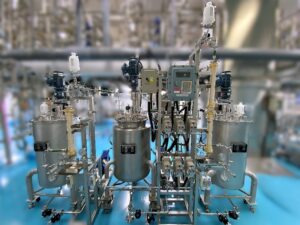
Recently, demand for APIs has shifted from traditional, high-volume small molecules to a broader need across biologics, peptides, oligonucleotides, viral vectors, and more, according to officials at both companies. API needs are becoming increasingly complex due to their high specificity and growing role in next-generation therapeutics.
Some of the next-generation APIs such as peptides and oligonucleotides are heat sensitive. Their manufacturing processes have thus relied on the costly, time-consuming, and energy-intensive freeze-drying method, which can remove solvents without heating, to obtain APIs with high quality explains an Asahi spokesperson.
Although the freeze-drying process can be shortened by concentrating the raw material solution to reduce the volume of liquid feed prior to the freeze-drying step, conventional concentration technologies such as vacuum distillation carry the risk of quality degradation due to heating, and the formation of precipitates caused by changes in solvent composition during the concentration step, adds the spokesperson.

Asahi Kasei’s system for forward osmosis (FO) and membrane distillation (MD) addresses such manufacturing challenges by concentrating the raw material solution for pharmaceutical applications without applying heat or pressure, notes another Asahi official, explaining that FO utilizes an osmotic pressure difference across a membrane to remove water from liquids, achieving highly concentrated API solutions under mild conditions. MD leverages a vapor pressure difference across a membrane to remove volatile components such as acetonitrile, alcohol, or ammonia, at or below room temperature.
Asahi Kasei says it looks forward to studying the prospects for future commercialization of the FO–MD system.
The post Peptistar Began Operation of the Asahi Kasei FO-MD System at Manufacturing Scale appeared first on GEN – Genetic Engineering and Biotechnology News.