

NHS Shared Business Services has launched a £900m framework agreement to support the procurement of AI across the NHS.
Medication Treatment of ADHD in Pediatric Epilepsy
Conditions: ADHD – Attention Deficit Disorder With Hyperactivity
Interventions: Drug: methylphenidate hydrochloride (Jornay PM)
Sponsors: Hugo W. Moser Research Institute at Kennedy Krieger, Inc.
Recruiting
Interventions: Drug: methylphenidate hydrochloride (Jornay PM)
Sponsors: Hugo W. Moser Research Institute at Kennedy Krieger, Inc.
Recruiting
Investigating Health, Equity, and Resilience in Girls and Women With ADHD Across the Lifespan
Conditions: ADHD
Interventions: Other: No Intervention: Observational Cohort
Sponsors: University of Calgary
Recruiting
Interventions: Other: No Intervention: Observational Cohort
Sponsors: University of Calgary
Recruiting
RCT of Brief Intervention Addressing Stigma Among Parents of Children With Mental Health Problems
Conditions: Depression Disorders; ADHD; Substance Abuse; Social Stigma; Help-Seeking Behavior; Caregiver Burden
Interventions: Other: Brief video
Sponsors: New York State Psychiatric Institute; Columbia University
Not yet recruiting
Interventions: Other: Brief video
Sponsors: New York State Psychiatric Institute; Columbia University
Not yet recruiting
Intensive-neurofeedback Protocol for Children With ADHD: A Proof-of-concept Study Comparing iAPF-personalized and Standard Theta-beta-ratio Training
Conditions: ADHD; Inattention; Hyperactivity; Impulsivity; Executive Dysfunction
Interventions: Behavioral: Standard TBR-NF; Behavioral: iAPF -TBR-NF
Sponsors: Bielefeld University; Philipps University Marburg
Recruiting
Interventions: Behavioral: Standard TBR-NF; Behavioral: iAPF -TBR-NF
Sponsors: Bielefeld University; Philipps University Marburg
Recruiting
Co-designing Adaptations of a Digital Mental Health Intervention (Wysa) for Adolescent Girls With Anxiety or Depression in Rural India
Conditions: Anxiety; Depression in Adolescence; Anxiety Disorder of Adolescence
Interventions: Behavioral: Digital psychosocial tool
Sponsors: Wysa; Wellcome Trust; Imperial College London; Tata Institute of Social Sciences; Milaan Foundation
Not yet recruiting
Interventions: Behavioral: Digital psychosocial tool
Sponsors: Wysa; Wellcome Trust; Imperial College London; Tata Institute of Social Sciences; Milaan Foundation
Not yet recruiting
Multi-site Feasibility of an Integrated Treatment for the Biology and Experience of Depression: The MULTIBED Study
Conditions: Major Depressive Disorder
Interventions: Behavioral: Cognitive Behavioral Therapy (CBT); Device: Whole-Body Hyperthermia
Sponsors: University of California, San Francisco; National Center for Complementary and Integrative Health (NCCIH)
Not yet recruiting
Interventions: Behavioral: Cognitive Behavioral Therapy (CBT); Device: Whole-Body Hyperthermia
Sponsors: University of California, San Francisco; National Center for Complementary and Integrative Health (NCCIH)
Not yet recruiting
The Impact of Trauma-Informed Sports-Based Intervention on Emotion Regulation, Self-Esteem, and Peer Relationships in Adolescents With Substance Use Disorder
Conditions: Adolescents With Substance Use Disorder
Interventions: Behavioral: The Trauma-Informed Sport-Based Intervention Program
Sponsors: Neslihan Lok
Completed
Interventions: Behavioral: The Trauma-Informed Sport-Based Intervention Program
Sponsors: Neslihan Lok
Completed
Here’s why Elon Musk lost his suit against OpenAI
On Monday, the jury in Musk v. Altman dealt Elon Musk a major blow—reaching a unanimous advisory verdict that he had sued OpenAI too late and, as a result, his claims are barred by the applicable statutes of limitations. US District Judge Yvonne Gonzalez Rogers immediately accepted it.
Musk announced on X that he will be appealing the decision. “The judge & jury never actually ruled on the merits of the case, just on a calendar technicality,” he wrote.
OpenAI was cofounded by Musk and a group of researchers in 2015 as a nonprofit with a mission to develop AI for the benefit of humanity, unconstrained by a need to generate financial returns. Musk donated $38 million to the company during its early days, allegedly on the basis that OpenAI CEO Sam Altman and president Greg Brockman had promised to keep the company a nonprofit committed to the mission.
Musk brought two claims against OpenAI. First, he argued that Altman and Brockman breached the charitable trust he created through his donations by breaking their promise to keep the company a nonprofit and creating a for-profit subsidiary that ballooned over the years. Second, he argued that Altman and Brockman unjustly enriched themselves at Musk’s expense. He sued OpenAI in 2024.
Musk asked the court to unwind a 2025 restructuring that converted OpenAI’s for-profit subsidiary into a public benefit corporation and to remove Altman and Brockman from their roles.
OpenAI argued that the time for Musk to sue the company had run out before he brought the case. The statute of limitations on the breach of charitable trust claim is three years, while the statute of limitations on the unjust enrichment claim is two years. This means that Musk should have discovered, or had reason to discover, Altman and Brockman’s alleged breach of charitable trust no earlier than 2021 and their alleged unjust enrichment no earlier than 2022.
While Musk argued he discovered that Altman and Brockman had broken their promise only in 2022, OpenAI claimed that Musk had reason to think this well before 2021.
Musk told the jury that he has gone through “three phases” in his beliefs about OpenAI: In phase one, he was “enthusiastically supportive” of the company. In phase two, “I started to lose confidence that they were telling me the truth,” he said. In phase three, “I’m sure they’re looting the nonprofit.”
Here’s a deeper dive into a timeline of the events as testified in the trial. You can read my dispatches from all three weeks of the trial here and here and here.
2017: Musk proposes creating a for-profit subsidiary
In 2017, two years after OpenAI was founded, Musk and the other cofounders tried to create a for-profit subsidiary to raise enough capital to build artificial general intelligence—powerful AI that can compete with humans on most cognitive tasks. They fought a bitter power battle over who would get to control the entity. Musk also proposed merging OpenAI with his electric-car company, Tesla.
During the trial, OpenAI’s lawyers pressed Musk on these discussions, suggesting that Musk knew in 2017 about Altman and Brockman’s plans to pivot the company—even participating in such plans—and had reason to sue then.
“I was not opposed to there being a small for-profit that provides funding to the nonprofit,” Musk told the jury, “as long as the tail didn’t wag the dog.”
2019: OpenAI creates a for-profit subsidiary with capped profits
In 2019, OpenAI created a for-profit subsidiary, under which employees and investors would receive a capped return on their investment. At the same time, the company secured a $1 billion investment from Microsoft. OpenAI argued that Musk again had reason to sue the company then.
But Musk testified that he didn’t think the move was violating the nonprofit’s mission. “If you’ve got a capped-profit situation, it hasn’t violated the nonprofit’s goal,” Musk told the jury earlier in the trial. “There was no basis for me to file a lawsuit at that time.”
2020: Microsoft snags an exclusive license
In 2020, when Microsoft secured an exclusive license to OpenAI’s GPT-3 model, Musk posted on X: “This does seem like the opposite of open. OpenAI is essentially captured by Microsoft.” OpenAI once again argued that Musk had reason to sue then.
But Musk testified that after reading the post, Altman reassured him that “OpenAI was staying on the mission as a nonprofit.” Musk said although he was skeptical, he still had no reason to sue the company at that point.
2022: Microsoft prepares to invest $10 billion in OpenAI
It was only in 2022, Musk testified, that he discovered OpenAI had abandoned its nonprofit mission. At that time, Microsoft was preparing to invest $10 billion in OpenAI—a deal that closed in 2023.
“I was disturbed to see OpenAI with a $20B valuation,” Musk texted Altman after reading the news. “This is a bait and switch.”
Musk told the jury this was the moment that made him realize “the for-profit is the tail wagging the dog.” He thought Microsoft would give $10 billion only if it expected “a very big financial return.” He argued that this was the point he realized “OpenAI had become, for all intents and purposes, a for-profit company with a $20 billion valuation.”
“The 2023 deal was different,” Steven Molo, one of Musk’s lawyers, hammered home during his closing argument.
The jury sides with OpenAI
It was up to the jury to decide whether the evidence supported Musk’s claim that he first realized in 2023 that OpenAI was no longer a nonprofit committed to its mission. In the verdict announced today, they found Musk did in fact have reason to think that he was being misled by Altman and Brockman before 2021. They did not address whether he was in fact misled.
Courts often decide cases on procedural grounds like statutes of limitations when they can, because it can be the cleaner way to resolve a case than to grapple with its merits.
Musk has said he will appeal the decision to the Ninth Circuit Court of Appeals, a federal appellate court that reviews decisions from district courts in California and other states.
Codon Optimization Isn’t Equal: Benchmarking Gene Design for Antibody Expression
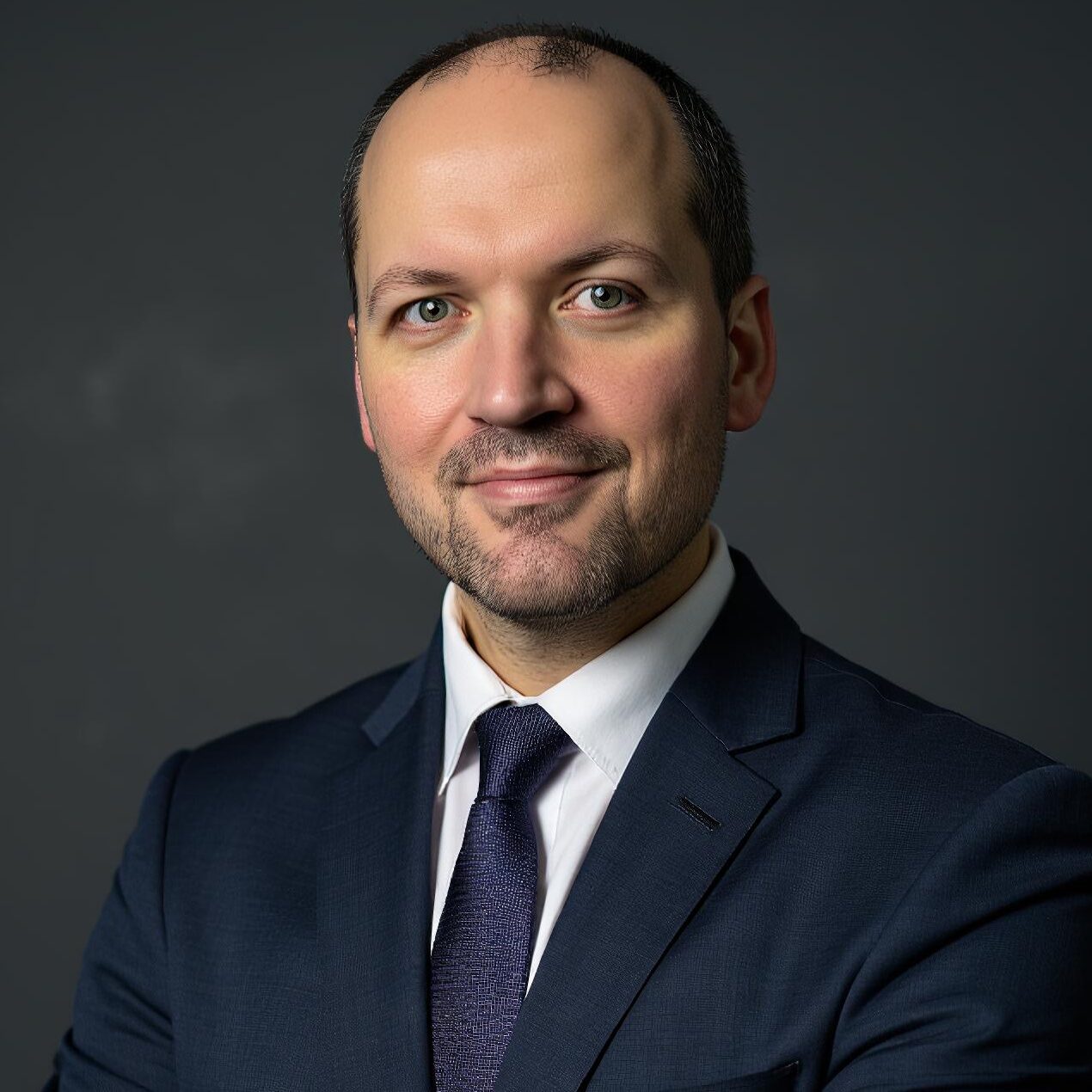
Justin Byers
Founder and CEO
Axio BioPharma
Panelist
Justin Byers
Justin Byers is the founder and CEO of Axio BioPharma. He holds a BS in biochemistry and molecular biology from Illinois State University and has held leadership roles at Illumina, Danaher, and Fujifilm. Throughout his career, Byers has led commercial, operational, and cross-functional initiatives supporting biologics programs from early development through manufacturing. He has worked closely with scientific teams to scale workflows, improve process rigor, and align technical execution with strategic objectives. At Axio, Byers oversees corporate strategy, partnerships, and scientific direction. His focus is positioning the company at the intersection of structured data and biologics workflow execution. Axio is accelerating biologics development through mAb production services for R&D while partnering with innovators and CDMOs to ensure the data required for rigorous decision making and a digitally enabled future is generated, structured, and accessible.
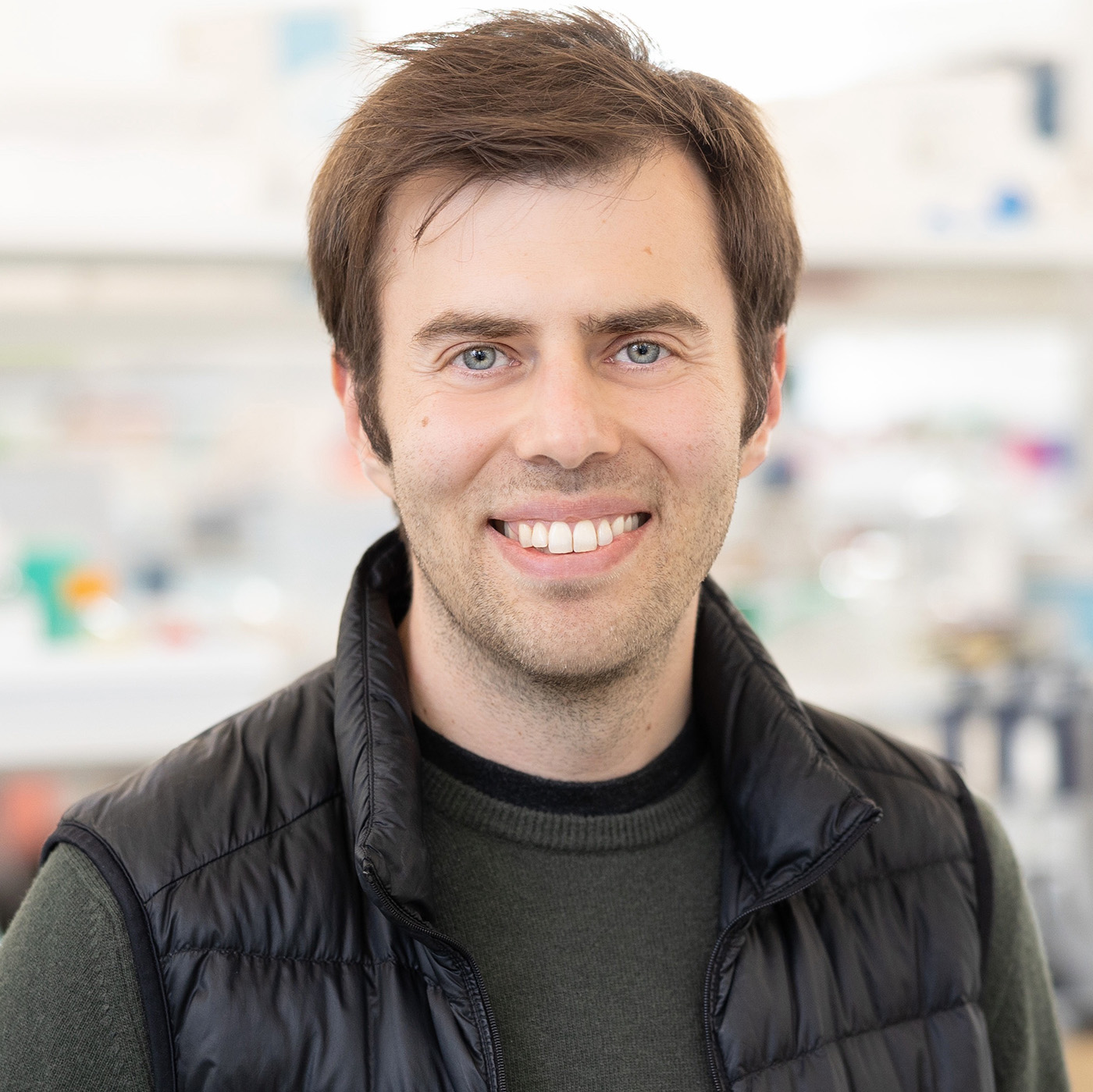
Daniel Lin-Arlow, PhD
Chief Scientific Officer and Co-founder
Ansa Biotechnologies
Panelist
Daniel Lin-Arlow, PhD
Daniel Lin-Arlow, PhD, is a scientist-entrepreneur with deep expertise in synthetic biology and biophysics. Motivated by firsthand challenges in obtaining DNA constructs for metabolic engineering in graduate school, he is deeply committed to providing scientists with the DNA constructs they need for their research. As Ansa’s founding CEO, Lin-Arlow grew the company from two employees in 2018 to more than 70 by 2024, raising over $130 million in venture capital and grant funding to support technology development and commercialization. He transitioned to the role of chief scientific officer in 2024, where he leads the development of new applications of the company’s technologies. Lin-Arlow received his PhD from the University of California, Berkeley for his work in Jay Keasling’s lab for developing the DNA synthesis technology commercialized by Ansa. Prior to graduate school, he was a scientific associate at D.E. Shaw Research where he studied the biophysical properties of G protein-coupled receptors, including how drugs bind and modulate their activity. Dan began his scientific career at MIT, where he earned dual SB degrees in math with computer science and biology, and developed computation tools for the analysis of regulation of gene expression at the Broad Institute of MIT and Harvard. Lin-Arlow is a co-inventor of nine patent families and has co-authored scientific publications in Nature, Science, Cell, PNAS, and Nature Biotechnology.
Broadcast Date:
- Time:
Antibody expression titers are key drivers of screening efficiency in discovery, developability, manufacturing economics, and development timelines. Although it is possible to address poor antibody expression by increasing overall batch size and optimizing downstream processes, the root cause often lies in the underlying DNA sequences. Controlled benchmarking studies are helpful for systematically evaluating DNA construct design decisions that impact titers.
In this GEN webinar, Justin Byers and Daniel Lin-Arlow, PhD, examine how enzymatic DNA synthesis and DNA construct design mitigate antibody expression challenges.
Byers will walk through a controlled benchmarking study of codon-optimization approaches, including details of the study design and how structured, gene-to-protein workflows can help identify optimal constructs before they become downstream problems. He will show that under matched CHO and HEK293 conditions, antibody constructs codon-optimized with an AI codon language model had consistently higher transient expression titers than other approaches. The AI codon-optimized sequences contained “complex” features such as repeats and GC skew that challenge traditional gene synthesis processes but were readily manufactured by Ansa’s DNA synthesis platform. These results suggest that complex sequence features can be important for optimal gene expression, which makes the ability to manufacture them as relevant as the codon strategy.
Lin-Arlow will present Ansa’s enzymatic DNA synthesis technology and the benefits to clients working on antibody production, cell and gene therapies, and other synthetic biology applications. Key takeaways include:
- An AI-powered codon optimization strategy that measurably improves transient antibody expression yield
- Why controlled side-by-side benchmarking under standardized conditions is the only reliable way to objectively evaluate DNA construct design choices
- How integrating rigorous sequence evaluation upstream compresses timelines and reduces the risks of expression failures late in development
- How Ansa’s fully enzymatic DNA synthesis addresses complex sequences, including: High or low GC content, secondary structures, inverted terminal repeats (ITRs), and homopolymers
- The Ansa On-Time Guarantee—DNA orders shipped on time, or the complete order is free
A live Q&A session will follow the presentation offering you a chance to pose questions to our expert panelists.
Produced with support from:
The post Codon Optimization Isn’t Equal: Benchmarking Gene Design for Antibody Expression appeared first on GEN – Genetic Engineering and Biotechnology News.