

<![CDATA[Concussion recovery in teen athletes often masks anxiety or depression; learn warning signs, screening tips, and safer return-to-play steps.]]>
Stress and Anxiety Before Biopsy, After Biopsy Results, and During Treatment in Patients With Suspected Bone or Soft Tissue Cancer
Conditions: Bone Neoplasms; Soft Tissue Neoplasms; Anxiety; Stress, Psychological
Interventions: Other: Routine Diagnostic and Treatment Pathway
Sponsors: Istanbul University
Recruiting
Interventions: Other: Routine Diagnostic and Treatment Pathway
Sponsors: Istanbul University
Recruiting
<![CDATA[New BEST teletraining helps people after TBI name emotions, reduce anxiety and anger, and boost resilience—early trials show promise.]]>
Cross-national comparisons of adolescent mental health and suicidality in the Middle East: a cross-sectional secondary analysis of the global school-based student health survey
BackgroundAdolescent mental health and suicidality represent growing global public health concerns, yet comparative evidence from the Middle East remains limited. This study examined the prevalence and correlates of psychological distress and suicidal behaviors among adolescents across Middle Eastern countries using the Global School-based Student Health Survey (GSHS).MethodsA cross-sectional analysis of nationally representative GSHS datasets from 12 Middle Eastern countries collected between 2004 and 2017. The pooled sample included 90,573 school-attending adolescents aged 11–18 years. Multivariable logistic regression models assessed associations between psychosocial factors and suicidal behaviors while adjusting for age, sex, and country.ResultsSubstantial cross-country variation in mental health indicators and suicidality was observed. Loneliness ranged from 11.5% in Bahrain to over 50.0% among female adolescents in Tunisia and Morocco. Suicidal ideation affected 16.3% of adolescents overall, while suicide planning was reported by 13.4%. Suicide attempts were reported by 9.1% of adolescents at least once. Female adolescents consistently reported higher levels of loneliness and anxiety, whereas males showed slightly higher adjusted odds of suicidal ideation and attempts (OR = 1.2). Lack of parental support, low school connectedness, and fewer friendships were significantly associated with higher odds of suicidal ideation, planning, and attempts. Emotional symptoms such as loneliness (OR = 1.7) and anxiety (OR = 1.8) were also strongly associated with suicide attempts.ConclusionsPsychological distress and suicidality are prevalent among adolescents across the Middle East, with notable gender and cross-country differences. Strengthening family support, peer relationships, and school connectedness should be central to regional adolescent mental health and suicide prevention strategies.
Big Five personality profiles, self-reported distress, and resilience resources among adults in Italy after the acute COVID-19 emergency: a cross-sectional cluster-analytic study
IntroductionPsychological recovery after the acute COVID-19 emergency has been uneven, and brief non-diagnostic markers that stratify vulnerability may support public mental health monitoring. We examined whether person-centered Big Five profiles differentiated self-reported distress and resilience resources among adults living in Italy after the end of the World Health Organization-declared COVID-19 public health emergency.MethodsThis cross-sectional anonymous online survey included 2,169 adults assessed between 22 May 2023 and 23 December 2024. Participants completed the Big Five Inventory-10 (BFI-10), Generalized Anxiety Disorder-7 (GAD-7), Patient Health Questionnaire-9 (PHQ-9), Perceived Stress Scale-10 (PSS-10), and Resilience Scale for Adults-11 (RSA-11). Standardized Big Five scores were clustered using k-means, and the number of profiles was evaluated using elbow, silhouette, and hierarchical-clustering methods.ResultsA two-profile solution was retained, although separation was modest (average silhouette width = 0.185). Compared with the resourceful trait profile (n = 1,113), the vulnerable trait profile (n = 1,056), characterized especially by lower emotional stability and conscientiousness, reported higher anxiety symptoms (g = 0.74), depressive symptoms (g = 0.76), and perceived stress (g = 0.86), and lower resilience resources (g = −1.02; all p < 0.001).DiscussionBrief person-centered Big Five profiling differentiated adults with greater self-reported symptom burden and fewer resilience resources in a prolonged post-emergency context. These findings are non-diagnostic and do not establish COVID-specific causal mechanisms, but may inform vulnerability stratification during future prolonged crises.
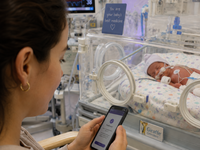
A Digital Acceptance and Commitment Therapy and Education Intervention for Caregivers of Very Preterm Infants in the Neonatal Intensive Care Unit: Randomized Controlled Trial
Background: Parents of very preterm infants admitted to the neonatal intensive care unit (NICU) experience high levels of psychological distress, yet access to timely, evidence-based mental health support is limited by staffing and resource constraints. Digital mental health interventions offer a scalable approach to addressing this gap; however, their effectiveness has not been well established in NICU caregiver populations, particularly during periods of acute stress. Objective: This study aims to evaluate the effectiveness of a self-guided digital acceptance and commitment therapy (ACT)–based intervention combined with NICU-specific education (NICU parent acceptance and commitment therapy [NPACT]). The study explored the intervention’s effects on stress among parents and primary caregivers of very preterm infants, compared to a digital education-only intervention, and active control. Methods: We conducted a 3-arm, single-center, randomized controlled cluster trial in a tertiary NICU. Parents and primary caregivers of very preterm infants (<32 wk’ gestational age,<1 wk old) were randomized by family cluster to (1) NPACT (ACT+ education), (2) a digital education-only intervention, or (3) active control. Digital interventions were delivered via a web-based platform over 2 weeks. The primary outcome was NICU-related stress on the Parent Stressor Scale: Neonatal Intensive Care Unit (PSS:NICU) at 2 weeks postrandomization. Secondary outcomes included caregiver anxiety, depression, perceived stress, and selected neonatal outcomes. Engagement and perceived helpfulness were assessed for digital interventions. Results: A total of 102 caregivers from 68 family clusters (79 infants; mean gestational age 28.1, SD 2.2 wk) were enrolled. There were no statistically significant between-group differences in the mean PSS:NICU scores at 2 weeks (NPACT 3.0, SD 0.9; education-only 2.5, SD 1; active control 2.6, SD 0.9; adjusted mean difference for NPACT vs active control 0.04, 95% CI −0.39 to 0.47). No between-group differences were observed for secondary psychological outcomes at any time point. However, caregivers in both digital intervention groups had higher odds of full breastfeeding at discharge compared with active control. Engagement with the digital interventions was high, with 97% (28/29) of NPACT participants and 76% (19/25) of education-only participants completing at least 5 of 7 modules, and both interventions were rated as very helpful. Conclusions: In this trial, an unguided digital mental health intervention delivered during NICU admission did not reduce NICU-specific parental stress or other psychological outcomes relative to active control. However, the intervention was highly used by caregivers. These findings suggest that while a brief digital mental health intervention can be successfully implemented in a high-stress clinical setting with caregivers, its capacity to reduce acute psychological distress may be limited. Secondary findings indicate potential benefits of the digital intervention on breastfeeding, generating hypotheses for future research. Digital mental health interventions in neonatal settings may be most effective when integrated within hybrid models of care and/or delivered beyond the acute admission phase. Trial Registration: Australian New Zealand Clinical Trials Registry ACTRN12623000641695; https://tinyurl.com/2e8677bb International Registered Report Identifier (IRRID): RR2-10.1016/j.cct.2024.107519
Why Young People Fail to Report Harmful Online Experiences
Research shows that 80% of youth who experience negative online interactions never report them. Here’s what parents can do to help.
Most parents assume that if something bad happened to their child online, they’d hear about it. But new research suggests that may not be the case.
In a study of over 1,000 youth ages 9–15 with mental health or neurodevelopmental concerns, researchers from the Child Mind Institute found that one in four experienced a negative online interaction — including cyberbullying, sexual harassment, or doxxing — in the past year. Among those who experienced an incident, nearly 69% said it happened more than once. Yet only 20% reported it.
The problem isn’t that young people don’t care or don’t know something is wrong. There are real, identifiable barriers getting in the way.
Why youth stay silent
The study identified three major barriers preventing young people from reporting harmful online experiences:
- They don’t know how. Many find the reporting process confusing and don’t understand how to use the tools on the platforms they frequent.
- They’re unsure if their experience qualifies. Young people often struggle to determine whether the incident is serious enough to report. When intent and severity are unclear, many default to staying quiet.
- They’re worried about the consequences. Embarrassment, fear of retaliation or escalation, and worries about anonymity are commonly reported. These emotional barriers were especially pronounced in young participants with anxiety or mood challenges.
What parents and caregivers can do
The study found that family dynamics can play an important role in both a child’s likelihood of experiencing online harm and how they respond to it.
Inconsistent discipline and poor supervision were linked with higher rates of negative online encounters. On the other hand, youth from families with open and supportive communication were more comfortable seeking help when something went wrong online. And when given the choice, most preferred telling a trusted adult rather than using platform reporting tools.
Here’s what parents can do:
- Keep communication open. Don’t wait for something to go wrong. Create space for low-pressure conversations about both positive and negative online experiences.
- Make it safe to speak up. To be able to talk openly about their issues with you, youth need to believe that it won’t result in punishment, judgment, or loss of their devices.
- Help them know what counts. When researchers presented hypothetical scenarios, youth were clear about what should be reported. But with their own real experiences, they hesitated. Talk through real and imagined scenarios to help them build confidence recognizing situations in which they should speak up.
- Learn the tools together. Sit down together and get familiar with the blocking, privacy, and reporting features on the platforms they regularly use.
Creating safer digital spaces
The responsibility for online safety shouldn’t fall entirely on children or their families.
If we want young people to report unwanted experiences, the tools and systems around them need to be clearer, safer, and easier to use. Platforms need reporting tools designed with young users in mind. Policies and safety guidance should be written in clear, developmentally appropriate language. This way, children will have a better understanding of what kinds of experiences should be reported and what happens after a report is submitted.
Based on research published in JAACAP Open.
Read the full study
The post Why Young People Fail to Report Harmful Online Experiences appeared first on Child Mind Institute.
Sex-related molecular phenotypes in anxiety-depressive disorders: a machine learning analysis of routine blood biomarkers
BackgroundAnxiety disorders and depressive disorders are the most prevalent mental disorders worldwide. Their diagnosis has long relied on clinical symptom assessment, and objective blood−based biomarkers remain lacking. Sex is a critical risk factor for these disorders; however, sex−specific divergence in blood biochemical profiles has yet to be systematically characterized.MethodsThis retrospective study enrolled 778 patients diagnosed with anxiety−depressive state at China−Japan Friendship Hospital. Demographic data, complete blood count parameters, and blood biochemical parameters were collected. Following missing value processing and multiple imputation, Mann–Whitney U tests were applied to identify sex−differentially expressed biomarkers. A random forest classifier was constructed to evaluate the discriminative capacity of combined multi−marker panels, with model performance comprehensively assessed through receiver operating characteristic curve analysis, SHAP−based explainability analysis, and multi−classifier probability projection. Age−stratified analyses were performed with a threshold of 50 years to explore the potential modifying effect of age on sex differences.ResultsSeveral biomarkers exhibiting significant differences between males and females were identified (FDR < 0.05), among which creatinine, hemoglobin, hematocrit, red blood cell count, and uric acid demonstrated the largest effect sizes. The random forest model achieved an area under the receiver operating characteristic curve of 0.902 on the independent test set. Multi−classifier probability projection following hyperparameter tuning yielded a Silhouette coefficient of 0.464 in the two−dimensional space, with permutational multivariate analysis of variance confirming highly significant centroid differences between groups (p < 0.001). Age−stratified analysis using hemoglobin as an example revealed that levels in males were significantly higher than those in females across both age strata, with the magnitude of the sex difference attenuated in the ≥50−year group compared with the <50−year group.ConclusionsRobust sex−related signals are embedded in routine blood biochemical markers. Although complete separation is difficult to achieve under unsupervised dimensionality reduction, these signals can be efficiently integrated through ensemble learning algorithms. This study provides a molecular phenotypic basis related to sex in patients with anxiety−depressive state and underscores the importance of fully considering sex as a variable in clinical laboratory testing.
A comparison between seven scales of neuropsychological assessments for cognitive impairment screening in Chinese older population: a cross-sectional study in Chongqing, China
BackgroundThe Clinical Dementia Rating Scale (CDR), the Ascertain Dementia 8 (AD8), the Mini-Cog, the Verbal Fluency Test (VFT), the Community Screener for Dementia (CSI-D), the Rey Auditory Verbal Learning Test (RAVLT), and the Activities of Daily Living Scale (ADL) represent seven commonly employed methods for community cognitive impairment screening in China that have garnered limited attention. This study aimed to assess the discriminatory power of these seven tests when administered concurrently in a single screening to detect cognitive impairment in the absence of a gold standard.MethodsWe conducted a cross-sectional survey among 1,506 elderly people aged 60 and above in the community. The cognitive and social functions of the elderly population were evaluated by using the Seven scales. The characteristics related to demographics and health were collected through questionnaire surveys, and the correlations and consistencies of the Seven scales with cognitive impairment were analyzed respectively. Multifactor logistic regression model was used to analyze the risk factors of cognitive impairment in each scale.ResultsThe positive screening proportions for the seven scales—CDR, ADL, AD8, CSI-D, Mini-Cog, VFT, and RAVLT—were 61.1%, 33.7%, 38.0%, 37.1%, 53.7%, 39.3%, and 52.9%, respectively. Agreement on cognitive impairment risk between each pair of scales was fair-to-moderate (Kappa: 0.32–0.645, all p < 0.001). Screening results differed significantly across the seven scales by age, educational, marital status, epilepsy, cerebral infarction, brain atrophy, and depression (all P < 0.001). Notably, Screen-positive proportions for cognitive impairment rose significantly with increasing age (p < 0.001); the ≥ 80-year-old group showed the highest proportions across scales. Conversely, higher educational attainment was associated with lower risk of screening positive for cognitive impairment (p < 0.001).ConclusionsOur study identified a relatively high screening positivity proportion for cognitive impairment in Chongqing, Age, Sex, Education, Marital status, Brain atrophy, Anxiety, and Depression are risk factors for screening positivity. The identified screening positivity for cognitive impairment varied across different neuropsychological assessment methods, indicating that assessment choice should be tailored to population characteristics rather than applying a one-size-fits-all approach. Selecting the appropriate tool can improve sensitivity and reduce missed diagnoses.
Changes in depression, anxiety, and post-traumatic stress symptoms among children and adolescents exposed to adverse childhood experiences following participation in the PROACT intervention in Nairobi, Kenya
IntroductionGlobally, children and adolescents exposed to Adverse Childhood Experiences (ACEs) face an increased risk of developing mental health disorders. The prevalence of these mental disorders is further amplified by the lack of access to specialised mental health treatment especially in low resource settings. There is an urgent need for scalable mental health interventions that can effectively address the needs of these vulnerable populations. Non-specialist-delivered interventions, such as PROACT (Psychoeducation, Relaxation, Problem-solving, Activation, and Cognitive Coping Therapy), represent a promising scalable approach that could help bridge the existing mental health treatment gap in low-resource settings.ObjectivesThis study aimed to assess changes in depression, anxiety, and post-traumatic stress symptoms among children and adolescents exposed to adverse childhood experiences following participation in the PROACT intervention delivered by trained social workers in Nairobi, Kenya.MethodologyMixed-methods pre-post study design was employed. Twenty purposively selected sites across Nairobi County each contributed one social worker (N = 20), who received training to deliver the intervention. A total of 40 children participated and received 4–6 PROACT sessions. Quantitative data were analysed using STATA version 17. Paired t-tests were used to compare baseline and endline scores, while mixed-effects linear regression models with participant ID as a random effect were fitted to estimate changes in outcomes over time and account for repeated measures. Statistically significant improvements were observed across all mental health outcomes. Mean anxiety scores decreased from 6.2 at baseline to 2.7 at endline (mean difference: −3.5; 95% CI: −4.7 to −2.2; p < 0.001), while mean depression scores decreased from 6.4 to 2.9 (mean difference: −3.6; 95% CI: −4.9 to −2.3; p < 0.001). Mean PTSD scores decreased from 16.7 (95% CI: 12.8–20.5) at baseline to 7.3 (95% CI: 4.4–10.1) at endline (mean difference: −9.4; 95% CI: −14.6 to −9.3; p < 0.001). Mixed-effects linear regression analyses corroborated these findings, demonstrating significant reductions in PTSD (β = −9.44), anxiety (β = −3.48), and depression (β = −3.59) symptoms (all p < 0.001).ConclusionThe PROACT intervention was feasible and acceptable when delivered by social workers in Nairobi primary healthcare facilities and was associated with improvements in mental health outcomes among children and adolescents. These findings highlight the potential of task-sharing approaches to expand access to mental healthcare in low- and middle-income countries (LMICs) and warrant further evaluation in controlled studies.