Bio-Techne, Refeyn Partner on Workflow for Bispecific Antibody, Biosimilar Characterization

This week, Bio-Techne, a provider of life science tools, reagents, and diagnostic product, and Refeyn, a pioneer in mass photometry technology, announced the launch of an integrated workflow for characterizing charge and size variants in bispecific antibodies and biosimilars. 

The workflow combines Bio-Techne’s R&D Systems MauriceFlex™ imaged capillary isoelectric focusing (icIEF) fractionation system with Refeyn’s TwoMP mass photometry platform. The combined solution makes it possible for researchers to directly correlate charge heterogeneity with molecular weight and aggregation at single‑molecule resolution in four hours.

“Bispecifics are the fastest growing segment within next‑generation antibodies, but they are very difficult to characterize,” said Gerry Mackay, CEO of Refeyn. That difficulty is due to the structural complexity of these molecules. Incomplete characterization can delay development, increase manufacturing risks, and lead to costly late-stage failures. “This approach directly addresses one of the biggest challenges by combining icIEF fractionation with mass photometry. Researchers can now interrogate charge and size variants together in a single workflow,” he said. 

Within the workflow, charge variants are first separated using the MauriceFlex system. They are then analyzed on Refeyn’s TwoMP platform. The system requires a nanogram‑level sample and reveals size distribution and aggregation at single‑molecule resolution. 

Together, the technologies enable direct characterization of aggregation and size within icIEF-resolved charge variants, something which is not accessible with standalone methods. It reduces reliance on multiple tests and supports faster, more efficient process development. 

These capabilities are a boon for customers, according to Will Geist, president of Bio‑Techne’s Protein Sciences Segment. “Enabling deeper characterization with less sample helps them reduce risk, control costs, and make better decisions earlier in development.” 

The post Bio-Techne, Refeyn Partner on Workflow for Bispecific Antibody, Biosimilar Characterization appeared first on GEN – Genetic Engineering and Biotechnology News.

A Billion-Dollar Deal, Trial Trouble, Biohub Updates, and Vaccine Research News

In this week’s episode, we start with news that Fulcrum Therapeutics is scrapping its lead pipeline program for sickle cell disease following concerns from the FDA about the drug’s risks and benefits. Also on the docket, news of Eli Lilly’s latest spending. The pharma giant has added its genetic medicines pipeline and capabilities by signing a $1.9 billion agreement with Ascidian Therapeutics to develop RNA exon editors for treating inherited kidney diseases. Next up, updates to an open-source model for binder design and protein function mapping. Finally, on the peer-review front, we dive into some of the latest vaccine research including insights into the mechanisms that cross-reactive T cells use to target multiple viral species in a single family and an improvement to standard polio vaccines.


Listed below are links to the GEN stories referenced in this episode of Touching Base:

Fulcrum Halts Development of SCD Candidate Pociredir, Sets Strategic Review
By Alex Philippidis and Kevin Davies, PhD, GEN Edge, June 2, 2026

Lilly, Ascidian Launch Up-to-$1.9B RNA Exon Editor Collaboration Targeting Inherited Kidney Diseases
By Alex Philippidis, GEN Edge, June 3, 2026


Biohub Releases Protein Biology World Model to Address Disease
By Fay Lin, PhD, GEN Edge, May 27, 2026

Cross-Reactive T Cells Could Point to Broad Vaccines or Treatments for Measles, Nipah Virus
GEN, June 2, 2026

Experimental Adjuvant Could Strengthen Mucosal Immunity with Injectable Polio Vaccines 
GEN, June 4, 2026

Touching Base Podcast
Hosted by Corinna Singleman, PhD

Behind the Breakthroughs
Hosted by Jonathan D. Grinstein, PhD


Produced with support from:

skpharmteco logo

The post A Billion-Dollar Deal, Trial Trouble, Biohub Updates, and Vaccine Research News appeared first on GEN – Genetic Engineering and Biotechnology News.

Brain-Targeted Drug Discovery Barriers Drive Deep Science Ventures and Medicines Discovery Catapult Deal

Deep Science Ventures (DSV) and Medicine Discovery Catapult (MDC) agreed to collaborate to address challenges in delivering medicines into the brain.

One of medicine’s greatest challenges is ensuring that treatments reach the precise area of the body where they are needed. While recent scientific breakthroughs have identified numerous targets for neurological conditions, the difficulty of effectively transporting these treatments across the blood-brain barrier and into the central nervous system (CNS) remains a primary challenge for global health.

According to the World Health Organization’s Global Status Report on Neurology, over 40% of the global population is living with CNS diseases, making them a leading global cause of ill health and disability.

Directly addressing critical gaps in healthcare means these innovations have the potential to improve patient outcomes while creating clinical and commercial opportunities for biotech and pharma companies. Developing new solutions could unlock access for rare neurological disorders and expand treatment to large or underserved patient populations, including those with diseases such as Alzheimer’s, Parkinson’s, and various brain cancers.

The first phase of the partnership will see an in-depth review of the current medicines landscape conducted to identify opportunities for innovation. This information will then be used to identify systemic gaps in brain-entry technologies. The long-term ambition is for novel approaches that meet the investment criteria of the partners to be spun out into new ventures focused on high-impact solutions and to provide them with pre-seed funding.

Alzheimers research
Credit: Minerva Studio/Getty Images

A core part of DSV’s approach involves building future founding teams to form new companies that will address challenges across multiple sectors. Future founders will work on opportunities that have been pre-scoped by DSV, de-risking the standard founder proposition.

By combining DSV’s venture-building model with MDC’s drug discovery expertise and infrastructure, the partnership will aim to develop new approaches to ensure life-changing medicines reach the brain, according to Adam Tomassi-Russell, senior director, DSV.

“The blood-brain barrier remains one of the most complex issues in modern medicine and with over 40% of the world’s population facing neurological conditions, it’s imperative that we find an optimal solution to this problem,” said Tomassi-Russell. “By pooling our venture-creation expertise with MDC’s discovery capabilities, we can offer the right founders a frictionless environment in which to tackle the CNS delivery gap. If we can solve the ‘how’ of brain entry more effectively, we can unlock a new frontier of CNS therapeutics and address the huge unmet need in these diseases.”

“At MDC, we are committed to transforming bold ideas into better treatments,” added Nicola Heron, chief strategy officer, MDC. “This collaboration presents an opportunity to discover new technologies that could have a significant impact on patients and society. Through this partnership, we will strengthen the ecosystem for CNS innovation in the U.K. and beyond, enabling more medicines to reach patients faster.”


The post Brain-Targeted Drug Discovery Barriers Drive Deep Science Ventures and Medicines Discovery Catapult Deal appeared first on GEN – Genetic Engineering and Biotechnology News.

The Download: AI hacking beyond Mythos, and chatbots’ impact on our brains

This is today’s edition of The Download, our weekday newsletter that provides a daily dose of what’s going on in the world of technology.

The Meta hack shows there’s more to AI security than Mythos

On Monday, reports emerged that attackers had used Meta’s AI customer support agent to steal Instagram accounts. Their approach was simple: they asked the agent to link the accounts to email addresses they controlled, and it complied.

Since Anthropic announced that its Mythos model was too good at hacking for a general release, cybersecurity concerns have focused on the risk of superpowered AI systems overwhelming computer infrastructure. But the Instagram hack shows that far simpler exploits can still cause damage.

As companies offload more work to AI, these comparatively unsophisticated attacks are becoming harder to ignore. Read the full story to understand why.

—Grace Huckins

Are AI chatbots making us lose control of our brains?

Gloria Mark, a psychologist at the University of California, Irvine, fears that digital technologies are weakening our cognitive abilities.

Her research suggests attention spans have fallen sharply over time, leading to higher stress and lower performance. She now believes AI tools like ChatGPT and Claude may accelerate this shift. “You’re deferring your cognitive work to AI,” she said. “And it’s not good for us.”

Mark argues this could weaken critical thinking and emotional intelligence. Luckily, she thinks we can course-correct by changing our relationship with these technologies.

Find out how AI could reshape attention and thinking.

—Jessica Hamzelou

This story is from The Checkup, our weekly newsletter giving you the inside track on all things biotech. Sign up to receive it in your inbox every Thursday.

The must-reads

I’ve combed the internet to find you today’s most fun/important/scary/fascinating stories about technology.

1 Anthropic has called for a global slowdown in AI development
It flagged the risk of models “self-improving.” (WSJ $)
+ And wants a coordinated plan to stop them. (Reuters $)
+ Skeptics note that the timing is awfully convenient. (The Register)

2 In a first, scientists have precisely edited human embryo genes
They relied on a newer gene-editing technique. (NYT $)
+ Genetically-modified babies could be on their way. (Guardian)
+ Companies have big plans for the technology. (MIT Technology Review)

3 US officials have discussed taking financial stakes in the AI firms
They’ve held talks about the government acquiring shares. (Reuters $)
+ Sam Altman pitched the idea to the White House last year. (WSJ $)

4 Bot web traffic has overtaken human web traffic
Cloudflare said 57.4% of traffic now comes from bots. (NBC News)
+ Its CEO expected the milestone at the end of 2027. (CNET)

5 The White House plans to bring AI doctors into American medicine
It wants chatbots to diagnose illness and prescribe medicine. (WSJ $)
+ But we don’t even know if healthcare AI actually helps patients. (MIT Technology Review)

6 Meta quietly added facial recognition code for smart glasses to its app
The exploratory feature would identify people via biometric data. (Wired $)
+ Smart glasses are also entering warfare. (MIT Technology Review)

7 South Korea’s labour minister wants tech firms to share AI profits
Kim Young wants staff and suppliers to get a share. (Reuters $)
+ He helped avert a huge strike over AI profit-sharing at Samsung. (NYT $)

8 Canada’s highly-anticipated AI strategy has launched
It promises over $2 billion in funding and aims to create 250,000 jobs. (BBC)
+ AI could strengthen democracy. (MIT Technology Review)

9 Investment in agricultural tech is booming
That’s good news at a time when we’re facing unprecedented levels of food market volatility. (The Economist $)

10 Bumblebees can use tools to solve problems, new research shows
Not just busy—they’re clever too! (Guardian) 

Quote of the day

“Welp, that happened faster than I predicted.” 

—Matthew Prince, co-founder and CEO of Cloudflare, one of the largest internet hosting services, reacts on X to reports that bots have overtaken humans in driving web traffic.

One More Thing

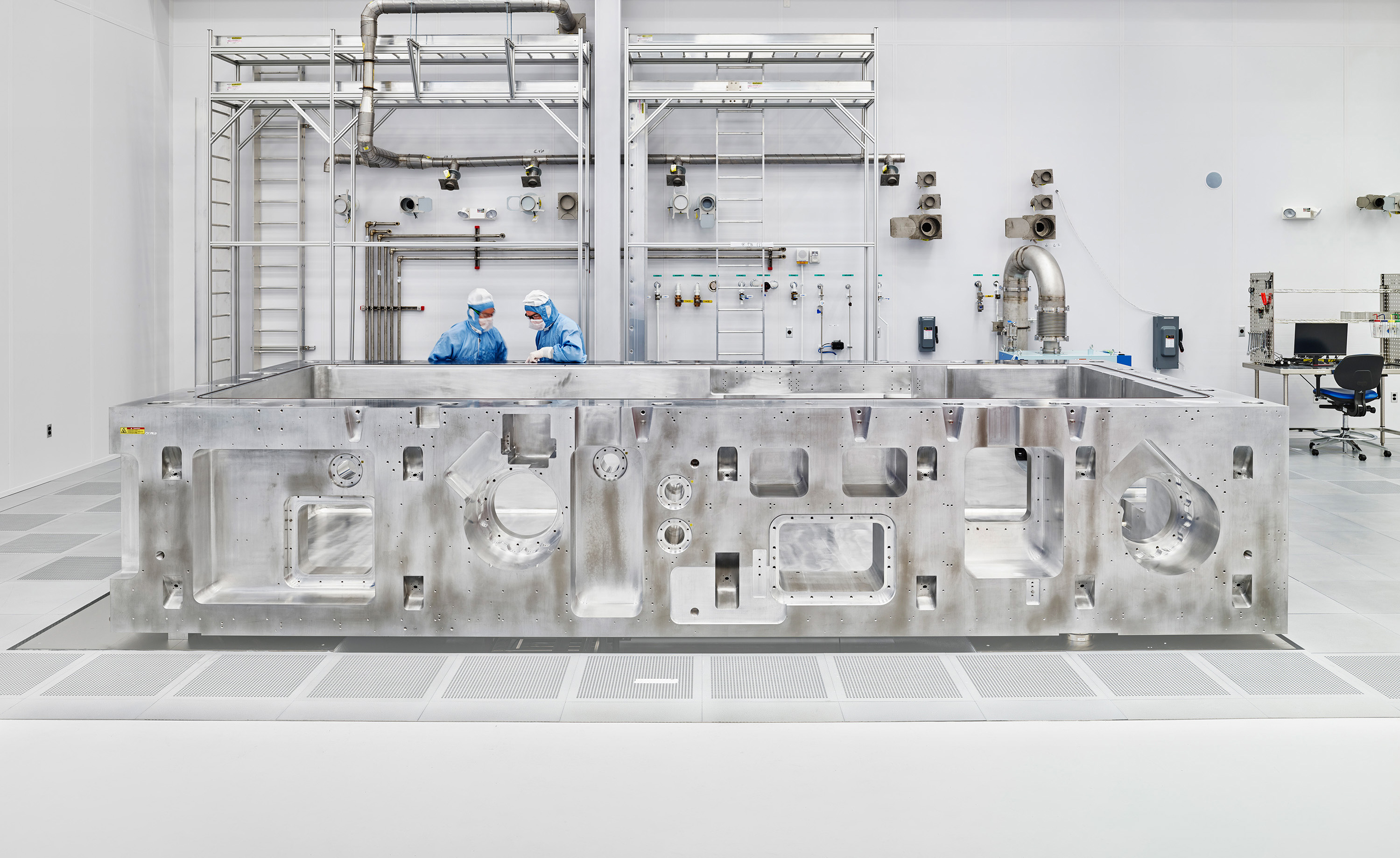
ASML machine

CHRISTOPHER PAYNE


Inside the machine that saved Moore’s Law

In a Connecticut clean room, the Dutch company ASML is developing the world’s most advanced machine for extreme ultraviolet (EUV) lithography, a crucial process for manufacturing microchips.

The system has become vital to Moore’s Law—the observation that the number of transistors on a chip roughly doubles every two years as components shrink, driving gains in performance and efficiency. “Without this machine, it’s gone,” says Wayne Lam, a director of research at CCS Insight. “You can’t really make any leading-edge processors without EUV.”

Discover how ASML’s EUV technology saved Moore’s Law.

—Clive Thompson

We can still have nice things

A place for comfort, fun, and distraction to brighten up your day. (Got any ideas? Drop me a line.)

+ Tech bosses love Tolkien. Here’s what the writer might think of them.
+ Rare footage captures an underwater volcano erupting beneath the Pacific Ocean.
+ Watch a tiny rescued cub grow into adulthood in this heartwarming tiger compilation.
+ This medieval version of “Take On Me” is like stepping into a tavern of synth-pop bards.

Are AI chatbots making us lose control of our brains?

This week I’ve been at SXSW London. There’s been music, film, and a lot—and I mean a lot—of talk about AI. I also had the opportunity to sit down with Gloria Mark, a psychologist at the University of California, Irvine, who has spent the last 30 years studying how people interact with digital technologies.

Early in her career, the biggest concerns were the potential impacts of internet and email use on our brains. We may laugh those concerns off today, but it’s true that as the technologies became more ubiquitous and ingrained in our daily lives, our attention spans began to shrink.

Mark is worried that things are only getting worse. The title of our session was “Have we lost control of our brains?” Unfortunately, Mark told me, the answer is yes.

Around two decades ago, Mark started wondering about how our use of devices might affect our attention spans. She set up what she calls “living laboratories,” using sensors and trackers to monitor adult volunteers’ attention, mood, and behavior when they were using devices.

In 2003, she found that the average user had an attention span of around two and a half minutes. That’s how long people could spend focused on one thing before moving on to something else. “That surprised me at the time,” she told me during our session on Wednesday. “I thought: Wow, this is really short.”

But when she repeated the experiment in 2012, she found that attention spans had shrunk—all the way down to around 75 seconds on average, she said. In research she conducted between 2014 and 2020, attention spans shrank further still—to a mere 47 seconds, on average. Yikes.

And it’s not good for us. Mark told me that she’s found switching our attention so frequently is stressful. “We would have people wear heart rate monitors, and … we would see direct correlation between switching attention fast and stress going up,” she told me.

All this distraction makes it harder for us to get stuff done, too. “It just takes longer to do any single task if you’re switching your attention,” she told me. “It’s not great for performance. It’s not great for our emotional well-being.”

And that’s for adults. What about the effects of digital technologies on children? A few months ago, Meta (which owns Facebook and Instagram) and Google’s YouTube were ordered to pay millions of dollars in damages to a 20-year-old woman who had accused the companies of creating products that led her to develop a childhood addiction.

Just a couple of weeks ago, Meta settled another lawsuit, this one brought by a rural school district in Kentucky. The district had also accused the company of designing addictive products that were harmful to students and had sought more than $60 million to cover the costs of their mental-health needs. Around 1,200 other school districts are taking similar legal action against social media companies.

But social media isn’t all bad, all the time. It can provide opportunities for some people, including those from marginalized groups, to form connections that might otherwise be difficult. A 2024 survey of LGBTQ+ teenagers found that while some described social media as a place of rejection and fear, others described it as a place where they felt a sense of belonging, where they could develop friendships and cultivate their identity.

In truth, we can’t definitively say what effects using social media is having on children across the board, says Mark. “There have been lots and lots of studies, and the evidence is to date inconclusive,” she told me. (Despite what you might read in best-selling books on the subject.)

Mark is hopeful that large, long-term studies might finally start shedding a bit more light on this question. An effort of this nature is underway in Australia, which enacted a social media ban for under-16s at the end of last year.

Given this uncertainty over a 20-year-old technology, I wondered if Mark had any thoughts on the potential impacts of AI—an obviously much newer offering that within the space of a couple of years appears to have become deeply integrated into our digital lives.

She told me she’s worried.

When we put in effort to do something—such as evaluating or summarizing content—we’re doing what’s known as “depth of processing,” she told me. “When you’re actively engaged with information, you’re processing it on a very deep level,” she said. “Then you’re more likely to learn it, to understand it, [and] to retain it.”

That’s not happening when most people use AI bots like ChatGPT, Claude, and Gemini. When we ask these tools to write, summarize, or evaluate for us, we’re no longer doing that depth of processing. “You’re deferring your cognitive work to AI,” she said. “And it’s not good for us.”

The risk is that our cognitive abilities will weaken over time. “If you’re not constantly exercising your muscles, they can atrophy,” Mark said. “And that’s exactly what can happen with our minds.” People with weaker critical thinking skills are more likely to fall prey to misinformation, she added.

Interactions with AI-powered “synthetic companions” can be just as harmful. Relationships between human beings take work—time, effort, and understanding. None of that is needed if you’re forming a relationship with a sycophantic bot. The “muscle” we risk atrophying here is emotional intelligence, which surveys suggest is already on the decline, said Mark.

She’s not painting a particularly rosy picture.

“If we continue on this trajectory, attention spans are diminished, loneliness is rising, boredom is rising, emotional intelligence decreasing, and actually our sense of purpose, according to studies, is also decreasing,” she said.

Luckily, she thinks we can course-correct by changing our relationship with these technologies. The key factor is effort.

The more effort we put into something, the deeper the satisfaction we stand to gain, Mark told me. That means making an effort to read a book rather than skimming its summary, and to meet with friends in person when you can. Try not to use GPS in places where you can probably manage without it.

“I love technology; we can’t give it up,” she told me. “[But] we have to learn how to create new life routines.”

This article first appeared in The Checkup, MIT Technology Review’s weekly biotech newsletter. To receive it in your inbox every Thursday, and read articles like this first, sign up here.

Novel Intracellular Pathway Identified That Protects Against Viral and Bacterial Infection

A common concept of the immune system is that of white blood cells putting up a fight against invading pathogens in the bloodstream. Researchers have now detailed a separate but equally important route by which our bodies fight infection—directly inside already infected cells. The team, co-led by Leo James, PhD, and Tyler Rhinesmith, PhD, at MRC Laboratory of Molecular Biology, defined a previously undescribed method of fighting pathogen invaders—and which they called  “antibody-directed xenophagy” (ADX)—where cells can digest bacteria and viruses, including Salmonella and adenoviruses, that cross the cell membrane. The scientists found that regulation of ADX is dependent on the intracellular protein, TRIM21, which James’s lab had previously shown protects from viral infection by binding to antibody-coated viruses in the cell cytosol, triggering virus degradation.

“People have talked about viral xenophagy before as a sort of concept, but if you look in literature, there aren’t any good examples where people have shown this operating to potently block infection,” said James. “In our single study, we’ve gone from the discovery of something completely unknown [ADX], all the way through molecular mechanism, its function in cells into animals, and demonstrated physiological importance.”

The discovery of the ADX pathway may have potential future medical implications. While far more study is needed, the research points to the feasibility that antibody or small molecule therapeutics could be used to treat infections by marking pathogens in the blood so TRIM21 can recognize and jumpstart ADX once they enter cells.

James, Rhinesmith, and colleagues reported on their findings in Molecular Cell, in a paper titled “TRIM21 induces selective autophagy of viruses and bacteria,” stating, “We propose that TRIM21 evolved through competition with pathogens to induce autophagy of diverse and complex substrates, potentially explaining its versatility for targeted protein degradation.”

Typically, the body will respond to an infection by creating antibodies that latch onto the invaders in the blood to alert immune cells, such as white blood cells, to destroy them. Sometimes, those antibody-bound pathogens evade the immune cells and infect healthy cells. This is where antibody-directed xenophagy becomes involved.

Using CRISPR-Cas9 and quantitative imaging, the team determined that once an antibody-labeled pathogen enters a cell, ADX begins with the specialized protein TRIM21, which flags the pathogen with a ubiquitin marker that signals to the cell that it has been invaded.

TRIM21 is an intracellular E3 ubiquitin ligase protein that binds to antibodies and catalyzes ubiquitination. Prior work by James’s group had found that TRIM protects against viral infection by binding to antibody-coated viruses in the cell, triggering ubiquitination and viral degradation.

“Recently, we and others have shown that the degradative adaptability of TRIM21 extends to a wide range of additional substrates beyond viral capsid proteins,” the team further pointed out. “TRIM21 is an exceptionally versatile ubiquitin ligase that can be directed by antibodies to target oligomeric protein scaffolds, viral capsids, and proteopathic aggregates for intracellular degradation.”

However, the mechanism used by cells to degrade the tagged viruses wasn’t known. “… how such a large and complex substrate is quickly and efficiently degraded remains unclear.”

Rhinesmith, a post-doc in James’s group, conducted a genome-wide CRISPR-Cas9 knockout screen, individually removing every gene across the human genome and testing how its deletion impacted TRIM21-triggered degradation of viruses. The results were striking, revealing a previously undescribed process by which TRIM21 is able to trigger autophagy of cell-invading viruses.

Autophagy is a conserved cellular process through which damaged or toxic cellular components are delivered to specialist acidic organelles to be degraded and recycled. While this process plays a key role in maintaining cellular health, its ability to protect against invading viral pathogens hasn’t been well studied.

Staff scientist Anna Albecka developed a high-fidelity confocal microscopy platform that allowed the team to visualize previously unidentified events in the TRIM21 restriction mechanism. The team observed binding of TRIM21 to antibody-coated viruses inside cells, in real time. The microscopy results showed that after TRIM21 ubiquitinates the invading virus complex, ubiquitin stimulates the assembly of autophagy components around viruses, including LC3, a marker for membranous compartments called autophagosomes.

Working with Claudia Puri and David C. Rubinsztein at the U.K. Dementia Research Institute, Cambridge, the team used super-resolution microscopy to visualize the assembly of these autophagosome membranes around individual viral particles coated in antibodies and TRIM21. Together, these observations revealed the stepwise process by which incoming virions are incarcerated inside sealed, LC3-positive autophagosomes.

Albecka was further able to show that these virus-containing autophagosomes are ultimately delivered to acidic lysosomes, resulting in the degradation of each virus into harmless peptides and nucleotides. Significantly, the study suggests that antiviral autophagy is a highly effective strategy deployed by cells to protect themselves from infection, and provides new tools for investigating this process.

Inspired by the ability of TRIM21 to activate by clustering around clients of very different architectures, the team next sought to understand whether it could also intercept a completely different type of pathogen: bacteria. The team used antibodies and a novel live cell microscopy method to track bacterial growth inside mouse cells. They observed the same ADX pathway that intercepts viral infection also potently restricts the growth of intracellular Salmonella. This discovery is significant because it explains how TRIM21 is able to intercept and trigger the degradation of invading pathogens of many complex structures and diverse lineages. “Importantly, our data explain how TRIM21 can degrade large and highly complex substrates,” the authors stated. “The need to intercept and destroy phylogenetically and structurally diverse pathogens may have driven the evolution of TRIM21’s very broad substrate versatility.”

By leveraging the intrinsic flexibility of the autophagy pathway, ADX can adapt to and degrade a variety of large and difficult targets. The findings indicate that the cell does not require a bespoke defense strategy for every individual pathogen. Instead, it employs a universal strategy, reliant on TRIM21, to redirect the cell’s existing autophagy machinery to any harmful material tagged with antibodies. This adaptability makes ADX clinically important for human immunity and, excitingly, a potential target for therapeutic enhancement.

“TRIM21 is unique because it uses the antibodies attached to the invading virus or bacteria to alert the cell,” said James. Rhinesmith added, “We show in the paper that on top of non-enveloped viruses, it’s also able to target bacteria along the same pathway. It seems that you trigger ubiquitination of whatever pathogen has antibodies around it through TRIM21, and this is the key step that leads to autophagy of the bacteria or the virus.”

This ability for cells to fight back from the inside doesn’t appear limited to specific cells within our body. The research team tested for the presence and action of TRIM21 against adenovirus in a range of human cell lines, as well as living mouse models in the case of Salmonella. These experiments indicated that ADX-mediated immunity is likely ubiquitous throughout the human body. “TRIM21 is expressed from what we call an ‘interferon-stimulated gene,’ which means that it is upregulated during infection, so your body makes it all the time, everywhere,” said James. “And the reason why you make it everywhere is so that you can potentially protect any cell or tissue.”

Though ADX may sound like a backup for our immune system for when pathogens evade our first lines of defense, the authors noted that this could be an equally important primary mode of protective immunity. “Our data shows that without TRIM21, a significant component of protective immunity in vivo against viruses is lost. In practice, immunity works because we’ve got different mechanisms operating together,” James said.

TRIM21 is the first intracellular protein discovered to stimulate ADX immunity, but there may be others that have equally broad or specific pathogen targets. Part of the research team’s next steps is determining the existence of other ADX-stimulating proteins and what limitations there may be to TRIM21’s function.

The post Novel Intracellular Pathway Identified That Protects Against Viral and Bacterial Infection appeared first on GEN – Genetic Engineering and Biotechnology News.


Open Letter: In Support of Mandatory Nucleic Acid Synthesis Screening and Recordkeeping

As life sciences researchers, builders of AI and biotechnology, and experts with a wide range of views on how to approach AI policy, we call on legislators to make screening of orders for synthetic nucleic acids—and the equipment needed to make them—mandatory. 
The ability to order synthetic DNA online has accelerated vaccine development, powered basic research, and made it possible for small teams to access capabilities that used to be confined to major institutions. Since the publication of protocols to reconstruct viruses from strands of DNA more than two decades ago, it has also been recognized as a point in the biotechnology supply chain where a bad actor could cause outsized harm. Recognizing the vulnerability, synthesis companies formed the International Gene Synthesis Consortium in 2009 to develop and implement voluntary safeguards against misuse.

While the issue is not new, the pace of progress in artificial intelligence is. AI systems now outperform PhD-level virologists on questions about highly technical laboratory procedures in their own domains of expertise. The evidence about what this means for present-day biosecurity threats is genuinely mixed, but the trend is hard to dispute. AI systems are improving rapidly, and alongside incredible benefits to science and medicine, there is a real possibility that the knowledge barriers which have historically prevented bad actors from obtaining biological weapons will meaningfully erode.

Support for screening does not depend on any particular view of AI; the biosecurity case has been recognized by scientists and governments for decades. Screening is also one of the best understood and least disruptive biosecurity measures available. It asks providers of synthesized DNA and manufacturers of synthesis machines to check synthesis requests for sequences of concern and to verify customer legitimacy before shipping orders. Providers should also record synthesis orders and sequence data to support legitimate biosecurity investigations, so that any threat that might evade initial screening can be traced back to its source — including when individual sequences would not raise concern in isolation. Awareness of traceability itself deters misuse.

Many of the largest and most responsible providers in the industry already screen and record orders voluntarily because it is well understood that they have an important role to play in maintaining public trust in and mitigating potential misuse of this important technology.

For these reasons, the undersigned support mandatory nucleic acid synthesis screening, including recordkeeping, in the United States.

Given the pace at which the underlying technology is changing, we believe the need is urgent. Congress should act this session, and we applaud the legislative efforts currently underway. To ensure a consistent national standard rather than a patchwork of conflicting laws, states should also consider implementing requirements based on existing federal and industry guidelines.

This is a rare moment of agreement across stakeholders that are often at odds. We hope policymakers will meet it with decisive action.

Sincerely,

You can find the full list of signatories and the letter here. I am a media consultant working with the two organizations that are the primary organizers of the letter: the Institute for Progress (IFP) and the Foundation for American Innovation (FAI). The best email contact regarding the open letter is letter@screendna.org.

Carrie Hutcheson is senior director of the Glen Echo Group in Washington, DC.  


The post Open Letter: In Support of Mandatory Nucleic Acid Synthesis Screening and Recordkeeping appeared first on GEN – Genetic Engineering and Biotechnology News.

What RevMed’s pancreatic cancer drug meant for one patient

Why did oncologists give a standing ovation to a data presentation on Revolution Medicines’ pancreatic cancer drug, daraxonrasib? Why did biotech stocks perform so badly this week? And are concrete beaches better than normal beaches?

We discuss all that and more on this week’s episode of “The Readout LOUD,” STAT’s biotech podcast.

Read the rest…