

Chikungunya Vaccine Development in Africa Accelerated by ACT-CHIK

Institut Pasteur is launching ACT-CHIK (Accelerating Clinical Trials for CHIKungunya Vaccine in Africa), a four-year research project funded by the Global Health EDCTP3 Joint Undertaking under the European Union’s Horizon Europe program that aims to advance clinical trials and prepare for the manufacturing of a chikungunya vaccine in Africa.

With €15.3 million in EU funding, ACT-CHIK will advance the development of MV-CHIK—a measles-virus-based chikungunya vaccine originally developed at Institut Pasteur—through a large-scale Phase Ib/III clinical trial in four African countries, while preparing for technology transfer to an African vaccine manufacturer.

“Chikungunya remains a neglected disease in Africa despite its growing burden. ACT-CHIK represents a unique opportunity to generate critical clinical data in the populations that need this vaccine most, while simultaneously building the foundation for regional vaccine manufacturing on the continent,” notes Sotiris Missailidis, DPhil, ACT-CHIK project coordinator at Institut Pasteur.

Chikungunya is a mosquito-borne viral disease transmitted by Aedes aegypti and Aedes albopictus mosquitoes. It causes debilitating symptoms, including high fever, severe joint pain that can persist for months or even years, headache, rash, and fatigue. Over the past two decades, the number of chikungunya cases reported across Africa has risen sharply. Yet, the disease remains largely underdiagnosed and under-reported, particularly in regions where multiple arboviruses and malaria co-circulate. Climate change is further expanding the range of mosquito vectors, increasing the risk of outbreaks across the globe, and most notably in Africa.

Although chikungunya vaccines have recently become available, their use remains limited largely among travelers, with cost and access constraints hindering their deployment in endemic regions. The MV-CHIK candidate is designed to be accessible to populations in endemic areas and aims to support local production. This positioning will address a major gap in equitable access to vaccination and to strengthen outbreak preparedness in regions where the need is greatest.

The MV-CHIK vaccine is a live-attenuated, recombinant vaccine using the well-established measles virus Schwarz vaccine strain as a vector—a platform technology originally developed at the Institut Pasteur in Paris. Six Phase I and II clinical trials conducted in Europe, the United States, and Puerto Rico, including approximately 600 adult participants in total, have demonstrated satisfactory safety, tolerability, and immunogenicity profiles.

Building on these results, ACT-CHIK will conduct a Phase Ib/III multicenter, international clinical trial to evaluate the safety and immunogenicity of MV-CHIK in adults, adolescents, and children living in Rwanda, Kenya, Nigeria, and Senegal. By enrolling 940 participants across both endemic and non-endemic areas, the trial will generate essential data to advance the clinical development plan for African populations, including younger age groups.

Beyond clinical evaluation, the project has a strategic manufacturing dimension. ACT-CHIK will conduct comprehensive due diligence, gap analysis, and prepare for the technology transfer of the MV-CHIK vaccine manufacturing process to the Institut Pasteur de Dakar (IPD), Africa’s only WHO-prequalified vaccine manufacturer. Fundação Oswaldo Cruz (Fiocruz) in Brazil, a fellow member of the Pasteur Network, will prepare the clinical trial materials and contribute its extensive vaccine manufacturing expertise to the technology transfer process.

The project will also develop a regulatory pathway for the licensure of the MV-CHIK vaccine in Africa through engagement with national regulatory authorities and the World Health Organization prequalification teams, to obtain prequalification.

ACT-CHIK directly supports Africa’s ambition—as set by the African Union—to produce 60% of the continent’s vaccine needs locally by 2040, and is aligned with the European Union’s Team Europe Initiative on Manufacturing and Access to Vaccines (TEI MAV+).

“ACT-CHIK will mobilize the full breadth of expertise at Institut Pasteur de Dakar: from clinical trials to cutting-edge virology and immunology laboratories, from vaccine research to manufacturing expertise. This project embodies our vision: an Africa that develops, evaluates, and produces its own vaccines—for the populations that need them most,” notes Ibrahima Socé Fall, PhD, CEO of Institut Pasteur de Dakar.

The ACT-CHIK consortium brings together seven partner institutions with complementary expertise:

  • Institut Pasteur (Paris, France) — Project coordinator; developer of the MV-CHIK vaccine platform
  • University of Rwanda (Kigali, Rwanda) — Scientific project leadership; clinical trial site
  • Institut Pasteur de Dakar (Dakar, Senegal) — Vaccine technology transfer recipient; clinical laboratory assays; clinical trial site
  • Fundação Oswaldo Cruz – Fiocruz (Rio de Janeiro, Brazil) — Clinical trial material manufacturing (fill & finish); technology transfer support
  • Irrua Specialist Teaching Hospital (Irrua, Nigeria) — Clinical trial site; Coordinating Principal Investigator
  • Kenya Medical Research Institute – KEMRI (Nairobi, Kenya) — Clinical trial site; Lead of data dissemination and communication
  • International Vaccine Institute – IVI (Seoul, South Korea) — Clinical trial sponsor, regulatory strategy, and capacity building

The post Chikungunya Vaccine Development in Africa Accelerated by ACT-CHIK appeared first on GEN – Genetic Engineering and Biotechnology News.

360° Video-Based Virtual Reality for Preparing Medical Students for Body Donor Dissection: Randomized Controlled Trial

Background: Body donor dissection is fundamental to medical education but often induces anxiety and emotional distress in students, potentially impacting learning outcomes and well-being. Traditional preparation methods emphasize technical and procedural elements while inadequately addressing students’ emotional challenges. Recent advances in educational technology, particularly 360° video-based virtual reality (VR), may enhance students’ emotional readiness by providing immersive previews of dissection environments. However, the application of this technology specifically for emotional preparation for body donor dissection remains largely unexplored. Objective: This study aimed to develop and evaluate a 360° video-based VR application designed to enhance medical students’ emotional preparedness for their first body donor dissection experience. Methods: A randomized controlled longitudinal study was conducted with 43 first-year medical students (26/43, 60.5% female, mean age 20.9, SD 0.57 years) at Weill Cornell Medicine-Qatar in Fall 2025. Participants completed a baseline survey including the 40-item State-Trait Anxiety Inventory and were randomly assigned to intervention (n=22) or control (n=21) groups using computer-generated permuted block randomization. Before their first dissection session, the intervention group viewed a custom-designed 360° video-based VR experience that featured a virtual tour of the anatomy laboratory and a simulated first encounter with a body donor. The control group received no intervention. State-Trait Anxiety Inventory surveys were administered at baseline (survey 1, all participants), post-VR intervention (survey 2, intervention group only), and postfirst dissection (survey 3, all participants). A follow-up perception survey (survey 4) was administered to the intervention group 1 week into the dissection course. Data were analyzed using 2-tailed paired-samples and independent-samples tests, with qualitative responses analyzed using artificial intelligence–assisted thematic analysis. Results: The intervention group demonstrated a statistically significant reduction in trait anxiety (TA) immediately following the VR experience (mean difference 2.32, SD 4.95; =2.20; =.04), while the reduction in state anxiety (SA) was not significant (mean difference 2.41, SD 8.55; =1.32; =.20). No significant differences in SA or TA were found between intervention and control groups immediately before the first dissection session (SA: =0.03; =.98 and TA: =0.70; =.49) or in anxiety trajectories from baseline to postdissection (SA: =0.85; =.41 and TA: =0.46; =.65). Female students reported higher baseline TA compared to normative college populations (45.42 vs 40.40; mean difference 5.02, SD 7.72; =3.32; =.003). Qualitative analysis revealed positive perceptions, with 91% (10/11) reporting clear content and 82% (9/11) recommending it to future cohorts. Key perceived benefits included environmental familiarization, procedural understanding, and psychological preparation. Conclusions: The 360° video-based VR intervention significantly reduced TA and was perceived as valuable for emotional and procedural preparation. The intervention shows promise as a preparatory tool for enhancing emotional and procedural readiness; however, its impact on objective educational outcomes was not assessed and warrants further investigation. Trial Registration: ClinicalTrials.gov NCT07521033; https://clinicaltrials.gov/study/NCT07521033
<img src="https://jmir-production.s3.us-east-2.amazonaws.com/thumbs/2d931f56b90b14ca89868171f23345e7" />

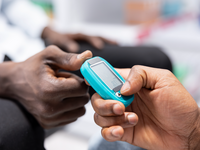
Social Partner Effects on Type 2 Diabetes Prevention, Management, and Spillover Health Outcomes: Single-Arm Pre-Post Pilot Intervention

Background: South Asian Americans are at high risk of prediabetes and type 2 diabetes mellitus (T2DM). South Asian populations are typically close-knit communities, with support networks that could be leveraged in lifestyle interventions. Objective: This study was a single-arm, pre-post pilot study to evaluate the feasibility and efficacy of a culturally tailored telehealth intervention for South Asian adults with prediabetes or T2DM and their social partners (trusted household members) who agreed to complete preintervention and postintervention surveys. Methods: Participants attended 5-hour-long health education sessions delivered in English and Bengali. Participant outcomes included pre-post changes in hemoglobin A1c (HbA), BMI, blood pressure (BP), self-reported minutes of physical activity, and dietary choices at baseline and at the 6-month follow-up. For social partners, outcomes included pre-post survey changes in physical activity and dietary choices. We used Pearson chi-square tests and paired 2-tailed tests to compare baseline measures with postintervention outcomes. Results: This pilot study included 54 participants and 106 social partners in Atlanta, Georgia, between March 2021 and November 2023. All participants were Bangladeshi and spoke native Bengali. Social partners were most commonly participants’ children (39/106, 36.8%) or spouses (34/106, 32.1%). The participant baseline HbA level was 7.5% (SD 1.48%), which decreased by −0.83% (95% CI 0.42%-1.30%; <.001). Participants also improved systolic BP by −5.8 mm Hg (95% CI 0.196-11.37; =.04) with no change in diastolic BP (−0.451 mm Hg, 95% CI −1.49 to 2.39; =.60) or BMI (−0.642 kg/m, 95% CI −1.87 to 0.59; =.17). Compared with baseline, 39% more participants exercised at least 150 minutes weekly (<.001), but there was no difference in self-reported fruit and vegetable intake. However, the social partners increased fruit and vegetable intake (=.02), decreased soda intake (<.001), and increased daily moderate exercise (=.003). Conclusions: Including social partners in T2DM prevention and management is feasible and potentially beneficial, but comparative studies are needed to determine the incremental effects of social partners’ participation vs individual-focused lifestyle interventions. Trial Registration: ClinicalTrials.gov NCT05275231; https://clinicaltrials.gov/study/NCT05275231

CiteSentinel Launched to Detect and Prevent AI Hallucinations in Legal Citations

Legal tech startup BrentWorks reports that it has launched CiteSentinel, a dedicated platform built specifically to detect and prevent AI hallucinations in legal citations, including those related to biotechnology. The tool scans legal documents and flags case law, statutes, and legal authorities that may be fabricated, misstated, or otherwise erroneous, before they reach a judge, according to the company.

Courts across the country are increasingly sanctioning attorneys who submit briefs containing invented case citations, a well-documented byproduct of generative AI drafting tools that produce authoritative-sounding, but entirely fictional, legal authority, says BrentWorks co-founder Brent Britton, a technology attorney and MIT-trained engineer. CiteSentinel was designed to close that verification gap, giving attorneys a fast and easy way to confirm that every citation in a filing corresponds to a real case, a real statute, and a real legal authority, he adds.

“The legal profession is learning, in very public ways, that AI doesn’t just make mistakes, it confidently lies to your face,” continues Britton. “CiteSentinel is about restoring trust. It lets lawyers move fast with the irresistible efficiencies of generative AI while still filing documents reciting authorities they can stand behind. It also enables them to scan opposing counsel’s documents, giving them a competitive edge in the courtroom.”

AI hallucinations
When a brief containing fabricated citations reaches the court, the question of who drafted it quickly becomes secondary to the question of whose name is on it. [BestForBest/Getty Images]

Many attorneys who do not personally use AI to draft documents are discovering they have a problem anyway, Britton points out. Opposing counsel may have used AI. Co-counsel may have. Contract attorneys and paralegals almost certainly have access to it and may be using it without disclosing that fact. When a brief containing fabricated citations reaches the court, the question of who drafted it quickly becomes secondary to the question of whose name is on it, he explains.

CiteSentinel lets attorneys scan any document, their own, a colleague’s, or an adversary’s, for citation errors before those errors become their problem, notes Britton. Attorneys who review opposing counsel’s filings with CiteSentinel gain an additional advantage: the ability to identify and challenge citations to authorities that simply do not exist, he says.

Unlike traditional research platforms that focus on finding more information, states Britton, CiteSentinel was created to confirm that the law cited in a document is real. Attorneys can scan:

  • Their own AI-assisted drafts, before filing
  • Submissions from co-counsel, contract attorneys, and support staff
  • Opposing counsel’s filings, for strategic advantage
  • Any document where citation accuracy carries professional or ethical weight

BrentWorks’ other co-founder is Brent Hunter, a technologist who applied neural networks to finance in 1993. He cites CiteSentinel as the first in a series of products the company will be releasing for the practice of law in the age of AI.

Both BrentWorks’ co-founders agree that AI hallucinations pose particular risks in biotechnology-related legal matters because cases often depend on highly technical evidence, including patent claims, prior art, clinical trial data, FDA regulatory history, scientific publications, expert witness testimony, freedom-to-operate analyses, and licensing agreements. In this context, an AI system could invent scientific references that do not exist, mischaracterize FDA guidance documents, fabricate patent precedents, incorrectly summarize clinical trial results, or generate inaccurate prior-art searches. Such errors can undermine legal arguments, regulatory submissions, and intellectual property strategies.

“Biotech litigation is where AI hallucinations turn genuinely dangerous. You have a system trained to sound authoritative now injecting phantom patent precedents and counterfeit clinical data into documents that determine whether a drug reaches patients or a patent survives challenge,” explains Brent Britton. “In this domain, where the technical record is everything, a ghost FDA guidance document or a fabricated prior art reference can unravel an entire legal strategy and years of work along with it. The law has always been a high-stakes information game, and right now the machines are playing it with synthetic cards.”

As CiteSentinel expands beyond just case citation verification, “it will be the truth layer that keeps all players honest,” he predicts.


The post CiteSentinel Launched to Detect and Prevent AI Hallucinations in Legal Citations appeared first on GEN – Genetic Engineering and Biotechnology News.

Feasibility study examining the short-term effects of Sonic Augmentation Technology™

BackgroundThe current study evaluated Sonic Augmentation Technology™ (SAT), a novel, Polyvagal-informed probe that incorporates continuously varying and acoustic features modeled on patterns of autonomic regulation into musical soundscapes. Specifically, the study examined whether SAT led to improvements in self-reported biobehavioral state (e.g. relaxation, breathing slowly, interoceptive clarity), and whether individuals with poorer baseline functioning (i.e., increased autonomic reactivity and anxiety/depression symptoms) reported greater improvements in biobehavioral state following SAT. It also sought to determine whether there would be changes in endogenous oxytocin level, and whether individuals who exhibit larger gains in biobehavioral state would show greater increases in oxytocin.MethodsThe current study examined data obtained from four samples, with 72 participants providing data virtually and 41 participants providing data in-person. Participants completed self-report measures of biobehavioral state, autonomic reactivity, and psychiatric symptomatology (i.e. anxiety and depression). Salivary oxytocin (pg/mL) was assessed via enzyme immunoassay in the participants who completed the study in person, with samples collected pre-and post-SAT.ResultsFollowing SAT, participants reported significant improvements in total biobehavioral state and the low and high arousal subscales. We also found that participants scoring above the cutoff for autonomic reactivity, anxiety, and depression reported greater increases in total biobehavioral state and decreases in the high arousal subscale. Greater decreases in the low arousal subscale were observed in the participants with increased anxiety. The subset of participants with salivary oxytocin samples exhibited increases in salivary oxytocin.ConclusionsThus, our results support the potential of SAT as a low-cost, non-invasive auditory probe for improving wellbeing, especially for clinical populations experiencing autonomic dysregulation and psychiatric difficulties, such as anxiety and depression.Clinical trial registrationClinicalTrials.gov, identifiers NCT06710886, NCT06902506, NCT06580119, and NCT07065227.

Single-cell spatial pharmacobiology for imaging antibody-based therapies in solid tumors

Nature Biotechnology, Published online: 08 June 2026; doi:10.1038/s41587-026-03171-8

We have developed single-cell spatial pharmacobiology (SSP), which combines in situ imaging of a systemically infused fluorescent therapeutic antibody with high-plex spatial proteomics. Applied to head and neck and pancreatic tumors from patients treated in phase 1 trials, SSP revealed marked spatial heterogeneity in antibody delivery and target engagement, which was shaped by conserved stromal barriers.

Post-adjuvant chemotherapy in ctDNA-positive patients with resected colorectal cancer: a randomized phase 3 trial

Nature Medicine, Published online: 08 June 2026; doi:10.1038/s41591-026-04428-0

In the randomized, double-blind phase 3 ALTAIR trial, patients with resected colorectal cancer who became positive for circulating tumor DNA during post-adjuvant surveillance received trifluridine/tipiracil hydrochloride therapy, which did not significantly prolong disease-free survival compared with placebo.

STAT+: Combination of pancreatic cancer drugs from Tango, Revolution leads to high response rate

Revolution Medicines’ experimental pancreatic cancer drug has been the star of the oncology field in recent weeks, with new data showing the medicine produced unprecedented outcomes for patients. 

Its next act — this time as a co-lead — was revealed Monday.

Tango Therapeutics said that in an early-stage clinical trial, a combination of its drug vopimetostat along with Revolution’s daraxonrasib led to a durable responses in the large majority of pancreatic cancer patients who received both medicines. 

Continue to STAT+ to read the full story…

Survodutide in adults with obesity and metabolic dysfunction-associated steatotic liver disease: SYNCHRONIZE-MASLD, a randomized, double-blind, placebo-controlled phase 3 trial

Nature Medicine, Published online: 07 June 2026; doi:10.1038/s41591-026-04479-3

As presented at the American Diabetes Association Meeting, in this phase 3 trial, weekly subcutaneous injections of survodutide, a glucagon receptor/GLP-1R dual agonist, lowered liver fat content and body weight compared to placebo in adults with obesity and at-risk metabolic dysfunction-associated steatotic liver disease (MASLD).

STAT+: New data may cast doubt on competitiveness of Boehringer’s obesity drug

New data on Boehringer Ingelheim’s obesity candidate suggest the drug may be helpful in cutting liver fat, but it’s not clear how competitive the treatment would be since it appears less efficacious and less tolerable than drugs on the market.

In a Phase 3 obesity trial, patients on the highest dose of the weekly injectable, called survodutide, lost 13% of their weight after 76 weeks, compared with 5% in the placebo group, according to data presented Sunday at the annual meeting of the American Diabetes Association and published in the New England Journal of Medicine. That’s lower than the rate of weight loss seen in pivotal trials of Novo Nordisk’s Wegovy and Eli Lilly’s Zepbound. 

Patients on survodutide, which targets the GLP-1 and glucagon hormones, did lose up to 63% of their liver fat, compared with 25% in the placebo group. Glucagon-targeting drugs are thought to be particularly helpful in cutting liver fat, since there are glucagon receptors in the liver.

Continue to STAT+ to read the full story…