

BackgroundThis meta-analysis aimed to systematically evaluate the effects of exercise interventions on sleep quality in patients with depression and to explore the dose–response relationships of key intervention parameters.MethodsA comprehensive search was conducted in PubMed, Web of Science, Embase, Scopus, and the Cochrane Library to identify randomized controlled trials (RCTs). Standardized mean differences (SMDs) and 95% confidence intervals (CIs) were calculated using a random-effects model. Subgroup and sensitivity analyses were performed to examine potential dose–response relationships.ResultsA total of 17 publications, including 19 randomized controlled trial comparisons and 1,457 participants, were included in this systematic review and meta-analysis. Pooled estimates indicated that exercise interventions significantly improved sleep quality [SMD = −0.37, 95% CI: −0.48 to −0.27]. Dose–response modeling suggested that exercise doses around 312.75 MET·min/week may be associated with greater improvements [Hedges’ g = −0.51, 95% CI: −0.71 to −0.31]. Subgroup analyses suggested that mind–body exercise [SMD = −0.49, 95% CI: −0.63 to −0.35], durations of 9–12 weeks [SMD = −0.49, 95% CI: −0.74 to −0.24], fewer than two sessions per week [SMD = −0.47, 95% CI: −0.65 to −0.29], and sessions longer than 90 minutes [SMD = −0.42, 95% CI: −0.66 to −0.18] may be associated with favorable changes.ConclusionsExercise interventions may improve sleep quality in individuals with depression, with potential benefits at low doses. These findings support individualized exercise prescriptions, but larger multicenter RCTs with long-term follow-up are needed to confirm the dose–response pattern and subgroup findings.Systematic Review Registrationhttps://www.crd.york.ac.uk/prospero/display_record.php?ID=CRD420251105568, identifier PROSPERO (CRD420251105568).
Post-intracerebral hemorrhage depression comorbid with obstructive sleep apnea and REM sleep behavior disorder: a case report and literature review
We report a 63-year-old male with post-cerebral hemorrhage depressive disorder. Previous adequate-dose, full-course antidepressant treatment yielded no significant improvement in depression, anxiety, or sleep disturbance. Detailed history taking and polysomnography (PSG) confirmed comorbid severe obstructive sleep apnea hypopnea syndrome (OSAHS) and rapid eye movement sleep behavior disorder (RBD). Without adjusting antidepressants, the patient first received continuous positive airway pressure (CPAP) for OSAHS, followed by individualized pharmacotherapy for RBD. With the improvement of sleep architecture and respiratory events, obvious remission of depressive and anxiety symptoms and substantial recovery of daytime function were observed. This case emphasizes the bidirectional relationship between sleep and mood disorders. For post-stroke depression (PSD) poorly responsive to antidepressants, active sleep evaluation, multidisciplinary collaboration, and targeted management of comorbid sleep disorders may be crucial to enhance therapeutic efficacy.
<![CDATA[Track latest neuropsychiatry breakthroughs: phase 3 narcolepsy study launches, new depression and PTSD therapies advance, and FDA approvals reshape care.]]>
This Study Aims to Compare the Efficacy and Safety of Lumateperone and Cariprazine in Patients With Bipolar I Depression Using Montgomery-Åsberg Depression Rating Scale (MADRS) and Clinical Global Impression Bipolar Severity Scale (CGI-BP-S) and Recording Treatment Emergent Adverse Effects.
Conditions: Bipolar 1 Depression
Interventions: Drug: Lumateperone; Drug: Cariprazine
Sponsors: Watim Medical & Dental College
Not yet recruiting
Interventions: Drug: Lumateperone; Drug: Cariprazine
Sponsors: Watim Medical & Dental College
Not yet recruiting
Clinical Risk Score Prediction for Risk of Dementia Among Late-life Population With Depression
Conditions: Alzheimer Dementia (AD); Dementia; Late Life Depression (LLD); Risk Scores; Prediction; Chinese Population; Obs e r; Observational Cohort Study; External Validation
Interventions: Other: No Intervention: Observational Cohort
Sponsors: Second Affiliated Hospital of Nanchang University
Recruiting
Interventions: Other: No Intervention: Observational Cohort
Sponsors: Second Affiliated Hospital of Nanchang University
Recruiting
<![CDATA[Largest real-world analysis shows Deep TMS cuts PTSD and depression symptoms in comorbid patients; promising but not FDA-cleared yet.]]>
Association between objective sleep structure and suicidal ideation in patients with depression: a study based on polysomnographic regression and cluster analysis
BackgroundDepression is a common mental disorder, and current suicidal ideation (SI) is a clinically important symptom. Sleep disturbance is common in depression, but the relationship between objective sleep architecture and current SI remains unclear. This study examined associations between objective sleep structure and current SI and explored whether sleep-clinical clustering could support exploratory SI stratification.Methods287 patients meeting DSM-5 criteria for depressive disorder underwent clinical assessment and overnight polysomnography (PSG). Current SI was assessed using item 3 of the HAMD-17. Binary logistic regression evaluated factors associated with current SI. K-Means clustering (K = 3) was performed using standardized HAMD score, PSQI score, AHI, total awakenings, N3%, R%, and sleep efficiency. Quantitative cluster validation, sensitivity analyses excluding HAMD from clustering, and ROC-based performance metrics were additionally conducted.ResultsCurrent SI was present in 50.52% (145/287) of patients. In the individual-variable regression model, only HAMD total score was independently associated with current SI (OR = 1.683, p < 0.001). Cluster analysis identified three subgroups with distinct current SI rates: Cluster 1 (deep-sleep dominant, 37.04%), Cluster 2 (high-arousal-apnea, 70.37%), and Cluster 3 (low-arousal-subjective insomnia, 60.80%). The K = 3 solution showed WSS = 1450.71, mean silhouette = 0.204, and Davies-Bouldin index = 1.679. In the demographic-adjusted model, membership in Clusters 2 + 3 was associated with current SI (OR = 3.152, 95% CI: 1.883-5.274, p < 0.001; AUC = 0.700, 95% CI: 0.639-0.760). When HAMD was excluded from clustering, the association remained (OR = 2.669, 95% CI: 1.598-4.458, p < 0.001), whereas additional adjustment for HAMD total score attenuated the primary cluster association (OR = 0.842, 95% CI: 0.411-1.725, p = 0.639).ConclusionsDepression severity was the primary factor associated with current SI. PSG-derived sleep-clinical clusters may help characterize heterogeneous presentations of current SI, but their incremental value beyond depressive severity should be interpreted as exploratory and validated in larger longitudinal samples.
Relationship of Peripheral Inflammatory and Neuroprotective Biomarkers With Response to Intermittent Theta Burst Stimulation in Treatment-Resistant Depression
Conditions: Treatment-resistant Depression (TRD); Major Depression
Interventions: Device: Intermittent Theta Burst Stimulation (iTBS)
Sponsors: Gulhane Training and Research Hospital
Not yet recruiting
Interventions: Device: Intermittent Theta Burst Stimulation (iTBS)
Sponsors: Gulhane Training and Research Hospital
Not yet recruiting
Leveraging mHealth to Promote Opioid Use Recovery and Mental Health Among Residents of a Medium-Sized Midwestern City
Conditions: Opioid Use; Stimulant Use; Depression and Anxiety Symptoms
Interventions: Behavioral: uMAT-R + enhanced community engagement; Behavioral: Original uMAT-R supplementary mHealth recovery intervention
Sponsors: Washington University School of Medicine
Recruiting
Interventions: Behavioral: uMAT-R + enhanced community engagement; Behavioral: Original uMAT-R supplementary mHealth recovery intervention
Sponsors: Washington University School of Medicine
Recruiting
Rhythm-Based Video Games: Exploring the Cognitive and Learning Potential
By Florencia Assaneo, PhD, Research Fellow, Stavros Niarchos Foundation (SNF) Global Center for Child and Adolescent Mental Health at the Child Mind Institute
Educational challenges for Latin American children
Primary education in Latin America has faced a steady decline over recent decades, contributing to what many organizations now describe as an educational crisis. International institutions such as the Economic Commission for Latin America and the Caribbean (ECLAC), the United Nations Educational, Scientific and Cultural Organization (UNESCO), as well as the World Bank Group have all called for urgent action to address worsening learning outcomes across the region. The situation is particularly concerning in Mexico. Results from the 2022 Programme for International Student Assessment showed that Mexico scored well below the Organization for Economic Co-operation and Development (OECD) average in reading, mathematics, and science — placing the country among the lower-performing educational systems evaluated globally.
The consequences of this crisis extend far beyond the classroom. Educational difficulties during childhood are closely linked to long-term social and mental health outcomes. Research has shown that additional years of basic education are associated with lower rates of depression and anxiety (Kondirolli & Sunder, 2022), as well as higher levels of resilience and perceived control over one’s life (Niemeyer et al. 2019). In this sense, poor academic performance in primary school can have lasting effects that continue into adulthood, limiting employment opportunities, increasing vulnerability, and negatively affecting overall well-being.
Can rhythm-based video games improve learning?
Open-access interventions that strengthen children’s cognitive and academic abilities could have enormous value in low- and middle-income countries, where educational resources are often limited. Our work explores whether the ability to coordinate movements with rhythmic sounds — such as clapping, tapping, or dancing to music — can be leveraged to support children’s learning and cognitive development through engaging digital tools.
Over the last decade, multiple studies have shown that children who are better at synchronizing their movements to rhythm also tend to perform better on a wide range of cognitive and language-related tasks. These include reading, phonological awareness, processing speed, rapid naming, and other foundational abilities linked to academic success. Researchers have assessed these rhythmic coordination skills in multiple ways, from walking to the beat of music to tapping along with a steady rhythm or coordinating movements while playing musical instruments. Across these different approaches, one result consistently emerges: children who are better at aligning movement with sound also tend to show stronger cognitive performance.
Building on these study findings, my current fellowship project, supported by the Stavros Niarchos Foundation (SNF) Global Center for Child and Adolescent Mental Health at the Child Mind Institute, seeks to better understand how these rhythm synchronization abilities develop during childhood and whether they could eventually be strengthened through interactive digital interventions. Specifically, we are studying the developmental stage at which these abilities become established in children, and whether individuals with stronger rhythmic coordination also show advantages in attention and language-related skills. Understanding when these abilities emerge is particularly important because it may help identify the developmental window during which they are most malleable and therefore most responsive to training or intervention.

In parallel, we are using functional magnetic resonance imaging (fMRI) — a non-invasive brain imaging technique that allows us to observe which brain regions become active during different tasks — to explore the relationship between rhythmic synchronization and the brain’s reward system. Importantly, these same reward-related regions are also strongly engaged during video game play. If the pathways within this reward system are similarly activated during rhythmic coordination, this could mean that children who initially struggle to synchronize movements with sound may be able to strengthen these abilities through a carefully designed video game experience. One possible future application could involve an open-access mobile game in which children synchronize taps or hand movements to musical rhythms while progressing through increasingly challenging levels and unlocking rewards or visual customizations.
Overall, the current project seeks to generate the scientific evidence necessary to determine whether rhythm-based digital interventions could become a viable tool for supporting children’s cognitive development. This work has the potential to contribute to the future development of accessible and scalable tools that can strengthen foundational cognitive skills linked to academic performance in children. These tools can be applied to children in Mexico and, more broadly, across low- and middle-income countries (LMICs), expanding access to education resources and interventions.
The power of collaboration between the SNF Global Center and UNAM
Our laboratory at Universidad Nacional Autónoma de México (UNAM) is primarily dedicated to basic neuroscience research. Based at UNAM’s campus in Querétaro, our team brings together researchers and students from different disciplines — including neuroscience, psychology, physics, engineering, and data analysis — united by a shared interest in understanding how rhythm and brain dynamics shape human cognition and behavior. Here, we have access to excellent infrastructure for fundamental research, including neuroimaging facilities and high-performance computational resources. However, translating basic scientific discoveries into interventions capable of improving people’s daily lives is often much more challenging and requires strong cross-sector collaboration.
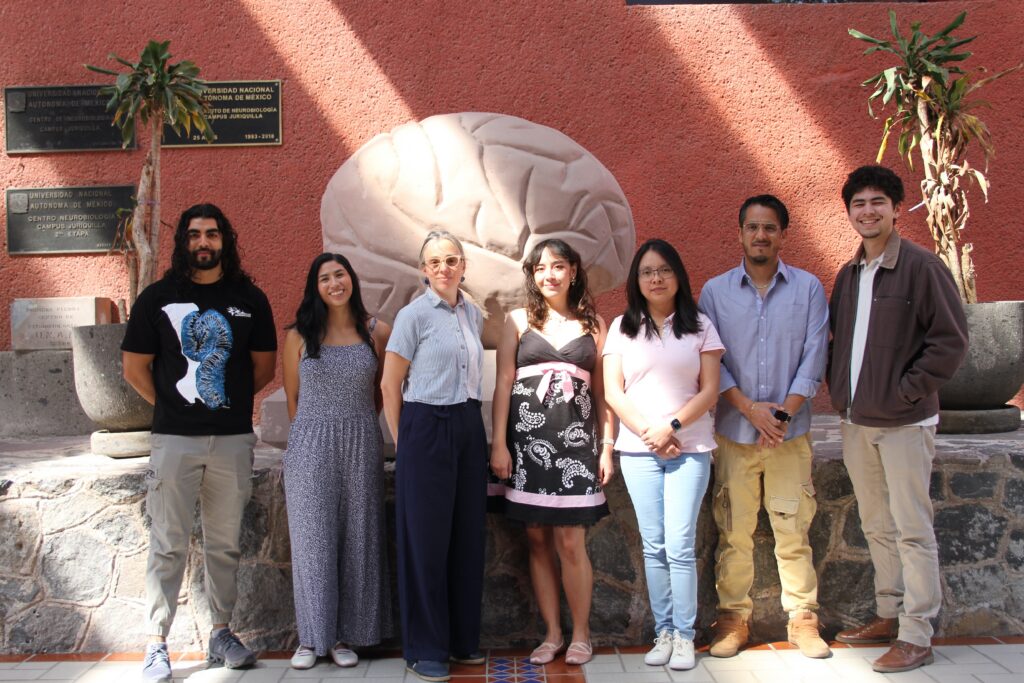
The work I’m conducting as part of the SNF Global Center Research Fellowship has encouraged us to begin thinking beyond the laboratory. This current fellowship has given us the opportunity to test the core scientific assumptions behind our proposed open-access intervention. If the pilot project proves successful, the next stages of the work will become considerably more ambitious, involving both the technological development of the intervention and its large-scale implementation and evaluation in school settings. Advancing toward those goals will likely require the support of larger international organizations and cross-sector collaborations. In this context, the opportunities provided by the SNF Global Center at the Child Mind Institute to share, disseminate, and give visibility to our work are extremely valuable, helping create the connections and momentum necessary to move from foundational research toward real-world impact.
More broadly, this kind of collaboration highlights the importance of building bridges between global institutions and local research communities. By combining international support with local expertise and close engagement with schools and communities, it becomes possible to develop solutions that are both scientifically rigorous and genuinely connected to the realities of the populations they aim to serve.
Learn more about the Research Fellowship
The post Rhythm-Based Video Games: Exploring the Cognitive and Learning Potential appeared first on Child Mind Institute.