

Frimley Health NHS Foundation Trust has become one of only seven NHS organisations in the UK to achieve HIMSS EMRAM Stage 6 accreditation.
Heat waves mess with your brain. Scientists are trying to figure out why.
It’s been hot in London this week. Really hot. A dangerous heat wave has hit Western Europe. Yesterday, the UK recorded its highest ever June temperature at 36.1 °C (about 97 °F). But as the weather app on my phone confirmed, it felt like 39 °C.
It’s frightening that we are seeing such temperatures in the UK in June. According to the Met Office, the country’s national weather and climate service, June temperatures peaked at an average 19 °C (66 °F) in England between 1991 and 2020. Across Europe, the heat wave is likely to cause thousands of deaths. There will be other awful consequences for agriculture, infrastructure, and the health system.
But this week I want to look at what the heat does to our minds and brains. Personally, I’ve found it almost impossible to think straight. The heat is distracting and my mind is foggy. I dread to think about the conditions of people who work outdoors, in even hotter regions.
It’s not just exhaustion and confusion. The effects of heat on the brain can be deadly. And researchers are still trying to figure out why.
Studies have confirmed that as temperatures rise, people seem to get more irritable and more violent. Most of these studies are based on associations, though. It’s difficult to directly study how a heat wave might affect our thinking, says Catherine Thompson, a cognitive psychologist at Liverpool Hope University.
She has been studying the effects of extreme heat on firefighters instead. It’s easier to measure people’s cognitive skills before and after they undergo scheduled training that involves entering a burning building.
It’s early days, but the team found that firefighters found it harder to focus and control their attention immediately after heat exposure—something people in heat waves can empathize with, I’m sure.
The firefighters’ skills returned to normal after 20 minutes or so of cooling down. But they’d experienced just 15 minutes of intense heat exposure. Thompson doesn’t know what the effects of living through a days-long heat wave might be—or how long they’ll last. Figuring that out might involve shipping cognitive test kits to thousands of people during the few days’ notice of an impending heat wave. “My guess [is] that no one’s done it because it’s just so difficult to do,” says Thompson.
Still, researchers can learn about some of the impacts of heat waves through studies after the fact. And those studies suggest that the heat seems to have more disastrous outcomes for people with mental-health disorders.
Those outcomes become apparent when temperatures rise above what is considered typical for a given region. “There seems to be a correlation where the hotter it gets, especially during the hottest times of the year, the worse the mental-health outcomes,” says Joshua Wortzel, who directs the Heat-Mind Lab at Hartford HealthCare in Connecticut.
In a study published in 2023, Emma Lawrence at the University of Oxford, who studies the effect of climate change on mental health, and her colleagues reviewed the evidence linking mental-health outcomes to ambient outdoor temperatures. They found that during heat waves, there was a 9.7% increase in the rate of hospital admissions for people with such conditions.
“People who live with mental-health conditions are among the most susceptible to the physical impacts of heat,” says Lawrence. People with schizophrenia were found to have been three times more likely to die during the record-breaking heat wave that affected Canada in 2021, for example.
In order to protect people, we need a better understanding of the mechanisms underlying these effects. After all, a lot of things change when it’s very, very hot. Some people may end up stuck indoors, avoiding outdoor play and exercise, and it can be difficult to get a good night of sleep, for example. Sleep, socializing, and exercise are all really important for our mental health.
But whether unusual heat does something specific to our brains is, as Wortzel puts it, “the million-dollar question.”
Research in lab animals suggests that excessive heat can alter the way chemical signals work in our brain. The levels of neurotransmitters like serotonin, for example, seem to increase when rats and mice are exposed to high temperatures, according to multiple studies. The heat may also interfere with the way networks in our brains communicate with each other. It might affect the way oxygen reaches our brain cells.
“There are so many biological reasons why brains may be negatively affected by heat,” says Wortzel.
Emerging research suggests that for whatever reason, children and young people are among the most vulnerable. In research published earlier this week, Wortzel and his colleagues saw a 2.97% increase in the suicide rate among people in the US aged 15 to 24 for every 1 °C increase in average monthly temperature. That’s more than double the increase seen in people over the age of 24 (which is concerning in its own right).
Other work hints that heat exposure might have long-term consequences for children’s brain development. Babies who were exposed to either extreme heat or cold appeared to have altered white matter by the time they were nine to 12 years old—although it’s not clear how these impacts might affect an individual child.
“It seems that extreme temperature exposure for very young children may affect their brain development,” says Lawrence, who spoke to me from Oxford. She was meant to be in London for Climate Action Week, but her event, which focused on extreme heat, ended up being canceled … owing to the extreme heat.
We are living through the effects of climate change. And that brings a new urgency to the question of how heat affects our brains. Children born in 2020 are predicted to experience around seven times the number of heat waves their grandparents did, says Lawrance. “[We] need to be serious about adapting to a warming world.”
This article first appeared in The Checkup, MIT Technology Review’s weekly biotech newsletter. To receive it in your inbox every Thursday, and read articles like this first, sign up here.
Opinion: Joseph Fraumeni Jr., pioneering cancer genetics researcher, devoted his life to families like mine
When Joe Fraumeni was a pre-med student in the 1950s, he accompanied a group that visited Massachusetts General Hospital to sit in an amphitheater and watch a patient being cut open for an abdominal operation. As he told me many years later, Joe got so queasy from the sight that he had to walk out and decided not to become a surgeon.
How fortunate we were that he didn’t.
NHS hospitals declare critical incidents as heat causes IT failures
NHS hospitals have declared critical incidents and reported failures affecting cooling systems, diagnostic equipment and IT due to the heat.
SEEG-Guided DBS for Schizophrenia
Conditions: Schizophrenia Disorders; Schizo Affective Disorder
Interventions: Procedure: SEEG implantation; Device: Deep brain stimulation
Sponsors: Ruijin Hospital
Recruiting
Interventions: Procedure: SEEG implantation; Device: Deep brain stimulation
Sponsors: Ruijin Hospital
Recruiting
Feasibility and Effectiveness of an AI-Powered Carbohydrate Counting Educational Platform to Support Parents of Children With Type 1 Diabetes: A Multicentre Randomized Controlled Trial
Conditions: Type 1 Diabetes Mellitus
Interventions: Behavioral: AI-Powered Carbohydrate Counting Educational Platform
Sponsors: Sultan Qaboos University; Applied Science Private University; Al Jalila Children’s Specialty Hospital
Not yet recruiting
Interventions: Behavioral: AI-Powered Carbohydrate Counting Educational Platform
Sponsors: Sultan Qaboos University; Applied Science Private University; Al Jalila Children’s Specialty Hospital
Not yet recruiting
Patient Perceptions and Acceptance of Blockchain-Based Health Data Sharing in Oncology: Cross-Sectional Survey
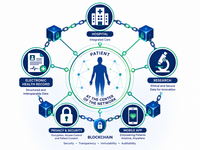
Background: Fragmentation of electronic health records in oncology hinders coordinated care, delays diagnoses, and limits therapeutic personalization. Blockchains promise to promote secure, interoperable, and patient-centered data governance; however, patient perceptions of blockchains remain underexplored, particularly in middle-income countries such as Brazil. Objective: We assessed opinions, attitudes, and willingness among patients with cancer to digitally share clinical information and the feasibility of applying blockchains to restructuring secure health data sharing in the Brazilian public health context. We had three research questions: (1) What is the level of digital health tool acceptance among patients with cancer in Brazil? (2) Which sociodemographic factors are associated with willingness to share health data? (3) Are blockchains feasible and acceptable for restructuring secure oncology data sharing? Methods: An exploratory, descriptive, cross-sectional self-report survey was conducted at Hospital Santa Izabel, a national oncology reference center in Salvador, Bahia, Brazil, between September and November 2023. A convenience sample of 110 outpatients with cancer was recruited systematically; data were collected via a self-administered questionnaire. The 20-item instrument, developed de novo and validated via expert panel and pilot testing, covered 5 content domains yielding 3 composite scoring domains: self-management, adherence, and governance. We used Cronbach α to assess internal consistency, independent 2-tailed tests, 1-way ANOVA, and Pearson correlations to compare domain scores across sociodemographic groups, and a chi-square goodness-of-fit test to examine trust proportions across recipient types. Results: We received sufficiently complete responses from 94.5% (104/110) of patients. The sample was predominantly female (63/98, 64.3%), self-identified as (mixed-race; 64/98, 65.3%), and lower income (55/96, 57.3% earned less than twice the minimum wage). Acceptance of technology was high: 86.4% (95/110) would use health apps and 89.1% (98/110) expressed interest in prevention-focused applications. Trust in data sharing varied significantly across recipient types (=210.4; <.001): 79.1% (87/110) trusted health care professionals, 51.8% (57/110) hospitals, 15.5% (17/110) the pharmaceutical industry, and 10% (11/110) the government. Anonymization and encryption significantly increased willingness to share (92/110, 83.6%). Younger patients (18‐59 years) showed significantly higher adherence scores than those aged ≥60 years (mean 76.49, SD 19.16 vs mean 65.83, SD 26.66; =2.29; =.02). Domain reliability was good to excellent (Cronbach α=0.8807 [adherence], 0.8504 [self-management], and 0.7576 [governance]). Conclusions: Patients with cancer in Brazil demonstrated high acceptance of digital health tools and openness to data sharing when privacy, security, and governance are guaranteed. This supports the feasibility of blockchain-based health data management systems, provided they incorporate patient-centered principles, digital inclusion strategies, and robust governance aligned with Brazilian regulations (the General Data Protection Law) and the Unified Health System (Sistema Único de Saúde) infrastructure. Importantly, patient support reflected acceptance of blockchain’s functional principles, data security, anonymization, and auditability rather than familiarity with the technology itself, a distinction with direct implications for future implementation studies. International Registered Report Identifier (IRRID): RR2-10.2196/89278
Omega 365 platform selected for Frimley hospital programme
Frimley Health NHS Foundation Trust has selected Omega 365’s system to support its major hospital development programme.
What will Burnham as PM mean for NHS IT?
Jon Hoeksma examines what two former health secretaries, Andy Burnham and Wes Streeting, running the country might mean for NHS IT investment.
Oxford AI studies secure NIHR funding to tackle NHS waiting times
Two studies have received funding from the National Institute for Health and Care Research (NIHR) as part of an £8 million initiative supporting AI projects aimed at reducing NHS waiting times and improving patient care. Through its Invention for Innovation (i4i) programme, the NIHR awarded £8,136,409 to six projects testing a range of AI and […]