

ObjectiveInsomnia Disorder (ID) is associated with significant health burdens. First-line treatments are limited by accessibility or side effects, necessitating alternative approaches. rTMS, a noninvasive neuromodulation technique, has shown promise in treating various neuropsychiatric disorders by modulating cortical excitability. This comprehensive meta-analysis explores the effect of rTMS on ID and identifies possible factors that influence it.MethodsA comprehensive search of the Cochrane Library, Embase, Web of Science, PubMed, CNKI, and Wanfang databases identified RCTs evaluating the effects of rTMS on insomnia disorder. Data synthesis and subgroup analysis were performed via SMD, WMD, relative risk (RR), and 95% CI to evaluate the effects of rTMS and its influencing factors. The review protocol was prospectively registered in PROSPERO (CRD42024626833).ResultsNineteen studies contributed 23 trials involving 1,690 adult participants. The rTMS group demonstrated markedly improved sleep quality compared with sham rTMS recipients in individuals with insomnia disorder. (PSQI total scores; ISI; p < 0.001); (PSG (SE); p = 0.003). Combined rTMS and medication were more effective than medication alone. (PSQI total scores; p = 0.003). In the subgroup analysis, after excluding a study with high heterogeneity, the rTMS cohort showed greater improvement in sleep quality than the other treatment groups. (PSQI total scores; p = 0.03).ConclusionIndependent rTMS and rTMS-medication combinations significantly improve sleep patterns and rest quality in patients with Insomnia Disorder. The safety and efficacy of LF-rTMS are also significant. The duration of the disease, treatment duration, and stimulation site may influence the sleep quality of patients with ID.
Exercise interventions for depressive symptoms in adults with lung and digestive cancer: a meta-analysis of randomized controlled trials
BackgroundDepressive symptoms are common among patients with cancer and can substantially impair quality of life, treatment adherence and overall well-being. Although exercise has been increasingly recognised as a promising non-pharmacological strategy for alleviating depression in oncology settings, existing evidence has focused predominantly on breast cancer, with limited attention to lung and digestive cancers. This meta-analysis aimed to evaluate the effects of exercise interventions on depressive symptoms in adults with lung and digestive cancer.MethodsA systematic search was conducted in PubMed, Web of Science, Embase, Cochrane Library and Scopus from database inception to March 2026. Randomized controlled trials investigating the effects of exercise interventions on depressive symptoms in adults with lung or digestive cancer were included. The primary outcome was depressive symptoms measured using validated instruments. Subgroup analyses were performed according to intervention format, exercise type and training frequency. Risk of bias was assessed using the Cochrane Risk of Bias tool version 1.ResultsEight randomized controlled trials were included in the meta-analysis. Baseline analysis showed no significant difference in depressive symptoms between the exercise and control groups before intervention. Post-intervention meta-analysis demonstrated that exercise significantly reduced depressive symptoms compared with control conditions (SMD = -0.45, P = 0.02), Although substantial heterogeneity was observed. Individually delivered programmes, walking-based exercise and moderate-frequency training (3–5 times per week) showed numerically larger effect estimates.ConclusionsExercise interventions may reduce depressive symptoms in adults with lung and digestive cancer and represent a promising adjunctive strategy for psychological care in these populations. Although subgroup differences were not statistically significant, certain intervention characteristics may be associated with greater benefit. Further large-scale, high-quality randomized trials are needed to confirm these findings and to establish the optimal exercise prescription for reducing depressive symptoms in adults with lung and digestive cancer.Systematic review registrationhttps://www.crd.york.ac.uk/prospero/, identifier CRD420261336578.
The efficacy of acupuncture for depression-associated chronic pain: a systematic review and meta-analysis
ObjectiveThe comorbidity of pain and depression is prevalent, adding difficulty to the treatment of depression. This systematic review with meta-analysis aims to determine the efficacy and safety of acupuncture in treating depression-associated chronic pain (DACP).MethodsA comprehensive search was conducted across four international databases, namely PubMed, Embase, Web of Science, and the Cochrane Library, along with four regional databases, including Wanfang Data, CNKI, VIP database, and SinoMed, from inception to March 2025. The Cochrane Risk of Bias 2 tool was utilized to assess risk of bias in the included research articles, and the Grading of Recommendations Assessment, Development, and Evaluations system was employed to evaluate the certainty of evidence. Meta-regression analysis was performed to explore the influence of patient age and treatment duration on the study results, and sensitivity analysis was used to verify the stability of the results. The publication bias was evaluated when the number of included studies exceeded ten. All data analyses were completed using Stata15.1.ResultsTen randomized controlled trials involving 761 participants were included. Acupuncture combined with conventional medications was more effective than medication alone in improving depressive symptoms (standardized mean difference (SMD): -0.72; 95% confidence interval (CI): -0.91 to -0.53; P < 0.01) and reducing pain (SMD: -0.85; 95% CI: -1.36 to -0.34; P < 0.01). Head-to-head comparisons revealed that acupuncture is similar to medication in improving the Hamilton Depression Rating Scale scores (SMD: -0.05; 95% CI: -0.61 to 0.51; P > 0.05) and the Visual Analogue Scale scores (SMD: -0.33; 95% CI: -0.94 to 0.29; P > 0.05), suggesting no statistically significant difference between the two treatments. In contrast, acupuncture was associated with a better safety profile (relative risk: 0.40; 95% CI: 0.27 to 0.60). Further subgroup analysis found the advantage of a 4-week acupuncture treatment in improving depressive symptoms, while longer-term treatment tended to be more effective in relieving pain.ConclusionsAcupuncture appears to have comparable antidepressant and analgesic effects to conventional oral medications. When applied as an adjuvant therapy, acupuncture may enhance the clinical efficacy of monotherapy for DACP. Regarding treatment duration, a 4-week acupuncture intervention may be superior to a longer cycle (> 4 weeks) in alleviating depressive symptoms, while long-term acupuncture treatment may provide greater benefits in analgesia.Systematic Review Registrationhttps://www.crd.york.ac.uk/PROSPERO, identifier CRD420251026454.
Downplaying toxicities in cancer drug trials is not acceptable
Nature Medicine, Published online: 01 June 2026; doi:10.1038/s41591-026-04463-x
As a physician I want to treat the patient, not just the tumor.
Incretin therapies, nutrition and food insecurity in the UK
Nature Medicine, Published online: 01 June 2026; doi:10.1038/s41591-026-04426-2
Incretin therapies, nutrition and food insecurity in the UK
Tumor-targeted interferon-α gene therapy for glioblastoma: a phase 1 trial
Nature Medicine, Published online: 01 June 2026; doi:10.1038/s41591-026-04419-1
In an interim analysis of a phase 1/2 trial in 24 patients with newly diagnosed glioblastoma, a genetically engineered autologous stem cell transplant designed to deliver interferon-α to the tumor microenvironment was well tolerated, with stable engraftment and evidence for immune reprogramming.
Manageable toxicity is not a label — it is an oxymoron
Nature Medicine, Published online: 01 June 2026; doi:10.1038/s41591-026-04464-w
From the patient’s perspective, toxicity is manageable only when it is met with empathy.
Illuminating the Drug Development Path with Cell-Based Reporter Assays
Sponsored content brought to you by

Selecting and advancing drug candidates through discovery and development is a long, resource-intensive process. Demonstrating efficacy, mechanism of action (MOA), and product quality requires robust functional data.
In early discovery, researchers use high-throughput screening (HTS) to identify active compounds in a biologically relevant context. During lead characterization and validation, these assays generate reproducible, quantitative data to confirm activity and support candidate selection. In later stages, cell based assays are commonly used as potency assays to ensure reliability, consistency, and lot-to-lot comparability of biologics, supporting regulatory compliance.
BPS Bioscience maintains upstream licensing agreements for its cell lines, enabling clients to operate within established regulatory frameworks. This approach mitigates downstream risks associated with third-party restrictions and supports a smoother transition from research to clinical and commercial use.
Scientific rationale for using cell-based assays in biologics development
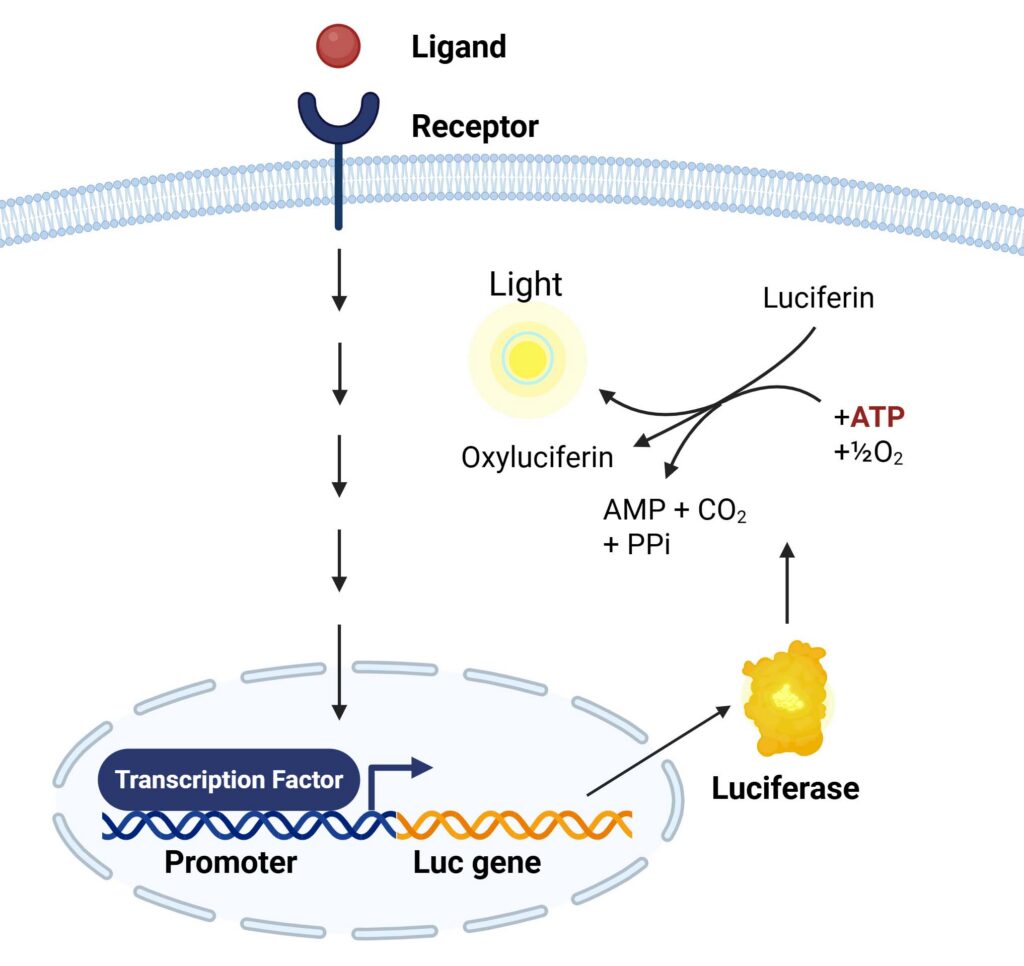
Unlike biochemical assays, cell-based assays capture key parameters such as membrane permeability, receptor engagement, and downstream signaling in intact cells, providing a more accurate representation of biological activity. Genetically engineered cell lines include overexpression and knockout models used to validate therapeutic targets and assess compound activity. Inducible reporter assays are particularly valuable for studying signaling pathways. Luciferase reporters, placed under the control of pathway-specific response elements, enable sensitive, quantitative, and reproducible measurement of pathway activation.
Reporter systems are broadly applicable across diverse cell types and signaling pathways, supporting HTS as well as more complex applications such as research in metabolism/obesity and immunotherapy, chimeric antigen receptor and T-cell receptor functional evaluation, antibody-dependent cellular cytotoxicity assays, and other co-culture models. Many biologics, including cytokine-targeting antibodies, peptides, and mimetics, are defined by their effects on specific signaling pathways. For example, GLP-1 receptor agonists activate cAMP-dependent signaling cascades, while anti-TL1A antibodies inhibit TL1A-mediated immune signaling. Accurately measuring these pathway-specific responses is essential for candidate selection and mechanistic validation.
Applications
Reporter cell lines enable a wide range of applications:
- Discovery and screening
• Identify agonists or antagonists of specific signaling pathways
• Screen compound libraries for selective modulators
- Mechanistic studies
• Characterize MOA
• Analyze pathway function and regulation
- Functional assays
• Perform co-culture cytotoxicity assays to evaluate immune effector function
• Support immunotherapy development and cell-based therapeutic evaluation
BPS Bioscience reporter cell portfolio
BPS Bioscience offers a comprehensive portfolio of pathway-specific reporter cell lines designed to support biologics development across multiple therapeutic areas. Reporter cell lines include IL-2, IL-6, and IL-15-responsive reporter cells, GLP-1-responsive models for metabolic research, and TL1A-responsive Jurkat cells.
Luciferase-based reporter systems provide rapid, sensitive, and quantitative detection of cellular responses, enabling efficient compound screening, pathway analysis, and target validation. Supporting reagents, including optimized culture media and the One-Step Luciferase Assay System, further streamline experimental workflows and improve reproducibility.
Advantages of luciferase reporter cell systems
- Quantitative readouts enable precise measurement of pathway activity
- High sensitivity allows detection of subtle biological effects
- Low background and high signal-to-noise ratio ensure robust data
- Compatibility with high-throughput formats supports large-scale screening
Advantages of BPS Bioscience reporter cell lines
- Optimized protocols and media simplify assay implementation
- Human cell backgrounds improve physiological relevance (with select alternative models available)
- Cost-effective workflows with minimal reagent requirements
- Extensive validation, with data often benchmarked against clinically relevant compounds
- Clonal cell lines ensure consistency and reduce variability over time
Together, cell based reporter assays and their supporting tools enable efficient, pathway
relevant evaluation of biologics from discovery through late stage development.

Learn more bpsbioscience.com.
The post Illuminating the Drug Development Path with Cell-Based Reporter Assays appeared first on GEN – Genetic Engineering and Biotechnology News.
Soon…the First Organ-on-a-Chip Qualified Drug Development Tool
Sponsored content brought to you by

Historical data indicate that animal models are not ideal for the determination of the efficacy and safety of human therapeutics. Ninety percent of drugs that pass animal studies do not receive regulatory approval. Improving predictive accuracy in preclinical tests is paramount, thus the movement toward more human-relevant models.
The goal to reduce the use of animals in preclinical testing changes testing paradigms. In April 2025, the U.S. FDA’s Roadmap to Reducing Animal Testing in Preclinical Safety Studies outlined a strategic, stepwise approach to replace animal testing with scientifically validated new approach methodologies (NAMs), such as organ-on-a-chip systems, computational modeling, and advanced in vitro assays. FDA Modernization Acts 2.0 and 3.0 facilitated this activity by empowering the agency to accept NAMs in lieu of animal studies.
Meanwhile, legislation from the EU, Directive 2010/63/EU, requires marketing authorization holders to integrate the 3Rs (Reduction, Refinement, and Replacement) and welfare standards for the treatment of animals in all aspects of the development, manufacture, and testing of medicines. In addition, last year, the U.K. delivered an expedited phase-out plan for animal use.
But it all began in 2020 with the launch of the FDA Innovative Science and Technology Approaches for New Drugs (ISTAND) pilot program to provide a pathway to qualify novel drug development tools (DDTs) that did not fit within the agency’s existing qualification programs. Qualified DDTs are defined as having a proven, specific use and can be incorporated in any drug development program for a particular context of use.
The pilot has advanced to a permanent DDT qualification program. To date, ISTAND has accepted eight submissions–two tools that assess preclinical safety without using animals, two methods involving tissues, and one statistical approach.
The rigorous ISTAND process
In a 2022 Communications Medicine study to test drug-induced liver injury (DILI), 870 human Emulate Liver-Chips created with cells from three different human donors were challenged with 27 different drugs. The human Liver-Chip predicted human DILI with 87% sensitivity and 100% specificity, ~7 to 8 times more accurate than the comparable animal models.1 These results prompted Emulate to submit a Letter of Intent (LOI) to ISTAND in 2024.
ISTAND accepted Emulate’s LOI for the first organ-on-a-chip DDT to predict DILI. The human Liver-Chip S1 was proposed to assess the risk of small molecule candidate drugs inducing DILI in adults to create human-relevant data for candidate drug IND submission.
The LOI acceptance was the entry point in a three-step rigorous qualification process. ISTAND required Emulate to qualify the in vivo-like physiological functionality of the Liver-Chip S1, and quantify its ability to predict DILI risk through changes in tissue morphology as well as alterations in albumin and alanine transaminase (ALT) protein concentrations when the chips were challenged with toxic drugs administered across eight concentrations.
Now, the Emulate Liver-Chip S1 is in the final stages of qualification. Two independent commercial users need to successfully produce similar results. Pending successful completion, the Liver-Chip will be the first FDA-approved DDT to assess the potential of a small-molecule candidate drug to cause DILI when a prior structurally similar small-molecule has shown DILI in the clinic.
High-throughput capabilities
Moving toward reduction and, in some cases, replacement of animal models demands both biological fidelity and throughput. For model development and target validation, the Zoë-CM2® Culture Module automates the precise condition needed to culture up to 12 chips.
For high-throughput options, the AVA Emulation System is a self-contained Organ-on-a-Chip workstation that fuses high-throughput microfluidic tissue culture, full environmental control, and real-time imaging into a single, compact benchtop unit. The Chip-Array
consumable integrates 12 independent Organ-Chips into an SBS format for 96-well streamlined workflows with multichannel pipettes and automated liquid handlers.
Reference
1. Ewart, L., Apostolou, A., Briggs, S.A. et al. Performance assessment and economic analysis of a human Liver-Chip for predictive toxicology. Commun Med 2, 154 (2022). doi.org/10.1038/s43856-022-00209-1.

Click Here to learn more about Emulate’s product portfolio emulatebio.com/resources/emulate-product-brochure.
The post Soon…the First Organ-on-a-Chip Qualified Drug Development Tool appeared first on GEN – Genetic Engineering and Biotechnology News.
STAT+: Medicare still won’t say how much covering obesity drugs will cost
Medicare is advertising that adults 65 and older can get Wegovy and Zepbound, specifically for weight loss, starting in July for $50 a month. But the agency still is not sharing how much this will cost taxpayers, who will foot most of the bill.
There is a lot at stake for the public and Medicare beneficiaries. The temporary coverage of obesity medications, which sidesteps federal law, will unleash millions of new patients and billions of dollars in revenue for the drugs’ manufacturers, Eli Lilly and Novo Nordisk.
Medicare’s “GLP-1 Bridge” program starts July 1 and runs through Dec. 31, 2027. The Trump administration initially planned on testing coverage of the obesity drugs through Medicare Advantage and prescription drug plans, but the health insurers that run those plans balked at the high potential costs. Instead, the drugs will be covered solely by taxpayers and the beneficiaries who fill prescriptions.