Bonito Biosciences and DaltonTx Collaborate on Precision Delivery for Oligotherapeutics

Bonito Biosciences and DaltonTx agreed to collaborate to help advance next-generation precision delivery systems for Bonito’s oligotherapeutic medicines. The collaboration will initially focus on delivery to the central nervous system, combining Bonito’s functional delivery data engine and ligand discovery platform with DaltonTx’s AI systems which are designed to iteratively model, predict, and optimize precision delivery biology.

Together, the companies will work to identify, optimize, and advance delivery ligands for conjugated oligotherapeutic payloads, including novel bispecific approaches for targeted CNS delivery, according to officials at both firms.

Through its functional selection platform, Bonito screens hundreds of billions of encoded ligands against complex cellular delivery phenotypes, explained a Bonito spokesperson, adding that these datasets–physically generated and directly tested on cell systems of interest– capture high-dimensional information related to receptor engagement and cellular delivery.

DaltonTx will apply its AI capabilities to model these data and to work on accelerating the design and optimization of next-generation delivery ligands through structural prediction, affinity mapping, and developability analysis. Together, the companies aim to establish an iterative learning loop for the rapid discovery of precision delivery systems for conjugated oligotherapeutics, noted Richard Wagner, CEO of Bonito.

“This collaboration brings together two highly complementary capabilities: Bonito’s ability to generate uniquely rich functional delivery data at massive scale and DaltonTx’s deep expertise in adaptive AI systems for molecular design and optimization,” he continued. “We believe precision delivery is fundamentally a data and prediction problem. By combining closed-loop functional screening with AI-driven design, we aim to accelerate the discovery of delivery systems capable of reaching tissues and cell types that have historically remained inaccessible to oligotherapeutics.”

“AI systems are only as powerful as the quality and dimensionality of the underlying biological data,” pointed out Garry Pairaudeau, CEO and co-founder of DaltonTx. “Bonito has built a uniquely differentiated platform for generating functional delivery datasets at extraordinary scale. Combining these data with DaltonTx’s agentic AI platform, which integrates AI, human expertise, and experimental data into one continuous learning engine, has the potential to significantly accelerate the discovery of next-generation delivery systems for conjugated oligotherapeutics.”


The post Bonito Biosciences and DaltonTx Collaborate on Precision Delivery for Oligotherapeutics appeared first on GEN – Genetic Engineering and Biotechnology News.

STAT+: The woman behind the world’s biggest longevity competition

BERKELEY, Calif. — Jamie Justice is an anti-aging researcher with a name fit for a superhero and a grand mission to match. A few years ago, she left her tenure-track job at Wake Forest University to team up with entrepreneur Peter Diamandis on XPRIZE Healthspan — a $101 million global competition meant to identify therapeutic treatments that can restore muscle, cognition, and immune function in older adults.

“There’s a booming market for slowing aging, but there’s no way to tell if [treatments] work,” Justice said onstage at the longevity conference Vitalist Bay here this month. XPRIZE Healthspan, for which she serves as executive director, was created to bridge that gap. The 10 teams selected from a pool of 40 this year will be required to test out their therapies in yearlong randomized controlled clinical trials before the winner of the grand prize is announced in 2030. 

Dressed in wide-legged jeans and a dark blazer, Justice walked the audience through XPRIZE competitors’ varying approaches to longevity. Exercise, senolytics (drugs that target damaged “zombie” cells that increase as we age), and personalized medicine geared toward biomarkers were among some of the prevailing approaches.

The longevity field, as the people involved in it acknowledge, tends to attract colorful characters with far-out theories. (A man in a purple cape trotted regally through the grounds of Vitalist Bay.) Figures like Justice, who’s hung onto her academic ties as an adjunct assistant professor of gerontology and geriatric medicine at Wake Forest, occupy a more grounded, science-based part of the spectrum. But she welcomes a big-tent approach to the world of anti-aging research. “I think, as scientists, we have to be really mindful to not turn into gatekeepers,” she told STAT during an interview after her talk.

STAT sat down with Justice to learn more about the XPRIZE Healthspan competitors, research on what people really want in their old age, and the problem of “purely scammy” companies giving longevity a bad name.

Continue to STAT+ to read the full story…

The Download: climate tech goes public and the AI Hype Index returns

This is today’s edition of The Download, our weekday newsletter that provides a daily dose of what’s going on in the world of technology.

Climate tech companies are going public. What’s next?

Solar and battery company Solv Energy went public in February, hitting a $6 billion valuation. X-energy, which builds small modular nuclear reactors, followed at $11.5 billion. Then came geothermal company Fervo Energy, reaching a market cap of about $12.4 billion.

All three have been IPO success stories. And it doesn’t feel like a coincidence that they’re racing to provide electricity in an era of rising demand, driven partly by data centers.

What does this boom reveal about the future of the grid? And what comes next? Read the full story to find out.

—Casey Crownhart

This story is from The Spark, our weekly newsletter giving you the inside track on all things climate. Sign up to receive it in your inbox every Wednesday.

The AI Hype Index

Separating AI reality from hyped-up fiction isn’t always easy. That’s why we’ve created the AI Hype Index—a simple, at-a-glance summary of what’s shaping the industry right now.

The latest edition includes billionaire road trips, students booing, made-up quotes, and too much sci-fi. See where it all landed on this month’s index.

The must-reads

I’ve combed the internet to find you today’s most fun/important/scary/fascinating stories about technology.

1 Illinois just passed what could become America’s strongest AI safety law
It would require third-party safety audits. (Wired $)
+ But it still needs the governor’s approval. (NBC News)
+ The US is divided over AI regulation. (MIT Technology Review)

2 A Google engineer has been charged with insider trading
He allegedly bet on who’d be the most-searched people of 2025 on Polymarket. (BBC)
+ And used internal data to rack up more than $1.2 million in winnings. (Verge)
+ He’s been charged with fraud and money laundering over the bets. (NPR)

3 ByteDance is developing custom CPUs amid a massive AI chip squeeze
The TikTok owner is struggling with severe supply shortages. (Reuters $)
+ Google, Amazon, and Microsoft are also building custom CPUs. (CNBC)
+ Taiwan’s “silicon shield” could be weakening. (MIT Technology Review)

4 Four tech giants have backed a clean energy push for AI data centers
Amazon, Google, Meta, and Microsoft have joined the initiative. (Quartz)
+ Investor Elemental Impact will deploy up to $5 million per project. (Axios)

5 Nvidia’s CEO is joining the board of Beijing’s Tsinghua University
His appointment comes as Nvidia struggles to export chips to China. (FT $)
+ President Xi is an alumnus of Tsinghua, aka “China’s Harvard.” (Reuters $)

6 The Trump administration is in talks to fund drone firms
One of which counts Donald Trump Jr. as a shareholder. (WSJ $)
+ Drone dominance has been described ​as a “presidential priority.” (Reuters $)

7 London has reclaimed its position as Europe’s leading tech hub
It’s overtaken Paris in new global rankings. (Euronews)
+ And now sits fourth, behind the Bay Area, New York and Boston. (Reuters $)

8 OpenAI and Anthropic disagree over AI’s impact on jobs
Anthropic is emphasizing the risks, while OpenAI is sounding rosier. (Axios)
+ The AI jobs hysteria needs a reality check. (MIT Technology Review)

9 Researchers claim to have achieved perfect randomness for the first time
Thanks to entangled quantum chips. (Interesting Engineering)
+ The milestone could lead to better cybersecurity. (Scientific American)

10 Embryo organoids are showing why many pregnancies fail
They’ve led to improvements in IVF and pregnancy treatments. (New Scientist $)
+ New tech is transforming reproductive medicine. (MIT Technology Review)

Quote of the day

“How can we be happy about Google coming? We’ll all be scattered. It feels very sad.”

—Pyla Kondamma, a 42-year-old in Visakhapatnam, India, tells the Wall Street Journal her concerns about Google building data centers in her city.

One More Thing

NICO ORTEGA


Why venture capital doesn’t build the things we really need

Venture capital has been the engine of US innovation for years. This largely white, largely male corner of finance has backed software companies that grow fast—but generate large amounts of money for a shrinking number of Americans.

It’s also creating fewer jobs for ordinary people. And recently, venture capitalists have struggled to find ideas that fit their preferred pattern.

Here’s what’s going wrong with the funding model that made Silicon Valley a global hub.

—Elizabeth MacBride

We can still have nice things

A place for comfort, fun, and distraction to brighten up your day. (Got any ideas? Drop me a line.)

+ Never miss a great movie again with this worldwide release tracker.
+ These quirky word puzzles use emoji hints to help you find answers.
+ The digital museum of plugs and sockets is a treasure trove of global connectors.
+ Michael Jackson’s “Smooth Criminal” becomes a Bach-style fugue played on classical guitar.

Gut microbiome screens could identify risk of Parkinson’s disease years before symptoms appear

Nature Medicine, Published online: 28 May 2026; doi:10.1038/s41591-026-04458-8

Innovative microbiome analysis revealed a part of the gut microbiome that changes coherently from healthy individuals across those with genetic risk of Parkinson’s disease to patients who are symptomatic. A large range of microbiome alterations within each of the three groups enables identification of individuals at greater risk of developing Parkinson’s disease. A healthy diet was inversely associated with these alterations and might mitigate disease risk.

Antibody Drug Slows Disability Progression in Advanced Multiple Sclerosis

Results from the Phase III ORATORIO-HAND study show that ocrelizumab, an antibody drug already prescribed to some patients with multiple sclerosis (MS), could benefit a much larger patient population, including those who are older or at more advanced stages of the disease. Published today in The Lancet, these findings could change the way clinicians understand and manage MS. 

“Our study suggests we should think differently about what successful treatment looks like in advanced MS and that we shouldn’t assume a lack of benefit in certain groups,” said Gavin Giovannoni, MD, PhD, professor of neurology at Queen Mary University of London. “These findings show that treatment can make a meaningful difference to people with more advanced forms of MS and can help preserve hand and arm function, which is important for maintaining independence, daily activities and quality of life.” 

The clinical trial recruited over 1,000 patients with primary progressive multiple sclerosis (PPMS), a form of MS where disability worsens over time that affects about 10–15% of people diagnosed with the autoimmune condition. Ocrelizumab is currently available to patients early on in their PPMS with lower levels of disability, delivered as an infusion every six months to reduce disability progression. However, those with advanced disease, including patients who need a wheelchair to move around, are not eligible for this treatment and currently have limited options available to them. 

Compared to a placebo, ocrelizumab significantly reduced the risk of disability progression by 30%, with stronger effects in patients showing signs of inflammatory activity on MRI scans, for whom the drug reduced this risk by 55%. The treatment also reduced the worsening of hand and arm function by 41% after 12 weeks and lowered the need for a wheelchair by 52% among patients who were already unable to walk freely at the start.  

These results settle a longstanding debate over whether more advanced forms of multiple sclerosis can still benefit from treatment. In contrast with previous studies, which often excluded patients over 55 and those with advanced disability, this clinical trial recruited participants up to 65 years old and those with substantial mobility impairment. 

In addition to assessing walking ability, the study focused on assessing hand and arm function. This decision was based on a separate survey conducted by Giovannoni’s team in which patients with worsening multiple sclerosis reported prioritizing upper-limb function due to its importance for their independence, including their ability for cleaning and grooming themselves. 

“MS can be debilitating, exhausting and unpredictable, and hand and arm function is essential for helping people to remain independent,” said Catherine Godbold, PhD, senior research communications manager at the MS Society. “Many previous trials have focused solely on walking ability as a measure of whether a drug is effective. But trials like this are vital in helping us find treatments for everyone.”  

“Ocrelizumab is already used as a treatment for active relapsing MS and early primary progressive MS,” she added. “These results could mean it is made available for more people with primary progressive MS, who don’t currently have access to any treatment options. The key now is how we work together to see these findings translated into clinical practice.” 

The post Antibody Drug Slows Disability Progression in Advanced Multiple Sclerosis appeared first on Inside Precision Medicine.

STAT+: As Ebola outbreak in Central Africa grows, the U.S. turns itself into a fortress

When Craig Spencer contracted Ebola while working in Guinea during the West African outbreak in 2014, he was already back in the United States when he first developed symptoms. He credits the treatment he got at New York’s Bellevue Hospital for his survival.

If Spencer, an emergency medicine physician and an associate professor in Brown University’s School of Public Health, were to contract Ebola in the current outbreak in the Democratic Republic of Congo and Uganda — if he’d even had high-risk exposures to Ebola patients — he wouldn’t be allowed back into the U.S. for care or quarantine.

Administration officials confirmed Thursday that any Americans who contract Ebola will not be brought to the United States for treatment. Instead, they will be evacuated to as-yet-undetermined locations in Europe. An official, speaking on condition of anonymity, told reporters that the Centers for Disease Control and Prevention and the State Department are working to identify tertiary care facilities that could take Americans needing care. One such case has already occurred.

Continue to STAT+ to read the full story…

Target for Aggressive Prostate Cancer Prevention Identified in Mice

Researchers at Columbia University Irving Medical Center have identified a gene that drives the development of neuroendocrine prostate cancer (NEPC), an aggressive form of the disease. Their study showed that genetic or pharmacological inhibition of Sirtuin 1 prevents the growth of NEPC tumors in mice, laying the groundwork for future clinical studies aimed at developing new treatments for NEPC in humans.

Research lead Cory Abate-Shen, PhD, a professor at Columbia University Vagelos College of Physicians and Surgeons, is co-senior author of the researchers’ published paper in Journal of Experimental Medicine, titled “A forward genetic screen identifies Sirtuin 1 as a driver of neuroendocrine prostate cancer,” in which the team noted, “We demonstrate that expression of Sirt1 promotes NEPC while its silencing or pharmacological inhibition suppresses the NEPC phenotype.”

Prostate cancer is the most common cancer in men, and one in every six men will be affected by prostate cancer in their lifetime, the authors explained. Prostate cancer treatments have been focused on approaches to dampening androgen receptor (AR) signalling, and for men with recurrent or advanced prostate cancer the current standard of care is androgen deprivation therapy (ADT). However, it is well documented that ADT will eventually fail, leading to tumor recurrence and development of the ADT-insensitive aggressive prostate cancer variant, NEPC. “… while ADT initially leads to tumor regression, eventually tumors recur as castration-resistant prostate cancer (CRPC), so called because of its continued reliance on AR even in the absence of androgens,” the team continued.

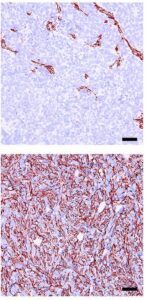
Positively stained NEPC markers (top) are lost when Sirt1 is silenced (bottom). [© 2026 Nunes de Almeida et al. Originally published in <em>Journal of Experimental Medicine</em>. https://doi.org/10.1084/jem.20241484]
Positively stained NEPC markers (top) are lost when Sirt1 is silenced (bottom). [© 2026 Nunes de Almeida et al. Originally published in Journal of Experimental Medicine.]

The process through which ADT-responsive tumors transition towards NEPC tumors—a phenomenon known as lineage plasticity—remains unknown. “Elucidating the mechanisms governing this process may improve treatment by overcoming plasticity-associated drug resistance,” Abate-Shen added.

For their newly reported study the research team performed a Sleeping Beauty (SB) forwards genetic mutagenesis screen in mice looking for mutations that recurred across multiple independent prostate cancer tumors. They identified 75 candidate NEPC-promoting genes, the most promising of which was Sirtuin 1 (Sirt1). Sirt1 encodes an enzyme with a broad range of functions, including control of gene expression and metabolism.

The group first looked to a human prostate cancer cell line to characterize the role of Sirt1. In these cells, the induction of NEPC produced an increase in the expression of genes predicted to be activated by SIRT1 and a corresponding decrease in those predicted to be downregulated by this protein. Confirming these results, the group found that activation of Sirt1 in cells with low SIRT1 expression levels led to a robust increase in key NEPC markers.

Recapitulating their cell line data, the team found that silencing of Sirt1 profoundly reduced tumor growth in mice with NEPC, indicating that Sirt1 is indeed a promising target for NEPC treatment. They also treated the tumors with the FDA-approved SIRT1-inhibitor, Selisistat, which was originally developed for treatment of Huntington’s disease. Encouragingly, the researchers saw that Selisistat administration significantly reversed the NEPC phenotype. “Functional studies in human prostate cancer cell models and mouse organoid models using gain- and loss-of- function approaches in vitro and in vivo, as well as pharmacological inhibition, demonstrated that one of the top-ranked candidates, Sirt1, promotes NEPC,” they wrote in summary.

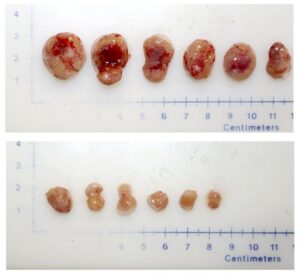
Tumors surgically removed from Sirt1-silenced mice (bottom) are significantly smaller than tumors removed from mice with wild-type Sirt1 expression. [© 2026 Nunes de Almeida et al. Originally published in <em>Journal of Experimental Medicine</em>. https://doi.org/10.1084/jem.20241484]
Tumors surgically removed from Sirt1-silenced mice (bottom) are significantly smaller than tumors removed from mice with wild-type Sirt1 expression. [© 2026 Nunes de Almeida et al. Originally published in Journal of Experimental Medicine.]

“Our findings demonstrate that SIRT1 plays a pivotal role in promoting NEPC, revealing a context-dependent function that extends beyond general tumor growth to the regulation of lineage plasticity and neuroendocrine differentiation,” says Abate-Shen, adding that “this highlights SIRT1 as an attractive and clinically actionable target for lethal prostate cancer that warrants further investigation in future clinical studies.”

In their paper the team concluded, “Overall, our study establishes a generalizable computational and experimental framework that integrates SB mutagenesis with phenotypic, genomic, and transcriptomic analyses to identify novel cancer drivers … Importantly, our data suggest that targeting SIRT1 may suppress or reverse progression toward NEPC.”

The post Target for Aggressive Prostate Cancer Prevention Identified in Mice appeared first on GEN – Genetic Engineering and Biotechnology News.

Hormone Cell Atlas Maps Body’s Chemical Messengers

An initiative to map hormones in the human body has revealed the breadth and complexity of the endocrine system and could deliver transformative insights into disease for the creation of new therapeutics.

The Hormone Cell Atlas provides a comprehensive framework to explore the impact of these chemical messengers in health and disease, combining a system-level overview with detail at a cellular level.

Its creation incorporates transcriptome-level data from dozens of tissue types and involves the expression of hundreds of hormone and receptor genes in millions of cells and nuclei.

The research, in Science, reveal the distributed and interconnected nature of hormonal regulation, involving a wide repertoire of cell types derived from multiple cell lineages.

These cells show the potential to both synthesize or modulate hormones, with most expressing receptor genes that may integrate signals from multiple hormones.

“These findings have implications not only for understanding physiology and its perturbation in disease, but also for understanding the pleiotropic effects of hormone-based therapies,” reported Lijiang Fei, PhD, from the University of Cambridge, and co-workers.

“For example, expression of GLP1R and GIPR in cardiomyocytes and cardiac pacemaker cells raises the possibility that any cardiovascular benefits or risks of these drugs may arise from direct receptor engagement, not solely from weight loss or improvements in glycemic control.”

Hormones are secreted by endocrine glands and act across tissues and organs to coordinate physiological functions, orchestrating metabolism, growth, reproduction, and other essential physiological processes using tightly regulated synthesis and release.

Inspired by the creation of the Human Cell Atlas, which aims to map all the cells in the human body, Fei and co-workers set out to improve understanding of the synthesis and action of hormones.

Using information from that initiative, the team analyzed the expression of 379 hormone and receptor genes in a transcriptomic dataset comprising 14 million single cells and nuclei across 47 human tissues.

The team mapped the cellular architecture of hormone production and action across diverse tissues and lineages, charted long-range endocrine feedback loops, and localized the expression of genes associated with monogenic endocrine and metabolic disease at cell type resolution across a variety of tissues.

Through this, they created a comprehensive, high-resolution, browsable map that predicted hormone production at cellular resolution.

“The atlas not only recovers classical endocrine axes but also illuminates underappreciated sites of hormone production and action,” the authors pointed out.

“We highlight important principles in endocrine biology, including local modulation of steroidogenic signals in peripheral tissues, specialized vascular-endocrine niches, and the role of adipocytes as dynamic hormone-producing and -sensing cell types.”

They conclude: “This accessible, adaptable resource establishes a dynamic framework for dissecting endocrine physiology and paves the way for mechanistic and physiological studies, which together may deliver transformative insights into human endocrine disease and inform rational drug discovery.”

The post Hormone Cell Atlas Maps Body’s Chemical Messengers appeared first on Inside Precision Medicine.

SHIMMER: Routine Clinical Data Processed Into Scalable Disease State Markers

Yes, you have a disease. No, you don’t have a disease.

There is too much complexity to human health for this simplistic, binary method of diagnosis. The phenotypic state of a disease is an ongoing process, while the genotype remains static. Even when it comes to infection, the presence or absence of a pathogen captures little of the entire dynamic biological world inside each of us.

A person’s future development can be predicted with near-certainty by an inherited mutation or chromosomal arrangement, such as cystic fibrosis, Huntington’s disease, and trisomy 21 (Down’s syndrome). Disease development is not an on/off switch. Rather, diseases progress along quantifiable biological spectrums.

The question is, how can that be done in an everyday clinical setting with routine data?

Icahn School of Medicine at Mount Sinai researchers developed a machine learning (ML)-based system that uses routine clinical data to estimate a person’s risk for multiple diseases, potentially revealing hidden illness years before diagnosis.

Published in the Cell Press journal Med, the study demonstrates that SHIMMER stands out due to its use of standard clinical measurements instead of highly specialized data. The practical use of many AI systems in medicine is limited because they require extensive imaging, genomic sequencing, or disease-specific testing. The fact that SHIMMER uses data that is already collected in regular healthcare settings instead could make it easier to implement on a larger scale.

Decoding disease states

Led by Iain S. Forrest, MD, PhD, the research team trained ML models on seven diseases—atrial fibrillation, breast cancer, coronary artery disease (CAD), migraine, rheumatoid arthritis (RA), schizophrenia, and type 2 diabetes (T2D)—using records from the BioMe Biobank in New York and the UK Biobank.

The researchers found that the disease-spectrum scores aligned closely with known risk factors and biological markers. For atrial fibrillation, rising SHIMMER scores tracked with increasing age, obesity, hypertension, and stroke risk. In T2D, the scores rose alongside glucose levels, hemoglobin A1c, triglycerides, and inflammatory markers. CAD scores correlated with smoking, high cholesterol, chronic kidney disease, and established cardiovascular risk calculations.

Importantly, these relationships were not abrupt. Instead, biological changes increased gradually across the spectrum, supporting the idea that disease develops gradually rather than suddenly at diagnosis.

Forrest and colleagues also showed that SHIMMER is capable of identifying disease severity and predicting outcomes. Higher SHIMMER scores were associated with earlier disease onset, more complications, and reduced survival. In CAD, increasing scores tracked with worsening artery blockage, heart failure, arrhythmias, and heart attacks. For RA, higher scores aligned with greater inflammation, worsening anemia, and increased use of immunosuppressive medications.

Some of the strongest findings involved diseases that traditionally lack reliable biomarkers. Schizophrenia, for example, is diagnosed largely through behavioral assessment rather than laboratory testing. However, SHIMMER found obesity, smoking, cannabis use, cardiovascular complications, and poorer survival linked to schizophrenia risk and severity. Spectrum associations were also found in migraine, another condition without biomarkers, including symptom severity and medication use.

Perhaps the most clinically intriguing result was SHIMMER’s ability to flag people who appeared biologically ill despite lacking a formal diagnosis. The researchers identified several people whose routine clinical data strongly resembled known disease profiles despite no diagnosis. One patient with a high T2D SHIMMER score had obesity, hypertension, high glucose, and classic diabetic symptoms but was never diagnosed. Similar patterns appeared for coronary artery disease and rheumatoid arthritis.

In larger undiagnosed populations, elevated SHIMMER scores still predicted abnormal biomarkers and mortality risk. That suggests the system may detect diseases that traditional healthcare pathways miss.

Not a shiny object

The findings challenge the long-standing medical convention of classifying disease in binary terms: either a patient has a condition or does not. The implications could be significant for preventive medicine and population health management. Continuous disease-spectrum scores may help healthcare systems identify high-risk patients earlier and prevent complications.

The researchers envision SHIMMER as an EHR background decision-support tool. Even if they do not meet diagnostic criteria, patients with high scores for diabetes or coronary artery disease may be prioritized for testing, monitoring, or preventive treatment. In that sense, it is complementary to genetic screening.

Still, the work remains a proof of concept rather than a ready-to-deploy clinical tool. The study was retrospective, meaning it analyzed existing records rather than prospectively following patients in real time. The researchers also note concerns about healthcare bias, uneven data quality, and the ethical implications of artificial intelligence in medicine.

Another important limitation is that SHIMMER does not provide definitive diagnoses. Its scores reflect disease burden and biological resemblance rather than calibrated predictions of future illness. Determining how clinicians should act on specific score thresholds will require further study.

The work represents a broader shift in how medicine may conceptualize disease in the AI era. Instead of fixed categories, conditions may increasingly be viewed as dynamic biological trajectories measurable through continuously updated clinical data. If confirmed in future studies, SHIMMER could turn routine medical records into early-warning systems that detect disease before symptoms appear.


The post SHIMMER: Routine Clinical Data Processed Into Scalable Disease State Markers appeared first on Inside Precision Medicine.


STAT+: Trump’s pharma deals get tested

You’re reading the web edition of D.C. Diagnosis, STAT’s twice-weekly newsletter about the politics and policy of health and medicine. Sign up here to receive it in your inbox on Tuesdays and Thursdays.

RFK Jr. removed two snakes from Dr. Oz’s patio, bare-hand grabbing the black racers, one of which briefly tangled with his tie. That species, while not venomous, often bites and defecates a foul-smelling musk when handled. Send news tips and bad ideas to John.Wilkerson@statnews.com or John_Wilkerson.07 on Signal.

What is MFN anyway?

Let’s be honest. Most favored nation is one of those odd terms, like “direct and indirect remuneration,” that drug policy folks casually use as though they mean something.

Continue to STAT+ to read the full story…