

IntroductionThere are persistent demands for well-designed randomized controlled trials (RCTs), including follow-up measurements, in studies on animal-assisted treatment (AAT). In addition, a possible dose-response relationship is under discussion. The aim of the present study was to investigate the efficacy of a single-session AAT with sheep, including a booster exercise, over a follow-up period of four weeks.MethodsIn an RCT, a single-session AAT with sheep in a group setting, including an imaginative booster exercise conducted in the week following the AAT session, was compared to treatment as usual (TAU). Sixty psychiatric inpatients with severe mental illness were assessed for positive and negative emotions, mindfulness, and self-efficacy expectancy at baseline (PRE), immediately after the intervention (POST), and at one-week and four-week follow-ups.ResultsThe results indicate significant differences between the two groups at POST and still in the one-week follow-up (FU1) in three of four outcomes. Within the intervention group, within-group analyses demonstrated significant improvements from PRE to POST and from PRE to FU1 across all outcomes, with large effect sizes. At the four-week follow-up, all significant effects had diminished.ConclusionsAn imaginative booster exercise conducted within one week after an AAT session was effective in maintaining large effect sizes for up to one week. However, the results did not persist at the four-week follow-up. Longer follow-up periods, variations in the number of sessions, and the inclusion of active control groups are therefore necessary for further AAT studies.Trial registrationhttps://drks.de/search/de/trial/DRKS00031347, identifier DRKS 00031347
Advancing conversational diagnostic AI with multimodal reasoning
Nature Medicine, Published online: 14 May 2026; doi:10.1038/s41591-026-04371-0
Improvements in the Articulate Medical Intelligence Explorer, a large language model designed for diagnostic dialogue, enable the model to request, interpret and reason about multimodal medical data.
Performance of traumatic encephalopathy syndrome criteria in identifying individuals with chronic traumatic encephalopathy
Nature Medicine, Published online: 14 May 2026; doi:10.1038/s41591-026-04392-9
The proposed clinical features of traumatic encephalopathy syndrome have low predictive value for chronic traumatic encephalopathy pathology, raising significant concern for incorrect diagnoses of neurodegeneration in former athletes.
Abatacept versus hydroxychloroquine for prevention of rheumatoid arthritis in individuals with palindromic rheumatism: a randomized open-label trial
Nature Medicine, Published online: 14 May 2026; doi:10.1038/s41591-026-04395-6
Subcutaneous injections of abatacept were superior to oral hydroxychloroquine in preventing progression to persistent arthritis in individuals with palindromic rheumatism.
STAT+: Three years of declining overdose deaths begets cautious optimism and some concerns
Get your daily dose of health and medicine every weekday with STAT’s free newsletter Morning Rounds. Sign up here.
Good morning. STAT’s Helen Branswell was recently interviewed for Columbia Journalism Review about the challenges of reporting on the hantavirus outbreak. If you need a dose of empathy for journalists — or if you’re a reporter yourself, looking for guidance from the best — check it out. And if you want to subscribe to STAT+ afterward, you can do that here.
The Trump admin’s wish list for its next FDA leader
The Trump administration is working to identify the next FDA commissioner after Marty Makary resigned on Tuesday. The dream candidate is someone who can rebuild trust with agency staff, focus on the agency’s food policy, and continue to drive drug-approval reforms, STAT’s Daniel Payne and Lizzy Lawrence report.
Visualizing Receptor Transport Within Neurons via Transcytosis
As spindly, elongated cells, neurons must be able to transport proteins and receptors between distant sites in their cell bodies and axons to function properly. A new imaging study by researchers at Johns Hopkins University has now visualized the ebb and flow of the nerve growth factor receptor TrkA within neurons, via an unusual process known as transcytosis. Their study also explains how this phenomenon supports neuronal function and connectivity in mice.
Senior and corresponding author Rejji Kuruvilla, PhD, at Johns Hopkins University Department of Biology, and colleagues reported on their findings in Science Signaling, in a paper titled “Transcytosis-mediated anterograde transport of the receptor TrkA mediates the formation of presynaptic sites in sympathetic neurons.” In their paper, the authors concluded, “These findings provide mechanistic insight into an atypical mode of receptor trafficking and demonstrate its physiological relevance in sympathetic neuron connectivity in mice … Our study suggests that transcytosis might be a more general mechanism than now appreciated for the targeted transport of trophic and guidance receptors, adhesion and synaptic proteins, as well as ion channels.”
The axons of neurons are extremely long compared to their main cell bodies, with axon terminals sometimes residing a long distance from the cell nucleus. “Axon terminals can be meters away from cell bodies where many axonal membrane proteins with critical functions in regulating axon guidance and growth, neuronal survival, presynaptic organization, and synaptic transmission are made,” the authors wrote.
Neurons need to be able to transport these proteins efficiently across these relatively vast distances. They do this by either directly sending the protein through a secretory pathway or via an indirect mechanism called transcytosis. The latter occurs when the central cell body takes in newly synthesized proteins or surface receptors, after which they move to axons through the cell cytoplasm. “Transcytosis is an atypical endocytosis-based mechanism, where newly synthesized proteins are first inserted on cell body surfaces, internalized, and anterogradely transported to axons,” the team continued.
Transcytosis is still relatively obscure and enigmatic compared with the direct secretion method, and questions remain about how exactly it sustains the function and connectivity of neurons. “In contrast to the considerable progress made in understanding the direct secretory pathway, there is limited knowledge about transcytosis, specifically the underlying transport kinetics and organelles involved, whether it occurs in vivo, and its contributions to neuronal connectivity and function,” the investigators noted.
Seeking answers, first author Kuruvilla, together with first author Guillermo Moya-Alvarado, PhD, and colleagues, used live cell imaging and electron microscopy to peer at the movement of receptors across compartments within mouse neurons.
They visualized the trafficking dynamics and transcytosis of a receptor named TrkA. “The family of tropomyosin-related kinase (Trk) receptors provides a prominent example of membrane proteins that undergo long-distance axonal trafficking to control neuronal survival, axon growth, and synaptic transmission,” the scientists explained.
Through their study, the authors noted various shifts in speed and direction as vesicles carried TrkA from the soma to axons. Using labeled TrkA proteins, the scientists also confirmed that transcytosis occurred within nerve terminals of living mice. “Live imaging and electron microscopy of compartmentalized cultures revealed that soma surface–derived TrkA proteins underwent dynamic transport within axons, with changes in speed, direction, and the vesicular organelles that carried them as they moved from proximal to distal axon compartments,” they stated. “In mice, soma surface–labeled TrkA proteins were observed in sympathetic nerve terminals, demonstrating that transcytosis occurs in vivo.”
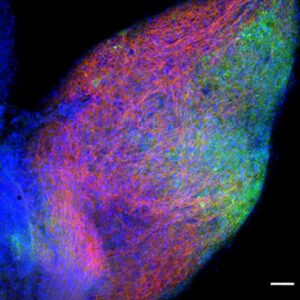
They also found that disrupting its transcytosis by introducing a point mutation into TrkA reduced the number and size of presynaptic sites and decreased synaptic transmission in culture and in rodents in vivo, confirming the importance of the process for neuronal physiology. “These findings provide mechanistic insight into an atypical mode of receptor trafficking and demonstrate its physiological relevance in sympathetic neuron connectivity in mice,” the team concluded “Uncovering mechanisms of axon delivery has implications that extend beyond the healthy nervous system to understanding cell biological pathways that contribute to nerve repair after injury or neurodegeneration, because the correct complement of membrane proteins must be accurately targeted to regenerating axons to ensure functional recovery.”
The post Visualizing Receptor Transport Within Neurons via Transcytosis appeared first on GEN – Genetic Engineering and Biotechnology News.
ASGCT 2026: Timothy Yu Wins Jerry Mendell Award For N-of-1 Therapies
BOSTON – Timothy Yu, MD, PhD, a leading neurogeneticist at Boston Children’s Hospital and Harvard Medical School, was awarded one of the top honors by the American Society of Gene and Cell Therapy (ASGCT), the Jerry Mendell Award.
Yu was recognized for his trailblazing work over the past decade in devising bespoke oligonucleotide therapies for patients with ultra-rare genetic disorders. He entitled his talk: “The paradox of N-of-1: Scaling the logic of genetic intervention.” A suitable sub-title, Yu said, could be: “A neurogeneticist’s accidental injection into the field of gene therapy.”

Yu’s research has progressed from gene discovery to clinical applications of N-of-1 therapies. The long tail challenge of developing gene therapies for patients with rare diseases is actually immense. There are some 400 million individuals worldwide who suffer one of some 8,000 monogenic disorders. Three out of ten affected children do not see their fifth birthday, while most lack any kind of medical treatment.
But progress over the past 10-20 years has provided hope in the form of various molecular therapies—antisense, mRNA, gene therapy, siRNAs, CRISPR, and newer flavors of gene editing. The concept of “therapeutic programmability is very important,” Yu said.
Yu’s injection into the field began with a single patient, Mila Makovec, a young girl from Colorado, whom he met in 2018. This index patient was eventually diagnosed with a form of Batten disease, CLN7—a rare subtype that was progressive and fatal.
Mila’s gene mutation was private but correctable, an insertion sitting deep within an intron. This offered Yu’s team hope that they could block abnormal splicing. Clearly, no company could progress a therapy for a single patient, Yu recalled.
Allele-specific oligonucleotides are simple to manufacture and can boost gene expression, following the model of Spinraza for spinal muscular atrophy.
Yu’s team developed a customized ASO therapy in about a year, which was published in 2019. The therapy brought about a reduction in Mila’s seizures, but not in time to result in a cure. In May 2019, Yu’s team met with the FDA to establish a path forward. The first guidances were published in 2021.
Moving on
Yu recounted several other therapies designed for other patients with different genetic disorders. The second program, working with Jennifer Puck, MD, and colleagues, was for ataxia telangiectasia (A-T). One A-T mutation created a new splice site that appeared to be reversible with a custom ASO.
The pilot clinical study was initiated in 2018, when the child was two years old. It is, Yu said, the longest running N-of-1 trial. The child is now nine years old and shows no worsening of clinical symptoms. Various measurements and assays confirm there has been no clinical progression. “We have converted a classic case of A-T to a milder form,” Yu said. The trial is expanding in Europe, including ten additional children in Turkey.
A member of Yu’s lab, Claudia Lentucci, PhD, is among the team leading a third program treating infants with neonatal epilepsy (KCNT1-related epileptic encephalopathy). One patient had seizures halted but developed ventricular enlargement. The team has since modified the protocol to use intracerebroventricular injection, which reduces seizures by 60-70%.
A fourth example presented by Yu was a treatment for Grace, a 15-year-old girl with a rare form of retinitis pigmentosa. She presented seven years ago with vision loss and pain insensitivity. Launched in August 2023, the therapy corrects a deep intronic mutation. It has been well tolerated and resulted in a stabilization of her vision.
Yu summarized similar therapies developed for patients with Zellweger syndrome, Niemann Pick Type C, and Batten disease. In total, 35 N-of-1 oligonucleotides have been administered to more than 80 patients.
On hearing the news of Baby KJ last year, “we all stood up and took notice,” Yu said.
“Our motivations are to help patients without other options. We have expanded from a sick child in Colorado to generate pilot learnings for childhood neurologic diseases.” His team’s work is not only offering hope in a compassionate sense but is also leading the exploration of new delivery models for precision medicine.
Yu has built a large network of collaborators, including clinicians, regulators, and industry professionals. The N=1 Collaborative has grown to more than 2,000 members worldwide and will be holding its third conference this October in Denver.
A new approach
From what was once called “interventional genetics,” Yu said, “the data is inviting us to take a new approach” that he called “genetic surgery.”
N-of-1 therapies are “more akin to a complex surgery, [using] customized tools and procedures for therapeutic benefit akin to organ transplant or cardiac surgery,” he said.
Yu also highlighted the FDA’s Plausible Mechanism Pathway, announced last February, which offers opportunities to approve medicines on the basis of very small numbers of patients. But the guidance emphasized the importance of data sharing—an issue that required the community’s full attention.
“You can’t build a modular system in a silo,” Yu said. “If you want cures that are greater than the sum of their parts, you must share the data to see how the pieces fit together.”
The post ASGCT 2026: Timothy Yu Wins Jerry Mendell Award For N-of-1 Therapies appeared first on Inside Precision Medicine.
Targeted Ultrasound Could Offer Alternative to Chronic Pain Medication
A new study has shown that targeting ultrasound stimulation to brain regions involved in processing pain can induce long-lasting changes in brain activity, significantly reducing pain perception. Published in Nature Communications, these findings point at a novel non-invasive strategy to treat chronic pain.
“Our study represents an important first step in understanding how this technology can non-invasively stimulate deep brain regions involved in pain processing,” said Sam Hughes, PhD, senior lecturer in pain neuroscience at the University of Exeter. “We found that targeting a specific brain region involved in pain processing can alter how pain is perceived and change how this area communicates with other parts of the brain’s pain network. The next stage of our research will be to test whether this approach can help people living with chronic pain.”
Hughes and colleagues used transcranial ultrasound stimulation (TUS), a low-intensity neuromodulation technique, to target the dorsal anterior cingulate cortex (dACC), a brain region implicated in chronic pain. The study recruited a total of 32 healthy volunteers, who were treated either with TUS or a sham while putting their right hand in a cold gel to trigger pain due to the low temperature. All participants were asked to rate the severity of the pain they were feeling and underwent MRI and MRS scans to monitor the physiological changes caused by the treatment.
Results showed that, while TUS had no immediate effect on pain intensity, participants reported a significant reduction in pain from 28 to 55 minutes after the stimulation, suggesting it can trigger a delayed analgesic effect. At the physiological level, TUS was found to disrupt the relationship between temperature and pain intensity, increasing the connectivity between the dACC and other brain regions involved in pain modulation and changing the concentration of the GABA neurotransmitter within the dCC.
“The study aimed to characterize how transcranial ultrasound stimulation interacts with—and potentially also alters—the brain’s processing of pain,” said Sophie Clarke, PhD, postdoctoral research fellow at the University of Plymouth and lead author of the study. “Understanding these mechanisms will be very important to support the next steps in understanding whether the stimulation can be effective in helping patients with chronic pain.”
Previous research at the University of Plymouth had shown the potential benefits of TUS for psychiatric conditions including anxiety, depression, and addiction. This study shows these benefits could extend beyond neurological disorders and one day offer a non-invasive treatment option for those experiencing chronic pain due to conditions such as fibromyalgia, back pain, and arthritis, or recovering after cancer treatment.
“Having shown the use of ultrasound can yield positive results for people with a variety of neurological conditions, we wanted to explore what it could mean for those living with chronic pain,” said Elsa Fouragnan, PhD, director of the University of Plymouth’s Brain Research and Imaging Centre (BRIC) and Centre for Therapeutic Ultrasound (CENTUS). “Most of us know someone experiencing chronic pain, and there are very few treatments that deliver any form of long-term benefit. The findings of this new work are really promising, and we are already building on it to assess whether TUS could be a beneficial and non-invasive therapeutic treatment.”
The post Targeted Ultrasound Could Offer Alternative to Chronic Pain Medication appeared first on Inside Precision Medicine.
TNBC Ecotypes Reveal Molecular Signatures Tied to Chemotherapy Response
Researchers at The University of Texas MD Anderson Cancer Center have identified immune cell and tumor-specific features in triple-negative breast cancer (TNBC) that may help predict which patients are most likely to respond to chemotherapy before treatment begins, according to a study published in Nature. Using single-cell and spatial transcriptomic analyses of pretreatment tumor samples, the team identified specific macrophage subtypes and cancer-cell gene expression programs associated with response to neoadjuvant chemotherapy (NAC). The team also developed a 13-gene panel and a machine learning model that could help classify tumors according to their likelihood of responding to chemotherapy.
“This study provides novel insights into the gene-expression programs and the different cell states of the tumor microenvironment in patients with triple-negative breast cancer,” said Nicholas Navin, PhD, chair of systems biology at MD Anderson. “Importantly, we’ve identified certain programs and macrophage subtypes that are associated with good responses to neoadjuvant chemotherapy, which has tremendous potential to improve patient outcomes.”
TNBC accounts for between 10% and 20% of breast cancer cases. Because it lacks estrogen, progesterone, and HER2 receptors, treatment options are limited, resulting in a higher rate of recurrence compared with other form of breast cancer. Chemotherapy is the main treatment approach, particularly in early-stage disease, where neoadjuvant chemotherapy can achieve pathological complete response in 40% to 50% of patients. However, treatment outcomes vary widely from patient to patient, and researchers have been looking for ways that can better predict response before therapy begins.
For this study, the researchers analyzed pretreatment core biopsy samples from treatment-naive patients with early-stage TNBC. They performed single-cell RNA sequencing on 427,857 cells collected from 101 patients and spatial transcriptomic profiling on tumors from 44 patients. The findings also were compared with normal breast tissue data from the Human Breast Cell Atlas.
Based on their testing the researchers classified TNBC tumors into four patient-level “archetypes” based on cancer-cell gene expression patterns. They also identified 13 metaprograms that reflected heterogeneity within tumors at the single-cell level.
The tumor microenvironment consisted of 49 immune and stromal cell states organized into eight cellular communities, or ecotypes, defined by the co-occurrence of cancer cells and surrounding immune cell populations. Researchers found these cellular neighborhoods were associated both with tumor archetypes and chemotherapy response.
The study homed in on macrophages, a type of immune cell that has received less attention in TNBC research than T cells. The investigators said that seven of eight macrophage cell states were significantly associated with treatment response, while none of the 14 T-cell and natural killer-cell states showed significant associations with NAC response.
Macrophage subtypes linked to interferon signaling and complement activity, identified as Mac-IFN and Mac-lip-C1Q, were more abundant in patients who achieved pathological complete response. By comparison, two macrophages associated with angiogenesis and extracellular matrix remodeling, called Mac-angio and Mac-ECM, were enriched in patients with residual disease after chemotherapy.
The team also found that tumors linked to good response to NAC showed increased interferon signaling and elevated expression of human leukocyte antigen class II genes. Researchers said these findings indicate that cancer cells themselves may actively participate in modulating immune signaling related to chemotherapy response.
As part of their work, the researchers developed a 13-gene transcriptional signature panel developed from the single-cell analyses that can be used as a predictive model for chemotherapy response. Researchers said the model’s predictions correlated with chemotherapy response and overall survival across multiple public TNBC cohorts.
These new findings have the potential to influence how patients with TNBC are treated in the future by helping clinicians identify which patients are more likely to benefit from standard chemotherapy and which patients may need alternative therapeutic strategies earlier.
In addition, “these findings suggest that targeting specific macrophage subtypes could potentially provide new therapeutic opportunities in TNBC,” the researchers wrote.
The MD Anderson team noted that the study is one of the first large-scale single-cell genomic studies of TNBC integrating cancer cells, immune cells and treatment-response data. Earlier research exploring tumor heterogeneity has often lacked therapy response information, focused only on cancer cells or immune cells separately, or included relatively small patient cohorts.
Whether single-cell RNA seq could eventually become a basis for predictive diagnostics remains an open question. Today, the method is still expensive and technically challenging, two hindrances to it wider adoption. The researchers noted, however, that advances in sample multiplexing and other methods compatible with formalin-fixed paraffin-embedded tissue could make it feasible in the future.
Clinton Yam, MD, an associate professor of breast medical oncology at MD Anderson, said the findings could support more individualized approaches to TNBC care.
“These insights provide an important foundation for improving our understanding of why different TNBC tumors respond differently to chemotherapy, and the findings have strong potential to inform future strategies aimed at better predicting treatment response and guiding more individualized care for patients with triple-negative breast cancer.”
Future research will focus on validating the predictive models in prospective patient cohorts and evaluating TNBC treated with chemo-immunotherapy, which has become the standard of care when TNBC is detected early. The researchers also plan to study longitudinal tumor samples collected before, during, and after treatment to better understand how cancer cells and the tumor microenvironment evolve over time and how those changes relate to chemotherapy response and survival.
The post TNBC Ecotypes Reveal Molecular Signatures Tied to Chemotherapy Response appeared first on Inside Precision Medicine.
Personalized DNA Vaccine Shows Immune Activation and Survival Signals in Glioblastoma Trial
A personalized DNA vaccine targeting up to 40 patient-specific neoantigens generated robust immune responses and encouraging survival outcomes in patients with MGMT-unmethylated glioblastoma in a small Phase I clinical trial, according to new findings published in Nature Cancer.
The study evaluated GNOS-PV01, a personalized therapeutic cancer vaccine developed by Geneos Therapeutics in collaboration with researchers at Washington University School of Medicine in St. Louis. Investigators reported that the vaccine was safe, feasible to administer, and capable of stimulating circulating and tumor-infiltrating T-cell responses in a cancer type long considered highly resistant to immunotherapy.
Glioblastoma remains one of the deadliest cancers, with median survival typically ranging from 12 to 18 months. Patients with MGMT-unmethylated disease face especially poor outcomes because they derive limited benefit from temozolomide, a standard chemotherapy agent commonly used after surgery and radiation.
“Nothing really works in this MGMT-negative or unmethylated glioblastoma patient population,” said Niranjan Sardesai, Geneos’ CEO. “Median survival is around a year, and effective treatments are very much needed.”
The open-label, single-arm GT-20 study enrolled nine patients with newly diagnosed MGMT-unmethylated glioblastoma following surgical resection and radiation therapy. Each patient received a fully individualized vaccine constructed from neoantigens identified through sequencing of their own tumors. Vaccines encoded between 17 and 40 neoantigens per patient.
According to the paper, the vaccine caused no serious adverse events, unexpected toxicities, or dose-limiting toxicities. Eight of the nine evaluable patients developed measurable immune responses. The lone nonresponder had been treated with dexamethasone, an immunosuppressive corticosteroid frequently used in glioblastoma management.
Sardesai emphasized that the immunogenicity findings were particularly notable because glioblastoma is considered an “immune-excluded” tumor with low tumor mutational burden, characteristics that have historically limited the effectiveness of checkpoint inhibitors such as anti–PD-1 therapies.
“Checkpoint-based immunotherapy has not worked in GBM,” he said. “This is a cold tumor.”
The investigators also observed signals of clinical activity. Six-month progression-free survival and 12-month overall survival were each achieved in 66.7% of patients. Median progression-free survival was 8.5 months, while median overall survival reached 16.3 months. Survival at 24 months was 33%, including one patient who remains alive four years after surgery.
“What was very striking was that three of nine patients, or one-third of the patients, had lived more than two years,” Sardesai said. “The two-year survival rate is about 10% to 15%” with standard treatment approaches in this population.
The study also identified an association between stronger CD8-positive T-cell responses and longer survival. Investigators reported that patients generating higher levels of vaccine-induced cytotoxic T cells tended to experience improved overall survival.
One of the most compelling findings involved a long-term survivor who has remained progression-free for nearly five years. Researchers analyzed a brain biopsy obtained approximately three years after treatment initiation and identified vaccine-induced T-cell clones within the tumor tissue that matched T-cell populations detected in the patient’s blood.
“For the first time, we are able to match vaccine-driven immune responses,” Sardesai said. “We are able to see T-cell clones in the blood, and these T-cell clones have infiltrated and are found in her brain.”
The vaccine platform differs from earlier glioblastoma vaccine strategies in several ways. Rather than targeting a small number of antigens, the DNA-based approach allows investigators to incorporate a much larger neoantigen repertoire into each personalized product.
“These patients received as many as 40 different antigens that were identified from their own tumor,” Sardesai said. “Prior treatments had typically been looking at 20 or fewer in GBM.”
He argued that broader antigen targeting may be especially important in glioblastoma because of the disease’s pronounced intratumoral heterogeneity.
“When it comes to targeting cancer, more is better,” he said. “You want to take more shots on goal.”
Another distinguishing feature of the platform is its apparent ability to stimulate CD8-positive killer T cells, which are considered critical for direct tumor cell elimination. Sardesai noted that generating robust CD8 responses has historically been difficult for many cancer vaccine technologies.
Importantly, each vaccine is uniquely manufactured for a single patient.
“These are exquisitely personalized vaccines,” Sardesai said. “Every patient gets their own vaccine.”
The authors cautioned that the findings remain preliminary because of the trial’s small sample size and lack of a control arm. Still, they believe the results justify larger randomized studies.
“We are very encouraged by the data,” Sardesai said. “But this is still only nine patients. We have to replicate these findings in larger, well-controlled studies.”
The company has previously reported results using the same platform in hepatocellular carcinoma, suggesting the strategy could potentially extend across multiple tumor types characterized by immune exclusion and low tumor mutational burden.
“All cancers carry neoantigens,” Sardesai said. “These personalized cancer vaccines provide a very convenient way” to target those tumor-specific alterations across different cancers.
The post Personalized DNA Vaccine Shows Immune Activation and Survival Signals in Glioblastoma Trial appeared first on Inside Precision Medicine.