International OCD Foundation Responds to OCD Representation in TLC’s “90 Day Fiancé”

Recent conversations about the portrayal of OCD on TLC’s 90 Day Fiancé underscore an important truth: how OCD is portrayed in television, film, and other media matters.

OCD is a serious, often debilitating mental health disorder affecting millions of people. It is characterized by unwanted, intrusive thoughts, images, or urges (obsessions) and repetitive behaviors or mental acts (compulsions) performed in an attempt to reduce distress. While OCD can look different from person to person, it is highly treatable. Yet today, nearly 95% of people with OCD are not receiving the most effective treatment. Misunderstanding OCD makes it harder for people to recognize their symptoms, receive an accurate diagnosis, and get the care they need to reclaim their lives.

Each episode of 90 Day Fiancé is watched by more than one million viewers. With that kind of reach comes an extraordinary opportunity to shape public understanding of mental health for the better. Accurate portrayals of OCD have the power to transform lives. They replace myths with understanding, reduce stigma, help people recognize the signs of OCD sooner, inspire individuals to seek effective treatment, and let those living with OCD know they are not alone—and that recovery is possible.

The entertainment industry has a responsibility to get it right, and doing so requires thoughtful decisions at every stage of the creative process. The International OCD Foundation encourages TLC to engage clinical experts and people with lived experience to better inform their editorial decisions. We stand ready to serve as a resource for future portrayals of OCD and related disorders.

If you are creating content that includes OCD or related disorders, we encourage you to connect with us at media@iocdf.org. Together, we can improve public understanding of OCD, reduce stigma, and help more people find the treatment that can change their lives.

The post International OCD Foundation Responds to OCD Representation in TLC’s “90 Day Fiancé” appeared first on International OCD Foundation.

Machine learning methods evaluation for identification of cognitive phenotypes in multiple sclerosis and their MRI correlates

BackgroundCognitive impairment (CI) is common in multiple sclerosis (MS) yet poorly captured by conventional disability scales. Although neuropsychological assessment and magnetic resonance imaging (MRI) are routinely used separately, there is no simple clinically applicable framework integrating cognitive performance with structural brain changes to identify patients at increased risk of cognitive decline. Integrating neuropsychological testing with MRI-based atrophy metrics may yield clinically useful cognitive phenotypes with differential patterns of brain atrophy measures.MethodsData were collected from 79 patients with multiple sclerosis (PwMS) who underwent comprehensive neuropsychological assessment and brain MRI. Neuropsychological variables were subjected to a feature selection procedure based on variance and quartile coefficient of dispersion filtering, followed by Pearson correlation and mutual information (MI) analyses to generate reduced feature sets. These feature sets were used as input for unsupervised clustering with the Partitioning Around Medoids (PAM) algorithm to identify cognitive phenotypes. Differences between the resulting groups in the degree of brain atrophy measures were subsequently evaluated using appropriate statistical tests—one-way ANOVA or the Kruskal–Wallis test. Post hoc analysis was performed using a pairwise t-test, Welch’s t-test, or Wilcoxon test with the Holm-Bonferroni correction, depending on the data distribution and variance.ResultsThe feature selection procedure based on variance and mutual information identified neuropsychological features that were subsequently used for clustering. Based on these features, the PAM algorithm identified three distinct groups of PwMS that differed in their clinical characteristics, degree of brain atrophy measures, and cognitive phenotype, ranging from preserved cognition to global cognitive impairment.ConclusionThree cognitive phenotypes with differential patterns of brain atrophy measures integrate neuropsychological testing with MRI measures into a clinically applicable framework that may help bridge the gap between structural imaging findings and everyday cognitive assessment in PwMS. This approach may improve screening, enable earlier detection of CI, improve monitoring, and provide valuable information for rehabilitation planning.

Cross-national comparisons of adolescent mental health and suicidality in the Middle East: a cross-sectional secondary analysis of the global school-based student health survey

BackgroundAdolescent mental health and suicidality represent growing global public health concerns, yet comparative evidence from the Middle East remains limited. This study examined the prevalence and correlates of psychological distress and suicidal behaviors among adolescents across Middle Eastern countries using the Global School-based Student Health Survey (GSHS).MethodsA cross-sectional analysis of nationally representative GSHS datasets from 12 Middle Eastern countries collected between 2004 and 2017. The pooled sample included 90,573 school-attending adolescents aged 11–18 years. Multivariable logistic regression models assessed associations between psychosocial factors and suicidal behaviors while adjusting for age, sex, and country.ResultsSubstantial cross-country variation in mental health indicators and suicidality was observed. Loneliness ranged from 11.5% in Bahrain to over 50.0% among female adolescents in Tunisia and Morocco. Suicidal ideation affected 16.3% of adolescents overall, while suicide planning was reported by 13.4%. Suicide attempts were reported by 9.1% of adolescents at least once. Female adolescents consistently reported higher levels of loneliness and anxiety, whereas males showed slightly higher adjusted odds of suicidal ideation and attempts (OR = 1.2). Lack of parental support, low school connectedness, and fewer friendships were significantly associated with higher odds of suicidal ideation, planning, and attempts. Emotional symptoms such as loneliness (OR = 1.7) and anxiety (OR = 1.8) were also strongly associated with suicide attempts.ConclusionsPsychological distress and suicidality are prevalent among adolescents across the Middle East, with notable gender and cross-country differences. Strengthening family support, peer relationships, and school connectedness should be central to regional adolescent mental health and suicide prevention strategies.

The associations between emotional neglect and positive mental health: the mediating role of stress-is-enhancing mindset and the moderating role of stress-is-debilitating mindset

ObjectiveThis study aimed to investigate the associations among emotional neglect (EN), stress-is-enhancing mindset (SIEM), stress-is-debilitating mindset (SIDM), and positive mental health (PMH).MethodsThe cross-sectional survey was employed in this study. A sample of 2150 college students (826 males) completed the emotional neglect subscale of the Childhood Trauma Questionnaire Short Form, the Stress Mindset Measure and the Positive Mental Health Scale. The PROCESS macro version 4.2 for SPSS was used to examine the moderated mediation model.ResultsEN negatively predicted PMH (p < 0.001). SIEM mediated the association between EN and PMH. Moreover, SIDM (β = 0.04, p < 0.001) not merely moderated the relationship between EN and PMH, but also moderated the link between EN and SIEM (β = 0.04, p < 0.001).ConclusionEN has a direct negative link to PMH and an indirect negative link to PMH through SIEM. Importantly, high SIDM mitigates the direct negative relation between EN and PMH. Moreover, the indirect negative effects of EN on PMH via SIEM diminish as SIDM increases, and the mediation pathway of SIEM is neutralized under high SIDM. These findings preliminary reveal the interplay between SIEM and SIDM in post-traumatic cognitive processing, offering new insights into the non-linear processes of psychological adaptation following early adversity.

Big Five personality profiles, self-reported distress, and resilience resources among adults in Italy after the acute COVID-19 emergency: a cross-sectional cluster-analytic study

IntroductionPsychological recovery after the acute COVID-19 emergency has been uneven, and brief non-diagnostic markers that stratify vulnerability may support public mental health monitoring. We examined whether person-centered Big Five profiles differentiated self-reported distress and resilience resources among adults living in Italy after the end of the World Health Organization-declared COVID-19 public health emergency.MethodsThis cross-sectional anonymous online survey included 2,169 adults assessed between 22 May 2023 and 23 December 2024. Participants completed the Big Five Inventory-10 (BFI-10), Generalized Anxiety Disorder-7 (GAD-7), Patient Health Questionnaire-9 (PHQ-9), Perceived Stress Scale-10 (PSS-10), and Resilience Scale for Adults-11 (RSA-11). Standardized Big Five scores were clustered using k-means, and the number of profiles was evaluated using elbow, silhouette, and hierarchical-clustering methods.ResultsA two-profile solution was retained, although separation was modest (average silhouette width = 0.185). Compared with the resourceful trait profile (n = 1,113), the vulnerable trait profile (n = 1,056), characterized especially by lower emotional stability and conscientiousness, reported higher anxiety symptoms (g = 0.74), depressive symptoms (g = 0.76), and perceived stress (g = 0.86), and lower resilience resources (g = −1.02; all p < 0.001).DiscussionBrief person-centered Big Five profiling differentiated adults with greater self-reported symptom burden and fewer resilience resources in a prolonged post-emergency context. These findings are non-diagnostic and do not establish COVID-specific causal mechanisms, but may inform vulnerability stratification during future prolonged crises.

NeuroCon-AutismNet: a privacy-preserving multimodal framework toward autism screening via diffusion-regularized EEG biomarkers and empathy-aware multilingual dialogue

IntroductionAutism Spectrum Disorder (ASD) screening requires multimodal biomarkers to capture the heterogeneous neurological and behavioral phenotypes. Current screening approaches remain siloed across EEG analysis and conversational assessment, limiting integrated diagnostic architecture. Privacy-preserving machine learning frameworks for mental health screening are underdeveloped, particularly for multilingual deployment contexts. This paper presents NeuroCon-AutismNet, a candidate multimodal architecture integrating diffusion-regularized EEG synthesis, multilingual conversational screening, and formal differential privacy as architectural proof-of-concept. No diagnostic discrimination capability is claimed; all validation is scoped to synthetic evaluation.MethodsNeuroCon-AutismNet comprises four modules: (1) Temporal Diffusion Biomarker Generator (TDBG), a latent diffusion model over VAE-encoded 19-channel EEG; (2) Multilingual Affective Dialogue Screening Network (MADSN), a fine-tuned GPT-2-small module deployed in English, Spanish, and Hindi; (3) Neuro-Linguistic Fusion Transformer (NLFT), enforcing positional alignment as a design prior rather than learned cross-modal association; and (4) Adaptive Mixture-of-Experts Layer (AMEL-X) for entropy-regularized multimodal fusion. Formal (ε, δ)-differential privacy (ε = 1.0, δ = 1e-5) is verified via DP-SGD RDP composition (σ = 1.2, q = 0.0914, T = 550 steps, verified ε = 0.97). Privacy verification establishes architectural readiness for future real-data deployment; no real patient records are present in the training set.Results and DiscussionWithin closed synthetic evaluation, held-out diagnostic AUC is 0.503 (95% CI: 0.487–0.519, DeLong p = 0.67), statistically indistinguishable from chance and the central limitation of this study. Two partial external benchmarks are provided. Spectral comparison against three independently published real ASD EEG studies yields Pearson r = 0.87 across five frequency bands; delta and alpha directions are reproduced, but theta and gamma reproduce poorly with large amplitude errors (delta MAE 14.79%, alpha MAE 11.57%). Expert evaluation of MADSN outputs by 50 annotators under single-blind protocol yields 90% empathy satisfaction and Cohen’s κ = 0.82, reflecting text quality rather than clinical screening validity. The null diagnostic AUC and synthetic-only evaluation prevent any current screening or clinical-utility claims. Real-data EEG validation, clinician-caregiver interaction studies for MADSN, and DP-protected training on real patient records are prerequisites for future clinical deployment.

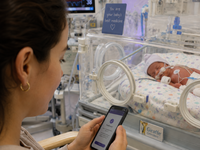
A Digital Acceptance and Commitment Therapy and Education Intervention for Caregivers of Very Preterm Infants in the Neonatal Intensive Care Unit: Randomized Controlled Trial

Background: Parents of very preterm infants admitted to the neonatal intensive care unit (NICU) experience high levels of psychological distress, yet access to timely, evidence-based mental health support is limited by staffing and resource constraints. Digital mental health interventions offer a scalable approach to addressing this gap; however, their effectiveness has not been well established in NICU caregiver populations, particularly during periods of acute stress. Objective: This study aims to evaluate the effectiveness of a self-guided digital acceptance and commitment therapy (ACT)–based intervention combined with NICU-specific education (NICU parent acceptance and commitment therapy [NPACT]). The study explored the intervention’s effects on stress among parents and primary caregivers of very preterm infants, compared to a digital education-only intervention, and active control. Methods: We conducted a 3-arm, single-center, randomized controlled cluster trial in a tertiary NICU. Parents and primary caregivers of very preterm infants (<32 wk’ gestational age,<1 wk old) were randomized by family cluster to (1) NPACT (ACT+ education), (2) a digital education-only intervention, or (3) active control. Digital interventions were delivered via a web-based platform over 2 weeks. The primary outcome was NICU-related stress on the Parent Stressor Scale: Neonatal Intensive Care Unit (PSS:NICU) at 2 weeks postrandomization. Secondary outcomes included caregiver anxiety, depression, perceived stress, and selected neonatal outcomes. Engagement and perceived helpfulness were assessed for digital interventions. Results: A total of 102 caregivers from 68 family clusters (79 infants; mean gestational age 28.1, SD 2.2 wk) were enrolled. There were no statistically significant between-group differences in the mean PSS:NICU scores at 2 weeks (NPACT 3.0, SD 0.9; education-only 2.5, SD 1; active control 2.6, SD 0.9; adjusted mean difference for NPACT vs active control 0.04, 95% CI −0.39 to 0.47). No between-group differences were observed for secondary psychological outcomes at any time point. However, caregivers in both digital intervention groups had higher odds of full breastfeeding at discharge compared with active control. Engagement with the digital interventions was high, with 97% (28/29) of NPACT participants and 76% (19/25) of education-only participants completing at least 5 of 7 modules, and both interventions were rated as very helpful. Conclusions: In this trial, an unguided digital mental health intervention delivered during NICU admission did not reduce NICU-specific parental stress or other psychological outcomes relative to active control. However, the intervention was highly used by caregivers. These findings suggest that while a brief digital mental health intervention can be successfully implemented in a high-stress clinical setting with caregivers, its capacity to reduce acute psychological distress may be limited. Secondary findings indicate potential benefits of the digital intervention on breastfeeding, generating hypotheses for future research. Digital mental health interventions in neonatal settings may be most effective when integrated within hybrid models of care and/or delivered beyond the acute admission phase. Trial Registration: Australian New Zealand Clinical Trials Registry ACTRN12623000641695; https://tinyurl.com/2e8677bb International Registered Report Identifier (IRRID): RR2-10.1016/j.cct.2024.107519

Why Young People Fail to Report Harmful Online Experiences

Research shows that 80% of youth who experience negative online interactions never report them. Here’s what parents can do to help.

Most parents assume that if something bad happened to their child online, they’d hear about it. But new research suggests that may not be the case.

In a study of over 1,000 youth ages 9–15 with mental health or neurodevelopmental concerns, researchers from the Child Mind Institute found that one in four experienced a negative online interaction — including cyberbullying, sexual harassment, or doxxing — in the past year. Among those who experienced an incident, nearly 69% said it happened more than once. Yet only 20% reported it.

The problem isn’t that young people don’t care or don’t know something is wrong. There are real, identifiable barriers getting in the way.

Why youth stay silent

The study identified three major barriers preventing young people from reporting harmful online experiences:

  • They don’t know how. Many find the reporting process confusing and don’t understand how to use the tools on the platforms they frequent.
  • They’re unsure if their experience qualifies. Young people often struggle to determine whether the incident is serious enough to report. When intent and severity are unclear, many default to staying quiet.
  • They’re worried about the consequences. Embarrassment, fear of retaliation or escalation, and worries about anonymity are commonly reported. These emotional barriers were especially pronounced in young participants with anxiety or mood challenges.

What parents and caregivers can do

The study found that family dynamics can play an important role in both a child’s likelihood of experiencing online harm and how they respond to it.

Inconsistent discipline and poor supervision were linked with higher rates of negative online encounters. On the other hand, youth from families with open and supportive communication were more comfortable seeking help when something went wrong online. And when given the choice, most preferred telling a trusted adult rather than using platform reporting tools.

Here’s what parents can do:

  • Keep communication open. Don’t wait for something to go wrong. Create space for low-pressure conversations about both positive and negative online experiences.
  • Make it safe to speak up. To be able to talk openly about their issues with you, youth need to believe that it won’t result in punishment, judgment, or loss of their devices.
  • Help them know what counts. When researchers presented hypothetical scenarios, youth were clear about what should be reported. But with their own real experiences, they hesitated. Talk through real and imagined scenarios to help them build confidence recognizing situations in which they should speak up.
  • Learn the tools together. Sit down together and get familiar with the blocking, privacy, and reporting features on the platforms they regularly use.

Creating safer digital spaces

The responsibility for online safety shouldn’t fall entirely on children or their families.

If we want young people to report unwanted experiences, the tools and systems around them need to be clearer, safer, and easier to use. Platforms need reporting tools designed with young users in mind. Policies and safety guidance should be written in clear, developmentally appropriate language. This way, children will have a better understanding of what kinds of experiences should be reported and what happens after a report is submitted.

Based on research published in JAACAP Open.
Read the full study

The post Why Young People Fail to Report Harmful Online Experiences appeared first on Child Mind Institute.

Autism-Like Traits in Mice Improved After Single Rapamycin Dose

The results of a preclinical study led by UCLA Health researchers suggest that inflammation during pregnancy in mice can trigger autism-like brain and behavior changes in offspring, and that the effects may be rapidly but temporarily reversible in adulthood with a short-term dose of the immunosuppressive drug rapamycin.

The study showed that a single dose of rapamycin rapidly improved changes including brain overactivity, seizure risk, sensory sensitivity, repetitive behaviors, and abnormal brain functional network organization. Rapamycin itself is not considered a viable candidate for human therapy, as the effects of the drug were found to be temporary, with repeated dosing losing efficacy, and repeated use also having the potential for toxicity. However, the researchers said the study findings indicate that some autism-related brain changes may still be treatable in adulthood, and point to possible therapeutic approaches that target the underlying pathway rather than only symptoms.

“These results reframe how autism-associated symptoms might be treated,” said Janel Le Belle, PhD, an associate professor in the UCLA Department of Neurosurgery. “If the adult brain remains capable of functional normalization, then some features of autism may be successfully addressed without needing to correct underlying structural differences.” Le Belle is first author of the researchers’ published paper in Nature Communications, titled “Acute rapamycin treatment reveals distinct mechanisms of dysfunction in a maternal inflammation mouse model.”

Neurodevelopmental disorders result from the disruption of brain development in utero or in early life, with genetic, environmental, epigenetic, and immunological factors all potential contributors to complex pathogenesis, the authors wrote. Previous studies have shown that offspring of mothers who experience inflammation while pregnant have a higher likelihood of developing autism-associated traits such as repetitive behaviors and difficulty with social interaction, as well as brain overgrowth and disrupted sensory processing that continue into adulthood. “Maternal inflammatory response (MIR) during early mouse gestation induces a cascade of physiological and behavioral changes associated with autism spectrum disorder (ASD),” they stated.

Rapamycin has been shown in previous mouse autism studies to improve symptoms by suppressing an overactive mTOR pathway that signals cell growth and proliferation. What has been less clear is whether these brain changes could still be modifiable in adulthood, and whether rapamycin’s benefits came from long-term structural repair or faster functional changes. “We wanted to understand the mechanisms that underlie the effects of adult mTOR inhibition, where treatment isn’t aimed at preventing or reversing structural brain abnormalities,” the team stated.

For their newly reported study the scientists exposed pregnant mice to a mild inflammatory trigger early in gestation at a dose that was too low to make the mothers significantly ill. The resulting offspring went on to develop chronic brain and body-wide inflammation, mild brain overgrowth, overactive cell-signaling in the mTOR pathway, disorganized brain functional network connectivity and behaviors associated with autism.

When researchers gave adult offspring a single dose of rapamycin they found rapid improvement across nearly every measure. Neurons that had been firing abnormally calmed down, susceptibility to seizures dropped, brain regions that had been miscommunicating reorganized into more typical patterns and repetitive behaviors and sensory over-responsivity eased. These changes occurred within roughly two hours of drug administration, which was too rapid to be explained by the kind of physical rewiring of brain synapses that typically takes longer.

“The level of functional normalization achieved over this short time suggests new mechanisms by which possible treatments may act,” said the study’s senior author Harley Kornblum, MD, PhD, director of the UCLA Intellectual and Developmental Disabilities Research Center in the Semel Institute for Neuroscience and Human Behavior. “It suggests the adult brain may be more adaptable than we assumed, even when the underlying structural changes from early development are still there. This points us toward the brain’s functional circuitry, not just its physical structure, as a target for future treatment approaches.”

To understand the mechanisms of rapid rapamycin effects, researchers examined gene activity in brain cells before and after treatment. They found that rapamycin reversed abnormal expression of genes tied to autism, epilepsy and ion channel function, particularly in excitatory neurons, suggesting the drug works by quickly rebalancing brain cell excitability rather than by repairing structural brain differences.

The findings suggest that mTOR pathway activity, brain network organization and neuronal excitation levels as potential targets for future therapies aimed at specific autism symptoms such as sensory over-responsivity, a common but difficult-to-treat symptom of autism. “Our findings demonstrate that mTOR dysregulation drives dysfunctional brain development in MIR offspring but the adult brain remains amenable to rapid functional normalization, rescuing core and comorbid ASD associated brain and behavior phenotypes,” the authors stated.

Co-senior author and professor in the UCLA Department of Neurosurgery, Neil Harris, PhD, cautioned that the results showed the treatment effects to be temporary and that daily dosing produced tolerance over several weeks. This, along with rapamycin’s high potential for toxicity and the fact that these studies were performed in mice, makes it unsuitable for broad use in humans. “This points toward new therapeutic targets like sensory circuit neuromodulation or balancing neuronal inhibition and excitation, rather than toward rapamycin itself as a treatment,” Harris said. As the authors further commented in their paper, “Restoring excitatory/inhibitory imbalance and sensory functional network modularity may be important targets for therapeutically addressing multiple ASD phenotypes.”

The post Autism-Like Traits in Mice Improved After Single Rapamycin Dose appeared first on GEN – Genetic Engineering and Biotechnology News.