What Are Intrusive Thoughts?

When a child confesses a frightening thought that seemed to come out of nowhere — “What if I hurt someone with this knife?” “What if mom dies in a car accident?” “What if germs get into this paper cut and I die of an infection?”  — you can both find it confusing and disturbing.  But in most cases these intrusive thoughts are not evidence of a problem.

Intrusive thoughts are unwanted ideas, images, or urges that pop into the mind seemingly out of nowhere. They might feel embarrassing, violent, sexual, or just plain strange — and they feel completely out of character, which is exactly why they’re so upsetting. “An intrusive thought is a lot like your brain sending junk mail,” says Theresa Welles, PhD, a clinical psychologist and director of the Bubrick Center for Pediatric OCD at the Child Mind Institute. “Just because it shows up doesn’t mean it’s important or true or something you even want.”

It also doesn’t necessarily mean that a child has OCD or another mental health disorder. Though intrusive thoughts are associated with OCD — in which unwanted thoughts (called obsessions) drive children to perform rituals (called compulsions) to alleviate them — for many children they are just fleeting thoughts. It’s only when kids become unable to let them go that they are concerning. Another way to think about it, says Dr. Welles, is that “the brain’s job is to generate thoughts, the same way an apple tree’s job is to produce apples. Not every apple is perfect — some are misshapen or wormy. And not every thought is meaningful or worth paying attention to. Having a thought is not the same as wanting it or intending to act on it.”

Who has intrusive thoughts

“Everyone who has a brain has them,” says Caitlyn Downie, LCSW, director of trauma and resilience at the Child Mind Institute. “It’s part of the human existence.” A child might suddenly imagine something terrible happening to a parent, or a teenager might have a violent or sexual thought that feels shocking or shameful. Most of the time, these pass quickly — unpleasant, but easy enough to brush aside.

That’s the key distinction: not the thought itself, but what happens after it. The concern isn’t that the thought appeared — it’s how the child responds, how often it returns, and whether it starts getting in the way of daily life.

For some children — particularly those who are anxious, perfectionistic, or who have OCD — intrusive thoughts become “sticky.” Instead of passing through, the thought snags. The child starts paying attention to it, trying to figure it out or make it go away, which only makes it feel more powerful. “Young people lack the experience to recognize that thoughts aren’t the same as intentions, desires, or actions,” Dr. Welles says. “The thoughts feel alarming. So the child pays more attention, and the more attention they give it, the more often it returns.” That loop of fear and self-doubt is what parents and clinicians need to be alert to.

When should parents be concerned?

Many children are too ashamed or frightened to describe what’s actually going on, so parents may never hear about the thought itself. Instead, changes in behavior are often the first clue. Look for signs like:

  • Increased distress, irritability, or moodiness
  • Avoidance of something that wasn’t previously a problem
  • Trouble concentrating or sleeping
  • Excessive guilt or repeated reassurance seeking
  • Rituals like checking, counting, washing hands, or going through routines in a specific way

It’s worth seeking professional support when intrusive thoughts are frequent and intense, hard to shake, causing real distress, or getting in the way of school, friendships, or daily routines.

Why intrusive thoughts feel so frightening

When an intrusive thought appears, it can set off the body’s alarm system — the same ancient survival mechanism that helped people run from danger or fight it off. In anxiety and OCD, that alarm bell rings when there’s no real emergency. The child has a thought, the body reacts with panic, and the child assumes the thought must be important because it feels big and important.

Children may also fall into what clinicians call thought-action fusion. “That’s the mistaken belief that having a thought makes it more likely to happen,” explains Dr. Welles, “or that it reveals something terrible about who they are.” A child who thinks, “What if I hurt my baby brother?” may become convinced the thought means they secretly want to — but intrusive thoughts are often the precise opposite of what a child would ever want. Paradoxically, Dr. Welles says, “for most people with anxiety disorders and OCD, these thoughts are the actual opposite of what they would ever do.”

How parents can help

The first thing to do is stay calm — harder than it sounds if the thought is violent, sexual, or taboo. Children look to their parents to gauge whether something is truly dangerous, so if you look horrified, your child takes that as confirmation the thought is something to fear.

When a child shares an intrusive thought, Downie suggests responding with warmth and curiosity: “Say something like, ‘I appreciate you telling me — it sounds like that was really scary.’ It also helps to normalize it: ‘A lot of people have thoughts they don’t particularly like.’” Some other responses that can help:

  • “That sounds really upsetting — I’m glad you told me.”
  • “Having a thought doesn’t mean you want it or that it’ll ever happen.”
  • “You don’t have to figure this out right now.”

The goal is to help your child feel less alone and less ashamed, without treating the thought like a five-alarm emergency. And do your best to avoid reassurance. Reassuring the child about the contents of a specific thought (for example, responding to a child who asks, “Are you sure I’m a good person?” with “Yes, you’re a good person”) can actually make things worse, especially in kids with OCD. They feel very temporary relief but then the thought creeps back and they need more reassurance. It becomes a cycle. Instead try: “I know this feels awful. And I know you can handle it.”

It also helps to redirect the child to something concrete: getting dressed, eating breakfast, watching a show, texting a friend. With younger kids, you might guide them in doing slow breaths or suggest they move to another room so they distract themselves from the thought. With teens, you might mean teach them to resist the urge to Google their fears or thoughts, confess, or ask the same question over and over again. “The idea,” Downie says, “is to validate the feeling without validating the fear. You’re saying: ‘I hear you, this is hard, and you can get through it.’”

What can cause intrusive thoughts?

Intrusive thoughts aren’t a diagnosis on their own — they’re a symptom that can show up across a range of conditions, or in children who have no diagnosis at all. Disorders they may be associated with include:

  • OCD: The most closely associated condition. Common themes include harm, contamination, sexual thoughts, and religious or moral fears.
  • Generalized anxiety: Tends to involve repetitive “what if” worries about everyday concerns — school, safety, family, the future.
  • Social anxiety: Brings intrusive thoughts about embarrassment, rejection, or being judged by peers.
  • PTSD: Can involve intrusive memories, images, or sensations tied to a traumatic event. “A child who has experienced trauma may worry about being harmed again or even about harming someone else,” Downie notes, “but that doesn’t mean every child with trauma will have intrusive thoughts.”
  • Depression: Often involves intrusive thoughts that fit a negative self-image: I’m worthless. I’m a burden. I’m a bad person.
  • Autism spectrum disorder: Repetitive thoughts often center on a special interest and aren’t typically unwanted or distressing the way OCD thoughts are — though they can look similar from the outside.
  • Psychotic disorders: Young people with psychosis tend to experience intrusive thoughts as fixed and real, without the self-awareness that typically accompanies anxiety-driven ones. Psychotic disorders such as schizophrenia are rare in children, though early signs can appear in the teenage years.

How intrusive thoughts are treated

Treatment depends on what’s driving the thoughts and how much they’re disrupting the child’s life:

  • For OCD, the gold-standard treatment is exposure and response prevention (ERP), a specialized form of cognitive behavioral therapy (CBT) where children practice sitting with intrusive thoughts without doing compulsions. Over time, they learn to tolerate uncertainty and discover that the thought, however uncomfortable, isn’t actually dangerous.
  • For anxiety, the same treatments are helpful. CBT helps children understand the connection between thoughts, feelings, and behaviors, and ERP helps kids learn to tolerate the anxiety these thoughts generate, and it gradually diminishes.
  • For trauma, treatment may include trauma-focused CBT. Mindfulness, DBT skills, and breathing exercises can also help regulate the nervous system.
  • Family involvement matters a great deal. “Parents often need help learning how to respond without accidentally feeding the anxiety cycle,” Dr. Welles says. SPACE (Supportive Parenting for Anxious Childhood Emotions) is an evidence-based approach that helps parents reduce accommodation and support their child’s brave behavior instead.
  • For moderate-to-severe OCD or anxiety, medication — typically an SSRI — may also be worth discussing with a psychiatrist or pediatrician.

Helping your child trust their own mind

One of the hardest things about intrusive thoughts is that they can make children afraid of their own minds — convinced that every thought needs to be examined or explained away before they can relax. But no one gets to have only pleasant, well-behaved thoughts.  

What children can learn is that a thought can be upsetting without being meaningful, loud without being true, and it can pass through without becoming a verdict on who they are. As parents, the most powerful thing you can offer is a calm, steady presence — taking it seriously without treating it as a catastrophe. When your child sees you aren’t panicked, they get to borrow some of that calm for themselves.

Frequently Asked Questions

What are intrusive thoughts?

Intrusive thoughts are unwanted ideas, images, or urges that pop into your mind unexpectedly. They often feel upsetting or out of character, but they’re essentially “junk mail” from the brain — not meaningful or important.

Are intrusive thoughts normal?

Yes, everyone can have them. Most children (and adults) experience intrusive thoughts at times, and in many cases they pass quickly without causing problems.

What causes intrusive thoughts?

They’re a normal byproduct of how the brain works, but they can become more frequent or “sticky” in kids who are anxious, perfectionistic, or dealing with conditions like OCD or trauma. Paying extra attention to the thought can also make it return more often.

Do intrusive thoughts mean I want to act on them?

No. Having an intrusive thought doesn’t mean you want to act on it or that it reflects who you are. In fact, these thoughts are often the opposite of what someone would ever want or do.

The post What Are Intrusive Thoughts? appeared first on Child Mind Institute.

Affiliate Updates: Summer 2026

An IOCDF Affiliate carries out the mission of the International OCD Foundation through programs at the local community level within the United States. Each Affiliate is an independent 501(c)3 non-profit organization run entirely by dedicated volunteers.

Below will be quarterly updates from our Affiliates, organized by state. Click the (+) to open each menu and read updates and find contact information for clinics near you.

The post Affiliate Updates: Summer 2026 appeared first on International OCD Foundation.

Associations between childhood trauma, intolerance of uncertainty, and symptom severity in obsessive-compulsive disorder

BackgroundChildhood trauma (CT) has been associated with obsessive-compulsive disorder (OCD), but its relationship with obsessive-compulsive symptom (OCS) severity remains inconsistent. Intolerance of uncertainty (IU) may represent one of the cognitive processes underlying this association. The present study aimed to examine differences in CT and IU between patients with OCD and healthy controls (HCs), and to test whether IU mediates the relationship between CT and OCS severity.MethodsThis study included 82 patients with OCD and 82 healthy controls (HCs) matched on age and sex. CT was assessed using the Childhood Trauma Questionnaire-33 (CTQ-33), IU using the Intolerance of Uncertainty Scale–Short Form (IUS-12), and OCS severity using the Yale-Brown Obsessive-Compulsive Scale (Y-BOCS).ResultsPatients with OCD had significantly higher scores than HCs on all CTQ-33 subscales and on IU measures. In particular, the patient group showed higher IUS-12 total scores than the HC group (39.30 ± 10.42 vs. 32.11 ± 8.62, p < 0.001), with higher prospective anxiety (22.11 ± 5.13 vs. 20.11 ± 4.59, p = 0.009) and inhibitory anxiety scores (17.19 ± 5.99 vs. 12.00 ± 4.82, p < 0.001). Within the patient group, physical abuse was the only CT dimension significantly associated with total Y-BOCS scores (r = 0.248, p = 0.025), whereas IU was positively associated with symptom severity (IUS-12 total: r = 0.346, p = 0.001). Path analysis showed that CT was associated with IU (β = 0.238, p = 0.023), IU was associated with OCS severity (β = 0.329, p = 0.007), and the direct effect of CT on OCS severity was no longer significant after IU was included in the model (c′ = 0.209, p = 0.093), supporting partial mediation.ConclusionCT appears to be elevated in patients with OCD, although its association with symptom severity is not uniform across trauma dimensions. IU may represent an important cognitive mechanism linking CT to OCS severity. These findings suggest that assessing and addressing IU may contribute to more individualized clinical approaches in OCD.

When OCD Is Loud, Trust Your Higher Power

by Annabella Hagen, LCSW

When I met Marie, she shared how faith and her connection with a Higher Power had always been important in her life. Her parents taught her that faith could be an anchor during hard times.

But Marie also had a genetic predisposition to obsessive compulsive disorder (OCD). When doubts and fears began to take over, she slowly lost confidence that she could ever feel peace again. Without knowing it, the more she tried to reason with the thoughts, fight them, or seek reassurance, the stronger they became.

Her OCD changed themes as she grew up. The voice within whispered different fears at different times:

“You may hurt the kids you’re babysitting.”
“You caused your granny’s pneumonia because you didn’t wash your hands well enough.”
“Am I going blind?”
“Why do these ugly images come into my head in sacred places? I must stop them.”

She tried to “fix” her doubts. But the more she focused on them, the more they grew. They distracted her from what mattered most — including her relationship with her Higher Power. She blamed herself for not feeling close to God. She felt ashamed and spiritually broken.

Many people with OCD blame themselves for their unwanted thoughts. They panic.

“Why would I think this?”
“What does this say about me?”
“Am I a terrible person?”

No matter what Marie did, she could not find certainty. She could not get enough reassurance. She wished she could control her thoughts and feelings. Because she couldn’t, she became very hard on herself. Her self-compassion slowly disappeared.

But here is something important: every human being — whether they have OCD or not — experiences disturbing thoughts, images, or impulses at times. Research going back decades, including studies like Rachman and de Silva (1978), shows that intrusive thoughts are common in the general population.

The difference is not the content of the thoughts. The difference is how often they come, how intense they feel, and how much distress they cause.

When someone without OCD has a strange thought, they may feel uncomfortable and say, “That was weird,” and move on.

But someone with OCD feels a strong need to solve the doubt. They may analyze it, argue with it, pray repeatedly, seek reassurance, or try to push it away. Without realizing it, these efforts make the thoughts louder and more frequent. This is how the OCD cycle grows.

Understanding this can bring hope. It means the problem is not your faith. It is the pattern.

And the good news is that OCD is not only genetic or neurological. It is also behavioral. That means you can learn to respond differently!

Thoughts and feelings are like the weather. They come and go. When we fight them or try to control them, they often stay longer.

You can learn to let them be.

Through Exposure and Response Prevention (ERP), you can practice moving toward what matters most — your faith, your family, your values — even when doubt is present. Instead of trying to silence the thoughts, you can choose not to follow the urge to fix them.

The first step is awareness.

You may already notice the unwanted thoughts. But can you notice how you respond?

Ask yourself gently:

  • Do I try to get rid of emotional pain right away?
  • Do I avoid situations because they trigger anxiety and doubts?
  • When I feel an urge, do I automatically act on it?
  • Can I see that thoughts are just thoughts, not facts?

These small moments of awareness begin to weaken the cycle.

As you practice new responses, you can begin shaping new pathways in your brain. Slowly, you can move closer to the connection with your Higher Power that you have been longing for.

Thoughts come and go. What matters most is what you choose to do.

You can act in faith and trust your Higher Power, even when the OCD voice is loud. That voice feels powerful, but it is not your identity. It does not define your relationship with God.

Change takes time. It takes practice. But it is possible. And it is worth it!

And you can find your way back!

Remember, OCD may try to use your faith as a weapon, your faith is not the problem—the disorder is. OCD is a health condition that seeks certainty where faith invites trust.

If you find yourself in a cycle of “loud” thoughts and repetitive compulsions—like over-praying, seeking constant reassurance, or fearing you’ve lost your connection to the divine—know that healing is possible.

To help more individuals like Marie navigate these challenges, the International OCD Foundation has released a comprehensive new brochure specifically for people of faith.

Download the “OCD is Not What You Think It Is” Brochure here or visit the Faith & OCD Resource Page to find more specialized support and information.

The post When OCD Is Loud, Trust Your Higher Power appeared first on International OCD Foundation.

Virtual reality based attentional bias modification training for patients with obsessive-compulsive disorder: a feasibility study

BackgroundAttentional bias modification (ABM) training is employed to modulate attentional bias and alleviate clinical symptoms in obsessive-compulsive disorder (OCD) patients. This study aimed to develop a novel, ecologically valid ABM paradigm based on virtual reality (VR). The intent was to enhance the efficacy of traditional computerized ABM and to preliminarily examine its feasibility in patients with contamination-based obsessive-compulsive disorder (OCD).Method15 patients with OCD who were currently receiving pharmacotherapy were recruited and allocated to either an ABM group, which received VR-ABM training twice weekly for four weeks (eight sessions in total), or a TAU group, which continued their routine outpatient treatment, including pharmacotherapy, psychotherapy, and physical therapy.Result5 patients in ABM group and 5 patients in TAU group completed the 4-week follow-up. VR-ABM paradigm effectively elicited target symptoms, with virtual scenarios inducing moderate levels of obsessive-compulsive symptoms and anxiety. Notably, all participants in the VR-ABM group reported the program to be appropriately challenging, effectively eliciting obsessive-compulsive symptoms and improving subjective concentration.ConclusionThese preliminary findings support the feasibility of the novel VR-ABM training in OCD and warrant further investigation in larger, controlled trials to rigorously evaluate its therapeutic efficacy.

Introducing the 2026 IOCDF Award Winners of the 2026 Annual OCD Conference

The mission of the International OCD Foundation — to ensure that no one affected by OCD or related disorders suffers alone — requires the collaboration and dedication of countless individuals and professionals around the world. Each year, the IOCDF is honored to recognize a few of these contributors who have gone above and beyond to inspire hope, build community, and move us closer to a world where everyone has access to effective support and care.

These awards will be presented at the 31st Annual OCD Conference, sponsored by OCD Institute Texas, on Saturday, July 11, 2026.

2026 Career Achievement Award Winner: Sabine Wilhelm, PhD

Highlighting the significant and notable contributions of a professional in the field of OCD and related disorders.

Sabine Wilhelm, PhD, is the Donovan-Chien Family Endowed Professor at Harvard Medical School and Chief of Psychology at Mass General Brigham. She directs both the Center for OCD and Related Disorders and the Center for Digital Mental Health at Massachusetts General Hospital. Dr. Wilhelm’s work leverages AI and technology to improve mental health care globally, focusing on developing personalized, scalable digital treatments. She has authored 375 publications and nine books. She has received major awards, including the NAMI Scientific Research Award and the Peter Ranney Innovation Award from the World Medical Innovation Forum. Dr. Wilhelm is the outgoing Chair of the IOCDF Scientific & Clinical Advisory Council after serving since 2023, and she has served on numerous committees to support the Foundation’s work to advance research and resources for OCD and related disorders.

2026 Patricia Perkins Service Award Winner: Aureen Wagner, PhD

Honors any professional or IOCDF member who has stood out as a long-time (10+ years) and active contributor to the IOCDF in multiple ways. This award is named after Patricia Perkins, IOCDF co-founder, past president of the Board of Directors, and previous executive director.

Winner Bio: Aureen Pinto Wagner, PhD, has been involved with the International OCD Foundation since 1992 and a frequent presenter at its conferences and programs for families, clinicians, and youth. She serves on the IOCDF’s Scientific and Clinical Advisory Board and has been faculty with the Behavior Therapy Training Institute since 2001.

Dedicated to expanding access to evidence-based OCD treatment, Dr. Wagner provides clinician training, workshops, and consultation nationwide. She is the author of the professional treatment manual Treatment of OCD in Children and Adolescents: A Professional’s Kit and several award-winning books for families, including  “Up and Down the Worry Hill: A Children’s Book about Obsessive-Compulsive Disorder and its Treatment,” “What to do when your Child has Obsessive-Compulsive Disorder: Strategies and Solutions” and “Worried No More: Help and Hope for Anxious Children.”

At The Anxiety Wellness Center in Cary, North Carolina. Dr. Wagner provides in-person and telehealth treatment for children, adolescents, and adults with OCD, anxiety, and related conditions, along with parenting support for families.

2026 Hero Award Winner: Stephen Smith

Recognizes any individual that has stood out as a particularly effective advocate for OCD and related disorders or who helped raise awareness of these disorders. 

Stephen Smith is the Co-founder and Chief Executive Officer of NOCD, the world’s largest OCD-specialty treatment provider for both adults and children. After emerging from a personal struggle with undiagnosed OCD and experiencing the success of Exposure & Response Prevention (ERP) therapy first-hand, Stephen made it his mission to transform the behavioral health treatment system for people with OCD and related conditions. Under his leadership, NOCD has done that. NOCD drives OCD awareness campaigns that reach millions of people each year, cares for hundreds of thousands of people with OCD, and is contracted to serve more than 140 million commercial lives nationally.

2026 Youth Hero Award Winner: Gabriella Lee

Recognizes any youth (under 18) that has stood out as a particularly effective advocate for OCD and related disorders or who helped raise awareness of these disorders. This award is presented by UNSTUCK: an OCD kids movie.

Gabriella Chaeyoon Lee is a junior at Great Oak High School in California who is dedicated to promoting mental health awareness, particularly surrounding OCD. Inspired by her personal connection to OCD through her mother’s diagnosis, she actively works to reduce stigma and support others through her school club and independent initiatives. She is passionate about creating safe and inclusive spaces where individuals feel understood and supported. She hopes to continue her advocacy and contribute to meaningful change in mental health communities.

2026 Illumination Award Winner: Tiffany Jenkins

Honors media personalities who have represented OCD or related disorders in a respectful, accurate, and appropriate way, or who have challenged stereotypes and helped to fight stigma around mental health issues.

Tiffany Jenkins is a comedian, New York Times bestselling author, speaker, and podcast host with a combined social media following of over 9 million and more than one billion video views worldwide.

While widely recognized for her relatable and candid comedy, Tiffany is deeply committed to raising awareness around mental health and addiction. Drawing from her own lived experience in recovery, she travels across the United States speaking at high schools, correctional facilities, treatment centers, and conferences, where she delivers impactful, honest conversations that resonate with diverse audiences.

Above all, Tiffany is a devoted mother, bringing authenticity, resilience, and humor into both her work and her everyday life.

The post Introducing the 2026 IOCDF Award Winners of the 2026 Annual OCD Conference appeared first on International OCD Foundation.

The Download: the first brain implant power user and South Korea’s AI obsession

This is today’s edition of The Download, our weekday newsletter that provides a daily dose of what’s going on in the world of technology.

This man with ALS is the first “power user” of a brain implant that lets him speak

Casey Harrell has had a set of electrodes embedded in his brain for almost three years. Harrell, who has ALS and is paralyzed, first used his brain-computer interface (BCI) to “speak” in 2023. Since then, he’s clocked thousands of hours of use. 

Harrell can now use the device largely independently. His team has added new features to it, and he also uses it to surf the web and perform his job. “Living with a disease like ALS, you are supposed to have diminished dreams. I do not,” Harrell told MIT Technology Review. 

The team behind the device call Harrell “the first power user of a speech BCI.” They now plan to add further enhancements to the device.

Dive into the groundbreaking impact of Casey Harrell’s BCI.

—Jessica Hamzelou

Why do South Koreans love AI so much?

While a public backlash against AI brews across the US, South Koreans are optimistic. Only 16% say they are more concerned than excited about AI—the lowest of the 25 countries surveyed by the Pew Research Center—while 50% of Americans were more worried than excited. 

South Koreans share a deep conviction that embracing technology is integral to modernizing the country and cementing its place in the global order. Their fascination with AI is just the latest incarnation of that ethos—and it’s making them anxious to stay ahead.

Read the full story on South Korea’s AI fervour.

—Michelle Kim

This story is from The Algorithm, our weekly newsletter giving you the inside track on all things AI. Sign up to receive it in your inbox every Monday.

The must-reads

I’ve combed the internet to find you today’s most fun/important/scary/fascinating stories about technology.

1 The US says it restricted Anthropic AI over foreign intelligence risks
Commerce chief Lutnick said he acted over national security fears. (Reuters $)
+ Following the ban, Anthropic disabled access to its new models. (BBC)
+ Both sides are increasingly desperate for a resolution. (WSJ $)

2 DeepSeek just became China’s most valuable startup
It raised $7 billion, the largest-ever first-round funding for an AI startup. (The Information $)
+ The deal values DeepSeek at over $50 billion. (WSJ $)
+ Its unusual structure preserves founder control. (Reuters $)
+ DeepSeek’s new flagship model has caused a stir. (MIT Technology Review)
 
3 Alibaba has unveiled AI models for robots amid a shift from chatbots
It’s joined a global race to move AI into the physical world. (SCMP)
+ AI is learning to understand its surroundings. (MIT Technology Review)
 
4 Fox is buying streaming giant Roku for $22 billion
The deal creates the third-largest player in US TV by viewing share. (BBC)
+ Fox is making a big bet on free streaming. (Washington Post $)

5 EA has launched a new way to advertise “directly into gameplay”
EA Advertising allows brands to become part of the game itself. (CNBC)
+ Xbox’s new chief strategy officer is also eyeing in-game ads. (PC Gamer)
+ GenAI could reinvent what it means to play. (MIT Technology Review)

6 It’s trivially easy to use Reddit to manipulate AI search
A tiny snippet of text can trick ChatGPT and Google’s AI search. (404 Media)
+ AI search is being manipulated to generate dangerous biases. (BBC)
 
7 Sperm have been made magnetic to allow IVF inside the body
The technique enables remote guidance towards an egg. (New Scientist $)
+ Automation and AI are transforming IVF. (MIT Technology Review)
 
8 The world’s leading deepfake expert no longer trusts his own eyes
He’s struggling to prove what’s real before the internet decides. (NYT $)
 
9 Meta’s CTO admits its AI reorganisation was “atrocious”
He’s promised staff better communication—and snacks. (Wired $)
 
10 Silicon Valley billionaires are pretending to kill each other for fun
In a new game show from Peter Thiel’s Founders Fund. (WSJ $)

Quote of the day

“There was a speeding ticket, and they gave Fable the death penalty.” 

—Alex Stamos, the former chief security officer of Facebook, tells the Washington Post that banning foreign access to Anthropic’s leading model is a disproportionate punishment.

One More Thing

" "

VICTOR KERLOW


Inside effective altruism, where the far future counts a lot more than the present

Since its birth in the late 2000s, effective altruism has aimed to answer a deceptively simple question: “How can those with means have the greatest impact?”

Directing money to evidence-based approaches is EA’s best-known technique. But as it’s expanded from an academic philosophy into a community and a movement, its ideas of the “best” way to change the world have evolved as well. 

Find out how effective altruism became one of the most influential—and contested—forces in philanthropy.

—Rebecca Ackermann

We can still have nice things

A place for comfort, fun, and distraction to brighten up your day. (Got any ideas? Drop me a line.)

+ The humble table has been reimagined as an unconventional public artifact.
+ Take a visual tour of the weird, centuries-old history of architecture’s most gruesome gargoyles.
+ A colorful parakeet unseen for an entire century was triumphantly rediscovered in an unexplored Indonesian forest.
+ This shimmering Southern Lights timelapse filmed by an astronaut on the SpaceX Dragon is stunning.

Non-Coding RNA Gene Expression in Psychiatric Disorders

Conditions: Schizophrenia Disorders; Major Depression; Bipolar Affective Disorders; Obsessive Compulsive Disorder (OCD); Anxiety Disorder (Panic Disorder or GAD)

Interventions: Genetic: Real-time Polymerase Chain Reaction

Sponsors: Carmen Concerto

Not yet recruiting

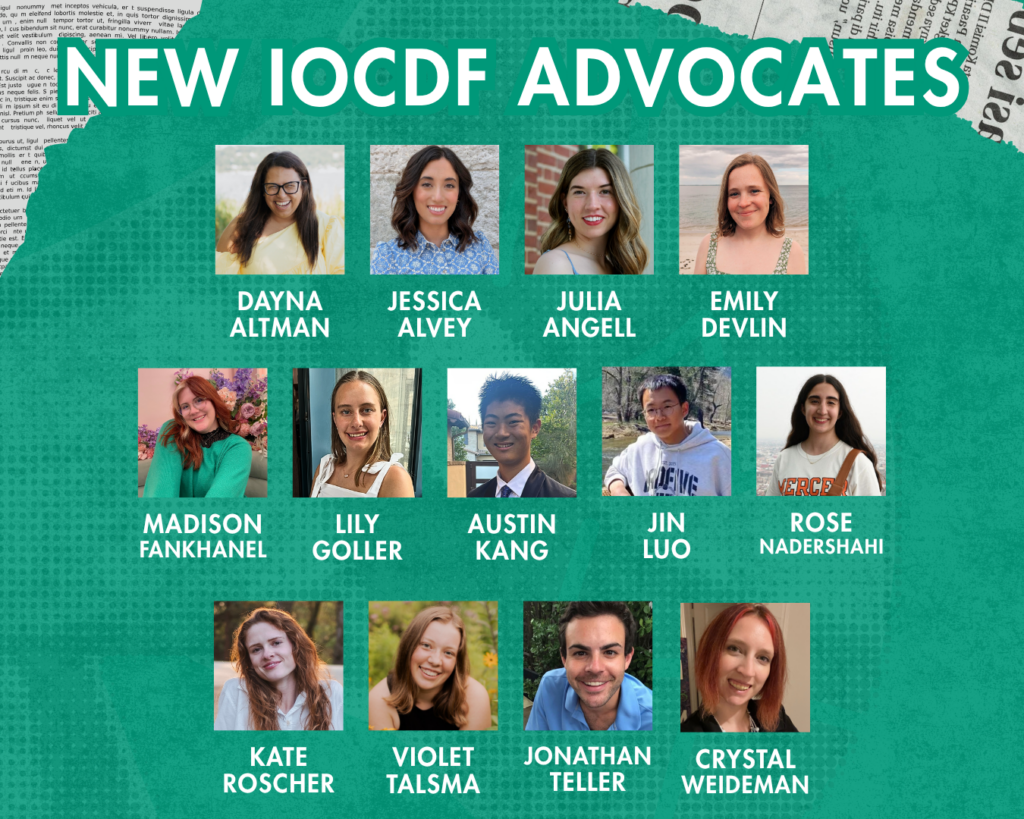
Welcome to Our New IOCDF Advocates

The IOCDF is thrilled to announce our newest cohort of Advocate volunteers! We’re welcoming 13 incredible new Advocates to our program, bringing our total to 64 dedicated volunteers working together to create meaningful change for the OCD and related disorders community.

These passionate individuals join us from bustling cities and quiet rural towns across the United States and around the world. From California to Massachusetts, and from countries including Canada and Ireland, this mix of local and global perspectives ensures we can reach and represent diverse communities everywhere.

The Power of Diverse Voices

Our newest cohort has a wide range of experiences and interests. They are passionate about addressing critical topics including:

  • Access to treatment
  • Diversity, multicultural issues, and LGBTQIA+ inclusion
  • Family issues and family accommodation
  • Young adult mental health and academic challenges
  • Public policy
  • Research advancement
  • Suicide prevention
  • Nutrition, fitness, and anxiety in athletes

This diversity of focus areas ensures that we can better represent and serve the full spectrum of our community’s needs.

Meet the Spring 2026 Advocates:

  • Dayna Altman 
  • Jessica Alvey 
  • Julia Angell 
  • Emily Devlin 
  • Madison Fankhanel 
  • Lily Goller 
  • Austin Kang 
  • Jin Luo 
  • Rose Nadershahi 
  • Kate Roscher 
  • Violet Talsma 
  • Jonathan Teller 
  • Crystal Weideman

You can see the full list of IOCDF advocates at iocdf.org/advocate-program

Your Voice Matters Too

Inspired by our Advocates? You can make a difference! Here are ways to start advocating today:

Fuel Our Mission Through Fundraising

Turn your passion into action by launching a personal fundraiser. Whether for a birthday, a race, or a creative project, you can rally your friends and family to raise critical funds. Every dollar helps build a world where everyone affected by OCD can thrive. Start your fundraiser here or explore all ways to give back here.

Advocate for policy change

Your voice can shape laws that improve access to care and insurance coverage. The IOCDF Public Policy Action Center makes it simple to find the latest bills and contact your elected officials with just a few clicks. True change starts here.

Join an IOCDF Special Interest Group

Connect with people who share your experiences or professional interests. IOCDF Special Interest Groups (SIGs) provide a platform for deeper discussion.

Whether you advocate on the national stage, share your story to fight stigma, or fundraise your way, every action creates a ripple effect of hope and understanding. Your journey, your voice, and your commitment are powerful tools.

Start today and help us build a world where everyone affected by OCD feels supported, seen, and empowered. Join a dedicated community committed to raising awareness.

Welcome again to our new IOCDF Advocates, we’re grateful to have you joining our mission!

The post Welcome to Our New IOCDF Advocates appeared first on International OCD Foundation.