Schizophrenia’s genetic landscape just expanded dramatically. A new study in Nature Genetics identifies 641 previously unrecognized genes associated with schizophrenia, thanks to a modeling framework that captures how distant genetic variants regulate gene expression through co‑expression networks. The work reframes schizophrenia not as a collection of isolated genetic hits, but as a disorder shaped by long‑range regulatory relationships across the brain. The study is titled, “Co‑expression‑based models improve eQTL predictions for transcriptome‑wide association studies and highlight new schizophrenia‑associated genes.”
The research team, led by Giulio Pergola, PhD, at the Lieber Institute for Brain Development (LIBD), developed two trans‑aware predictive models—INGENE and MODULE—that quantify how variants far from a gene influence its expression through co‑regulated partners. Traditional transcriptome‑wide association studies (TWAS) focus almost exclusively on cis‑expression quantitative trait loci (cis–eQTLs), variants within ±1 Mb of a gene. But as the paper noted, “Most transcriptome‑wide association approaches primarily model local (cis) genetic effects, leaving much of gene regulation unexplained.” By contrast, the new models incorporate distal (trans) regulatory effects, capturing regulatory relationships that behave more like social networks than neighborhood blocks.
Using RNA‑seq data from six human post‑mortem brain regions and genetic data from more than 102,000 individuals, the team integrated cis‑based predictors (CIS, EpiXcan) with their new trans‑based frameworks. The combined approach improved gene‑expression prediction for 18,744 genes, and when applied to Psychiatric Genomics Consortium (PGC3) datasets, it identified 766 schizophrenia‑associated genes, including 641 not previously detected by TWAS.
Pergola said the field has been “looking for the light under the lamppost, focusing only on genes close to disease‑associated DNA variants.” By illuminating long‑range interactions, he explained, “we’ve essentially turned on lights across the entire neighborhood, revealing how distant genetic variants coordinate to build the genetic basis of schizophrenia.”
The findings converge on pathways involved in glutamate signaling, neuronal communication, immune processes, and neurodevelopment—biological systems repeatedly implicated in psychiatric risk. MODULE‑derived trans‑single nucleotide polymorphisms (SNPs) showed particularly strong enrichment for schizophrenia‑associated variants, and many overlapped with cis‑eQTLs for transcription factors such as GATAD2A, RERE, IRF3,and SP4, all previously prioritized in schizophrenia GWAS.
Daniel Weinberger, MD, CEO and director of LIBD, emphasized the shift in perspective: “Schizophrenia risk isn’t just about individual genes acting one after another—it’s about how networks of genes work together. Understanding these coordinated genetic programs brings us closer to precision psychiatry.”
By demonstrating that trans‑regulatory architecture is both detectable and biologically meaningful, the study provides a roadmap for expanding TWAS beyond local effects. It also underscores the importance of integrating multi‑region brain transcriptomics with large‑scale genetic cohorts to reveal disease‑relevant regulatory relationships.
Mediodorsal thalamic nucleus (MD) is a pivotal hub for cortical functions, characterized by significant heterogeneity in its anatomical connectivity, cytoarchitecture, and function, constituting a complex nucleus composed of multiple functionally specialized subregions. We elaborates on the heterogeneous anatomical connectivity of MD and its crucial role in supporting higher cognitive functions such as working memory, cognitive control, and emotional integration. It then focuses on the multifaceted role of MD within epileptic pathological networks. Substantial evidence indicates that MD in patients with epilepsy exhibits structural atrophy and abnormalities in functional connectivity, with its activity being recruited early during seizures and likely involved in seizure propagation and generalization. However, the therapeutic efficacy of neuromodulation targeting MD, such as deep brain stimulation (DBS), remains contentious, highlighting the current insufficient understanding of its distinct functional subregions and specific pathway mechanisms. Finally, the review discusses the challenges and future directions in translating MD into an effective therapeutic target. It emphasizes that future research must endeavor to elucidate its causal mechanisms within epileptic networks at the subregional level, account for the heterogeneity of seizure onset frequencies, and develop precise intervention strategies targeting specific epileptogenic pathways, thereby advancing novel therapies focused on thalamocortical circuits toward clinical application.
Background: Psychotic disorder represents a leading cause of disability worldwide, and relapse in psychosis is common. Artificial intelligence (AI) is increasingly recognized as a method that could aid clinical monitoring for individuals experiencing psychosis. Objective: This review aims to map the existing literature on AI-based approaches—including machine learning, deep learning, and natural language processing—used to detect relapse in individuals with psychotic disorders. Methods: A systematic search strategy was conducted on PubMed, PsycINFO, and Embase up to January 7, 2026. Observational studies, randomized controlled trials, and quasi-experimental studies that used AI methods to detect relapse in psychosis were eligible for inclusion. Screening and data extraction procedures were conducted by at least 2 reviewers working independently. Findings were extracted, charted, and described using narrative synthesis based on data extraction and consensus meetings with the research team. The scoping review was prospectively registered with the Open Science Framework. Results: Relevant studies identified (N=10) included the use of digital tools such as smartphone- and smartwatch-based monitoring, ecological momentary assessment tools, social media activity, and internet searches. Digital phenotyping via smartphones and wearables emerged as the most common method for data collection. The efficacy of AI models varied with sensitivity (or recall) ranging from 0.25 to 0.77 and specificity (or precision) ranging from 0.06 to 0.88. The reported area under the receiver operating characteristic curve for models ranged from 0.63 to 0.78. AI models were heterogeneous across studies, and most study findings were not replicated. Conclusions: This scoping review highlights both the promise and the current limitations of AI in psychosis relapse detection. Passive digital phenotyping research in the detection of psychosis relapse has progressed, and personalized approaches with individual-level modeling show promise; however, further studies need to include larger numbers of participants and should incorporate methods such as large language models. Future studies will require large collaborations aimed at delivering AI methods for use in real-world clinical practice.
<img src="https://jmir-production.s3.us-east-2.amazonaws.com/thumbs/56322bc1f7dff8563d736e70b885fd6c" />
IntroductionUnderstanding how neurotransmitter systems organize into large-scale networks is essential for elucidating the mechanisms through which drugs, diseases, and behavioral states alter brain function. Existing imaging modalities such as functional MRI (fMRI) and positron emission tomography (PET) provide measures of hemodynamic and metabolic connectivity, but cannot noninvasively map neurotransmitter-associated networks with high spatial resolution. Herein, we introduce a chemical exchange saturation transfer (CEST) MRI-based framework for mapping glutamate-associated molecular connectivity and apply it to characterize nicotine-induced network reorganization in the mouse brain.MethodsMale C57BL/6 mice underwent dynamic glutamate-weighted CEST (gluCEST) MRI before and after seven days of nicotine exposure. Regional glutamate-weighted CEST time series were extracted from 51 brain regions, and connectivity was evaluated using within-subject temporal correlation and inter-subject covariance analyses.ResultsGraph theory analyses identified four baseline glutamate-associated modules involving frontal-sensorimotor, cortico-hippocampal, intra-hippocampal, and cortico-striatal circuits. Nicotine exposure attenuated these baseline networks in analyses performed without global signal regression (GSR) and with conditional GSR, whereas full GSR reduced the apparent magnitude of these effects. Nicotine also reduced nodal strength in the CA1 and insular cortex. In contrast, nicotine selectively strengthened a thalamo-striato-motor circuit involving the motor cortex, mediodorsal and ventral thalamic nuclei, and caudoputamen. This pattern remained evident even under full GSR. Subject-level covariance analysis confirmed widespread nicotine-induced attenuation of glutamate-associated connectivity and revealed a distinct sensory-limbic module involving the lateral geniculate nucleus, amygdala, and piriform cortex that was selectively disrupted following nicotine exposure.DiscussionThese results demonstrate the feasibility of dynamic gluCEST MRI for mapping glutamate-associated molecular connectivity in vivo and detecting pharmacologically induced network remodeling. This approach provides a noninvasive platform for investigating glutamatergic dysregulation in addiction, neuropsychiatric disorders, and therapeutic response.
Generative artificial intelligence (GenAI) and large language models are rapidly entering mental health research and service delivery, yet their dominant use remains symptom-centric, emphasizing screening, classification, triage, and risk detection. For older adults, mental health is often inseparable from existential concerns: loss of social role, disrupted continuity of self, loneliness, diminished dignity, and questions of legacy. This perspective argues that GenAI should not be conceptualized as an autonomous substitute for clinicians, nurses, social workers, or family caregivers. Instead, it may be better understood as an interactional infrastructure for meaning-centered care in later life. Drawing on meaning-centered psychotherapy, dignity therapy, life review, gerotranscendence theory, care ethics, and implementation science, we propose a Sensing-Narrating-Connecting-Governing framework. In this model, multimodal AI systems help detect existential and relational cues, support life-review conversations, co-construct dignity-preserving narratives, connect older adults with human care networks, and operate under explicit safeguards for privacy, hallucination, dependency, crisis escalation, and cultural adaptation. The proposed framework shifts evaluation from model performance alone toward existential well-being, dignity, continuity of self, therapeutic alliance, equity, and workflow integration. We conclude that GenAI may contribute to public mental health only when deployed as a bounded, human-supervised, culturally responsive layer of relational augmentation rather than as a replacement for human presence.
Conditions: Early Onset Psychosis; First Psychotic Episode Within the Last 5 Years; First-episode Psychosis; Schizophrenia Spectrum Disorders (SSD); Psychosis; Psychosis NOS; Randomized Controlled Trial (RCT)
Interventions: Behavioral: FEEL GOOD; Other: Treatment as Usual (TAU)
Sponsors: Stephanie Mehl; German Research Foundation; Universitätsklinikum Hamburg-Eppendorf; Central Institute of Mental Health, Mannheim; University Hospital Augsburg; Ludwig-Maximilians – University of Munich; Charite University, Berlin, Germany; University Hospital of Cologne; Vivantes Klinikum am Urban; Philipps University Marburg
Antimicrobial resistance (AMR) is a significant global health threat, with its impact felt across all regions of the world.1 According to the World Health Organization (WHO), AMR is responsible for an estimated 700,000 deaths annually worldwide, and this figure is projected to rise to 10 million deaths per year by 2050 if current trends persist.
Notably, the number of deaths attributable to AMR in many countries surpasses those caused by diabetes, kidney diseases, digestive disorders, and other non-communicable diseases. AMR has profound implications for clinical practice, affecting the management of infections across various healthcare settings. Here, we will discuss recent advances using novel biomaterials and phage for combating AMR.
Wounds, in particular, are susceptible to colonization by AMR bacteria, complicating wound healing and increasing the risk of serious complications such as sepsis and amputation, which in turn exacerbates the chronic wound burden. Chronic wounds impact the healthcare system because of their increasing prevalence and cost. The rapid growth of AMR further limits the effectiveness of standard antibiotic therapies, necessitating the use of more potent and costly antimicrobial agents, which may have adverse effects and contribute to further resistance development.
The most common bacteria isolated from chronic wounds include species of Staphylococcus (47–55%), primarily S. aureus and S. epidermidis, P. aeruginosa (25–33.6%), Acinetobacter spp., Enterococcus faecalis, and Enterobacteriaceae such as Escherichia coli, Klebsiella pneumoniae, and Enterobacter spp.2 Many of these bacteria have developed persistent AMR, such as methicillin-resistant S. aureus (MRSA). They are highly resistant to commonly used antibiotics and, therefore, limit treatment options for wound infection. To combat the growing threat of infected wounds with AMR bacteria, Han and colleagues devised a creative approach to directly degrade proteins responsible for bacterial growth.3
UDP-N-acetylmuramoyl-L-alanine-D-glutamate ligase (MurD) is a prime target for combating antibiotic resistance in bacteria as it catalyzes the synthesis of peptidoglycan, the predominant structural component in bacterial cell walls. Han et al. developed a bacterial nanoinducer (bacNID) designed to specifically degrade MurD, effectively inhibiting the growth of both Gram-positive and Gram-negative bacteria.
Two critical, interconnected challenges
“Our paper addresses two critical, interconnected challenges in global public health and antibacterial therapy: 1) The crisis of antibiotic resistance. Bacteria rapidly evolve resistance to conventional antibiotics through mechanisms such as membrane permeability changes, target mutations, enzymatic inactivation, and efflux pumps; and 2) The failure of the traditional drug development model. The pharmaceutical industry faces a >95% failure rate in developing new antibiotics. Even when new drugs are found, bacteria often develop resistance quickly, and many candidates suffer from poor pharmacokinetics, systemic toxicity, and an inability to selectively target bacteria over healthy host cells,” says Guangjun Nie, PhD, senior author of the paper and professor at the National Center for Nanoscience and Technology, Beijing, China.
Nie adds that by moving away from the “one-target-one-drug” inhibition model, their study solves the problem of how to kill bacteria without giving them a chance to evolve resistance. “It achieves this by hijacking the bacteria’s own protein degradation machinery to destroy essential proteins such as MurD that are necessary for cell wall synthesis.”
The team first conjugated MurD-targeting peptides (pMurD) on gold nanoparticles, alongside the addition of a rapidly degradable SsrA peptide tag. The role of the SsrA tag is to bind MurD, thereby “tricking” the bacterial ClpXP protease into degrading MurD. Gold nanoparticles function as a peptide delivery vehicle that is taken up directly by the bacteria to circumvent the potential membrane permeability barrier. In this way, bacNID can destroy MurD, which is needed to synthesize the cell wall, leading to bacterial death.
The rapid growth of AMR limits the effectiveness of standard antibiotic therapies, necessitating the use of more potent and costly antimicrobial agents, which may have adverse effects and contribute to further resistance development. [10174593_258/Getty Images]
The team showed that bacNID was able to specifically inhibit model Gram-positive and Gram-negative bacteria with a dose-dependent degradation profile while exhibiting low cytotoxicity towards nontargeted mammalian cells. BacNID also specifically targeted MurD while sparing other Mur ligases. This approach can also be used with other nanoparticle vehicles, such as platinum, making it a versatile method for universal inhibition of diverse AMR bacteria.
To improve mechanistic understanding, the team utilized a variety of techniques and discovered that bacNID-treated bacteria suffered from cell wall damage, leading to leakage of a significant amount of DNA and ATP. Interestingly, compared with conventional antibiotics, treatment with bacNID did not lead to the formation of resistance after sustained treatment.
Using an in vivo infected skin wound model, the authors showed that bacNID treatment not only reduced infection burden but also promoted better wound healing outcomes, including greater skin cell proliferation, neo-angiogenesis, and lower inflammation. To expand the applicability of their method, bacNID was also tested in a S. aureus-infected nonhealing keratitis model and S. typhimurium-induced colitis model, showing great efficacy in both diseases.
“While our current study focuses on MurD, a major future step is to apply the bacNID platform to degrade other essential bacterial proteins. Readers can expect the team to develop bacNIDs against different targets in various pathogenic bacteria (e.g., targeting virulence factors or other metabolic enzymes). Future iterations of bacNIDs may incorporate stimuli-responsive nanotechnology (e.g., pH or enzyme-sensitive linkages) to ensure that the degradation-inducing activity is activated only within the specific microenvironment of the infection site, further minimizing off-target effects,” says Nie.
“We will also conduct more in-depth mechanistic studies to definitively elucidate why targeted protein degradation fails to induce the antibiotic resistance observed with conventional therapies.”
Guangjun Nie, PhD, professor at the National Center for Nanoscience and Technology, Beijing, China, with his team of scientists in the lab. [Guangjun Nie]
Trick bacteria with bacteria
Owing to an aging population, there is a rise in the use of implants, but these implants are prone to the formation of bacterial biofilm. The extracellular polymeric material in biofilm is known to reduce antibiotic penetration while creating an immunosuppressive environment, leading to impaired antimicrobial responses. In particular, orthopedic implants provide a conducive habitat for hematogenous bacteria for growth and formation of biofilm. Yang and colleagues hypothesized that bacteria that cause implant infection can be repackaged as drug carriers to penetrate biofilm for intra-film drug delivery.4
“Genetically modified bacteria have emerged as a promising delivery platform for diverse biomedical applications, ranging from cancer immunotherapy to infectious disease treatment. However, the clinical translation of current live bacterial biotherapeutics remains hindered by two major bottlenecks: unresolved in vivo safety concerns and the requirement for sophisticated species-specific genetic engineering. By exploiting the inherent life cycle of biofilms, our chemically primed bacterial triggers enable localized drug release deep inside biofilm structures, achieving effective biofilm eradication across genetically distinct bacterial and fungal infection models,” says Wei Tao, PhD, senior author and professor at Harvard Medical School.
The team first prepared bacteria by subjecting them to calcium chloride to increase membrane porosity and enhance their ability to uptake exogenous drugs like antibiotics. Ultraviolet radiation was then used to deactivate the bacterial membrane repair mechanism, creating irreversible membrane pores. They found that the modified bacteria, i.e., tricker, was able to migrate and thrive in biofilm and eventually, release exogenous drugs that are otherwise, challenging for delivery.
As a biofilm matures, surrounding bacteria are known to be attracted to and integrated into it. The team first labeled their tricker bacteria with a fluorescent dye and found that the bacteria were integrated throughout the biofilm with 80% coverage. However, a caveat is that the integration is most effective if the tricker and biofilm bacterial species are the same. The team discovered that while modified S. aureus can penetrate the core of S. aureus biofilm in 60 minutes, modified E. coli barely penetrates S. aureus biofilm. Likewise, modified E. coli can penetrate the core of E. coli biofilm, while modified S.aureus can penetrate E. coli biofilm with a much lower efficiency. Once in the biofilm, the chemically modified and inactivated bacteria were found to lyse, especially at hypoxic and acidic conditions.
Besides preventing antibiotic penetration, biofilm can also release bacterial-derived materials that suppress the immune system, particularly macrophages. For instance, it is well-characterized that S. aureus biofilms can bias macrophages towards an anti-inflammatory M2 phenotype, characterized by impaired antimicrobial peptide production, elevated arginase-1 (Arg-1), and attenuated inducible nitric oxide synthase (iNOS) expression. Interestingly, Yang and colleagues found that tricker bacteria were able to modify the metabolic states of the biofilm, resulting in enhanced production of I-arginine via iNOS to generate nitric oxide to improve bacterial clearance capacity.
Using an in vivo model of subcutaneous implant infection, the team found that there was an observable increase in mature dendritic cell and M1-like macrophage activation in the lymph nodes. The amount of memory B cells and antibodies with antimicrobial immune memory functions was also increased. After primary bacterial inoculation and intervention, the team reintroduced MRSA and found that 86% of treated mice rejected MRSA while all mice in the control group succumbed to the infection. This finding suggested that treatment with tricker bacteria was able to evoke innate and adaptive immune system endogenously for better control of AMR, with potential for bacterial-specific systemic memory to prevent relapse.
Finally, the strategy was tested in a murine bone infection model. By tracking cytokine levels and tissue histology, the team showed that their strategy was biologically safe. An MRSA rechallenge to the contralateral knee also led to a significant drop in biofilm burden in treated mice, providing convincing evidence of immune memory.
“To advance its clinical translation, the antibacterial efficacy of this approach will be further validated in large animal models, including rabbits, pigs, and dogs. This strategy exhibits enormous potential for future clinical translation of personalized antibacterial therapeutics, which enables highly efficient and precise treatment by profiling patient-derived pathogens and designing tailored “tricker” bacteria. Moreover, the current approach is adaptable to polymicrobial infections. Future work will also explore the feasibility of combining modified bacteria with other antibacterial agents or functional materials to optimize therapeutic performance,” adds Tao.
Wei Tao, PhD, professor at the Harvard Medical School (far right, first row) and his research team. [Wei Tao]
Using phage cocktail in clinical trials
Biofilm-related vascular graft infections (VGIs) are a major therapeutic challenge attributing to persistent, antibiotic-resistant bacteria residing in retained grafts. Graft explant is not always possible due to patient factors and surgical technical challenges. To effectively preserve the graft, treatment of VGI is typically a prolonged course of parenteral antibiotics followed by long-term suppressive antimicrobial therapy. Yet, graft survival rate is low, and recurrent infection is common.
Phages are viruses that specifically infect bacterial cells and can cause bacterial lysis. They have been shown to be active against both biofilm-forming bacteria and can even enhance antibiotic activity by eliciting phage-antibiotic synergies to combat AMR. Chung and colleagues made use of a phage cocktail to treat a 36-year-old female patient with refractory P. aeruginosa mediastinitis and vascular graft infection.5
“Our paper addresses key translational barriers to effective treatment of VGI caused by multidrug-resistant, biofilm-forming pathogens. Firstly, antibiotic failure in biofilm-associated infections as VGI pathogens embedded within biofilms exhibit marked tolerance to antibiotics, leading to persistent infection and relapse despite prolonged therapy. Secondly, escalating AMR as resistant subpopulations emerge under antibiotic pressure, further limiting treatment options in already complex infections. Thirdly, the lack of timely, personalized therapy as conventional phage therapy workflows are slow, making timely intervention difficult in acute or deteriorating cases.
Next, unpredictable phage–antibiotic interactions, such as phage-antibiotic synergy, are not reliably identified or optimised in routine clinical workflows. Finally, fragmented clinical-laboratory integration, as there is limited integration between real-time microbiology, pharmacology, and clinical decision-making to enable adaptive therapy,” says Andrea Kwa, PhD, senior author and associate professor at the SingHealth-Duke-National University of Singapore Medical School.
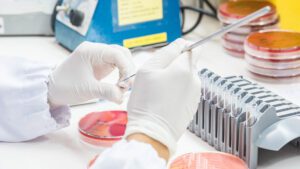
The team set up a multidimensional evaluation workflow to identify the most suitable therapeutic phages from the Singapore Phage Repository. Screening began with phage susceptibility testing of the four P. aeruginosa clinical isolates using spot and plaque assays, before other assays to identify the most potent cocktail. As phages are highly immunogenic when administered intravenously, the team also performed systemic inflammation monitoring and found that the patient tolerated the phages well.
The team found that their phage cocktail was able to restore antibiotic susceptibility by altering the efflux capacity of the bacteria. This positively impacted the antibiotic options for the patient. For instance, fluoroquinolone susceptibility was restored, resuscitating its use as an oral suppressive antibiotic for the long-term management of VGI.
Kwa adds that building on this proof-of-concept, her team’s next phase focuses on scaling, standardization, and integration of timely bespoke phage–antibiotic therapy into routine clinical practice. “Our key future directions include scaling up of rapid-response phage platforms, such as expansion of phage libraries/repositories with well-characterized, clinically ready phages with faster turnaround for matching and deployment, overcoming current procurement delays. We will also develop standardized precision workflows for phage susceptibility testing and phage–antibiotic synergy testing. Our team will also enhance regulatory and translational readiness of our technology for GMP-compatible production pipelines to enable scalable clinical deployment.”
AMR is a serious healthcare issue affecting the world. With the rising use of antibiotics in farms and clinical settings, this problem needs to be taken seriously. Unfortunately, the development of antibiotics is slow and mostly unsuccessful, thus requiring a new approach for society to effectively treat AMR. Biomaterials offer a new avenue to deliver tricker bacteria into biofilm to improve intra-film drug delivery and to activate the suppressed immune system, while also inhibiting intra-bacterial growth mechanisms. Phage is also becoming a popular option, especially for personalized medicine, and this therapy may see even greater efficacy when combined with biomaterials such as hydrogel to improve its delivery and reduce systemic immunogenicity.
References
Bertagnolio S, Dobreva Z, Centner CM, et al. WHO global research priorities for antimicrobial resistance in human health. Lancet Microbe. Elsevier Ltd. 2024;5(11). doi:10.1016/S2666-5247(24)00134-4
Uberoi A, McCready-Vangi A, Grice EA. The wound microbiota: microbial mechanisms of impaired wound healing and infection. Nat Rev Microbiol. Nature Research. 2024;22(8):507-521. doi:10.1038/s41579-024-01035-z
Han L, Huang W, Pan X, et al. Utilizing nanoinducers for precision degradation of bacterial protein to mitigate antibiotic resistance. Nature Communications . 2025;16(1). doi:10.1038/s41467-025-66221-w
Yang C, Saiding Q, Chen W, et al. Chemically modified and inactivated bacteria enable intra-biofilm drug delivery and long-term immunity against implant infections. Nat Biomed Eng. Published online January 16, 2026. doi:10.1038/s41551-025-01600-8
Chung SJ, Liu Y, Thong S, et al. Timely bespoke phage-antibiotic combination to treat refractory Pseudomonas aeruginosa mediastinitis and vascular graft infection. Nat Commun. Published online January 9, 2026. doi:10.1038/s41467-025-68136-y
BackgroundEarly intervention in psychosis (EIP) is a key component of youth mental health care, yet recommended models of care for individuals at clinical high risk for psychosis (CHR-P) and first-episode psychosis (FEP) remain heterogeneous across jurisdictions. No previous study has combined a formal AGREE II appraisal with a structured synthesis of core service components for EIP.MethodsWe conducted a systematic review and AGREE II-based appraisal of international clinical practice guidelines (CPGs) and quality standards (QSs). MEDLINE (via PubMed), the Cochrane Library (CENTRAL), Web of Science, guideline repositories, and grey literature sources were searched to March 2025 in accordance with PRISMA 2020 guidance. Eligible documents were CPGs or QSs published in English or Italian from 2005 onward containing recommendations on the organization, assessment, and treatment of CHR-P and/or FEP. Methodological quality was appraised with AGREE II (inter-rater agreement assessed using ICCs); recommendations were extracted, and core components required endorsement by at least one third of relevant documents with at least one strong or mandatory recommendation. Twenty-six documents (24 CPGs and 2 QSs) were included. Methodological quality was moderate overall, with substantial variability across AGREE II domains: scores were generally strongest for scope and purpose, stakeholder involvement, and clarity of presentation, and more variable for Rigour of development, applicability, and editorial independence.ResultsWe identified 32 core recommendations. For CHR-P, the most consistent components were specialized services or dedicated pathways, comprehensive multidisciplinary assessment, cognitive-behavioural therapy, family interventions, and a cautious approach to antipsychotic use. For FEP, the most consistently endorsed components were specialized multidisciplinary teams, assertive and continuous follow-up, family work, psychoeducation, structured pharmacological monitoring, and supported education and employment.ConclusionThese findings provide a guideline-derived framework for youth EIP service delivery and model development, while highlighting the need for more methodologically robust and implementation-oriented guidance across settings.Systematic review registrationhttps://osf.io/cek7u, identifier cek7u.