

<![CDATA[Learn how dual antipsychotics can mask the true cause of high prolactin, and how stepwise switches to aripiprazole or clozapine restore cycles.]]>
Breast Cancer Prevention Drug Endoxifen Shows Promise at Low Doses
A lower-dose alternative to tamoxifen may offer a safer path to breast cancer prevention, according to new research from Karolinska Institutet. The study published in the Journal of the National Cancer Institute, suggests that endoxifen, the most active metabolite of tamoxifen, can reduce mammographic breast density to a similar extent while causing fewer side effects, a balance that has long been difficult to achieve in preventive treatment.
A long-standing trade-off in prevention
Tamoxifen has long been a cornerstone of breast cancer therapy and prevention. It is widely used to reduce recurrence in patients and is also approved for women at increased risk of developing the disease. Yet despite its proven efficacy, its use in prevention has been limited.
Many patients discontinue treatment because of side effects, particularly symptoms resembling menopause such as hot flushes and night sweats. These challenges have highlighted a persistent problem in preventive medicine: therapies can be effective, but if they are not tolerable, adherence—and therefore real-world benefit—remains low.
A more direct and potentially precise approach
Endoxifen offers a different strategy. As the active form of tamoxifen produced in the body, it acts directly on estrogen receptors without requiring metabolic conversion. This makes its effects more predictable and may reduce variability between patients.
It also raises an important question: if endoxifen is the molecule responsible for tamoxifen’s therapeutic effect, could it be used at lower doses to achieve the same benefit with fewer side effects?
Strong biological effects at low doses
To test this idea, researchers administered low daily doses of endoxifen to healthy premenopausal women and monitored changes in mammographic breast density over six months.
Breast density is an established risk factor for cancer and is increasingly used as a marker of response to preventive therapy. Higher density is associated with increased risk, while reductions during treatment suggest a beneficial biological effect.
The results were notable. Even at very low doses, endoxifen significantly reduced breast density. A daily dose of one milligram led to a reduction of around 19 percent, while two milligrams achieved a reduction of approximately 26 percent. These effects are comparable to those typically seen with standard-dose tamoxifen, despite using a fraction of the dose.
Improved tolerability at lower doses
Equally important was how patients tolerated the treatment. While the higher dose of endoxifen was associated with an increase in menopausal symptoms, the lower dose showed a safety profile similar to placebo.
“Our results suggest that a lower dose may be sufficient to affect breast density, whilst also appearing to be better tolerated,” said Mattias Hammarström, head of operations KARMA project at the Karolinska Institute and co-author of the study
This finding is particularly significant because tolerability is one of the main barriers to preventive therapy. A drug that maintains efficacy while minimizing side effects could substantially improve adherence and expand the use of preventive strategies.
Rethinking dosing in preventive therapy
The study highlights a broader shift toward precision dosing, finding the minimum effective dose rather than relying on traditional high-dose approaches.
In this case, the data suggest that maximal biological effect may be achieved at relatively low levels of drug exposure. Increasing the dose further may not provide additional benefit but can increase the likelihood of adverse effects.
This principle has important implications not only for breast cancer prevention but also for other areas of medicine, where balancing efficacy and tolerability is critical.
Implications for clinical practice
If confirmed in larger studies, low-dose endoxifen could become an attractive option for women at increased risk of breast cancer who are currently reluctant to use tamoxifen.
By offering a similar reduction in breast density with fewer side effects, it may lower the threshold for initiating preventive treatment and improve long-term adherence.
However, it is important to note that reductions in breast density do not directly prove a reduction in cancer risk. Longer-term studies will be needed to determine whether these biological changes translate into meaningful clinical outcomes.
Looking ahead
The findings provide a strong proof of concept that targeting the active metabolite directly, and at lower doses, may offer a more refined approach to prevention.
Future research will focus on confirming these results in larger populations and evaluating long-term effects on cancer incidence. There is also growing interest in integrating such approaches into broader prevention strategies, potentially alongside lifestyle interventions and risk-based screening.
For now, the study offers a promising step toward making preventive therapy both effective and tolerable. By reducing side effects without compromising efficacy, low-dose endoxifen could help overcome one of the key barriers in breast cancer prevention, and bring precision medicine principles into preventive care.
The post Breast Cancer Prevention Drug Endoxifen Shows Promise at Low Doses appeared first on Inside Precision Medicine.
Restoring Protein Recycling Reverses T-Cell Exhaustion in Mice
New research published by scientists at the University of California, San Diego (UCSD), describes an unexpected factor underlying T-cell exhaustion. The details of their work in mice are published in a new Cell paper titled “Proteostasis sustains T-cell differentiation potential and tumor-infiltrating lymphocyte function.”
T cells are critical members of the immune system but there are limits to their defensive capabilities. When fighting cancer cells, T cells often burn out and become dysfunctional. A major focus of current cancer immunotherapy efforts is rescuing T cells from this state and getting them back into cancer-fighting shape. The new Cell study led by scientists in the lab of Ananda Goldrath, PhD, a professor of molecular biology at UCSD, and their collaborators elsewhere, suggests that a potential solution to T-cell exhaustion might have to do with protein recycling.
Specifically, their finding has to do with proteostasis, the network of cellular processes that orchestrates the proper construction, movement, and destruction of proteins in cells. A component of this network features a type of recycling function where healthy cells continuously dismantle old and damaged proteins to preserve energy and reuse building blocks to make new proteins. According to the paper, the scientists uncovered an impaired protein recycling function as the surprise culprit in T-cell exhaustion.
“We found that exhausted T cells’ recycling programs are falling apart, leading to damaged and misfolded proteins that pile up with nowhere to go,” said Nicole Scharping, PhD, a post-doctoral fellow in the Goldrath lab and lead author on the paper. Additionally, the scientists also uncovered a way to reverse the accumulation of misfolded proteins by fixing the broken recycling function and restoring normal proteostasis. As Scharping explained, the issue can be resolved with a “tag and sort” fix. This is accomplished using E3 ligase enzymes which act as labelers at a recycling facility, tagging worn-out proteins so the cell knows to break them down.
“In exhausted T cells, many of these enzymes get switched off, and recycling grinds to a halt,” said Scharping. After examining thousands of proteins, the scientists honed in on NEURL3, RNF149 and WSB1 as the E3 ligases responsible for rescuing T cell recycling functions. “When we restored specific E3 ligases, the buildup cleared, and the T cells regained their function and worked better at clearing tumors.” While the new study was conducted in mice, the researchers indicate that similar strategies could be employed for immunotherapy treatments in human cancer.
Importantly, the findings may have implications in other diseases as impaired protein processing is not unique to exhausted T cells. “We think this loss of proteostasis resembles what occurs in neurons in other protein aggregate diseases such as Parkinson’s and Alzheimer’s,” said Goldrath. “Rescuing these cells from exhaustion could improve the ability of T cells to respond to both chronic infection as well as tumors.”
The post Restoring Protein Recycling Reverses T-Cell Exhaustion in Mice appeared first on GEN – Genetic Engineering and Biotechnology News.
Tryptophan modulates the impact of prolactin on insomnia in perimenopausal women: a cross-sectional study
BackgroundInsomnia is highly prevalent among perimenopausal women and exerts detrimental effects on physical health, psychological well-being, and overall quality of life. However, its underlying mechanisms remain incompletely understood. This cross-sectional study aimed to identify factors associated with insomnia in perimenopausal women.MethodsA total of 187 perimenopausal women aged 45–55 years were enrolled. Insomnia, anxiety, and depression severity were assessed using the Insomnia Severity Index (ISI), Generalized Anxiety Disorder-7 (GAD-7), and Patient Health Questionnaire-9 (PHQ-9), respectively. Serum levels of relevant amino acids and hormones were measured. Spearman correlation and linear regression analyses were performed to examine the associations among prolactin levels, tryptophan levels, insomnia, anxiety, and depression. Moderation analysis was further conducted to evaluate the potential moderating role of tryptophan in these relationships.ResultsSerum prolactin levels were positively associated with scores of ISI, GAD-7, and PHQ-9. Furthermore, prolactin levels were positively correlated with the severity of sleep-onset difficulties, sleep maintenance problems, noticeability of impairment, and sleep-related distress. Of note, serum tryptophan levels significantly moderated the association between prolactin levels and ISI scores (β = 0.227, 95% CI = 0.04–0.41, p = 0.0148). To wit, he positive relationship between prolactin levels and insomnia severity was stronger in perimenopausal women with higher serum tryptophan levels compared with those with lower levels.ConclusionsThe moderating effect of serum tryptophan on the relationship between prolactin levels and insomnia in perimenopausal women helps us understand the neuroendocrine mechanisms underlying perimenopausal insomnia and may inform future research on targeted preventive and therapeutic strategies.
Breaking Through the Barrier
According to the American Brain Foundation, over one in three people around the world are affected by neurological conditions, the leading cause of illness and disability worldwide. This silent epidemic is not country-specific. Neurological conditions such as lysosomal storage disorders, rare enzyme deficiencies, and Alzheimer’s and Parkinson’s disease take their victims, regardless of age, race, or location.
For decades, scientists have struggled to deliver therapeutics to the brain, only to be thwarted by the highly protective blood-brain barrier (BBB). First-generation approaches demonstrated proof of principle but still require advancements to improve the ability to reach specific areas of the brain, or specific cell types, safely, and with sufficient dosage to enable meaningful therapeutic effects.
Although much remains unknown generally about brain biology and its defensive mechanisms, novel therapies for devastating neurological diseases are progressing into clinical trials. There is no magic bullet—no promises, no cures—but a gleaming light can be seen in this particular long and dark tunnel.
Dedicated scientists continue to work on gene therapies for the indications that most benefit from a once-and-done approach, in addition to neurological shuttles to address those disorders that require therapeutic tempering and dosage control.
Expanding platform technologies
In 2021, JCR Pharmaceuticals received regulatory approval for the first biotherapeutic, IZCARGO (pabinafusp alfa), designed to cross the BBB to deliver a therapeutic enzyme for the treatment of a lysosomal storage disorder called mucopolysaccharidosis type II (MPS II) or Hunter syndrome.
The platform technology has been expanded to exploit receptor-mediated transcytosis (RMT) to address other lysosomal storage and neurodegenerative diseases. Still, delivery to specific cells or parts of the brain remains challenging, along with efficient delivery of antisense oligonucleotides or siRNA.
“The issue is not delivery across the BBB, but the endosomal escape to efficiently suppress the target RNA,” said Hiroyuki Sonoda, PhD, representative director, president, and CSO, at JCR Pharmaceuticals. “Small molecule CNS delivery is related to physicochemical properties. The structural design needs to make them lipophilic, yet also able to evade typical transporter clearing mechanisms.”
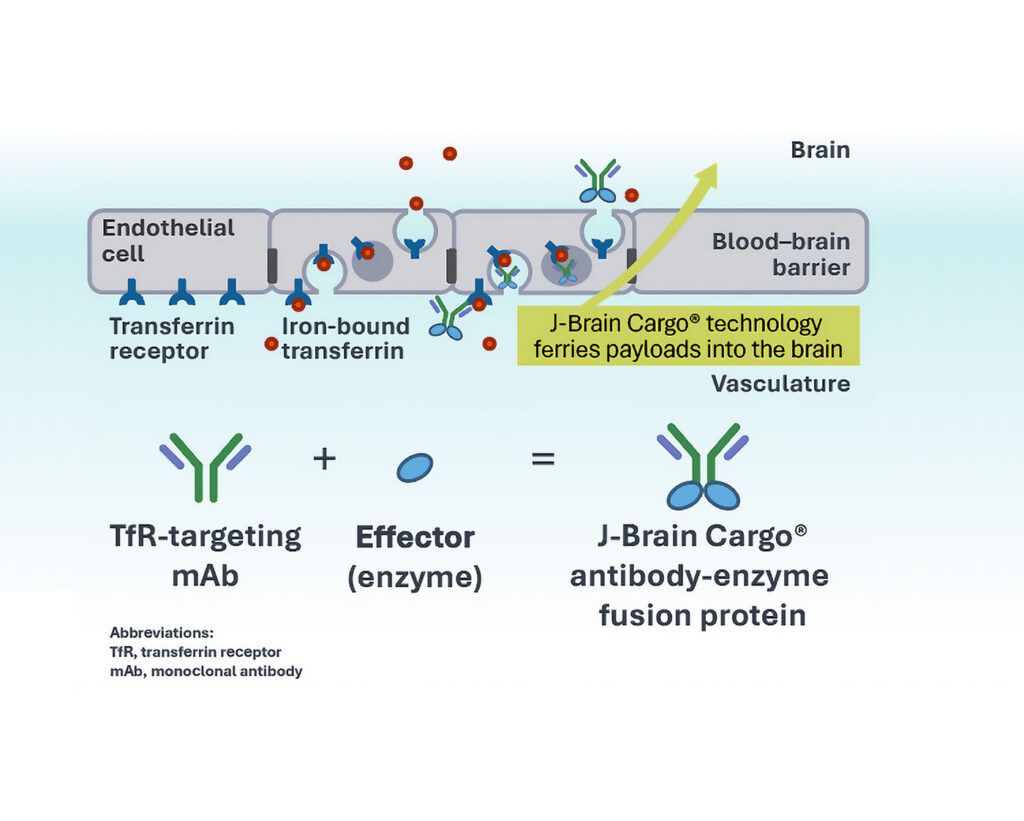
J‑Brain Cargo® uses RMT, mainly focusing on the transferrin receptor (TfR). Other promising candidates target different receptors. “We have successfully transported enzymes, antibodies, peptides, decoy receptors, antisense oligos, and siRNA into the CNS,” commented Sonoda. J‑Brain Cargo is particularly suited for enzyme replacement therapies in lysosomal storage disorders and conditions where dose control, reversibility, and titration are important.
For gene therapies, JCR developed the JUST-AAV platform technology. Novel changes in the capsid almost completely eliminate liver tropism. The modified capsids express miniaturized antibodies on the capsid surface against receptors on selected tissues, organs, or the BBB, enhancing targeted delivery. JUST‑AAV is for diseases where continuous transgene expression is desired to achieve the optimal effect.
Several candidates are in global clinical trials, including JR-141 (pabinafusp alfa) for individuals with MPS II (also known as Hunter syndrome), JR-171 to treat MPS I (also known as Hurler, Hurler Scheie, or Scheie syndromes), and JR-441 for individuals with MPS IIIA (also known as Sanfilippo syndrome A).
Programs in collaboration with MEDIPAL HOLDINGS CORPORATION are in different stages of clinical and pre-clinical development for individuals with MPS IIIB (also known as Sanfilippo syndrome B), Fucosidosis, and GM2 gangliosidosis (including Tay-Sachs and Sandhoff disease).
Collaborating with leading pharmaceutical companies is core to JCR’s strategy to bring these platform technologies to broader application. “We enable our partner by turning their biologics into CNS-penetrating versions of their original molecule,” said Sonoda.
JCR manufactures most of its drug products in-house. Last year, they were selected for the Ministry of Economy, Trade and Industry’s “Regenerative CDMO Subsidy” to expand biomanufacturing capacity for regenerative, cell, and gene therapies.
Optimizing BBB transport
“Protein engineering architecture differentiates our delivery technology along with its optimization for efficacy, safety, and tolerability,” said Ryan Watts, PhD, co-founder and CEO of Denali Therapeutics.
The TransportVehicle (TV) technology has the RMT binding site integrated directly into the constant domain (Fc) of an antibody for optimal properties and modularity. This allows the same TV sequences to transport a range of large molecule biotherapeutics such as enzymes, oligonucleotides, and antibodies for systemic administration. The engineered Fc domains bind to specific natural transport receptors expressed at the BBB, such as TfR.
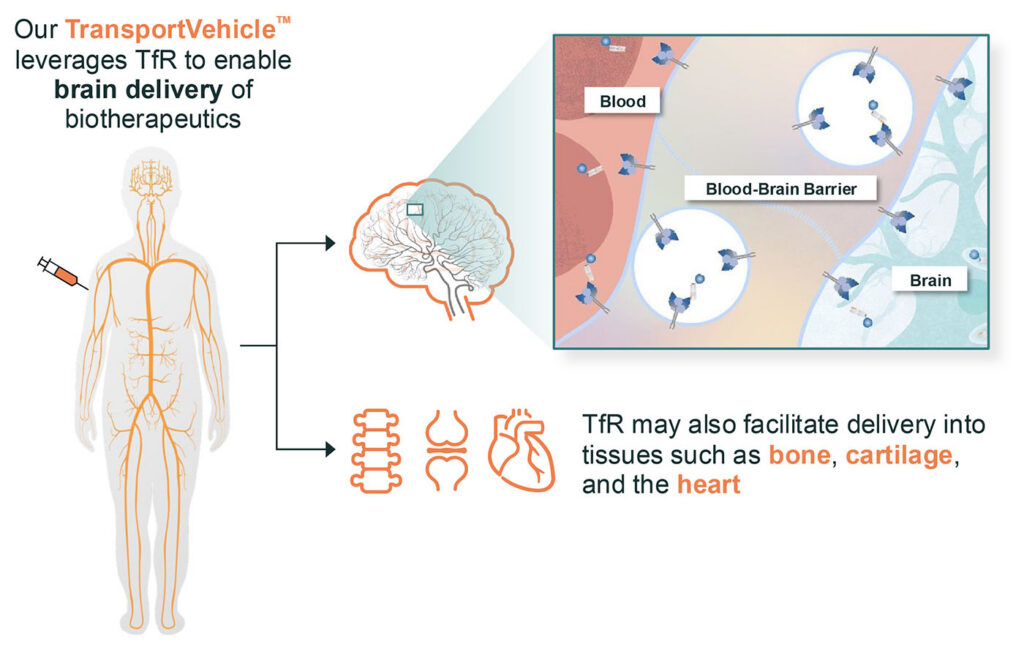
“Our research recently demonstrated that a TV platform-enabled anti-Ab antibody improved distribution in the brain and significantly reduced risk of Amyloid-Related Imaging Abnormalities (ARIA) in a mouse model of Alzheimer’s disease, when compared with a conventional anti-Ab antibody.1 The study provides the first mechanistic insight for mitigating the risk of ARIA,” detailed Watts.
The Enzyme TransportVehicle (ETV) contains a fusion of a therapeutic enzyme. The Fc portion of the fusion molecule binds the apical surface of the TfR to avoid interference with normal iron transport.
In March 2026, Denali’s lead ETV program, Avlayah (tividenofusp alfa-eknm), received FDA accelerated approval for the pediatric treatment of the lysosomal storage disorder MPS II. Avlayah is the foundation for their broader ETV franchise, addressing other lysosomal storage disorders such as MPS IIIA. Results from the open-label Phase I/II clinical trial are available.2
Their Oligonucleotide TransportVehicle (OTV) platform is an engineered TV conjugated to an oligonucleotide for the systemic delivery of genetic medicines to the brain. Extensive characterization and research demonstrate the ability of OTV to elicit broad biodistribution of oligonucleotide therapies throughout the CNS following systemic exposure.
“For example, our investigational therapy DNL628 for the treatment of Alzheimer’s disease is designed to cross the BBB and reduce the tau protein by targeting the MAPT gene that encodes for tau,” explained Watts.
Lastly, the Antibody TransportVehicle (ATV) platform is designed to enable brain delivery of antibodies capable of selective immune activation and a targeted therapeutic approach after intravenous administration. The investigational anti-Ab antibody therapy DNL921, for example, is designed to reduce amyloid plaques and avoid ARIA.
The TV-enabled clinical development portfolio also includes candidates for frontotemporal dementia-granulin and Pompe disease.
Advancing clinical options
“It is exciting to begin to see that delivery through the BBB is possible using gene therapy or shuttle approaches,” said Todd Carter, PhD, CSO at Voyager Therapeutics. Although first-generation therapeutics are demonstrating meaningful levels of delivery, optimization, and improvement of the functionality, exposure duration, and therapeutic effects are still needed.
“For some diseases, gene therapy is the preferred treatment modality, as both the capsid and the payload can be modified to perform a specific job,” said Carter. But viral vector delivery for gene therapy has had problems with liver-based toxicity.
For the best human translation opportunities, Voyager developed a model in non-human primates (NHPs) requiring cross-species activity across multiple NHP species. This strategy resulted in the company’s TRACER (Tropism Redirection of AAV by Cell-type-specific Expression of RNA) technology, used to screen tens of millions of vector variants using barcoded libraries in which capsids were modified with slight insertions of seven to nine amino acids.
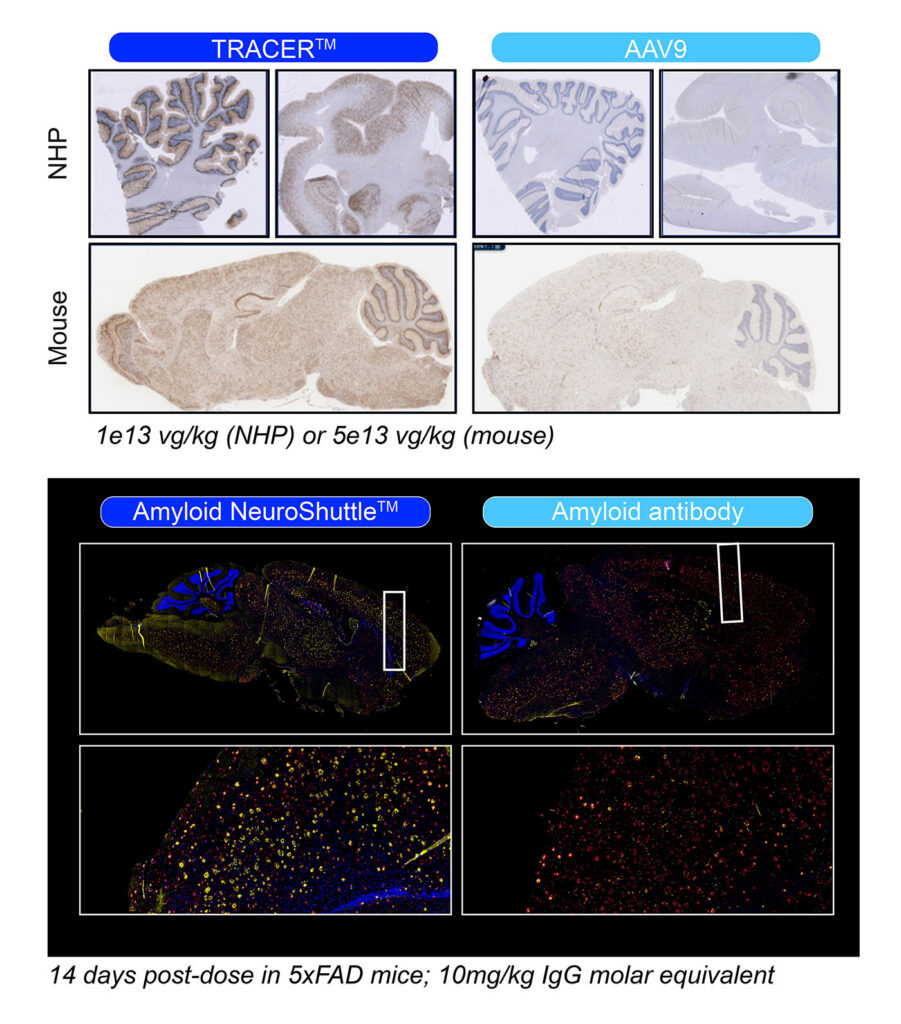
Successful expression in neurons demonstrated that the capsids crossing the BBB worked. Directed evolution improved them. “Next, we needed to determine the mechanism—the receptors they were targeting,” said Carter. This led to the identification of the receptor, alkaline phosphatase (ALPL), tissue nonspecific.
Now, Voyager has multiple families of capsids that mediate delivery into the brain, are detargeted from the liver, and, for the most advanced, have improved the capsid’s ability to target the brain using ALPL. “Using the ALPL receptor elevates delivery to the brain and allows us to substantially reduce dosage,” said Carter.
“I would not have picked ALPL just on face value,” added Mihalis Kariolis, PhD, vice president of non-viral therapeutics at Voyager Therapeutics. “It highlights the power of the unbiased TRACER approach. Expanding the number of brain delivery receptors provides highly differentiated options to reduce side effects and expand the diversity of treatment modalities.”
Both gene therapy and shuttle approaches have opportunities in different indications. Once-and-done gene therapy is not tweakable, whereas shuttle-based dosing is. “In our APOE gene therapy program, we want to reduce existing APOE4 and replace it with APOE2 permanently,” said Carter. “The shuttle has advantages in situations where permanent ongoing delivery is not required.”
Voyager’s most advanced program (VY7523) is a tau monoclonal antibody that is exquisitely specific for pathological tau. Data will be available in the second half of the year. A gene therapy (VY1706) moving into the clinic this year is designed to knock down tau mRNA and protein intracellularly. A collaboration with Neurocrine Biosciences focuses on Friedreich’s ataxia (FA) and is also expected to enter the clinic this year.
Combining transport receptors
The protective BBB is crucial for maintaining homeostasis and ensuring proper neurological function. Comprised of both cellular and acellular components, this sophisticated structure tightly regulates information flow between the periphery and the brain. According to Tanya Wallace, PhD, vice president of neuroscience discovery research at AbbVie, despite the BBB’s importance, many seemingly basic biological questions remain unanswered, fueling additional global research.
The complexity of the BBB also represents a significant bottleneck for advancing therapeutics targeting brain-related disorders. Historically, achieving therapeutically relevant levels of drugs in the brain has been a major challenge in treating serious diseases such as Alzheimer’s and Parkinson’s diseases. “A notable success story is the development of L-DOPA, a prodrug that leverages existing transport mechanisms to cross the BBB,” said Wallace. Once in the brain, L-DOPA is metabolized into dopamine, offering a key symptomatic treatment for Parkinson’s disease.
Breakthroughs in delivery now allow scientists to leverage more technologies that can bring not only small molecules but also complex biologics into the brain. The Modular Delivery (MODELTM) platform exemplifies this progress. The platform enables engineering of bispecific antibodies, capable of targeting naturally expressed BBB receptors such as TfR and CD98. TfR and CD98 are well-characterized at the BBB, and, together, they offer distinct advantages for increasing brain exposure to therapeutics.
“By engaging these transport pathways, the platform can enhance the uptake of a variety of therapeutics, including antibodies and oligonucleotides,” highlighted Wallace. “This multi-receptor strategy provides flexibility to optimize the balance of uptake, release, and distribution in the brain, paving the way for potentially more effective treatments across neurological disease areas.”
This platform technology facilitated the development of ABBV-1758, which is progressing in clinical development. ABBV-1758 utilizes TfR to transport a 3pE-Ab antibody across the BBB to enable the removal of amyloid beta plaques, a pathological hallmark of Alzheimer’s disease.
As scientists aspire to further refine delivery strategies, ongoing research is exploring additional receptors and innovative approaches, including insulin-like growth factor 1 receptor (IGF-1R) and brain cell-type-specific targeting. The field is rapidly evolving to advance more precise, personalized interventions for challenging neuroscience conditions.
“Successful brain delivery requires more than just advances in transport technology; it demands interdisciplinary collaboration, novel preclinical models, and thoughtful clinical translation,” Wallace pointed out. Continued biological research and investment into innovative discovery platforms will be crucial for bringing transformative therapies to patients with the greatest unmet needs.
References
- Pizzo ME, Plowey ED, Khoury N et al. Transferrin receptor-targeted anti-amyloid antibody enhances brain delivery and mitigates ARIA. Science. 2025 Aug 7;389(6760):eads3204. doi: 10.1126/science.ads3204.
- Muenzer J, Burton BK, Harmatz P et al. An intravenous brain-penetrant enzyme therapy for mucopolysaccharidosis II. N Engl J Med. 2026 Jan 1;394(1):39-50. doi: 10.1056/NEJMoa2508681.
The post Breaking Through the Barrier appeared first on GEN – Genetic Engineering and Biotechnology News.
Circulating Oxytocin Changes in Response to MDMA vs. Placebo in Adult Patients With Autism Spectrum Disorder and Matched Healthy Controls
Conditions: Autism Spectrum Disorder
Interventions: Diagnostic Test: MDMA; Diagnostic Test: Placebo
Sponsors: University Hospital, Basel, Switzerland
Not yet recruiting
Interventions: Diagnostic Test: MDMA; Diagnostic Test: Placebo
Sponsors: University Hospital, Basel, Switzerland
Not yet recruiting
Method Identifies Cellular Makeup of Microenvironments Favoring Tumor Metastasis
Researchers at Baylor College of Medicine and collaborating institutions have developed a method that reveals the cellular makeup of tissues that support metastatic cancer growth, which is the primary cause of death for most patients with solid tumors. The technique, sortase A-based microenvironment niche tagging (SAMENT), is designed to selectively label cells encountered by cancer cells during metastasis. The team’s tests using SAMENT not only revealed cellular features shared by metastatic niches of multiple cancer models but also uncovered an unexpected driver of immune suppression in bone metastasis.
“As tumors progress, cancer cells leave the original site and spread or metastasize to other organs where they seed new tumors,” said Xiang Zhang, PhD, William T. Butler, MD, Endowed Chair for Distinguished Faculty, professor of molecular and cellular biology, and director of the Lester and Sue Smith Breast Center at Baylor. “Our lab is interested in better understanding what cellular and molecular features support metastasis as these could guide the development of therapies to prevent, slow down, or eliminate them. In the current study, we first developed a new method to identify the makeup of metastatic niches.”
Zhang, also a member of Baylor’s Dan L Duncan Comprehensive Cancer Center, is senior and corresponding author of the team’s published paper in Cell, titled “Unbiased niche labeling maps immune-excluded niche in bone metastasis.”
During metastasis, cancer cells interact constantly with other normal cells in the body, and these interactions affect cell behavior, fate, and even response to therapies. “Numerous previous studies have elucidated the roles of specific microenvironment niches (i.e., cells that are immediately adjacent to cancer cells) in the progression of metastasis,” the authors wrote.
For their newly reported study the team developed the SAMENT technology. “Our method allowed us to identify specific cells encountered by cancer cells during metastasis,” said co-first author Fengshuo Liu, graduate student in the Cancer and Cell Biology Program working in the Zhang lab. “The method, called Sortase A–Based Microenvironment Niche Tagging (SAMENT), selectively labels normal cells that come into direct contact with cancer cells.”
The authors further explained, “By combining SrtA and synthetic ligand-receptor binding, we aim to label any cells that are physically encountered by cancer cells.”
The investigators’ tests using SAMENT revealed that pro-metastatic microenvironments of multiple cancer models in all the organs studied, including bone, lung, liver, and brain, shared common features, including an abundance of macrophage immune cells and shortage or absence of immune T cells, which typically help fight tumors. “Among all cell types, macrophages occur most frequently surrounding disseminated cancer cells and appear to be phenotypically re-programmed upon interaction with metastases,” they wrote.
Liu added, “However, bone metastases stood out. We were surprised to find that macrophages surrounding cancer cells in bone metastases activated a protein called estrogen receptor alpha (ERα). This protein is best known for its role in hormone-responsive breast cancer but is much less studied in macrophages or other immune cells.” The team added, “It also plays an important role in many other cell types, including macrophages, T cells, osteoblasts, and osteoclasts.”
The study showed that macrophages with active ERα signaling were not detected in normal bone or in primary tumors in other tissues. ERα-active macrophages were also present in human bone metastasis samples from patients with breast, lung and kidney cancers—including male patients. This showed that this finding is not limited to one cancer type or to women.
The researchers also investigated how cancer cells turned macrophages, which would typically fight cancer, into their allies. Cancer cells deliver small molecules called fatty acids (FAs) to macrophages, likely through tiny particles known as extracellular vesicles (EVs). These fatty acids activate a metabolic pathway in macrophages that turns on ERα signaling. “Taken together, our data indicate that ERα expression in macrophages is driven by cancer cell-derived FAs through paracrine interaction mediated by EVs,” they wrote.
Once ERα is active, macrophages become immunosuppressive—instead of helping the immune system attack cancer, they form a barrier that physically and chemically blocks T cells from reaching tumor cells. ERα-active macrophages act as bodyguards for metastatic cancer in bone.
“To test whether ERα in macrophages can drive bone metastasis, we genetically removed the ERα gene specifically from macrophages in mice,” Liu continued. “As a result, cancer cells were far less able to colonize bone in multiple cancer models. Tumors grew more slowly, and metastases in other organs that often arise from bone tumors were also reduced. Importantly, removing ERα from macrophages did not disrupt normal bone health—bone structure and remodeling remained intact.” In their paper the scientists stated, “Taken together, our results strongly support the hypothesis that ERα in macrophages plays an important role in bone colonization.”
“When macrophage ERα was genetically removed or when mice were treated with fulvestrant, an FDA-approved cancer drug that degrades estrogen receptors, T cells were able to enter metastatic lesions in bone and kill tumor cells,” Zhang said. “Our findings support conducting future human clinical trials to assess the value of estrogen-blocking therapies combined with other therapies to treat bone metastases across multiple cancer types, in both women and men.”
The authors added, “Furthermore, as shown in the final set of experiments, inhibition of ERα in macrophages may not be effective by itself but could synergize with immunotherapies because it facilitates T cell infiltration into static lesions.” The team acknowledged that they didn’t see any synergy between Erαknockout in macrophages and anti-PD1 treatment. However, they noted, “… it is still worth exploring the combinatory effects with other immunotherapies. Therefore, our findings may warrant future clinical trials on combined endocrine and immunotherapies on patients with bone metastases, and this combination may be extended to other cancer types and to patients of both genders.”
The post Method Identifies Cellular Makeup of Microenvironments Favoring Tumor Metastasis appeared first on GEN – Genetic Engineering and Biotechnology News.
Human Ventral Tegmental Local Field Potentials in Treatment-Resistant Depression and Obsessive-Compulsive Disorder
The ventral tegmental area (VTA) is a key node within the limbic circuitry. Through dense dopaminergic, glutamatergic, and GABAergic projections, the VTA forms reciprocal loops with prefrontal and limbic cortices that are consistently implicated in major depressive disorder (MDD) and obsessive–compulsive disorder (OCD) (1,2). Decades of animal research have established the VTA as a central hub for motivational drive and reward prediction error signaling (3,4). Despite its presumed critical role in mental disorders, direct electrophysiological recordings from the human VTA have so far remained absent.
Oxytocin Plus Self-compassion Training in Borderline Personality Disorder
Conditions: Self-compassion Training (SCT) Plus Intranasal Oxytocin; Self-compassion Training (SCT) Plus Intranasal Placebo
Interventions: Drug: Intranasal Oxytocin (IN-OXT); Drug: Intranasal Placebo; Behavioral: Self-Compassion Training (SCT)
Sponsors: Fundació Institut de Recerca de l’Hospital de la Santa Creu i Sant Pau
Recruiting
Interventions: Drug: Intranasal Oxytocin (IN-OXT); Drug: Intranasal Placebo; Behavioral: Self-Compassion Training (SCT)
Sponsors: Fundació Institut de Recerca de l’Hospital de la Santa Creu i Sant Pau
Recruiting
<![CDATA[How do estrogen, testosterone, and aromatase shape binge eating and bulimia risk? Let’s explore brain biomarkers and future hormone-aware treatments.]]>