

The Download: coding’s future, the ‘Steroid Olympics,’ and AI-driven science

This is today’s edition of The Download, our weekday newsletter that provides a daily dose of what’s going on in the world of technology.

Anthropic’s Code with Claude showed off coding’s future—whether you like it or not

At Anthropic’s developer event in London this week, Code with Claude, attendees were asked if they’d shipped code written entirely by Claude. Almost half the room raised their hands. Many admitted they hadn’t even read the code before pushing it live.

As tools like Claude Code get better, more and more developers are happy to hand their work off to AI. Anthropic says it wants to push automation as far as it will go. But not everyone is convinced that’s the right approach. 

Read the full story on how AI is reshaping coding for good.

—Will Douglas Heaven

The Enhanced Games fit right in with the rest of 2026’s longevity vibes

This Sunday, 42 athletes will gather in Las Vegas for the inaugural Enhanced Games, a controversial sporting competition that allows the use of performance-enhancing drugs. The goal? To “push the boundaries of human performance.”

The event embodies a zeitgeist of peptide-crazed looksmaxxing, where consumers are encouraged to get thinner than ever, optimize for longevity, and have their “best baby.” In 2026, if you’re not enhancing, what are you even doing?

Find out how the competition reflects our enhancement-obsessed era.

—Jessica Hamzelou

This story is from The Checkup, our weekly newsletter giving you the inside track on all things biotech. Sign up to receive it in your inbox every Thursday.

Google I/O showed how the path for AI-driven science is shifting

—Grace Huckins

During Tuesday’s Google I/O keynote, Demis Hassabis, the CEO of Google DeepMind, proclaimed that we are “standing in the foothills of the singularity.” But what struck me as I listened in the audience was the context in which he said those words.

The contrast reflects two directions for AI in science. One builds specialized systems like WeatherNext for specific problems. The other pushes toward agentic, LLM-based systems that could eventually execute cutting-edge research projects without human involvement.

The big scientific announcement at I/O was Gemini for Science, which leans further into this agent-driven future. It can still call on specialized systems, but Google appears to be transitioning away from them.

Here’s how the shift could affect science.

Can AI learn to understand the world?

Many leading AI researchers have turned their attention to a new kind of system that understands the physical environment: world models. 

Backed by researchers at Google DeepMind, Fei-Fei Li’s World Labs, and Meta’s former Chief AI scientist, Yann LeCun, the idea is gaining serious momentum. Could it change how AI understands reality?

MIT Technology Review editor in chief Mat Honan, senior AI editor Will Douglas Heaven, and AI reporter Grace Huckins unpacked it all in an exclusive Roundtables discussion yesterday.

Subscribers can watch the full recording now.

World models are also one of MIT Technology Review’s 10 Things That Matter in AI Right Now, our list of what’s really worth your attention in the busy, buzzy world of AI.

The must-reads

I’ve combed the internet to find you today’s most fun/important/scary/fascinating stories about technology.

1 Trump has postponed an AI order due to overregulation fears
He said he was concerned it would be “a blocker.” (CNBC)
+ And that he wants to preserve the US’s lead over China in AI. (Reuters $)
+ A source said the delay was because he “just hates regulation.” (Axios)
+ A war over regulation is coming to America. (MIT Technology Review)

2 OpenClaw’s engineers warn that a “vibe-coded slop” crisis is coming
They say AI is flooding the world with bad and even dangerous code. (WSJ $)
+ Now vibe coding is coming to your phone, too. (The Verge)
+ What exactly is vibe coding? (MIT Technology Review)

3 SpaceX has called off the launch of a new Starship prototype
Engineers discovered a ground system glitch. (CNBC)
+ They hope to try again tonight. (Ars Technica)
+ The launch could play a key role in SpaceX’s IPO. (NPR)

4 Meta has settled a school district’s social media addiction lawsuit
It had been sued over the alleged harm caused to students. (BBC)
+ Snap, TikTok, and YouTube have also settled with the district. (NYT $)

5 Bluesky says it’s being hacked by the Kremlin to spread propaganda
It’s fighting Russian efforts to hijack real users’ accounts to post. (NYT $)
+ Now is a good time for doing crime. (MIT Technology Review)

6 Africa’s biggest economies are pushing for AI sovereignty
They aim to reduce their dependence on Big Tech. (Rest of World)
+ New strategies could make Africa a major AI player. (MIT Technology Review)

7 Undersea cables threaten the Gulf’s AI expansion plans
Conflicts have put the fragile critical infrastructure at risk. (Wired $)

8 Waymo is pausing services as robotaxis keep driving into floods
It suspended services in four US cities. (TechCrunch)

9 Microscopic silica spheres may help cool the planet
But some researchers need further convincing. (The Economist $)

10 Spotify will now let subscribers create AI remixes

It’s the first time they can use AI to create content on Spotify. (Guardian)

Quote of the day

“You have AI — actual intelligence.” 

—Apple cofounder Steve Wozniak reassures college graduates about AI’s impact and draws applause, in contrast to the boos received by former Google CEO Eric Schmidt earlier this week, Business Insider reports.

One More Thing

Looking down a neighborhood street where a man in wheelchair has crossed with wife and daughter.

GETTY IMAGES


The future is disabled

Technologies for disability, access, and mobility are often portrayed as objects of empowerment or heroic, life-changing panaceas for social ills. But their benefits are often temporary, lopsided, or reliant on constant investment, care, and attention.

Often, accessibility tech assumes levels of access that don’t exist: reliable internet, smartphones, or affordable devices. Projects frequently overlook the very communities they claim to serve. Yet there’s another way: opening ourselves up to all-access thinking and disabled expertise.

Discover how that approach could create a more livable world for everyone.

—Ashley Shew

We can still have nice things

A place for comfort, fun, and distraction to brighten up your day. (Got any ideas? Drop me a line.)

+ Treat your eyes to this magical footage of a lake floating above an ocean.
+ Test your visual recall with this clever game that recreates colors from memory.
+ Take back control of your internet with this dashboard that brings together your favourite social feeds.
+ Peer into the heart of a barred spiral galaxy in this stunning new capture from the James Webb Space Telescope.

Association between frailty and postoperative delirium after transcatheter aortic valve replacement: a meta-analysis

BackgroundPostoperative delirium (POD) is a common complication following transcatheter aortic valve replacement (TAVR) and is associated with adverse outcomes in older patients. Frailty, a multidimensional geriatric syndrome, has been increasingly recognized as a potential risk factor for POD. However, existing evidence remains inconsistent. This meta-analysis aimed to evaluate the association between frailty and POD after TAVR.MethodsA systematic search of PubMed, Embase, and Web of Science was conducted from inception to January 22, 2026. Cohort studies evaluating the association between preprocedural frailty and POD after TAVR were included. Odds ratios (ORs) with 95% confidence intervals (CIs) were pooled using a random-effects model accounting for the influence of potential heterogeneity.ResultsTen cohort studies involving 7,702 patients were included. Frailty was present in 2,062 (26.8%) patients, and 786 (10.2%) developed POD. Pooled analysis showed that frailty was significantly associated with an increased risk of POD after TAVR (OR: 2.17, 95% CI: 1.60–2.95; I2 = 55%). The association was stronger in studies with sample size ≥ 500 compared with < 500 (OR: 2.74 vs. 1.38; p for subgroup difference < 0.001). The effect estimates were consistent across subgroups stratified by study design, age, sex, frailty assessment methods, follow-up duration, analytic models, and study quality (all p for subgroup difference > 0.05). Notably, studies using CAM-ICU to diagnose POD showed a stronger association than those using DSM criteria or other methods (OR: 3.60 vs. 1.56 and 2.53; p = 0.006). Meta-regression identified sample size as a significant source of heterogeneity (p = 0.02).ConclusionsFrailty is associated with an increased risk of POD after TAVR. These findings highlight the importance of frailty assessment for perioperative risk stratification and support targeted strategies to prevent delirium in high-risk patients undergoing TAVR.Systematic review registrationhttps://www.crd.york.ac.uk/prospero/, identifier CRD420261352173.

Anthropic’s Code with Claude showed off coding’s future—whether you like it or not

The vibes were strong at Code with Claude, Anthropic’s two-day event for software developers in London that kicked off on May 19, the same day as Google’s I/O in Palo Alto. (A coincidence, not a flex, Anthropic staffers assured me.)

“Who here has shipped a pull request in the last week that was completely written by Claude?” Jeremy Hadfield, an engineer at Anthropic, asked from the main stage. Almost half the people in the packed room—many sitting with laptops on their knees, coding or prompting as they watched the talks—raised their hands.

Pull requests are fixes or updates to existing software that are submitted for review before they go live. They are the bread and butter of software development, the chunks of code that most professional developers spend their lives writing—or did until now.

“Who here has shipped a pull request that was completely written by Claude where they did not read the code at all?” Hadfield asked next. Nervous laughter. Most of the hands stayed up.

It’s not news that LLM-powered tools like Anthropic’s Claude Code and OpenAI’s Codex have upended the way software gets made. Top tech companies now like to boast of how little code their developers write by hand. (“Most software at Anthropic is now written by Claude,” Hadfield said. “Claude has written most of the code in Claude Code.”) OpenAI, Google, and Microsoft make similar claims. Many others wish they could.

Even so, it is striking how normal this new paradigm already seems, and how fast it has set in. This was the second year that Anthropic has put on developer events, which also run in San Francisco and Tokyo. This time last year, the company had just released Claude 4. It could code, kind of. But with Anthropic’s latest string of updates—especially Claude 4.6 and then 4.7, released in February and April—Claude Code is a tool that more and more developers seem happy to hand their work off to.   

An 8-bit character with a chef's hat in a pixel kitchen flips food in a fry pan over a pixel stove
Let Claude cook.
ANTHROPIC (GRAPHIC) / WILL DOUGLAS HEAVEN (PHOTO)

Anthropic says its goal is to push automation as far as it will go. Instead of using AI to generate code and then having humans clean it up and fix the mistakes, it wants Claude to check and correct its own work. “The default isn’t ‘I’m going to prompt Claude’—the default is now ‘I’m going to have Claude prompt itself,’” Boris Cherny, who heads Claude Code, said in the opening keynote.

If all goes well, human developers shouldn’t even see the error messages when something doesn’t work. That will all be handled by Claude, which will test and tweak, test and tweak, until everything runs as it should. As Ravi Trivedi, an engineer at Anthropic, put it in another talk: “The key principle is getting out of Claude’s way. We like to say: ‘Let it cook.’”

Trivedi presented a new feature in Claude Code, announced two weeks ago, which Anthropic calls dreaming. Claude Code agents write notes to themselves, recording and saving useful information about specific tasks. When another coding agent later starts to work on the same code, it can use the notes to get up to speed faster and learn from any errors that previous agents may have made.

Dreaming is a system that Claude Code uses to read through all these notes and consolidate the information they contain, spotting patterns and common issues across different tasks. In theory, dreaming should help Claude Code learn about a particular code base and get better and better at working on it.

Success stories

Code with Claude is an event aimed at developers. As well as product showcases and hands-on workshops from Anthropic, there were how-tos from a range of companies that had reshaped their software development teams around Claude Code, including Spotify and Delivery Hero as well as Lovable, Base44, and Monday.com—three startups vibe-coding apps that help people vibe-code apps.

There were no signs of unease at Code with Claude. Everybody I met wanted in.

And yet outside the conference there have been a number of reports that many coders are starting to question this bright new future. Some gripe in online forums like Reddit and Hacker News that AI coding tools are being pushed by managers chasing productivity gains, when in practice the technology makes software development harder because of all the extra code developers now have to review. “The only people I’ve heard saying that generated code is fine are those who don’t read it,” a user called pron posted on Hacker News last week. 

Others claim that their coding abilities have fallen off as they hand more tasks to AI. And researchers have warned that AI tools can produce unsafe code that will make software more vulnerable to attacks.  

I sat down with Claude engineering lead Katelyn Lesse and Claude product lead Angela Jiang and asked them what they made of the concerns that a sudden flood of code generated (and shipped) without proper human oversight was kicking serious security and maintenance problems down the road.

“All of the old software development best practices still apply. They’ve applied this entire time,” said Lesse. “I think there are a lot of people and teams that may have lost sight of them in this moment.” 

And yet as Anthropic and others push for greater automation and tools like Claude Code improve, the temptation increases to offload more and more tasks, including oversight. Lesse told me that some of the technical managers at Anthropic are exhausted by keeping up with all the code their teams now produce. “Part of things happening so much more quickly is just managing your time,” she said.

“I think that right now Claude is probably as good as a midlevel engineer at writing code,” she added. You still need expert engineers to design a system and troubleshoot harder problems, she said, “But over time we want Claude to get better and better at all different types of engineering.”

Jiang agreed: “I think the absolute end state we’re trying to get to is Claude basically being able to build itself.”

The Download: online safety’s future and climate tech’s big pivot

This is today’s edition of The Download, our weekday newsletter that provides a daily dose of what’s going on in the world of technology.

Tech researchers are suing the Trump administration over the future of online safety

For months, the Trump administration has been going after researchers who study and try to counter hate speech, harassment, propaganda, and disinformation online. Now, some of those researchers are fighting back. 

In a new lawsuit, they’re seeking to strike down a visa restriction policy against “foreign officials and other persons” announced last year by US Secretary of State Marco Rubio.

They say the policy violates the speech and due process rights of foreign-born workers whose “work supports greater moderation of content on the [tech] platforms.” Find out how the case could impact online safety and free speech.

—Eileen Guo

Climate tech companies are pivoting to critical minerals

We’re over a year into the second Trump administration, and support for climate causes in the US is weak. But climate tech companies are finding ways to survive and even thrive in this new environment, including by looking beyond decarbonization.

One example is Boston Metal. The startup has raised a $75 million round to produce critical metals, MIT Technology Review can exclusively report.

The company is best known for its efforts to clean up steel production, an industry that’s responsible for about 8% of global greenhouse gas emissions. But the new focus and fresh funds could help it survive a period of waning support for industrial decarbonization.

Read the full story on its high-stakes shift. And discover more about the new strategy for climate tech companies in our analysis of how they’re reframing their missions.

—Casey Crownhart 

Our story on the climate tech pivot is from The Spark, our weekly newsletter giving you the inside track on all things climate. Sign up to receive it in your inbox every Wednesday.

Can AI learn to understand the world?

As the limits of LLMs become clearer, researchers are developing a new kind of AI designed to understand the physical environment: world models. 

Recent developments from Google DeepMind, Fei-Fei Li’s World Labs, and Yann LeCun’s new startup have pushed these systems to the forefront of AI. At an exclusive virtual event today, MIT Technology Review will examine the progress—and what comes next.

Join editor in chief Mat Honan, senior AI editor Will Douglas Heaven, and AI reporter Grace Huckins for the subscriber-only Roundtables discussion on world models. Register here to take part in the session at 19:30 GMT / 2:30 PM ET / 11:30 AM PT.

World models are one of our 10 Things That Matter in AI Right Now, MIT Technology Review’s new list of the technologies and ideas shaping the future of AI.

The must-reads

I’ve combed the internet to find you today’s most fun/important/scary/fascinating stories about technology.

1 SpaceX has filed for an IPO expected to be the largest ever
It could make Elon Musk the world’s first trillionaire. (BBC) 
+ But he’s also a risk factor in the prospectus. (The Verge)
+ The filing exposes SpaceX’s finances for the first time. (NYT $)
+ AI spending pushed it to a $1.94 billion loss in Q1 2026. (Reuters $)
+ And rivals are challenging its launch dominance. (MIT Technology Review)

2 Nvidia reported record revenues thanks to the AI boom
It’s blown past Wall Street expectations, despite losing the Chinese market. (Guardian)
+ It has “largely conceded” China’s AI chip market to Huawei. (CNBC)
+ It generated no revenue from H200 chip sales in China. (SCMP)

3 Samsung has averted a massive strike over AI profit-sharing
It reached a tentative deal on bonuses with workers. (FT $)
+ The last-minute deal averts an 18-day walkout. (Engadget) 
+ But the compromise has exposed deep divisions. (Reuters $)
+ Anti-AI protests are increasing. (MIT Technology Review)

4 President Trump will sign a cybersecurity directive as soon as today
But it stops short of mandatory federal approval of models before they’re released. (Bloomberg $)
+ AI is making online crimes easier. (MIT Technology Review)

5 OpenAI may file for an IPO within days
The ChatGPT-maker wants to go public as early as September. (WSJ $)

6 Robotics won’t be transformed by a single AI breakthrough
Don’t expect a ChatGPT moment. (IEE Spectrum)
+ Human work behind humanoid robots is being hidden. (MIT Technology Review)

7 Rocks could generate hydrogen while storing CO2
New research shows they could also produce geothermal power. (New Scientist)
+ AI is uncovering hidden geothermal energy resources. (MIT Technology Review)

8 The EU is accelerating a Trump-fueled breakup with Big Tech
Geopolitical tensions are driving a shift toward homegrown software. (Wired $)

9 Solid-state breakthroughs could soon transform commercial batteries
They’d be faster and safer than today’s lithium-ion equivalents. (The Economist $)

10 Two researchers are rebuilding math from the ground up
By replacing the most fundamental concept in topology. (Quanta)
+ OpenAI claims its solved an 80-year-old math problem. (TechCrunch)

Quote of the day

“This isn’t a blip, it’s an inflection point.” 

—Gurjeet Grewal, CEO of UK-based Octopus Electric Vehicles, tells Reuters that the Iran war has been a boon for European EV sales.

One More Thing

""
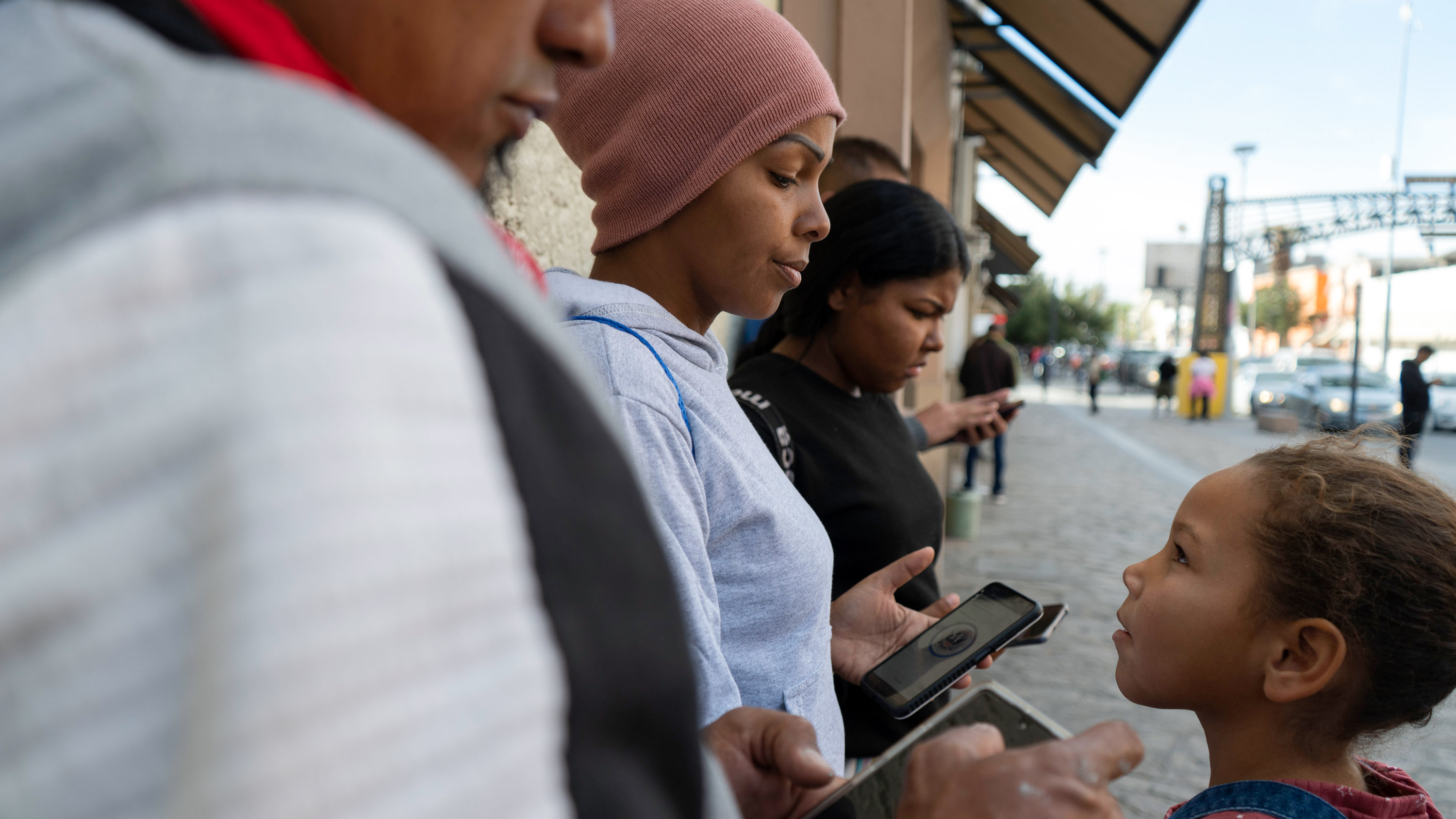
Keisy Plaza looks at her daughter Arantza Plaza with disappointment after failing to get an appointment on the CBP One app in Ciudad Juárez, Mexico.
ALICIA FERNáNDEZ


The new US border wall is an app

At the US southern border in 2023, asylum seekers had to request appointments with immigration officials via a mobile app. The Biden administration said the app, named CBP One, would make migration more orderly and discourage unauthorized crossings. But for many migrants, it became another obstacle.

While waiting in dangerous border cities, they reported frozen screens, facial recognition issues, spotty connectivity, and difficulty securing appointments. Advocates argue that requiring vulnerable people to rely on smartphones, internet access, and digital literacy creates a system that leaves many behind.

Find out how CBP One endangered some of the people most in need of protection.

—Lorena Ríos

We can still have nice things

A place for comfort, fun, and distraction to brighten up your day. (Got any ideas? Drop me a line.)

+ See how big countries really are with this interactive tool.
+ Explore the entire Star Wars galaxy in detail through this interactive map.
+ Chart the origins of historical events with this interactive cause-and-effect explorer.
+ Discover the surprising origins of global currency symbols in this deep dive into financial history.

Exploring the life stories of young adult men in prison with a history of dual harm

People who engage in both self-harm and violence (‘dual harm’) in prison cause widespread disruption to prison services. Whilst the behavioural profile of such individuals is gaining attention, there is very little research which explores their life histories and how these contextualise their dual harm. This study qualitatively explored how five young men in a medium secure prison in England with a history of dual harm (in the community, prison, or both) made sense of their life experiences and engagement in dual harm behaviours. Participants were interviewed using an in-depth life story interview protocol. A narrative analysis identified three themes: ‘Beginning: Making sense of a traumatic childhood’, ‘Middle: Exploring challenges during late adolescence’ and ‘End: Who I am now, and who I must be’. These themes, grounded in life experiences and associated meaning, offer valuable insights into the underpinnings of dual harm behaviours and direction for interventions addressing dual harm in prisons. The paper concludes with a discussion of key implications and directions for future research and practice in relation to the support and management of people who dual harm in custody.

Ultra-Short Radiotherapy Schedule for Prostate Cancer Supported by HERMES Trial

U.K. research has shown that condensing prostate cancer radiotherapy into two sessions, but with a higher dose per session, rather than the traditional five sessions does not lead to increased side effects when treatment is delivered using state-of-the-art magnetic resonance imaging (MRI)-guided technology.

Lead researcher Sian Cooper, clinical research fellow at The Royal Marsden NHS Foundation Trust and the Institute of Cancer Research in London, told Inside Precision Medicine that the results of the HERMES trial “point toward a future where prostate radiotherapy is tailored to the disease, to the individual’s anatomy and symptom profile, whilst being mindful of the impact of treatment time on patients’ lives.”

Presenting at the 2026 Congress of the European Society for Radiotherapy and Oncology (ESTRO), Cooper said that the number of people diagnosed with prostate cancer is projected to double by 2040, meaning the demand for effective and efficient treatment has never been greater.

At present, localized prostate cancer is typically treated with stereotactic body radiotherapy over five sessions, but there has been increasing interest delivering the treatment in fewer sessions, with a larger dose each session.

“For patients, a two-session treatment course would be far less disruptive than the weeks of daily hospital visits that radiotherapy has traditionally required. This convenience comes with clear benefits for work, leisure, family life and travel. For clinicians and health systems, fewer fractions mean faster workflow throughput, and getting patients the right treatment, quicker,” said Cooper.

“We wanted to find out whether giving the equivalent dose in just two treatment sessions could be feasible and safe for patients, and to understand how it might affect the potential side effects patients can experience, such as problems with urinary and bowel function.”

The move toward giving higher radiotherapy doses in fewer sessions has been made possible by improvements in radiotherapy delivery technology over recent years.

“It has allowed us to harness the power of modern computing and discoveries in clinical physics, to create radiotherapy doses which conform very tightly to the edge of the prostate,” Cooper explained. “This results in vastly less dose to the normal, healthy tissues around the cancer.”

The HERMES trial used a Unity MR-Linac (Elekta AB, Sweden) machine, which Cooper describes as “the ultimate evolution of this progress,” to deliver radiotherapy to participants.

The device combines real-time MR scanning with a linear accelerator and is known as MRI-guided adaptive radiotherapy. It allows adaptation of the radiotherapy beam design to changes in patient anatomy on the treatment day as well as moment by moment motion management, meaning that if there are any changes in the target or healthy bystander organs, the radiation beam can be switched off.

“This level of precision was needed to safely deliver the high dose of radiation necessary to maintain the biologically equivalent dose in just two fractions,” Cooper noted.

In all, 46 participants (median age 74 years) with intermediate or lower high-risk prostate cancer were randomly assigned to receive radiotherapy at a dose of 24 Gy in two fractions over 8 days, with a 27 Gy integrated boost to the MRI defined tumor (n=22), or 36.25 Gy in five fractions over two weeks to the planning target volume, with 40 Gy to the prostate and proximal one cm seminal vesicles (n=24). All participants had androgen deprivation treatment for at least six months.

Cooper reported that, at two years, four (18%) participants in the two-fraction arm and six (25%) in the five-fraction arm experienced moderate (grade 2) urinary adverse events (AEs) such as increased frequency or urgency. Grade 2 gastrointestinal AEs occurred in one participant in each arm (5% and 4%, respectively).

There were no grade 3 or worse genitourinary or gastrointestinal events in either group.

The team also showed that quality of life, measured by the International Prostate Symptom Score and the International Index of Erectile Function, showed minimal change up to two years but will continue to be monitored up to five years.

Cooper said that the investigators will present efficacy data, a secondary endpoint, when it matures but she pointed out that as “the cancer control rate for prostate cancer is so high, it often takes many years for failures to appear, whereas trial data for ultra hypofractionation show that the genitourinary adverse event rate is the primary concern after treatment.”

ESTRO president, Matthias Guckenberger, MD, from University Hospital Zurich, Switzerland, who was not involved in the research said: “While the technology used in this trial is currently available in only a limited number of specialist centers worldwide, they are growing rapidly. These results can help guide how they are used and help us understand whether two-session radiotherapy should become a new standard of care.”

The post Ultra-Short Radiotherapy Schedule for Prostate Cancer Supported by HERMES Trial appeared first on Inside Precision Medicine.

Anti-Inflammatory Drug Could Help Some People with Depression

Research led by the University of Bristol suggests treatment with an anti-inflammatory drug, already approved to treat arthritis, could help some people with depression.

The study, published in JAMA Psychiatry,  was small but showed gradual improvement in the severity of depression and physical symptoms like fatigue, as well as a lowering of anxiety in those treated with tocilizumab versus placebo.

“Low-grade systemic inflammation is a putative causal factor in depression, present in approximately 30% of patients,” write co-lead author Golam Khandakar, MD, PhD, a professor and researcher at the University of Bristol, and colleagues.

“Individuals with difficult-to-treat depression have higher cytokine, e.g., interleukin 6 (IL-6) and C-reactive protein (CRP) levels, than treatment-responsive patients and controls.”

Tocilizumab is a humanized monoclonal antibody that blocks the IL‑6 receptor and is used as an immunosuppressive drug in several inflammatory and cytokine‑driven conditions. For example, it is approved by the FDA to treat rheumatoid arthritis and cytokine release syndrome in patients with severe COVID-19.

To test whether IL-6 inhibition could help people with depression, the authors carried out a small randomized controlled trial as a proof-of-concept study. Overall, 14 participants were given a tocilizumab infusion, and 16 participants were randomly assigned to receive a saline placebo infusion.

Adults were eligible to be in the study if they had moderate‑to‑severe, difficult‑to‑treat depression despite antidepressants, showed persistent low‑grade inflammation on repeat CRP tests, and had prominent physical depressive symptoms like fatigue.

After receiving a single infusion, the participants were followed up for four weeks with evaluations at one week, two weeks and four weeks. All were taking anti-depressants when enrolled and continued them during the trial.

The trial was not large enough or long enough to show a statistically significant improvement, but it did show a consistent pattern of greater, clinically sized improvement with tocilizumab by the end of the follow-up period, especially in patients with higher baseline CRP.

No real differences were seen at one or two weeks, but at four weeks people given tocilizumab showed bigger improvements in overall depression scores, fatigue, energy levels, anxiety and quality of life than those in the placebo group. Around 54% of participants in the tocilizumab went into remission at four weeks versus 31% of the placebo group.

“This work represents an important milestone in the development of new treatments for depression especially difficult-to-treat depression, which affects millions of people in the U.K. alone,” said Khandakar in a press statement.

“This is one of the first randomized controlled trials to test immunotherapy for depression, the first to test the IL-6 receptor as the treatment target, and the first to use a targeted approach to select patients most likely to benefit, and to show that it works.”

The researchers now want to carry out a larger randomized trial to assess if the effects they saw are significant in a bigger treatment population.

The post Anti-Inflammatory Drug Could Help Some People with Depression appeared first on Inside Precision Medicine.