In step with the trend toward more selective use of chemotherapy, Labcorp has launched an expanded version of its DPYD Genotype test, which helps identify cancer patients at increased risk for severe side effects from fluoropyrimidine-based drugs. The test is now the only offering, from a national laboratory provider, that detects all Tier 1 and Tier 2 DPYD variant alleles recommended to be tested for by the Association for Molecular Pathology.
The DPYD gene encodes the enzyme DPD, which metabolizes more than 80% of 5-FU. Patients with reduced or absent DPD activity can experience serious, potentially life-threatening side effects, including diarrhea, neutropenia, and neurotoxicity when given fluoropyrimidines 5-FU or capecitabine.
Such pharmacogenomic (PGx) testing is used to help identify patients who are at greater risk for adverse drug reactions from certain treatments based on their genetic makeup. Once a chemotherapy regimen is recommended, PGx testing can help guide treatment decisions and reduce the risk of toxicity. DPYD testing is one of the most well-established examples of PGx.
“Pharmacogenomic testing is typically incorporated early in the treatment process, once a chemotherapy plan has been established, to give clinicians information about a patient’s inherited ability to metabolize certain medications or respond to them,” Annette Taylor, PhD, MS, told Inside Precision Medicine. She is associate vice president, strategic director, pharmacogenomics, Labcorp.
Fluoropyrimidines are one of the most widely used chemotherapy agents for colorectal, pancreatic, gastrointestinal, breast, and head and neck cancers. However, up to 9% of cancer patients carry DPYD variants that can negatively affect their ability to break down such drugs. That variant contributes to an estimated 1,300 deaths in the U.S. each year. By identifying the full range of Tier 1 and Tier 2 DPYD variants, the new test helps reduce the risk that vulnerable patients will receive the treatment.
“Advances in pharmacogenomics are reshaping cancer care,” said Marcia Eisenberg, PhD, chief scientific officer at Labcorp. “Our expanded DPYD test identifies patients at risk for severe toxicity before treatment begins, supporting safer, more personalized care.”
The U.S. Food and Drug Administration (FDA) recently updated its product labeling for 5-FU and capecitabine, which includes a Boxed Warning about the risk of severe adverse reactions or death in patients with complete DPD deficiency. The agency also advises testing for DPYD variants before treatment with 5-FU or capecitabine unless immediate treatment is necessary and recommends avoiding use of these drugs in patients with certain homozygous or compound heterozygous DPYD variants associated with complete DPD deficiency.
In addition, recent updates to National Comprehensive Cancer Network (NCCN) guidelines for colon cancer and other relevant indications reference these Boxed Warnings and the recommendation for DPYD testing. Further, Clinical Pharmacogenomics Implementation Consortium (CPIC) guidelines recommend adjusting or avoiding treatment based on a patient’s DPYD metabolizer status as determined by DPYD testing.
“There are other pharmacogenomic tests available beyond DPYD testing that can provide clinically actionable information for certain therapies and treatment settings. Common tests include UGT1A1 genotyping for irinotecan and TPMT/NUDT15 testing for thiopurines,” Taylor said.
Other tests offered by Labcorp include the UGT1A1 Irinotecan Toxicity test, which helps guide chemotherapy with irinotecan, commonly used for metastatic colon and rectal cancer. Labcorp also offers the TPMT and NUDT15 Genotyping test, useful for optimizing therapy with thiopurine drugs (azathioprine, mercaptopurine, and thioguanine).
A team of researchers at the University of Southern California has developed a method to expand a key population of blood-forming progenitor cells in the laboratory while preserving their identity and function, overcoming a longstanding barrier in hematology and opening new possibilities for cancer immunotherapy.
The study, published in Cell, describes how investigators generated large numbers of granulocyte-monocyte progenitors (GMPs)—immune precursor cells that give rise to macrophages, monocytes, and neutrophils—using a culture system that enables these cells to self-renew in vitro. The work not only challenges conventional assumptions about hematopoietic progenitor biology but also provides a potentially scalable platform for engineering immune cells designed to attack cancer.
“This is the first time we can pick single progenitor cells and expand them in large quantities without differentiation,” said senior author Qi-Long Ying, PhD, professor of stem cell biology at USC. “They retain the original identity.”
The achievement addresses a problem that has frustrated researchers for decades. Although hematopoietic stem cells and their descendants have been extensively studied, scientists have struggled to maintain specific blood-forming progenitor populations in culture over long periods without the cells differentiating into mature immune cells.
Ying said the project grew out of his laboratory’s experience working with embryonic stem cells, which can be maintained indefinitely in culture. He reasoned that if embryonic stem cells could be expanded long term, similar approaches might eventually be developed for stem and progenitor cells found in bone marrow.
After years of experimentation, the researchers established culture conditions that selectively support GMPs, a progenitor population responsible for generating several innate immune cell types involved in recognizing and destroying abnormal cells.
Challenging a longstanding paradigm
According to co-author Daniel McKim, PhD, one of the most surprising findings was not simply the ability to expand GMPs but the demonstration that these progenitor cells could undergo extensive self-renewal in vitro.
“The prevailing theory has been that hematopoietic progenitors are short-lived intermediate cells that are incapable of self-renewal,” McKim said. “One of the distinctions between hematopoietic stem cells and progenitors is the belief that these cells are not able to self-renew. What we found is that under the right conditions, they can.”
The researchers emphasize that the self-renewal phenomenon occurs in culture. Once transplanted back into animals, the GMPs behave like normal progenitor cells, producing downstream immune populations before eventually becoming depleted.
Still, the ability to generate vast numbers of GMPs in vitro represents a significant technical advance. The investigators report expansion levels approaching eight orders of magnitude while maintaining the cells’ progenitor characteristics.
Building better cell therapies
Beyond the basic biology, the researchers see major implications for cancer immunotherapy.
Current cellular immunotherapies are dominated by CAR T-cell approaches, which have transformed treatment for several blood cancers but have shown more limited success against solid tumors. Investigators have long been interested in developing therapies based on macrophages and other innate immune cells because those cells naturally infiltrate tumors and can reshape the tumor microenvironment.
However, translating those concepts into viable therapies has proven difficult. Mature macrophages and monocytes are challenging to genetically engineer, difficult to manufacture at scale, and often fail to persist after infusion.
The newly expanded GMPs may provide a solution. Because the progenitor cells can be generated in large numbers and genetically modified before transplantation, they offer a renewable source of tumor-fighting immune cells.
“In our body these cells are very rare,” Ying said. “The mature cells cannot grow, and it is very challenging to genetically modify them. Now we have progenitor cells that can be expanded long-term in large quantities, and we can easily genetically modify them. That makes everything possible.”
The team engineered both mouse and human GMPs with chimeric antigen receptors (CARs) and evaluated them in mouse models. Unlike mature macrophages, which often become trapped in organs such as the lungs and liver after infusion, the progenitor cells distributed broadly throughout the body and engrafted within the bone marrow.
Once established, the cells generated populations of macrophages and monocytes capable of infiltrating tumors.
McKim noted that this approach may overcome several limitations that have hindered macrophage-based immunotherapies. “One of the big issues has been that it’s hard to engineer these cells, and when you put them back into the body they don’t get where they need to go,” he said. “The progenitors solve both problems. They’re easy to engineer, and they expand after transplantation.”
Implications for solid tumors
The researchers believe progenitor-derived innate immune therapies may offer advantages in solid tumors, where CAR T-cell approaches have struggled.
Tumors often create highly suppressive microenvironments that limit T-cell activity. Macrophages and related innate immune cells, by contrast, naturally migrate into tumors and can help stimulate broader immune responses.
“Monocytes and macrophages love going into tumors,” McKim said. “They can kill tumor cells themselves, but they can also help generate a natural antitumor immune response by the host.” That capability could prove particularly important in cancers that evade treatment by losing specific target antigens, a common mechanism of resistance to CAR T-cell therapy.
Although the work remains preclinical, the investigators believe the platform could eventually support a wide range of immune-engineering applications beyond cancer.
As AI infrastructure for drug discovery continues to proliferate with reasoning workflows capable of generating hypotheses, candidate molecules, and experimental plans, Medra CEO Michelle Lee, PhD, argues that physical AI is the solution to addressing the next bottleneck: experimental validation at scale.
“Building foundation models in biology that can predict and cure disease will take thousands of years of data generation,” Lee explained in an interview with GEN Edge. “The more I looked at the field, the more I realized that this data problem is actually a robotics problem.”
In a new collaboration with the Defense Advanced Research Projects Agency (DARPA), Medra has launched AI Experimentalist, the scientific reasoning layer of its robotics platform. The system translates high-level research goals expressed in natural language into executable workflows that span the entire experimental cycle, from literature review, wet-lab execution, data analysis, and protocol refinement.
In a blog post, Medra presents an example where scientists prompt to “build an Epidermal Growth Factor Receptor (EGFR) blocking antibody assay cascade.” AI Experimentalist can propose small optimizations in execution, including testing linear DNA templates in parallel, optimizing expression conditions, and feeding results immediately into the next run, for compounding time savings from days to hours.
Partners can access AI Experimentalist through physical AI labs deployed on site at customer facilities or operated remotely through Medra’s flagship science laboratory, Medra Lab 001 (ML001), which unveiled in April and touts running experiments 24/7. Medra describes the 38,000 square foot facility as the largest autonomous lab in the United States.
Artisanal nature
In contrast to industrial automation, which has been powerful for repeatable tasks, such as combinatorial chemistry and screening, physical AI equips the same hardware with sensors to enable intelligent decision-making.
While many robotics players in biology are focused on the manufacturing step, Medra has the ambitious goal of accelerating end-to-end drug discovery campaigns.
“The artisanal nature of science is actually what makes certain experiments work and others fail,” said Lee. She noted that seemingly subtle variables, such as the angle of a pipette or the precise timing of mixing reagents, can have an outsized impact on experimental outcomes.
Medra is currently working with partners across academia, biopharma, and government to run and develop assays across a wide array of applications, including antibody discovery, protein engineering, gene editing, and cell biology.
Looking ahead, Lee says the bottleneck is not robotic capability, but integration and deployment. AI Experimentalist addresses this challenge through a multi-agent architecture and model-agnostic harness that allows Medra to incorporate new biological AI models and scientific agents. Among them are NVIDIA Nemotron models for protocol editing and optimization and the newly launched NVIDIA BioNeMo Agent Toolkit.
“The flexibility of physical AI will be incredibly key in making scientific discovery truly autonomous,” asserts Lee.
Drew Weissman, MD, PhD, is a world-renowned physician and Roberts Family Professor in Vaccine Research at Penn Medicine. He is best known for his contributions to RNA biology and the development of COVID-19 RNA vaccines. Weissman and Katalin Karikó, PhD, were jointly awarded the 2023 Nobel Prize in Medicine for their discoveries that enabled the modified mRNA technology used in Pfizer-BioNTech and Moderna’s vaccines to prevent COVID-19. More than 15 years ago, Weissman and Karikó found a way to modify mRNA and developed a delivery technique to package the mRNA in lipid nanoparticles. The COVID-19 RNA vaccine received FDA approval in August 2021.
Weissman is one of the academic leaders of the NSF AIRFoundry, an effort to leverage AI to improve, accelerate, and scale the design, manufacture, and delivery of RNA, which officially opened in April 2026. Weissman’s lab is currently working on a pan-coronavirus vaccine, a universal flu vaccine, and a vaccine to prevent herpes. They are working with Penn colleagues to develop cancer therapeutics with mRNA technology. And they are developing a SARS-CoV-2 mRNA vaccine with Chulalongkorn University in Thailand to help residents of Thailand and other Asian countries access lifesaving vaccines.
Before joining Penn in 1997, Weissman was a fellow at the National Institutes of Health studying HIV in the lab of Anthony Fauci, MD. Weissman received his bachelor’s degree and master’s degree from Brandeis University. He earned his MD and PhD from Boston University and completed his residency at Beth Israel Hospital.
Zachary Ives, PhD
Professor of Computer and Information Science University of Pennsylvania
Panelist
Zachary Ives, PhD
Zachary Ives, PhD, is the department chair and Adani President’s Distinguished Professor of Computer and Information Science at the University of Pennsylvania. Zack’s research interests include data integration and sharing, data provenance and trustworthiness, and machine learning systems. He is a recipient of the National Science Foundation (NSF) CAREER award, and an alumnus of the DARPA Computer Science Study Panel and Information Science and Technology advisory panel. He has also been awarded the Christian R. and Mary F. Lindback Foundation Award for Distinguished Teaching and an IEEE Technical Committee on Data Engineering Education Award, and he is a fellow of the ACM.
Zack is one of the academic leaders of the U.S. NSF Artificial Intelligence-driven RNA BioFoundry (NSF AIRFoundry), an $18-million effort to leverage AI to improve, accelerate, and scale the design, manufacture, and delivery of RNA. The center officially opened in April 2026.
Zack studied computer science at Sonoma State University and holds a PhD in computer science from the University of Washington. He joined the faculty of Penn in 2003. He is a co-author of the textbook Principles of Data Integration. He has been an associate editor for the Proceedings of the VLDB Endowment and The VLDB Journal.
Silvi Rouskin, PhD
Asst. Professor of Microbiologyy Harvard Medical School
Panelist
Silvi Rouskin, PhD
Born in Bulgaria, Silvi Rouskin, PhD, is an assistant professor of microbiology at Harvard Medical School. She is the winner of the 2021 Vilcek Prize for Creative Promise in Biomedical Science. Following a six-year spell at the Whitehead Institute, where she was the Andria and Paul Heafy Whitehead Fellow, Silvi joined the faculty of Harvard Medical School in 2021.
Silvi’s Harvard lab studies alternative RNA structures and the myriad roles they have in both viral and human biology. In particular, the lab studies how RNA folding informs alternative splicing and how misfolding can lead to disease. The lab developed DMS-MaPseq (dimethyl sulfate mutational profiling with sequencing) and DREEM (Detection-of-RNA-folding-Ensembles-using-Expectation-Maximization) algorithm to distinguish multiple RNA conformations formed by the same underlying sequence in vivo at single nucleotide resolution.
Silvi immigrated to the United States as a teenager to pursue a career in science. She holds a degree in physics from Florida Institute of Technology and a PhD in biochemistry and molecular biology from the University of California, San Francisco. Her interest in RNA began while working as a staff research associate in the lab of Joseph DeRisi, PhD, at UCSF, where she began developing techniques for the detection of viruses associated with human disease.
Broadcast Date:
Time:
In anticipation of RNA Day (on August 1), GEN invites you to join our exciting Spotlight virtual event on RNA Therapeutics on Wednesday, July 29.
We are living in a “post-genomic” world where RNA is no longer just a messenger but a programmable drug and molecular therapeutic. From the global impact of mRNA vaccines to advances in RNA editing and the potential of circular RNA, the field of RNA therapeutics is truly taking off. RNA is rapidly becoming a universal software for precision medicine.
Over 2.5 hours, this GENSpotlight on RNA Therapeutics brings you three interlinked sessions that feature outstanding researchers exploring various aspects of RNA biology and therapeutics, including:
A keynote panel including two founding members of the AIRFoundry (Artificial Intelligence-driven RNA BioFoundry) at the University of Pennsylvania—Zachary Ives, PhD, and Nobel laureate Drew Weissman, MD, PhD
A talk from Silvi Rouskin, PhD, a leading microbiologist at Harvard Medical School, presenting new research on alternative RNA structures and their relevance in health and disease
Presentations from our two sponsors, 4basebio and Aldevron
Registration to our Spotlight on RNA Therapeutics is entirely free. We look forward to celebrating RNA Day with you (a few days early).
This is today’s edition of The Download, our weekday newsletter that provides a daily dose of what’s going on in the world of technology.
Introducing: the Engineering issue
We can’t fix everything, but we can be ambitious. We can take on the challenge of making the world better through human ingenuity. That’s what the new Engineering issue of MIT Technology Review is all about.
Sometimes the challenges we face are giant, like tunneling beneath the seafloor. Some exist at the nanoscale, as with a new ASML machine powering the future of chipmaking. Others represent problems at a planetary scale and in truly unknown territory, like replicating a volcano’s mechanism to cool the Earth on purpose.
These incredible engineering stories show we can come together to get to work and, when the smoke clears, find we’ve made real progress. Subscribe now to read all of them—and more—in the full print issue.
Stripe, Anthropic, and OpenAI are backing an effort to stop respiratory infections
The common cold comes for us all—often more than once a year. And there is no way to prevent it. The best you can do is take vitamin C and stay away from people with the sniffles.
Now, the payment company Stripe is funding a new $500-million nonprofit aiming to prevent both the common cold and the flu. Its eventual goal is to get rid of respiratory viruses altogether.
Anthropic, OpenAI, and Bill Gates have also backed the venture, which will investigate whether modern technologies can counter the common cold and the flu. Dive into the nonprofit’s plans.
—Antonio Regalado
MIT Technology Review Narrated: inside the hunt for the most dangerous asteroid ever
As asteroid 2024 YR4 hurtled toward Earth, astronomers determined that this massive rock posed a higher risk of impact than any object of its size in recorded history. Then, just as quickly as history was made, experts declared that the danger had passed.
This is the inside story of the network of global scientists who found, followed, planned for, and finally dismissed the most dangerous asteroid ever discovered —all under the tightest of timelines and with the highest of stakes.
—Robin George Andrews
This is our latest story to be turned into an MIT Technology Review Narrated podcast, which we publish each week on Spotifyand Apple Podcasts. Just navigate to MIT Technology Review Narrated on either platform, and follow us to get all our new content as it’s released.
The must-reads
I’ve combed the internet to find you today’s most fun/important/scary/fascinating stories about technology.
1 China has taken the US’s crown for the world’s fastest supercomputer Shenzhen’s LineShine overtook California’s El Capitan. (Axios) + China had not had a machine at the top of the list since 2017. (NYT $) + But the supercomputer race isn’t geared for AI work. (Reuters $)
2 Mythos reportedly found flaws in classified US government systems A US official said Anthropic’s model identified certain vulnerabilities. (AP News) + The model has now been suspended over US security concerns. (BBC) + The NSA has lost access to Anthropic’s tools in fallout. (Engadget) + The feud raises new questions about AI safety. (MIT Technology Review)
3 A US pilot reported seeing Iranian drones swarm in “jellyfish” formation Which would represent an alarming advance in Iranian drone capabilities. (CNN) + The US is heading toward a drone-filled future. (MIT Technology Review)
4 Mark Zuckerberg directed Meta to create a prediction markets app It will be similar to Polymarket and Kalshi. (NYT $) + But won’t let users wager real money. (The Verge) + Another new app, Meta Photos, will create media with AI. (Reuters $)
5 SpaceX’s “Starfall” just launched a secretive test flight The orbital delivery spacecraft blasted off for the first time yesterday. (Axios) + It could also support space manufacturing. (New Scientist $)
6 Alibaba has sued the US for being linked to the Chinese military It wants to be removed from a Pentagon blacklist. (Reuters $)
7 Nvidia’s banned AI chips have doubled in price on China’s black market The DGX B300 now costs more than $1.1 million. (Financial Times $)
8 Tesla claims a driver “manually overrode self-driving” in a deadly crash It said the accelerator was pressed “all the way to 100%.” (The Verge $)
9 The US science retreat has created an opportunity for Europe But questions about funding and innovation remain. (Nature) + Trump has dealt many blows to US science. (MIT Technology Review)
10 Meta’s new smart glasses ditch Ray-Bans for Kylie Jenner Meta logos and Jenner designs have replaced the Ray-Ban branding. (Wired $)
Quote of the day
“It’s blasphemy against AI if you say it’s a bubble.”
—SoftBank founder and CEO Masayoshi Son tells shareholders that the AI boom is still in its early stages, Reuters reports.
One More Thing
ERIK CARTER
Video games are dividing South Korea
They say StarCraft was the game that changed everything. When the science fiction strategy game arrived in South Korea in 1998, it wasn’t just a hit—it was an awakening.
Out of 11 million copies sold worldwide, 4.5 million were in the country. The game was so popular that it triggered another boom: “PC bangs,” pay-as-you-go gaming cafés.
StarCraft and PC bangs spoke to a generation of young South Koreans boxed in by economic anxiety and rising academic pressures. But they also sparked arguments about game addiction. They’ve led to feuds between government departments—and a national debate over policy.
A place for comfort, fun, and distraction to brighten up your day. (Got any ideas? Drop me a line.)
+ This archive lovingly documents the beautiful design of over 1,700 obsolete objects. + Classic TV theme tunes like Hey Arnold! Have been revived in a musician’s marvellous samples. + Marvel at the mind-boggling geometry of nature and see how bees perfectly construct honeycombs. + Hear the ominous, deeply atmospheric tones of a custom string instrument built inside a plastic drainage pipe.
SAN DIEGO—California’s three life sciences clusters all lost jobs last year, yet the industry remains a major engine of innovation and economic growth, according to a report released by the state’s largest life sciences organization to coincide with the Biotechnology Industry Organization (BIO) International Convention being held here.
BIOCOM California quantified the economic impact of the Golden State’s life sciences industry as generating $394 billion in economic output in 2025—a figure that goes beyond the direct impact of the 406,505 people employed by life sciences employers across the state. The impact figure includes indirect impact (activity generated through suppliers, vendors, and subcontractors supporting the industry) and induced impact (the household spending generated by workers employed in both life-sci organizations and supporting industries).
When indirect and induced impact are accounted for, the life sciences sustain 1,079,365 jobs statewide, the report stated.
However, all three of the state’s top-tier life-sci clusters—the San Francisco Bay Area, San Diego, and the Los Angeles/Orange County region—saw decreases in employment within the industry last year, according to the report.
San Francisco ranks second in the latest edition of GEN’s nationally-quoted A-List of Top 10 U.S. Biopharma Clusters, unchanged from a year ago, while San Diego slid one position to sixth, and LA/Orange County slipped one notch to eighth.
“Continued biotech winter”
“California, like the other states in the country, are still showing the effects of the pandemic and the recovery from that, because it was such a large run up of investment and hiring and building of new space, followed by a pretty significant drop off in 2022, 23,” Tim Scott BIOCOM California’s president and CEO, explained in an interview with GEN conducted at the organization’s booth within the convention’s exhibition floor.
“And then we have the continued biotech winter that’s been caused mostly through the instability at the federal level in terms of policy,” Scott added.
He cited NIH funding cuts, the delay in re-authorizing the Small Business Innovation Research (SBIR) and Small Business Technology Transfer (STTR) seed funding programs, tariffs, and the “most favorite nation” drug pricing framework championed by the Trump administration as a vehicle for lowering drug prices: “All of these things have led the industry and the investors in the industry to pause.”
Most of the life-sci job decline was concentrated in the Bay Area and San Diego regions, which together accounted for 88% of job losses.
The San Francisco Bay Area saw its life-sci workforce slide 2.7% from 2024 to 137,779 jobs last year, driven mainly by decreasing employment in scientific/research tools, biotechnology, and biopharmaceuticals. The San Diego region finished 2025 with 61,866 jobs, a 2.55% decline from the previous year, due primarily to the loss of jobs in the R&D in physical, engineering, and life sciences and electromedical and electrotherapeutic apparatus manufacturing sectors.
Greater Los Angeles, which BIOCOM California defines as Los Angeles, San Bernardino, and Ventura counties, saw its employment base shrink 0.5% year-over-year, to 143,153 last year, with the largest employment decrease coming in drug wholesaler positions. Orange County’s life-sci workforce also dipped by 0.5%, sliding to 57,213 jobs, driven by cuts in scientific/research tools and medical devices and equipment employment—though Orange County also saw increases in biotechnology and research and testing jobs.
“Significant driver”
“In spite of the slight decrease in growth this year, we’re still at about $400 billion in economic output for California in the life sciences. That’s the second largest industry in California,” Scott said. “It’s still a significant driver of economic activity and of innovation.”
Another driver of innovation, NIH funding, stayed flat last year compared to 2024 at $5.23 billion for all of California. But the number of NIH awards statewide fell 8.5% from 9,384 in 2024 to 8,587 in 2025.
Life science manufacturing jobs fell by 2.1% last year to 143,572 jobs, though they still accounted for more than one-third (35.3%) of all of the industry jobs in the state. Across 31 life science industry sub-sectors, 23 recorded job losses, with the largest declines in medical laboratories and R&D within the physical, engineering, and life sciences job category.
But the state’s life-sci manufacturing segment is eventually expected to grow as drug developers either strive to meet growing demand, reshore their production in the United States to avoid tariffs, or both. Gilead Sciences began construction in September 2025 of a new 180,000 square-foot development and manufacturing facility, part of a companywide $32 billion U.S. investment strategy. Two months later, Novartis opened a 10,000-square-foot radioligand therapy (RLT) manufacturing facility for cancer treatments in Carlsbad, CA, the pharma giant’s third U.S.-based RLT site.
While biopharmas and contract manufacturers have announced hundreds of billions of dollars in new projects, projects announced for California remain mostly under construction, so hiring levels have not yet risen to account for the new manufacturing activity, Scott said.
Potential challenges loom
Two more potential challenges loom for California life science companies—one from Washington, the other from Sacramento.
Scott said BIOCOM California is paying attention to federal efforts aimed at further scrutinizing activity between U.S. and Chinese biopharmas.
Earlier this month, Reps. John Moolenaar (R-MI), chairman of the Select Committee on China, and Congresswoman Debbie Dingell (D-MI), introduced the Biotech Investment National Security Act (BINSA). BINSA would amend the Comprehensive Outbound Investment National Security (COINS) Act, enacted last year, by adding pharmaceutical and biological product development to the list of sectors subject to screening of investments by the U.S. government.
The measure would subject U.S. pharmaceutical licensing deals, joint ventures, and equity investments with Chinese covered foreign persons to U.S. Treasury Department review, as well as explicitly cover licensing deals involving technology and intellectual property. BINSA also requires the Secretary of War (formerly Defense) to assess within 60 days whether U.S. capital investment in Chinese biotechnology negatively affects national security and military readiness.
“We’re trying to find the balance between protecting American interests with regard to intellectual property and also competing with China. And we’re balancing that with cooperating with China,” Scott said. “You can imagine a politician in Washington, D.C., wants to really protect our interests. A biotech entrepreneur in California wants to go anywhere in the world to find resources to be able to move their drug toward the clinic.”
In Sacramento, Gov. Gavin Newsom, who leaves office at year’s end when his second term expires, has proposed permanently limiting the amount of business tax credits that a corporation can claim each year. Starting in 2027, corporate taxpayers would be allowed to claim a maximum of either $5 million or 50% of their pre-credit tax liability, whichever is greater. The limit would not affect taxpayers with less than $5 million in credits.
According to California’s Legislative Analyst’s Office (LAO), recent tax collection data shows that fewer than 100 corporate taxpayers in California would be affected. LAO has estimated that the proposal would raise $850 million in 2026–27, since the cap would only apply to part of the fiscal year, and $1.7 billion to $1.8 billion annually between 2027–28 and 2029–30.
However, the R&D credit likely accounts for most of the proposal’s fiscal effect, according to the LAO, since the R&D credit accounts for the overwhelming majority of business credit usage and carry-forward balances. And the roughly 100 affected businesses include many of the largest biopharma giants, Scott said.
“That is a really big tool for engaging pharma and encouraging investment in California. Without the R&D tax credit, companies are less likely to want to invest in California,” Scott asserted. “The R&D tax credit has had a direct effect on driving the growth of the biotech industry in California.”
A journey that has lasted more than 30 years for Sangamo Therapeutics, a pioneering gene editing biotech company in the Bay Area, has reached an unwanted milestone as the company filed for Chapter 11 bankruptcy protection.
Concurrent with its starting voluntary Chapter 11 proceedings in the U.S. Bankruptcy Court for the District of Delaware, Sangamo simultaneously entered into two separate asset sale agreements: Eli Lillyhas agreed toacquire Sangamo’s capsid delivery platform, zinc finger nuclease (ZFN) platform, modular integrase (MINT) platform, and prion disease program, ST-506. Astellas Pharma has agreed to take over Sangamo’s Fabry disease program, isaralgagenecivaparvovec(ST-920).
To clinch the deals, Lilly and Astellas have agreed to be “stalking horse” bidders when Sangamo’s assets are sold in a future bankruptcy court auction. The stalking horse bids do not include the clinical-stage ST-503 program to treat chronic neuropathic pain, the giroctocogene fitelparvovec program to treat hemophilia A, and Sangamo’s cell therapy and regulatory T cell (Treg) assets. Sangamo said these are expected to remain available to interested bidders at the auction.
“We believe this process provides a clear framework to pursue value-maximizing transactions,” said Sandy Macrae, Sangamo’s CEO. “Our priority is to execute a disciplined and efficient saleprocess while supporting all ofour stakeholders. We are also pleased to have signed agreements with two large pharmaceutical companies to serve as stalking horse bidders in the process, underscoring the strategic interest in our assets.”
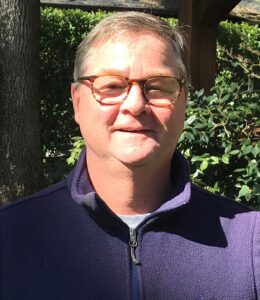
Ed Lanphier, founder, Sangamo Therapeutics
Founded by Ed Lanphier in 1995, Sangamo became an early developer of zinc-finger nucleases (ZFNs), one of the first established gene editing platforms. In 2005, Sangamo scientists led by Fyodor Urnov, PhD, Phil Gregory, PhD, and Mike Holmes, PhD, demonstrated the use of ZFNs to engineer a base substitution in human DNA. The term “genome editing” was born around that report. Sangamo’s technology became the first gene editing platform to enter the clinic, initially for patients with human immunodeficiency virus (HIV), followed by a series of rare genetic diseases.
More recently, the biotech branded itself as a “genomic medicine” company. In 2023, Sangamo trumpeted promising clinical data from its first-in-human Phase I/II STAAR trial (NCT04046224) in Fabry disease. All 25 patients dosed in the STAAR study have continued to show sustained, elevated α-Gal A levels, up to three years for the longest-treated patient. However, later that year, Sangamo deferred additional spending on planning a future Phase III program for ST-920, absent a collaboration partner or additional external funding.
Sangamo made the move as part of a restructuring that included a similar deferral of spending on chimeric antigen receptor-modified regulatory T-cell (CAR-Treg) therapies, the elimination of 40% of its U.S. workforce, and the narrowing of its pipeline. Sangamo said it was refocusing its spending on developing epigenetic regulation therapies treating neurological diseases, as well as novel adeno-associated virus (AAV) capsid delivery technologies.
In 2024, Sangamo shares surged 69% after it reached alignment with the FDA on a regulatory pathway to Accelerated Approval for ST-920 in advance of submitting a biologics license application (pre-BLA). However, Dennis Ding, an equity analyst with Jefferies, argued that the news posed little threat to the developer of the sole marketed drug for the rare disorder, Galafold® (migalastat), marketed by Amicus Therapeutics.
Last month, Sangamo said it remained in the process of completing a rolling BLA submission to the FDA for Accelerated Approval of ST-920 based on the mean annualized estimated glomerular filtration rate (eGFR) slope at 52-weeks across all dosed patients in the study. Two-year eGFR data may serve as confirmatory evidence for traditional approval, Sangamo said the FDA affirmed.
Sangamo was also advancing the Chemistry, Manufacturing and Controls (CMC) module, ahead of completion of the rolling BLA submission for ST-920, which the company said it expected this summer (subject to the ability to secure adequate additional funding), while it was continuing to commercialize the Fabry gene therapy.
In reporting first-quarter results, Sangamo said that it had submitted preclinical and clinical modules for review, while also submitting its antibody assay companion diagnostic, designed to screen patients for eligibility with ST-920, to the FDA’s Center for Devices and Radiological Health (CDRH).
Sangamo reported a $31-million net loss on revenue that plunged 78% year over year to $1.4 million from $6.4 million. Sangamo said $5 million of that decrease reflected Pfizer’s termination early last year of its collaboration with Sangamo to develop a hemophilia A gene therapy, giroctocogene fitelparvovec.
Speaking several years ago with The CRISPR Journal, a peer-reviewed journal and sister publication of GEN, Sangamo founder Edward Lanphier reflected on the company’s bright beginnings. In 1994–95, he recalled, he became aware of research being done by Jeremy Berg, PhD, and Srinivasan Chandrasegaran, PhD, on engineering zinc finger proteins (ZFPs).
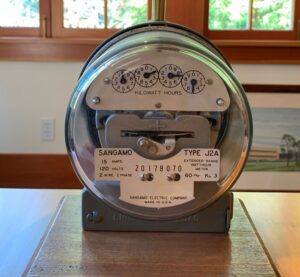
A watt-hour meter, an electric usage measuring device designed and patented by the great-grandfather of Sangamo Therapeutics founder Ed Lanphier
“While it was certainly unclear what making novel DNA-binding proteins might do, novel DNA sequences represented the other half of this equation—an agnostic vector plus a platform for developing novel transgenes. I became quite interested in that, and thus in starting Sangamo,” Lanphier remembered.
After founding Sangamo in 1995, Lanphier joined the company full-time two years later. Sangamo’s name was derived from some fascinating family history—Lanphier’s great-grandfather, a Yale-educated electrical engineer, founded a company in Sangamon County, IL, during the 1890s.
He designed and patented “the watt hour meter—the thing that sits on the side of buildings and goes around and around recording electricity,” Lanphier recalled. The Sangamo Electric Company manufactured various electronic components before being sold in the 1970s to Schlumberger.
Lanphier remembered “this incredibly cool logo from Sangamo Electric. I asked my dad, ‘‘What do you think?’’ He said, ‘‘That would be great!’’ And so, I started Sangamo Biosciences.”
While ZFNs showed immense promise as a commercial gene editing platform, they were difficult and expensive to manufacture. The dramatic arrival of CRISPR in 2012–13 quickly pushed ZFNs onto the fringes of the clinical gene editing space.
“When the [gene editing] movie is written, I know it is going to focus exclusively on the Broad and Berkeley and Charpentier and their work. But it is completely unfair—not to me but to Fyodor and Ed [Rebar] and Philip and Mike Holmes and Jeff Miller and the dozens of people who did create this field.”
Lanphier was asked why Sangamo never joined the CRISPR revolution a decade ago. “My perspective was always that [CRISPR] is bacterial—it is nonspecific, it is immunogenic. It’s a great research tool. It’s going to give a lot of visibility to genome editing. When people actually want to use it therapeutically, that’s when they will end up talking to us.”
Alas for Sangamo, that eventuality did not materialize.
The national conversation about the value of education is currently dominated by speculation about the risks and positive potential of AI.
Whatever your own perspective on that debate, I hope you’ll be glad to know that MIT is also working on a deeply important but comparatively old-fashioned challenge: American high school students’ startlingly uneven access to calculus. According to the National Survey of Science and Mathematics Education, which covers the nation’s more than 13,000 school districts, in almost half of US high schools calculus isn’t even offered.
As our graduates know better than anyone, preparation in calculus is effectively an admissions requirement at a place like MIT—which means that students in schools with no calculus classes are in practice locked out of an essential route to STEM careers.
Recognizing this glaring need, we set out to find a solution. With support and inspiration from the Siegel Family Foundation, in the fall of 2025 the Institute launched the MIT4America Calculus Project. Developed by the MIT Scheller Teacher Education Program (STEP) Lab, the Calculus Project recruits and trains MIT undergraduates and alumni to provide weekly long-distance calculus tutoring for students in underresourced high schools across the country.
Reflecting the Institute’s longstanding commitment to national service, the MIT4America Calculus Project supplies an innovative answer to a hard practical problem, and it taps the uncommon skill of MIT’s people to create opportunity for others and spread the educational impact of the Institute beyond our walls.
The project is in its early phases, so far engaging 30 MIT undergraduates and seven alumni tutors. From its initial work with 14 school districts across the country, it’s on track to collaborate with about 20 this summer.
The demand is clear—and the response from the students we’re reaching makes it all worthwhile. This spring, the first Calculus Project students were prepared for their AP exams, thanks to their own persistence, diligence, and curiosity—and to the generosity, care, and patience of a dedicated group of people from MIT.
It’s somewhat surprising that he can choose just one. He’s the person spellers rely on to confirm pronunciations and answer questions about the roots of the words they’re given at the Scripps National Spelling Bee—arguably the world’s most prestigious competition of its kind. The story of how the word earned the top spot on his personal list may well mark the beginning of his unique career path as both a linguist and a Greek Orthodox priest.
In third grade, Sietsema ventured to a garage sale at a friend’s house with 50 cents in his pocket and picked out three books that struck his fancy. Although they were priced at 50 cents each, his friend’s mother said the books he’d chosen were on special and sent him home with all three, including a collection of Edgar Allan Poe stories called Masterpieces of Mystery. Knowing it contained macabre tales like “The Tell-Tale Heart,” his own mother told him he’d need to wait a few years before reading it. Naturally, he started it right away.
As he read “The Unparalleled Adventure of One Hans Pfaall,” Sietsema was baffled by the main character’s description of arriving at the moon in a balloon. Pfaall reported tumbling into a crowd of people who were “eyeing me and my balloon askant, with their arms set a-kimbo.” Sietsema had never encountered the word akimbo (with or without a hyphen) and asked his parents what it meant. They didn’t know, and it wasn’t in the family’s dictionary. The question also stumped his teachers, and the dictionaries in his classroom and the school library were no help either. “For years, I didn’t know what this word meant,” Sietsema says. It stuck in his mind that there was a word out there that he, his parents, and his teachers didn’t know. He thinks it wasn’t till he got to college that he finally found a dictionary with the answer: The moon dwellers in Poe’s story had been standing with their hands on their hips, elbows turned outward.
“I credit that puzzle with getting me into dictionaries and being curious about etymology,” he says. It kindled a fascination with words—and an abundance of curiosity—that would shape his life’s trajectory and work.
Growing up in Grand Rapids, Michigan, Sietsema attended a Dutch Reformed Christian school and recalls taking part in only one spelling bee, in second grade. It was in the 1970s, when everyone was hooked on phonics—so he overthought the sounding-it-out implications when asked to spell of. “I spelled it U-V, and of course, I was wrong,” he says.
At the time, he thought he probably wanted to work in the church—when he painted himself as an adult for a class project, he dressed his grown-up self in a cassock. But after taking a class in nuclear chemistry at the local junior college in high school, he decided his backup plan was to become a nuclear engineer. So when he went to the University of Michigan, he enrolled in the school of engineering. While he did well and liked his courses, though, he soon realized he felt called to a career in the church after all.
Sietsema (a.k.a. Father Mark) presides at the 2025 Holy Friday evening service at Holy Trinity Greek Orthodox Church in Lansing, Michigan. As part of that service, he sprinkles the congregation with rose-scented water, which delights the children. “It’s like a one-sided water fight in church,” he says. This service culminates with a procession in which a symbolic tomb is carried around the outside of the church. Everyone who attends takes part and leaves with a flower.
COURTESY OF BRIAN SIETSEMA
Switching to the college of literature, science, and the arts, he chose the studies in religion major, taking advantage of the interdisciplinary freedom it offered to take classes in literature, art, and more. He also tucked in courses that would fulfill seminary prerequisites such as knowledge of the biblical languages, studying ancient Hebrew and ancient Greek as well as modern languages that might come in handy for theological scholarship (Dutch, Swedish, and modern Hebrew).
Being in Ann Arbor gave Sietsema “a different understanding of the wideness of the Christian world,” as he puts it, and he gradually became less sure about which church he wanted to work in. As he neared the end of his fourth year at Michigan, he still needed a few more pre-seminary courses—and it dawned on him that he’d taken an “awful lot” of languages and thoroughly enjoyed them. So he stayed on for a fifth year to study linguistics as well as German, ancient Aramaic, and modern Arabic. One of his professors encouraged him to go to grad school and insisted that he apply to MIT, which was considered the top linguistics program in the country. To his surprise, he got in.
Sietsema calls his four years at MIT a great adventure: “If I could relive them, I would empty out my bank accounts to do so.”
At MIT he worked with Morris Halle, one of the leaders in generative grammar, which Sietsema describes as a working model of the “chemistry” of language—the parts and processes that form the building blocks of verbal communication. Halle and others had developed counting procedures (akin to measured time in music) that help explain stress patterns (that is, which syllables might receive emphasis by varying such things as stress or pitch). Building on that work, Sietsema’s dissertation proposed that the division of words and phrases into metrical units similar to musical measures can be used to predict where high and low tones fall, which he demonstrated in the tonal patterns of four Bantu languages spoken in Tanzania. At the time, research in this area was seen to have implications for creating natural-sounding machine- generated speech.
Sietsema calls Halle “a wonderful mentor,” and the two played well off one another. As he was sweltering in his Central Square apartment while printing the final version of his dissertation, Halle called and asked him to stop by. Knowing that Sietsema read Hebrew, Halle, a Latvian-born Jew who’d learned English as his sixth language, wanted to show him a syllable-counting analysis of the 23rd Psalm he’d just completed; Sietsema answered with his own structural analysis of Psalm 90. “I could tell he was delighted to have this young Gentile boy from Grand Rapids, Michigan, who had the same fascination for biblical Hebrew as he did,” Sietsema says.
Today, he calls his four horizon-expanding years at MIT a great adventure: “If I could relive them, I would empty out my bank accounts to do so.” Beyond embracing the intellectual stimulation of the Institute, he took advantage of Cambridge’s many cultural opportunities and cross-registered at Harvard to study French and Ugaritic. All told, he says, he’s now studied about a dozen languages, including the Latin he took in high school and the modern Greek he would add to his repertoire several years after earning his doctorate. (“I always feel like I’m leaving one out,” he says.)
When Sietsema graduated from MIT in 1989, the job market for linguists was “not great.” As fate would have it, though, Matt Alexander, PhD ’92, his best friend at MIT, had already been hired at the University of Michigan, where a one-year position as a visiting assistant professor of phonology opened up that spring. Alexander recommended Sietsema, who handed in his dissertation and got the job, earning an award for excellence in teaching based on student reviews in his first semester.
Shortly after his one-year gig at Michigan ended, he returned to Massachusetts and landed a job as pronunciation editor at Merriam-Webster in Springfield. Although the work was very different from the theoretical linguistics he’d focused on in grad school, “as the guy who had studied a whole bunch of language back in undergrad, it was kind of coming home to old-school philology,” he says. His main job was to ensure that pronunciations—which can change—were up to date. Fluoride, for example, shifted from floo-o-ride in the early 1900s to flor-ide in the second half of the century.
At Merriam-Webster, he made the call on which pronunciations would go into the 10th edition of Merriam-Webster’s Collegiate Dictionary—and in what order of preference. The dictionary, he explains, takes a descriptivist approach that reflects common word usage, so he kept a radio and a TV on in the background as he worked. He’d listen for interesting pronunciations and record them on index cards, noting how each such word was said, who said it, where the person was from, and what the context was. These went into Merriam-Webster’s “huge files” of index cards containing citations of words in actual usage.
Sietsema also had a hand in identifying new words and usages that appeared in the 10th edition, which was initially released in 1993—and he was responsible for the inclusion of definitions for interjectional uses of like. He recognized three informal uses: to introduce a quotation (“So she was like, ‘Let’s go eat’”); to give an approximation (“There were like 10 people in line”); and to emphasize (“He was, like, gorgeous”) or convey something apologetically or vaguely (“I need to, like, borrow some money”). While not a fan of such usages, he recognized them as real linguistic phenomena that had earned a place in the dictionary.
During his tenure as pronunciation editor, he introduced the use of the International Phonetic Alphabet (a standard phonetic notation for all languages) into Merriam-Webster publications long before it became widely used in American mass-market dictionaries. He also oversaw the recording of pronunciations for digital versions of the dictionary and flew out to a San Diego recording studio to supervise the voice actors. When the actors refused to record certain words that offended them, Sietsema had to step into the breach and do it himself. If you go to www.merriam-webster.com and search for a choice two-part expletive the actor Samuel L. Jackson is famous for delivering, it will be his voice that you hear when you click on the icon of the speaker—offering a decidedly less memorable rendition.
Working at Merriam-Webster gave Sietsema access to what he describes as its “fantastic library of old books on every subject imaginable.” He seized the opportunity to delve into historical questions about the development of Christianity—something he’d been curious about. It struck him that Orthodox Christianity was the most original form of the faith that was still around. Having met Katherine Chapekis, a young linguist raised in the Greek Orthodox tradition, during his year teaching in Ann Arbor also nudged him in the direction of Orthodoxy. In 1991, he converted and they married, and she began working at Merriam-Webster the following year as a definer and researcher who tracked down first usages of English words.
After 15 years of answering etymological queries, when the bee was expanded in 2018 Sietsema began serving as a pronouncer for some of the earlier rounds as well.
AP PHOTO/CAROLYN KASTER
At the Greek Orthodox church in Springfield, Sietsema’s facility for languages proved useful when he served as a volunteer chanter, helping the priest lead services in Greek. “I do a good job with the liturgical Greek because I have the phonological knowledge to know how to make my mouth do the things that it needs to do to sound like authentic Greek speech as opposed to an American just rattling off Greek letters,” he says.
He began taking evening classes in Byzantine chant, and before long the bishop was encouraging him to attend seminary. Merriam-Webster allowed him to work four 10-hour days so he could commute to Brookline to study at the Holy Cross Greek Orthodox School of Theology. And after four years, he earned a master of divinity degree.
Sietsema fully intended to go back to being a lexicographer, perhaps eventually getting ordained so he could serve as a substitute priest on weekends. But he’d made what he jokingly calls “a terrible mistake” at the seminary: He’d embraced his studies so enthusiastically that he became the valedictorian and had to give the commencement speech. The archbishop of America—the head of the Greek Orthodox church in the US—came up from New York to attend the ceremony, and he happened to be in need of a deacon who could also serve as a speechwriter. “A few weeks later, I got a call from the archdiocese saying ‘We want you to be ordained, and we want you to come to New York, and we want you to write for the archbishop,’” Sietsema recalls.
In short order, he and his wife moved to the Upper East Side of Manhattan so he could begin his new post as Father Mark (he used his middle name because Orthodox priests must be ordained with a saint’s name, and there are no Orthodox Saint Brians). As deacon to the archbishop and then to his successor, he wrote their speeches and encyclicals on top of many other duties—including chauffeuring them through New York City traffic—and traveled with them around the country and to Greece, meeting President Clinton, ambassadors, members of Congress, Elie Wiesel, and South Africa’s Anglican Archbishop Desmond Tutu along the way. But after two years, as the father of a newborn, he was eager to move on from a job that required putting in as many as 14 hours six or seven days a week. So in 2000, he returned to Michigan to become pastor of the Holy Trinity Greek Orthodox Church in Lansing.
“The World Series can be a four-game sweep and the Super Bowl can be a blowout, but the National Spelling Bee always comes down to one last word.”
Not long after settling into parish life, Sietsema got an unexpected call from the Scripps Spelling Bee. His wife had served on the event’s word panel from 1997 to 2000, and he had traveled with her to one of the members’ off-site gatherings in 1998. He’d tagged along to dinner one night, and they were pleased to meet the person who was responsible for pronunciations in the bee’s official dictionary. But now, just a few weeks before the 2003 event, there was a crisis: The longtime pronouncer had suddenly died. The veteran associate pronouncer would step into his role and take on the job of giving spellers their words, but a new associate pronouncer would be needed to answer spellers’ questions about word roots, monitor pronunciations, and be prepared to serve as the pronouncer if needed. Could he do it? Honored to be asked, Sietsema got the okay from his bishop and said yes.
Little did he know it would become a permanent gig. After 15 years of answering root-word queries, when the bee expanded in 2018 he began serving as a pronouncer for some of the earlier rounds as well—though never for the finals. Now he’s the head of a team of associate pronouncers. “It’s just wonderful to see these young people blossom right in front of you, asking their questions and analyzing the word on the spot and figuring out how it all goes together,” he says. He dismisses the idea that the kids have photographic memories, saying they’re “really just good little word detectives.”
As a member of the bee’s word panel, Sietsema attends multiple daylong meetings to create and fine-tune each year’s list by mining the 500,000 or so words in Merriam-Webster’s unabridged dictionary. “For an introductory round, you want something that’s an interesting word, a useful word, but something that’s gettable,” he says. “For the later rounds, you really want to find something that’s going to challenge the speller. And it’s nice to have a word that’s analyzable.” “Rooty” words—those with obvious roots—are ideal.
The advent of unabridged online dictionaries has streamlined how students prepare for the bee, which once required wading through the dictionary manually to compile word lists. Today, it’s easy to generate lists of words derived from a particular language to study their roots, for example. Meanwhile, the competition has become increasingly fierce, and once-verboten terms like geographical names are considered fair game. For some of the words in the hardest rounds, “it looks like you’re just taking a spoonful of alphabet soup,” he says. “And that’s for the spellers who really, really are committed to learning just about every word they can in the dictionary.”
When it gets down to the last spellers in the final round, there’s an electric feeling in the room. “It’s always a close competition,” he says. “The World Series can be a four-game sweep and the Super Bowl can be a blowout, but the National Spelling Bee always comes down to one last word, and that’s what makes it exciting each and every time.”
The philosopher Friedrich Nietzsche famously wrote that a characteristic of theologians is their “unfitness for philology,” meaning they can’t be trusted to interpret texts with objective accuracy. He also maintained that a sense of restraint characterizes a good linguist. Sietsema says he’s right on both counts. When linguists analyze texts, “we know what we don’t know, and that’s important because you don’t find meaning where it’s not in the original,” he says. He thinks the well-trained linguist has a mission to the world of theology: to help clarify what is an appropriate interpretation of a sacred text and what is going too far.
He’s put his unique blend of skills into practice. In the early days of the covid pandemic, for instance, a Greek Orthodox scholar defended the practice of continuing to use a single spoon to administer communion. The scholar argued that holy things cannot cause harm and that abandoning them for fear of an earthly disease was far more dangerous than the disease itself, citing a passage from a homily of an archbishop of Constantinople in the fourth century CE saying “nothing is worse than to relegate spiritual things to human reasoning.” Sietsema responded with a thoughtful defense of reason, pointing out that the scholar’s argument relied on a mistranslation of logismoi, which he explained refers not to the faculty of reason but to negative mental habits, such as flawed reckonings, intrusive thoughts, or vain rationalizations. He countered that the church very much values reason and advocated “the exercise of good sense, good science, and compassion,” arguing that “those who pit faith against the faculty of reason end up losing one or the other or both.”
Sietsema’s time at MIT, he says, taught him to pay attention not only to what’s in data sets but also to what’s not there that could be. “That particular muscle gets used in both linguistic analysis and lexicography, as well as in pastoral care,” he says. “When you’re listening to people pour out their hearts, it’s important to notice what they’re saying and what they’re not saying.”
During his time as a deacon at the Archdiocese in New York City, Sietsema stands alongside Archbishop Iakovos, the head of the Greek Orthodox church in the US, at a water blessing service attended by former President George H.W. Bush.
COURTESY OF BRIAN SIETSEMA
As both a priest and a linguist, he’s called on to notice and remember. Attention to detail matters whether he’s gearing up for the celebration of Pascha, or Easter, at Holy Trinity or preparing for the National Spelling Bee, which he calls “the holy week of spelling.”
This spring, before heading to Washington for his 24th National Spelling Bee in May, Sietsema reflected on what words he might add to his list of favorites. A top candidate was one given to Evelyn Blacklock, a speller in his first bee as associate pronouncer in 2003: clepsydra, meaning an old-style water clock. “She didn’t know it, but through a series of questions to me about the Greek roots of the word—from kleptein (to steal) and hydōr (water)—she was able to divine the English spelling,” he recalls. “It was so satisfying to watch this feat of word sleuthing happen in real time, and it gave me a good insight into the importance of my role at the bee.”
It seems unlikely, however, that akimbo will ever lose top billing on his list. It’s easy to imagine Sietsema facing the future with his own hands on hips, elbows out, embracing linguistics, theology, and scientific reason as he shares his joy for life and the words we use to describe it.