A major selling point for wearable devices is the promise that they’ll help identify hidden health conditions before they lead to major harm. But a nagging issue has been the connection to clinician guidance when a smartwatch or ring raises the alarm.
To help address this issue, wearable makers Oura and Whoop recently announced they’ll make it possible for users to connect virtually with doctors directly from their apps. While the move could represent the first step in the long-awaited adoption of consumer health data by traditional clinical care, experts cautioned that the bar for data in clinical decision-making is higher than for simple wellness purposes. The Food and Drug Administration has only authorized a handful of wearable features for clinical use, and the evidence base for using wearable data to inform medical care is nascent. Widespread use by clinicians will take considerably more work.
“This was an inevitable development,” said Ida Sim, a physician and professor at the University of California, San Francisco, who studies how to make best use of consumer health data. “We’ve got these sensors that have ostensibly valuable data … but we haven’t even begun to tap into the real clinical value.”
In October 2014, when the Centers for Disease Control and Prevention warned that the Ebola outbreak in West Africa risked infecting 1.4 million Africans by 2015, Susan Reichle was the counselor to USAID in Washington, D.C. At the time, the CDC mounted the largest response in history, and for the first time in an Ebola outbreak. USAID was involved in the response, too.
It was a very different situation compared to the current outbreak in the Democratic Republic of the Congo and Uganda. In 2014, the world learned about the outbreak when there were 49 confirmed cases, and it took two-and-a-half months to get to 300 cases. This time, there were already hundreds of suspected cases by the time the CDC began its response, and 300 confirmed cases were reached within two weeks.
Interventions: Behavioral: Streamlined Suubi+Adherence; Behavioral: Streamlined Interpersonal Psychotherapy Groups (IPT-G)
Sponsors: City University of New York, School of Public Health; National Institute of Mental Health (NIMH); New York University; Washington University Bursky School of Public Health
A cup of coffee can mean many things: a daily part of our routine, a moment of calm, a midday boost. But zoom in past the steam, past the roasted aromatics, down to the caffeine molecule itself, and a different story emerges. At the Texas A&M Health Institute of Biosciences and Technology, researchers have turned this everyday stimulant into something far more unexpected: a molecular “pause button” for engineered cells.
In a study published in the Journal of the American Chemical Society (JACS), the team unveiled CODS, a caffeine‑operated dissociation system built using AI‑guided de novo protein design. The paper, “AI‑Guided De Novo Design of a Caffeine‑Induced Protein Dissociation System,” describes how the group reprogrammed “an existing caffeine-responsive chemically induced proximity (CIP) module into a ligand-dependent dissociation system.”
“AI is changing how we design biology,” said senior author Yubin Zhou, MD, PhD. “Instead of relying only on protein parts that already exist in nature, we can now design new mini proteins with specific behaviors. Here, we used AI to help turn caffeine into a precise trigger for controlling engineered cells.”
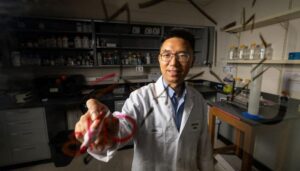
A team of Texas A&M Health researchers led by Yubin Zhou, MD, PhD, is using caffeine to precisely control engineered cells, a step toward safer and more responsive therapies. [Texas A&M University]
The CODS system pairs a caffeine‑binding protein with a synthetic mini‑binder designed using the BindCraft platform. In the absence of caffeine, the two components stay locked together. Add caffeine, and the complex snaps apart, releasing the binder and shutting down the attached cellular function. As Tianlu Wang, PhD, a postdoctoral fellow in the Zhou lab, put it, “Many genetically-encoded molecular tools act like accelerators. CODS gives us something closer to a brake or pause button.”
The team demonstrated CODS across several biological contexts. In engineered gene circuits, caffeine addition sharply reduced transcriptional activity. In a rewired pyroptosis pathway, caffeine triggered inflammatory cell death by freeing the active domain of gasdermin D. And in perhaps the most translational example, CODS served as a conditional deactivator for CAR T cells,temporarily dampening their activity without destroying the therapeutic cells.
“Powerful therapies need powerful control,” Zhou said. “By combining AI‑designed proteins, high‑performance computing, and familiar small molecules, we are building a new language for communicating with engineered cells.”
The design process itself leaned heavily on computation. Graduate student Brendan McKee led the AI‑guided binder design and molecular modeling, while Tatsuki Nonomura spearheaded the molecular engineering and live‑cell validation. The Texas A&M High Performance Research Computing service provided the infrastructure needed to run large‑scale simulations. “High‑performance computing was essential for this project,” Zhou noted. “It helped us move from a conceptual idea to a functional molecular switch much faster.”
Although caffeine is not a therapeutic molecule, its safety and familiarity make it an appealing control signal. As Zhou emphasized, “Coffee will not replace medicine. But caffeine can help us imagine medicines that are more controllable, more responsive, and safer for patients.” The researchers’ next steps include further testing in therapeutic cells, animal models, and disease-relevant settings before moving toward clinical use.
CODS now joins a growing toolkit of AI‑designed molecular switches, offering a blueprint for future systems responsive to other safe, accessible molecules. As programmable cell therapies advance, the ability to modulate them with something as simple as caffeine may prove unexpectedly powerful.
The authors report that a patent application covering the CODS platform has been filed by Texas A&M University, with Y.Z., T.N., B.M., and T.W. listed as inventors (U.S. Provisional Patent Application No. 64/022,078).
AstraZeneca’s investigational GLP-1 pill showed promise in mid-stage obesity and diabetes studies, but it may still be too early to determine how it stacks up against oral treatments already on the market.
In one Phase 2 trial of people with obesity, called VISTA, those on the highest dose of the drug, called elecoglipron, lost 11.2% of their weight after 36 weeks, when looking at all patients regardless of discontinuations, according to data presented Monday at the annual meeting of the American Diabetes Association and published in the Lancet. (Eli Lilly’s pill Foundayo led to the same rate of weight loss in a Phase 3 study that lasted twice as long, but it’s hard to compare across trials in different phases.)
In a separate Phase 2 trial in people with diabetes, called SOLSTICE, patients on the highest dose saw up to a 1.74 percentage-point decrease in a measure of blood sugar called A1C after 26 weeks. The study, also published in the Lancet, enrolled people taking oral Ozempic open-label as a comparator group, and they experienced a smaller A1C decrease of 1.32 percentage points.
A study led by researchers at the University of Texas at El Paso (UTEP) has found that people with type 2 diabetes or obesity who were prescribed GLP-1 receptor agonists (GLP-1 RAs) had substantially lower odds of developing alcohol, opioid, nicotine, and cocaine use disorders compared with similar individuals who were not taking the medications. The research, published in the journal Frontiers in Psychiatry, used health data from more than 142,000 patients from the All of Us Research Program and adds to a growing body of evidence indicating that GLP-1 medications may have an influence on dopamine signaling and other neural pathways that drive cravings not just for food but other substances.
“Our findings add to growing evidence that GLP-1 medications may influence more than appetite and blood sugar regulation,” said lead author Tadesse Abegaz, PhD, an assistant professor in the School of Pharmacy, University of Texas at El Paso. “These medications appear to affect brain pathways involved in reward and craving, which could help explain the lower rates of substance use disorders observed in our study.”
Substance use disorders are a significant public health challenge contributing to illness, premature death, and higher healthcare costs. While current treatment methods that combine medications and behavioral therapy can be effective, relapse rates remain high, often exceeding 50% within the first year after treatment, suggesting a need for additional ways to treat this disease.
An emerging candidate for this are GLP-1 receptor agonists such as semaglutide and liraglutide. Developed to treat type 2 diabetes and obesity, these drugs have drawn attention because GLP-1 receptors are found not only in areas involved in metabolic regulation but also in brain regions associated with reward and reinforcement.
“Animal studies have demonstrated that GLP-1 RAs reduce the self-administration of alcohol, opioid, nicotine, and cocaine effects [that] are believed to be mediated through interactions with the mesolimbic dopamine system,” the researchers wrote. Small human studies and observational analyses have also suggested reductions in substance cravings, relapse rates, and alcohol-related hospitalizations among some patients receiving GLP-1 therapies.
The El Paso investigators said they initiated their research to move beyond smaller studies because “the real-world impact of GLP-1 RA on multiple co-occurrence of SUD (substance use disorder) has not been systematically investigated.”
To address this gap, the team conducted a retrospective nested case-control study using data from the NIH’s All of Us Research Program. The study examined individuals with type 2 diabetes or obesity and identified cases involving new diagnoses of alcohol use disorder, opioid use disorder, nicotine use disorder, or cocaine use disorder. These individuals were compared with matched control participants who had diabetes or obesity but no documented history of substance use disorders.
Analyses of these data showed consistent associations across all categories studied. GLP-1 receptor agonist use was associated with a 74% reduction in the odds of alcohol use disorder, a 69% reduction in the odds of opioid use disorder, a 68% reduction in the odds of nicotine use disorder, and a 75% reduction in the odds of cocaine use disorder. The researchers also reported 75% lower odds of any substance use disorder among GLP-1 users compared with non-users.
“Exposure to GLP-1 RAs was consistently associated with significantly reduced odds of SUD cases,” the researchers wrote. “These findings suggest that GLP-1 RAs may exert behavioral-modifying effects that extend beyond glycemic control and weight loss.”
The researchers noted that their research was observational and does not establish cause and effect. “We do not support prescribing these medications for addiction treatment at this time,” said senior author Gabriel Frietze, PhD, an assistant professor of pharmaceutical sciences at UTEP. “Because this was an observational study in a specific clinical population, randomized clinical trials are needed before GLP-1 medications can be recommended for treating addiction.”
The team believes the findings could help guide future approaches to addressing substance use-related health issues by identifying biological pathways that may be targeted therapeutically. The authors noted that mechanisms potentially involved include modulation of dopamine release, suppression of neuroinflammation, and attenuation of stress-related neural circuits.
“Our next goal is to conduct prospective research that follows individuals initiating GLP-1 therapy over time,” Abegaz said. “We aim to evaluate whether changes in the substance use behaviors occur after treatment begins and whether these changes related to improvements in mental health and quality of life. Ultimately, this work will help inform whether GLP-1 medications could become part of future treatment strategies for substance use disorders.”
In cancer research and therapy development, even trace levels of endotoxins (LPS) in recombinant proteins can severely distort results. In discovery and preclinical studies, endotoxins are silent disruptors of animal immunization, sensitive biological assays, and toxicity assessments, compromising results and safety evaluations. Endotoxin-free recombinant proteins are therefore essential for generating reliable research data and successful development of next-generation cancer therapeutics.
Invisible interference in cancer therapy and vaccine development
Endotoxin contamination can severely compromise antibody generation in animal models. Even small amounts of endotoxins can alter the host’s immune response, reducing antibody specificity, consistency, and overall quality. Endotoxin-contaminated recombinant proteins can subtly—but significantly—alter cellular behavior through immunostimulatory and cytotoxic effects. Endotoxin-induced systemic inflammation in animals can further disrupt experiments, potentially leading to study suspension or even termination.
In cell-based studies, endotoxin contamination can be a hidden disruptor. Immune cells such as dendritic cells, macrophages, monocytes, and T cells can respond strongly even to trace amounts of endotoxins, leading to cytokine release, altered proliferation, or unexpected activation. These effects can easily produce misleading or non-reproducible results.
The demand for endotoxin-free reagents is even more critical in the development of cancer vaccines. Since these therapies rely on precise modulation of the immune system, endotoxin contamination can trigger unintended immune activation, masking the true efficacy of the vaccine candidate and introducing safety risks. Using endotoxin-free proteins is therefore vital to accurately evaluate immunogenicity and support safe clinical translation.
Sino Biological’s ProPure solution to minimize endotoxin risk
While pharmacopeial guidelines such as USP <85> provide general limits for endotoxin, cutting-edge immunology and translational oncology studies often require far stricter control. Sino Biological’s ProPure endotoxin-free recombinant proteins are designed to eliminate this variable at the source, supporting reliable results from early discovery through IND-enabling studies. Produced at the state-of-the-art Center for Bioprocessing (C4B) in Houston, Texas, ProPure reagents are rigorously controlled to achieve levels as low as 0.05 EU/mg, with select products reaching an exceptional 0.01 EU/mg—over ten times lower than typical industry standards.
By incorporating endotoxin-free proteins, researchers in cancer therapy and vaccine development can confidently achieve consistent and accurate results in critical applications, including:
Animal immunization for antibody generation—ensuring high-quality antibodies and predictable host immune responses.
Preclinical toxicology and pharmacokinetics (PK)—minimizing confounding immune activation in animal models.
In vitro cell proliferation and differentiation assays—reducing false positives caused by endotoxin-sensitive cells such as dendritic cells, macrophages, and T cells.
Precise detection and quantification of cytokines—supporting reliable immunological readouts and biomarker analyses.
How ProPure achieves ultra-low endotoxin levels
ProPure quality is not achieved by end-stage cleanup alone. C4B employs an integrated Prevention–Isolation–Detection strategy across the entire production lifecycle.
Prevention at the source: Endotoxin-free plasmids and buffers, low endotoxin-binding plastics, and stringent clean-in-place (CIP) procedures minimize endotoxin introduction from cloning through purification.
Environmental isolation: The facility follows an E. coli-free principle, eliminating a major source of endotoxin introduction in recombinant protein production.
Dual detection: Each batch is tested using Limulus Amebocyte Lysate (LAL) and/or recombinant Factor C (rFC) assays for sensitive, redundant detection, and fully traceable batch data.
ProPure triple-control strategy for ultra-low endotoxin.
This end-to-end design ensures that ProPure proteins arrive ready for use in the most demanding oncology and immunology applications, without extra purification steps that can damage protein quality or delay timelines.
With advanced technologies and rigorous quality control, Sino Biological delivers endotoxin-free proteins that meet the needs of highly sensitive research and translational applications. ProPure proteins help researchers reduce variability, improve reproducibility, and accelerate the development of next-generation cancer therapies.
When Jingkun Zeng, PhD, joined the lab of Nobel laureate, Jennifer Doudna, PhD, as a postdoctoral researcher in 2024, he was not interested in applying CRISPR for gene editing.
The molecular scissors had demonstrated extraordinary clinical promise in correcting single-point mutations, most strikingly in Baby KJ’s case, where a rare metabolic disorder once presented a 50% mortality rate in infancy.
Yet, Zeng had his ambitious sights on stopping cancer progression, where the biology “became messy.” Cancer can be driven by hundreds of thousands of mutations, making it nearly impossible to correct each mutation one-by-one to restore healthy function.
Zeng, who completed his PhD training in cancer evolution at The Francis Crick Institute, aimed to develop new CRISPR-based technology that could therapeutically access the undruggable tumor suppressor protein, p53. Mutations in this “guardian of the genome” are found in nearly half of all cancers, and up to 70–90% of cases of the most deadly tumors, including ovarian, pancreatic, and non-small cell lung cancer.
In a new study published in Nature titled, “Targeting Cancer-Specific Mutations with RNA-Triggered Chromatin Shredding,” Zeng and colleagues from Innovative Genomics Institute (IGI), University of California (UC) Berkeley, UC San Francisco (UCSF), and Gladstone Institutes, have now engineered a CRISPR system to selectively trigger cancer cell death by chromatin shredding.
The approach recognizes cancer cells using the RNA-guided nuclease,CRISPR-Cas12a2, to recognize mutant p53 mRNA transcripts. Therapeutic effectiveness was demonstrated in mouse models of lung and liver tumors.
Bacterial roots
Mutations in p53 are early drivers in the cancer-causing cascade, making the tumor suppressor one of the most sought-after targets in cancer therapy. Yet despite decades of effort, no approved p53 drugs exist on the market.
Unlike many druggable proteins, p53 lacks a well-defined binding pocket traditionally required by established modalities, such as small molecules or antibodies. Additionally, most cancer therapeutics are designed to inhibit disease-driving proteins, whereas restoring p53 function demands precise, controlled activation of a tumor suppressor.
“It’s the first time we managed to target p53 with such precision,” Zeng told GEN, emphasizing that CRISPR-Cas12a2 can distinguish healthy and disease cells that differed by just one nucleotide.
The novel drug modality takes advantage of CRISPR’s bacterial roots as a defense system that protects against infection by cutting the genetic material of invading viruses, preventing replication and spread.
Zeng also emphasizes that the guide RNA is easily programmable for additional therapeutic areas, such as destroying viral infected cells or abnormal cells due to aging. The technology can also be multiplexed to recognize multiple cancer mutations simultaneously.
Looking ahead, the authors aim to improve the delivery efficiency to cancer cells, a longstanding challenge across CRISPR therapies. The team is also undergoing collaborations to apply the technology across diverse cancer types, including brain, prostate, and ovarian cancer.
This is the online version of STAT’s weekly email newsletter Health Care Inc. Sign up here.
I live in northwest Indiana, and it appears the Chicago Bears are going to put the team’s new stadium here, well outside the actual city of Chicago with almost no public transit and financed completely by Indiana taxpayers. The Bears are successfully pissing off just about everyone — no small feat. Send all Bears thoughts and health care tips my way! bob.herman@statnews.com.
The breastfeeding billing battle
UnitedHealthcare is cutting back on paying for lactation counseling, and the clinicians who provide those services are up in arms, another example of the deepening rifts between providers and insurers.



 solution to minimize endotoxin risk

