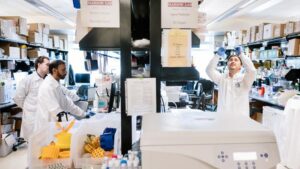
Henry Schein discloses exec pay for longtime CEO Stan Bergman’s final year

Henry Schein reported pay increases for three of its five executives in 2025, while median employee pay increased from the year before. The Melville, New York-based medical product supplier is the 11th-largest medical device company in the world, according to Medical Design & Outsourcing’s 2025 Medtech Big 100 ranking by revenue. Since then, Henry Schein increased…

The post Henry Schein discloses exec pay for longtime CEO Stan Bergman’s final year appeared first on Medical Design and Outsourcing.

STAT+: Tortugas Neuroscience launches with hopes to develop drugs for brain disorders, other conditions

A new startup has found that the Chinese biotech industry is good for more than obesity drugs and cancer therapies. 

The company, Tortugas Neuroscience, launched Tuesday with plans to develop two schizophrenia and tinnitus drugs licensed from Chinese drugmaker Jiangsu Hansoh Pharmaceutical Group. The startup will also test two other medicines for focal epilepsy and encephalopathies that were originally created by Japanese pharmaceutical company Eisai Co. Ltd. 

Tortugas has $106 million from Cure Ventures, The Column Group, and AN Ventures to begin testing the drugs in mid-stage trials in the U.S. 

Continue to STAT+ to read the full story…

CPC Biotech debuts unified bioprocess fluid portfolio

NEWS RELEASE: Introducing CPC Biotech – one brand uniting critical fluid management components New brand unites CPC’s Biopharma connector products with PSG Biotech’s pump, flow meter and sensor expertise – creating an integrated portfolio for the biopharmaceutical industry CPC Biotech to make its public debut at INTERPHEX 2026, April 21–23, Javits Center, New York City Roseville,…

The post CPC Biotech debuts unified bioprocess fluid portfolio appeared first on Medical Design and Outsourcing.

CleanAssure Launched as an ISO Class 5 Controlled Cleanroom for Sterile Single-Use Assemblies

Freudenberg Medical, a Kaiserslautern, Germany-based contract design manufacturing partner, launched CleanAssure, a new ISO Class 5 controlled cleanroom designed to deliver clean and sterile single-use assemblies for biopharmaceutical customers, according to the company.

Freudenberg Medical manufactures silicone and thermoplastic elastomer (TPE) tubing for bioprocessing and critical fluid transfer. The company specializes in seamless, overmolded single-use assemblies used in vaccine production, cell cultivation, fluid transfer, and fill-finish operations.

The controlled cleanroom enables customers to receive ready-to-use washed, dried, and gamma sterilized single-use assemblies with the highest product quality, sterility, and process consistency, noted Rudi Gall, vp, global pharma, Freudenberg Medical.

“CleanAssure allows us to support our customers beyond component manufacturing,” he said. “By integrating controlled cleaning and sterilization into our single-use assembly services, we help reduce contamination risk, streamline validation activities, and support a reliable supply for our customers. We can now support customers with their entire component value chain and allow them to focus on their core manufacturing capability.”

Freudenberg’s cleaning process uses ultrapure water and air, operating within ISO 5 conditions. The water is produced using a multi-stage filtration process, resulting in high-purity water specifically suitable for pharmaceutical applications.

Key biopharma industry challenges

Biopharmaceutical manufacturers increasingly rely on single-use systems but face ongoing challenges related to cleaning validation, contamination risk, and production downtime. Customer-managed cleaning processes are often time-intensive, costly, and require additional resources while directly impacting supply reliability, according to Gall.

The company explained that its controlled cleaning environment addresses these challenges by reducing cross-contamination risk through tightly controlled ISO Class 5 processing; alleviating customer cleaning validation burden by delivering assemblies washed and sterilized under cGMP, validated conditions; minimizing production downtime by removing cleaning as a process step; and supporting a consistent, reliable supply of high-quality single-use assemblies.

Freudenberg will be attending INTERPHEX New York, April 21–23, Booth 1673, to exhibit its new products and services.

The post CleanAssure Launched as an ISO Class 5 Controlled Cleanroom for Sterile Single-Use Assemblies appeared first on GEN – Genetic Engineering and Biotechnology News.

CRISPR Screens Map Human T‑Cell Genes That Promote or Block HIV Infection

How does HIV, armed with only nine genes, manage to hijack the immune system so effectively? For decades, researchers have known that the virus depends on human proteins to enter, replicate, and persist—yet the full roster of those host factors has remained elusive. One major reason: most HIV studies have relied on immortalized cell lines rather than the primary CD4+ T cells the virus actually infects in the body. As a result, scientists have lacked a comprehensive picture of how real human T cells respond when HIV attacks.

A new study from Gladstone Institutes and the University of California, San Francisco (UCSF), changes that. In the study, titled “Systematic Discovery of Pro- and Anti-HIV Host Factors in Primary Human CD4+ T Cells” and published in Cell, researchers report the first genome‑wide map of human genes that either promote or restrict HIV infection in primary human CD4+ T cells, offering a long‑sought blueprint of the host–virus interface.

“HIV has been a global crisis for over 40 years,” said Alex Marson, MD, PhD, director of the Gladstone‑UCSF Institute of Genomic Immunology and senior author of the study. “By studying human T cells, which are the primary target of the virus, we’ve finally mapped the genes—many of which were previously unknown—that influence whether or not they can be infected by HIV.”

Gladstone Institutes
Scientists in the Marson Lab at Gladstone Institutes have opened a new door to understanding HIV by creating the first genetic roadmap of how the virus interacts with real human cells. [Gladstone Institutes]

Achieving this required overcoming a fundamental technical barrier. “One challenge of using real human T cells for research is they’re very difficult to infect with HIV; out of a whole dish of cells, typically only one or two percent would get infected,” said first author Ujjwal Rathore, PhD. After years of optimization, the team pushed infection rates to roughly 70%, enabling genome‑scale CRISPR perturbations in primary cells for the first time.

With that platform in hand, the researchers performed orthogonal genome‑wide CRISPR activation (CRISPRa) and CRISPR knockout (CRISPRn) screens in CD4+ T cells, systematically testing nearly every human gene. Disrupting genes revealed those HIV depends on, while overactivating genes exposed natural antiviral defenses that HIV normally suppresses. “Over‑activating the genes gave us a wealth of information,” said co–first author Eli Dugan, a PhD candidate in Marson’s lab. “We discovered natural antiviral proteins that were previously invisible because the virus could effectively silence them.”

Across both screens, the team identified hundreds of host factors that shape HIV infection. Among the most striking were two previously unrecognized antiviral proteins: PI16 and PPID (Cyp40). “PI16 interacts with host factors involved in HIV fusion and inhibits viral entry, whereas PPID, a paralog of the proviral cyclophilin CypA, binds capsid and reduces nuclear import of the HIV core,” wrote the authors. Targeted mutagenesis, along with structural modeling and evolutionary analyses, pinpointed residues essential for PPID’s restriction activity, and engineered variants were up to tenfold more potent, according to Dugan.

To test whether these defenses could counter real‑world viral strains, the team collaborated with HIV pioneer Jay Levy, MD, who provided isolates from the early AIDS epidemic. Elevated levels of PI16 or PPID restricted even these aggressive HIV strains.

“This was the first genome‑wide effort to show how human genes affect HIV infection in cells taken directly from human blood samples,” said Nevan Krogan, PhD, director of the HIV Accessory and Regulatory Complexes (HARC) Center. “Our findings could eventually lead to new treatments that help the body’s immune system resist the virus.”

Beyond identifying antiviral factors, the study offers the potential for a powerful new platform for probing HIV latency—the persistent reservoir that evades antiretroviral therapy. “Now, we have the platform to ask the biggest questions in the field,” Rathore said, “and hopefully learn how to eliminate hidden HIV that current drugs can’t reach.”

The post CRISPR Screens Map Human T‑Cell Genes That Promote or Block HIV Infection appeared first on GEN – Genetic Engineering and Biotechnology News.

STAT+: At AACR, a provocative use of CAR-T, Merck’s new thing and cancer’s geography problem

You’re reading the web version of STAT’s popup newsletter, AACR in 30 seconds, your guide to what’s happening at the American Association of Cancer Researchers’ annual meeting. Sign up here.

We’re back with more data from the AACR meeting! Among the highlights today: a first look at a drug Merck acquired from China, a fascinating but potentially controversial use for CAR-T, and American oncology’s geography problem. Don’t forget: Tuesday night we will host a live event in San Diego, and we also have a virtual recap of the AACR conference on Thursday.

CAR-T shows deep response in smoldering myeloma

In an early phase trial, investigators at Dana-Farber Cancer Institute treated 20 high risk smoldering multiple myeloma patients with Carvykti, a BCMA directed CAR-T therapy. The idea was to use the immunotherapy on patients with the multiple myeloma precursor condition, hoping to prevent the active cancer in patients at high risk of progression.

Continue to STAT+ to read the full story…

Safe@Campus Virtual Reality Training for Campus Shooting Preparedness: Prototype Development and Usability Study

<strong>Background:</strong> Campus shootings, though infrequent, result in significant loss of life, psychological trauma, and disruption to university communities. Traditional preparedness programs developed for K-12 settings do not translate well to university environments. Virtual reality (VR) offers an immersive and engaging method to enhance situational awareness and decision-making during high-stress events. <strong>Objective:</strong> This study aimed to develop the Safe@Campus prototype, a theory-informed, stakeholder-engaged VR-based prototype designed to prepare university students to recognize and respond to campus shooting threats, and to evaluate its initial usability and feasibility among undergraduate students. <strong>Methods:</strong> We followed a 2-phase, user-centered design process. Phase I (stakeholder-informed feasibility assessment and prototype refinement): through interviews with campus safety experts, firearm safety practitioners, school safety specialists, and students, we identified key content, scenario requirements, and implementation considerations. A 360-degree video–based VR prototype depicting an active shooter incident in a university classroom was developed using Unity3D, incorporating branching decision points aligned with the “run, hide, or fight” framework. Expert and user feedback guided iterative refinements. Phase II (student usability and acceptability testing): 2 focus groups with undergraduates at The Ohio State University (N=17) viewed a VR scenario and then participated in guided discussions about prior training experiences, the acceptability of VR, and recommendations for improvement. Transcripts were analyzed using constant comparative methods in ATLAS.ti (version 25). <strong>Results:</strong> The first focus group comprised 8 students (n=5, 63% female; n=3, 38% White, n=4, 50% Asian/Asian American), and the second comprised 9 students (n=6, 67% female; n=6, 67% White). Across both groups, 82% (14/17) reported participating in active shooter drills during K-12 schooling, yet many felt these experiences did not adequately prepare them for the complexity of university environments. The following four major themes emerged: (1) prior experience with active shooter drills: K-12 drills varied widely in realism and left students uncertain about appropriate actions in university settings; (2) need for university-specific training: participants noted substantial gaps in preparedness and expressed strong support for required, standardized training; (3) perceived usefulness of VR: students found VR highly engaging, realistic, and effective for reinforcing situational awareness and decision-making; and (4) recommendations for prototype improvement: students suggested increasing interactivity, adding time-pressured decisions, expanding scenarios to diverse campus spaces, and integrating the program into required university activities such as orientation. <strong>Conclusions:</strong> Safe@Campus is a feasible, acceptable, and engaging VR-based approach to campus shooting preparedness. Students viewed the immersive, decision-driven format as an effective way to build practical skills not addressed by traditional training. Future development should expand scenario diversity, increase interactivity, and evaluate program effectiveness in larger trials. <strong>Trial Registration:</strong>

STAT+: In early trial, CAR-T results raise hope of preventing multiple myeloma in high-risk patients

SAN DIEGO — Alison Cameron spent close to a decade fighting to keep her myeloma under control. She’d been diagnosed with smoldering multiple myeloma, a precursor to cancer, and received infusions to keep it from progressing to active multiple myeloma for years. Now, after receiving CAR-T therapy, an aggressive immunotherapy, while on a trial, the 54-year old anesthesiologist is hoping the risk of cancer is gone for good.

It’s a reasonable hope, given the results of that trial, which researchers presented at the American Association for Cancer Research meeting here on Monday. All 20 patients who received the trial treatment no longer had any detectable myeloma cells in their body. That’s a far deeper and more complete response than scientists typically expect when it comes to multiple myeloma, and it’s prompting some experts to consider the possibility these patients have truly had active cancer permanently averted.

Currently, there is only one approved therapy for high risk smoldering myeloma, an antibody therapy called Darzalex. Patients can remain on treatment for years, but without achieving these kinds of deep molecular responses, and many still progress within five years, said Ecaterina Dumbrava, a cancer researcher at MD Anderson Cancer Center who did not work on the study. “The results raise a very important question: Whether early immune interception can not only delay progression but redefine treatment goals? Can we talk about the word we always avoid, which is cure?” she said.

Continue to STAT+ to read the full story…

Lilly to Acquire Kelonia for Up to $7B, Expanding Cancer Cell Therapy Pipeline

Eli Lilly has agreed to acquire Kelonia Therapeutics for up to $7 billion, the companies said today, in a deal that would bolster the buyer’s oncology pipeline with an early clinical phase lentiviral in vivo chimeric antigen receptor T-cell (CAR T) therapy under study in relapsed/refractory multiple myeloma.

Kelonia’s lead program KLN-1010 is a one-time intravenous gene therapy designed to generate anti-B-cell maturation antigen (BCMA) CAR T cells, targeting the BCMA protein expressed on the surface of multiple myeloma cells.

In December at the American Society of Hematology (ASH) 2025 Annual Meeting, Kelonia presented positive early clinical data for KLN-1010 from the Phase I inMMyCARTM trial (NCT07075185). The data showed the CAR T therapy to have 100% minimal residual disease (MRD)-negative response rate across four patients, all of whom remained in response through the longest follow up of five months.

Those and other results, according to the company, provided initial clinical validation of KLN-1010 and demonstrated promising tolerability. In January, Kelonia won FDA clearance for an investigational new drug (IND) application for KLN-1010, enabling the trial to expand from Australia into multiple clinical sites across the United States.

“The early clinical data for KLN-1010 are highly encouraging, both as a potential step forward for patients with multiple myeloma and as proof of concept for Kelonia’s platform,” Jacob Van Naarden, executive vice president and president of Lilly Oncology and head of corporate business development, said in a statement.

Investors appeared more sanguine about the Kelonia acquisition as Lilly shares were all but flat in early Monday trading as of 11 a.m. ET, to $927.16 from Friday’s close of $927.03. Kelonia is privately held.

KLN-1010 applies the company’s in vivo gene placement system (iGPS®), which uses engineered lentiviral-based particles designed to efficiently and selectively enter T-cells inside the body, enabling a patient’s own body to generate CAR T therapies designed to treat underlying disease.

Lilly and Kelonia reason that KLN-1010 could transform treatment of multiple myeloma by eliminating challenges associated with both ex vivo patient-specific cell therapy manufacturing, and pre-administration chemotherapy.

“Autologous CAR T therapies have meaningfully improved outcomes for patients with various cancers, but significant manufacturing, safety, and access barriers mean that only a fraction of eligible patients actually receive them,” Van Naarden added. “Kelonia’s in vivo platform has the potential to change that by delivering rapid, durable responses in a far simpler, off-the-shelf format.”

Kelonia marks Eli Lilly’s fourth announced acquisition of a smaller biotech this year:

Behind the deals

Behind all the deals is the pharma giant’s desire to capitalize on the billions of dollars it is generating from sales of its obesity and diabetes drugs based on glucagon-like peptide 1 (GLP-1) receptor analysts alone or in tandem with a glucose-dependent insulinotropic polypeptide (GIP). Lilly markets tirzepatide, a GLP-1/GIP dual agonist, in obesity as Zepbound® ($13.542 billion in 2025 sales) and in diabetes as Mounjaro® ($22.965 billion).

Lilly stands to generate even more in obesity-related sales in coming years once it brings to market its oral obesity drug Foundayo™ (orforglipron), a small molecule GLP-1 receptor agonist—though analysts predict the drug’s 2026 sales will likely be lower than once expected because of the price war Foundayo faces competing head to head with Lilly’s arch-rival in obesity drugs, Novo Nordisk. In December, Novo Nordisk got a jump on Lilly when the Danish biotech giant won FDA approval for oral Wegovy® (semaglutide), a once-daily 25 mg GLP-1 receptor agonist tablet indicated for chronic weight management.

A Lilly buyout of Kelonia could compel Johnson & Johnson to take a closer look at acquiring Legend Biotech, Kostas Biliouris, PhD, a managing director on the biotechnology research team of Oppenheimer, wrote Sunday in a research note. He cited the fact J&J’s Janssen Biotech successfully partnered with Legend to develop Carvykti® (ciltacabtagene autoleucel), a B-cell maturation antigen (BCMA)-directed CAR T-cell therapy indicated for adults with relapsed or refractory multiple myeloma who have received at least one prior line of therapy. Carvykti generated $1.877 billion in sales last year, up nearly double (96%) from $963 million in 2024.

Also, Biliouris cited the presence in Legend’s pipeline of LUCAR-G39D, a clinical in vivo CAR T program designed to treat B-cell non-Hodgkin’s lymphoma by targeting CD19xCD20. LUCAR-G39D showed positive first-in-human safety and efficacy data from a Phase I trial (NCT06395870) at ASH last December.

“We believe in vivo CAR T technology has strong potential, as treatment process is fast and circumvents the need for lymphodepletion, but think it will likely take ~6-8years before safety/durability questions are addressed, and regulatory approval is granted,” Biliouris predicted.

Lilly has agreed to acquire Kelonia for $3.25 billion upfront plus up to $3.75 billion in future payments tied to achieving specified clinical, regulatory, and commercial milestones. The acquisition deal is subject to regulatory approvals and other customary closing conditions, and is expected to close in the second half of 2026.

Upon closing, Lilly said, it will determine how to account for the transaction in accordance with Generally Accepted Accounting Principles (GAAP), then reflect the deal in future financial results and financial guidance.

“Kelonia’s leadership in advancing the immense promise of in vivo cell therapy is unmatched, extending its reach and impact beyond the traditional boundaries of personalized medicine,” Kelonia CEO Kevin Friedman, PhD, stated. “We have demonstrated the ability to achieve deep multiple myeloma remissions with significantly reduced complexity and cost relative to ex vivo CAR T-cell approaches.”

“In combination with Lilly’s strengths, our in vivo iGPS platform is positioned to broaden the reach of cell therapy beyond the current CAR T landscape in hematologic malignancies and to transform treatment across a far wider range of cancers and other serious diseases,” Friedman added.

The post Lilly to Acquire Kelonia for Up to $7B, Expanding Cancer Cell Therapy Pipeline appeared first on GEN – Genetic Engineering and Biotechnology News.