

Michael Antonov: From Virtual Worlds to Real-World Drug Discovery

AI is often portrayed as either a technology that will revolutionize healthcare and cure disease or an overhyped force that could stifle science—but the reality is far more nuanced. While AI is already transforming biomedical research, meaningful advances in medicine require much more than powerful algorithms. That complexity is the focus of this conversation with Michael Antonov, co-founder of Oculus, who turned to biology and drug discovery after pioneering virtual reality.

To do so, he co-founded the computational drug discovery company Deep Origin. Rather than relying on AI alone, Antonov believes progress depends on integrating machine learning with physics-based molecular simulations, mechanistic models, and rigorous experimental validation. This philosophy has been fundamental for shaping Deep Origin’s AI-native platform to improve virtual drug screening, predict toxicity, and help researchers develop safer, more effective therapies.

In this episode of Behind the Breakthroughs, Anotonov examines how AI is changing drug discovery and the pharmaceutical industry’s opportunities and limitations, taking a pragmatic approach to claims that AI alone can improve human health from larger models and more computing power. This conversation offers a glimpse into biomedical innovation’s future for those interested in where AI is truly changing medicine and where human expertise and experimental science remain vital.

This interview has been edited for length and clarity.


IPM: Does virtual reality (VR) have a role in medicine and healthcare?

Antonov: VR is predominantly a visualization device, so it’s good for training and various other areas in terms of actual treatments. When VR has been used and is actually FDA approved, as far as I know, it presents modified images to each eye and kind of trains your brain to treat them both simultaneously. Similarly, it’s been used for PTSD treatments and some of the areas where you can maybe handle fears. I haven’t personally experimented with that.
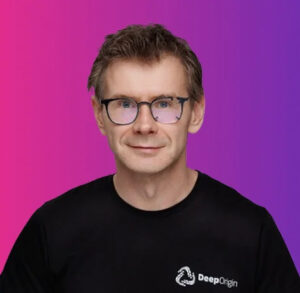
michael antonov deep origin
Michael Antonov, co-founder of Oculus and Deep Origin [Deep Origin]

On the visualization side, for displayed molecules, there’s a company that has done a great job of allowing you to look at the molecules, and this could be useful for research. That said, it just gives you more spatial perception. It doesn’t actually solve the problem for you. 

On the training side, there are potentially huge benefits, even though you would then have to require investing a lot in software to make it actually perform well. Now, one good example is, I have invested in this company called Osso VR, which does training for knee replacement surgery, and they actually practiced it, and they did a study where their surgeons trained with their knee replacement and got 230% more proficiency.

Given the time and the accuracy of a procedure and the speed of how they learn. But to me, that felt actually very incredible that it’s actually being used. I think they also do nursing trade trainings and such. Those are probably the top areas that will probably be more brain-oriented cognitive things you could do. It would just take time to explore it.


IPM: What will AI’s impact be on medicine and healthcare?

Antonov: I think that there is still a lot of uncertainty. The system is overloaded. There’s a whole spectrum, and the challenge is that there are hundreds of different companies and projects with a whole different range of funding.

For pharma, it would be a big job to sift through what is actually good and what will help me take my target forward. That’s a challenge because there’s a lot more noise and there are some really good companies, but there are also many me-too, not-so-great ones. There are also certain fundamental areas that haven’t been solved yet, like toxicity and other issues, although there has been progress in some areas. There are like dozens of predictors, but they’re not necessarily super great, though they’re better than nothing. It’s hard to tell where it’s going. The biggest thing is to see what you actually prove in the lab.

The other thing is that there is a range of medicinal chemists and other knowledgeable people who haven’t been exposed to the breakthroughs or effects we might see on our side. AI may surprise us in certain biological parts of the name for certain problems. Now, more holistically at Deep Origin, our plan is to support the discovery process for small molecule drugs and have predictable outcomes.


IPM: How will AI drive the future of precision medicine?

Antonov: The super exciting way it could look in 20 years in that type of timeframe is that we are starting to get personalized medicine. You’re really combining the patient and the system model so that whenever you have a disease, if you have maybe a novel genomic mutation or if you have a new virus, you can literally put the data into the system.

Here is basically experimental data about whatever you collect from the virus. I don’t know if you get the structure of its protease from crystallography. I will even tell you here are the steps you need to take and which lab to run them in. But once you provide it, the system will be able to decompose the pathways and targets it’s affecting and then identify the specific concentrations you might need for these patients.

Essentially, you can provide a target in just a few months. You have good candidates, and these candidates have a much higher probability of not being toxic and having good admin properties. Let’s say we are moving from 90% failure rate to maybe 60%. That would be a huge job. That’s what the toxicity models enable, though they are hard because they need both experimental and data collection. But actually, even things like physics can help with counter screening, asking, what are all these things we should not bind to? Go and check them computationally. This whole stack basically gives you data on how to run your trial. That’s ten years. But then you level it up with populations and the individual.

This is a 2030 year outlook because then you’re pulling in the genomics data, maybe various things, and this is where the industry really becomes much more powerful and individualized. To do that, you really need these more detailed models.


IPM: Do you have a prediction about a current AI trend that will be around for a while?

Antonov: One of the hot topics right now is the idea of AI scientists. In our case, we have an AI discovery engine. We actually did this earlier, which is this area grant from the U.K. for picking up the disease, which can be fully drugged by AI.

We ran our AI scientist system to pick a target for endometriosis. It uses our tools to come up with a molecule. It’s currently in progress, and it did a very detailed breakdown and analysis of hundreds of targets based on very specific criteria, and I picked a particular one with all the reasons.

It’s interesting to make those kinds of tools and this whole pipeline available to almost everyday people because then, much like some genomics tools, an available AI system, which can support the full path of drug development, can in fact let a patient or an interest group just come in and take lots of steps in the direction of saying, “Here’s either maybe an RNA or a gene therapy or a drug that can serve.”

That would be a huge step toward democratizing it. It doesn’t mean that AI will do all the steps for us, but it doesn’t mean that it can do a lot of the known steps, which have been done many times and can help us along the way. Of course, the real scientist will still be very critical to all the parts.

For general accessibility, this automation that is happening and these kinds of simulation tools and large language models in general are incredible. They’ve got a little bit of a long-winded thing, but I wanted to reflect on what you said.


IPM: What are the pros and cons of building Deep Origin in the U.S. or China?

Antonov: Some of the more recent wisdom that I’ve heard is that if you want to survive in the U.S. or more expensive countries, you need to be taking bigger risks, and you need to be more innovative in how you approach the type of modalities and things. So that’s one line of thinking. 

Another way is to be distributed. In our case, a big part of our AI/ML team is in Armenia. My co-founder is Armenian. We have 40 people there. I have just come from spending a week and a half with the team there for model building and science. There is an AI, and there are definitely people in all of the areas. Automated labs could also probably be in any country.

In terms of the actual trials, it depends on the situation. There are certain things that it’s probably wiser to do in China for this time being, but also maybe India will be up and coming, and if there are certain scenarios where there are more rare diseases, it’s probably okay to also not stay in the States.

There’s no perfect answer. We have a challenging environment. At the end of the day, you have to have something really valuable and novel to keep going forward. They have really great scientific research there too. We have to be careful and just really go at it hard.


IPM: Where does China stand out from the United States in terms of pharmaceutical research and development?

Antonov: If I were to pick one area, it’s the cost of clinical trials and the way we select just all the aspects of this. And to be honest, I’m not an expert in this. And clearly there’s a lot of progress in China right now. Everybody talks about how it’s much more cost-effective and quicker to do things there. There are a lot of “right to try” opportunities that are helping.

That said, I believe that we can have a lot better kinds of social programs around this to make it like easier for people to participate and maybe take more highly educated guesses and risks. There’s software infrastructure to simplify and reduce the cost. That would be amazing. In some of those areas, AI also can help, and the models actually can help.


IPM: If you could work on anything, what would it be?

Antonov: I would say focusing on aging as a disease. If you look at the funding, things could shake up the type of research that the NIH and the National Institute on Aging (NIA) do, which is really fundamental to our biology because it drives the majority of diseases and has 3% of the budget, whereas oncology and Alzheimer’s have huge budgets. There’s probably more impact in aging than probably some other well-funded areas if we look at the fundamental parts. That would be a big area where you can have a multiplier effect just from the research side.

To really build an ecosystem of better computational and AI models, maybe creating some way to actually incentivize people to contribute to them, because that’s the challenge right now. You can publish a research paper, or you can build your model to make your proprietary hidden drug. But we need scientists to share those in an integrated way. How do we do that?

Maybe it’ll take some big AI companies to jump into it and do something there. But it’s not going to be solved with just a model. It really needs to be a true experiment-grounded framework where researchers can contribute their part and have it be a part of a whole.

The post Michael Antonov: From Virtual Worlds to Real-World Drug Discovery appeared first on Inside Precision Medicine.

The Download: Anthropic launches Claude Science, and California’s carbon manure math

This is today’s edition of The Download, our weekday newsletter that provides a daily dose of what’s going on in the world of technology.

Claude Science is Anthropic’s newest flagship product

At an event for pharmaceutical executives, biotech founders, and researchers yesterday, Anthropic announced Claude Science, a major new product intended to support scientific research like Claude Code supports software engineering.

Like Claude Code, Claude Science can autonomously carry out meaningful work from concise, high-level instructions, with tools for computational biology and drug development. The launch signals that Anthropic is doubling down on AI for science, and the company will also use the product in its own research into drugs for rare, neglected diseases.

Discover why Anthropic is betting big on AI for scientific research.

—Grace Huckins

Why California’s carbon manure math doesn’t add up

Something stinks in California’s climate policies. 

Years ago, the state set up a system that pays cattle farmers to turn the methane emitted from cattle manure into natural gas. It’s become wildly popular because the subsidies are extremely lucrative. But research suggests the program exposes the shortcomings of carbon offsetting and trading schemes.

Instead of forcing industries to directly cut their pollution or pay for it as a cost of doing business, legislators have opted for incentives that swap climate responsibilities between parties and regions. The system could ultimately lock in more warming.

Read the full story on California’s dubious carbon calculations.

—James Temple

This story is from The Spark, our weekly climate tech newsletter. Sign up to receive it in your inbox every Wednesday.

Watch now: longevity’s next frontier—“reprogramming” your body

Billions of dollars are pouring into efforts to reverse aging as scientists investigate ways to return cells to a younger state. But how close are these experimental treatments? And are they likely to work? 

At a recent virtual Roundtables event, MIT Technology Review explored the answers with science editor Mary Beth Griggs and senior biotechnology reporter Jessica Hamzelou. Subscribers can now watch the full recording of the fascinating discussion.

MIT Technology Review Narrated: the search for dark matter has been blown wide open

For decades, physicists have hunted for weakly interacting massive particles (WIMPs), a leading candidate for dark matter. But their search has run into a new problem: neutrinos. 

These tiny particles from the sun and other stars can create a “neutrino fog” that drowns out any signal of dark matter. Hitting the neutrino fog does not, however, mean an end to the search. Researchers just have to shift the focus of their hunt.

They’re now casting a much wider net. New proposals include quantum sensors, liquid-helium detectors, and even searches in Jupiter’s atmosphere.

—Dan Garisto


This is our latest
story to be turned into an MIT Technology Review Narrated podcast, which we publish each week on Spotify and Apple Podcasts. Just navigate to MIT Technology Review Narrated on either platform, and follow us to get all our new content as it’s released.

The must-reads

I’ve combed the internet to find you today’s most fun/important/scary/fascinating stories about technology.

1 The US has lifted restrictions on Anthropic’s Mythos and Fable models
Anthropic said it would begin restoring access today. (NYT $)
+ The US had imposed controls over security concerns. (Bloomberg $)
+ It lifted the restrictions after lengthy talks with Anthropic. (BBC)
+ But the crackdown has already opened doors for Chinese AI rivals. (CNBC)

2 The most detailed survey of the universe ever is now underway
It’s using the largest digital camera on Earth. (New Scientist $) 
+ The project is based at the Vera C. Rubin Observatory in Chile. (NYT $)
+ It aims to transform our view of the cosmos. (MIT Technology Review)
 
3 Tech talent is fleeing the US due to H1-B visa chaos
They’re eyeing relocation to Canada, the UK, or the Gulf. (Rest of World)
+ While China is poaching AI talent from the US. (CNBC)
+ Visa rules are also affecting young scientists. (MIT Technology Review)
 
4 Trump raked in more than $1 billion from crypto businesses in 2025
He reported $635 million in royalties from a Trump meme coin. (BBC)
+ The rest largely came from his World Liberty Financial venture. (The Hill)
 
5 The UN warns that the rapid spread of AI may worsen global inequality
It’s proposed a shared framework for responsible AI development. (Guardian)

6 Companies are making LLMs talk like a caveman to curb AI spending
A senior OpenAI employee contributed to the “caveman” project. (404 Media)
 
7 Babies are born with the neural foundations for math
Brain recordings have identified the mechanisms. (New Scientist $)

8 An independent studio has bought the OpenAI movie Amazon dropped
Neon has purchased “Artificial,” which focuses on Sam Altman. (NYT $)
+ Amazon had dumped it after investing in OpenAI. (Gizmodo)
+ The depiction of Altman is reportedly unsympathetic. (Variety)

9 AI has re-created Gene Wilder’s voice for a new “Willy Wonka” series
Wilder’s wife said his estate is “delighted” with the new show. (NBC News)
+ Netflix partnered with AI company ElevenLabs on the project. (The Verge)

10 NASA aims to send a spare Mars rover—and soccer ball—to the moon
The nuclear-powered “Promise” may help establish a lunar base. (NYT $)

Quote of the day

“Caveman save you token, save you money.” 

—The GitHub repository for the “caveman” plugin explains how the project curbs AI spending by turning verbose LLM outputs into concise text.

One More Thing

white pill tablet with a meter etched onto the surface

SELMAN DESIGN


AI is dreaming up drugs that no one has ever seen. Now we’ve got to see if they work.

On average, it takes more than 10 years and billions of dollars to develop a new drug. A growing number of startups are betting that AI can make the process faster and cheaper. 

By predicting how potential drugs might behave in the body and discarding dead-end compounds before they leave the computer, machine-learning models can cut down on the need for painstaking lab work. 

Yet it is still early days for AI drug discovery. A lot of AI companies are making claims they can’t back up—and the technology is not a panacea. But the technology is beginning to move from promise to practice.

Find out how AI is speeding up drug discovery.

—Will Douglas Heaven

We can still have nice things

A place for comfort, fun, and distraction to brighten up your day. (Got any ideas? Drop me a line.)

+ Explore the surprisingly diverse world of regional dartboards from across the UK.
+ Judge a book’s beauty by its cover with this collection of the best designs of the last decade.
+ This John Wick parody with almost no dialogue understands what audiences really came for.
+ Focus your mind or unwind with over 80 custom albums of ambient instrumental electronic music on Caught In Joy.

Microbiota-gut-brain axis imbalance: a promising therapeutic target for preserving brain health in high-altitude environment

High-altitude hypobaric hypoxia poses a significant threat to brain function, yet effective neuroprotective strategies remain limited. Emerging evidence highlights the microbiota-gut-brain axis (MGBA) as a key mediator in high-altitude-induced cognitive impairment, positioning it as a potential therapeutic target. This review synthesizes current knowledge on how high-altitude exposure dynamically reshapes gut microbial ecology, characterized by reduced diversity, phylum-level instability, and functional metabolic shifts. Furthermore, we delineate how such altitude-induced dysbiosis has been associated with neural dysfunction through interconnected pathogenic mechanisms that are proposed to link gut ecology to brain outcomes: intestinal barrier disruption with metabolic dysregulation, LPS/TLR4-mediated neuroinflammation, vagal and enteric nervous system alterations, oxidative stress imbalance, and neuroendocrine dysregulation. Most current evidence is correlational, and further research is needed to establish causality. A critical unresolved question is whether short-term, transient gut dysbiosis at high altitude can instigate long-lasting neurological deficits independent of ongoing microbial perturbation. We further evaluate microbiota-targeted neuroprotective strategies, including probiotics, prebiotics, and fecal microbiota transplantation, highlighting their distinct mechanisms and summarizing the current evidence supporting MGBA-targeted interventions for high-altitude brain health. Preclinical studies suggest these approaches hold promise by restoring barrier integrity, attenuating inflammatory signaling, and rebalancing microbial metabolite profiles, while human intervention evidence remains scarce. Finally, we discuss critical challenges and future directions for translating these mechanistic insights into personalized interventions, emphasizing deeper mechanistic exploration and the synergistic interactions among microbial taxa. These insights may inform more effective therapeutic strategies for the growing populations residing in or traveling to high-altitude regions.

Integrating anatomical priors and clinical semantics for MRI-based diagnosis and care support in Alzheimer’s disease

Alzheimer’s disease (AD) is a progressive neurodegenerative disorder, and magnetic resonance imaging (MRI) has become an important tool for its auxiliary diagnosis because it can reveal key structural abnormalities, including hippocampal and parahippocampal atrophy, ventricular enlargement, temporal cortical degeneration, and gray matter loss. However, reliable stage-aware classification remains challenging because current methods are still limited in handling weak anatomical boundaries, low-contrast lesions, subtle inter-stage differences, and the semantic gap between neuroimaging features and clinical descriptions. To address these issues, we propose AFCG-Net, a diagnosis-guided and frequency-aware cross-modal network for joint MRI-text diagnosis. The framework consists of three stages: anatomy-guided visual encoding, cross-modal semantic alignment, and gated fusion with anatomical priors. Specifically, ASFG enhances visual representations through multi-scale modeling and low frequency-guided refinement, CASF strengthens the consistency between clinical semantics and imaging features, and AGDF performs anatomy-guided deep fusion to improve both discriminability and interpretability. Experiments on a combined cohort of 4,197 original MRI-text samples, including 2,106 self-collected samples and 2,091 ADNI samples, show that AFCG-Net achieves Precision, Recall, and F-score values of 96.3%, 96.5%, and 95.8%, respectively. The proposed method achieves the best results in the Mild dementia and Moderate dementia categories, while also showing stronger performance in the more challenging Non-dementia and Very Mild dementia categories. These results suggest that AFCG-Net provides an effective and interpretable multimodal solution for AD-assisted diagnosis.

Inhibiting the uPAR/FPR1 interactions reduces blood-retinal barrier breakdown and improves retinal function in a rat model of diabetes

Diabetic retinopathy (DR) is a leading cause of blindness characterized by early neurovascular damage driven by hyperglycemia-induced mechanisms, including inflammation. The system composed of the urokinase-type plasminogen activator (uPA) and its receptor (uPAR) has previously emerged as a potential regulator of the pro-inflammatory events in DR, possibly through the interaction of uPAR with its lateral partners, such as formyl peptide receptors (FPRs). This study explored whether the inhibition of uPAR/FPR1 crosstalk may reduce early neurovascular alterations in DR by targeting inflammation. To this aim, the new FPR1 antagonist N-19004 was tested in a rat model of streptozotocin-induced diabetes. N-19004 was administered subcutaneously for 7 days at 1 month from diabetes onset. Immunofluorescence, RT-qPCR, Western blot and Evans blue perfusion were performed to evaluate the effects of N-19004 on inflammation, reactive gliosis, blood-retinal barrier (BRB) integrity and apoptosis. In addition, electroretinogram (ERG) was used to assess N-19004 efficacy on retinal function. N-19004 inhibited the activation of inflammation-related transcription factors, including nuclear factor kappa-light-chain-enhancer of activated B cells and signal transducer and activator of transcription 3, leading to reduced interleukin-1β and tumor necrosis factor-α expression. The attenuation of inflammatory processes resulted in reduced glial activation, as indicated by lower glial fibrillary acidic protein expression and Müller cell gliosis. The anti-inflammatory activity of N-19004 was accompanied by decreased BRB breakdown, as demonstrated by N-19004-mediated reduction of vascular endothelial growth factor, increased levels of tight junction components and diminished vessel leakage. The amelioration of BRB integrity was associated with reduced activation of caspase 3 and partial preservation of scotopic ERG a- and b-wave amplitudes, thereby improving retinal viability and function in N-19004-treated STZ rats. These results support the possible involvement of uPAR/FPR1 interactions in the regulation of DR-related inflammation and suggest a novel therapeutic target for the management of the early phases of disease.

Endocannabinoid system modulation in bruxism: a neurobiological hypothesis and translational model of ECS-targeted intervention

Bruxism is a multifactorial motor behavior of predominantly central origin, characterized by repetitive masticatory muscle activity and associated with dysregulation of dopaminergic, serotonergic, GABAergic, and glutamatergic pathways involved in motor control, emotional regulation, and stress responsivity. The endocannabinoid system (ECS) has emerged as a key homeostatic neuromodulator capable of integrating these neurotransmitter systems, thereby influencing pain processing, sleep–wake dynamics, and motor output. This article develops a neurobiological hypothesis based on a narrative integrative synthesis of clinical, experimental, and translational evidence regarding ECS involvement in the pathophysiology of bruxism. Findings from randomized clinical trials suggest that topical cannabidiol (CBD) may modulate motor neuron excitability and reduce pain-related outcomes, while case-based and experimental evidence supports the interaction between cannabinoid signaling and neural circuits implicated in motor control and behavioral regulation. Building on this evidence, we propose a hypothesis-driven translational model in which ECS-mediated neuromodulation may influence central mechanisms underlying bruxism, including motor pattern generation, stress responsivity, and nociceptive processing. Rather than providing prescriptive therapeutic recommendations, this model is intended as a hypothesis-generating construct that integrates current knowledge on ECS signaling within the broader neurobiology of motor control. Although heterogeneity in study design and outcome measures limits definitive conclusions, the available evidence supports the ECS as a plausible modulatory system in bruxism, with potential implications for future mechanistic and clinical research in centrally mediated motor disorders.

The relationship between intracranial artery hemodynamics and subjective cognitive decline in patients with cerebral small vessel disease: a 4D flow study

BackgroundRecent studies link disrupted intracranial artery hemodynamics, including pulsatility index (PI), resistance index (RI), and wall shear stress (WSS), to neuroimaging features of cerebral small vessel disease (CSVD). Cognitive dysfunction is a key clinical manifestation of CSVD. Subjective cognitive decline (SCD), considered a pre-mild cognitive impairment stage, enables early identification and intervention to control cognitive decline. Nevertheless, scholarly investigation on SCD in CSVD and its underlying hemodynamic mechanisms remains limited.ObjectiveThis study aims to utilize 4D flow magnetic resonance imaging (MRI) to explore the effects of intracranial artery hemodynamics on SCD in patients with CSVD.MethodsThis study enrolled 40 patients with CSVD, comprising 20 individuals with SCD and 20 with normal cognition. SCD was evaluated according to established diagnostic criteria using the 9-item Subjective Cognitive Decline Questionnaire (SCD-Q9). Hemodynamic parameters, including PI-flow, PI-area, RI and WSS, were measured in nine major intracranial arteries via 4D flow MRI. Associations between these parameters and cognitive status were examined using logistic regression analysis.ResultsCompared to the cognitively normal group, patients with CSVD and concomitant SCD showed lower arterial elasticity at the C7 segment and the basilar artery (BA), and lower WSS at the C2 segment. Logistic regression analysis further identified abnormal RI-BA was independently associated with SCD in the CSVD cohort.ConclusionAltered intracranial artery hemodynamics in patients with CSVD are associated with the presence of SCD. These findings offer mechanistic insight into early cognitive impairment in CSVD and suggest that hemodynamic abnormalities may serve as potential indicators of early cognitive dysfunction in this population.

The relationship between mobile phone addiction and depression, anxiety among Chinese college students: the mediating role of friendship quality and the moderating effect of preference for solitude

BackgroundThe university stage represents a critical period for the development of individual mental health. Mobile phone addiction is closely linked to depression and anxiety among college students, and both friendship quality and preference for solitude are tightly associated with college students’ mobile phone addiction and emotional health. Therefore, this study aimed to investigate the relationships and internal mechanisms among mobile phone addiction, friendship quality, preference for solitude, depression and anxiety in college students.MethodsA total of 1083 Chinese college students (58.2% female; mean age = 19.87 ± 1.692 years) were included as participants. Data were collected using the Mobile Phone Addiction Index, Friendship Quality Questionnaire, Preference for Solitude Questionnaire, and Depression Anxiety Stress Scale. Data processing and analyses were conducted using SPSS 26.0 and the PROCESS macro.Results(1) Mobile phone addiction was significantly negatively correlated with friendship quality, and significantly positively correlated with both depression and anxiety; friendship quality was significantly negatively correlated with depression and anxiety; preference for solitude was significantly positively correlated with depression and anxiety. (2) Mobile phone addiction not only directly and positively predicted depression and anxiety among college students, but also predicted depression and anxiety through the mediating role of friendship quality. (3) The direct effect of mobile phone addiction on depression and the mediating effect of friendship quality in the relationships between mobile phone addiction and depression/anxiety were both moderated by preference for solitude, whereas the moderating effect of preference for solitude on the association between mobile phone addiction and anxiety was not significant.ConclusionFriendship quality serves as an important mediating pathway between mobile phone addiction and depressive and anxiety symptoms among Chinese college students. Preference for solitude may amplify the associations of mobile phone addiction with poorer friendship quality and elevated depressive symptoms.

Smoking as a correlate of suicidal behavior and self-harm in adolescents with depressive disorders

Suicidal behavior and self-harm are major public health concerns among adolescents, particularly those with depressive disorders. While smoking has been linked to suicidality in general populations, its independent role in both suicidal behavior and self-harm within well-characterized clinical samples of youth with depressive disorders remains understudied. This study consecutively enrolled 2,343 adolescents (aged 12–18 years) diagnosed with unipolar depression, bipolar disorder, or depressive episode according to DSM-5 criteria at Nanhai Public Health Hospital of Foshan City and The Third People’s Hospital of Foshan between January 2025 and December 2025. Suicidal behavior (≥1 suicide attempt) and self-harm (intentional self-injury or poisoning regardless of intent) were assessed via clinical interviews. Multivariable binary logistic regression models were constructed to identify factors independently associated with each outcome, adjusting for age, sex, education, income, parental education, psychiatric diagnosis, family history of mental illness, physical disease, and smoking status. Among 2,343 participants (mean age 14.99 ± 1.65 years; 77.8% female), the prevalence of self-harm was 76.0% and suicidal behavior was 44.2%. In fully adjusted models, smoking status was the only variable significantly associated with suicidal behavior after adjustment for measured covariates: current smokers (OR = 2.74, 95% CI: 1.81–4.22, P<0.001) and past quitters (OR = 2.32, 95% CI: 1.66–3.28, P<0.001) had higher odds compared to never smokers. For self-harm, current smoking was significantly associated with increased risk (OR = 2.31, 95% CI: 1.33–4.37, P = 0.006). Education level showed a borderline association with self-harm, with each additional year of schooling corresponding to a 10% lower odds (OR = 0.90, 95% CI: 0.81–1.00, P = 0.050); however, this finding should be interpreted cautiously given the exploratory nature of the analysis. No other demographic or clinical variables, including age, sex, or psychiatric diagnosis, were independently associated with either outcome. Smoking was strongly associated with both suicidal behavior and self−harm after adjustment for measured demographic and clinical covariates. These findings underscore the importance of assessing tobacco use as a potential clinical marker of vulnerability in youth mental health settings.