

<![CDATA[“I’m a four-year-old prince with a bag of Jack Frost sand filling my sandbox kingdom…”]]>
The U.S. infant mortality rate fell to an all-time low, though it still trails other similar nations
NEW YORK — Infant mortality in the U.S. dropped to a new all-time low in 2025, according to preliminary government data.
There were slightly fewer than 5.4 infant deaths per 1,000 live births in 2025, according to the Centers for Disease Control and Prevention.
Adaptive Deep Brain Stimulation Improves Walking and Reduces Falls in Parkinson’s Disease
Researchers at the University of California, San Francisco (UCSF) have developed a new form of adaptive deep brain stimulation (aDBS) that adjusts therapy in real time as patients walk, improving gait stability and reducing falls in people with Parkinson’s disease.
Published in Nature Medicine, the study demonstrates for the first time that an implanted neurostimulator can detect brain signals associated with individual steps and modify stimulation within fractions of a second. The approach represents a significant advance in personalized neuromodulation and could help address one of the most difficult-to-treat symptoms of Parkinson’s disease.
“Difficulty walking is one of the most disabling symptoms of Parkinson’s disease and one of the hardest to treat,” said senior author Doris D. Wang, MD, PhD, associate professor of neurological surgery at UCSF. “Walking is a highly dynamic behavior that requires precise timing across both sides of the body. We developed a system that can recognize those movement patterns and respond in real time, effectively allowing the stimulation to work with the patient as they move.”
Addressing a major unmet need in Parkinson’s disease
More than 10 million people worldwide are living with Parkinson’s disease, a progressive neurodegenerative disorder characterized by tremor, rigidity, slowness of movement, and postural instability.
Deep brain stimulation has become an established treatment for many motor symptoms of the disease, particularly tremor and rigidity. However, gait impairment, freezing of gait, and falls often persist despite therapy and are major contributors to disability, hospitalization, and loss of independence.
One limitation of conventional DBS is that it delivers continuous stimulation regardless of a patient’s activity. While effective for relatively stable symptoms, this approach may not adequately support complex behaviors such as walking, which require rapid and constantly changing coordination between the brain, spinal cord, and muscles.
The UCSF team hypothesized that stimulation timed to a patient’s actual movements might provide more effective support for gait control.
Turning brain signals into therapeutic feedback
To develop the system, researchers identified neural activity patterns associated with movements of the left and right legs. These movement-related signals were then incorporated directly into an implanted neurostimulator capable of adjusting therapy automatically during different phases of walking.
Unlike previous adaptive DBS approaches that typically respond to slower changes in disease-related brain activity, the new system operates on a timescale of milliseconds and responds directly to behavior itself.
“The brain contains remarkably rich information about movement,” said first author Kenneth H. Louie, PhD, a UCSF postdoctoral scholar. “We found that we could identify neural signatures linked to each step and use them to guide stimulation in real time.”
The researchers liken the device to a cardiac pacemaker. Rather than delivering constant stimulation, the neurostimulator continuously monitors neural signals and dynamically modifies therapy to match the brain’s walking rhythm.
The system performs these adjustments internally without requiring an external computer, making it suitable for real-world use outside the laboratory.
Testing the adaptive system
The study enrolled five individuals with Parkinson’s disease who had previously undergone DBS surgery as part of a UCSF investigational research program.
In addition to therapeutic DBS leads implanted deep within the brain, participants received research electrodes positioned over motor-related cortical regions. These electrodes allowed researchers to record neural activity associated with walking and identify personalized movement signatures for each participant.
Using these individualized neural biomarkers, investigators programmed the implanted device to automatically adjust stimulation during walking.
Laboratory testing demonstrated improvements in several objective measures of gait performance, including increased gait symmetry and reduced variability between steps. Both metrics are associated with more stable and efficient walking patterns.
The researchers then evaluated the system in participants’ daily lives through a blinded, multi-day crossover study comparing periods with adaptive stimulation and periods with conventional stimulation settings.
During adaptive stimulation, participants experienced fewer falls while maintaining overall control of their Parkinson’s symptoms.
No serious adverse events were reported, and participants tolerated the rapid stimulation changes without difficulty.
Although the trial was small, the findings provide early evidence that matching stimulation to behavior may offer benefits beyond those achieved with continuous DBS.
A shift toward behavior-responsive neuromodulation
The study highlights an emerging trend in neuromodulation: moving from static therapies toward systems that continuously sense and respond to changing neural states.
Most adaptive DBS technologies under development focus on biomarkers that fluctuate over minutes or hours. The UCSF approach instead targets neural signals associated with immediate actions, enabling stimulation to respond almost instantaneously.
“This study is about more than walking,” said Wang. “It demonstrates that brain stimulation can adapt to what a person is doing in real time. That opens the door to future therapies that respond dynamically to movement, speech, mood, cognition, and other brain functions.”
The concept could ultimately extend beyond Parkinson’s disease to other neurological and psychiatric disorders in which symptoms vary throughout the day.
Toward intelligent brain implants
Researchers envision future implanted devices that function as closed-loop systems, continuously monitoring neural activity and delivering therapy only when needed.
Such systems could potentially improve treatment efficacy while reducing side effects and conserving device battery life. By tailoring stimulation to specific behaviors or symptoms, clinicians may be able to provide more precise and individualized care.
The work also represents an important technological milestone because the adaptive algorithms were embedded directly within the implanted device rather than relying on external processing hardware.
“This is an important step toward a new generation of brain therapies,” Wang said. “Instead of delivering the same stimulation all day long, future devices may continuously listen to the brain and immediately respond to a patient’s needs. Just as pacemakers transformed the treatment of heart disease, intelligent neurostimulators may transform how we treat disorders of the brain.”
While larger clinical studies will be needed to confirm the benefits of the approach, the results provide an early demonstration that real-time, behavior-responsive neuromodulation may offer a new way to address some of Parkinson’s disease’s most challenging symptoms.
The post Adaptive Deep Brain Stimulation Improves Walking and Reduces Falls in Parkinson’s Disease appeared first on Inside Precision Medicine.
STAT+: ARCH-launched Neumora stops depression program
Want to stay on top of the science and politics driving biotech today? Sign up to get our biotech newsletter in your inbox.
Good morning. Let’s get straight to the news today.
The need-to-know this morning
- Moderna said Ester Banque joined the company as chief commercial officer. She was formerly president of U.S. operations for Zoetis. Moderna President Stephen Hoge has also been given an expanded role overseeing several of the company’s drug development programs.
New AI model aims to improve trial enrollment
The biotech Verge Labs today released a new AI model that it says will help determine which patients will respond to treatment better, leading to fewer people dropping out while also increasing the statistical power of a trial.
Scramblase Dynamics Uncovered by Single-Vesicle Fluorescence Microscopy
A new single-protein analysis technique gives researchers newfound ability to study scramblases, physiologically important proteins that translocate phospholipids bidirectionally across cell membranes.
In the study published in Nature Structural & Molecular Biology titled, “A single-vesicle fluorescence microscopy platform to quantify phospholipid scrambling,” researchers from Weill Cornell Medicine and Ruhr University Bochum have developed a fluorescence imaging-based technique to measure the activity rates of individual scramblase proteins.
“I’m excited about this new platform as it is versatile and provides unprecedented information on exactly how fast a single scramblase works,” said Anant Menon, PhD, professor of biochemistry and biophysics at Weill Cornell Medicine and co-corresponding author of the study.
Scramblases are key drug targets with roles in the assembly of cell membranes, modification of proteins with sugars, cell survival, muscle development and molecular trafficking. Yet, strategies for understanding scramblase dynamics have been limited.
Traditionally, researchers purify scramblase proteins for further study using vesicles to record average scramblase activity. However, this bulk approach is unable to measure the transport rate of individual scramblases and capture how scramblase variability impact biological processes.
The authors used fluorescently-tagged scramblases to achieve high resolution and evaluated a scramblase protein, known as VDAC1, best known as a membrane channel protein within mitochondria. Two copies of VDAC must align to provide a pathway for lipid movement. These dimers have a wide range of scrambling rates, from fewer than 100 to more than 1,000 lipids per second.
“These findings indicate that only certain dimer conformations are capable of rapid scrambling, directly validating predictions from computer simulations,” Menon said.
The team demonstrated the versatility of their approach by applying the platform to measure lipid-scrambling by opsin, a cell-membrane receptor and scramblase that is involved in light-detection in the eye. Results showed that individual opsin proteins scramble lipids faster than VDAC dimers, achieving rates in excess of 10,000 lipids per second.
The new platform can study how drug molecules impact scramblase function. Additionally, the authors aim to combine their functional studies of scramblases with high-resolution imaging to understand how scramblase shape relates to activity rates. The team also plans to use the technique to study other lipid-moving proteins called flippases and floppases.
The post Scramblase Dynamics Uncovered by Single-Vesicle Fluorescence Microscopy appeared first on GEN – Genetic Engineering and Biotechnology News.
<![CDATA[Menopause-related sleep disruptions and slow-wave scoring bias may skew women’s neurodegeneration risk insights, SLEEP 2026 highlights.]]>
BioTrinity 2026 Showcases Delivery Technologies and Promising Therapeutic Candidates
European biotechs presented a range of interesting technologies and novel therapeutic biotechs at the recent BioTrinity conference, organized by BioUK, formerly OBN. The meeting highlighted a spectrum of cell and protein-based therapies, as well as novel delivery methods, with eye-catching investments and partnering opportunities.
One of the stand-out technologies discussed by U.K.-based University of Southampton spin-out Renovos Biologics was the use of synthetic nanoclays. However, these are not being used for their traditional application of controlling drug release, but rather, for medical delivery. According to Agnieszka Janeczek, PhD, “We are developing an injectable, biodegradable nanoclay for use with bone morphogenetic protein 2 (BMP-2), a crucial growth factor in bone regeneration. We intend to use this on patients who have had spinal fusions after trauma or sports injuries.”
Current treatments to encourage bone growth after spinal fusion, such as BMP-2 in its current formulations, are poorly retained around the spine, causing inflammation or, worse, bone growth outside the spine. This often leads to patients needing revision surgery at a cost of up to $50,000. “BMP-2 was used around fusions in the cervical spine, but the growth of bone and inflammation caused some patients to develop breathing difficulties and has resulted in a black box warning against using BMP-2 for this application,” noted Janeczek.
To overcome these issues, the company has developed a synthetic nanoclay that provides a localized environment conducive to cell infiltration. The nanoclay retains the BMP-2 bioactive molecule until newly regenerated tissue gradually replaces it.
“We have used RENOVITE® with BMP-2 so that this protein is injectable with a 23-gauge needle to deliver BMP-2 in a gel to allow precise templating of new bone formation, and therefore safer and more efficient bone fusion,” she continued. “Using our nanoclay, we see better quality bone growth as the bone grows evenly around and through the fusion, unlike BMP-2 on its own, which can sometimes initiate bone growth around the fusion to create an eggshell effect with bone only on the outside.”

The Renovos nanoclay retains the BMP-2 protein more readily around the fusion. As a result, it is possible to administer BMP-2 in a lower dosage, giving it the potential benefit of use in lower-cost markets, said Janeczek, and concluded that “Twenty-one percent of lumbar fusions are in patients that are younger than 45 years old, and the market for bone fusion could be worth $24.5 billion by 2035. Our lead asset RENOVITE BMP-2 will enter first-in-human trials by 2027, and we welcome investment to help assess this game-changing product in the clinic.”
Patching up wounds
Thomas Hafner, CEO of Onya Therapeutics, based in Ebbw Vale, U.K., stated that “For 25 years, wound care has been an innovation desert because therapies are difficult to scale and are not easy to adapt. This is not a glamorous area, but it is a massive opportunity.”
To address this issue, several companies are developing devices, artificial skin, or anti-microbials. Others are developing sponges for managing exuding wounds, making them thicker for better absorption. As Hafner pointed out, they are doing this without asking, “Is this the right approach? “Wound care is a massive problem. For example, 30% of patients with diabetic foot ulcers will lose a limb within five years. Globally, there are triple the number of patients with chronic wounds as there are with cancer—wound care is a $400 billion crisis in plain sight.”
Currently, with wound care, 90% of the costs are for the labor to manage the wound and only 6% for the products themselves. To address this, Onya says it is developing a treatment that could collapse the 90% costs of wound management by accelerating healing. The company calls it active exudate therapy.
“In chronic wounds, the amount of exudate increases, and so instead of mopping up the exudate with dressings, we have found a way of turning off the tap. By doing this, we encourage healing and reduce amputations, potentially saving billions of dollars,” Hafner noted.
Onya, which closed a £2.6 million seed financing round in 2025, is utilizing a compound known as OTX-PP01, based on potassium permanganate, a molecule with long-established clinical safety and broad antimicrobial and astringent action. This compound is delivered via a patch. “Unlike other wound management treatments, we don’t absorb the fluid; instead, our OTX-PP01 patch supports reduction of excessive exudate by addressing chronic inflammation, and creating the conditions for healing to restart,” said Hafner.
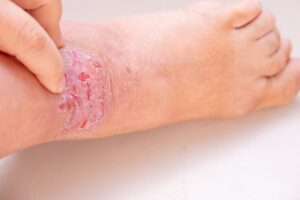
The compound does this in two ways: first, it targets exudate with an astringent action that can reduce excessive wound fluid at the source, targeting the inflammatory cycle that can stall healing. Second, it addresses inflammation using a broad-spectrum antimicrobial action targeting pathogens through oxidation.
“OTX-PP01 is not a new molecule. It has over 150 years of safe clinical use, but the delivery method is new,” explained Hafner. “The patch is easy to fit, and a nurse can put it on the wound and leave it on for 15 minutes for the compound to absorb and do its job of healing. After removing the patch, a nurse can then redress the wound.”
Onya has designed its OTX-PP01 patch product to treat diabetic foot ulcers, venous leg ulcers, and pressure ulcers. It does not have to undertake Phase I studies as these were waived based on the established safety profile of the active compound. “We have a Phase II/III adaptive trial design, which we hope to complete in the next four to five years. Our aim with OTX-PP01 is to transform wound management to wound healing,” said Hafner.
Eyes on the prize
Therapies for treating ophthalmic diseases were also noteworthy at BioTrinity, with StemSight and Link Biologics presenting data on their promising clinical candidates. StemSight, based in Tampere, Finland, is a biotech company spun out from Tampere University. The firm is developing off-the-shelf induced pluripotent stem cell (iPSC) therapies to cure corneal blindness.
According to Laura Koivusalo, PhD, CEO and founder of StemSight, the market value of regenerative medicine products across a variety of indications was $63 billion in 2026. However, the bottleneck for making these therapies widely available is manufacturing and scaleup. Koivusalo said that “Recently in Japan, the first iPSC treatments have been approved for use, and the advantage of using iPSCs combined with biomaterials is that they provide efficient and durable therapies.”
Her company is developing a therapy to treat limbal stem cell deficiency (LSCD), a rare disease that causes blurry vision due to corneal epithelium loss and eventually blindness. There are over 240,000 sufferers worldwide, and there are currently no treatments for this condition available for most patients.
“The only treatment option for LSCD is available only to patients with one healthy eye,” Koivusalo explained. “Scientists can harvest limbal stem cells from the healthy eye and transplant them into the diseased one to restore the damaged surface cells. The therapy proves that the cell transplantation approach works, but this is a personalized autologous treatment. Additionally, if both eyes have LSCD, and the patient is truly blind, this treatment is not possible as there are no healthy stem cells available to harvest. That’s where the high value of cure is really measured.”
StemSight is developing an allogenic limbal stem cell therapy, which uses gene-edited iPSCs to reduce immunogenicity. Currently, the firm can produce one hundred patient doses per batch using a GMP-compliant process. It then freezes these cells until their delivery on a biomaterial carrier for patients.

“Our process produces high-quality stem cells for a low cost of goods,” continued Koivusalo. “We are currently in late preclinical development with our lead product, STE-101, and have shown that we can regenerate corneal epithelium in rodent models using imaging and histology. These are objective measures of efficacy, as we cannot ask rodents if they can read a chart.”
StemSight is aiming to treat ten patients in a Phase I/II study starting early 2028.
Unlike StemSight, Link Biologics, a U.K.-based spin-out from the University of Manchester, is developing first-in-class biologics to treat Dry Eye Disease (DED) and Wet Age-related Macular Degeneration (AMD). The firm is developing therapies based on TSG-6 (Tumor Necrosis Factor-α-Stimulated Gene/Protein-6), a secreted glycoprotein that has an endogenous role to protect tissues from inflammatory damage and promote repair. Link’s TSG-6-based therapies have enhanced activities compared to the native protein and thus have a unique combination of anti-inflammatory, tissue-protective, and tissue-reparative properties.
Reuben Dawkins, CEO and co-founder of Link Biologics, stated that “We are using these protein biologics to treat DED and wet AMD because these are billion-dollar markets where there are limited treatment options available. Current standard of care for DED, for example, involves cyclosporine, which has a 15% response rate, or Xiidra, where 50% of pivotal trials did not show improvement in key efficacy measures vs no treatment. Overall, nine in ten DED patients stop using their initial medication within one year.”
The company’s lead candidate, LB001, is in preclinical development for the treatment of DED. Dawkins presented data to show that in mouse models, twice daily administration of LB001 for seven days reduced corneal epithelial damage and suppressed inflammatory markers compared to a branded cyclosporine (Restasis).
“Unlike other treatments, LB001 has a dual tissue-repair and anti-inflammatory action which may make this molecule more effective than current therapies,” noted Dawkins. “We have completed CMC so are able to manufacture LB001 to GMP standards, and it is stable as an eye drop formulation. We will be taking LB001 into a 180-patient Phase I/II clinical trial, which we aim to commence in 2027.”
Sue Pearson, PhD, is a freelance writer based in the U.K.
The post BioTrinity 2026 Showcases Delivery Technologies and Promising Therapeutic Candidates appeared first on GEN – Genetic Engineering and Biotechnology News.
STAT+: Pharmalittle: We’re reading about Medicare and obesity drugs, Germany’s pricing plans, and more
Rise and shine, everyone, another busy day is on the way. And it is getting off to a pleasant start here on the Pharmalot campus, where clear blue skies and comfy breezes are greeting us. Moreover, the official mascots succeed in spotting various varmints — foxes and possums, to be specific, but thankfully, no vultures. As for us, we are heating our spiffy new replacement kettle for another cuppa stimulation. Our choice today is old-fashioned green teas. And here is a helpful tip — a teaspoon of honey enhances the flavors splendidly. Of course, you are invited to join us. For the full experience, we are now hawking replicas — take a look. Meanwhile, here are a few items of interest. As always, do keep in touch. We appreciate feedback, criticism, and tips. …
Weight loss drugs will be available to adults 65 and older in Medicare for the first time next month, thanks to a government program that is supposed to be temporary — but it may be difficult to end, STAT explains. By law, Medicare is prohibited from paying for obesity drugs, but the Trump administration is circumventing the law by making the drugs available in a demonstration program. Initially, Medicare hoped to push private Medicare insurers to voluntarily cover the drugs in a three-year program called Balance, which would have started following a short transitional period. But insurers balked, so the government is instead extending the transitional coverage program, called Bridge, until the end of next year.
Novo Nordisk chief executive officer Mike Doustdar said the company plans to seek Chinese regulatory approval for its Wegovy weight loss pill “very soon” as it moves to catch up with Eli Lilly in the world’s second-largest pharmaceutical market, Reuters tells us. The patent for semaglutide, the active ingredient in Novo’s blockbusters Wegovy and Ozempic, expired in China in March, though the company has regulatory data protection until early next year. Doustdar said he expected competition from generic drugmakers from the second quarter of next year. Novo won early approval in the U.S. and the U.K. for its Wegovy pill and launched it in the U.S. this year. Lilly followed quickly, securing U.S. approval in April for its oral drug orforglipron.
<![CDATA[Explore today’s schizophrenia treatments, comparing first-, second-, and newer antipsychotics, clozapine’s role, and how side effects and adherence drive medication choices.]]>
Turning Rejection Into a Roadmap: Advice for the Next Generation of Mental Health Leaders
A Conversation with Tom Osborn, Founder of Africa’s Largest Mental Health Provider Shamiri Institute
Aaliyah Nadirah Madyun, program director at the Stavros Niarchos Foundation (SNF) Global Center for Child and Adolescent Mental Health at the Child Mind Institute, recently sat down with Tom Osborn, founder of the Shamiri Institute and an International Advisory Board member at the SNF Global Center. They discussed Osborn’s remarkable journey as a young entrepreneur.
At just 18, while studying at Harvard University, Osborn founded the Shamiri Institute, which has since grown into Africa’s largest youth mental health provider — now reaching over 100,000 young people annually and having trained and employed more than 3,000 providers. In this candid conversation, Osborn shares hard-won lessons on resilience, mentorship, and well-being. He offers advice to the SNF Global Center’s Youth Council members — many of whom are launching their own mental health initiatives in communities across Greece, Brazil, South Africa, and beyond.

AM: You founded Shamiri when you were just 18. Many members of our SNF Global Center Youth Councils are now launching their own mental health organizations. What advice would you give them?
TO: I think these past three to five years post-COVID have been quite good for mental health. There’s just more dialogue, more conversation. It’s maybe one of the best times to start working in mental health. There is a big space for young people to be leaders. On the other hand, it’s also very difficult.
AM: What kind of difficulties can young people expect to encounter?
TO: It’s very difficult for a few reasons. We normally start this work because we have a lot of passion, enthusiasm, and commitment to the cause. But that is not the day-to-day of being a social entrepreneur. It’s convincing people to partner with you, to fund you, etc., which is a completely different skill set to learn. And the second part is getting a level of comfort with failure. Because the reality is, on average, nine out of ten doors that you try to open will not open; especially when you are starting. For example, if you’re in Brazil and there are 100 other young people trying to start something, there is a finite pool of opportunities and resources. So, when you are starting, part of the initial process requires you to develop resilience and a growth mindset.
AM: Could you speak about the role mentorship has played in your journey, and how young entrepreneurs can leverage mentorship to navigate the challenges of building something from the ground up?
TO: Mentorship is really crucial. Finding folks — researchers, practitioners, or just folks in the community — who can help provide guidance as you build the skills you need to be an effective entrepreneur.
AM: How would you recommend young people go about finding a mentor? It seems like that ability, identifying and cultivating a mentoring relationship, might be a skill set in itself.
TO: In my experience, there are three pathways. In many countries we have what we call accelerators, which look for young people who literally have an idea and enthusiasm, and then take them through 10–16 weeks of bootcamp where they can learn the skills to develop their idea. So, that’s one pathway. The second pathway, which really worked for me but may sound intimidating, is direct outreach to folks who have done something similar. So, you can do some research. It doesn’t have to even be related to mental health. It can be education or some broader thing. But find someone who has built something that you admire. You will be surprised how many people are willing to support and pay it forward, because we all have benefited from the help of someone else. I created an Excel spreadsheet with a list of people who I looked up to, and I reached out to them on LinkedIn. Sometimes you can even find their email. Some people said “no”, but if you reach out to 10 or 20 people, some people will talk to you. And the third pathway is . . . increasingly we have a lot of resources like the SNF Global Center Youth Councils and international organizations that deal with mental health. You can join these organizations to expand your network.
AM: Could you share your story with us and tell us how you got started?
TO: I started when I was in University as part of a research project I was doing when I was studying psychology. I needed to do something for my thesis and in the process of doing that I applied to an accelerator. I also went to my professor and asked him, ‘Do you know anyone who could connect me with?’ In fact, he helped me write my first grant and gave me the opportunity to learn those entrepreneurial skills.
AM: Starting at such a young age, one can imagine that you must have encountered many challenges and setbacks. What were the key lessons you took away from that growth period?
TO: The reality of this work, and not to discourage people but to give a factual picture, is that there are more setbacks than there are wins. Part of the process is that you learn from the setbacks. I can give you an example of some of my own setbacks. In my first year of doing this, we tried to raise money. We applied for grants, sent out proposals, etc.; but we couldn’t raise any money. So, what I did after getting the rejection is I would email and ask, “Do you have any feedback for us about why we didn’t get the funding?” or “Can we jump on a call so you can explain what we can do better?” What I learned from that was the way I was communicating what we were doing made sense in my mind, but I wasn’t putting myself in the shoes of the person who was reviewing the proposal. I only have five to ten minutes of someone’s time. So, how can I really simplify my message? For example, my first proposal was, “Shamiri does task-shifting mental health interventions for adolescent depression, anxiety, etc.” If you are in the field, you maybe get it. But if you are somebody who is just reading grants on mental health education, you don’t really get it. Now we say, “Shamiri means thrive and we enable young people to thrive.” So that invites people to ask how we’re helping people to thrive.
AM: What is another setback that surprised you?
A second example of a failure is getting buy-in from the beneficiaries that we were trying to work with. I thought, “We have this great idea, we’ve done this research, and it works. We’re going to go to schools and they’re going to be like, ‘This is great! Come work with us.’ Teachers are going to want to work with us.” But actually, in our first three years we were trying to work with 25,000 students and we ended up working with only 1,000 students. We really struggled with getting people to sign up. The lesson from that was we were thinking more from the idea this was our product, rather than thinking, “What is the problem that I am trying to solve for this person?” To give a concrete example, there are three people we need to get buy-in from: young people in schools, teachers, and parents. Just having a great product does not mean that people are going to use it. You need to figure out what the problem is. How can I solve it? How do I communicate this to users?
AM: I can imagine that dealing with failures and setbacks is extremely hard, especially for a young person. What would you say to a young person who is currently experiencing this?
TO: Finding ways to stay grounded and healthy from a well-being perspective is really crucial. Identify what matters to you and connect with those things. And ideally if you can find a way to build a routine around that, it could help. Doing this work takes a big toll. If you don’t find ways to ground yourself and get the energy to continue with this, you may burn out.
AM: Do you have some final words for our Youth Council members and other young people reading this?
TO: Those closest to the problem are those closest to the solution. I am from Kenya, which is a really young country. The median age is 19 and 70 percent of the population is under 30. If we are to solve some of these pressing problems, including mental health, those solutions are going to have to come from young people.
The post Turning Rejection Into a Roadmap: Advice for the Next Generation of Mental Health Leaders appeared first on Child Mind Institute.