

<![CDATA[Two-dose oral R‑MDMA, EMP-01, cuts social anxiety symptoms and real‑world avoidance in phase 2a study, with strong responder rates and good tolerability.]]>
Fifth Annual SoFi Child Mind Institute Golf Invitational Raises $630,000 to Support Youth Mental Health
San Francisco, CA – On April 20, the Child Mind Institute and SoFi held its fifth annual Golf Invitational at the Olympic Club in San Francisco. Participants included legendary athletes Marcus Allen (Los Angeles Raiders), Barry Bonds (San Francisco Giants), Royce Clayton (San Francisco Giants), Vince Coleman (St. Louis Cardinals), Al Joyner (Olympic gold medalist), Gary Payton (Miami Heat), and Sterling Sharpe (Green Bay Packers). The event raised $630,000 to support the organization’s mission to transform the lives of children and families struggling with mental health and learning disorders.
The day’s programming began with a round of golf where participants enjoyed time on the course alongside fellow supporters. Following the tournament, guests gathered for an evening reception and seated dinner highlighted by a live auction featuring exclusive experiences, and an awards presentation for tournament winners. The event featured remarks from Harold S. Koplewicz, MD, president of the Child Mind Institute, and Brian Boitano, Olympic gold medalist skater, who talked candidly about the mental pressures of performing on a global stage.
Raj Mathai, 12-time Emmy Award winner and NBC Bay Area weeknight news anchor, hosted the event and served as the dinner program emcee and auctioneer.
During the reception, the Child Mind Institute announced it is now seeing patients in a new San Francisco location, in addition to their San Mateo clinic, making it easier for families across the city, Marin County, and the northern East Bay to access care.
“Even as we grow our presence here in California, we know this challenge is bigger than any one location,” said Dr. Koplewicz. “If we’re going to meet the need, we have to reach children earlier in spaces where they already are: at home, in schools, in their communities, and increasingly, in the digital spaces where they spend so much of their time. Technology is already shaping young people’s lives. Our responsibility is to make sure it also supports them.”
“Supporting mental health is fundamental to building stronger families and more resilient communities,” said Anthony Noto, CEO of SoFi. “We’re proud to partner with the Child Mind Institute to expand access to critical mental health resources for children and families, helping empower the next generation to realize their ambitions and reach their full potential.”
Additional sponsors include Prologis, the Silk Family, GingerBread Capital, and Platform Golf, as well as product and vendor support from Bay Golf Club, Dryvebox, Drops of Dough, Goated Golf, Moretz Marketing, Sightglass Coffee, and Supergoop. Tracy Toyota served as the event’s Hole-in-One Sponsor.
The SoFi | Child Mind Institute Golf Invitational event committee included Stacy Denman, Ronnie Lott, Kristin Noto, and Linnea Roberts.
Photos are available upon request.
About the Child Mind Institute
The Child Mind Institute is dedicated to transforming the lives of children and families struggling with mental health and learning disorders by giving them the help they need. We’ve become the leading independent nonprofit in children’s mental health by providing gold-standard, evidence-based care, delivering educational resources to millions of families each year, training educators in underserved communities, and developing tomorrow’s breakthrough treatments.
Follow the Child Mind Institute on social media: Instagram, Facebook, X, LinkedIn
For press questions, contact our press team at childmindinstitute@ssmandl.com or our media officer at mediaoffice@childmind.org.
About SoFi
SoFi Technologies (NASDAQ: SOFI) is a one-stop shop for digital financial services on a mission to help people achieve financial independence to realize their ambitions. 13.7 million members trust SoFi to borrow, save, spend, invest, and protect their money and buy, sell and hold their crypto – all in one app – and get access to financial planners, exclusive experiences, and a thriving community. Fintechs, financial institutions, and brands use SoFi’s technology platform Galileo to build and manage innovative financial solutions across 128 million global accounts. For more information, visit www.sofi.com or download our iOS and Android apps.
The post Fifth Annual SoFi Child Mind Institute Golf Invitational Raises $630,000 to Support Youth Mental Health appeared first on Child Mind Institute.
Bridging Countries and Building Capacity: A Bright Path Forward for Global Child Mental Health
By Peter Raucci, Director, Global Fellowships Strategy, Stavros Niarchos Foundation (SNF) Global Center for Child and Adolescent Mental Health at the Child Mind Institute
In May of 2025, I had the opportunity to visit Kenya to explore a possible expansion of the Stavros Niarchos Foundation (SNF) Global Center for Child and Adolescent Mental Health at the Child Mind Institute’s Clinical Fellowship model. Our goal was to build a new training pipeline connecting talented Kenyan clinicians with experts at the renowned Stellenbosch University in South Africa. The trip was eye-opening — not only because of the talent and dedication of the clinicians we met in Nairobi and Mombasa, Kenya’s two largest cities, but also because it reaffirmed a fundamental truth about global mental health. Collaboration across borders is essential.
This vision has now turned into a powerful reality. I’m proud to share that after identifying critical needs during the Kenya trip, we were able to select our first cohort of Fellows. These exceptional clinicians whose expertise, dedication, and deep commitment to their communities position them to be transformative leaders, are now on track to help pioneer this partnership.
Our inaugural fellows:
- Muthoni Muthiga, psychiatrist
- Milcah Olando, psychiatrist
- Mercy Chege, psychologist
The plan is for the Fellows to spend a period of up to two years in South Africa and Kenya, receiving intensive training in child and adolescent mental health from the experts at Stellenbosch University. After concluding their Fellowship, all three have committed to continuing their work in Kenya’s public sector — exactly where their knowledge and skills are needed most.

During the visit to Kenya, I witnessed an urgent and growing crisis in access to mental health care for youth. Through the SNF Global Center Fellowships Program, we aim to strengthen the capacity of the workforce by training local specialists like our inaugural Fellows. They can provide culturally responsive, evidence-based care while collaboratively building systems that prioritize youth mental health care.
Facilities like Kenyatta National Hospital and Mathari National Teaching and Referral Hospital in Nairobi — as well as public clinics in Mombasa County and Kilifi County — are in urgent need of CAMH specialists. For instance, in Kilifi County, only two psychiatric nurses serve a population of around 1.2 million people — leaving a staggering gap in mental health support for both youths and adults. Additionally, my conversations with clinicians at Aga Khan University (Kenya), a private institution with strong public partnerships that could serve as a vital hub for the Fellowship, further reinforced that sense of urgency. The clinicians I met are dedicated to improving outcomes for children and families. And what they need is time, training, mentorship, and the opportunity to grow into leadership roles in the field.
That’s why cross-country training opportunities like this matter. They don’t just build the skills of individual practitioners. They strengthen clinical networks, inspire new research, and ultimately transform systems of care. We are exploring ways to adapt our model to meet the unique needs and strengths of East and Southern Africa. Kenya has a fast-growing population of young people, yet trained CAMH specialists remain critically few. By training clinicians in South Africa and supporting their return to Kenya, we aim to help support a growing community of local experts working in public hospitals, university settings, and community mental health systems.
Ayesha Mian, MD, who sits on the Executive Council of the International Association for Child and Adolescent Psychiatry and Allied Professions (IACAPAP), joined me on the trip.
When reflecting on how much is being done in the field of global child and adolescent mental health, she says, “The answer must lie in disruptive solutions, collaborations, regional partnerships and cross disciplinary interventions that build and sustain systems. The partnership between Kenya and South Africa provides just such an opportunity, where the conversations ranged from on ground training of child and adolescent health care professionals to developing systems of care across the country and the region through policy, literacy, and capacity building.”
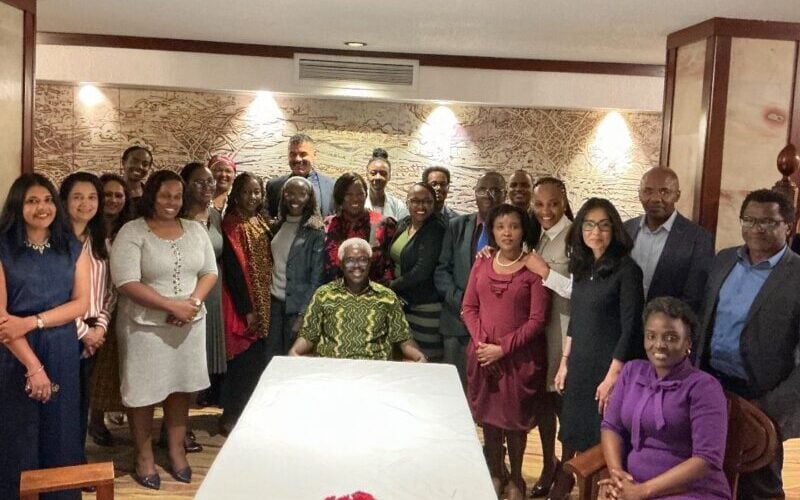
Partnerships between low- and middle-income countries (LMICs) and high-income countries (HICs) have the opportunity for impact. What’s just as powerful, perhaps even more transformative, are partnerships between LMICs themselves — countries where the economic, cultural, and systemic realities show evidence of pattern. South-South collaboration has the potential to build more contextually appropriate models of care with Fellows learning from mentors who understand the day-to-day realities of practicing in resource-constrained systems. Our Fellowship model has already proven successful in linking Mozambique with Brazil, where generalist clinicians receive training in child and adolescent mental health specializations.
This kind of collaboration isn’t about one-way knowledge transfer. It’s about co-creating solutions that are sustainable, regionally relevant, and driven by the people who will carry them forward. Over time, as this capacity grows, Kenya itself has the potential to become a regional hub for CAMH training — serving as a center of excellence for East Africa, including Uganda, Tanzania, and beyond.
The Fellowship model reflects the Child Mind Institute’s commitment to translating clinical excellence into scalable, global workforce solutions that strengthen public systems of care.
Learn more about the Global Fellowships Program
The post Bridging Countries and Building Capacity: A Bright Path Forward for Global Child Mental Health appeared first on Child Mind Institute.
<![CDATA[]]>
Lewisham and Greenwich awards £52m EPR contract to Epic
Lewisham and Greenwich NHS Trust has awarded a £52 million contract to Epic to supply a new electronic patient record (EPR) system.
Tideglusib improves novel object recognition memory in the preclinical DBA/2J mdx mouse model of Duchenne muscular dystrophy
IntroductionDuchenne muscular dystrophy (DMD) is a severe X-linked neuromuscular disorder characterized by progressive muscle wasting. Approximately 1 in 3 DMD patients experience cognitive dysfunction, with research suggesting an Alzheimer’s disease (AD)-like pathology. We have previously shown that treatment with the glycogen synthase kinase 3β (GSK3) inhibitor, tideglusib, improves muscle quality, function, and insulin sensitivity in the DBA/2J (D2) mdx mouse model of DMD. In this brief follow-up study, we report the effects of tideglusib treatment on cognitive function.MethodsMale D2 WT and mdx mice were purchased from Jackson Laboratories. Mice were separated into the following groups: (1) WT, (2) mdx-vehicle, and (3) mdx-tideglusib (10 mg/kg/day via oral gavage for 4 weeks). A novel object recognition test was performed to assess recognition memory. Hippocampus and serum samples were collected for BACE1 activity assays, amyloid beta (Aβ) ELISAs, and western blotting.ResultsCompared to vehicle-treated mdx mice, tideglusib-treated mdx mice demonstrated improved recognition memory. These changes to recognition memory were accompanied by greater expression of beta-catenin, an indirect downstream marker of GSK3 inhibition. While there were no changes in BACE1 activity, tideglusib-treated mdx mice had higher concentrations of Aβ in the serum and lower protein levels of receptor of advanced glycation end products.DiscussionThe results from this brief follow-up study offer preliminary support for tideglusib as a treatment for both muscle and brain impairments in mdx mice, potentially improving cognitive function through enhanced vascular Aβ clearance.
Exploring neural mechanisms of Mandarin tone sandhi perception via fNIRS: the role of gesture in multimodal integration
IntroductionThe use of pitch gestures in teaching Mandarin tone (i.e., gesture-augmented instruction) has been reported to facilitate lexical tone acquisition. However, the neural mechanisms underlying how gestures aid the learning of complex phonological rules, such as tone sandhi, remain unclear. This study investigated whether gesture-based learning enhances tone sandhi perception primarily through multimodal integration or by promoting cognitive control.MethodsForty-four Vietnamese-speaking learners were randomly assigned to either a gesture training group or a no-gesture control group. Post-training, participants performed a disyllabic tone discrimination task while functional near-infrared spectroscopy (fNIRS) data and behavioral responses were recorded.ResultsResults revealed significantly greater neural responses in the left dorsolateral prefrontal cortex (L-DLPFC) in the gesture group compared to the control group. Moreover, enhanced L-DLPFC activation was positively correlated with improved behavioral discrimination accuracy. The gesture group also exhibited strengthened functional connectivity between the L-DLPFC and bilateral prefrontal cortices, accompanied by accelerated hemodynamic responses.DiscussionCollectively, these findings suggest that gesture-assisted learning facilitates tone sandhi mastery primarily by augmenting prefrontal executive control and fostering multisensory integration. This pattern aligns with a weak embodied cognition framework, in which gestures serve as distributed scaffolds that support, rather than replace, abstract tonal representations.
Oral administration of kratom leaf extract alleviates anxiety-like behavior, urinary bladder pain, voiding dysfunction, and bladder hypercontractility via attenuating muscarinic receptor response in male mice exposed to chronic water avoidance stress
Psychological stress causes and deteriorates interstitial cystitis/painful bladder syndrome with urinary frequency, incontinence, bladder pain and urgency. The major alkaloid of kratom (Mitragyna speciosa), mitragynine, shows analgesic, anxiolytic, and smooth muscle relaxant effects. However, the effects of kratom leaf extract on stress-induced anxiety-like behavior, urinary bladder pain and urinary bladder dysfunction remain unknown. Therefore, this study aims to examine the effect of kratom leaf extract administration on anxiety-like behaviors, bladder pain, bladder contractile properties, and mast cell number in mice exposed to water avoidance stress. Male C57BL/6 mice were exposed to water avoidance stress (WAS) protocol for 10 consecutive days and compared with the stress-exposed mice receiving oral administration of kratom leaf extract (2.5 and 5 mg/kg of mitragynine) or solifenacin (10 mg/kg). Anxiety-like behaviors were assessed using open field test. Bladder pain sensitivity was evaluated with von Frey test, while voiding behavior was analyzed using voiding pattern analysis. Bladder contractility was examined using an in vitro organ bath technique, and urinary bladder mast cell infiltration was assessed by toluidine blue staining. Results show that mice receiving WAS had a reduction in the total duration and number of unsupported rearing behaviors, reduced voiding area, and increased bladder pain responses; however, these effects were reversed by treatment with kratom leaf extract (2.5 and 5 mg/kg of mitragynine). Interestingly, the WAS group also exhibited markedly increased tonic contractions in response to carbachol, a muscarinic agonist; these responses were attenuated in mice treated with kratom leaf extract (2.5 and 5 mg/kg) The enhanced tonic contractile response to carbachol was abolished by pre-incubation with ondansetron (a 5-HT₃ antagonist). The WAS group showed an increased total number of mast cells in the urinary bladder, which was reduced by treatment with kratom leaf extract at both 2.5 and 5 mg/kg. Our results indicate that treatment with kratom leaf extract attenuated chronic stress–induced bladder pain responses, voiding abnormalities, and mast cell numbers, and was associated with reduced contractile response to muscarinic stimulation, suggesting a potential modulatory effect on stress-induced bladder dysfunction.
Chronic stress and cognitive dysfunction in myalgic encephalomyelitis/chronic fatigue syndrome: HPA axis dysregulation and hippocampal plasticity
Cognitive dysfunction is a common and disabling clinical feature of myalgic encephalomyelitis/chronic fatigue syndrome (ME/CFS), often described by patients as “brain fog.” These symptoms typically manifest as difficulties in attention, memory, and concentration. Chronic stress has been proposed as an important contributing factor in ME/CFS. The hypothalamic-pituitary-adrenal (HPA) axis plays a central role in the stress response, and prolonged adverse stress may contribute to HPA axis dysregulation, including altered cortisol rhythmicity and impaired negative feedback regulation. Such dysregulation may be associated with cognitive dysfunction in ME/CFS through mechanisms involving neuroinflammatory responses, oxidative stress, and disturbances in neurotransmitter homeostasis. Studies suggest that these alterations may affect hippocampal structure and function, thereby contributing to impaired learning and memory processes. As a key brain region involved in cognition and stress regulation, the hippocampus may be implicated in the neurobiological mechanisms underlying cognitive dysfunction in ME/CFS. This review integrates current evidence on the potential role of HPA axis dysregulation and related neurobiological alterations in chronic stress-associated cognitive dysfunction in ME/CFS, with the aim of providing a theoretical basis for identifying potential intervention targets and informing strategies centered on HPA axis regulation.
Psychometric properties of Lithuanian translation of the self-report version of the Liebowitz social anxiety scale in young adult sample
BackgroundSocial anxiety disorder starts in adolescence or young adulthood and may have damaging effects on psychosocial development of the individual. Any intervention starts from assessment and the Liebowitz social anxiety scale with later developed self-report version is a valuable tool for practitioners for almost four decades. Even though the original version and adaptations have consistently demonstrated good reliability, there remains considerable debate regarding the factor structure. The aim is to test the factor structure and internal consistency of Lithuanian translation of the self-report version of the Liebowitz social anxiety scale (LSAS-SR) in a non-clinical young adult sample.MethodData of 452 young adults (mean age 21.3, 69.7% female) who volunteered participate in the study was used. Two factor solutions were tested: a single-factor model, with anxiety/fear and avoidance ratings loading on one factor, and a higher-order factor model, including two second-order scales (anxiety/fear scale and avoidance scale) and four first-order subscales (social interaction anxiety, performance anxiety, social interaction avoidance, performance avoidance). Internal consistency assessed using Cronbach’s alpha.ResultsLithuanian version has excellent internal consistency for the total score, scales and subscales, with Cronbach’s alfas ranging.85-.96. Confirmatory factor analysis shows that both tested models have acceptable data fit (RMSEA = .062-.067; CFI = .93-.94), however strong associations between (sub)scales, i.e. correlations exceeding.80, suggests that the use of scale and subscale scores may be less informative, especially in cross-sectional research, but could provide nuanced information in individual assessment.ConclusionFurther research on psychometric properties of Lithuanian versions of LSAS-SR should focus on verifying these results in a representative sample and in a clinical sample as well as testing the convergent and discriminant validity.