

BackgroundWorldwide, there are relatively few specialized inpatient units dedicated to women with histories of childhood sexual abuse (CSA) and comorbid psychiatric disorders. This pilot study examined dissociation and PTSD among women admitted to such a specialized integrative inpatient unit in Israel. We conduct an in-depth analysis of the role of dissociation in these women’s clinical picture, as well as in their treatment response.MethodsThe study included two phases. Phase 1 used a cross-sectional design to assess the complex inter-relationships between PTSD and various facets of dissociation in women with CSA histories admitted to a specialized inpatient unit (N = 108). Phase 2 focused on a sub-sample of participants (N = 28) who completed the inpatient program and completed admission and discharge assessments. Measures included the PTSD Checklist for DSM-5 (PCL-5) and the Dissociative Experiences Scale (DES-II).ResultsIn Phase 1, dissociative symptoms were positively correlated with overall PTSD severity and all PTSD symptom clusters, with the dissociative sub-measure of Absorption showing the strongest associations. In Phase 2, PTSD symptoms significantly decreased following treatment. In line with phase 1, reductions in Absorption were associated with improvements in overall PTSD severity and specifically in Hyperarousal symptoms.ConclusionsFindings from this pilot study indicate the therapeutic potential of a specialized integrated inpatient unit for women with CSA histories. Importantly, our results indicate that dissociation should be regarded as a major therapeutic target, most notably patients’ tendency for maladaptive absorption. These preliminary results should be expanded upon in larger, controlled clinical trials, further elucidating the role of dissociation and other mechanisms of change in similar units.
Smartphone-Based Ecological Momentary Assessment Among Community-Dwelling Older Adults: Observational Feasibility and Acceptability Study
<strong>Background:</strong> Ecological momentary assessment (EMA) enables repeated, real-time measurement of emotional states, behaviors, and contextual exposures in individuals’ daily lives. Although EMA has been increasingly used in health and behavioral research, evidence regarding the feasibility, compliance, and acceptability of smartphone-based EMA among older adults in Asian settings remains limited. <strong>Objective:</strong> This study aimed to evaluate the feasibility, EMA compliance, usability, and acceptability of a 14-day smartphone-based EMA protocol among community-dwelling older adults in Singapore. <strong>Methods:</strong> The data came from the Ecological Momentary Assessment in Ageing study, a smartphone-based EMA study designed to assess mental well-being, lifestyle behaviors, and perceived neighborhood environment among older adults. Adults aged 65 years or older in Singapore were enrolled and asked to complete 5 EMA prompts per day over 14 consecutive days using a smartphone app. Each EMA prompt remained available for up to 5 hours after delivery. EMA prompts assessed momentary mental well-being, sleep, physical activity, screen time, and perceived neighborhood environment. Feasibility indicators included recruitment and retention rates. EMA compliance was assessed as the proportion of completed EMA prompts out of all scheduled prompts. Usability and acceptability were assessed using a poststudy survey. <strong>Results:</strong> Between June 2025 and December 2025, a total of 186 individuals initially expressed interest in the study, of whom 139 (74.7%) scheduled an appointment, and 132 (95%) of the latter attended the appointment. Of those who attended, 98.5% (130/132) were enrolled. Participants had a mean age of 70.1 (SD 4.04) years; 65.4% (85/130) were female, 90.8% (118/130) were Chinese, and 65.4% (85/130) had postsecondary or university-level education. All enrolled participants completed the 14-day EMA protocol, resulting in 100% (130/130) retention. Across all participants, 99% (9007/9100) of the scheduled EMA prompts were completed. The poststudy usability survey was completed by 96.9% (126/130) of the participants. Among those who completed the poststudy usability survey, 88.1% (111/126) agreed or strongly agreed that the app was easy to use, 84.1% (106/126) agreed or strongly agreed that most people would learn to use it quickly, and 87.3% (110/126) preferred the app over face-to-face interviews. Overall, 91.3% (115/126) reported being satisfied or strongly satisfied with the app, and 100% (126/126) indicated willingness to be contacted for future research. <strong>Conclusions:</strong> A 14-day smartphone-based EMA protocol was highly feasible and acceptable among community-dwelling older adults in Singapore, with high retention and compliance and favorable usability ratings. These findings support the use of EMA methodologies in aging research within Asian contexts and suggest that older adults can successfully engage with repeated smartphone-based assessments when protocols are appropriately designed and supported.

Symptom-Only Localization of Brainstem Ischemia Using Large Language Models Versus Neurologists in Diffusion-Weighted Imaging–Positive Cases: Retrospective Single-Center Study
Background: Symptom-based localization of brainstem ischemia is challenging because of the anatomical complexity of the brainstem and the nonspecific overlap of clinical syndromes. Whether large language models (LLMs) can meaningfully assist in this task remains uncertain. Objective: This study aimed to compare the performance of several OpenAI LLMs and neurologists in localizing diffusion-weighted imaging (DWI)–confirmed brainstem ischemic lesions based on symptom descriptions alone. Methods: In this retrospective single-center study, 109 patients with DWI-confirmed acute brainstem ischemia were included. Three neurologists and 6 LLMs (GPT-5, GPT-4, GPT-4.1, GPT-4o, o3, and o3-pro) predicted lesion localization using a combined anatomical-lateral end point (left or right midbrain, pons, and medulla) based on symptom descriptions alone. Overall and regional accuracy, the Cohen κ, 6-class confusion matrices, and point-biserial correlations between symptom count and correct prediction were assessed. Because all raters evaluated the same cases, paired McNemar tests with Benjamini-Hochberg correction were used for pairwise performance comparisons. Results: GPT-4 and GPT-4o achieved the highest overall accuracy (61/109, 56%; 95% CI 46.1%‐65.5%). Agreement with the DWI reference standard remained limited across all raters, with the Cohen κ reaching a maximum of 0.291 for GPT-4o. Confusion matrices showed that higher performance was driven mainly by pontine cases, whereas misclassification remained frequent in mesencephalic and medullary lesions. Regional analyses outside the pons were imprecise because mesencephalic and medullary subgroups each contained only 16 cases. A higher number of documented symptoms was associated with correct prediction for GPT-4, GPT-5, GPT-o3, and 1 neurologist. Conclusions: Although some LLMs showed higher relative accuracy than the participating neurologists, absolute performance remained limited and clinically insufficient. These findings are best interpreted as an exploratory benchmark under constrained conditions: absolute performance remained modest, agreement beyond chance was limited, and performance outside pontine lesions was inconclusive.
<img src="https://jmir-production.s3.us-east-2.amazonaws.com/thumbs/1421615fb3ca4d0369d94444f4d003b3" />
STAT+: RFK Jr. plans to create list of injuries caused by Covid-19 vaccines
WASHINGTON — Health secretary Robert F. Kennedy Jr. is preparing to make it easier for people to claim that they were injured by a Covid-19 vaccine and receive compensation.
Kennedy is set to start the process of compiling a list of injuries that are presumed to be caused by Covid shots. People with those conditions could then ask for compensation from the government. It’s not clear what conditions may make the list — and that’s something that outside experts are keeping a close eye on.
Kennedy has long been critical of vaccines, saying none have been adequately safety tested. He’s said that he plans to overhaul a similar but separate program that provides compensation for individuals who claim injury by a vaccine recommended by the federal government.
Virtual Patients Will Train Future Mental Health Clinicians
Researchers from the University of Pennsylvania and New York University have received a $4 million grant from the Wellcome Trust to develop an AI-driven platform to train mental health clinicians using simulations of real patients.
Within the next two years, the partners will work on the development of the STELLAR platform, which stands for Steering-Vector Enhanced LLM Agents for Realistic Digital Twins in Mental Health. The platform will create digital twins of patients that trainees can use to practice conducting clinical interviews and evaluating psychiatric symptoms.
“STELLAR brings together behavioral data, clinical expertise, and AI to ask a very practical question,” said Sharath Chandra Guntuku, PhD, associate professor of computer and information science at Penn Engineering. “Can we build training tools that better prepare clinicians for how varied and complex patients are?”
Preparing future mental health clinicians for clinical interviews can be challenging as patients will often report overlapping symptoms that shift over time and subjective experiences that can be expressed differently by each individual. STELLAR will give trainees an ethical option for trainees to simulate interviewing patients with a broad range of symptoms, backgrounds, and clinical scenarios.
“In psychiatry, the details of symptom experience matter: how someone describes distress, how symptoms overlap, how severity changes over time, and how context shapes the clinical interaction,” said Raquel E. Gur, MD, PhD, professor of psychiatry, neurology, and radiology at Penn’s Perelman School of Medicine.
Patient simulations will be created drawing from clinical data from the Philadelphia Neurodevelopmental Cohort, a repository including psychiatric assessments and clinical interviews from thousands of young people created by Penn Medicine and the Children’s Hospital of Philadelphia. Rather than copying individual patients, the simulations will create composites based on real-world data for clinicians to practice realistic conversations in the context of a clinical interview.
This will allow trainers to precisely control the symptoms students encounter, their intensity, and how they interact with each other. For instance, a trainee may practice interviewing a patient with mild anxiety and another whose anxiety overlaps with depression or psychosis to learn how to distinguish the differences in presentation between both.
Because many mental health symptoms manifest beyond formal clinical settings, the platform will also be trained using data from social media platforms, where people discuss mental health symptoms in everyday language.
“Patient simulations will only be useful for clinician training if they are grounded in real clinical speech and evaluated as clinical interactions, not just plausible AI dialogue,” said Neville Ryant, PhD, researcher at Penn’s Linguistic Data Consortium. “[Our] role is to bring speech and language science into the core of the project: adapting speech-recognition tools to clinical interviews, creating high-quality transcripts and annotations, and helping evaluate both what the simulations say and how they say it. That includes assessing the language generated by the models, the naturalness of synthetic voices, how well those voices reflect target speech patterns, and the behavior of the avatar during real trainee interactions.”
To ensure the conversations are realistic, respectful, and useful to trainees, the team will involve people with lived experience of mental health conditions as well as family members and caregivers to provide their perspective into the evaluation process. Their feedback will help researchers assess the accuracy of simulations, avoid stereotyping patients, and prepare trainees for complex and nuanced clinical conversations with real patients.
“The promise of this approach is that we can move beyond stylized and potentially biased simulations,” said João Sedoc, PhD, assistant professor of technology, operations and statistics at NYU’s Stern School of Business. “If we can create digital patients that simulate controllable plausible symptom expression and responsibly evaluate, we can augment current clinician training practices with the kinds of conversations that are essential to better mental health care.”
The post Virtual Patients Will Train Future Mental Health Clinicians appeared first on Inside Precision Medicine.
Conversational mHealth Platform Designed to Support Tuberculosis Treatment Adherence in Low-Income South African Patients: Pilot Cohort Study
Background: Tuberculosis is a leading cause of death in South Africa, with poor adherence undermining treatment success. Findings from recent research on the impact of mHealth (mobile health) interventions on tuberculosis treatment outcomes show promise, yet many interventions remain untested in African contexts. Rising smartphone ownership in South Africa enables more complex mHealth interventions, offering an opportunity to deploy behavioral tools within high-burden, resource-constrained settings. Objective: This pilot study evaluates the feasibility and effectiveness, among low-income patients at a South African clinic, of a WhatsApp (Meta)-based conversational mHealth platform designed to tackle specific behavioral barriers to adherence. Aims include the following: (1) evaluating coverage by studying the proportion of patients within the target group who own smartphones, (2) describing patterns of engagement with the platform and the role of mobile data scarcity as a barrier to use, and (3) producing evidence on the impact that a behavioral mHealth intervention can have on tuberculosis treatment success. Methods: Patients newly diagnosed with drug-susceptible pulmonary tuberculosis between August 2022 and October 2023 completed a screening survey. Those owning compatible mobile phones were invited to enroll. The platform provided reminders alongside behavioral support features. Coverage was studied by estimating smartphone ownership among screened patients and comparing characteristics between enrolled patients (n=42) and those receiving standard care (n=102) using standardized differences. Engagement was analyzed using local polynomial regressions for usage trends and logistic regressions to estimate the impact of mobile data top-ups. The marginal effect of enrollment on the probability of successfully completing tuberculosis treatment was studied using a test and logistic regressions with and without covariates. Results: A total of 34% (49/146) of screened participants owned a phone that could use WhatsApp. There were differences in characteristics by enrollment status. Further, 50% of patients engaged with the platform each day until the end of treatment. Overcoming an initial inability to send unprompted messages to inactive patients was associated with an immediate 13-percentage-point increase in aggregate engagement the following month. Mobile data scarcity hindered use—receiving mobile data top-ups within the previous week was associated with a 3.37-percentage-point increase (95% CI 0.0007 to 0.0666) in platform engagement. The estimated marginal effect of enrollment was a 17.6-percentage-point (95% CI 0.003 to 0.348) increase in treatment completion, becoming attenuated after adjusting for patient characteristics (12.8 percentage points, 95% CI −0.048 to 0.304). Conclusions: While phone ownership and mobile data constraints represent barriers to feasibility, findings suggest that smartphone-based mHealth interventions may aid successful treatment completion—alleviating health system burdens by automating care for less vulnerable patients. Engagement with the platform throughout tuberculosis treatment was high and stable, and enrolled users experienced a higher success rate. A randomized controlled trial is required for impact evaluation.
<img src="https://jmir-production.s3.us-east-2.amazonaws.com/thumbs/6c33a091172729d435db0219a572586a" />
Resilience and Stress Among Health Care Workers Participating in the StressPal Frontline Program: Quasi-Experimental Pretest-Posttest Study
Background: Health care workers continue to experience heightened levels of distress and burnout, which contribute to higher levels of job dissatisfaction, turnover intentions, presenteeism, and staffing shortages. Objective: The aim of this study was to examine how participation in the StressPal Frontline: Essential Resilience Self-Care and Burnout Prevention program influenced health care workers’ stress and resilience. The study also sought to identify specific measures of perceived stress and resilience that were most affected by participation in the program and to explore whether pre-and-post differences varied based on participant characteristics. The StressPal Frontline program is a digital resilience intervention specifically developed for health care workers to enhance psychological flexibility and stress resilience. The self-paced training program, designed for approximately a 6-week period, consists of brief modules, follow-up resources, and a peer engagement community. Methods: A pretest-posttest quasi-experimental design was used to assess the effectiveness of the StressPal Frontline program in reducing stress and building resilience among 76 health care workers who voluntarily joined and completed the program. Outcome measures included the Perceived Stress Scale and the Brief Resilience Scale to assess participants’ perceptions of stressful situations and their ability to bounce back from stress. Descriptive statistics, correlation analysis, paired-samples 2-tailed test, and multiple regression analysis were conducted. The paired-samples test was calculated at the scale level and item level to evaluate the statistical significance of pretest and posttest mean differences, and the Cohen statistic was used as a measure of effect size. Statistical analysis for this study was conducted in Excel (Microsoft), SPSS (IBM Corp), and Jamovi (jamovi project). Results: The results indicated a 1.53-point reduction in the Perceived Stress Scale score after participating in the StressPal Frontline program, suggesting a statistically significant decline in average perceived stress due to participation in the program (=.004). The corresponding value of Cohen was 0.34, suggesting a small-to-medium effect of the intervention, StressPal Frontline program, in reducing perceived stress. For the Brief Resilience Scale, pre-and-post difference was not significant at the scale level (=.07); however, item-level analysis found significant increases in participants’ perception of their ability to bounce back quickly after hard times and handle difficult situations. No significant differences were found in outcome measures based on age, race, ethnicity, professional role, or practice setting. Conclusions: The StressPal Frontline program was associated with positive outcomes in reducing perceived stress. Our study also found no statistical differences in outcomes among participants of different age groups, races, ethnicities, occupations, genders, and practice settings. This is an important finding, as it indicates that the StressPal Frontline program may provide positive benefits for reducing stress across professions, settings, and individual characteristics. This program, along with other resources, could be implemented by health care organizations to support workers’ professional development, behavioral health, and well-being.
<img src="https://jmir-production.s3.us-east-2.amazonaws.com/thumbs/b188f6392a855b01cd41f10741dde2b1" />
Epitope Editing Strategy Could Enable Less Toxic Stem Cell Transplants
Stem cell transplantation and gene therapy are among the most powerful curative approaches for blood diseases such as sickle cell disease, β-thalassemia, immune deficiencies, and some blood cancers. Replacing or correcting the blood-forming stem cells can offer the possibility of long-lasting benefit or a cure. However, before patients can receive these therapies, they usually need intensive and potentially toxic chemotherapy or radiation to clear space in the bone marrow for the new stem cells.
Researchers headed by teams at Boston Children’s Hospital and Dana-Faber Cancer Institute have developed a new strategy to make stem cell transplants safer by replacing chemotherapy-based treatment with a more targeted approach. Instead of using toxic agents that damage DNA throughout the body, the team developed an donor stem cell epitope-editing strategy and antibodies that recognize surface markers only on the blood-forming stem cells that need to be depleted. Reporting on their developments in Nature (“Non-genotoxic transplantation and in vivo selection through epitope editing,”) the team demonstrated that these antibodies can help clear the patient’s existing stem cells from the bone marrow in a more selective, less toxic way.
Hematopoietic stem/progenitor cell (HSPC) transplantation (HSCT) is a cornerstone therapy for a wide range of malignant and non-malignant conditions, “… leveraging the unique regenerative capacity of HSPCs to replenish the hematopoietic system,” the authors wrote. However, they pointed out, the short-term and long-term effects of pre-transplant genotoxic conditioning represent real barriers to broader use of HSPC transplantation and gene therapies.
Although monoclonal antibodies have been proposed as alternatives to chemotherapy or radiotherapy, they are also associated with efficacy and safety challenges, the team noted. An antibody normally cannot distinguish between the patient’s original stem cells and the infused therapeutic stem cells from the treatment. If the antibody remains in the body, it may also attack these transplanted cells, preventing them from integrating. “… immune-based agents pose efficacy and safety challenges due to nonselective targeting of transplanted HSPCs and prolonged half-life, leading to on-target depletion,” the investigators stated.
Researcher Pietro Genovese, PhD, of the Dana-Farber/Boston Children’s Cancer and Blood Disorders Center, and his team solved this problem by giving the therapeutic stem cells a form of molecular protection. Using precise genome-editing tools, they made changes to a tiny recognition site—epitope—on the surface of the donor stem cells. This small change prevented the antibody from binding to the therapeutic cells, while preserving the normal function of the protein. “… we identified amino acid changes in the extracellular domain of KIT that disrupt the binding of two therapeutic monoclonal antibodies, which impair stem cell factor (SCF)-mediated signaling without affecting KIT expression or functionality,” they explained.
The edited stem cells were in effect given a molecular camouflage. They could hide from the antibody, while the unedited cells remained vulnerable. In previous work the team had used the same general principle of epitope editing to protect healthy blood stem cells from cancer immunotherapies, such as CAR T cells or therapeutic antibodies, while allowing those therapies to attack leukemia cells.
The newly reported approach included therapeutic editing of blood stem cells to increase fetal hemoglobin (HbF), a protective form of hemoglobin that can compensate for the defective adult hemoglobin found in sickle cell disease and β-thalassemia. “In our experiments, KIT and BCL11A were efficiently co-edited in primary HSPCs, endowing their progeny with both HbF induction and mAb resistance,” the investigators commented. The results showed that the protected, epitope-edited stem cells can survive antibody treatment, integrate in the bone marrow, and enrich gradually over time. The findings point to a new way to make room for transplanted cells, and also selectively favor the therapeutic cells after transplantation.
“By avoiding chemotherapy, we can open up stem cell transplants for diseases that are less severe or for fragile patients normally too sick or too high risk for transplantation,” said first author Gabriele Casirati, MD, an instructor in Genovese’s lab. “Typically, bone marrow transplants are reserved for patients with life-threatening diseases but are simultaneously limited to those patients who can tolerate the chemotherapy.”
This work could have implications for the future of both stem cell and gene therapy. First, it may help enable chemotherapy-free or chemotherapy-sparing transplantation approaches, reducing the burden of treatment for patients who currently face the risks of DNA damage. Second, because the antibody can continue to select for protected cells after transplantation, the strategy could help therapeutic stem cells reach the levels needed for clinical benefit. “In conclusion, our findings support the paradigm-shifting potential of epitope editing to design next-generation HSCT,” the team stated.
The broader significance extends beyond inherited blood disorders. Together, these studies suggest that epitope editing could become a flexible platform: one application could make stem cell transplantation and gene therapy safer, while another could expand the use of cancer immunotherapy by protecting normal blood formation from unintended damage. “… by overcoming the limitations of monoclonal antibody pharmacokinetics, epitope editing enables novel hematopoietic replacement regimens that are not limited by on-target graft elimination, allowing prolonged immune-based conditioning that maximizes hematopoietic niche clearance without chemo-radiotherapy or monoclonal antibody wash-out,” they noted.
“Although this work is still preclinical, it points toward a future in which patients may receive curative stem cell therapies with less toxicity, less reliance on chemotherapy, and greater precision,” said Genovese. “By combining targeted biological conditioning with molecularly protected therapeutic stem cells, this strategy offers a new framework for safer and more accessible treatments for a wide range of blood diseases.”
The technology used in this study is jointly owned by Boston Children’s and Dana-Farber Cancer Institute. In their paper the team commented, “We envision a future where patients receive life-saving stem cell therapies without risks of prolonged aplasia, infertility or secondary malignancies, and with minimal or no hospitalization.”
The post Epitope Editing Strategy Could Enable Less Toxic Stem Cell Transplants appeared first on GEN – Genetic Engineering and Biotechnology News.
Fujifilm Selected with Six Others in FDA PreCheck Pilot Manufacturing Program
Fujifilm Biotechnologies reports that its commercial-scale cell culture manufacturing facility in Holly Springs, NC, has been selected as one of only seven participants in the FDA’s PreCheck Pilot Program. The program, which also includes Amneal Pharmaceutical, Cellares, Eli Lilly, Kriya Therapeutics, Kyowa Kirin, and Regeneron, is a strategic initiative designed to strengthen America’s pharmaceutical manufacturing capabilities and help accelerate patient access to critical medicines.
“We are honored that our Holly Springs site has been selected to participate in the FDA’s PreCheck Pilot Program,” said Lars Petersen, president and CEO of the company. “We’re committed to helping our customers bring life-changing therapies to patients faster, and participation in this initiative will help support greater access to critical medicines in the U.S.”
The pilot program is designed to enhance FDA-industry engagement by facilitating earlier interactions to minimize uncertainty associated with manufacturing readiness, with the goal of creating a more efficient regulatory review process, and strengthening the resilience of the U.S. pharmaceutical supply chain. The FDA PreCheck Pilot Program will focus on manufacturing readiness, regulatory predictability, and expedited facility inspections.
Fujifilm’s customers at the Holly Springs site includes argenx, Johnson & Johnson, Regeneron, and a number of other pharma firms. On behalf of its customers, Fujifilm’s Holly Springs site manufactures monoclonal antibodies (mAbs), including treatments for complex diseases.
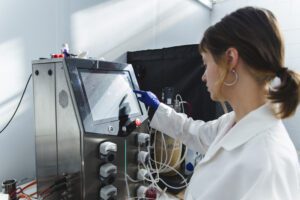
“As our customers continue advancing innovative biologic therapies, manufacturing readiness and regulatory predictability are increasingly important,” said Laurie Braxton, senior vice president and site head, Holly Springs at Fujifilm. “Our participation in the program reinforces our commitment to providing customers with high-quality manufacturing capabilities.”
Fujifilm’s Holly Springs facility is one of North America’s largest end-to-end cell culture biopharmaceutical manufacturing facilities and represents a key node in the company’s growing global manufacturing network, according to Lars Petersen. The $3.2 billion manufacturing site opened with a capacity of 8 x 20,000 L mammalian cell culture bioreactors, and will add a drug product line in early 2027, followed by Finished Goods. An expansion is underway to double drug substance capacity with an additional 8 x 20,000 L bioreactors.
With an increase in demand for U.S. manufacturing capacity, Fujifilm officials say they will accelerate the opening of its expansion by six months, targeting late FY2027. The Holly Springs site recently surpassed 800 employees, with the overall goal of hiring a total of 1,400 local employees by 2031.
Designed with standardized platforms and advanced digital capabilities, the site is part of the company’s interconnected kojoXTM operating system, which harmonizes systems, equipment, and processes across global sites to enable faster technology transfer, greater manufacturing flexibility, and consistent quality for customers worldwide
The post Fujifilm Selected with Six Others in FDA PreCheck Pilot Manufacturing Program appeared first on GEN – Genetic Engineering and Biotechnology News.
STAT+: White House reviewing top contenders to lead FDA
WASHINGTON — The top contenders to lead the Food and Drug Administration have been sent to the White House for a final review and decision, according to a person familiar with the process.
The finalists include Heidi Overton, a White House adviser; Jeffrey Vacirca, an oncologist and health system executive; and Stephen Ferrara, a health affairs official at the Defense Department.