The axon initial segment was known to receive GABAergic synaptic inputs. Yang et al. show that it can be excited directly via specialized ‘axonic spines’. These spines thus boost neuronal firing and act as a fast track to route circuit information.
Pagani et al. used cross-species fMRI to reveal two autism subtypes, characterized by lower and higher brain connectivity and linked to synaptic and immune-related pathways, respectively.
In a discussion about the best fruits, my STAT colleague Alexa Lee and I agreed that peaches have been mid in recent years. Is this just a New York City problem? Please dial in with your fruit feelings.
You know what’s not mid? STAT’s excellent journalism on health and medicine. Subscribe here.
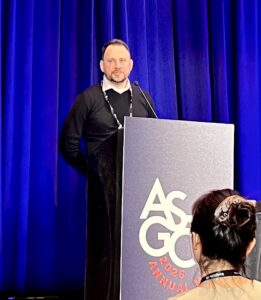
BOSTON — In a potentially significant advance for the genome editing field, researchers from the biotechnology company Caszyme and the Vilnius University Institute of Biotechnology in Lithuania have developed a potent and compact variant of Cas12l nuclease. Giedrius Gasiūnas, PhD, Caszyme co-founder and CEO, presented highlights of the research at ASGCT.
The work represents “a great example of the potential of continued mining for novel Cas effectors within the bacterial metagenomic diversity dark matter,” said Rodolphe Barrangou, PhD, Editor in Chief of The CRISPR Journal, which will shortly be publishing a paper on the Lithuanian team’s results.
“We need more diverse effectors to address the technical shortcomings of the CRISPR toolbox,” Barrangou continued. “This study is a great illustration of the potential of mining bacterial diversity.”
Giedrius Gasiūnas, PhD, Caszyme CEO, presents Cas12l at ASGCT 2026.
The Lithuanian team, including veteran gene editor Virginijus Siksnys, PhD—winner of the 2018 Kavli Prize with Jennifer Doudna, PhD, and Emmanuelle Charpentier, PhD, for CRISPR gene editing—used a hybrid approach to optimize Cas12l. By combining cryo-electron microscopy (cryo-EM) structure-guided design with artificial intelligence (AI) protein language models, the team was able to engineer a variant (Asp2Cas12l M82) that overcomes the known efficiency limitations of the Cas12l family.
Although Cas9 has widespread utility, including clinical applications, researchers have long considered its relatively large size and requirement for G-rich protospacer adjacent motifs (PAMs) problematic. The Cas12l family, discovered in the Armatimonadota bacterial phylum, offers a more compact size (867 amino acids) and recognition of a C-rich PAM site.
But wild-type Cas12l enzymes exhibit lower editing efficiencies and higher target-to-target variation compared to Cas9. According to Gasiūnas, the new M82 variant is “reliable, precise and adaptable,” and shows promise for a wide range of therapeutic applications.
“Through our continued work exploring novel Cas systems, Caszyme is focused on advancing technologies that move beyond promise into practical use.”
Path to potency
The engineering of the M82 variant proceeded in two steps. First, the Caszyme researchers solved the 3D structure of Asp2Cas12l complexed with an sgRNA and DNA to high resolution (2.51 Å). This revealed a unique “bracelet” architecture whereby the nuclease encircles the DNA target via interlocking helical bundles and a proline-rich string.
Next, the team introduced arginine substitutions at dozens of positions in the molecule to enhance electrostatic attraction to the negatively charged DNA backbone. This work included the production of an M67 variant, which provided a 7-fold improvement in indel editing over the wild-type nuclease.
To engineer further refinements, the Caszyme group turned to AI, specifically the ESM-2 protein large language model. This model predicted evolutionary hotspots considered likely to preserve or enhance function. Integrating these AI-derived substitutions—Q572R in the bridge helix and F607S in the RuvC domain—resulted in the final M82 Cas12l variant, illustrating the value of AI-supported engineering rather than deploying protein-directed evolution.
Rivaling Cas9
Gasiūnas presented data showing that M82 possesses good activity across recalcitrant gene targets, reducing the target-to-target variation that plagues many novel nucleases. In head-to-head comparisons in HEK293T cells, M82 demonstrated an average indel editing rate of 67.4%, nearly identical to that of Cas9 at overlapping target sites. This potency was consistently maintained across several delivery formats, including plasmid DNA, mRNA, and ribonucleoprotein complexes.
The Caszyme group also showed excellent M82 efficiency in homology-directed repair (HDR). In experiments targeting the AAVS1 locus, M82 facilitated a site-specific gene insertion frequency of 39%, outperforming Cas9 in the same context. Using single-stranded donor templates, HDR rates reached as high as 56%. Gasiūnas suggested that the staggered cut produced by Cas12l may inherently steer DNA repair toward precise correction rather than stochastic indels. With regard to safety, Caszyme found that M82 Cas12l maintained a high degree of on-target precision. Secondary editing signals were largely detected at or near the lower limits of assay sensitivity, suggesting a low risk of off-target cleavage.
The compact size of the M82 variant makes it an attractive candidate for adeno-associated virus-mediated delivery, which has strict limits on cargo size. “It is no secret that the CRISPR space has faced challenges and concerns in recent years,” Gasiūnas said. “However, we are confident in M82’s ability to create headroom for scientists to stand up and innovate within.”
Crowded field
Cas12l is not the only compact Cas nuclease gaining attention, of course. In a talk preceding Gasiūnas’ presentation, Zhaoshi Wu, PhD, co-founder and chief technology officer of Shanghai-based Castalysis Bioscience, presented an update on Cas12n, details of which were first published in Molecular Cell in 2023. The nuclease was touted as being the first independent CRISPR-Cas complete gene family uncovered by Chinese scientists within China’s territory.
Touted as a next-gen ultra-compact gene editing system, Cas12n (branded as alphaCas) consists of just 450 amino acids, and possesses structural similarity to TnpB. Cryo-EM structural analysis led the Chinese investigators to optimize the molecule for non-viral in vivo delivery. Preclinical experiments showed robust genome editing in a mouse model by targeting PCSK9 using lipid nanoparticle delivery, resulting in sharp drop in serum LDL levels.
Wu said his company is on target to begin its first clinical before the end of 2026. But he faced an uncomfortable moment during audience questions. Fyodor Urnov, PhD, challenged Wu’s claim that an inherent advantage of Cas12n was its safety profile compared to Cas9. Urnov pointed out that Intellia Therapeutics has two ongoing Phase III in vivo trials using CRISPR-Cas9 that show no immunogenicity concerns using LNP delivery.
Urnov later congratulated Wu on the rest of the company’s data and wished them success.
The Stavros Niarchos Foundation (SNF) Global Center for Child and Adolescent Mental Health at the Child Mind Institute launches its next two-year fellowship for professionals pursuing evidence-based approaches across diverse, underserved global communities
New York, NY—Applications are now open for the 2026 Communicator Fellowship at the Stavros Niarchos Foundation (SNF) Global Center for Child and Adolescent Mental Health at the Child Mind Institute. The fellowship is designed to support a new generation of communicators working to shape child and adolescent mental health care in low- and middle-income countries, in addition to the SNF Global Center’s core country offices in Brazil, Greece, and South Africa. Up to three professionals working in public communications, including journalists, broadcasters, and podcasters, will be selected for the two-year program.
The Communicator Fellowship is part of the SNF Global Center’s broader mission to reduce gaps in data and care, catalyze system-level advancements, and transform child and adolescent mental health care by turning evidence into action, scaling culturally appropriate solutions, and building a global network of experts so young people everywhere can access support when they need it.
The application deadline is June 15, 2026. Fellows will be selected and announced by early August 2026. In addition to financial support of up to $100,000 USD, fellows will receive training, mentorship, and networking opportunities.
At a time when one in five young people are experiencing mental health or learning challenges, with most cases beginning by age 14, effective and accurate communication is urgently needed.
At the Child Mind Institute, we believe that translating research into accessible knowledge that empowers young people, families, and communities is integral to advancing mental health care. The Communicator Fellowship builds on this commitment by supporting professionals who can bring evidence-based mental health information to the public in clear, engaging, and culturally relevant ways.
Vinicius Gaby Vieira Rego, MD, of Brazil, a current Communicator Fellow with the support of the Institute of Psychiatry at the University of São Paulo, exemplifies this mission. Working with youth, Dr. Rego is co-creating a multi-platform literacy hub designed to combat harmful misinformation by empowering Brazil’s young leaders.
“I am deeply grateful for the opportunity to join the SNF Global Center’s network of fellows to support adolescent mental health in Brazil through communication,” said Dr. Rego. “This fellowship will enable a multi-channel communication project aimed at strengthening mental health literacy and peer-support capacity — with young people and for young people — across the country.”
As a fellow, Dr. Rego’s work directly addresses complex mental health challenges faced by young people in Brazil, while contributing to broader global efforts to improve communication about mental health care.
“In the current digital environment, where adolescents are exposed to a high volume of mental health content, the need for evidence-based information that resonates with young people has never been greater,” said Guilherme Polanczyk, MD, PhD, associate professor of Child and Adolescent Psychiatry at the University of São Paulo. “We are proud to endorse a project committed to supporting how young people and their communities understand and reflect on their mental health.”
Other current fellows are leading high-impact projects dispelling misinformation, reducing stigma, and increasing youth engagement — all while bringing critical attention to links among mental health, climate change, and human rights. Through partnerships, these efforts are transforming the future of youth mental health across the globe.
“Vinicius’s project is ambitious, and with the support of the Institute of Psychiatry at the University of São Paulo, we know it will provide young people in Brazil with much-needed resources to support their mental health,” said Peter Raucci, Director of Global Fellowship Strategy of the SNF Global Center at the Child Mind Institute. “What we’re seeing through the Communicator Fellowship is how quickly ideas can move from concept to culturally relevant, real-world impact.”
SNF Global Center Communicator Fellowship Timeline
About the SNF Global Center at the Child Mind Institute The Stavros Niarchos Foundation (SNF) Global Center for Child and Adolescent Mental Health at the Child Mind Institute brings together the Child Mind Institute’s expertise as a leading independent nonprofit in children’s mental health and the Stavros Niarchos Foundation’s deep commitment to supporting collaborative projects to improve access to quality health care worldwide. The center is building partnerships to drive advances in under-researched areas of children and adolescents’ mental health, and expand access to culturally appropriate training, resources, and treatment in low- and middle-income countries. This work is conducted by the Child Mind Institute with support from SNF through its Global Health Initiative (GHI).
About the Child Mind Institute The Child Mind Institute is dedicated to transforming the lives of children and families struggling with mental health and learning disorders by giving them the help they need. We’ve become the leading independent nonprofit in children’s mental health by providing gold-standard, evidence-based care, delivering educational resources to millions of families each year, training educators in underserved communities, and developing tomorrow’s breakthrough treatments.
BOSTON — A team at Children’s Hospital of Philadelphia (CHOP) led by Rebecca Ahrens-Niklas, MD, PhD, and Lindsey George, MD, has described a case of a brain tumor linked to a rare integration of adeno-associated virus (AAV).
George presented the work at the American Society of Gene and Cell Therapy (ASGCT) conference in a plenary talk selected as the “presidential abstract” by ASGCT president, Terry Flotte, MD. The study, “Neuroepithelial tumor with AAV integration after intracisternal magna vector delivery,” was published in the New England Journal of Medicine.
Lindsey George, MD
Over the past 25 years, some 6,000 patients have been treated with some form of AAV gene therapy. In all that time, George said, there have been no established long-term safety concerns, although genome integration events have been reported in mouse and dog studies. But the case documented by George and colleagues at CHOP suggests that the gene therapy field may need to pay more attention to this potential occurrence.
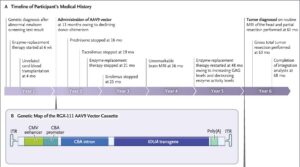
The story began with a 5-year-old boy with an inherited lysosomal disorder, severe MPS1 deficiency (Hurler subtype). The patient received enzyme replacement therapy at six weeks of age, followed by a cord blood stem cell transplant at age four months.
Investigators chose to perform gene therapy when the patient was 13 months old to deliver the iduronidase (IDUA) gene. The vector chosen was an AAV9 serotype, using a cytomegalovirus enhancer and a chicken beta-actin promoter driving the gene. The virus was administered into the boy’s cisterna magna in the base of the skull.
When the boy was five years old, a routine neurological scan revealed a large intraventricular mass that had not been observed two years earlier. Analysis of the tumor revealed it was a PLAG1-driven neuroepithelial tumor—indeed, PLAG1 expression was almost 300 times higher than in other central nervous system tumors studied at CHOP. (PLAG1 is usually only expressed during embryogenesis.)
Surgery to remove the tumor was successful. Eight months after surgery, there are no signs of tumor growth. The boy is also showing advanced neurocognitive function.
Tumor typing
George described RNA sequencing of the tumor, which revealed the fusion of a fragment of the AAV9 vector cassette to exon 5 of the PLAG1 gene on chromosome 8. The resulting transcript is predicted to encode a PLAG1 derivative containing five zinc-finger DNA-binding domains and a C-terminal transcriptional activation domain, which was previously reported to function as a transcriptional activator.
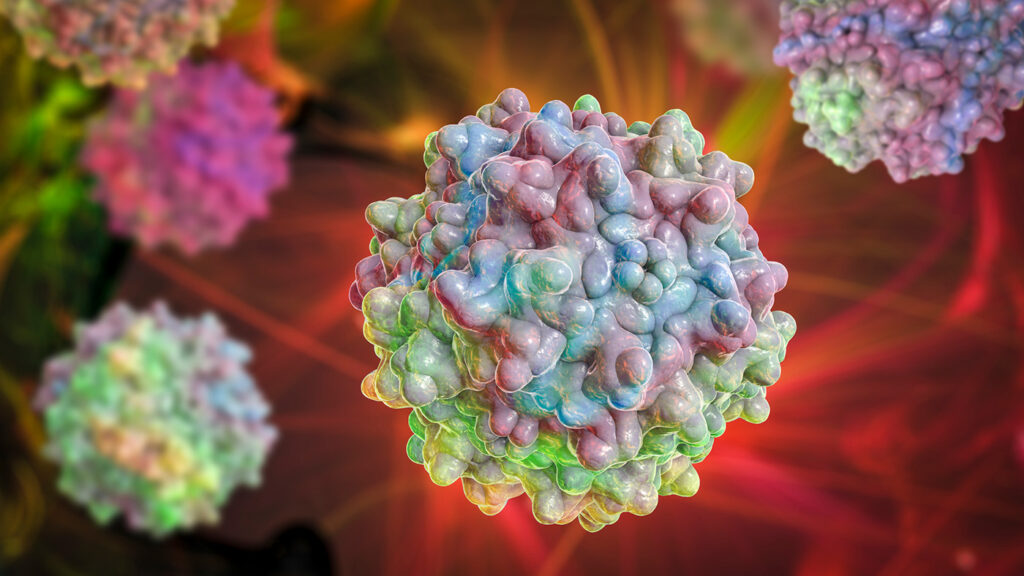
Credit: Dr_Microbe / iStock / Getty Images Plus
Curiously, the chimeric junction also included a segment of human chromosome 10, which George suspects originated during the vector manufacturing process. The integration event was present in about 40% of the total reads, suggesting integration into one of the two PLAG1 alleles.
George concluded her talk by noting that while the clinical outcome in this patient is so far encouraging, this is evidence that AAV integration can be associated with oncogenesis. The study underscores the need to monitor the most heavily transduced tissues after AAV gene therapy.
While the gene therapy community should be cautious in extrapolating this single case report across all AAV gene therapy programs, George said the study supports the use of the lowest feasible vector dose as well as tissue-specific promoters.
George noted that detection of the integrated AAV vector DNA was challenging, in part because of rearrangements of vector DNA. The use of several complementary techniques—long-read DNA sequencing, targeted PCR amplification, and RNA sequencing—was required to confirm the integration.
George and coworkers closed their paper, noting that, “Our findings support the hypothesis that rare AAV integration can contribute to human oncogenesis, which emphasizes the need to optimize gene delivery methods and monitor transduced tissues after treatment.”
This is today’s edition of The Download, our weekday newsletter that provides a daily dose of what’s going on in the world of technology.
How Chinese short dramas became AI content machines
China’s short drama industry is fueled by bite-sized, melodramatic, and smutty shows built for smartphone scrolling. Now, many are being made entirely with AI: no actors, camera operators, cinematographers, or CGI specialists required.
An average of 470 AI-generated short dramas were released every day in January. Production timelines have shrunk from months to weeks, while costs have dropped by up to 90%. Storytelling is also increasingly driven by performance data.
The World Health Organization’s latest global statistics report reads less like a progress update than a warning sign. Progress on some of the world’s biggest health threats is stalling, and in some cases reversing altogether.
There were 1.3 million new HIV cases in 2024, malaria is resurging, vaccination rates are slipping in the Americas, and 42.8 million children are suffering from severe malnutrition. The world is now far off track from meeting many of the UN’s major health goals by 2030.
This story is from The Checkup, our weekly newsletter giving you the inside track on all things biotech. Sign up to receive it in your inbox every Thursday.
The must-reads
I’ve combed the internet to find you today’s most fun/important/scary/fascinating stories about technology.
1 As their trial goes to the jury, Musk and Altman face lying accusations Lawyers hammered the rivals’ credibility in their closing arguments. (WSJ $) + Musk was accused of “selective amnesia.” (Reuters $) + The pair are in court over OpenAI’s future. (MIT Technology Review) + And their trial has made everyone look bad. (Wired $)
2 AI data centers are straining America’s power grid Nevada is redirecting electricity from Lake Tahoe to AI. (Ars Technica) + Utah is getting a giant data center despite water shortage fears. (Guardian) + No one wants a data center in their backyard. (MIT Technology Review)
3 OpenAI is mulling legal action against Apple over its ChatGPT integration It hasn’t got the expected benefits from its deal with Apple. (Bloomberg $) + OpenAI is frustrated by the promotion of the ChatGPT integration. (NYT $)
4 Anthropic has agreed terms for a $30 billion funding deal At a $900 billion valuation, which leapfrogs OpenAI’s. (The Information $) + Dragoneer, Greenoaks, Sequoia, and Altimeter are leading the round. (FT $)
6 Washington and Beijing will hold formal talks on AI safety They’ll discuss guardrails on AI. (CNBC) + And a protocol to stop nonstate actors getting powerful models. (NYT $)
5 Alphabet and Amazon are using “unprecedented” borrowing to fund AI They’re tapping the foreign debt market at new levels. (FT $) + People can’t agree on what the AI bubble is. (MIT Technology Review)
7 Big Tech has turned to Sesame Street to deflect scrutiny of screen use Sparking accusations of encouraging children’s tech dependence. (Reuters $)
8 Anthropic’s feud with the White House threatens other businesses Figma and Tenable say it will harm their ability to sell software. (Bloomberg $)
9 Autonomous agents staged a digital crime spree during a safety test The “AI Bonnie and Clyde” then deleted themselves. (Guardian)
10 A poop app analysis app offered to sell photos of users’ stools The images were used for AI training. (404 Media)
Quote of the day
“It’s like we don’t exist.”
—Danielle Hughes, North Lake Tahoe resident and CEO of Tahoe Spark, tells Fortune that residents are being sidelined as their energy supplier prioritizes data centers.
One More Thing
LIZ ISLES/ALL TECH IS HUMAN
The rise of the tech ethics congregation
Just before Christmas, a pastor preached a gospel of morals over money to several hundred members of his flock. But the preacher wasn’t religious, and his congregation wasn’t a church. It was All Tech Is Human, a nonprofit devoted to ethics and responsibility in tech.
Founded in 2018, the organization has built a fast-expanding community for people who believe technology should focus less on profits and more on the public interest. It’s also drawing people searching for meaning and connection in a digital world.
Ovarian cancer remains one of the deadliest gynaecological malignancies, with high-grade serous ovarian cancer (HGSOC) accounting for the majority of deaths.1,2 Despite advances in surgery and chemotherapy, most patients are diagnosed at an advanced stage, and the 5-year survival rate has stubbornly remained below 50% for decades.3 A major obstacle is that the traditional FIGO staging system, while useful for prognosis, does not explain why patients within the same stage often follow dramatically different clinical trajectories.
The conversation about social media and mental health keeps circling back to the same question: Should we ban children from these platforms? It is an important question. But it is not the only one, and it shouldn’t be.