To inform precision management of obesity, this study developed and externally validated a parsimonious model (OBSCORE) that accurately predicts the risk of 18 obesity-related complications. This was achieved by integrating thousands of clinical, molecular and other health-related characteristics assessed in 200,000 individuals with overweight or obesity within a machine-learning framework.
The alarming rise in the incidence of colorectal cancer among younger individuals is probably due to environmental factors; epigenetic signatures of exposures may help uncover drivers of this trend, but questions remain.
OBSCORE is a machine learning-based risk prediction tool that uses a set of clinical features to stratify individuals with a body mass index (BMI) of ≥ 27 kg m−2 by their 10-year risk of obesity-related complications, outperforming existing models. OBSCORE is generalizable across diverse populations, supporting risk-based prioritization of obesity interventions that goes beyond simple BMI thresholds.
Mood and thought are tightly coupled, but the mechanisms linking them are not understood. This link is particularly important when considering mood disorders such as depression. We propose the Facilitating Thought Progression (FTP) framework, which characterizes depression as a disorder of thought dynamics, encompassing both the temporal evolution and semantic expanse of mental activity. Five parameters jointly determine the fluency of thought progression: breadth, speed, flexibility, novelty, and scope.
A strategic imperative in mood disorders is to identify innovative mechanisms that translate into improved therapeutics when compared to the extant options. More specifically, there is a need for treatments with greater efficacy, shorter time-to-peak efficacy, greater durability of effect as well as improved tolerability profiles. Moreover, priority has also shifted towards identifying mood disorder therapeutics capable of targeting domains of psychopathology that are most pervasive, debilitating and inadequately treated by conventional pharmacology (e.g., anhedonia, cognitive impairment).
High-density single-neuron recordings in patients with epilepsy revealed interictal discharges are generated by structured laminar circuits. These circuits overlapped with cognitive circuits and could predict discharges up to 1 s in advance.
The authors identify glucose-derived conversion of citrate to acetyl-CoA upstream of histone acetylation as modulating the regional dynamics of oligodendrocyte progenitors, with extranuclear acetyl-CoA from other sources being used for myelination.
This is today’s edition of The Download, our weekday newsletter that provides a daily dose of what’s going on in the world of technology.
Digging for clues about the North Pole’s past
In the past, getting to the North Pole involved a treacherous trip through ice many meters thick. But last year, a research vessel encountered open water and thin ice, which created an easy passage. It provided a reminder of how quickly the Arctic is changing.
Now scientists are digging deep below the seabed to find out if the Arctic Ocean was ever ice-free—and what that could mean for the future of Earth’s northernmost waters. Here’s what they hope to discover.
Humanoid data: 10 Things That Matter in AI Right Now
I was recently invited to join an app that would pay me to film myself doing tasks like putting food in a bowl and microwaving it. Another site asked if I’d like to remotely control a robotic arm to help improve its dexterity. What on earth is happening?
These examples are just part of a growing push by robotics companies to collect data on our movements for training humanoids. As the race for real-world data heats up, our everyday movements are being turned into training data. Read the full story.
—James O’Donnell
Humanoid data is one of our 10 Things That Matter in AI Right Now, a new look at the big ideas, trends, and technologies really worth your attention in the buzzy world of AI.
The must-reads
I’ve combed the internet to find you today’s most fun/important/scary/fascinating stories about technology.
1Google, Microsoft, Amazon, and Meta have all set AI spending records Collectively, they’re up 71% on the same quarter last year. (NYT $) + Microsoft, Google and Amazon reported big payoffs from the splurge. (FT $) + But Meta’s shares slid after its plans spooked investors. (BBC) + What even is the AI bubble? (MIT Technology Review)
2The White House opposes Anthropic’s plan to expand Mythos access It’s concerned about the model’s cyber risks. (Bloomberg $) + And worried that the government will lose compute access. (WSJ $) + Anthropic is seeking funding at a valuation over $900 billion. (Bloomberg $)
3Elon Musk has claimed OpenAI’s leaders “looted the nonprofit” During testimony, Musk said he “was a fool” for trusting them. (Gizmodo) + But he had raised his own concerns about OpenAI’s non-profit status. (The Verge) + The case could reshape the AI landscape. (MIT Technology Review)
4 Autonomous vehicles may be worsening According to emergency first-responders, glitches are increasing. (Wired)
5 OpenAI has abandoned much of its Stargate plan It will no longer develop its own data centers. (FT $) + The project’s compute requirements have been questioned. (MIT Technology Review)
6A convicted Harvard scientist is rebuilding a brain-computer lab in China He had previously been named the world’s top chemist. (Reuters $) + But was then convicted for lying about payments from China. (NYT $)
7Families have sued OpenAI over a mass shooter’s use of ChatGPT They say OpenAI provided a dangerously defective version of the chatbot. (NPR)
8 Apple is reportedly close to giving up on the Vision Pro After the latest model flopped. (MacRumors)
9Senators are interrogating US AI firms on safeguards against China Over fears of IP theft. (Axios)
10Friendly AI chatbots are more likely to be inaccurate A new study found kinder answers contained more mistakes. (BBC)
Quote of the day
“Never talk about goblins, gremlins, raccoons, trolls, ogres, pigeons, or other animals or creatures unless it is absolutely and unambiguously relevant to the user’s query.”
—OpenAI instructs Codex to avoid critter talk in a system prompt for the coding agent, Ars Technica reports.
One More Thing
ARTHUR MOUNT
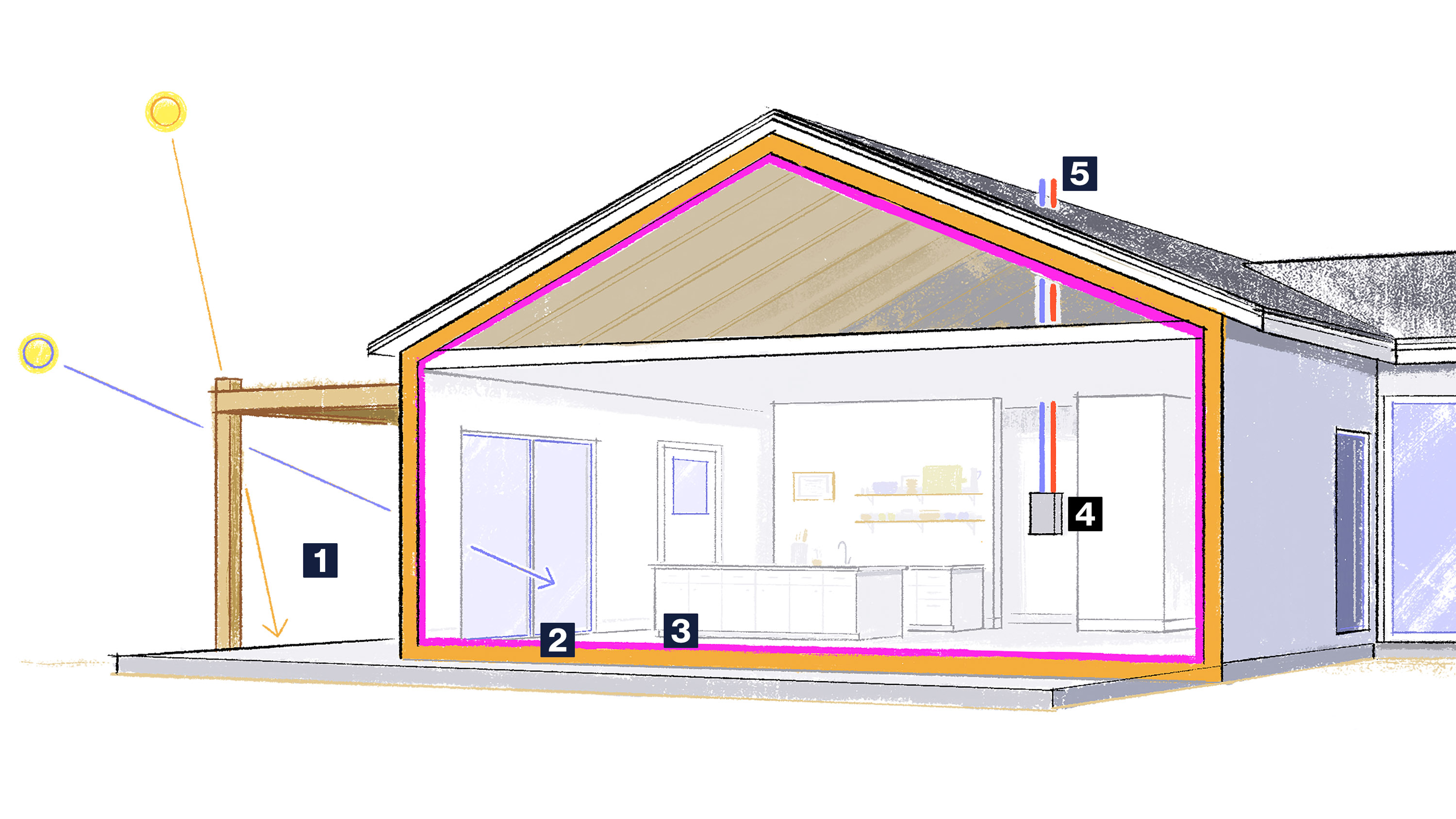
Is this the most energy-efficient way to build homes?
When engineers began designing an ultra-efficient home in the 1970s, they realized the trick wasn’t generating energy in a greener way, but using less of it. They needed to make a better thermos, not a cheaper coffee maker.
That idea helped inspire today’s passive-house standard: airtight buildings that can cut energy use by up to 90% through better windows, insulation, and ventilation.
A place for comfort, fun and distraction to brighten up your day. (Got any ideas? Drop me a line.)
+ Finally, someone built a gaming PC inside a microwave that runs DOOM. + Experience the rhythm of the city through this rapid-fire collage of urban photography. + Get a dose of pure cuteness as these tiny snow leopard cubs leave their den for the first time. + If you’re staring at a random assortment of groceries, SuperCook will find a recipe based on what’s already in your pantry.
Officials at Ecolab Life Sciences report that the company is expanding its bioprocessing business with the launch of a new bioprocessing applications lab (BPAL) in Dongtan, Korea. They say the goal is to provide biopharmaceutical manufacturers across Asia with better local access to downstream process development support.
The site is Ecolab’s first bioprocessing facility in Asia and joins an established applications network in the U.S. and U.K.
BPAL Korea supports process development from early-stage resin screening through studies designed to replicate commercial manufacturing conditions, according to Jenny Tan, vice president and general manager, Ecolab Life Sciences APAC and India. On-site scientists work alongside customers across Asia to help optimize chromatography steps, improve yield and productivity, and accelerate regulatory pathways, with the aim of reducing the need to ship resins and reference materials overseas for development work, she continues.
Asia has become one of the world’s most active biopharmaceutical manufacturing regions, with Korea, China, Japan, India, and Singapore all home to growing pipelines in biosimilars and monoclonal antibody processes that scalable downstream purification. With local technical support now in place, manufacturers across the region can shorten development cycles and maintain consistency with global operations while working to tight regulatory and cost targets, continues Tan.
“Biopharmaceutical manufacturers across Asia are under increasing pressure to scale with speed while meeting demanding regulatory and performance expectations,” she explains. “BPAL Korea strengthens our ability to work side by side with customers, bringing local expertise together with Ecolab’s global, integrated bioprocessing network.”
By combining local scientific support with Ecolab’s innovative Purolite resin portfolio, Ecolab’s new BPAL was created to help enable manufacturers to address process challenges earlier, reduce development risk, and advance programs with greater confidence as they prepare for scaleup, says Tan.


 resin portfolio, Ecolab’s new BPAL was created to help enable manufacturers to address process challenges earlier, reduce development risk, and advance programs with greater confidence as they prepare for scaleup, says Tan.