

As mental health research increasingly aims to generate societal impact, researchers operate at the intersection of innovation and ethical responsibility. Drawing on experiences from the cocreated NEON Young Norway Study on youth recovery narratives, this viewpoint identifies four ethical tensions that arise from the existing governance frameworks in youth digital mental health research: (1) balancing safeguarding against harm with youth participation, (2) protecting privacy without undermining authentic storytelling, (3) governing unpredictable outcomes of cocreated research, and (4) meeting ethical and legal standards while ensuring youth-friendly communication. These tensions highlight limitations in mental health research that adopts participatory and digital approaches, as this often struggles to accommodate iterative designs, narrative data, and cross-sector collaboration. We argue that responsible youth mental health research requires ethics to be understood as a dynamic, participatory practice that supports safe and equitable inclusion, rather than having a focus on risk prevention. Ethical governance, therefore, needs to evolve toward proportionate, context-sensitive approaches that can enable innovation while protecting young people’s rights, agency, and voices.
<img src="https://jmir-production.s3.us-east-2.amazonaws.com/thumbs/123af813428fc7e274490540157cb83a" />
Emotion Classification in Japanese Cancer Survivor Interview Narratives Using Sentiment Polarity and Plutchik Emotion Frameworks: Model Development and Evaluation Study
Background: Cancer survivors often experience complex and coexisting emotions throughout diagnosis, treatment, and posttreatment life. Emotion classification of patient narratives may help in understanding survivorship experiences; however, evidence remains limited for multidimensional classification using cancer survivor interview narratives. Objective: This study aimed to develop and evaluate natural language processing–based emotion classification models using Japanese cancer survivor interview narratives and to examine whether polarity and multidimensional emotion labels provide complementary perspectives. Methods: We analyzed verbatim transcripts from 15 cancer survivor interviews published by the Cancer Note, Nonprofit Organization. Survivor utterances were extracted, noninformative conversational elements were removed, texts were segmented at Japanese punctuation marks, and 5 consecutive sentences were grouped into 1 chunk. Two annotators labeled 1998 text chunks with 3-class sentiment polarity labels (positive, neutral, or negative) and multilabel Plutchik 8-emotion labels (joy, trust, fear, surprise, sadness, disgust, anger, and anticipation). Japanese BERT (Bidirectional Encoder Representations from Transformers) and LUKE (Language Understanding with Knowledge-based Embeddings) were fine-tuned to build a multiclass polarity classifier and a multilabel 8-emotion classifier. Performance was evaluated using precision, recall, -score, macroaveraged metrics, Micro- for polarity, and Hamming loss for multilabel classification. For comparison, the same architectures were fine-tuned on WRIME (writers’ and readers’ intensities of emotion for their estimation), a Japanese social media emotion dataset, and evaluated on Cancer Note texts as a domain-transfer analysis. The 95% CIs were estimated using bootstrap resampling with 1000 iterations. Results: Neutral was the most frequent polarity label, trust was the most frequent 8-emotion label, and anger was the least frequent emotion label. Label distributions were imbalanced, with most-to-least frequency ratios of 3.47 for polarity and 8.10 for 8-emotion labels. In the 3-class sentiment polarity task, interview-trained models outperformed WRIME-trained transfer models. Interview Text-BERT achieved the highest micro- of 0.696 (95% CI 0.676‐0.716), whereas Interview Text-LUKE achieved the highest macro- of 0.660 (95% CI 0.639‐0.682). In the 8-emotion multilabel task, Interview Text-LUKE achieved the highest macro- of 0.427 (95% CI 0.398‐0.453) and the lowest Hamming loss of 0.078 (95% CI 0.073‐0.082). WRIME-trained transfer models showed lower performance, particularly in the 8-emotion task. Sadness and trust co-occurred most frequently, suggesting that positive and negative emotional elements may coexist in the same narratives. Conclusions: This exploratory study suggests the feasibility of domain-specific emotion classification for Japanese cancer survivor interview narratives. Models fine-tuned on target-domain narratives generally outperformed WRIME-trained transfer models, although the best architecture differed by task and metric. Polarity labels and Plutchik 8-emotion labels provided complementary perspectives on complex and coexisting emotions in survivorship narratives. However, performance for rare emotions remained limited, and the models should be regarded as preliminary research tools rather than clinically actionable systems. Larger, more diverse, prospectively or externally validated datasets, imbalance-aware methods, and user-centered evaluation are needed before clinical translation.
<img src="https://jmir-production.s3.us-east-2.amazonaws.com/thumbs/c55302eeaf28f695d0c405aa15e4c529" />
Impact of an mHealth App on Digital Transformation: Randomized Clinical Trial on Strengthening Digital Skills in Older Women
Background: The rapid growth of digital technologies has transformed daily activities, health management, and social interaction. Older adults, however, continue to face challenges in adopting and using these tools due to limited previous exposure, age-related sensory or cognitive decline, and low digital confidence. In Brazil, internet access among adults aged 60 years or older has increased, yet digital exclusion persists, worsening health disparities. Mobile health (mHealth) apps offer a potential strategy to promote digital inclusion, strengthen digital competencies, and support healthy aging. Nonetheless, studies show that culturally adapted, multidisciplinary interventions for this group remain scarce and are rarely assessed through both quantitative and qualitative methods. Objective: This study aimed to evaluate the impact of a lifestyle mHealth app on improving digital skills, as well as to analyze the level of satisfaction and usability of the app. Methods: In this mixed methods study, a 14-week randomized clinical trial was conducted in Ribeirão Preto, São Paulo, Brazil. A total of 40 older adult women were randomized into an intervention group (n=21), who used the mobile app, and a control group (n=19). Digital competencies were measured before and after the intervention using a semistructured questionnaire based on the (MCDMSênior; Digital Competency Model for M-learning with a focus on older adults) framework, covering 6 domains—basic technology use, internet navigation, mobile app use, online research, digital communication, and usage of digital resources. Additionally, satisfaction with the educational content was evaluated using the suitability assessment of materials, and system usability was assessed using the System Usability Scale. Qualitative data were collected through semistructured, in-person interviews conducted immediately after the intervention with all intervention participants. Interviews explored perceptions of the app’s usability, satisfaction with its content, barriers, and facilitators to engagement, and perceived changes in digital skills. All interviews were audio-recorded, transcribed, and analyzed thematically by 2 independent researchers using an inductive coding approach. Results: Postintervention analyses revealed significant differences in specific digital competencies. The intervention group demonstrated a moderate improvement in internet navigation skills, while gains in basic technology use and digital communication were minimal. Conversely, the control group exhibited moderate improvement in basic technology skills and lower effects in online research and digital communication. Overall, satisfaction with the educational content was low, and usability was rated as average. Qualitative findings indicated that, although participants valued the clarity of navigation and cultural relevance, persistent age-related fears and insecurities in using digital technologies were reported. Participants highlighted the need for more personalized guidance, ongoing motivational support, and technical adjustments to improve usability and engagement. Conclusions: mHealth apps can effectively enhance certain digital competencies in older women, particularly internet navigation, but improvements in content suitability and usability are needed. Refinements in design and tailored support are essential to overcome age-related barriers and foster digital inclusion. Trial Registration: Brazilian Registry of Clinical Trials RBR-6wgkzs8; https://ensaiosclinicos.gov.br/rg/RBR-6wgkzs8
<img src="https://jmir-production.s3.us-east-2.amazonaws.com/thumbs/0c5daf33accff9728a4940d3c44aa93d" />
Institutional Member Updates: Summer 2026
Institutional Members are clinics and programs in the US and around the globe that offer residential and/or intensive treatment for OCD and related disorders, are specialty outpatient clinics with a large staff dedicated to treating OCD, or provide low-cost treatment options through research studies.
Below are quarterly updates from our Institutional Members organized alphabetically. Click the (+) to open each menu and read updates and find contact information for clinics near you:
Do you work at a residential program, intensive outpatient program (ITP), or specialty outpatient clinic and looking to advertise your services? Learn more about becoming an Institutional Member and having your program updates included below!
The post Institutional Member Updates: Summer 2026 appeared first on International OCD Foundation.
What Are Intrusive Thoughts?
When a child confesses a frightening thought that seemed to come out of nowhere — “What if I hurt someone with this knife?” “What if mom dies in a car accident?” “What if germs get into this paper cut and I die of an infection?” — you can both find it confusing and disturbing. But in most cases these intrusive thoughts are not evidence of a problem.
Intrusive thoughts are unwanted ideas, images, or urges that pop into the mind seemingly out of nowhere. They might feel embarrassing, violent, sexual, or just plain strange — and they feel completely out of character, which is exactly why they’re so upsetting. “An intrusive thought is a lot like your brain sending junk mail,” says Theresa Welles, PhD, a clinical psychologist and director of the Bubrick Center for Pediatric OCD at the Child Mind Institute. “Just because it shows up doesn’t mean it’s important or true or something you even want.”
It also doesn’t necessarily mean that a child has OCD or another mental health disorder. Though intrusive thoughts are associated with OCD — in which unwanted thoughts (called obsessions) drive children to perform rituals (called compulsions) to alleviate them — for many children they are just fleeting thoughts. It’s only when kids become unable to let them go that they are concerning. Another way to think about it, says Dr. Welles, is that “the brain’s job is to generate thoughts, the same way an apple tree’s job is to produce apples. Not every apple is perfect — some are misshapen or wormy. And not every thought is meaningful or worth paying attention to. Having a thought is not the same as wanting it or intending to act on it.”
Who has intrusive thoughts
“Everyone who has a brain has them,” says Caitlyn Downie, LCSW, director of trauma and resilience at the Child Mind Institute. “It’s part of the human existence.” A child might suddenly imagine something terrible happening to a parent, or a teenager might have a violent or sexual thought that feels shocking or shameful. Most of the time, these pass quickly — unpleasant, but easy enough to brush aside.
That’s the key distinction: not the thought itself, but what happens after it. The concern isn’t that the thought appeared — it’s how the child responds, how often it returns, and whether it starts getting in the way of daily life.
For some children — particularly those who are anxious, perfectionistic, or who have OCD — intrusive thoughts become “sticky.” Instead of passing through, the thought snags. The child starts paying attention to it, trying to figure it out or make it go away, which only makes it feel more powerful. “Young people lack the experience to recognize that thoughts aren’t the same as intentions, desires, or actions,” Dr. Welles says. “The thoughts feel alarming. So the child pays more attention, and the more attention they give it, the more often it returns.” That loop of fear and self-doubt is what parents and clinicians need to be alert to.
When should parents be concerned?
Many children are too ashamed or frightened to describe what’s actually going on, so parents may never hear about the thought itself. Instead, changes in behavior are often the first clue. Look for signs like:
- Increased distress, irritability, or moodiness
- Avoidance of something that wasn’t previously a problem
- Trouble concentrating or sleeping
- Excessive guilt or repeated reassurance seeking
- Rituals like checking, counting, washing hands, or going through routines in a specific way
It’s worth seeking professional support when intrusive thoughts are frequent and intense, hard to shake, causing real distress, or getting in the way of school, friendships, or daily routines.
Why intrusive thoughts feel so frightening
When an intrusive thought appears, it can set off the body’s alarm system — the same ancient survival mechanism that helped people run from danger or fight it off. In anxiety and OCD, that alarm bell rings when there’s no real emergency. The child has a thought, the body reacts with panic, and the child assumes the thought must be important because it feels big and important.
Children may also fall into what clinicians call thought-action fusion. “That’s the mistaken belief that having a thought makes it more likely to happen,” explains Dr. Welles, “or that it reveals something terrible about who they are.” A child who thinks, “What if I hurt my baby brother?” may become convinced the thought means they secretly want to — but intrusive thoughts are often the precise opposite of what a child would ever want. Paradoxically, Dr. Welles says, “for most people with anxiety disorders and OCD, these thoughts are the actual opposite of what they would ever do.”
How parents can help
The first thing to do is stay calm — harder than it sounds if the thought is violent, sexual, or taboo. Children look to their parents to gauge whether something is truly dangerous, so if you look horrified, your child takes that as confirmation the thought is something to fear.
When a child shares an intrusive thought, Downie suggests responding with warmth and curiosity: “Say something like, ‘I appreciate you telling me — it sounds like that was really scary.’ It also helps to normalize it: ‘A lot of people have thoughts they don’t particularly like.’” Some other responses that can help:
- “That sounds really upsetting — I’m glad you told me.”
- “Having a thought doesn’t mean you want it or that it’ll ever happen.”
- “You don’t have to figure this out right now.”
The goal is to help your child feel less alone and less ashamed, without treating the thought like a five-alarm emergency. And do your best to avoid reassurance. Reassuring the child about the contents of a specific thought (for example, responding to a child who asks, “Are you sure I’m a good person?” with “Yes, you’re a good person”) can actually make things worse, especially in kids with OCD. They feel very temporary relief but then the thought creeps back and they need more reassurance. It becomes a cycle. Instead try: “I know this feels awful. And I know you can handle it.”
It also helps to redirect the child to something concrete: getting dressed, eating breakfast, watching a show, texting a friend. With younger kids, you might guide them in doing slow breaths or suggest they move to another room so they distract themselves from the thought. With teens, you might mean teach them to resist the urge to Google their fears or thoughts, confess, or ask the same question over and over again. “The idea,” Downie says, “is to validate the feeling without validating the fear. You’re saying: ‘I hear you, this is hard, and you can get through it.’”
What can cause intrusive thoughts?
Intrusive thoughts aren’t a diagnosis on their own — they’re a symptom that can show up across a range of conditions, or in children who have no diagnosis at all. Disorders they may be associated with include:
- OCD: The most closely associated condition. Common themes include harm, contamination, sexual thoughts, and religious or moral fears.
- Generalized anxiety: Tends to involve repetitive “what if” worries about everyday concerns — school, safety, family, the future.
- Social anxiety: Brings intrusive thoughts about embarrassment, rejection, or being judged by peers.
- PTSD: Can involve intrusive memories, images, or sensations tied to a traumatic event. “A child who has experienced trauma may worry about being harmed again or even about harming someone else,” Downie notes, “but that doesn’t mean every child with trauma will have intrusive thoughts.”
- Depression: Often involves intrusive thoughts that fit a negative self-image: I’m worthless. I’m a burden. I’m a bad person.
- Autism spectrum disorder: Repetitive thoughts often center on a special interest and aren’t typically unwanted or distressing the way OCD thoughts are — though they can look similar from the outside.
- Psychotic disorders: Young people with psychosis tend to experience intrusive thoughts as fixed and real, without the self-awareness that typically accompanies anxiety-driven ones. Psychotic disorders such as schizophrenia are rare in children, though early signs can appear in the teenage years.
How intrusive thoughts are treated
Treatment depends on what’s driving the thoughts and how much they’re disrupting the child’s life:
- For OCD, the gold-standard treatment is exposure and response prevention (ERP), a specialized form of cognitive behavioral therapy (CBT) where children practice sitting with intrusive thoughts without doing compulsions. Over time, they learn to tolerate uncertainty and discover that the thought, however uncomfortable, isn’t actually dangerous.
- For anxiety, the same treatments are helpful. CBT helps children understand the connection between thoughts, feelings, and behaviors, and ERP helps kids learn to tolerate the anxiety these thoughts generate, and it gradually diminishes.
- For trauma, treatment may include trauma-focused CBT. Mindfulness, DBT skills, and breathing exercises can also help regulate the nervous system.
- Family involvement matters a great deal. “Parents often need help learning how to respond without accidentally feeding the anxiety cycle,” Dr. Welles says. SPACE (Supportive Parenting for Anxious Childhood Emotions) is an evidence-based approach that helps parents reduce accommodation and support their child’s brave behavior instead.
- For moderate-to-severe OCD or anxiety, medication — typically an SSRI — may also be worth discussing with a psychiatrist or pediatrician.
Helping your child trust their own mind
One of the hardest things about intrusive thoughts is that they can make children afraid of their own minds — convinced that every thought needs to be examined or explained away before they can relax. But no one gets to have only pleasant, well-behaved thoughts.
What children can learn is that a thought can be upsetting without being meaningful, loud without being true, and it can pass through without becoming a verdict on who they are. As parents, the most powerful thing you can offer is a calm, steady presence — taking it seriously without treating it as a catastrophe. When your child sees you aren’t panicked, they get to borrow some of that calm for themselves.
Frequently Asked Questions
Intrusive thoughts are unwanted ideas, images, or urges that pop into your mind unexpectedly. They often feel upsetting or out of character, but they’re essentially “junk mail” from the brain — not meaningful or important.
Yes, everyone can have them. Most children (and adults) experience intrusive thoughts at times, and in many cases they pass quickly without causing problems.
They’re a normal byproduct of how the brain works, but they can become more frequent or “sticky” in kids who are anxious, perfectionistic, or dealing with conditions like OCD or trauma. Paying extra attention to the thought can also make it return more often.
No. Having an intrusive thought doesn’t mean you want to act on it or that it reflects who you are. In fact, these thoughts are often the opposite of what someone would ever want or do.
The post What Are Intrusive Thoughts? appeared first on Child Mind Institute.
Claude Science is Here, Antibiotics Designed by Text Prompt Among Applications
Anthropic has released Claude Science, an AI workbench for scientists that consolidates fragmented research tools, including over 60 scientific databases and connectors pre-configured for genomics, proteomics, structural biology, and more, into a single reasoning layer. The platform joins an increasingly crowded ecosystem of tech platforms specialized for biology and aims to accelerate scientific discovery by making domain expertise more accessible.
Anthropic’s life science partners are delivering applications. Basecamp Research is targeting global public health, where drug-resistant infections play a role in nearly five million deaths per year. The London-based team has announced that its antibiotic design and vaccine target prediction EDEN models will now be available through Claude Science.
A metagenomic foundation model, EDEN demonstrated a 97% success rate when designing functional peptides with high potency against World Health Organization (WHO) critical-priority and multidrug-resistant pathogens. The work was done in collaboration with César de la Fuente, PhD, presidential associate professor at the University of Pennsylvania.
In a Claude Science demo, Oliver Vince, PhD, co-founder at Basecamp, uploaded a sample patient microbiology report. When given a simple natural language prompt, the platform designed peptides, predicted their efficacy, and provided a shortlist of candidates most likely to succeed in experiments in minutes.
While generating human-ready antibiotics at the click of a button is still a step away, Vince said democratizing these tools is a powerful first step, particularly for researchers in regions where accelerated computing infrastructure is not readily accessible.
“Most models require you to be a computational scientist,” Vince told GEN Edge. “Now, potentially any clinician in the world can chat with Claude and design an antibiotic that may work.”
“From a strategic perspective, you want the people with the most agency to solve the problem,” added Phil Lorenz, PhD, CTO at Basecamp. “Not the model builders who are two or three steps removed.”
Full stack
Founded in 2019, Basecamp has spent its initial years building a full computational stack spanning data, models, and therapeutic assets.
In addition to antibiotics and vaccines, the company’s U.S. office, based in Cambridge and led by Jonathan Finn, PhD, Basecamp CSO and former CSO of Tome Biosciences, has fine-tuned EDEN for programmable gene insertion. The approach places large therapeutic DNA sequences at precise locations in the human genome, expanding upon CRISPR-based approaches that use small edits to address a limited number of indications.
EDEN’s generalizability is enabled by training on BaseData, the company’s proprietary dataset composed of 9.8 billion protein sequences collected over 200 diverse and extreme locations, including thermal springs, polar ice, and high-altitude plateaus, across more than 30 countries. The database provides a 10-fold expansion of known protein diversity when compared to all public databases combined.
In March, the team published the compounding advantages of BaseData on model performance in a technical report on scaling laws for metagenomics. Basecamp is steadily pushing forward that data diversity through the Trillion Gene Atlas, a partnership with Anthropic, NVIDIA, PacBio, and Ultima Genomics that aims to scale BaseData 100-fold over the next two years.
Vince emphasizes that model deployment and integration into real-world workflows will be critical for these models to reach their full potential. Basecamp anticipates releasing more applications over the next year.
“I think it will surprise people what these models can do,” he said.
The post Claude Science is Here, Antibiotics Designed by Text Prompt Among Applications appeared first on GEN – Genetic Engineering and Biotechnology News.
Roundtables: Longevity’s Next Frontier: “Reprogramming” Your Body
Listen to the session or watch below
Billions of dollars are flooding into efforts to reverse aging as scientists explore ways to return cells to a younger state. But how far off are these experimental treatments? Will they really work? Watch a conversation exploring longevity’s new focus.
Speakers: Mary Beth Griggs, science editor and Jessica Hamzelou, senior biotechnology reporter
Recorded on June 30, 2026
Related Stories:
iPSC-Derived Retinal Endothelial Cells Offer Platform for Studying Diseases
Biomedical engineers at Duke University have for the first time used induced pluripotent stem cells (iPSCs) to grow specialized blood vessel cells critical to retinal health.
When injected into mouse models of retinal disease, these “retinal endothelial cells” (iRECs) integrated into the damaged tissue to regenerate blood vessels and restore retinal function. The team also demonstrated these cells’ ability to form functional retinal vascular tissue in a lab-grown environment, providing a pathway to model and research various eye diseases.
The results point toward the potential of using these retinal cells and models to develop new methods of impactful vision loss treatments and eye disorder research. “Retinal vascular diseases affect millions of people in the U.S., but our understanding remains limited, hindering our ability to discover and develop new therapeutics,” said Sharon Gerecht, PhD, the Paul M. Gross Distinguished professor and chair of Biomedical Engineering at Duke. “Using human stem cells, we generated the cells found in retinal blood vessels, paving the way for new therapeutic approaches.”
Gerecht is senior and corresponding author of the researchers’ published paper in Nature Biomedical Engineering, titled “Derivation of functional retinal endothelial cells from human pluripotent stem cells for therapeutics and modeling.” In their report the authors suggested that their iREC differentiation strategy will “… advance cell therapy and disease modeling, accelerating the discovery of treatments for retinal microvascular diseases.”
The old saying that the eyes are windows into the soul is more accurate than one might think. Neurons from the retina—the back part of the eye that detects light—extend directly to the brain, technically making the eyes part of the central nervous system.
Also like the brain, the retina has a blood barrier that strictly controls what gets in and out including oxygen, nutrients, water and pharmaceuticals. While this barrier keeps the retina healthy and relatively protected from disease-causing agents, it also makes treating the retina difficult. “Retinal tissue has the highest energy and oxygen usage in the body due to the retina’s intense and continuous neuronal activity,” the authors further explained. “This demand leads to a crucial reliance on the inner blood–retina barrier (iBRB) to maintain ocular homeostasis.”
The barrier is formed by blood vessel tissue comprising a tight network of retinal endothelial cells, which form the inner layer of blood vessels, in concert with other specialized cells called pericytes and astrocytes. “Retinal endothelial cells (RECs) in the iBRB are continuous endothelial cells (ECs) that form tight junctions to regulate the diffusion of small molecules, such as ions and water, across their cell–cell interface,” the investigators continued. The specificity of these cells and the fact that they do not form in other areas of the body make the complex tissue difficult to heal or to grow from scratch.
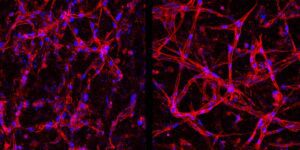
“When this specialized blood vessel tissue begins to break down, it can cause a lot of different diseases that lead to vision loss,” said Parker Esswein, a PhD student working in the Gerecht laboratory and co-first author of the paper. “While there are sources of retinal endothelial cells, being able to grow a continuous supply from scratch could offer many advantages for those working in the field.”
These retinal endothelial cells are currently collected and grown from real patients, making them relatively expensive with a limited supply. “A renewable source of human iBRB endothelium is thus vital for advancing eye research and treatment development,” the team noted in their paper.
To expand access, reduce cost and control variability, the Gerecht lab wanted to see if they could grow them from iPSCs. These are essentially mature adult cells reprogrammed to become primal versions of themselves that can then grow into a wide variety of other cell types.
To do this, Esswein and Ying-Yu Lin, PhD, a former PhD student in Gerecht’s lab, took commercial iPSCs and used a well-established procedure to get them to grow into common endothelial cells that form the inner layer of most of the body’s blood vessels. The researchers then used a specialized cocktail of growth factors to coax the cells into becoming the specific type of endothelial cells found in the retina. “… we differentiated human induced pluripotent stem cells into retinal endothelial cells (iRECs) via the Wnt–β-catenin pathway, namely Norrin–Frizzled4 signaling,” they explained.
Once successful, the researchers put their development to the test. In benchtop experiments, the team was able to get the iRECs to form the same networks and structures that they do within the body. The team then subjected these lab-grown tissues to low oxygen and high glucose levels, which are detrimental conditions often seen within real people. These conditions are fundamental causes of diabetic retinopathy (DR), the leading cause of vision loss in working-age people in the United States, and caused the tissue barrier to break down just like it does in patients. They wrote in summary, “Overall, we were able to robustly recapitulate the DR phenotype in 2D and 3D with our iRECs, exemplifying their ability to be utilized for in vitro disease modeling and to elucidate aberrant pathways and therapeutic targets.”
The researchers then tried their lab-grown cells as a therapy for mouse models with weak, unstructured retinal blood vessels. When injected into the mice before any actual vision loss occurred, these cells successfully integrated into the existing tissue and helped develop strong blood vessels with strong barriers. “When injected into oxygen-induced retinopathy mice, iRECs integrated into the host vascular network and revascularized the ischemic eye, rescuing the tissue,” they stated.
“The tests showed that these lab-grown cells have promise for preventative treatments, especially since they should be easier and cheaper to obtain using our technique,” Esswein said. “And while our benchtop experiments did not attempt to model a wide variety of specific eye diseases in these studies, we’re confident we can create excellent human tissue models in the lab to help better understand these diseases and uncover therapies.”
Moving forward, the researchers are planning to explore these potential uses for their retinal endothelial cells both in their laboratory and through emerging industry partnerships. The group also has a patent pending that covers both the stem cell-based therapeutics and in vitro modeling for drug discovery and testing. In their paper they concluded “Our study establishes functional human iRECs and microphysiological iBRB models that facilitate mechanistic studies aimed at identifying therapeutic targets and promoting the revascularization of injured retinas, thereby supporting treatment advancement.”
The post iPSC-Derived Retinal Endothelial Cells Offer Platform for Studying Diseases appeared first on GEN – Genetic Engineering and Biotechnology News.
New Agentic Capabilities for Tasks Across the Complete Research Workflow
Officials at Elsevier say the company is expanding LeapSpace, a research-grade AI workspace, with new agentic capabilities that help “researchers carry out an even greater range of tasks within their complex workflow to drive better outcomes with confidence.”
Designed specifically for the end-to-end research workflow, LeapSpace was created to accelerate discovery, help researchers calibrate the strength of the evidence, and support critical thinking. LeapSpace draws on 20+ million full-text peer-reviewed articles and books from Elsevier and over 1,000 new content licensing partners, including Sage Publishing, Emerald Publishing, IOP Publishing, and NEJM Group. as well as 100+ million scientific records from 7,000+ publishers on Scopus.
Results are grounded in peer-reviewed literature, citations are traceable to sources, Trust Cards help researchers calibrate the strength of evidence, and the researcher remains in control, with every recommended change requiring approval, notes an Elsevier spokesperson.
General-purpose AI tools can generate text, summarize articles and automate some tasks. But researchers require something more demanding: the latest trusted peer-reviewed content, verifiable citations, transparent reasoning, research integrity safeguards, and enterprise-grade security and privacy, according to Stuart Whayman, president, corporate markets, Elsevier, adding that this is what LeapSpace is built for.
Built with research-grade AI, LeapSpace is already delivering results for thousands of researchers around the world: 97% report time savings, with more than half saving over 50% of their research time, points out Whayman, LeapSpace is now extending support to writing—the task researchers most want AI to help with: more than half find writing clearly and concisely to convey complex ideas a challenge, rising to 60% among students and early-career researchers.
The post New Agentic Capabilities for Tasks Across the Complete Research Workflow appeared first on GEN – Genetic Engineering and Biotechnology News.
Use of a Conversational Agent for Training Mental Health Professionals in Suicide Safety Planning: Pilot Feasibility and Acceptability Study
Background: Safety planning is recognized as one of the most effective interventions for reducing suicidal behaviors. The quality of safety plans strongly depends on professional training, and traditional methods, such as role-playing, are time-consuming and offer limited opportunities for repetition across diverse patient profiles. Generative artificial intelligence (GenAI) may provide innovative solutions by offering accessible, flexible, and realistic training environments. Objective: This pilot study aimed to evaluate the acceptability and feasibility of a GenAI-based simulator designed to train mental health professionals in safety planning. Methods: Twenty nurses and nursing assistants from psychiatric units in a French university hospital participated in a pre-post, single-session evaluation. After self-rating their ability, competence, and willingness to manage patients experiencing suicidal ideation, participants interacted individually with the text-based simulator for 20 minutes to perform a safety plan with a chatbot, then completed postsimulation acceptability items, and open-ended feedback. Composite scores were computed: acceptability (eg, helpfulness; 0‐40), realism (eg, looking like real interaction with patient; 0‐20), and challenge (eg, emotional challenge; 0‐30). Pre-post changes were tested (Wilcoxon signed-rank test), and age-group comparisons were performed. Results: Acceptability was high (mean 31.9/40, SD 5.3; median 32, IQR 7), realism moderate-to-high (mean 15.1/20, SD 4.1; median 15, IQR 5.25), and challenge manageable (mean 17.0/30, SD 8; median 18, IQR 12.5). Participants rated usefulness (mean 7.65/10, SD 1.57; median 8, IQR 1.57), perceived learning (mean 7.6/10, SD 1.79; median 8, IQR 2), recommendation to use the chatbot for training (mean 8.3/10, SD 1.59; median 9, IQR 2.25), and feedback quality (mean 8.35/10, SD 1.27; median 8.5, IQR 1.25) favorably. Willingness to actively manage patients experiencing suicidal ideation significantly increased postsimulation (.03). Younger participants reported higher acceptability (.04) and realism (.03). Participants reported minimal concerns regarding the simulator’s use. Conclusions: This pilot study demonstrates that a GenAI-based simulator for safety planning is feasible and highly acceptable among experienced mental health professionals. The findings are promising and warrant larger, controlled trials to assess impacts on training effectiveness and patient outcomes.
<img src="https://jmir-production.s3.us-east-2.amazonaws.com/thumbs/662a4ae716b1ea24241b30b661b4ecb7" />