Interventions: Behavioral: Individual Physiotherapy; Behavioral: Group Movement Awareness; Behavioral: Group Psychotherapy; Other: Nutritional Recommendations
Sponsors: Charles University, Czech Republic; Institute for Clinical and Experimental Medicine; Faculty Hospital Kralovske Vinohrady; Czech Ministry of Education
A journey that has lasted more than 30 years for Sangamo Therapeutics, a pioneering gene editing biotech company in the Bay Area, has reached an unwanted milestone as the company filed for Chapter 11 bankruptcy protection.
Concurrent with its starting voluntary Chapter 11 proceedings in the U.S. Bankruptcy Court for the District of Delaware, Sangamo simultaneously entered into two separate asset sale agreements: Eli Lillyhas agreed toacquire Sangamo’s capsid delivery platform, zinc finger nuclease (ZFN) platform, modular integrase (MINT) platform, and prion disease program, ST-506. Astellas Pharma has agreed to take over Sangamo’s Fabry disease program, isaralgagenecivaparvovec(ST-920).
To clinch the deals, Lilly and Astellas have agreed to be “stalking horse” bidders when Sangamo’s assets are sold in a future bankruptcy court auction. The stalking horse bids do not include the clinical-stage ST-503 program to treat chronic neuropathic pain, the giroctocogene fitelparvovec program to treat hemophilia A, and Sangamo’s cell therapy and regulatory T cell (Treg) assets. Sangamo said these are expected to remain available to interested bidders at the auction.
“We believe this process provides a clear framework to pursue value-maximizing transactions,” said Sandy Macrae, Sangamo’s CEO. “Our priority is to execute a disciplined and efficient saleprocess while supporting all ofour stakeholders. We are also pleased to have signed agreements with two large pharmaceutical companies to serve as stalking horse bidders in the process, underscoring the strategic interest in our assets.”
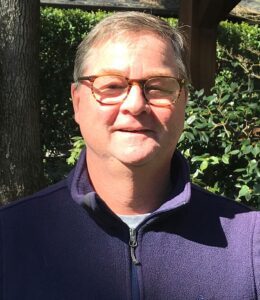
Ed Lanphier, founder, Sangamo Therapeutics
Founded by Ed Lanphier in 1995, Sangamo became an early developer of zinc-finger nucleases (ZFNs), one of the first established gene editing platforms. In 2005, Sangamo scientists led by Fyodor Urnov, PhD, Phil Gregory, PhD, and Mike Holmes, PhD, demonstrated the use of ZFNs to engineer a base substitution in human DNA. The term “genome editing” was born around that report. Sangamo’s technology became the first gene editing platform to enter the clinic, initially for patients with human immunodeficiency virus (HIV), followed by a series of rare genetic diseases.
More recently, the biotech branded itself as a “genomic medicine” company. In 2023, Sangamo trumpeted promising clinical data from its first-in-human Phase I/II STAAR trial (NCT04046224) in Fabry disease. All 25 patients dosed in the STAAR study have continued to show sustained, elevated α-Gal A levels, up to three years for the longest-treated patient. However, later that year, Sangamo deferred additional spending on planning a future Phase III program for ST-920, absent a collaboration partner or additional external funding.
Sangamo made the move as part of a restructuring that included a similar deferral of spending on chimeric antigen receptor-modified regulatory T-cell (CAR-Treg) therapies, the elimination of 40% of its U.S. workforce, and the narrowing of its pipeline. Sangamo said it was refocusing its spending on developing epigenetic regulation therapies treating neurological diseases, as well as novel adeno-associated virus (AAV) capsid delivery technologies.
In 2024, Sangamo shares surged 69% after it reached alignment with the FDA on a regulatory pathway to Accelerated Approval for ST-920 in advance of submitting a biologics license application (pre-BLA). However, Dennis Ding, an equity analyst with Jefferies, argued that the news posed little threat to the developer of the sole marketed drug for the rare disorder, Galafold® (migalastat), marketed by Amicus Therapeutics.
Last month, Sangamo said it remained in the process of completing a rolling BLA submission to the FDA for Accelerated Approval of ST-920 based on the mean annualized estimated glomerular filtration rate (eGFR) slope at 52-weeks across all dosed patients in the study. Two-year eGFR data may serve as confirmatory evidence for traditional approval, Sangamo said the FDA affirmed.
Sangamo was also advancing the Chemistry, Manufacturing and Controls (CMC) module, ahead of completion of the rolling BLA submission for ST-920, which the company said it expected this summer (subject to the ability to secure adequate additional funding), while it was continuing to commercialize the Fabry gene therapy.
In reporting first-quarter results, Sangamo said that it had submitted preclinical and clinical modules for review, while also submitting its antibody assay companion diagnostic, designed to screen patients for eligibility with ST-920, to the FDA’s Center for Devices and Radiological Health (CDRH).
Sangamo reported a $31-million net loss on revenue that plunged 78% year over year to $1.4 million from $6.4 million. Sangamo said $5 million of that decrease reflected Pfizer’s termination early last year of its collaboration with Sangamo to develop a hemophilia A gene therapy, giroctocogene fitelparvovec.
Speaking several years ago with The CRISPR Journal, a peer-reviewed journal and sister publication of GEN, Sangamo founder Edward Lanphier reflected on the company’s bright beginnings. In 1994–95, he recalled, he became aware of research being done by Jeremy Berg, PhD, and Srinivasan Chandrasegaran, PhD, on engineering zinc finger proteins (ZFPs).
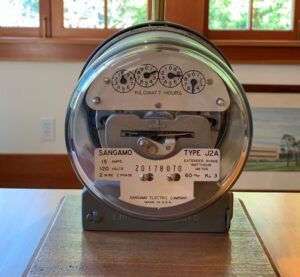
A watt-hour meter, an electric usage measuring device designed and patented by the great-grandfather of Sangamo Therapeutics founder Ed Lanphier
“While it was certainly unclear what making novel DNA-binding proteins might do, novel DNA sequences represented the other half of this equation—an agnostic vector plus a platform for developing novel transgenes. I became quite interested in that, and thus in starting Sangamo,” Lanphier remembered.
After founding Sangamo in 1995, Lanphier joined the company full-time two years later. Sangamo’s name was derived from some fascinating family history—Lanphier’s great-grandfather, a Yale-educated electrical engineer, founded a company in Sangamon County, IL, during the 1890s.
He designed and patented “the watt hour meter—the thing that sits on the side of buildings and goes around and around recording electricity,” Lanphier recalled. The Sangamo Electric Company manufactured various electronic components before being sold in the 1970s to Schlumberger.
Lanphier remembered “this incredibly cool logo from Sangamo Electric. I asked my dad, ‘‘What do you think?’’ He said, ‘‘That would be great!’’ And so, I started Sangamo Biosciences.”
While ZFNs showed immense promise as a commercial gene editing platform, they were difficult and expensive to manufacture. The dramatic arrival of CRISPR in 2012–13 quickly pushed ZFNs onto the fringes of the clinical gene editing space.
“When the [gene editing] movie is written, I know it is going to focus exclusively on the Broad and Berkeley and Charpentier and their work. But it is completely unfair—not to me but to Fyodor and Ed [Rebar] and Philip and Mike Holmes and Jeff Miller and the dozens of people who did create this field.”
Lanphier was asked why Sangamo never joined the CRISPR revolution a decade ago. “My perspective was always that [CRISPR] is bacterial—it is nonspecific, it is immunogenic. It’s a great research tool. It’s going to give a lot of visibility to genome editing. When people actually want to use it therapeutically, that’s when they will end up talking to us.”
Alas for Sangamo, that eventuality did not materialize.
Background: Leisure-time physical activity (LTPA) participation among Chinese college students remains insufficient despite growing public health concerns regarding sedentary lifestyles and obesity. Social media platforms have increasingly become important channels for delivering social support related to physical activity (PA); however, different dimensions of social support on social media may exert distinct psychological influences on exercise intentions. Objective: Guided by the theory of planned behavior, this study aimed to examine the direct and indirect relationships between different dimensions of social support on social media and Chinese college students’ intentions to engage in LTPA. Methods: A cross-sectional online survey was conducted among undergraduate and graduate students from a comprehensive university in East China between February and June 2022. A total of 310 valid responses were analyzed using structural equation modeling in R. Three dimensions of social support on social media, including companionship support, informational support, and self-esteem support, were examined as predictors of LTPA intention, with the theory of planned behavior constructs (attitude, subjective norms, and perceived behavioral control) modeled as mediators. Demographic characteristics, BMI, social media use, and prior PA behaviors were included as covariates. Results: Companionship support demonstrated the strongest positive association with LTPA intention, including both a direct effect (β=.348; =.005) and an indirect effect through attitudes toward PA (β=.286; =.002). Self-esteem support also showed a significant positive indirect association with LTPA intention via attitude (β=.138; =.02). In contrast, informational support demonstrated a significant negative indirect effect on LTPA intention through attitude (β=−.291; <.001). Subjective norms and perceived behavioral control did not significantly mediate the relationships between social support dimensions and LTPA intention. The findings suggest that companionship-oriented interactions on social media may strengthen positive exercise attitudes, whereas excessive or low-credibility informational content may undermine exercise motivation. Conclusions: Different dimensions of social support on social media play distinct roles in shaping Chinese college students’ intentions to engage in LTPA. Social media–based PA interventions should prioritize companionship and esteem support while improving the credibility, personalization, and quality of informational support to reduce potential negative effects associated with misinformation and information overload.
It’s somewhat surprising that he can choose just one. He’s the person spellers rely on to confirm pronunciations and answer questions about the roots of the words they’re given at the Scripps National Spelling Bee—arguably the world’s most prestigious competition of its kind. The story of how the word earned the top spot on his personal list may well mark the beginning of his unique career path as both a linguist and a Greek Orthodox priest.
In third grade, Sietsema ventured to a garage sale at a friend’s house with 50 cents in his pocket and picked out three books that struck his fancy. Although they were priced at 50 cents each, his friend’s mother said the books he’d chosen were on special and sent him home with all three, including a collection of Edgar Allan Poe stories called Masterpieces of Mystery. Knowing it contained macabre tales like “The Tell-Tale Heart,” his own mother told him he’d need to wait a few years before reading it. Naturally, he started it right away.
As he read “The Unparalleled Adventure of One Hans Pfaall,” Sietsema was baffled by the main character’s description of arriving at the moon in a balloon. Pfaall reported tumbling into a crowd of people who were “eyeing me and my balloon askant, with their arms set a-kimbo.” Sietsema had never encountered the word akimbo (with or without a hyphen) and asked his parents what it meant. They didn’t know, and it wasn’t in the family’s dictionary. The question also stumped his teachers, and the dictionaries in his classroom and the school library were no help either. “For years, I didn’t know what this word meant,” Sietsema says. It stuck in his mind that there was a word out there that he, his parents, and his teachers didn’t know. He thinks it wasn’t till he got to college that he finally found a dictionary with the answer: The moon dwellers in Poe’s story had been standing with their hands on their hips, elbows turned outward.
“I credit that puzzle with getting me into dictionaries and being curious about etymology,” he says. It kindled a fascination with words—and an abundance of curiosity—that would shape his life’s trajectory and work.
Growing up in Grand Rapids, Michigan, Sietsema attended a Dutch Reformed Christian school and recalls taking part in only one spelling bee, in second grade. It was in the 1970s, when everyone was hooked on phonics—so he overthought the sounding-it-out implications when asked to spell of. “I spelled it U-V, and of course, I was wrong,” he says.
At the time, he thought he probably wanted to work in the church—when he painted himself as an adult for a class project, he dressed his grown-up self in a cassock. But after taking a class in nuclear chemistry at the local junior college in high school, he decided his backup plan was to become a nuclear engineer. So when he went to the University of Michigan, he enrolled in the school of engineering. While he did well and liked his courses, though, he soon realized he felt called to a career in the church after all.
Sietsema (a.k.a. Father Mark) presides at the 2025 Holy Friday evening service at Holy Trinity Greek Orthodox Church in Lansing, Michigan. As part of that service, he sprinkles the congregation with rose-scented water, which delights the children. “It’s like a one-sided water fight in church,” he says. This service culminates with a procession in which a symbolic tomb is carried around the outside of the church. Everyone who attends takes part and leaves with a flower.
COURTESY OF BRIAN SIETSEMA
Switching to the college of literature, science, and the arts, he chose the studies in religion major, taking advantage of the interdisciplinary freedom it offered to take classes in literature, art, and more. He also tucked in courses that would fulfill seminary prerequisites such as knowledge of the biblical languages, studying ancient Hebrew and ancient Greek as well as modern languages that might come in handy for theological scholarship (Dutch, Swedish, and modern Hebrew).
Being in Ann Arbor gave Sietsema “a different understanding of the wideness of the Christian world,” as he puts it, and he gradually became less sure about which church he wanted to work in. As he neared the end of his fourth year at Michigan, he still needed a few more pre-seminary courses—and it dawned on him that he’d taken an “awful lot” of languages and thoroughly enjoyed them. So he stayed on for a fifth year to study linguistics as well as German, ancient Aramaic, and modern Arabic. One of his professors encouraged him to go to grad school and insisted that he apply to MIT, which was considered the top linguistics program in the country. To his surprise, he got in.
Sietsema calls his four years at MIT a great adventure: “If I could relive them, I would empty out my bank accounts to do so.”
At MIT he worked with Morris Halle, one of the leaders in generative grammar, which Sietsema describes as a working model of the “chemistry” of language—the parts and processes that form the building blocks of verbal communication. Halle and others had developed counting procedures (akin to measured time in music) that help explain stress patterns (that is, which syllables might receive emphasis by varying such things as stress or pitch). Building on that work, Sietsema’s dissertation proposed that the division of words and phrases into metrical units similar to musical measures can be used to predict where high and low tones fall, which he demonstrated in the tonal patterns of four Bantu languages spoken in Tanzania. At the time, research in this area was seen to have implications for creating natural-sounding machine- generated speech.
Sietsema calls Halle “a wonderful mentor,” and the two played well off one another. As he was sweltering in his Central Square apartment while printing the final version of his dissertation, Halle called and asked him to stop by. Knowing that Sietsema read Hebrew, Halle, a Latvian-born Jew who’d learned English as his sixth language, wanted to show him a syllable-counting analysis of the 23rd Psalm he’d just completed; Sietsema answered with his own structural analysis of Psalm 90. “I could tell he was delighted to have this young Gentile boy from Grand Rapids, Michigan, who had the same fascination for biblical Hebrew as he did,” Sietsema says.
Today, he calls his four horizon-expanding years at MIT a great adventure: “If I could relive them, I would empty out my bank accounts to do so.” Beyond embracing the intellectual stimulation of the Institute, he took advantage of Cambridge’s many cultural opportunities and cross-registered at Harvard to study French and Ugaritic. All told, he says, he’s now studied about a dozen languages, including the Latin he took in high school and the modern Greek he would add to his repertoire several years after earning his doctorate. (“I always feel like I’m leaving one out,” he says.)
When Sietsema graduated from MIT in 1989, the job market for linguists was “not great.” As fate would have it, though, Matt Alexander, PhD ’92, his best friend at MIT, had already been hired at the University of Michigan, where a one-year position as a visiting assistant professor of phonology opened up that spring. Alexander recommended Sietsema, who handed in his dissertation and got the job, earning an award for excellence in teaching based on student reviews in his first semester.
Shortly after his one-year gig at Michigan ended, he returned to Massachusetts and landed a job as pronunciation editor at Merriam-Webster in Springfield. Although the work was very different from the theoretical linguistics he’d focused on in grad school, “as the guy who had studied a whole bunch of language back in undergrad, it was kind of coming home to old-school philology,” he says. His main job was to ensure that pronunciations—which can change—were up to date. Fluoride, for example, shifted from floo-o-ride in the early 1900s to flor-ide in the second half of the century.
At Merriam-Webster, he made the call on which pronunciations would go into the 10th edition of Merriam-Webster’s Collegiate Dictionary—and in what order of preference. The dictionary, he explains, takes a descriptivist approach that reflects common word usage, so he kept a radio and a TV on in the background as he worked. He’d listen for interesting pronunciations and record them on index cards, noting how each such word was said, who said it, where the person was from, and what the context was. These went into Merriam-Webster’s “huge files” of index cards containing citations of words in actual usage.
Sietsema also had a hand in identifying new words and usages that appeared in the 10th edition, which was initially released in 1993—and he was responsible for the inclusion of definitions for interjectional uses of like. He recognized three informal uses: to introduce a quotation (“So she was like, ‘Let’s go eat’”); to give an approximation (“There were like 10 people in line”); and to emphasize (“He was, like, gorgeous”) or convey something apologetically or vaguely (“I need to, like, borrow some money”). While not a fan of such usages, he recognized them as real linguistic phenomena that had earned a place in the dictionary.
During his tenure as pronunciation editor, he introduced the use of the International Phonetic Alphabet (a standard phonetic notation for all languages) into Merriam-Webster publications long before it became widely used in American mass-market dictionaries. He also oversaw the recording of pronunciations for digital versions of the dictionary and flew out to a San Diego recording studio to supervise the voice actors. When the actors refused to record certain words that offended them, Sietsema had to step into the breach and do it himself. If you go to www.merriam-webster.com and search for a choice two-part expletive the actor Samuel L. Jackson is famous for delivering, it will be his voice that you hear when you click on the icon of the speaker—offering a decidedly less memorable rendition.
Working at Merriam-Webster gave Sietsema access to what he describes as its “fantastic library of old books on every subject imaginable.” He seized the opportunity to delve into historical questions about the development of Christianity—something he’d been curious about. It struck him that Orthodox Christianity was the most original form of the faith that was still around. Having met Katherine Chapekis, a young linguist raised in the Greek Orthodox tradition, during his year teaching in Ann Arbor also nudged him in the direction of Orthodoxy. In 1991, he converted and they married, and she began working at Merriam-Webster the following year as a definer and researcher who tracked down first usages of English words.
After 15 years of answering etymological queries, when the bee was expanded in 2018 Sietsema began serving as a pronouncer for some of the earlier rounds as well.
AP PHOTO/CAROLYN KASTER
At the Greek Orthodox church in Springfield, Sietsema’s facility for languages proved useful when he served as a volunteer chanter, helping the priest lead services in Greek. “I do a good job with the liturgical Greek because I have the phonological knowledge to know how to make my mouth do the things that it needs to do to sound like authentic Greek speech as opposed to an American just rattling off Greek letters,” he says.
He began taking evening classes in Byzantine chant, and before long the bishop was encouraging him to attend seminary. Merriam-Webster allowed him to work four 10-hour days so he could commute to Brookline to study at the Holy Cross Greek Orthodox School of Theology. And after four years, he earned a master of divinity degree.
Sietsema fully intended to go back to being a lexicographer, perhaps eventually getting ordained so he could serve as a substitute priest on weekends. But he’d made what he jokingly calls “a terrible mistake” at the seminary: He’d embraced his studies so enthusiastically that he became the valedictorian and had to give the commencement speech. The archbishop of America—the head of the Greek Orthodox church in the US—came up from New York to attend the ceremony, and he happened to be in need of a deacon who could also serve as a speechwriter. “A few weeks later, I got a call from the archdiocese saying ‘We want you to be ordained, and we want you to come to New York, and we want you to write for the archbishop,’” Sietsema recalls.
In short order, he and his wife moved to the Upper East Side of Manhattan so he could begin his new post as Father Mark (he used his middle name because Orthodox priests must be ordained with a saint’s name, and there are no Orthodox Saint Brians). As deacon to the archbishop and then to his successor, he wrote their speeches and encyclicals on top of many other duties—including chauffeuring them through New York City traffic—and traveled with them around the country and to Greece, meeting President Clinton, ambassadors, members of Congress, Elie Wiesel, and South Africa’s Anglican Archbishop Desmond Tutu along the way. But after two years, as the father of a newborn, he was eager to move on from a job that required putting in as many as 14 hours six or seven days a week. So in 2000, he returned to Michigan to become pastor of the Holy Trinity Greek Orthodox Church in Lansing.
“The World Series can be a four-game sweep and the Super Bowl can be a blowout, but the National Spelling Bee always comes down to one last word.”
Not long after settling into parish life, Sietsema got an unexpected call from the Scripps Spelling Bee. His wife had served on the event’s word panel from 1997 to 2000, and he had traveled with her to one of the members’ off-site gatherings in 1998. He’d tagged along to dinner one night, and they were pleased to meet the person who was responsible for pronunciations in the bee’s official dictionary. But now, just a few weeks before the 2003 event, there was a crisis: The longtime pronouncer had suddenly died. The veteran associate pronouncer would step into his role and take on the job of giving spellers their words, but a new associate pronouncer would be needed to answer spellers’ questions about word roots, monitor pronunciations, and be prepared to serve as the pronouncer if needed. Could he do it? Honored to be asked, Sietsema got the okay from his bishop and said yes.
Little did he know it would become a permanent gig. After 15 years of answering root-word queries, when the bee expanded in 2018 he began serving as a pronouncer for some of the earlier rounds as well—though never for the finals. Now he’s the head of a team of associate pronouncers. “It’s just wonderful to see these young people blossom right in front of you, asking their questions and analyzing the word on the spot and figuring out how it all goes together,” he says. He dismisses the idea that the kids have photographic memories, saying they’re “really just good little word detectives.”
As a member of the bee’s word panel, Sietsema attends multiple daylong meetings to create and fine-tune each year’s list by mining the 500,000 or so words in Merriam-Webster’s unabridged dictionary. “For an introductory round, you want something that’s an interesting word, a useful word, but something that’s gettable,” he says. “For the later rounds, you really want to find something that’s going to challenge the speller. And it’s nice to have a word that’s analyzable.” “Rooty” words—those with obvious roots—are ideal.
The advent of unabridged online dictionaries has streamlined how students prepare for the bee, which once required wading through the dictionary manually to compile word lists. Today, it’s easy to generate lists of words derived from a particular language to study their roots, for example. Meanwhile, the competition has become increasingly fierce, and once-verboten terms like geographical names are considered fair game. For some of the words in the hardest rounds, “it looks like you’re just taking a spoonful of alphabet soup,” he says. “And that’s for the spellers who really, really are committed to learning just about every word they can in the dictionary.”
When it gets down to the last spellers in the final round, there’s an electric feeling in the room. “It’s always a close competition,” he says. “The World Series can be a four-game sweep and the Super Bowl can be a blowout, but the National Spelling Bee always comes down to one last word, and that’s what makes it exciting each and every time.”
The philosopher Friedrich Nietzsche famously wrote that a characteristic of theologians is their “unfitness for philology,” meaning they can’t be trusted to interpret texts with objective accuracy. He also maintained that a sense of restraint characterizes a good linguist. Sietsema says he’s right on both counts. When linguists analyze texts, “we know what we don’t know, and that’s important because you don’t find meaning where it’s not in the original,” he says. He thinks the well-trained linguist has a mission to the world of theology: to help clarify what is an appropriate interpretation of a sacred text and what is going too far.
He’s put his unique blend of skills into practice. In the early days of the covid pandemic, for instance, a Greek Orthodox scholar defended the practice of continuing to use a single spoon to administer communion. The scholar argued that holy things cannot cause harm and that abandoning them for fear of an earthly disease was far more dangerous than the disease itself, citing a passage from a homily of an archbishop of Constantinople in the fourth century CE saying “nothing is worse than to relegate spiritual things to human reasoning.” Sietsema responded with a thoughtful defense of reason, pointing out that the scholar’s argument relied on a mistranslation of logismoi, which he explained refers not to the faculty of reason but to negative mental habits, such as flawed reckonings, intrusive thoughts, or vain rationalizations. He countered that the church very much values reason and advocated “the exercise of good sense, good science, and compassion,” arguing that “those who pit faith against the faculty of reason end up losing one or the other or both.”
Sietsema’s time at MIT, he says, taught him to pay attention not only to what’s in data sets but also to what’s not there that could be. “That particular muscle gets used in both linguistic analysis and lexicography, as well as in pastoral care,” he says. “When you’re listening to people pour out their hearts, it’s important to notice what they’re saying and what they’re not saying.”
During his time as a deacon at the Archdiocese in New York City, Sietsema stands alongside Archbishop Iakovos, the head of the Greek Orthodox church in the US, at a water blessing service attended by former President George H.W. Bush.
COURTESY OF BRIAN SIETSEMA
As both a priest and a linguist, he’s called on to notice and remember. Attention to detail matters whether he’s gearing up for the celebration of Pascha, or Easter, at Holy Trinity or preparing for the National Spelling Bee, which he calls “the holy week of spelling.”
This spring, before heading to Washington for his 24th National Spelling Bee in May, Sietsema reflected on what words he might add to his list of favorites. A top candidate was one given to Evelyn Blacklock, a speller in his first bee as associate pronouncer in 2003: clepsydra, meaning an old-style water clock. “She didn’t know it, but through a series of questions to me about the Greek roots of the word—from kleptein (to steal) and hydōr (water)—she was able to divine the English spelling,” he recalls. “It was so satisfying to watch this feat of word sleuthing happen in real time, and it gave me a good insight into the importance of my role at the bee.”
It seems unlikely, however, that akimbo will ever lose top billing on his list. It’s easy to imagine Sietsema facing the future with his own hands on hips, elbows out, embracing linguistics, theology, and scientific reason as he shares his joy for life and the words we use to describe it.
Here’s a problem you probably didn’t solve in school: You’re an ambitious young plumber from Brooklyn in a world inhabited by violent human-size mushrooms called Goombas. The love of your life has been kidnapped, so you embark on a quest to rescue her, venturing through stretches of pipe-filled and monster-ridden terrain where your only means of protection are your powers of jumping and stomping.
It’s a journey so arduous that no computer—real or hypothetical—is powerful enough to figure out if you can reach her. And according to research published by the MIT Hardness Group, determining whether your quest is possible at all is at least as complicated as decoding the encryption behind financial transactions. But if this problem could talk, the first thing it would say is “Hello, it’s a-me, Mario!”
For the love of the game
Though it does have a YouTube channel, the MIT Hardness Group isn’t an official research group. Instead, it’s a placeholder name for theoretical computer science projects—including several related to Super Mario—from Erik Demaine’s class Algorithmic Lower Bounds: Fun with Hardness Proofs.
Demaine, a professor of computer science, received a MacArthur fellowship (also known as a “genius” grant) for his work in computational geometry on protein folding and origami. But he also researches complexity theory, which focuses on organizing problems into categories based on how much time and memory space it takes for computers to solve them.
He happens to be an avid Super Mario fan as well. “I grew up playing NES [Nintendo Entertainment System] games,” Demaine says. “I poured many hours into playing as a kid, so it’s fun to come back to it these many years later and tie it into my research.”
Erik Demaine researches complexity theory, which examines the amount of time and memory that computers need to solve problems. He’s also an avid Super Mario fan.
DONNA COVENEY/MIT
Super Mario takes place on a horizontally scrolling universe of platforms, pipes, and other obstacles. The object of the game is to rescue Princess Peach, the monarch of the Mushroom Kingdom, by racing through this terrain while sidestepping or dueling monsters like Goombas and deadly porcupines called Spinies. The game takes place over several levels; in the original version, each level ends with a flagpole that sends Mario on to the next part of his mission.
Over the last 14 years, Demaine and his collaborators have proved many things about Super Mario, such as that it’s even harder than the infamous traveling-salesman problem (which seeks the most efficient route between many different locations) or the problem of factoring large numbers. But the result that surprised Demaine the most came from four of his students: Hayashi Ani ’21, MEng ’23; Holden Hall ’26; Ricardo Ruiz ’24, MEng ’25; and Naveen Venkat ’23, MEng ’24. For their final project in that 2023 class, the team used a combination of fan-made Super Mario level editors and a platform called Super Mario Maker to create levels so hard that they are undecidable. In other words, it’s impossible to write a computer program that always correctly predicts whether, in those levels, Mario can reach the castle.
Previously, Demaine had believed that Super Mario belonged in the PSPACE complexity class, which contains problems that are solvable but whose solutions become impractically complex as the problem gets bigger. At the time, he had even said that PSPACE was Mario’s “permanent home.” But the new findings pushed Super Mariointo RE-Complete, the class of undecidable problems. “It’s the hardest complexity class we could imagine for these sorts of games,” Demaine says.
What computers can’t solve
In 1936, Alan Turing, the father of modern computer science,created a puzzle now known as the Halting Problem to prove it’s not possible to construct a computer that can solve everything.
At the core of the Halting Problem lies a paradox, and it goes like this: Suppose you have a fancy computer, called the Oracle, that looks at any program and correctly determines whether a computer following it will ever come to a stop. For example, if it sees the program “Take 1 and add 3,” the Oracle will say the program halts, but if the program says “Take 1 and add 1 to it until it becomes 0,” the Oracle will say it runs forever.
Now suppose you have another computer, the Contrarian, and you put the Oracle inside it. When you give the Contrarian a program, it passes it to the Oracle and then does the opposite of whatever the Oracle says the program will do. So if the Oracle assesses the Contrarian’s program and thinks it will halt, the Contrarian will run forever. If the Oracle thinks the program will run forever, the Contrarian will halt. Either way, the Oracle’s assessment is wrong, so the classification problem is undecidable.
The proofs that Super Mario is undecidable rely on a more complex version of this idea. The team’s argument breaks down the video game using a technique called a reduction, in which mathematicians convert a problem they’re trying to solve into a problem they already know something about. “The classic example I remember in a math class is: How do you make a pot of boiling water?” Demaine recalls. “Well, I fill up the pot with water from the sink, and then I put it on the stove, and then it eventually boils. Okay, now I’ll give you a pot of water that’s already filled. How do you make a pot of boiling water? Well, I empty out the pot first and reduce to the previous problem.”
In their particular world of platforms and porcupines, the team broke down their Super Mariolevel into localized parts of Mario’s path called gadgets, which they could use to prove that the level was undecidable.
“A gadget in our sense is anything in your environment that decides whether or not you can go through one pattern [within a level],” explains Jayson Lynch ’12, MEng ’15, PhD ’20, a CSAIL research scientist and head of algorithms at MIT FutureTech. For example, in one gadget Mario might need to jump on a platform to avoid a monster as he makes his way across the screen. As a PhD student mentored by Demaine, Lynch spearheaded the formalization of gadget theory and worked on some of the earlier Super Mario papers but did not study the game’s undecidability.
One of Lynch’s favorite Super Mario gadgets is the door gadget, which works like a door that Mario can open, traverse, and close. The door in question is always either open (when the Spiny is on the right) or closed (when the Spiny is on the left). So if a Spiny is pacing back and forth on the left of the door, Mario has to navigate beneath the moving Spiny and jump up to hit a brick block just as the Spiny reaches it. This bumps the Spiny to the right side, which opens the door and allows Mario to travel across the traverse path and get to the spot where he can close the door. Once there, he must time another jump beneath the pacing Spiny to send it back to the left side of the gadget, closing the door behind him.
Mario opens the door by bumping the Spiny from the left to the right.With the Spiny out of the way, Mario can go through the open door and follow the traverse path to the other side. Once there, he’ll be able to bump the Spiny back to the left and close the door.
Since a door is always open or closed, its state can be used to simulate a true or false statement, with open being true and closed being false. Earlier Super Mario papers had strung together multiple door gadgets to simulate a true-or-false problem that complexity researchers already knew to be hard. But to show undecidability, the team used Super Mario level editors to put together another device, called a counter gadget, that tallies the game’s monsters and obstacles.
If you can build a machine with even just a few of those counters, Demaine says, you can simulate an arbitrary computer—one that could essentially do anything a non-quantum computer could do, given enough time and memory. And with no limit on the number of monsters, such a machine could have infinitely expandable memory, even though the level size stays the same, which he calls “pretty wild.” In other words, any theoretical computer can be built in a Super Mario level. “You could use it to solve anything you can use a computer to do,” says Demaine. “You could have it do your taxes, or compile your code, or run an LLM, or optimize your class schedule.” You might even build Super Mario levels that could excel at sudoku, construct optimal chess strategies, or prove any provable mathematical theorem.
The MIT mathematician Marvin Minsky invented counter machines in 1961 to figure out how simple a computer could be while still being “universal” (as powerful as any other computer, given enough time). These theoretical computers each store two numbers and can change them by adding 1, subtracting 1, or doing something special if a number hits a set value.
In the counter gadgets the students designed for Super Mario, the numbers reflect how many Goombas the levels contain. A number increases when a pipe spits out a Goomba and decreases when Mario stomps on one. Mario dies if he collides with a Goomba without stomping on it, so he can continue along the path only when the counter is at 0.
The MIT Hardness group designed this counter gadget in Super Mario Maker 1 to prove undecidability.
Minsky had already proved that counter machines are undecidable because they can run undecidable problems. Since the researchers proved that counter gadgets simulate counter machines, then any level of Super Mario containing a counter gadget will also be unsolvable. “In the future, if someone wants to show a game is undecidable,” explains Holden Hall, one of the students behind the project, “they just have to make one of these gadgets.”
The existence of undecidable problems like the Halting Problem implies that it’s possible to construct an undecidable Super Mario level. Just as the singular undecidable program for the Halting Problem meant thatit’s impossible to figure out if a computer program will run forever, the team’s undecidable level means that it is impossible to determine whether an arbitrary Mario level can be beaten.
Putting the “super” in Super Mario
More than two years after Demaine’s class on hardness proofs, some of his students continue to meet weekly to discuss their Super Marioresearch.
“From the point of view of complexity theory, studying video games is interesting mostly for didactical reasons,” Fabrizio Grandoni, a research professor at the University of Applied Sciences and Arts of Southern Switzerland, told MIT News in 2016. “It’s a simple, natural way to attract students to study this specific topic.”
Hall, who had very little exposure to the ideas of complexity theory before taking Demaine’s class, is a case in point, noting: “I took the class because a bunch of people I knew were taking it. But since I took it, I really enjoyed the class, and so I’ve taken a lot more classes in that realm.”
The applications of the MIT Hardness Group’s work go way beyond stomping on mushrooms and collecting coins. For example, researchers at the University of Texas Rio Grande Valley (including Timothy Gomez, now a PhD student at MIT) have used the gadget theory developed for analyzing games like Super Marioto study the complexity of problems relating to planning robotic motion and modeling chemical reaction networks.
“[Gadget theory] can be used in the negative way to say ‘Oh, well, we should stop searching for algorithms because we know this problem is too hard’—or it can be used in this positive way, because usually, to prove something hard, you’re showing that you can build a computer of a certain type,” Demaine says.
Though there’s no way of knowing what mark Super Mariowill leave on the future of math and computer science, one thing’s for sure: No matter how many princesses he does or doesn’t save, the legacy of this little plumber is set to extend far beyond video screens.
The Argentina v. France final of the 2022 Men’s World Cup in Qatar was shaping up to be one of the most epic games in soccer history. With just 12 minutes remaining in the extra time added to the game to break a tie, the referee had a critical decision to make—and fast.
Lionel Messi, the Argentine captain and soccer legend, had just launched the ball past the French goal line, giving Argentina a 3–2 lead. The crowd roared, but a flag was raised. One ref thought that shortly before Messi kicked the ball, the Argentine forward Lautaro Martinez had been closer to the goal than any French players apart from the goalie when he’d received a pass—putting him in an illegal “offside” position.
If the head referee called Martinez offside, the goal wouldn’t count. If he declared him onside, Argentina would keep its 3–2 lead with minutes left to play.
The weight of more than just one offside call stood on that referee’s shoulders; it was the weight of the World Cup itself.
But in 2022, for the first time in the storied competition’s history, referees had access to semi-automated offside technology (SAOT), a system that could rapidly analyze the play and detect an offside player. In this case, it produced an image revealing that a French defender was slightly closer to the goal than Martinez, just barely leaving the Argentine forward in a legal attacking position.
The referee ruled that the goal counted: 3–2, Argentina.
SAOT produced this image to determine whether Argentine forward Lautaro Martinez (in white) was offside. It shows that only Martinez’s fingers had crossed the vertical white line into offside territory. Players’ hands and arms are not considered for offside decisions, so Martinez was declared onside.
COURTESY OF THE RESEARCHERS
Argentina eventually emerged as the champion, winning a penalty shootout after a late goal by French forward Kylian Mbappé tied the game at 3–3. Only in a parallel universe will we know how the game—and the tournament—would have played out if the referee had overturned Messi’s goal.
For FIFA, soccer’s international governing body, SAOT is among the latest in a portfolio of innovations used at the World Cup. From goal line technology to video assistant referee (VAR) tools, officiating tech is now commonplace at the top level of the game.
But SAOT is part of a broader sports technology landscape that stretches far beyond soccer. And one of the major players in that landscape is the very team that collaborated with FIFA to bring SAOT to the pitch in the first place: the MIT Sports Lab. Founded in 2015, the lab focuses on using technology and data science to tackle real problems facing athletes, teams, and sports organizations and brands.
The lab has worked with FIFA, the NBA, the NFL, and Adidas, and it collaborates with a host of other sports organizations and industry players. Some of its work may be hiding in the soles of your running shoes, in the decisions your favorite NBA team makes, or even on soccer’s biggest stage—as was the case in what the AP called “probably the wildest final in the tournament’s 92-year history.”
The MIT Sports Lab’s origin story begins around 2010, when Anette “Peko” Hosoi, the Pappalardo Professor of Mechanical Engineering, fell in love with downhill mountain biking and needed a new bike. But given the varying linkage systems, shock types, and geometries, she found it difficult to choose the best one. Encountering only minimal information online, she assigned the analysis to her 2.001 class, the introductory course on mechanics. “All of my exams that semester were bike questions,” she says. They proved to be really good engineering questions too.
Having recently earned tenure, she wondered, What if I actually built this sports thing into something bigger? In 2011, she began conceptualizing a project called STE@M (Sports Technology and Education at MIT), which would assemble students, faculty, athletes, and industry partners to tackle sports engineering challenges. As the effort kicked into gear over the next few years, Hosoi began collaborating with Christina Chase, MIT’s new entrepreneur in residence, and in 2015 the two of them cofounded the MIT Sports Lab.
Mechanical engineering professor Anette “Peko” Hosoi assigned bike engineering challenges to her students when she needed a better mountain bike. In 2015, she cofounded the MIT Sports Lab with entrepreneur and MechE lecturer Christina Chase.
COURTESY OF MIT MECHANICAL ENGINEERING
“It turned out that we’re the perfect combination for this because my background comes from the math, physics, engineering side,” says Hosoi. “And she comes from the entrepreneurship [and] product development side. To really interface with these different sports companies and leagues, you need to span that whole spectrum.” Chase became the lab’s managing director and Hosoi its faculty director.
For over a decade, the Sports Lab has grown as interest in sports tech has skyrocketed—and it’s accumulated what younger fans would call some elite ball knowledge in the process.
This depth is exactly what its partners need.
“There’s more and more data that’s getting collected,” says Hosoi. “A lot of the teams, leagues, brands don’t necessarily have the in-house manpower to extract the information they need. So that’s where we can give them a boost.”
When MIT researchers looked at early skeletal data representing soccer players in motion, they saw “skeletons” flying above the ground or completely underground, in anatomically impossible positions.
The FIFA partnership has been especially fruitful—and the Sports Lab’s role in validating SAOT has probably had more impact than any other project the organizations have worked on together, says Ferran Vidal-Codina, SM ’13, PhD ’17, a former research scientist at the lab who was part of the team from FIFA, MIT, and third-party data providers that developed the technology.
The system’s viability depended on the ability to quickly access and analyze what’s known as tracking data—the record of everywhere the players and the ball move throughout a game.
To collect that information at top-level FIFA tournaments, data providers station about 12 state-of-the-art cameras around the stadium, capturing images at double or more the speed of normal broadcasting cameras. Computer vision algorithms then convert the feeds into what’s called skeletal data—3D representations of the players in motion.
“It’s a ton of data—22 players, one referee, two assistant referees, [each with] 29 joints with XYZ coordinates, 50 times per second,” says Henry Wang ’23, a former MIT varsity swimmer who earned undergrad degrees in both business analytics and computer science, economics, and data science and is now a Sloan PhD candidate and a FIFA research consultant at the MIT Sports Lab.
Lionel Messi scores Argentina’s third goal past Hugo Lloris of France during the final of the 2022 FIFA World Cup in Qatar. Argentina prevailed over France in the match.
MATTHIAS HANGST/GETTY IMAGES
That works out to some 108,900 data points persecond for a game that lasts at least 90 minutes. And that’s just the players and referees—a chip embedded in the ball also collects position and velocity data 500 times per second. In total, that’s easily more than a dozen gigabytes of skeletal data and ball-tracking data per game.
FIFA was thrilled to have that much data to work with. But around 2021, when third-party providers started offering skeletal data, the organization did not have the full range of technical skills needed to validate it. “So the data got sent to us,” says Wang.
Right away, the team at the Sports Lab saw some issues. “We saw ‘skeletons’ flying above the ground or completely underground, in anatomically impossible positions,” Vidal-Codina recalls. “We saw skeletons having their bones and limbs stretching from 30 centimeters to a few meters. We saw balls doing weird motions in the air. All sorts of stuff that when you look at it—yeah, that’s definitely not ready to be used.”
Often, when there’s a new idea in the works, “we’re the ones that take the first stab at it,” says Sports Lab researcher and PhD student Henry Wang ’23. “We are the ones that prototype and show it’s possible.”
The lab’s job in tackling this problem was first to validate the data being fed into the system and then to confirm that the SAOT algorithm itself was performing exactly as the third-party vendors claimed it would.
In 2021 and 2022, FIFA ran a multitude of tests. Renting out a stadium for days at a time, the organization brought the data providers on site, where amateur players, or sometimes even FIFA staff, would run dozens of offside drills while those vendors collected live data.
The lab focused on analyzing that data and relaying the results to FIFA and its providers, which incentivized them to make improvements while casting light on blind spots they sometimes did not know they had, Vidal-Codina says. The lab was able, for example, to analyze how the call might differ if you focused on a player’s whole body, including arms and legs, or just the center of mass.
Before the technology could officially hit the pitch, the Sports Lab had to answer some key questions. First, could FIFA collect live data from the providers fast enough to make game-time assessments feasible? The researchers helped answer this by building a tool in Google Cloud to collect data as it was generated so the lab could later check the latency, allowing FIFA to understand just how “live” its data really was.
Also important: determining whether two data sets—the skeletal data and the information captured by what’s known as connected ball technology—could be combined to reliably yield a correct offside call. The lab helped do just that, developing a protocol that synched the systems collecting skeletal and connected ball data.
After validating SAOT, tweaking it, and testing it in many situations, including some official FIFA matches in 2021 and 2022, “FIFA felt it could be used at the biggest stage, which was the World Cup,” says Vidal-Codina. Indeed, FIFA president Gianni Infantino endorsed the tool himself when it debuted in Qatar.
Over the course of the 64-game tournament, SAOT assisted in more than 150 offside calls, some with weighty effects. Eight goals were overturned after a referee declared the scoring team offside; two goals were added to the scoreboard after a referee had incorrectly disallowed a goal that was not, in fact, offside; and in sevencases, an offside call assisted by SAOT changed the game’s outcome.
These results highlight just how crucial a single offside decision can be, given the low scores typical in soccer—and how tools like SAOT can help improve the game. “Overall, decisions have been made quicker and better. That’s ultimately what we strive for,” Vidal-Codina says.
The technology also takes some of the pressure off referees. “I would argue that the goal of our work is to make sure that the referee is as informed as possible about the decisions that they make,” says Wang. “It’s an incredibly difficult job.” During World Cup play, SAOT’s animated visuals were shown on stadium screens and available to as many as 5 billion viewers across platforms to help them understand the referees’ calls.
But the technology is meant to assist referees, not replace them. “We don’t want people to think that we are automating referees. I can guarantee you the referee is not going anywhere,” Wang says. “We want to make sure that the human element is transparent, that it’s informed, and that we are helping referees do their job.”
SAOT may have been the Sports Lab’s highest-profile FIFA project to date, but the lab has had a hand in shaping the organization’s larger innovation pipeline. It’s helped improve the way technology—from hardware like cameras to officiating tools like SAOT—gets tested and certified on its way to the pitch. Since 2021, FIFA’s process for certifying data providers’ systems has included having the Sports Lab assess their data latency from a live data collection event using the same infrastructure it built to validate SAOT. And often, when there’s a new idea in the works, “we’re the ones that take the first stab at it,” says Wang. “We are the ones that prototype and show it’s possible. It’s a call to the industry to say: ‘Hey, this is interesting.’”
FIFA isn’t the only organization interested in the insights that tracking data can offer; the NBA has been collecting it for over a decade. In 2025, Hosoi and the MIT Sports Lab published a paper based on an NBA-MIT collaboration that had a unique focus: Instead of using the tracking data to analyze the game’s physical elements, they sought to understand the mental ones.
“Currently, everything physical about an athlete gets measured,” Hosoi says. “But if you talk to the organizations, they tell you that the mental part of the game is just as important. And we have no tools for measuring the mental part. So the question is, can we use the physical tracking data to extract metrics for mental performance?”
In basketball, a big part of the mental game comes down to decisions around when to shoot and when to pass. But it’s not so easy to determine which players are making good or bad decisions. So MIT researchers created a metric called expected action value (EAV), which is essentially an assessment of the likelihood of a play’s success. Using a model trained on all 786,208 passes from the 2018–’19 NBA season and all 1.4 million shots from 2013 to 2019, they were able to figure out expected outcomes of different plays.
EAV takes into account the velocity of the shot and the acceleration of the player making the shot as well as the positions of players on the court. For instance, an uncontested three-point shot from the corner has a higher EAV than a two-point attempt from a player getting double-teamed closer to the basket (or “in the paint”). This approach can tell you not only the likelihood of a successful shot but also the chances of a successful pass. If the player decides to pass instead of shoot, and the receiver of the pass has a reasonable chance to make the shot, then that was a good decision by the passer.
A consistent record of high-EAV choices—passing at some times, shooting at others—means a player is making good decisions. “You can just calculate: How many times do players make good decisions? How many times do they make bad decisions? And we can rank NBA players by good decision-makers and bad decision-makers,” says Hosoi.
This approach can also help teams see if points are being left on the table. Given that teams averaged about 110 points per 100 possessions in the 2019 NBA season, or 1.1 points per possession, if a player passes up a play option with an EAV of more than 1.25 for a play with a lower EAV, the Sports Lab’s model classifies it as a “missed opportunity.” Flagging these moments saves time for coaches, who have to review video for at least 82 games every season. “If we can point to the time stamps of the different games where your guys might have missed an opportunity, you can take advantage of that, right?” Hosoi says.
At this point, the MIT Sports Lab doesn’t really need to advertise its services. “If you are good in sports, everybody who needs to know will know,” says Hosoi. The lab’s partners come to it if they need answers to questions—as the NFL did during the covid crisis.
At the beginning of the 2020 season, some teams had opened their stadiums for limited in-person attendance while others didn’t allow any fans. In March 2021, “there was a paper that was published that said in the cities where NFL stadiums have opened, there are spikes in covid cases,” Hosoi recalls. “And the NFL called us and said, ‘Wait, is this true? Because if this is true, we’re going to stop. Can you guys do an analysis on this?’”
After investigating, the Sports Lab identified a problem with the original paper. NFL teams made decisions about opening stadiums in conjunction with stadium owners and local governments. What the paper didn’t consider, however, was that some states had stricter covid protocols than others, and it was stadiums in those places that tended to stay closed to fans.
The lab accounted for the confounding factors involved and found that opening a stadium with distancing and masking protocols had no effect on covid cases. In fact, the analysis found that in some places, in-person attendance was correlated with case totals that were lower than expected. Hosoi hypothesizes that this was not only because the open stadiums required distanced seating and other safety measures but also because if fans were at the stadium, they were usually outdoors—not mingling in a crowded bar or at a friend’s house. Partly on the strength of these findings, the NFL decided to open all stadiums for in-person attendance in the 2021 season.
The Sports Lab’s expertise isn’t limited to data analytics; companies are also welcome to bring their hardware and product quandaries to the lab. Adidas, for example, had announced development of a 3D-printed midsole for running shoes in 2015 and was eager to bring it to market. It partnered with Carbon, a Silicon Valley company specializing in the technology, and by around 2017 the shoe manufacturer had finally figured out a way to produce 3D-printed midsoles at a speed that could match the commercial scale.
Still, it wasn’t quite sure how to use this innovation. Adidas approached the Sports Lab with one big question, which Sarah Fay ’15, SM ’18, PhD ’21, summarizes as “We know we can do all this cool stuff, but what should we do in order to make a high-performing shoe?”
“A regular running shoe just has a slab of foam in the bottom,” explains Fay, who tackled this project while earning her PhD. “You can only change the stiffness by changing the thickness. The exciting thing about 3D printing is that you can change the stiffness without having to change the shape, the footprint of the midsole—just by changing the lattice architecture.”
But manufacturing a high-performing shoe would be tricky: No two human runners are the same, and there was not much data from the running world at the time. So Fay turned to mechanical models—in particular, the mass-spring-damper model for analyzing a system’s dynamic behavior, which Thomas McMahon, a biomechanics pioneer at Harvard, had used to assess different running surfaces in the 1970s. “Just a simple model can be super powerful,” Fay says.
Fay iterated on this foundation to build a model with a center of mass, a rotating hip, and a leg that stretches. It could predict how runners of a given height, weight, and leg length would adjust their gait in response to different levels of springiness and shock absorption in a simple test shoe. This let Fay and Hosoi test gait response as they varied the stiffness of various parts of the midsole.
Sarah Fay ’15, SM ’18, PhD ’21, holds a 3D-printed midsole for a running shoe. Working with Peko Hosoi in the Sports Lab, she developed a model that makes it possible to predict how different midsoles would affect a particular runner’s gait.
MELANIE GONICK/MIT
To ensure the accuracy of the model, they also considered that runners typically (and often unconsciously) try to minimize what they called a “biological cost function” of running, such as the impact they feel when their foot hits the ground, or the jerkiness of their gait. In multiple simulations, they optimized their model for various biological cost functions, and they compared the resulting gaits with actual gaits recorded in a previous treadmill study. Upon finding that most runners try to minimize both the impact of their feet and the amount of energy their legs expend, Fay and Hosoi were able to optimize the model for those two factors to deliver highly accurate gait projections. And the ability to predict the gait made it possible to predict how well a shoe would perform.
Adidas used the model to help evaluate potential lattice-structured midsole designs, selecting the top performer for fabrication to do more formal testing. “Those are the shoes that Adidas ended up making and selling that I wear basically every day,” Fay says. She imagines that one day it could be possible to analyze running videos, determine the best shoe architectures for specific runners, and 3D-print shoes designed just for them.
Fay was able to fill in the mathematics and engineering expertise that the Adidas team was missing. And by giving her a way to couple her technical skills with her experience as a lifelong athlete who played both field hockey and squash at MIT, the Sports Lab may have helped her find her calling. Today, she runs a sports-related research lab of her own at Smith College, where she’s an assistant professor of engineering studying the biomechanics of soccer cleats and their role in players’ risk of knee injury.
“The big part of sports for me is just that it was a safe space for me to learn how to be a leader, how to be a person, how to be a teammate,” she says. “And I figured that that’s a valid enough reason to make my career path head in that direction.”
What Vidal-Codina calls the “most magical feature” of the lab is that it meets its partners in the sports industry where they are. As he puts it, its scientists can say, “Okay, what do you need help with? We may have the skills or the methodology to come to a solution. So let’s sit together and try and figure it out.”
“The best thing about the Sports Lab is the community of people we’ve built—a direct connecting line from the industries and the teams to our students and to our faculty.”
Anette “Peko” Hosoi, Pappalardo Professor of Mechanical Engineering, MIT
But its work benefits the MIT community as much as it does the world of pro sports. The Sports Lab hosts an annual MIT Sports Summit, which brings technical and management professionals in sports to campus to help students, faculty, and industry figures make personal connections and share their work. Hosoi and Chase also teach 2.98 (Sports Technology: Engineering & Innovation), a class that involves MIT students in real industry projects. And the lab brings pro-level sports insights to MIT athletes, partnering with the athletics department on projects like analyzing the NCAA Power Index—the metric used to select and seed teams for the Division III national tournament—with an eye toward helping MIT teams maximize their chances of securing spots. Another project involves collecting athletes’ personalized weight-room stats into a dashboard to give coaches a window into their performance and enhance their recovery. The lab also worked with an MIT soccer player to create a tool that automatically tracks the passing sequences leading to goals, shedding light on which players contributed. It’s now widely used by the Institute’s soccer teams.
“The best thing about the Sports Lab is the community of people we’ve built—a direct connecting line from the industries and the teams to our students and to our faculty,” Hosoi says. “That collaboration is better than the sum of the parts.”
While the lab’s work may take place behind the scenes, its influence will continue to ripple across the world of sports—from the soccer games on our televisions during this year’s World Cup to the shoes on our feet.
And the lab will do it by asking the most important question of all: “How can we help?”
<strong>Background:</strong> Exergames integrate motor, cognitive, and postural-control demands; however, how specific task-demand manipulations influence gaze allocation during exergame performance remains insufficiently characterized. <strong>Objective:</strong> This exploratory pilot study used a within-participant design to examine whether gaze allocation and task performance differed across baseline, concurrent cognitive-task, and unilateral-squat conditions during squat-based exergaming in healthy young adults. <strong>Methods:</strong> Eight healthy adults (mean age 20, SD 1 years; 7 men and 1 woman) used a squat-based exergame (<i>Ring Fit Adventure</i>; Nintendo) under 3 randomized conditions: baseline, concurrent cognitive task, and unilateral squats. In the concurrent cognitive task condition, participants performed serial subtraction during squatting. In the unilateral-squat condition, participants performed single-leg squats, which were intended to increase support-leg muscular demand as well as postural and motor-control requirements. Execution time, squat score, arithmetic performance, and eye-tracking metrics were recorded. Primary gaze outcomes were the proportion of fixation time and fixation counts allocated to predefined areas of interest (AOIs; command, avatar, and score) and to regions outside these areas across the entire trial. Differences from the baseline condition were examined using Dunnett tests or paired Wilcoxon signed-rank tests with Holm adjustment, and effect sizes were reported. <strong>Results:</strong> Exergame execution time increased from 31.0 (SD 3.3) seconds in the baseline condition to 38.2 (SD 6.1) seconds in the concurrent cognitive task condition and to 34.3 (SD 6.0) seconds in the unilateral-squat condition. In contrast, the squat score decreased from 98.8 (SD 2.8) in the baseline condition to 69.6 (SD 18.3) in the unilateral-squat condition. For fixation counts, allocation to the command AOI decreased from 44.8% (SD 11.4%) in the baseline condition to 32.1% (SD 8.9%) in the concurrent cognitive task condition and 36.2% (SD 8.5%) in the unilateral-squat condition. Outside AOI fixation counts increased in the concurrent cognitive task condition (55.7%, SD 8.6%) relative to the baseline condition (36%, SD 16.9%). <strong>Conclusions:</strong> In this exploratory within-participant pilot study, adding a concurrent cognitive task and performing unilateral squats resulted in different patterns of performance change and fixation count redistribution during squat-based exergaming. These preliminary findings suggest that AOI-based gaze allocation metrics may help characterize task demand–related attentional shifts in this setting. Larger confirmatory studies with more diverse samples and individual-level validation are needed before these metrics can be considered for adaptive or clinical applications.