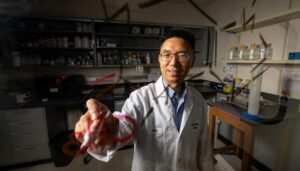
Moss Powering the Next Drug Frontier

For decades, Chinese hamster ovary (CHO) cells have been the gold standard for producing biologic drugs, from monoclonal antibodies to enzyme therapies. But for some of the most complex and fragile proteins, even CHO systems can fall short. Now, an unlikely contender—moss—is offering a new path forward.

At Germany-based Eleva, researchers are using Physcomitrium patens, a simple moss species, as a suspension cell culture system for producing recombinant human proteins that are difficult and sometimes impossible to manufacture in conventional platforms. According to Andreas Schaaf, PhD, Eleva’s CSO, these include “glycoproteins with complex or sensitive glycosylation requirements,” as well as cytokines, immune-cytokines, complement regulators, enzymes for rare metabolic disorders, and advanced antibody formats such as antibody-toxin conjugates.

The technology has deep academic roots. Plant biotechnologist Ralf Reski, PhD, at the University of Freiburg, helped develop P. patens into a model species for synthetic and systems biology and co-invented the moss bioreactor. His research led to the founding of Greenovation, now known as Eleva, which has since advanced the platform toward clinical-stage drug development.

The company’s first moss-produced drug candidate to enter clinical studies was a recombinant alpha-galactosidase enzyme replacement therapy (ERT) for Fabry disease, a rare lysosomal storage disorder. Current ERT options for Fabry patients are limited by short circulating half-life, inefficient uptake into key affected cell types, and immunogenicity. Eleva believes the more uniform glycosylation achieved through moss production could help overcome these limitations.

A particularly significant demonstration of the platform is Eleva’s recombinant complement Factor H candidate, currently in Phase Ib. Factor H is a large complement-regulatory glycoprotein used to target complement-related renal diseases such as C3 glomerulopathy (C3G), lupus nephritis (LN), and potentially dry age-related macular degeneration (AMD).

Schaaf notes that Factor H “had long resisted reliable expression in conventional systems such as yeast or CHO cells.” For patients with C3G—many of whom are young and face a 50% rate of kidney failure within ten years—the ability to restore natural Factor H activity could represent a major therapeutic shift. Current treatments often rely on broader complement suppression and carry boxed warnings for serious infections.

So why moss?

Unlike mammalian cells, which often generate heterogeneous glycan mixtures, moss produces more uniform glycosylation profiles due to its simplified glycan-processing pathway. This matters because glycosylation can directly affect a drug’s stability, efficacy, and immunogenicity.

Moss cells are also largely unaffected by toxic cytokine feedback, which in mammalian systems can inhibit growth or trigger apoptosis, limiting secretion efficiency and yields. Plant-specific chaperones and folding assistants, including protein disulfide isomerases, also help prevent protein aggregation and support the correct assembly of complex multimeric proteins.

“Moss offers clear advantages over other expression systems for certain protein classes that are difficult or impossible to manufacture otherwise,” Schaaf says, adding that such therapies might otherwise be “deprioritized or abandoned.”

There are practical manufacturing advantages, too. Moss requires no animal-derived media supplements, eliminating mammalian virus risk and removing the need for costly viral filtration in downstream processing. It is also less sensitive to fluctuations in temperature and pH, giving manufacturers greater process flexibility and potentially lowering production costs.

Still, Eleva is careful not to position moss as a replacement for CHO. Björn Cochlovius, PhD, CEO of Eleva, says standard proteins will continue to be best served by established systems. “The goal is not to replace CHO or other systems with moss when those other systems deliver well,” he explains.

Instead, the aim is to ensure that the range of therapeutic candidates in development is not defined by the limits of existing manufacturing platforms. Yields for large-scale GMP production and improving predictability remain ongoing challenges, but commercially viable titers are already being achieved through continuous optimization.

Cochlovius believes regulatory precedent and growing CDMO partnerships will further strengthen adoption. “A moss-based platform capable of reliably producing this category of proteins at scale would open a pipeline of programs that are currently inaccessible,” he says.

For biotech developers—and for patients with limited treatment options—that could make all the difference. Sometimes, the future of medicine grows in the smallest places.

The post Moss Powering the Next Drug Frontier appeared first on GEN – Genetic Engineering and Biotechnology News.

CoCoGraph AI Model Generates Molecules that Comply with Rules of Chemistry

Developing new molecular compounds is crucial to address pressing challenges, from drug discovery to sustainable materials. However, discovering viable new molecules is challenging due to the vastness of the search space. 

In a new paper published in Nature Machine Intelligence titled, “A collaborative constrained graph diffusion model for the generation of realistic synthetic molecules,” researchers from Universitat Rovira i Virgili (URV) have developed an AI tool capable of generating molecules that are guaranteed to comply with the rules of chemistry. The model, named CoCoGraph, operates similarly to generative AI tools for text or images, such as ChatGPT or Dall-E.  

“These models create new content that looks very much like the real thing. Our algorithm does the same, but with molecules,” said Roger Guimerà, PhD, ICREA research professor in the department of chemical engineering at URV and co-corresponding author of the study. He explains that the number of possible chemical molecules could be up to 10⁶⁰ variants, which is more than the number of water molecules in the ocean.  

CoCoGraph uses a diffusion model, a technique common in image generation, which progressively “disorders” a real molecule and trains the system to learn how to reconstruct it. 

Marta Sales-Pardo, PhD, professor in the department of chemical engineering at URV and co-corresponding author of the study, explains that the model begins with a real molecule, breaks the bonds, and then creates new bonds at random. The model then learns to reverse this process to reconstruct coherent structures. 

Notably, CoCoGraph directly incorporates the basic rules of chemistry, such as maintaining the correct number of bonds, to guarantee that generated molecules are chemically valid. The system is also more efficient, uses fewer parameters, and requires less computing power to generate molecules more quickly. 

The research team has compared the performance of CoCoGraph with other state-of-the-art models and analyzed 36 physicochemical properties, such as solubility and structural complexity. For two-thirds of these properties, the CoCoGraph generated molecules are chemically more realistic than those from other models. 

Although the model cannot yet design molecules with a specific function, researchers have identified molecules with properties similar to the drug, paracetamol. They have also explored techniques to partially modify an existing molecule to create new variants with similar characteristics, which are useful for optimizing drugs or developing new materials. 

The next step is to design molecules with specific properties, such as solubility and low toxicity. If successful, the technology could accelerate the discovery of new solutions across pharmacology and materials science in a chemical universe that is still practically unexplored. 

The post CoCoGraph AI Model Generates Molecules that Comply with Rules of Chemistry appeared first on GEN – Genetic Engineering and Biotechnology News.

Next Generation CRISPR Gene Editing Could Help Target Cancer Cells

A CRISPR gene editing protein called Cas12a2 can be turned into a kind of programmable self‑destruct switch for cells, which researchers think could be a new way to treat conditions like cancer if the technique is validated.

Cas12a2 eliminates eukaryotic cells based purely on which RNA transcripts they express, and the investigators showed this can be used to selectively destroy virus‑infected cells, unedited cells, and cancer cells bearing a single‑nucleotide mutation.

“Common molecular and cell-based interventions, such as small-molecule inhibitors, toxins, antibodies, lytic viruses or programmed immune cells, eliminate cells through specific proteins or survival pathways; however, these methods cannot be tailored to arbitrary genetic or transcriptional states as well as difficult-to-drug scenarios such as mutations in non-coding sequences or complex etiologies,” write co-lead author Yang Liu, PhD, assistant professor in biochemistry at University of Utah Health, and colleagues in Nature.

“A cell-killing approach triggered directly by the specific recognition of prescribed DNA or RNA sequences could greatly broaden the range of targetable conditions, creating new means to counter select against specific cells in a variety of situations and applications.”

In this study, the researchers first tested the technology in yeast and human cell lines against a harmless target. They found that the guided Cas12a2 destroyed the cells carrying the marker by effectively shredding their DNA. When they checked for off-target effects they were rare and weak.

They then tested the technology on cancer cells carrying the HPV virus by targeting viral RNA. The method killed cells containing the virus, but not cells negative for HPV. The team also used the Cas12a2 method to “clean up” after gene editing by killing unedited cells and enriching edited ones. Finally, they tested if Cas12a2 could recognize a single mutation in the cancer gene KRAS and showed it could destroy cells with this mutation while leaving cells with a non-mutant version of KRAS alone. This worked even when those cells were resistant to an approved KRAS drug.

“The enzyme that we’re working with is extremely specific,” Liu says. “It does not touch the healthy cells. So if we’re thinking about a cancer therapy, you’re treating cancer with no side effects. That was striking to us. We did not know that was possible.”

This research is early stage, and it will take some time to enter the clinic, as testing in animal models is needed first, but the research team say the results are promising. The technology is being developed commercially by German biotech Akribion Therapeutics, a biotech spin-off from BRAIN Biotech launched in 2024.

The post Next Generation CRISPR Gene Editing Could Help Target Cancer Cells appeared first on Inside Precision Medicine.

“Failure to Launch” Syndrome: How to Stop Enabling Your Grown Child

When Zeke was in high school, he struggled with anxiety and substance use problems, and he left college after the first semester. Now 25, he is living at home, and his mom Carol is frustrated. While she’s pushed him to go back to school or work, he has only held one part-time job at a local smoothie shop and quit after a few months, embarrassed that high school classmates would see him working there. Another attempt at trade school to become an electrician also didn’t take — it didn’t feel like the right fit. Now he rarely leaves the house, stays up all night playing video games or scrolling online, and sleeps most of the day.

Failure to launch syndrome, highly dependent adult children, boomerang kids — there’s no standard term or definition, but if you’re a parent in this situation you recognize it. You are worried and frustrated about your adult child’s difficulty in leaving the nest, and you don’t know what to do because everything you’ve tried so far hasn’t worked. 

“These aren’t kids who come back home because they finished school, and the first job they get doesn’t pay enough for them to afford rent on an apartment,” says Theresa Welles, the Shapiro Family Director of the Bubrick Center for Pediatric OCD at the Child Mind Institute. “We’re talking about young adults who functionally have hit a wall, so to speak. They’re caught in a loop of dependency.”

What is failure to launch syndrome?

It’s not uncommon for adult children to live with their parents: According to Pew Research Center, 18 percent of adults ages 25 to 34 lived in their parents’ home in 2023, with young men more likely than young women to do so (20 percent vs. 15 percent). Young adults might leave home for a period of time and then move back in with their parents because they can’t find a job. Or for religious or cultural reasons, some adult children expect to live in the family home until they get married. Living at home is not the main criterion for determining a “failure to launch.”

While there is no official clinical definition, researchers who study this group of young adults generally categorize someone as a highly dependent adult child if they are:

  • Not in school, working, or actively looking for work (though physically capable of doing so)
  • Financially dependent on their parents for housing and other necessities
  • Emotionally reliant on parents (i.e., needing constant reassurance that they are okay)  

They usually have very limited social interactions other than online. Often, they have mental health challenges such as anxiety, depression, or OCD, which is a contributing factor, Dr. Welles says.

“They’re at the developmental stage of early adulthood, they’re figuring out who they are,” Dr. Welles says. “The fancy term in psychology is ‘individuation,’ but it’s essentially who you are, both as part of your family and separate from your family.” Highly dependent adult children haven’t made much progress in this stage for several years. Many of them want to change their life path and become more independent, but they struggle with anxiety or fear of failure and don’t follow through on the necessary steps. “Reliance on parents reduces opportunities to build autonomy, which in turn maintains that reliance,” she says. So, they remain stuck.  

Dependent behaviors and parental accommodations

Young adults who are highly dependent often fall into certain patterns of behavior. They don’t do their own laundry, cook, clean, or help out around the house. They rarely leave the home and often shut themselves in their bedroom or live in the basement, avoiding talking to others in person. As a result, they rely on their parents to act as an intermediary with the outside world, such as making doctor’s appointments. They might blame their parents for their difficulties in life.

While parents may not like the situation, they struggle to get their adult child to change. So instead, they accommodate them — especially when they are concerned about their child’s mental health challenges.

“In the world of neurodiversity, accommodations are a good thing — we want accommodations for testing and sensory environments,” says Natalia Aíza, LPC, the author of the forthcoming Anxious to Launch: Parenting Strategies to Help Your Adult Child Move On. “But in the anxious-to-launch world, accommodations are actually interfering with your child becoming independent.”

Aíza gives some examples of unhelpful family accommodations: You make sure there’s food in the fridge, don’t ask them to contribute to paying bills, and may give them spending money. When they get angry or upset, you accept the behavior and feel guilty, thinking you are to blame for the situation. If they are anxious when you aren’t nearby, you don’t travel because it causes them stress. Instead of expecting them to take steps to find a therapist, you do the legwork.

“The number one behavior of the highly dependent adult child is avoidance. I cannot emphasize this enough,” Aíza says. “If your child has a full-on virtual life, that’s their social outlet. They are avoiding real-life challenges. They are avoiding working at jobs that are unpleasant. They are probably avoiding adulting tasks that should fall on them at this point. So, we swoop in and take care of those tasks for them.”

A modern version of an old problem

While adult children have lived with their parents in past generations, researchers argue that phenomenon of highly dependent adult children is on the rise, and young people today seem particularly susceptible. Adolescence is more prolonged now in many cultures, and there’s an emphasis on finding a fulfilling career, not just a job that pays the bills.

Technology contributes to the problem. Playing video games, watching videos, scrolling through social media — “these activities don’t help matters because they can do things that feel like they’re accomplishing something,” Dr. Welles says.  

How to stop enabling your grown child

In Dr. Welles’s practice, she has worked with families where she initially treated the teen for anxiety or OCD, then involved the parents more deeply when the young adult had trouble launching. In one case, the son was in the habit of playing video games late at night and would sleep through class the next day. He had anxiety and depression, and his parents didn’t want to take away video games because it was the one thing he enjoyed doing. But they started turning off the Wi-Fi in the house at a certain time at night.

“It sounds so extreme, like he’s being punished,” Dr. Welles says. “But it’s about saying to him, ‘We’re going to pull back on ways we’ve accommodated that may have unintentionally made your anxiety worse.’” It was important that the parents validated his feelings, saying things like, “You feel like you’re in danger, as if you’re standing in front of a bear, and that’s really hard. But that’s the anxiety lying to you, and it won’t go away if we keep accommodating things that allow you to avoid what you need to do in order to overcome this anxiety.”

And tactics like these made a difference over time. The son is now attending college part-time and working as a server at restaurant. He has a girlfriend and has plans to save enough to move into an apartment with a friend.

Setting boundaries with your adult child

If the adult child doesn’t seem motivated to find a job, Aíza has recommended that parents take them off the family cellphone plan, giving them warning that this will happen by the next month’s bill. “This is not necessarily the most strategic financial choice” because it’s often much cheaper per person on a family plan, she acknowledges. “But it is a perfect first accommodation to remove because it is telling your adult child, ‘This is something you can handle. You can be responsible for it financially and logistically. It is something that I control, and I want to stop controlling parts of your life.’” And it’s often the motivation they need to find a job — something that can earn them $100 for the monthly cell phone bill is small enough that it feels doable.

When families take steps like these, the adult child will likely get angry or upset. “That’s hard. But think about when your kids were toddlers, and they wanted to touch a hot stove,” Dr. Welles says. “They were mad when you said, ‘No, you can’t touch that stove,’ but that didn’t mean you let them do it.”

“The good news is, generally speaking, even if there’s unhappiness in the beginning,” she continues, “pretty quickly, once they start to feel better and are doing the things that they actually care about, it can really help.”

Supporting without enabling adult children

Highly dependent adult children might accuse parents of not being supportive when they pull back on accommodations. Dr. Welles suggests communicating that you hear them and validate their feelings: “You can say things like, ‘Hey, I know this is tough or ‘I know that this makes you really nervous.’ But you combine it with the confidence that they can do it, like ‘I also know you can do it, as hard as it is.’”

Sometimes, you might think you are being supportive when you are actually enabling — like filling out a job application on behalf of the child. “Even if it works and they get an interview, you’re accommodating their anxiety,” Dr. Welles says. “But also, there’s going to be a point when you can’t do something for the child — the interview or the job itself — so the earlier that you can pull back the better.”

If your adult child has both ADHD and anxiety, you can support their executive functioning skills without accommodating the anxiety. “Maybe you sit down with them on Mondays and look at their schedule to help them determine if there’s a way you can help them organize, as opposed to you stepping in and letting them avoid things they need to do because they’re anxious about it,” Dr. Welles says.

Aíza encourages giving the adult child the minimum amount of help needed, to avoid creating another form of dependency. “It’s about noticing, ‘Am I working harder at this than they are?’” she says. “A lot of times the answer is ‘yes,’ and that’s a signal to back off and put more expectations on the child.”

Treatment for highly dependent adult children

While there is no standard treatment for highly dependent adult children, early evidence has shown a form of therapy called SPACE-FTL (Supportive Parenting for Anxious Childhood Emotions – Failure to Launch) to be promising. A variation on an effective treatment for anxiety and OCD, SPACE-FTL involves only the parents, since the adult child is often resistant to seeking help. The program helps parents reduce accommodations step by step and engage extended family and friends to help de-escalate conflict. 

One tactic is to make a plan to deliver a change in accommodation in writing — for instance, explaining that you will stop paying the cellphone bill at the end of the month and why. Doing it in writing (on paper or in a text) makes the message clear and helps you remain calm and non-reactive. If you are expecting an angry or violent response, they can ask a grandparent, uncle, or family friend be in the house when you deliver the letter, since that might make the response less extreme. The relative or friend may even spend the night if the adult child is more likely to cool off when others are present.

Asking for others’ help also helps you stop blaming yourself for the situation. “A lot of parents of highly dependent adults feel shame, but this is not something happening to only one family,” Aíza says. “We need to build on our social supports and get other people on our team so that we don’t feel so isolated in this process. Your adult child may be resisting change, but you don’t have to. It might sound cruel, but our central mandate as parents is making sure our child is okay after we’re gone. We brought them on earth to survive us — that is the design.”

Frequently Asked Questions

What is “failure to launch syndrome”?

“Failure to launch” isn’t a formal diagnosis but describes young adults who are stuck in a pattern of dependence. They’re typically not working or in school, rely on parents financially and emotionally, and struggle to move forward with adult responsibilities.

How can I motivate my adult child to become independent?

Change often starts with parents gradually pulling back on accommodations while staying supportive and calm. Set clear expectations, validate their feelings, and shift responsibility back to them in manageable steps so they can build confidence and autonomy.

The post “Failure to Launch” Syndrome: How to Stop Enabling Your Grown Child appeared first on Child Mind Institute.

The Download: seafloor science and military chatbots

This is today’s edition of The Download, our weekday newsletter that provides a daily dose of what’s going on in the world of technology.

Inexpensive seafloor-hopping submersibles could stoke deep-sea science—and mining

Last week, two oblong neon submersibles started to descend nearly 6,000 meters into the Pacific Ocean. Throughout the rest of May, they will map the seafloor in search of critical mineral deposits. 

If all goes well, the vehicles, built by Orpheus Ocean, could help scientists probe the vastly understudied deep sea—and the resources it holds—at a fraction of the cost of existing systems.

But the same submersibles are also attracting deep-sea mining companies, raising concerns about environmental impacts. Find out why they’re drawing so much attention.

—Hannah Richter

The new war room: 10 Things That Matter in AI Right Now 

A new kind of system has entered the war room: conversational AI tools that commanders turn to not just for analysis, but for advice. 

One US defense official told MIT Technology Review that personnel might give these advice engines a list of potential targets to help decide which to strike first. China is commissioning similar tools too.

But as the systems gain traction, they’re also sparking concerns about AI-generated errors, a lack of transparency, and Big Tech gaining undue influence over what information gets seen. 

Here’s how these AI advice engines could impact the battlefield.

—James O’Donnell

The new war room is one of the 10 Things That Matter in AI Right Now, our list of the big ideas, trends, and advances in the field that are driving progress today—and will shape what’s possible tomorrow.

MIT Technology Review Narrated: is fake grass a bad idea? The AstroTurf wars are far from over. 

In 2001, Americans installed just over 7 million square meters of synthetic turf. By 2024, that number was 79 million square meters—enough to carpet all of Manhattan and then some. The increase worries folks who study microplastics and environmental pollution.  

While the plastic-making industry insists that synthetic fields are safe if properly installed, lots of researchers think that isn’t so. 

—Douglas Main 

This is our latest story to be turned into an MIT Technology Review Narrated podcast, which we publish each week on Spotify and Apple Podcasts. Just navigate to MIT Technology Review Narrated on either platform, and follow us to get all our new content as it’s released.

The must-reads

I’ve combed the internet to find you today’s most fun/important/scary/fascinating stories about technology.

1 Elon Musk pushed OpenAI to go commercial, its president has testified
Greg Brockman said Musk tried to turn it into a for-profit company years ago. (NYT $)
+ Musk allegedly wanted full control so he could raise $80 billion to colonize Mars. (Reuters $)
+ The Tesla CEO claims he intended for OpenAI to remain a non-profit. (BBC)
+ Here’s what happened in week one of Musk v. Altman. (MIT Technology Review)

2 Google and Meta are building AI agents to rival OpenClaw
Google’s Gemini agent will take actions on the users’ behalf. (Business Insider)
+ Meta’s will be powered by its Muse Spark AI model. (FT $)
+ Hustlers are cashing in on China’s OpenClaw AI craze. (MIT Technology Review)

3 Anthropic will spend $200 billion on Google’s cloud and chips
The investment will be spread across five years. (The Information $)
+ It’s part of a broader AI compute war. (Axios

4 DeepSeek is nearing a $45 billion valuation
A state-backed “Big Fund” will lead a new investment round in the company. (FT $)
+ Beijing is pushing to build alternatives to Nvidia and OpenAI. (Bloomberg $)
+ Here’s why DeepSeek’s new model matters. (MIT Technology Review)

5 Anthropic is launching AI agents for banks and financial firms
The 10 tools cover a broad mix of financial services tasks. (WSJ $)
+ They’re part of a push to win over Wall Street. (Bloomberg $)

6 Apple will pay $250 million to settle an AI lawsuit
It was accused of misleading iPhone buyers about Apple Intelligence. (BBC)
+ Some iPhone owners are eligible to receive up to $95. (NYT $)

7 Cheap laptops and phones may be disappearing because of AI demand
 Competition for memory chips is driving up gadget prices worldwide. (The Guardian)

8 Google DeepMind workers in the UK have voted to unionize
As a result of Google’s work with the Pentagon. (Wired $)

9 Pennsylvania is suing Character.AI over chatbots posing as doctors
Investigators say the bots claimed to hold medical licenses. (NPR)
+ How well do AI health tools work? (MIT Technology Review)

10 Scientists created a “living” plastic that destroys itself on command
It could help to eliminate microplastics. (Gizmodo)

Quote of the day

“I want AI to benefit humanity, not to facilitate a genocide.” 

—An anonymous Google DeepMind worker tells the Guardian that Google’s work with the Israel Defense Forces had motivated their vote to unionize.

One More Thing

a tiger shark seen underwater with a camera on its flank

COURTESY OF BENEATH THE WAVES


How tracking animal movement may save the planet

For decades, wildlife researchers have dreamed of building an “Internet of Animals”—a big-data system that monitors and analyzes animal behavior to help us understand the planet. Advances in sensors, AI, and satellite technology are now bringing that vision to reality.

Scientists want the system to track 100,000 sensor-tagged animals. They believe it could reveal how species respond to climate change and ecosystem loss—and even predict environmental disasters. Read the full story on how their idea could save our planet.

—Matthew Ponsford

We can still have nice things

A place for comfort, fun and distraction to brighten up your day. (Got any ideas? Drop me a line.)

+ Master the art of fried chicken with this definitive chef’s guide.
+ Find out why some birds hop and others walk in this breakdown of avian lifestyles.
+ This vintage Hollywood map shows how California’s landscape stood in for everything from the Nile to the Alps.
+ Here’s a fascinating look at the “Flatbed” airplane that was surprisingly efficient on paper but never left the hangar.

Opinion: Trump’s executive order on psychedelics is the right move. But is my field ready for it?

I have spent the last 10 years of my life investigating psychedelics as novel treatments for mental health conditions. When President Trump signed his executive order on psychedelic medicines, my first thought was: He got this one right. My second thought: My field may not be ready for it.

The order itself is sweeping. It directs the Food and Drug Administration to issue priority review vouchers to accelerate approval timelines, expands right-to-try pathways for ibogaine, dedicates $50 million in ARPA-H funding to psychedelic research, authorizes the Drug Enforcement Administration to speed scheduling of FDA-approved psychedelics, and launches collaboration with Veterans Affairs on therapies for veterans.

Read the rest…

Biomarkers of ASD/ADHD and Factors Affecting Anxiety and Depression in Children and Young Adults

Conditions: ADHD – Attention Deficit Disorder With Hyperactivity; Autism Spectrum Disorder (ASD); Developmental Coordination Disorder (DCD)

Sponsors: University of Exeter; University of Southampton; University of Dublin, Trinity College; Carol Davila University of Medicine and Pharmacy; Jimma University; FUNDACION PARA LA INVESTIGACION HOSPITAL CLINICO SAN CARLOS; The International Centre for Diarrhoeal Disease Research, Bangladesh; University of Bari Aldo Moro

Not yet recruiting

Autonomous pathology research using agentic AI shows potential in oncology

Nature Medicine, Published online: 05 May 2026; doi:10.1038/s41591-026-04403-9

The agentic artificial intelligence tool SPARK is able to reproduce pathology-based reasoning and produce biological hypotheses and relevant diagnostic, prognostic and predictive cellular parameters. The output of SPARK has the potential to advance the understanding of tumor biology and enable the development of diagnostic, prognostic and predictive tools for pathology and oncology.