

Rhythm-Based Video Games: Exploring the Cognitive and Learning Potential


By Florencia Assaneo, PhD, Research Fellow, Stavros Niarchos Foundation (SNF) Global Center for Child and Adolescent Mental Health at the Child Mind Institute


Educational challenges for Latin American children

Primary education in Latin America has faced a steady decline over recent decades, contributing to what many organizations now describe as an educational crisis. International institutions such as the Economic Commission for Latin America and the Caribbean (ECLAC), the United Nations Educational, Scientific and Cultural Organization (UNESCO), as well as the World Bank Group have all called for urgent action to address worsening learning outcomes across the region. The situation is particularly concerning in Mexico. Results from the 2022 Programme for International Student Assessment showed that Mexico scored well below the Organization for Economic Co-operation and Development (OECD) average in reading, mathematics, and science — placing the country among the lower-performing educational systems evaluated globally.

The consequences of this crisis extend far beyond the classroom. Educational difficulties during childhood are closely linked to long-term social and mental health outcomes. Research has shown that additional years of basic education are associated with lower rates of depression and anxiety (Kondirolli & Sunder, 2022), as well as higher levels of resilience and perceived control over one’s life (Niemeyer et al. 2019). In this sense, poor academic performance in primary school can have lasting effects that continue into adulthood, limiting employment opportunities, increasing vulnerability, and negatively affecting overall well-being.

Can rhythm-based video games improve learning?

Open-access interventions that strengthen children’s cognitive and academic abilities could have enormous value in low- and middle-income countries, where educational resources are often limited. Our work explores whether the ability to coordinate movements with rhythmic sounds — such as clapping, tapping, or dancing to music — can be leveraged to support children’s learning and cognitive development through engaging digital tools.

Over the last decade, multiple studies have shown that children who are better at synchronizing their movements to rhythm also tend to perform better on a wide range of cognitive and language-related tasks. These include reading, phonological awareness, processing speed, rapid naming, and other foundational abilities linked to academic success. Researchers have assessed these rhythmic coordination skills in multiple ways, from walking to the beat of music to tapping along with a steady rhythm or coordinating movements while playing musical instruments. Across these different approaches, one result consistently emerges: children who are better at aligning movement with sound also tend to show stronger cognitive performance.

Building on these study findings, my current fellowship project, supported by the Stavros Niarchos Foundation (SNF) Global Center for Child and Adolescent Mental Health at the Child Mind Institute, seeks to better understand how these rhythm synchronization abilities develop during childhood and whether they could eventually be strengthened through interactive digital interventions. Specifically, we are studying the developmental stage at which these abilities become established in children, and whether individuals with stronger rhythmic coordination also show advantages in attention and language-related skills. Understanding when these abilities emerge is particularly important because it may help identify the developmental window during which they are most malleable and therefore most responsive to training or intervention.

Public school “Américas Unidas” in Querétaro, Mexico.
From left to right: Rebeca Hernández Soto, associated researcher at the lab; M. Florencia Assaneo; principal of the public primary school; and Moramay Ramos Flores, a PhD student working on the project. At the public school “Américas Unidas” in Querétaro, Mexico. 

In parallel, we are using functional magnetic resonance imaging (fMRI) — a non-invasive brain imaging technique that allows us to observe which brain regions become active during different tasks — to explore the relationship between rhythmic synchronization and the brain’s reward system. Importantly, these same reward-related regions are also strongly engaged during video game play. If the pathways within this reward system are similarly activated during rhythmic coordination, this could mean that children who initially struggle to synchronize movements with sound may be able to strengthen these abilities through a carefully designed video game experience. One possible future application could involve an open-access mobile game in which children synchronize taps or hand movements to musical rhythms while progressing through increasingly challenging levels and unlocking rewards or visual customizations.

Overall, the current project seeks to generate the scientific evidence necessary to determine whether rhythm-based digital interventions could become a viable tool for supporting children’s cognitive development. This work has the potential to contribute to the future development of accessible and scalable tools that can strengthen foundational cognitive skills linked to academic performance in children. These tools can be applied to children in Mexico and, more broadly, across low- and middle-income countries (LMICs), expanding access to education resources and interventions.

The power of collaboration between the SNF Global Center and UNAM

Our laboratory at Universidad Nacional Autónoma de México (UNAM) is primarily dedicated to basic neuroscience research. Based at UNAM’s campus in Querétaro, our team brings together researchers and students from different disciplines — including neuroscience, psychology, physics, engineering, and data analysis — united by a shared interest in understanding how rhythm and brain dynamics shape human cognition and behavior. Here, we have access to excellent infrastructure for fundamental research, including neuroimaging facilities and high-performance computational resources. However, translating basic scientific discoveries into interventions capable of improving people’s daily lives is often much more challenging and requires strong cross-sector collaboration.
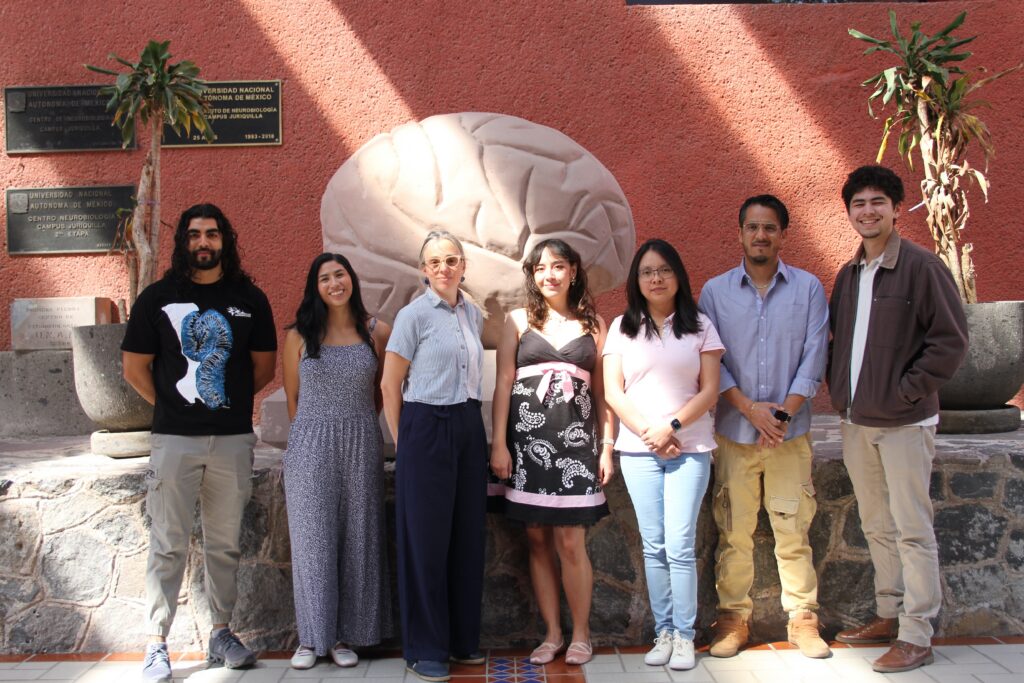
Members of the research team at the laboratory facilities on UNAM’s Querétaro campus.  

The work I’m conducting as part of the SNF Global Center Research Fellowship has encouraged us to begin thinking beyond the laboratory. This current fellowship has given us the opportunity to test the core scientific assumptions behind our proposed open-access intervention. If the pilot project proves successful, the next stages of the work will become considerably more ambitious, involving both the technological development of the intervention and its large-scale implementation and evaluation in school settings. Advancing toward those goals will likely require the support of larger international organizations and cross-sector collaborations. In this context, the opportunities provided by the SNF Global Center at the Child Mind Institute to share, disseminate, and give visibility to our work are extremely valuable, helping create the connections and momentum necessary to move from foundational research toward real-world impact.

More broadly, this kind of collaboration highlights the importance of building bridges between global institutions and local research communities. By combining international support with local expertise and close engagement with schools and communities, it becomes possible to develop solutions that are both scientifically rigorous and genuinely connected to the realities of the populations they aim to serve.

Learn more about the Research Fellowship

The post Rhythm-Based Video Games: Exploring the Cognitive and Learning Potential appeared first on Child Mind Institute.

Young Adults’ Perspectives on an Ecological Momentary Intervention for Drinking to Cope: Qualitative Study

<strong>Background:</strong> Young adults have high rates of mental health problems, such as mood or anxiety symptoms, and high rates of problematic drinking. Many young adults who undergo psychiatric hospitalization to address depression and anxiety symptoms also engage in risky drinking and tend to drink to cope with negative emotions. However, in many cases, treatment programs focusing on mood and anxiety symptoms often fail to adequately address problematic alcohol use in young adults. <strong>Objective:</strong> This study aimed to address this treatment gap by investigating patient perspectives on a potential ecological momentary intervention mobile app. Researchers used qualitative methods to gather perspectives of young adults hospitalized for psychiatric care on their use of drinking to cope with negative emotions and their feedback for a prospective app designed to suggest healthy coping strategies when participants report low mood and cravings to drink. <strong>Methods:</strong> We recruited a total of 12 young adults admitted to a partial hospitalization program to participate in a qualitative interview. To be eligible, participants needed to be aged 18-25 years and report drinking at least once weekly, binge drinking at least once monthly, drinking to cope with negative emotions, and depression and/or anxiety symptoms. <strong>Results:</strong> Qualitative analysis of our data resulted in 4 major themes. These included (1) motivations to use substances, (2) healthy coping, (3) general reactions to the proposed app, and (4) suggestions for the app. Participants generally had insight about their use of alcohol to cope and were able to identify several motivations for drinking; the most frequent motivations were to alleviate anxiety and depression, although many participants noted drinking to cope with other emotions, such as guilt or loneliness. Participants overall had positive responses to the prospective intervention and reported that they would appreciate the portability of a digital intervention in helping them “step down” from higher levels of psychiatric care. Participants also made several valuable suggestions about content, features, and usability, such as suggesting ways to “gamify” the app to increase use. <strong>Conclusions:</strong> This feedback will be crucial in designing and testing an ecological momentary intervention designed to reduce drinking to cope in young adults hospitalized for psychiatric care.

Affiliate Updates: Summer 2026

An IOCDF Affiliate carries out the mission of the International OCD Foundation through programs at the local community level within the United States. Each Affiliate is an independent 501(c)3 non-profit organization run entirely by dedicated volunteers.

Below will be quarterly updates from our Affiliates, organized by state. Click the (+) to open each menu and read updates and find contact information for clinics near you.

The post Affiliate Updates: Summer 2026 appeared first on International OCD Foundation.

Angry Kids: Dealing With Explosive Behavior

When a child — even a small child — melts down and becomes aggressive, they can pose a serious risk to themselves and others, including parents and siblings.

It’s not uncommon for kids who have trouble handling their emotions to lose control and direct their distress at a caregiver — screaming and cursing, throwing dangerous objects, or hitting and biting. It can be a scary, stressful experience for you and your child, too. Children often feel sorry after they’ve worn themselves out and calmed down.

So what are you to do?

It’s helpful to first understand that behavior is communication. A child who is so overwhelmed that they are lashing out is a distressed child. They don’t have the skill to manage their feelings and express them in a more mature way. They may lack language, impulse control, or problem-solving abilities.

Sometimes parents see this kind of explosive behavior as manipulative. But kids who lash out are usually unable to handle frustration or anger in a more effective way — say, by talking and figuring out how to achieve what they want.

Nonetheless, how you react when a child lashes out has an effect on whether they will continue to respond to distress in the same way or learn better ways to handle feelings so they don’t become overwhelming.

Behavioral techniques for anger management

Here are some pointers to help kids learn techniques to regulate their emotions:

  • Stay calm. Faced with a raging child, it’s easy to feel out of control and find yourself yelling at them. But when you shout, you have less chance of reaching them. Instead, you will only be making them more aggressive and defiant. As hard as it may be, if you can stay calm and in control of your own emotions, you can be a model for your child and teach them to do the same thing.
  • Don’t give in. Don’t encourage them to continue this behavior by agreeing to what they want in order to make it stop.
  • Praise appropriate behavior. When they have calmed down, praise them for pulling themselves together. And when they do try to express their feelings verbally, calmly, or try to find a compromise on an area of disagreement, praise them for those efforts.
  • Help them practice problem-solving skills. When your child is not upset is the time to help them try out communicating their feelings and coming up with solutions to conflicts before they escalate into aggressive outbursts. You can ask them how they feel and how they think you might solve a problem.
  • Time-outs and reward systems. Time-outs for nonviolent misbehavior can work well with children younger than 7 or 8 years old. When using time-outs, be sure to be consistent with them and balance them with other, more positive forms of attention. If a child is too old for time-outs, you want to move to a system of positive reinforcement for appropriate behavior — points or tokens toward something they want.
  • Avoid triggers. Vasco Lopes, PsyD, a clinical psychologist, says most kids who have frequent meltdowns do it at very predictable times, like homework time, bedtime, or when it’s time to stop playing, whether it’s Legos or video games. The trigger is usually being asked to do something they don’t like, or to stop doing something they do like. Time warnings (“we’re going in 10 minutes”), breaking tasks down into one-step directions (“first, put on your shoes”), and preparing your child for situations (“please ask to be excused before you leave Grandma’s table”) can all help avoid meltdowns.

What kind of tantrum is it?

How you respond to a tantrum also depends on its severity. The first rule in handling nonviolent tantrums is to ignore them as often as possible, since even negative attention, like telling the child to stop, can be encouraging.

But when a child is getting physical, ignoring is not recommended since it can result in harm to others as well as your child. In this situation, Dr. Lopes advises putting the child in a safe environment that does not give them access to you or any other potential rewards.

Critics of time-outs argue that they can be emotionally isolating for kids, but research shows that they are effective and do not cause children harm. (For more on the debate around time-outs, read our full article on the topic.) However, it’s very important to use them as just one technique in a nurturing, supportive parenting strategy. Be sure to balance use of time outs with lots of praise for kids’ positive behaviors. It’s also important to manage your own stress so that kids can learn how to regulate their emotions from your positive example.

If the child is young (usually 7 or younger), try placing them in a time out chair. If they won’t stay in the chair, take them to a backup area where they can calm down on their own without anyone else in the room. Again, for this approach to work there shouldn’t be any toys or games in the area that might make it rewarding.

Your child should stay in that room for one minute and must be calm before they are allowed out. Then they should come back to the chair for time out. “What this does is gives your child an immediate and consistent consequence for their aggression and it removes all access to reinforcing things in their environment,” explains Dr. Lopes.

If you have an older child who is being aggressive and you aren’t able to carry them into an isolated area to calm down, Dr. Lopes advises removing yourself from their vicinity. This ensures that they are not getting any attention or reinforcement from you and keeps you safe. In extreme instances, it may be necessary to call 911 to ensure your and your child’s safety.

Help with behavioral techniques

If your child is doing a lot of lashing out — enough that it is frequently frightening you and disrupting your family — it’s important to get some professional help. There are good behavioral therapies that can help you and your child get past the aggression, relieve your stress, and improve your relationship. You can learn techniques for managing their behavior more effectively, and they can learn to rein in disruptive behavior and enjoy a much more positive relationship with you.

  • Parent-child interaction therapy (PCIT). PCIT has been shown to be very helpful for children between the ages of 2 and 7. The parent and child work together through a set of exercises while a therapist coaches parents through an ear piece. You learn how to pay more attention to your child’s positive behavior, ignore minor misbehaviors, and provide consistent consequences for negative and aggressive behavior, all while remaining calm.
  • Parent management training (PMT). PMT teaches similar techniques as PCIT, though the therapist usually works with parents, not the child.
  • Collaborative and Proactive Solutions (CPS). CPS is a program based on the idea that explosive or disruptive behavior is the result of lagging skills rather than, say, an attempt to get attention or test limits. The idea is to teach children the skills they lack to respond to a situation in a more effective way than throwing a tantrum.

Figuring out explosive behavior

Tantrums and meltdowns are especially concerning when they occur more often, more intensely, or past the age in which they’re developmentally expected — those terrible twos up through preschool. As a child gets older, aggression becomes more and more dangerous to you, and the child. And it can become a big problem for them at school and with friends, too.

If your child has a pattern of lashing out it may be because of an underlying problem that needs treatment. Some possible reasons for aggressive behavior include:

  • ADHD: Kids with ADHD are frustrated easily, especially in certain situations, such as when they’re supposed to do homework or go to bed.
  • Anxiety: An anxious child may keep their worries secret, then lash out when the demands at school or at home put pressure on them that they can’t handle. Often, a child who “keeps it together” at school loses it with one or both parents.
  • Undiagnosed learning disability: When your child acts out repeatedly in school or during homework time, it could be because the work is very hard for them.
  • Sensory processing issues: Some children have trouble processing the information they are taking in through their senses. Things like too much noise, crowds and even “scratchy” clothes can make them anxious, uncomfortable, or overwhelmed. That can lead to actions that leave you mystified, including aggression.
  • Autism: Children with autism spectrum disorder are often prone to meltdowns when they are frustrated or faced with unexpected change. They also often have sensory issues that make them anxious and agitated.

Given that there are so many possible causes for emotional outbursts and aggression, an accurate diagnosis is key to getting the help you need. You may want to start with your pediatrician. They can rule out medical causes and then refer you to a specialist. A trained, experienced child psychologist or psychiatrist can help determine what, if any, underlying issues are present.

When behavioral plans aren’t enough

Professionals agree, the younger you can treat a child, the better. But what about older children and even younger kids who are so dangerous to themselves and others that behavioral techniques aren’t enough to keep them and others around them safe?

  • Medication. Medication for underlying conditions such as ADHD and anxiety may make your child more reachable and teachable. Kids with extreme behavior problems are often treated with antipsychotic medications like Risperdal or Abilify. But these medications should be partnered with behavioral techniques.
  • Holds. Parent training may, in fact, include learning how to use safe holds on your child so that you can keep both them and yourself out of harm’s way.
  • Residential settings. Children with extreme behaviors may need to spend time in a residential treatment facility — sometimes, but not always, in a hospital setting. There, they receive behavioral and, most likely, pharmaceutical treatment. Therapeutic boarding schools provide consistency and structure around the clock, seven days a week. The goal is for the child to internalize self-control so they can come back home with more appropriate behavior with you and the world at large.
  • Day treatment. With day treatment, a child with extreme behavioral problems lives at home but attends a school with a strict behavioral plan. Such schools should have trained staff prepared to safely handle crisis situations.

Explosive children need calm, confident parents

It can be challenging work for parents to learn how to handle an aggressive child with behavioral approaches, but for many kids it can make a big difference. Parents who are confident, calm, and consistent can be very successful in helping children develop the anger management skills they need to regulate their own behavior.

This may require more patience and willingness to try different techniques than you might with a typically developing child, but when the result is a better relationship and happier home, it’s well worth the effort.

Frequently Asked Questions

How can you deal with children’s anger?

One way to handle a child’s anger is to stay calm when they lose their temper. Controlling your emotions sets an example for the child. You can praise them when they express their feelings calmly and when they calm themselves down after an explosion. Adults who are confident, calm, and consistent help children develop the skills to regulate their behavior.

How do I teach a child to control their anger?

In parent-child interaction therapy, a therapist coaches parents on how to pay more attention to positive behavior, ignore minor misbehaviors, and provide consistent consequences for negative and aggressive behavior, all while remaining calm. Other forms of therapy also center on teaching the parent how to model emotional stability.

How can I calm a child down when angry?

Stay calm and ensure they are in a safe space. Yelling can escalate aggression. Speak in a steady voice, avoid giving in, and use time-outs to prevent meltdowns. When they calm down, praise them for it and for expressing their emotions appropriately. If they are frequently aggressive, behavioral therapy may help.

How do I help a child with anger issues?

Children who lash out often lack the skills to manage emotions. Identifying triggers, teaching problem-solving, and using praise or rewards can encourage better behavior. Time-outs work for younger kids, while older ones may need structured reinforcement. If outbursts are severe, you might need professional help. Programs like parent-child interaction therapy (PCIT), parent management training (PMT), or collaborative and practical solutions (CPS) can help.

The post Angry Kids: Dealing With Explosive Behavior appeared first on Child Mind Institute.

Social Prescribing for a Mindful Lifestyle

Conditions: Depression and/or Anxiety in the Mild-to-moderate Range; Loneliness; Social Isolation

Interventions: Behavioral: Mindfulness Lifestyle Social Prescribing Program

Sponsors: Buddhist Tzu Chi General Hospital

Not yet recruiting

Associations between childhood trauma, intolerance of uncertainty, and symptom severity in obsessive-compulsive disorder

BackgroundChildhood trauma (CT) has been associated with obsessive-compulsive disorder (OCD), but its relationship with obsessive-compulsive symptom (OCS) severity remains inconsistent. Intolerance of uncertainty (IU) may represent one of the cognitive processes underlying this association. The present study aimed to examine differences in CT and IU between patients with OCD and healthy controls (HCs), and to test whether IU mediates the relationship between CT and OCS severity.MethodsThis study included 82 patients with OCD and 82 healthy controls (HCs) matched on age and sex. CT was assessed using the Childhood Trauma Questionnaire-33 (CTQ-33), IU using the Intolerance of Uncertainty Scale–Short Form (IUS-12), and OCS severity using the Yale-Brown Obsessive-Compulsive Scale (Y-BOCS).ResultsPatients with OCD had significantly higher scores than HCs on all CTQ-33 subscales and on IU measures. In particular, the patient group showed higher IUS-12 total scores than the HC group (39.30 ± 10.42 vs. 32.11 ± 8.62, p < 0.001), with higher prospective anxiety (22.11 ± 5.13 vs. 20.11 ± 4.59, p = 0.009) and inhibitory anxiety scores (17.19 ± 5.99 vs. 12.00 ± 4.82, p < 0.001). Within the patient group, physical abuse was the only CT dimension significantly associated with total Y-BOCS scores (r = 0.248, p = 0.025), whereas IU was positively associated with symptom severity (IUS-12 total: r = 0.346, p = 0.001). Path analysis showed that CT was associated with IU (β = 0.238, p = 0.023), IU was associated with OCS severity (β = 0.329, p = 0.007), and the direct effect of CT on OCS severity was no longer significant after IU was included in the model (c′ = 0.209, p = 0.093), supporting partial mediation.ConclusionCT appears to be elevated in patients with OCD, although its association with symptom severity is not uniform across trauma dimensions. IU may represent an important cognitive mechanism linking CT to OCS severity. These findings suggest that assessing and addressing IU may contribute to more individualized clinical approaches in OCD.
<![CDATA[Adults born with congenital heart disease face hidden anxiety, PTSD, and cognitive hurdles. See why embedding psychiatry in cardiac care changes outcomes.]]>

The Download: introducing the Engineering issue

This is today’s edition of The Download, our weekday newsletter that provides a daily dose of what’s going on in the world of technology.

Introducing: the Engineering issue

We can’t fix everything, but we can be ambitious. We can take on the challenge of making the world better through human ingenuity. That’s what the new Engineering issue of MIT Technology Review is all about. 

Sometimes the challenges we face are giant, like tunneling beneath the seafloor. Some exist at the nanoscale, as with a new ASML machine powering the future of chipmaking. Others represent problems at a planetary scale and in truly unknown territory, like replicating a volcano’s mechanism to cool the Earth on purpose.

These incredible engineering stories show we can come together to get to work and, when the smoke clears, find we’ve made real progress. Subscribe now to read all of them—and more—in the full print issue.

Stripe, Anthropic, and OpenAI are backing an effort to stop respiratory infections

The common cold comes for us all—often more than once a year. And there is no way to prevent it. The best you can do is take vitamin C and stay away from people with the sniffles.

Now, the payment company Stripe is funding a new $500-million nonprofit aiming to prevent both the common cold and the flu. Its eventual goal is to get rid of respiratory viruses altogether.

Anthropic, OpenAI, and Bill Gates have also backed the venture, which will investigate whether modern technologies can counter the common cold and the flu. Dive into the nonprofit’s plans.

—Antonio Regalado

MIT Technology Review Narrated: inside the hunt for the most dangerous asteroid ever

As asteroid 2024 YR4 hurtled toward Earth, astronomers determined that this massive rock posed a higher risk of impact than any object of its size in recorded history. Then, just as quickly as history was made, experts declared that the danger had passed. 

This is the inside story of the network of global scientists who found, followed, planned for, and finally dismissed the most dangerous asteroid ever discovered —all under the tightest of timelines and with the highest of stakes.

—Robin George Andrews

This is our latest story to be turned into an MIT Technology Review Narrated podcast, which we publish each week on Spotify and Apple Podcasts. Just navigate to MIT Technology Review Narrated on either platform, and follow us to get all our new content as it’s released.

The must-reads

I’ve combed the internet to find you today’s most fun/important/scary/fascinating stories about technology.

1 China has taken the US’s crown for the world’s fastest supercomputer 
Shenzhen’s LineShine overtook California’s El Capitan. (Axios)
+ China had not had a machine at the top of the list since 2017. (NYT $)
+ But the supercomputer race isn’t geared for AI work. (Reuters $)

2 Mythos reportedly found flaws in classified US government systems
A US official said Anthropic’s model identified certain vulnerabilities. (AP News)
+ The model has now been suspended over US security concerns. (BBC)
+ The NSA has lost access to Anthropic’s tools in fallout. (Engadget)
+ The feud raises new questions about AI safety. (MIT Technology Review) 

3 A US pilot reported seeing Iranian drones swarm in “jellyfish” formation
Which would represent an alarming advance in Iranian drone capabilities. (CNN)
+ The US is heading toward a drone-filled future. (MIT Technology Review)

4 Mark Zuckerberg directed Meta to create a prediction markets app
It will be similar to Polymarket and Kalshi. (NYT $)
+ But won’t let users wager real money. (The Verge) 
+ Another new app, Meta Photos, will create media with AI. (Reuters $)

5 SpaceX’s “Starfall” just launched a secretive test flight
The orbital delivery spacecraft blasted off for the first time yesterday. (Axios)
+ It could also support space manufacturing. (New Scientist $)

6 Alibaba has sued the US for being linked to the Chinese military
It wants to be removed from a Pentagon blacklist. (Reuters $)

7 Nvidia’s banned AI chips have doubled in price on China’s black market
The DGX B300 now costs more than $1.1 million. (Financial Times $)

8 Tesla claims a driver “manually overrode self-driving” in a deadly crash
It said the accelerator was pressed “all the way to 100%.” (The Verge $)

9 The US science retreat has created an opportunity for Europe
But questions about funding and innovation remain. (Nature)
+ Trump has dealt many blows to US science. (MIT Technology Review)

10 Meta’s new smart glasses ditch Ray-Bans for Kylie Jenner 
Meta logos and Jenner designs have replaced the Ray-Ban branding. (Wired $)

Quote of the day

“It’s blasphemy against AI if ‌you say it’s a bubble.”

—SoftBank founder and CEO Masayoshi Son tells shareholders that the AI boom is still in its early stages, Reuters reports.

One More Thing

ERIK CARTER


Video games are dividing South Korea

They say StarCraft was the game that changed everything. When the science fiction strategy game arrived in South Korea in 1998, it wasn’t just a hit—it was an awakening.

Out of 11 million copies sold worldwide, 4.5 million were in the country. The game was so popular that it triggered another boom: “PC bangs,” pay-as-you-go gaming cafés.

StarCraft and PC bangs spoke to a generation of young South Koreans boxed in by economic anxiety and rising academic pressures. But they also sparked arguments about game addiction. They’ve led to feuds between government departments—and a national debate over policy.

Read the full story.

—Max S. Kim

We can still have nice things

A place for comfort, fun, and distraction to brighten up your day. (Got any ideas? Drop me a line.)

+ This archive lovingly documents the beautiful design of over 1,700 obsolete objects.
+ Classic TV theme tunes like Hey Arnold! Have been revived in a musician’s marvellous samples.
+ Marvel at the mind-boggling geometry of nature and see how bees perfectly construct honeycombs.
+ Hear the ominous, deeply atmospheric tones of a custom string instrument built inside a plastic drainage pipe.