Background: Empathic communication in the clinical setting has been associated with improved clinical outcomes, decreased anxiety, and increased patient satisfaction, treatment adherence, and trust. Despite the recent growth in patient portal use, the expression of empathic communication through patient portal secure messages is not well understood. Objective: This study aimed to construct a coding schema to define and assess empathic opportunities initiated by patients and primary care clinicians’ responses to these opportunities within a patient portal messaging environment. Methods: Data for this study included adult patient secure messages and responding messages from clinicians working in family practice clinics within a regional health care system serving central and northeast Pennsylvania between January 2018 and December 2023. We conducted a manual review of messages using the Empathic Communication Coding System as a guiding framework, which defines empathic opportunities created by patients and corresponding empathic responses by clinicians. We double-coded 500 patient messages for 3 empathic opportunity types: statements of emotion, progress, and challenge. Coding definitions were iteratively updated to describe specific textual cues unique to the patient portal context. This procedure was repeated to code for empathy in clinician responses to empathic opportunities. An additional 100 patient messages were double-coded for interrater reliability testing, and 500 patient messages were single-coded using the finalized coding schema. Results: Among 1100 patient messages coded, 576 (52.4%) included an empathic opportunity. Of these messages, 100 (17.3%) included a statement of emotion, 85 (14.7%) included a statement of progress, and 539 (93.6%) included a statement of challenge. Statements of challenge were primarily characterized by patients explicitly describing physical or mental health issues, a barrier in care, or difficulties in their personal lives. Among the 576 patient messages with empathic opportunities, 446 (77.4%) received at least 1 response from a clinician. Clinicians sent 483 response messages, of which 64 (13.2%) expressed empathy. Conclusions: While patients created empathic opportunities in over half of patient portal secure messages, primary care clinicians infrequently responded with empathy. The findings of this study provide initial evidence of gaps in empathic communication within patient portal secure messages and lay the groundwork for using artificial intelligence models to systematically measure and improve this communication across the patient portal messaging system.
<img src="https://jmir-production.s3.us-east-2.amazonaws.com/thumbs/b25d0804a4d183367c4b91a44f24e0f8" />
Background: Social media is an increasingly prominent channel for communicating menopause information and experiences, yet the affective and behavioral consequences of different narrative framings remain unclear. Objective: We examined how distress, normalizing, and transformative narratives influenced women’s immediate responses to menopause content online, drawing on established narrative framings of menopause as normality, distress, and transformation. Methods: In an online experiment, UK women aged 40 to 83 years who were perimenopausal or postmenopausal were recruited via Prolific, a widely used online recruitment platform for behavioral and social science research. A total of 737 women were randomly assigned to view 4 anonymized and standardized social media posts from a pool of 12 reflecting 1 of 3 narratives: <i>normal</i> (n=248, 33.6%), <i>distress</i> (n=241, 32.7%), or <i>transformative</i> (n=248, 33.6%). Participants then reported affective reactions, expected behavioral responses, and perceptions of the posts using 5-point ordered response scales. Ordinal logistic regression models tested demographic predictors and condition effects controlling for demographic factors. Results: Participants who viewed distress-framed posts reported greater levels of worry (β=.910; <i>P</i><.001), confusion (β=.818; <i>P</i><.001), and anxiety (β=.817; <i>P</i><.001) and lower levels of reassurance (β=−.970; <i>P</i><.001), optimism (β=−.708; <i>P</i><.001), and empowerment (β=−.540; <i>P</i><.001). Distress framing also increased perceived knowledge of menopause (β=.564; <i>P</i><.001) despite participants feeling more negatively toward the posts. Neither distress nor transformative narratives influenced expected behavioral intentions to like, share, save, comment on, search for, or discuss social media posts compared with normalizing narratives. Postmenopausal status (β=−.630; <i>P</i><.001) and older age (β=−.492; <i>P</i><.001) were independently associated with less worry and anxiety. Participants rated distress (β=−.806; <i>P</i><.001) and transformative posts (β=−.968; <i>P</i><.001) as less representative of health professionals than normalizing posts; transformative posts were also judged to be less representative of newspapers or television (β=−.687; <i>P</i><.001). Conclusions: Narrative framing shaped immediate affect but not intended engagement with menopause content. Because this study assessed short-term responses to controlled, standardized posts, future research should examine whether these effects persist over time and how they operate in more ecologically valid social media environments. As public discussion expands, diverse, balanced narratives may help reduce stigma and temper the disproportionate salience of negative framing. This study advances understanding of how narrative framing shapes responses to health content online.
By Mai El Shoush, Partnership Campaign Manager, SNF Global Center for Child and Adolescent Mental Health at the Child Mind Institute
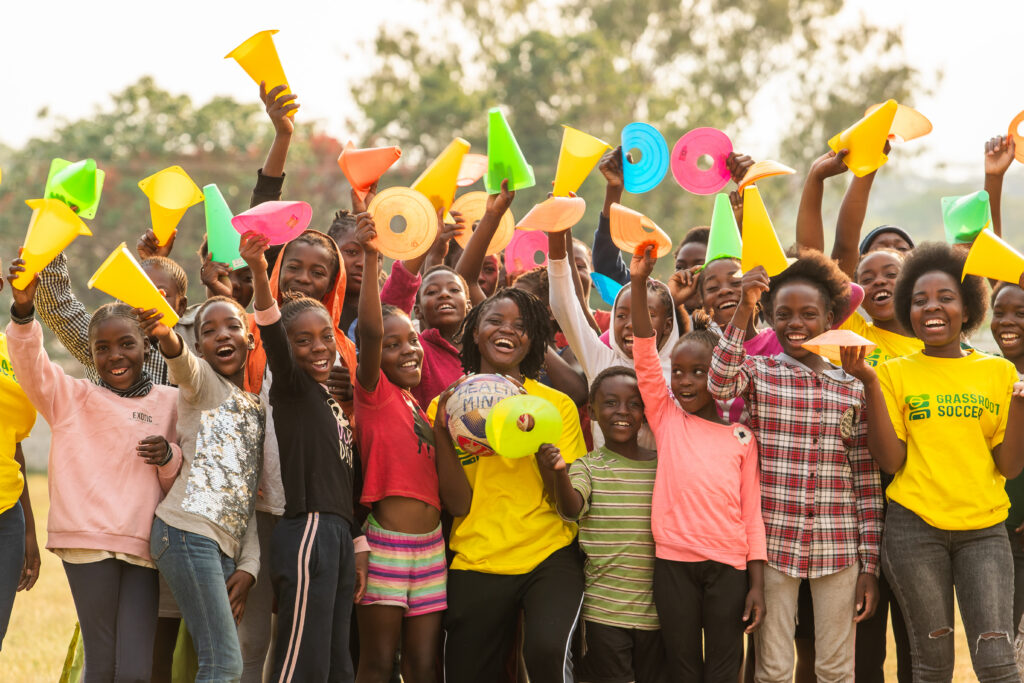
Few events unite the world quite like the FIFA World Cup, demonstrating soccer’s unique ability to connect people across cultures and communities. As millions tune in, the moment offers a timely reminder on how sports can reach young people far beyond the field. This belief underpins the work of Grassroot Soccer, a valued partner of the SNF Global Center for Child and Adolescent Mental Health at the Child Mind Institute. They utilize the power of soccer to advance youth mental health — and have reached more than 25 million young people around the world through this approach.
The partnership incorporates three interconnected areas:
Building capacity for frontline workers
Generating evidence
Contributing to thought leadership on child and adolescent mental health in low-resource settings
The 2026 Men’s World Cup in North America and the upcoming 2027 Women’s World Cup in Brazil present an important opportunity for the organization to take its mental health programming from sub-Saharan Africa and adapt it to the U.S. context.
We spoke with Grassroot Soccer’s Mental Health Specialist Charmaine Nyakonda about the organization’s approach, the impact of their collaboration with SNF, and the growing role of sports in improving the mental health of young people and communities globally.
Grassroot Soccer’s Mental Health Specialist, Charmaine Nyakonda
As international attention increasingly turns towards soccer’s global reach with the 2026 FIFA Men’s World Cup, what role can sports play in advancing youth mental health care across diverse communities?
Soccer is the most popular and accessible sport in the world. From the largest global stages like the World Cup to the most remote rural villages, it’s played everywhere on the planet. As the World Cup shows, soccer has the power to captivate across geographies, cultures, and time zones.
Soccer (and sport in general) is a powerful tool that teaches youth important life skills and character-building lessons like resiliency, hard work, courage, trust, and teamwork. On top of this, soccer’s universal appeal across diverse communities means using the language of the game can also be an effective way to break through the stigma around sensitive but pressing topics like mental health. This is why Grassroot Soccer uses soccer as a teaching tool for mental health.
Grassroot Soccer has successfully touched the lives of millions of young people across settings worldwide. What has the team learned about the universal role that sports can play in supporting mental health, resilience, and social connection?
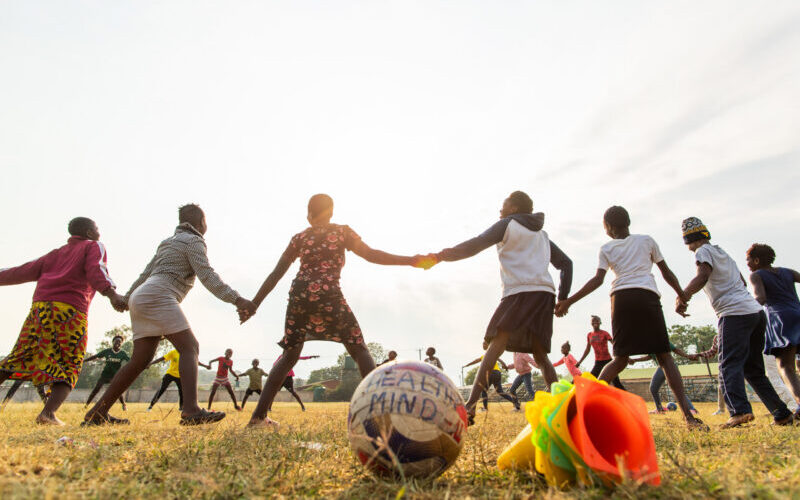
Across our programs, soccer serves as a universal entry point that hooks young people and meets them where they are. From there, our play-based activities use soccer games and metaphors to make learning about mental health fun and engaging. They break down stigma and create safe spaces where young people can feel comfortable opening up and being vulnerable. This drives exceptional participation and completion rates.
Importantly, our signature soccer-based mental health promotion and prevention program, called MindSKILLZ, is guided by core mental health design principles. This includes grassroots co-creation, trauma-informed practice, relationship-centered delivery, and strengths-based learning — which ensures that programs are ethical, culturally grounded, and safe for adolescents in both stable and crisis-affected settings.
“Soccer (and sport in general) is a powerful tool that teaches youth important life skills and character-building lessons like resiliency, hard work, courage, trust, and teamwork.”
What elements of Grassroot Soccer’s approach do you believe could serve as a transferable blueprint for other organizations seeking to improve outcomes for young people in different sectors and communities?
Our commitment to co-design with young people: We believe that young people are the experts on their lives and needs, so we intentionally apply the principle of “Nothing about us without us” to our work. We put this into practice by engaging young people at every point in the program life cycle to ensure our work meets their needs, from design to implementation to evaluation.
In 2023, Grassroot Soccer officially launched a Youth Advisory Committee (YAC) composed of young leaders that serves as an internal advisory and advocacy body for the organization. The Committee consists of SKILLZ Coaches, Master Coaches, and trainers between the ages of 18 to 30 from the communities we serve.
Mental health integration: Mental health promotion and prevention must be woven into every service that young people access. Mental health is both a driver and an outcome of young people’s overall well-being. Unaddressed mental health challenges undermine progress in HIV, sexual and reproductive health, education, and other youth development areas. And those same factors profoundly shape young people’s mental health in return.
What has made the partnership with the SNF Global Center particularly valuable, and what role do cross-sector and multidisciplinary partnerships play in expanding support and opportunities for young people?
The diverse cultural perspectives from Greece, Brazil, the United States, and South Africa — and especially youth voices — have enriched our understanding of the barriers young people face, the values that motivate them, and the creative solutions they come up with when it comes to mental health.
We’ve also benefited tremendously from the scientific and clinical expertise at the SNF Global Center. We were able to co-develop an open-access, near-peer emotional support online training that aims to enhance the capacity of frontline workers to identify, refer, and support common mental health problems among children and adolescents. This is especially important in low-resource settings.
Additionally, through thought leadership and advocacy collaboration, this partnership has been valuable in contributing to an important shift in the global conversation to framing low-resource settings (the Global South) as sources of innovation that can positively impact the Global North.
Over the years, what has most reinforced your belief in the power of soccer to support youth mental health, and what examples best bring that impact to life?
We’ve seen a few powerful stories of impact in humanitarian settings, where the need for mental health care is at its greatest but resources are at its most limited.
For example, in 2024, relentless downpours following a tropical cyclone caused rivers in Malawi’s Nkhotakota and Karonga districts to overflow, leading to widespread flooding impacting over 150,000 people and forcing many displaced residents to seek refuge in makeshift internally displaced person (IDP) camps.
In the camps, people had no access to mental health and psychological support services or safe spaces, and youth were not attending school. The Malawi Ministry of Health identified a major gap in mental health support for adolescents and young people and called on Grassroot Soccer to deliver MindSKILLZ to respond to this need.
Grassroot Soccer’s response team focused heavily on play, coping skills development, and trauma-informed support, creating critical psychological and physical safe spaces for youth within the camp environment.
Looking ahead, how would you like to see the conversation evolve at the intersection of sports, youth well-being, and mental health?
Firstly, we would like to see the conversation move beyond asking whether adolescent girls and young women like to play sports and instead asking, “What can we unlock when they do?”
For too long, sports (and soccer in particular) have been understood as primarily a significant part of adolescent boys’ and young men’s lives only. That assumption has shaped who gets access, who feels welcome, and whose well-being is centered. Grassroot Soccer’s own programming challenges this directly — we have reached more adolescent girls than boys, and in doing so have created space for girls to reconstruct gendered ideas about soccer. The conversation on sports, youth, and mental health needs to evolve to view sports games like soccer as universal tools that can transcend gender norms, age, and socio-economic background to support young people.
At the same time, we want to see the conversation take adolescent boys’ mental health more seriously, not less. Qualitative insights from Grassroot Soccer show that rigid masculine norms remain a profound barrier for boys.
More broadly, we ultimately want to see the conversation shift from individual resilience to multi-systemic access and inclusive enabling environments. Young people need culturally grounded, safe environments that work for them — and include them in design and delivery to help them develop into healthy adults who carry that capacity forward.
What do you see as the greatest opportunities for the next generation of young people, and what must we do collectively to help make that future possible?
With the largest generation of adolescents coming of age, their ability to live healthy and productive lives will have a profound impact on not just their own life trajectories, but also on the world. Tackling critical global issues from poverty to climate change will require a generation of young people who are strong, healthy, and empowered — and their mental health is central to all this.
At Grassroot Soccer, we are committed to investing in youth mental health to realize a world where mental health challenges have been normalized. We want young people to understand their own mental health, have practical coping skills to deal with frustration and aggression, and recognize the value in seeking support from others. This will help develop a population with reduced symptoms of depression and anxiety, as well as overall improved mental well-being. Then we can collectively realize our vision for a better future.
Through the SNF Global Center, the Child Mind Institute partners with organizations around the world to strengthen child and adolescent mental health systems by combining scientific expertise, local leadership, evidence-based innovation and youth voices. Grassroot Soccer is one example of how cross-sector partnerships can expand access to mental health support in communities where young people already learn, connect, and thrive.
BackgroundPerimenopausal women frequently experience physiological and psychological symptoms, including anxiety, depression, and panic disorders, mainly due to declining ovarian function and hormonal changes. Current options include pharmacotherapy, acupoint stimulation (AcuStim), and psychotherapy (psych), but their comparative efficacy and safety remain controversial.ObjectiveThis network meta-analysis (NMA) systematically compared pharmacotherapy, AcuStim, and psychotherapy for perimenopausal anxiety, depression, and panic disorder, assessing clinical efficacy, adverse events (AEs), and changes in the Hamilton Depression Rating Scale (HAMD), Hamilton Anxiety Rating Scale (HAMA), Kupperman Index (KI), Self-rating Depression Scale (SDS), Self-rating Anxiety Scale (SAS), Pittsburgh Sleep Quality Index (PSQI), and serum hormone levels.MethodsWe searched PubMed, Embase, Cochrane Library, Web of Science, CNKI, Wanfang, VIP, and SinoMed from inception to June 14, 2026, for randomized controlled trials (RCTs). A Bayesian NMA was performed, and the Surface Under the Cumulative Ranking Curve (SUCRA) was calculated.ResultsThe study included 131 RCTs, encompassing 11457 perimenopausal women diagnosed with emotional disorders. These trials evaluated three distinct treatment strategies. The NMA showed that the highest SUCRA probabilities were observed for drug_psych across HAMD (SUCRA = 92.4%), KI (SUCRA = 97.9%), SDS (SUCRA = 94.5%), PSQI (SUCRA = 98.1%), and follicle-stimulating hormone (FSH) (SUCRA = 96.1%) reduction and estradiol (E2) (SUCRA = 0.1%) elevation; for AcuStim_psych (SUCRA = 93.7%) in HAMA reduction; for psych (SUCRA = 98.9%) in SAS reduction; for drug_AcuStim in clinical efficacy (SUCRA = 9.0%) and luteinizing hormone (LH) reduction (SUCRA = 100%); and for control (SUCRA = 65.5%) in safety outcomes. In pharmacotherapy subgroup analyses, antidepressants (ADs)_Traditional Chinese medicine (TCM) ranked highest for HAMD (SUCRA = 87.2%) and safety (SUCRA = 82%), ADs_antipsychotics (AP) (SUCRA = 97.5%) for HAMA, and ADs_hormone replacement therapy (HRT) (SUCRA = 10.2%) for clinical efficacy.ConclusionPharmacological, acupoint stimulation, and psychological interventions each demonstrated therapeutic benefits for perimenopausal women with emotional disorders. Combination therapies generally showed more favorable efficacy across multiple psychological and endocrine outcomes than single-modality interventions, while no single treatment strategy was consistently superior across all outcomes. These findings may provide evidence to support individualized treatment selection according to patients’ clinical characteristics and therapeutic goals.Systematic review registrationhttps://www.crd.york.ac.uk/PROSPERO/, identifier CRD420261340530.
Perimenopause has entered the chat. Perimenopause—and its better-known relative, menopause—used to be considered taboo. Not anymore, thanks at least in part to TV doctors and social media influencers. Perhaps it’s my age, but these days, both my algorithm and my conversations with friends increasingly swing toward perimenopause.
Menopause is defined as the life stage that occurs a year after a person has had their last period. Perimenopause is the sometimes years-long period before that point, which can also feature all the symptoms we’d typically associate with menopause.
Today, information about perimenopause is more prevalent and accessible than ever. If you’re a woman in your 40s and you’re not feeling 100%, chances are there’ll be someone online ready to tell you you’re in perimenopause. And that you might want to start spending your money on blood tests, apps, and supplements or demanding hormone replacement therapy. But as regular readers might have guessed by this point, it’s not that simple.
Perimenopause tends to start around the age of 46 or 47. It’s during this time that many women start to experience some symptoms like hot flashes, irregular or unusually heavy periods, or anxiety, for example. And it can be heavy going. “Often symptoms are at their worst in the perimenopause,” says Mary Ann Lumsden, former president of the International Menopause Society.
That’s because hormones can fluctuate wildly. Levels of estrogen, progesterone, luteinizing hormone, and follicle-stimulating hormone can roller-coaster before leveling off after menopause. And that’s why, despite what some marketers will claim, there is no test for perimenopause.
“You can’t interpret hormone [measures] because they change so much,” says Lumsden. “And that is quite normal.”
That doesn’t mean women should have to put up with symptoms. But exactly how those symptoms are treated is another topic that has been clouded by misinformation.
Last week, I told a friend about some unusually bad pelvic pain I’d experienced. Her immediate advice was to find out if I was perimenopausal and, if I was, to request hormone replacement therapy (HRT) as soon as possible. If my doctor wouldn’t prescribe it, she continued, I should simply find another doctor who would.
This line of thinking has been heavily promoted on social media platforms, says Paula Briggs, a former chair of the British Menopause Society who currently leads the menopause service at Liverpool Women’s Hospital. But it’s not helpful.
HRT is essentially designed to top up or replace hormones like estrogen and progesterone, which naturally decline around menopause. There are lots of different drugs that can be taken in lots of different ways and at various doses.
While it does come with some risks and won’t suit everyone, HRT can be immensely helpful for many menopausal women. Not only can it help with many of the common symptoms of menopause, but it can also help prevent osteoporosis and maintain muscle strength.
But these drugs were trialed in, and approved for, menopausal women, says Lumsden. They won’t have the same effects in perimenopausal women. “If you give standard HRT, it may well get swamped by [the woman’s] own hormone production,” she says.
HRT can also cause abnormal bleeding in perimenopausal women, says Briggs.
She’s concerned about the messaging on perimenopause that is being promoted on social media. Particularly worrisome, she says, is the way younger women are being encouraged to assume they are perimenopausal and seek out HRT treatment.
“It’s almost cult-like, this idea that everybody must have HRT,” she says.
And then there are the supplements. There’s been an explosion in marketing for vitamins and supplements specifically targeted to middle-aged and menopausal women. But the evidence for these, too, is either limited or nonexistent. “I can’t see a mechanism for a lot of them,” says Lumsden.
Women who take these supplements don’t always know what they’re getting. Some of Lumsden’s patients have told her they take testosterone supplements to manage their symptoms. But blood tests revealed no increase in testosterone levels. “Whatever they’re getting, it’s not testosterone,” she says.
At any rate, not all the symptoms women experience in midlife can be blamed on hormones. The lengthy lists of perimenopause symptoms shared on social media include fatigue, brain fog, aches and pains, digestive issues, and more. “These do not link closely to the obvious menstrual cycle changes and hormone changes … across menopause,” says Nanette Santoro, a professor of obstetrics and gynecology at the University of Colorado Anschutz who studies menopause.
If you’re experiencing any symptoms, it’s worth getting them checked out to make sure they’re not being caused by something else. My own pelvic pain, for example, is almost definitely the result of endometriosis—a condition that can be made worse by HRT, Lumsden tells me.
At any rate, by the time women reach their 40s, many are already juggling care for children and aging parents, often while holding down a job (and dealing with pressures from societies that don’t appear to value older women). It’s an exhausting time—and not all of that exhaustion can be blamed on hormones.
As Santoro puts it: “Attributing everything unpleasant that happens to a woman over 35 to perimenopause is not based on any scientific evidence.”
This article first appeared in The Checkup, MIT Technology Review’s weekly biotech newsletter. To receive it in your inbox every Thursday, and read articles like this first, sign up here.