STAT+: ‘Synthetic lethality’ could trigger another round of biotech M&A

This story first appeared in Adam’s Biotech Scorecard, a subscriber-only newsletter. STAT+ subscribers can sign up here to get it delivered to their inbox.

Never before have I covered so much positive news about pancreatic cancer in such a short period of time. What happens next? Could Revolution Medicines buy Tango Therapeutics? Or, perhaps Bristol Myers Squibb goes all out and acquires Revolution Medicines?

To be clear, neither of these deals has been announced, or even rumored. I’m just playing the biotech M&A speculation game. But a strong case for something to happen can be made in the wake of Monday’s exciting report from Tango. In an early-stage clinical trial, patients with advanced pancreatic cancer benefited more from a combination of two targeted drugs — a PRMT5 inhibitor from Tango and Revolution’s pan-RAS inhibitor — than they might from each drug on its own.

Continue to STAT+ to read the full story…

GSK to Acquire Nuvalent for $10.6B, Boosting Cancer Pipeline with Precision NSCLC Treatments

GlaxoSmithKline (GSK) has agreed to acquire Nuvalent for $10.6 billion, the companies said, in a deal designed to strengthen the buyer’s cancer pipeline with Nuvalent’s precision oncology treatments—including three non-small cell lung cancer (NSCLC) therapies, of which two are under FDA review with decisions expected later this year.

Boston-based Nuvalent’s pipeline is headed by the ROS1 inhibitor zidesamtinib (NVL-520) and the ALK inhibitor eladalkib (NVL-655), which according to the company represent potential best-in-class, next-generation, highly selective treatments for NSCLC. Both are brain penetrant. The FDA has set target decision dates of September 18 for zidesamtinib and November 27 for neladalkib, both of which have been granted the agency’s Breakthrough Therapy and Orphan Drug designations.

Zidesamtinib is designed to treat NSCLC tumors driven by ROS1 that have developed resistance to currently available ROS1 inhibitors, including tumors with the prevalent G2032R “solvent front” resistance mutation. Zidesamtinib is selective in order to minimize CNS adverse events related to off-target inhibition of the tropomyosin receptor kinase (TRK) family, and potentially drive durable responses for patients with ROS1-mutant variants, Nuvalent says.

Eladalkib was created to address treating tumors driven by ALK that have developed resistance to first-, second-, and third-generation ALK inhibitors, including tumors with both single or compound treatment-emergent ALK mutations such as those involving the G1202R “solvent front” mutation. Eladalkib is also designed to avoiding TRK family inhibition and to treat brain metastases.

The third NSCLC asset of Nuvalent, NVL-330, is a HER2 inhibitor now under study in Phase I trials for HER2-altered NSCLC. In addition, Nuvalent’s pipeline includes an unspecified number of preclinical programs focused on “addressing the limitations of existing therapies for clinically proven kinase targets in oncology,” the company states on its website.

“Today’s acquisition is a multi-product deal, consistent with our approach to acquire assets that have clinically proven targets and meaningfully address an efficacy and/or tolerability gap,” GSK CEO Luke Miels said in a statement. “The two lead products are potential best-in-class assets that could launch this year if approved by the FDA and offer significant new treatment options to patients with two forms of non-small cell lung cancer.”

GSK investors were less enthusiastic as its shares on the London Stock Exchange on Monday dipped 0.5% to 1,903.50 pence. However, Nuvalent shares jumped 39% on Nasdaq to $123.25.

The $10.6 billion Nuvalent acquisition is the third largest merger-and-acquisition (M&A) deal announced this year, behind the €10.7 billion ($12.355 billion) cash buyout offer for Italian-based Recordati being pursued by CVC Capital Partners and Groupe Bruxelles Lambert, which aim to take the company private; and Sun Pharmaceutical Industries’ planned $11.75 billion purchase of Organon, the women’s health drug developer spun out of Merck & Co., in a deal expected to close in early 2027.

Immediate sales opportunities

The Nuvalent candidates, GSK added, present immediate new sales growth opportunities, improving profit contributions from 2027, and a platform in lung cancer for rapid expansion with GSK’s Ris-Rez, a B7-H3 targeted antibody-drug conjugate (ADC) now in Phase III clinical development.

In a presentation to investors after announcing a series of business updates on May 27, Nuvalent projected an ROS1+ NSCLC treatment could generate ~$1.4 billion to $2.1 billion in peak year sales, with about 40% of those sales (from ~$570 million to $855M million) expected to come from the U.S.—multiples above the ~$150 million in peak year sales attained in 2019 by Xalkori® (crizotinib), marketed by Pfizer and Merck KGaA.

An ALK+ NSCLC treatment would potentially be even more lucrative, Nuvalent said last month, with projected worldwide peak year sales ranging from ~$3.4 billion to $5 billion, of which the U.S. would account for 40% of sales, or between ~$1.35 billion and $2 billion—well above the $519 million in peak sales attained in 2023 by Alecensa® (alectinib), marketed by Genentech, a member of the Roche Group and created by Roche-owned Chugai Pharmaceutical.

“Since our founding, we have leveraged our deep expertise in chemistry and structure-based drug design to develop a portfolio of novel, potentially best-in-class kinase inhibitors. Our close collaboration with leading physician-scientists and patient advocates has driven remarkable enrolment, accelerating development and building confidence in the clinical profile of these drugs,” Nuvalent CEO James Porter, PhD, stated. “We’re excited that GSK has recognized the significant value these programs can offer patients and shares our vision for practice-changing innovation.”

Positive pivotal data

In announcing the acquisition, GSK cited positive pivotal data Nuvalent presented at the IASLC 2025 World Conference on Lung Cancer and the 2026 ASCO Annual Meeting. Data at both conferences showed potential best-in-class profiles for zidesamtinib and neladalkib, with both treatments designed to deliver longer effective treatment with better quality of life than current therapies, through high target-selectivity, durable treatment response, improved tolerability, enhanced blood-brain barrier penetration for tumor spread, and broader coverage of ALK and ROS1 mutations.

ROS1- and ALK-altered NSCLC primarily affect non-smoking adults aged 40-50, GSK and Nuvalent said—a patient population the companies described as uniquely defined and engaged.

GSK said it will commence a tender offer to acquire all of Nuvalent’s outstanding shares of Class A and Class B common stock at a purchase price of $124 per share in cash within 10 business days. The expected purchase price represents a 40% premium to the last closing price and a 26% premium to the 30 calendar day volume-weighted average price.

Net of cash acquired, GSK estimated its aggregate investment in Nuvalent to be $9.4 billion.

GSK said the acquisition will not change its 2026 full-year guidance range of 7-9% core operating profit and core EPS growth. The acquisition is expected to contribute to revenue growth from 2027, be incremental to GSK’s existing ambition for sales of >£40 billion (>$53.56 billion) by 2031, and strengthen the company’s core operating profit through the two-year period of loss of exclusivity for its aging blockbuster dolutegravir (2028-2030).

Dolutegravir is an HIV-1 integrase strand transfer inhibitor (INSTI) marketed as the monotherapy Tivicay® by Viiv Healthcare, in which GSK holds a 78.3% majority stake (and Shionogi, the remaining 21.7% after Pfizer cashed out its 11.7% stake, receiving $1.88 billion). Dolutegravir is also included in Viiv’s fixed-dose HIV combination therapies Dovato (dolutegravir and lamivudine) and Juluca (dolutegravir and rilpivirine).

Adding to core profit, EPS

GSK said it expected to add to its core operating profit in 2027 and core earnings per share (EPS) in 2029 by acquiring Nuvalent, even after accounting for cost-cutting synergies and “reprioritization,” which it defines as the shifting of personnel, capital, and other resources away from lower-yield, early-stage research or legacy programs toward higher-value clinical assets and corporate activities. Nuvalent reported 228 full-time employees, of which 144 are engaged in R&D, in its Form 10-K annual report for 2025, filed February 26.

Should the transaction close in Q3 2026 as expected, GSK said it expects low single-digit percentage dilution to core EPS this year through 2028.

The company said it will fund the Nuvalent acquisition primarily from new and existing debt facilities plus cash, with no impact expected to its credit rating. GSK ended Q1 with £3.442 billion ($4.608 billion) in cash and cash equivalents, up 1.3% from £3.397 billion ($4.548 billion) at the end of 2025.

The transaction is subject to customary closing conditions, including the tender of a majority of Nuvalent’s outstanding shares of Class A common stock in the tender offer and the expiration or termination of the applicable waiting period under the Hart-Scott-Rodino Act in the U.S. Soon after the closing of the tender offer, GSK expects to acquire any remaining shares of Nuvalent through a second-step merger under Delaware law at the same price per share.

GSK said it will account for the transaction as a business combination and assume Nuvalent’s existing revenue-sharing arrangements of low-single-digit royalties payable to Royalty Pharma and Deerfield. Royalty Pharma in December acquired for up to $315 million a pre-existing royalty interest in zidesamtinib and neladalkib from an undisclosed third party. Deerfield is Nuvalent’s largest shareholder.

“GSK’s proven track record, infrastructure, and expertise will support the successful commercialization of zidesamtinib and neladalkib, as well as accelerate advancement of our broader discovery pipeline,” Porter added.

The post GSK to Acquire Nuvalent for $10.6B, Boosting Cancer Pipeline with Precision NSCLC Treatments appeared first on GEN – Genetic Engineering and Biotechnology News.


Brain Aneurysm Study Identifies Structural, Immune Markers of Rupture Risk

According to some estimates, stroke is the second leading cause of death globally. One of the causes of a severe type of stroke are brain aneurysms. Now data from a new study suggests that certain cells in the brain may cause aneurysms to weaken and rupture. And it helps explain why some aneurysms burst while others do not. It also opens a door to new ways of potentially predicting and preventing strokes. All of the findings are covered in a new Nature Neuroscience paper titled “Cerebrovascular vulnerability and fibrosis in human brain aneurysms.”

Brain aneurysms, which are bulges in blood vessels in the brain, can go unnoticed for years before rupturing causing a severe, often deadly type of stroke. About one in 50 people in the U.S. has a brain aneurysm but predicting which ones are most dangerous remains challenging. Aneurysms can be repaired surgically or using other minimally invasive procedures but those decisions depend on the size and location of the aneurysm as well as patient specific risk factors. With the current study, “we’ve made major steps toward solving the mystery of how aneurysms form,” said Ethan Winkler, MD, PhD, assistant professor of neurological surgeon and senior author of the Nature Neuroscience study. “We’ve identified the cast of characters involved and seen which ones are implicated at different phases of disease.”

To get to those answers, Winkler and his team analyzed more than 100,000 individual cells from human aneurysms and healthy brain arteries. From these data, they identified 19 transcriptionally distinct cell types and determined which genes were active in each. They also mapped how the cells were organized within the blood vessel wall.

“Our atlas of human brain aneurysms, as well as cell-resolution spatial transcriptomics, revealed that pathological cerebrovascular remodeling occurs with the loss of structurally supportive smooth muscle cells and the emergence of activated perivascular fibroblasts, which re-populate the vascular wall and express multiple genes linked to aneurysm risk,” the scientists wrote. 

Specifically, they found that vessels in aneurysm tissue had disorganized layers, and that many of the smooth muscle cells that allows the vessel walls to expand and contract had disappeared. In their place were scar-forming fibroblasts, which the team dubbed “activated fibroblasts.” These stiffened the arterial wall, making it less able to flex as blood flowed through. These cells also expressed genes that are linked to an inherited risk of aneurysm. The scientists also identified a type of macrophage that accumulated inside the arterial wall near the fibroblasts. The data showed that these specialized macrophages express a gene that is typically associated with bone tissue. 

Further testing revealed the presence of a feedback look between the two cell types. Specifically, the activated fibroblasts release a signal that triggers the macrophages to produce enzymes that degrade the blood vessel’s structural support. The scientists confirmed that this was the case by blocking the signals sent to the macrophages. They observed that the macrophages were less likely to produce the destructive enzymes when the signal was blocked. 

This process where vessel walls lose muscle cells followed by the buildup of scar tissue and immune cell activation helps explain why smaller aneurysms, which are often considered low risk, can still rupture. It jibes with Winkler’s own clinical experiences. He noted that more than half of the ruptures that he treated early in his career occurred in aneurysms below the typical surgical threshold of seven millimeters.  

This study brings scientists and clinicians one step closer to understanding how aneurysms form and perhaps being able to intervene earlier to prevent them. As the scientists note in the paper, “the molecular blueprint provided by this study substantially extends our mechanistic understanding of brain aneurysms and nominates new cells and pathways with translational promise for the development of therapeutic options.” This could involve blocking the signals that fibroblasts send or by inhibiting the immune response to those signals.               

The post Brain Aneurysm Study Identifies Structural, Immune Markers of Rupture Risk appeared first on GEN – Genetic Engineering and Biotechnology News.
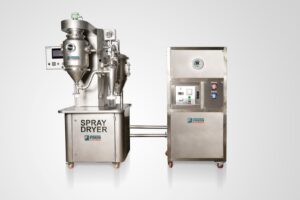
Symeres Expands Spray Drying Capabilities at Its U.S. New Jersey Site

Netherlands CRDMO Symeres expanded its spray drying capabilities at its Cranbury, NJ CMC development site to support formulation development for poorly soluble and development-challenged small-molecule drug candidates.

The expanded capability is designed to support bioavailability enhancement strategies, including amorphous solid dispersions (ASDs), particle engineering and solubility optimization for compounds progressing from preclinical development through Phase II clinical activities.

The investment strengthens the company’s integrated CMC offering by combining spray drying, formulation sciences, analytical characterization, solid-state sciences, and process development within a single development environment, according to Henning Steinhagen, CEO of Symeres. This enables sponsors to progress from early formulation screening through to clinical-ready material within one coordinated scientific framework, reducing tech-transfer risk, accelerating decision-making, and improving development continuity, he adds.

By expanding spray drying capabilities within its integrated Cranbury CMC site, Symeres says it can help clients address developability challenges earlier, reduce operational complexity, and support faster progression into clinical development. [Symeres]

“Our investment in spray drying reflects our commitment to supporting customers across the entire drug development journey,” continues Steinhagen. “While Symeres is widely recognized for its discovery expertise, this expanded capability further strengthens our ability to support complex molecules through development and into the clinic.”

“An increasing proportion of modern small molecule drug candidates require advanced formulation approaches to achieve acceptable bioavailability and clinical performance,” explains Paul O’Shea, managing director at Exemplify BioPharma, a Symeres company. “By expanding our spray drying capabilities within our integrated Cranbury CMC site, we can help clients address developability challenges earlier, reduce operational complexity, and support faster progression into clinical development.”

A Symeres spokesperson, who says the Cranbury site now supports laboratory-scale and pilot-scale spray drying workflows for a range of formulation development activities, including rapid material screening, process optimization and scalable process development, notes that the platform is particularly suited to Biopharmaceutical Classification System (BCS) Class II and IV compounds, highly lipophilic molecules and targeted therapies requiring enhanced oral exposure.

The post Symeres Expands Spray Drying Capabilities at Its U.S. New Jersey Site appeared first on GEN – Genetic Engineering and Biotechnology News.

In Silico Devices May Improve Drug Manufacturability

Using in silico tools to augment physical experiments can help identify manufacturability issues early in development. That’s according to an AI technology company that spoke on a recent panel.

BigHat Biosciences, which was among the companies presenting at PEGS Boston, explained that developing in silico models of antibody yields using a cell-free expression system allows the exploration of a wider range of mutations.

And this, in turn, lets companies better optimize their product for manufacturability.

“There’s only so many experiments you can do by putting an antibody into CHO [Chinese Hamster Ovary] cells,” explains Hunter Elliott, PhD, vice president of machine learning at BigHat Biosciences.

“With in silico tools augmenting that exploration side, we can build models that make predictions for improved sequences, screening many more antibodies in silico than we need to send to the lab.”

Elliott’s talk came alongside a panelist who argued it was important for preclinical researchers to communicate with the manufacturing departments of their companies to make a success of the latest generation of harder-to-manufacture drugs.

Speaking about his own products, Elliott argues that using in silico tools to explore a wider range of possible antibody mutations means it’s possible to select the handful with the highest possible yields as well as other improved biophysical properties.

“You’re derisking your processes because you’re combining your experiments with the in silico tools you’re using,” he says.

Talking about the panel, Elliott adds that discussion around the limitations of models included the lack of publicly available data on manufacturability and developability, especially for potential products that have failed to make it to the clinic.

Some have expressed concern that using in silico tools might also accidentally screen out the best-performing antibodies. Although, he says, “my personal opinion is that the ability to predict properties of sequences without sending them into the lab makes it easier for us to optimize from a suboptimal starting sequence.”

“With these models, we can keep this imperfect antibody in the loop and take it forward through several rounds of optimization, and then, instead of a candidate molecule being killed early on, it might be engineered into manufacturability.”

The post <i>In Silico</i> Devices May Improve Drug Manufacturability appeared first on GEN – Genetic Engineering and Biotechnology News.

STAT+: Your sepsis algorithm shouldn’t require a time machine

You’re reading the web edition of STAT’s AI Prognosis newsletter, our subscriber-exclusive guide to artificial intelligence in health care and medicine. Sign up to get it delivered in your inbox every Wednesday. 

The verdict is in: “Health care” will remain two words instead of one at STAT. You can click here to read more about the decision and what STAT readers on both sides of the issue said in our survey.

You know what else is two words? Ice cream. I got an ice cream maker at a garage sale over the weekend. Send your best ice cream recipes, AI story tips, and your questions to aiprognosis@statnews.com

Continue to STAT+ to read the full story…

Gorilla Adenovirus Brings Natural Edge to Cancer Therapy

When ReiThera’s scientists first turned to a gorilla-derived adenovirus, they were thinking about vaccines. What they found instead might reshape how the field thinks about virus-based therapy for cancer.

Angelo Raggioli, PhD, head of technology development at ReiThera, describes a platform built on a gorilla adenovirus that was discovered, not designed. He adds: “Several therapeutically relevant properties appear to be embedded in the native biology of the vector itself.” For example, the group C gorilla adenovirus showed low seroprevalence in humans, reduced liver sequestration after systemic delivery in mouse models, a natural tendency to go to the lungs, and intrinsic replication selectivity in human cancer cells, sparing non-cancerous cells.

That combination addresses some of the most persistent obstacles in virus-based therapy. Pre-existing immunity against common vectors can blunt therapeutic efficacy before treatment begins, while off-target organ uptake—particularly hepatic sequestration of adenoviral vectors—remains a fundamental challenge for intravenous administration. A gorilla-derived isolate sidesteps both problems: it is naturally distant from human adenoviruses (avoiding the impact of pre-existing immunity shaped by prior exposure), and serendipitously avoids liver sequestration.

The biodistribution profile is equally important. Reduced liver targeting after systemic delivery, plus an attraction to the lungs, positions the platform not only for oncology applications but potentially for pulmonary gene therapy.

Raggioli adds that adenoviral vectors offer cargo capacities of about 36 kilobases, which is a significant advantage over the roughly 4.5-kilobase ceiling of adeno-associated viruses. For diseases requiring delivery of large transgenes, that capacity difference could be clinically decisive.

In oncology settings, the vector has demonstrated selective replication in tumor cells while sparing normal tissue, which was a property the ReiThera team observed rather than engineered. “While much of the field is actively engineering vectors to retarget specific tissues, in this case, we started from the natural tropism of the virus and began exploring how to leverage those native biological properties therapeutically,” Raggioli explains.

The platform has also been armed with therapeutic payloads. As a proof of concept, the team encoded a single-chain anti-HER3 antibody directly into the viral genome, achieving selective expression in replication-permissive tumor cells. This positions the platform within a broader trend in oncolytic virology: viruses are increasingly expected to serve not merely as cytolytic agents but as localized delivery systems for antibodies, immune modulators, and other complex biologics.

That evolution reflects a shifting understanding of how oncolytic viruses actually work. Tumor cell lysis alone is no longer considered sufficient; the immunological consequences of that lysis—whether it triggers a productive antitumor immune response—are central to therapeutic activity. Engineering for that immunogenic conversion while preserving replication potency and tumor specificity represents one of the field’s most demanding design challenges.

“An additional strength of the platform is that, for vaccine and oncolytic applications, we can manage the entire process internally, from genome engineering to clinical-grade manufacturing,” Raggioli says.

What began as a search for a better vaccine backbone has yielded something potentially more versatile: a vector whose biology may be doing therapeutic work that other platforms have to build in from scratch.

The post Gorilla Adenovirus Brings Natural Edge to Cancer Therapy appeared first on GEN – Genetic Engineering and Biotechnology News.