

Background: As individuals with HIV live longer, many now face the health consequences of aging and multimorbidity, known as disability. Exercise can mitigate disability; however, engagement in exercise among adults living with HIV varies. Technology-based interventions, such as telerehabilitation, may help mitigate geographical, financial, and time barriers to community-based exercise (CBE). However, little is known about the experiences with technology uptake and usage among adults living with HIV. Understanding these experiences is essential to inform the design of inclusive, accessible, and sustainable online interventions. Objective: This study aimed to describe experiences with technology uptake and usage among adults aging with HIV participating in a 6-month online CBE intervention and explore how these experiences changed over time, from baseline to postintervention. Methods: We conducted a longitudinal qualitative descriptive study and secondary analysis using interview data from adults living with HIV who were engaged in a CBE intervention study in Toronto, Canada. Participants engaged in a 6-month online CBE intervention consisting of thrice-weekly exercise supervised biweekly through online personal coaching sessions, weekly group exercise classes, and monthly self-management education sessions (via Zoom). The technology used included Zoom software and a webcam, as well as the Sweat for Good YMCA app and the YMCA Virtuagym website; participants wore a wireless physical activity monitor (Fitbit Inspire 2) throughout. Participants completed interviews at baseline and postintervention. We conducted a group-based content analysis of interview transcripts, focusing on digital access, setup, usage, and perceptions of technology. Questionnaire data describing digital literacy and access to technology provided additional context to the interview data. Results: Eleven participants completed at least one interview. We analyzed 19 interview transcripts from 11 participants (women: n=6, 55%; men: n=5, 45%; median age 52, IQR 45-60 y). Experiences with technology uptake and usage among adults aging with HIV were characterized by four components: (1) preparations for technology (technology setup), (2) interactions with technology (preferences for different types of technology, preferences for mode of delivery, and ease of usage), (3) facilitators and satisfaction with technology (facilitators to technology uptake and usage and satisfaction with technology), and (4) challenges and frustrations with technology (barriers to technology uptake and usage and frustrations with technology). Experiences with technology across participants were influenced by intrinsic contextual factors (prior exposure to technology) and extrinsic contextual factors (COVID-19 pandemic and technological and social support). Conclusions: Experiences with technology among adults aging with HIV engaging in an online CBE intervention varied from increasing ease of use to increasingly burdensome over time. Results highlight the need to incorporate personal preferences and ongoing technological support when implementing online CBE with adults aging with HIV.
<img src="https://jmir-production.s3.us-east-2.amazonaws.com/thumbs/0a8d6a5175ae1cbe3aafc0c9c2827f3c" />
Developing forensic patient-oriented research guidelines: a rapid review using an integrated knowledge translation approach
This paper reports findings from a rapid literature review that informed new guidelines for conducting patient-oriented research in forensic mental health settings. The project adopted an integrated knowledge translation approach at a mental health hospital in Ontario, Canada, engaging a project team that included current forensic patients, hospital staff, and members of an international community of practice. Sources were identified through nine academic databases and targeted grey literature searches, screened independently by two reviewers and extracted using a structured template guided by an a priori framework developed with patients and staff at a knowledge exchange event. Findings were iteratively refined through a patient advisory group, an implementation study, ethnographic observations, and related integrated knowledge translation activities conducted alongside the review. Together, 31 academic and grey literature sources informed a framework organized around five core dimensions: 1) Resourcing, orientation, and training; 2) Confidentiality, consent, and compensation; 3) Relationships, shared understanding, and support; 4) Levels of engagement; and 5) Evaluation and sustainability. Guided by cross-cutting principles common among participatory mental health research, such as dignity, trust, respect, and a commitment to redressing power and attending to forms of epistemic injustice, the guidelines respond to distinctive constraints of forensic environments while highlighting opportunities to promote authentic co-production and sustain patient involvement in research. Recommendations include dedicated resources and capacity-building for patients; relational, ongoing consent practices co-developed with patients; flexible patient researcher roles with fair, paid compensation; and sustained institutional support for participatory practices. We call on forensic hospitals and secure settings to adapt and evaluate these guidelines and to invest in expanding patient leadership to advance the field.
Vitamins A and D Help Improve Lung Function in People with Asthma
Having higher levels of vitamins A and D in the body could help improve lung function in adults with asthma, suggests research led by Brigham and Women’s Hospital in Boston.
The study, published in the journal Thorax, also showed that higher vitamin A levels could also benefit lung health in children with asthma.
“Vitamins A and D are key regulators of gene expression involved in lung development and immune function…Both vitamins have complex roles in asthma and lung function,” write lead author Michael McGeachie, PhD, assistant professor at Brigham and Women’s Hospital, and colleagues.
“Vitamin A deficiency is more common in people with asthma and is linked to airway hyperresponsiveness. Moderate intake in childhood may improve lung function and reduce asthma risk, whereas excessive intake may increase adult-onset asthma risk. Vitamin D deficiency is associated with poorer lung function, increased exacerbations and worse disease control, although results are variable due to diet, age and sun exposure.”
In this study, the researchers evaluated data from two asthma study cohorts—the Genetic Epidemiology of Asthma in Costa Rica Study including 1,165 children with asthma and the adult Omic Determinants of Longitudinal Lung Function in Asthma cohort including 1,041 adults with the condition.
The researchers looked at both circulating vitamin A and D in both groups and also looked at links with epigenetic regulation.
In children, there were no significant links between lung function and vitamin D levels. Higher vitamin A levels were linked to better breathing capacity though. For each step up in vitamin A levels, the amount of air the children could blow out in the first second was about 2.5 percentage points higher, and the total amount of air they could breathe out was about 7.6 percentage points higher.
In the adults, one step up in vitamin A levels was linked to a 4.7 unit increase in the amount of air they could blow out in the first second and a 3.4 unit increase in the total amount of air they could breathe out. The effect of vitamin D levels in this group was smaller, but statistically significant, with lung function improvements between 0.16-0.18 units per step up in vitamin D levels.
The researchers also looked at DNA methylation and at several epigenetic clocks that estimate a person’s biological age from methylation patterns in the adult cohort. They found that adults with higher vitamin A and vitamin D levels had fewer methylation tags at key control sites in the IRF5 gene than those with lower levels and showed changes in small regulatory micro RNAs that respond to vitamin levels. These epigenetic changes were linked to better lung function and slower biological aging.
The epigenetic tests suggest that vitamins influence lung function and aging partly by producing these epigenetic changes, rather than only through a direct effect, according to the researchers.
“While future studies to replicate these findings in independent populations are needed to confirm the generalizability and robustness of these observations,” write Sze Man Tse, MD, and Geneviève Mailhot, PhD, of the CHU Sainte-Justine Research Center, Montreal, and the University of Montreal in an accompanying editorial in the same journal, “subsequent interventional studies examining the impact of vitamin supplementation on biological ageing and on IRF5 function will be particularly relevant.”
The post Vitamins A and D Help Improve Lung Function in People with Asthma appeared first on Inside Precision Medicine.
Institutional Member Updates: Summer 2026
Institutional Members are clinics and programs in the US and around the globe that offer residential and/or intensive treatment for OCD and related disorders, are specialty outpatient clinics with a large staff dedicated to treating OCD, or provide low-cost treatment options through research studies.
Below are quarterly updates from our Institutional Members organized alphabetically. Click the (+) to open each menu and read updates and find contact information for clinics near you:
Do you work at a residential program, intensive outpatient program (ITP), or specialty outpatient clinic and looking to advertise your services? Learn more about becoming an Institutional Member and having your program updates included below!
The post Institutional Member Updates: Summer 2026 appeared first on International OCD Foundation.
CCRM Ireland Would Be Established to Hasten Translation of Advanced Therapies Into Patient Treatments
Rinn Advanced Therapies, Ireland’s national research center for personalized immune cell therapies, signed a Memorandum of Understanding (MOU) with CCRM, which focuses on cell and gene therapy development and commercialization. The agreement outlines a strategic collaboration to explore establishing a CCRM-affiliated advanced therapies hub in Ireland.
The proposed initiative, referred to as CCRM Ireland, is designed to position Ireland as a key node within CCRM’s global network of advanced therapies hubs and further strengthen Ireland’s expertise in next-generation biomedicine. CCRM’s global network comprises CCRM in Canada, CCRM Australia, and CCRM Nordic in Sweden.
“The idea of collaborating with CCRM to establish CCRM Ireland is very attractive because of our shared commitment to improving patient outcomes,” said Sakis Mantalaris, PhD, director of Rinn Advanced Therapies. “By combining Rinn Advanced Therapies’ focus on novel personalized immune cell therapeutics with CCRM’s global platform, CCRM Ireland can accelerate the translation of cutting-edge science into accessible, high-quality treatments.”
Through this collaboration, Rinn Advanced Therapies will lead the evaluation of how Ireland’s integrated ecosystem—spanning academia, health care, biomanufacturing and research—can be aligned with CCRM’s model for accelerating the development of advanced therapies. The partnership will explore how to advance the design and clinical translation and delivery of personalized immune cell therapies, while also leveraging Ireland’s biopharmaceutical manufacturing skills.
CCRM Ireland would potentially support investment, venture creation and commercialization pathways, following CCRM Canada’s proven model.
“As cell and gene therapies move from scientific promise to clinical reality, no single organization, region or country can build this industry alone,” says Michael May, president and CEO, CCRM. “CCRM’s global hubs are designed to connect world-class research, manufacturing expertise, capital and talent into a coordinated network that accelerates the development and commercialization of advanced therapies.
By creating hubs around the world, and in the spirit of the Prime Minister of Canada’s call for middle-power countries to work together, with CCRM Ireland, we can help innovators overcome barriers to scale, strengthen local ecosystems and, most importantly, bring life-changing treatments to patients faster.”
Rinn Advanced Therapies brings together a network that includes universities, hospitals, and national organizations with a shared mission to develop and deliver personalized immune cell therapies that are more effective, accessible and affordable for patients.
CCRM will contribute its expertise in establishing and operating advanced therapies hubs, drawing on its experience in Canada and its growing international network. This includes proven frameworks in governance, GMP manufacturing, quality systems and commercialization.
The post CCRM Ireland Would Be Established to Hasten Translation of Advanced Therapies Into Patient Treatments appeared first on GEN – Genetic Engineering and Biotechnology News.
Heat waves mess with your brain. Scientists are trying to figure out why.
It’s been hot in London this week. Really hot. A dangerous heat wave has hit Western Europe. Yesterday, the UK recorded its highest ever June temperature at 36.1 °C (about 97 °F). But as the weather app on my phone confirmed, it felt like 39 °C.
It’s frightening that we are seeing such temperatures in the UK in June. According to the Met Office, the country’s national weather and climate service, June temperatures peaked at an average 19 °C (66 °F) in England between 1991 and 2020. Across Europe, the heat wave is likely to cause thousands of deaths. There will be other awful consequences for agriculture, infrastructure, and the health system.
But this week I want to look at what the heat does to our minds and brains. Personally, I’ve found it almost impossible to think straight. The heat is distracting and my mind is foggy. I dread to think about the conditions of people who work outdoors, in even hotter regions.
It’s not just exhaustion and confusion. The effects of heat on the brain can be deadly. And researchers are still trying to figure out why.
Studies have confirmed that as temperatures rise, people seem to get more irritable and more violent. Most of these studies are based on associations, though. It’s difficult to directly study how a heat wave might affect our thinking, says Catherine Thompson, a cognitive psychologist at Liverpool Hope University.
She has been studying the effects of extreme heat on firefighters instead. It’s easier to measure people’s cognitive skills before and after they undergo scheduled training that involves entering a burning building.
It’s early days, but the team found that firefighters found it harder to focus and control their attention immediately after heat exposure—something people in heat waves can empathize with, I’m sure.
The firefighters’ skills returned to normal after 20 minutes or so of cooling down. But they’d experienced just 15 minutes of intense heat exposure. Thompson doesn’t know what the effects of living through a days-long heat wave might be—or how long they’ll last. Figuring that out might involve shipping cognitive test kits to thousands of people during the few days’ notice of an impending heat wave. “My guess [is] that no one’s done it because it’s just so difficult to do,” says Thompson.
Still, researchers can learn about some of the impacts of heat waves through studies after the fact. And those studies suggest that the heat seems to have more disastrous outcomes for people with mental-health disorders.
Those outcomes become apparent when temperatures rise above what is considered typical for a given region. “There seems to be a correlation where the hotter it gets, especially during the hottest times of the year, the worse the mental-health outcomes,” says Joshua Wortzel, who directs the Heat-Mind Lab at Hartford HealthCare in Connecticut.
In a study published in 2023, Emma Lawrence at the University of Oxford, who studies the effect of climate change on mental health, and her colleagues reviewed the evidence linking mental-health outcomes to ambient outdoor temperatures. They found that during heat waves, there was a 9.7% increase in the rate of hospital admissions for people with such conditions.
“People who live with mental-health conditions are among the most susceptible to the physical impacts of heat,” says Lawrence. People with schizophrenia were found to have been three times more likely to die during the record-breaking heat wave that affected Canada in 2021, for example.
In order to protect people, we need a better understanding of the mechanisms underlying these effects. After all, a lot of things change when it’s very, very hot. Some people may end up stuck indoors, avoiding outdoor play and exercise, and it can be difficult to get a good night of sleep, for example. Sleep, socializing, and exercise are all really important for our mental health.
But whether unusual heat does something specific to our brains is, as Wortzel puts it, “the million-dollar question.”
Research in lab animals suggests that excessive heat can alter the way chemical signals work in our brain. The levels of neurotransmitters like serotonin, for example, seem to increase when rats and mice are exposed to high temperatures, according to multiple studies. The heat may also interfere with the way networks in our brains communicate with each other. It might affect the way oxygen reaches our brain cells.
“There are so many biological reasons why brains may be negatively affected by heat,” says Wortzel.
Emerging research suggests that for whatever reason, children and young people are among the most vulnerable. In research published earlier this week, Wortzel and his colleagues saw a 2.97% increase in the suicide rate among people in the US aged 15 to 24 for every 1 °C increase in average monthly temperature. That’s more than double the increase seen in people over the age of 24 (which is concerning in its own right).
Other work hints that heat exposure might have long-term consequences for children’s brain development. Babies who were exposed to either extreme heat or cold appeared to have altered white matter by the time they were nine to 12 years old—although it’s not clear how these impacts might affect an individual child.
“It seems that extreme temperature exposure for very young children may affect their brain development,” says Lawrence, who spoke to me from Oxford. She was meant to be in London for Climate Action Week, but her event, which focused on extreme heat, ended up being canceled … owing to the extreme heat.
We are living through the effects of climate change. And that brings a new urgency to the question of how heat affects our brains. Children born in 2020 are predicted to experience around seven times the number of heat waves their grandparents did, says Lawrance. “[We] need to be serious about adapting to a warming world.”
This article first appeared in The Checkup, MIT Technology Review’s weekly biotech newsletter. To receive it in your inbox every Thursday, and read articles like this first, sign up here.
Inside the world’s deepest and longest subsea road tunnel
It’s cold, it’s very, very noisy, and—if I can be quite honest with you—I’m not feeling super relaxed.
I’m currently around 300 meters, or 1,000 feet, beneath the North Sea, in a dark, dank cave. It smells weird. And I am increasingly aware of the pressure from millions of tons of seawater just above my head, pushing down with a force of more than 500 pounds per square inch. Picture a baby rhino standing on a postage stamp.
Only fabulous engineering is keeping me from being crushed, drowned, disappeared. My safety goggles are foggy.
Just a few hundred meters away, someone is about to blow up a giant rock wall. Luckily, earlier that day I was given a full safety briefing, and I’ve got a special hard hat on. “Don’t worry—if you don’t make it, we’ll have your stuff sent back to your office,” geologist Anne-Merete Gilje tells me, straight-faced. Ah, Norwegian humor.
“It’s kind of a lifestyle. You have to be a little bit crazy to work underground all the time.”
Niclas Brusehed, tunnel foreman, Implenia
I’m in this odd situation under the iconic fjords of Norway to visit what will soon become the world’s longest and deepest subsea road tunnel, called Rogfast (short for “Rogaland Fixed Link”). I want to understand how you make something as audacious as a 26.7-kilometer (16.6-mile) highway that sits 390 meters (1,280 feet) below the sea at its deepest point. And also—at a time when it can feel hard to get anything done, especially in the US—to reassure myself that ambitious engineering is still possible. That we can still make things.
The Norwegians already have the world’s longest subsea tunnel, the 14.4-kilometer Ryfylke, though Rogfast will dwarf it. Their expertise has attracted attention from Japan, Spain, Morocco, and even a number of US states, whose representatives were due to visit the site in May, just weeks after I went. They, too, want to know how Norway does it.
The answer: tons of explosives.
The entire endeavor feels like an obstinate refusal to give in to physics and geology. “It’s always exciting,” Niclas Brusehed, a tunnel foreman at Implenia, a Swiss firm involved in the project, tells me. “Every blast creates a new world.” There’s not just the blasting of the tunnel itself—although that is an epic project on its own—but an immense logistics challenge involving huge ventilation shafts, extreme pressure, underground roundabouts, and the complex Norwegian geology. Oh, and the water. So much water.
“This is the longest continuous blast on the sea,” says John Olaf Østerhus, assistant project manager at Implenia. “Never been done before. We can’t buy a book to see how we do this.”
All right, time to fish my phone out of my safety suit—don’t want to forget this.
On another planet
Arriving at the rock face where the tunnel hits seabed feels like being on the moon. It’s a huge slab of stone at the end of a long, dark, wet, wide passageway that’s lit (barely) by electric lights. Giant vehicles carting tons of rocks rumble past periodically, and we pull to the side of the road to let them by.

COURTESY OF NORWEGIAN PUBLIC ROADS ADMINISTRATION
Workers clock in for 12-hour shifts, 6 a.m. until 6 p.m., deep in the bowels of the Earth where no natural light can reach. Twelve days on, 16 days off. They eat their lunch at a table in this damp cave surrounded by portacabins plastered with safety notices. “It’s kind of a lifestyle,” says Brusehed, laughing. “You have to be a little bit crazy to work underground all the time.”
These crazy engineers are here to make tunnels the Norwegian way. The nation frequently uses what’s known as the drill-and-blast method instead of the tunnel-boring machines that are more typical elsewhere. This approach offers more flexibility for long, complex operations with varied rock types. Each blast adds about five to six meters to the tunnel.
Rogfast is being built inward from the ends to speed things up. The construction company Skanska is leading from the north, coming from the island of Vestre Bokn; Implenia has joined a company called Stangeland to tunnel from Randaberg in the south, which is where I am. Both teams use multiple laser scans each day to consistently measure their orientation and check that the tunnel is exactly where it should be. The two ends should meet sometime in 2029, with no more than just a few centimeters of deviation.

COURTESY OF NORWEGIAN PUBLIC ROADS ADMINISTRATION
Norway has constructed more than a thousand kilometers of tunnels over the past several decades. The depth and length of these make the best efforts to date of Elon Musk’s Boring Company—a mere 2.7-kilometer tunnel in Las Vegas that is just 3.6 meters wide—look rather pathetic. The country’s spectacular setting makes such builds necessary; while Norwegians are proud of having the second-longest coastline in the world after Canada, getting up and down the west coast requires multiple ferry rides between islands, which can move extra slowly when the weather’s bad.
After it’s completed, which is scheduled to happen in 2033, Rogfast should help eliminate two ferry routes and cut the five-hour journey between the southwestern cities of Stavanger and Bergen by 40 minutes. It will funnel four lanes of traffic deep beneath the fjords of Boknafjord and Kvitsøyfjord, and at one section a relatively scant 50 meters of rock will separate the drivers speeding through the tunnel from the bottom of the North Sea. There are also, delightfully, two undersea roundabouts located 220 meters below sea level.
But the first job is to contend with all that water.
The never-ending battle
Subsea tunneling is defined by a constant, ultimately unwinnable battle with the ocean. The sheer weight of the sea above you, and the crushing pressure, means the water will always find a way in. “It’s the volume and the pressure that’s the biggest risk,” says Ole Magne Rønning, project leader for Implenia/Stangeland.
So before tunnel engineers blow stuff up, they need to check for leaks. Into the rock face ahead of them, they drill a number of narrow holes that go 25 to 30 meters deep to see how much water comes through. Even a small probe can unleash a torrent within seconds, says Rønning. When road traffic eventually rumbles through these tubes, water will still trickle from the rocks; it will be redirected into mini reservoirs dotted throughout the tunnel network before being pumped back out.
Since stopping the water entirely is impossible, the game is instead to push it away as best you can. If the leakage in front of the rock face exceeds a certain limit—around four liters per hole per minute—then the next stage is “grouting”: pumping a mixture of cement-like sludge into new holes that fan out in the ceiling above and around the face. Ideally, you address the leaks that are ahead of you; “it’s a lot more difficult to stop a leak that’s behind you,” says Rønning.
At one point deep below the sea, I chat with Tarald Johan Nomeland, the project’s grouting specialist. He’s big and bearded, perhaps one of the most Norwegian-looking men I’ve ever met. He stands, towering above me, and shakes my hand in his giant bear-like paw. Grouting is in Nomeland’s family; his dad did it too. He loves it. “There’s not necessarily just one solution to a problem,” he says, eyes flashing with delight as he describes fighting the interminable battle with the water. “There may be many solutions.”
The amount of grouting needed determines how fast the project can move. On the Skanska side, for example, some weeks the face moves 30 meters; others, as few as 10.
This isn’t made any easier by the rock itself. The seabed around Norway was shaped by glaciers during the Ice Age. As the ice retreated, it dragged softer rock with it, carving out the fjords for which the nation is so famous. But this legacy makes digging subsea tunnels particularly gnarly. Much of what’s left is the hard, difficult-to-break stuff.
And it’s not just one type of rock, either. There are “big wide areas where we don’t know what’s down there,” says Gilje, the geologist who is a project manager for the Norwegian Public Roads Administration, which is in charge of the entire project. Before any construction started, boats took core samples from the seabed along the planned tunnel route. Seismic surveys from the ocean surface—like those that look for oil in the region—helped fill in the gaps.
Each kind of rock presents its own challenges, so the engineers “have different techniques for different problems,” Gilje explains. For example, they found that one southern section contains a lot of phyllite. Phyllite is considered “nice” to work with. It is formed from a combination of shale, siltstone, and mud over time and is pretty compact, with few cracks to let water through. Its compact nature means it requires more explosives per blast, however. It also contains a lot of quartz, which is toxic when released into the air during blasting. So workers wear monitors to measure their exposure, and a curtain of water sprayed in front of the rock face helps prevent too much from drifting into the tunnel.
The northernmost part of the route, meanwhile, is made mostly of solid granite and a similar rock called gneiss. Both are hard but contain fractures that allow the seawater to trickle through.
The rock type can also change over just a short distance. So during the dig, every 80 meters or so, an engineer sends sound waves through the face to expose its secrets and help evaluate its structural integrity. The rock is graded on a scale of 1 to 5, with 5 being the worst and least stable. “When you are reaching class 5, then it’s almost like soil. It’s not rock anymore,” says Rønning.
This investigation informs the kinds of structural supports each section will need—from steel rods that fan out above the rock face like an umbrella, for the strongest rock, to reinforced-concrete arches that hold up the weakest. To seal everything off, the team sprays a substance called “shotcrete,” liquid concrete mixed with reinforced-steel fibers, onto the walls throughout. A plastic membrane and concrete panels are fitted later.
“It’s going to be a very safe tunnel,” Gilje says. “It’s going to last for 100 years.”
Strange dangers
While I may not be brave, at least I don’t get seasick. Back at the surface, I board a small ferry that putters and sloshes its way from the mainland to Kvitsøy, a sparsely populated municipality made up of 365 separate islands and islets—something its 550 or so inhabitants are very proud of, even though most of these islands are uninhabited chunks of rock.
For the next few years, Kvitsøy’s population will experience a tiny boom as its largest island hosts a semipermanent encampment of contractors and engineers working on what is probably the most complex part of the Rogfast project: the giant ventilation shafts that will sit roughly halfway along the tunnel’s length to bring fresh air into the entire network, and remove the stale air in turn.
It’s also one of the reasons why road tunnels are much more complex than rail tunnels. Cars pump out fumes that have to be vented away. During construction, fresh air flows in via huge plastic tubes suspended from the ceiling, but eventually, Rogfast’s air will come in through two nine-meter-wide shafts that will bore down from Kvitsøy’s surface: one to bring it in, one to take it out.

COURTESY OF NORWEGIAN PUBLIC ROADS ADMINISTRATION
Creating these shafts is a wild process. First, narrow boreholes are drilled from the ground down into the tunnel 210 meters below the surface. A vertical drill rig is then pulled up through the hole from the bottom, widening the shaft to 2.4 meters as it ascends.
Then explosives are set off on the island’s surface, bashing down through the rock to widen the shaft. A large digger pushes the resulting debris down the narrower, not-yet-exploded length of shaft below, sending rocks barreling toward the tunnel at the bottom like socks tumbling down a laundry chute. Trucks haul away the fallen rocks. This process happens in stages, repeating at regular intervals, opening up the passage a bit deeper with each pass. Once it’s all done, steel rods are installed in the shaft’s walls to keep it secure.
Down below, I stand beneath one of the narrow guide holes for one of the two ventilation shafts. The ceiling soars overhead—a strangely beautiful cathedral, cragged and shadowed by lamplight.
Besides poisonous air, the epic nature of these engineering projects throws up other surprising dangers. For example, Rogfast will take about 30 minutes to drive through. It doesn’t seem that long, but the project’s designers worry that the monotonous environment may lull some drivers to sleep.
Engineers faced this problem with Ryfylke—which, as the current longest subsea road tunnel, has been a testing ground for its bigger sibling. It relieves the tedium with a large hall that opens up in the middle of the tunnel, lit by colored lights that change each day. When Rogfast is finished, artists will be invited to do something similar, using lights, colors, and shapes to keep drivers alert.
Then there are the environmental risks. What is there to do with all the loose rock created by the blasts? The engineers predict 8.5 million cubic meters’ worth. That’s enough to fill more than 2,500 Olympic-sized swimming pools. The solution is to bring it back to the surface, where it can be used to create new land. To do this, the project employs a giant barge designed to split open and dump 350 tons of rock in one go.
But adding more rock particles to the water can make it hard for fish to breathe, says Elizabeth Austdal Paulen, Implenia’s environment lead on the project and my fellow passenger on the windy (and soon to be redundant) ferry over to Kvitsøy. Her team monitors their levels in real time: If the particulate count is too high, the drops must pause until the new rock has settled on the seabed. The goal is to protect lobster fishing, a vital part of the local economy, and to safeguard the breeding time for cod, which was an issue when I visited.
Finally, of course, on top of all this are the many hazards for the people who are actually doing all this blasting and digging and hauling. Or, say, for the visitors who are finding their inner nine-year-old getting a little too giddy about what’s next.
Time to blow
Before I’m allowed underground, I must sit through a short safety briefing, where I learn there are multiple hazards when you’re that deep. Fires, for instance, can break out, exacerbated by the way the salt water affects electronics. Just a week earlier, a car caught fire somewhere deep within the network. “You have to be aware all the time,” says Anne Brit Moen, the project lead for Skanska. “It’s a very harsh, harsh climate.”
After the session, I’m given a hi-viz suit, the hard hat (which has built-in ear protectors), gloves, safety glasses, and reinforced boots. I get instructions on how to operate the oxygen mask that will be in the car with me, and a device to put in my pocket that will track my exact location on screens in the control room. The device also acts as a personal warning system: If it vibrates and a blue light appears, then a blast is imminent and I must get to safety; if it vibrates and glows red, umm, well, that’s bad news and it’s time to evacuate.
“If you’re the first to the rescue chamber, press the green button … close the hatch and sit down and be calm.”
Ketil Myklebost, project manager, Implenia
But let’s say I can’t—I’m too deep underground. Then there is a second, less fun option. I’m given instructions on how to access the rescue chambers. These metal boxes—about the size of a large van—can squeeze in around 16 people, and each contains chocolate, water, radio equipment, a defibrillator, and enough oxygen for 24 hours. I see them dotted throughout the tunnels as we drive through. Worst-case scenario, I’m supposed to get to the nearest one, sit tight, and hope to get rescued.
“If you’re the first to the rescue chamber, press the green button for 15 seconds to release pressure,” says Ketil Myklebost, a project manager at Implenia. “And then close the hatch and sit down and be calm.”
Calm, right. Okay.
In the hours before my visit, a huge drilling “jumbo” rig puts as many as 180 holes deep into the rock face. The number, angle, depth, and spacing of the holes is calculated in advance using software but finalized at the face—here, they’re almost six meters deep. At one point, I clamber up into the jumbo and inspect the pattern on its screen, matching it against what I can see on the huge rock face, which stands more than 12 meters tall and wide.
The holes have been stuffed with an explosive slurry. (Someone quips that if I get any on my clothes, I’ll be stopped at the airport as a terrorist. A Norwegian joke, again.) As I watch, workers in a kind of cherry picker fit each hole with a detonator and make sure they’re all connected to one another by wire, ready to be triggered remotely.
Then my personal safety device starts vibrating. When I take it out of my pocket, it’s blinking blue. Showtime.
How far back do I need to be? “It’s dangerous in this direction 500 to 600 meters, but if you’re around the corner you can be closer,” says Sveinung Brude, project manager for the Norwegian Public Roads Administration.

COURTESY OF NORWEGIAN PUBLIC ROADS ADMINISTRATION
I stand by the worker who will trigger the blast from what looks like a small briefcase with an antenna. Then he presses the button.
The shock wave hits me before I hear it. My chest vibrates. In the first few milliseconds, a propulsive thump briefly stuns my senses, followed immediately by a rolling, crumpled thunder.
Just a moment later—almost instantly, really—wind billows through the cavern. Rocks clatter as they crash off the walls. I try not to show any panic. (That was meant to sound like that, right?) A hush falls, and there’s just the tinkling of stones as they bounce and skip amid the rubble.
Dust rises into the air, and there is a strange smell.
Through my ear protection it sounds like the end of the world.

NORWEGIAN PUBLIC ROADS ADMINISTRATION
The explosion itself is a beautiful choreography: Blasts are initiated one after another, starting from the center. In video footage, you can just about hear the sequential pitter-patter of the charges as they go off. (In person, it’s a bit more all-at-once and overwhelming.)
Rogfast has just crept another few meters closer to completion.
I find myself grinning. Maybe there’s something extremely primal about being near an explosion? I’m not sure. I look down at my hand, where I have my phone out, recording the intensity of the moment.
Except … I wasn’t recording. The stupid rubber safety gloves I’m wearing must have stopped the command from going through.
Oh no. Oh no.
A once-in-a-lifetime opportunity, and I, uh, blew it. “I WASN’T RECORDING!” I shriek.
“It’s better that way,” says Rønning, walking off into the gloom. “You’ll remember it.” How very Norwegian.
Perseverance, Persistence Key to CAR T Success, Say Ross Prize Winners Carl June and Michel Sadelain
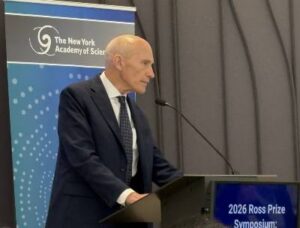
NEW YORK CITY — Patients, colleagues and peers gathered in midtown Manhattan last week to celebrate Carl June, MD, and Michel Sadelain, MD, PhD, who shared the 13th annual Ross Prize in Molecular Medicine.
The prize, which is made possible by the generosity of Feinstein Institutes board vice chairman Jack Ross and his wife, Robin, assistant vice president of principal gifts at the Northwell Foundation, recognizes biomedical scientists whose discoveries have transformed how medicine is practiced. Established in 2013, it is awarded annually through the Feinstein Institutes’ peer-reviewed, open-access journal Molecular Medicine.
June and Sadelain are both well-known in immunotherapy circles but could not disguise their delight at being recognized for their pioneering work in developing CAR T-cell therapy for cancer treatment.
June is an immunologist and cancer researcher at the University of Pennsylvania’s Perelman School of Medicine. He serves as the director of both the Center for Cellular Immunotherapies and the Parker Institute for Cancer Immunotherapy at Penn. Sadelain, who holds dual French and Canadian citizenship, is a professor of medicine at Columbia University’s Vagelos College of Physicians and Surgeons, where he directs the Columbia Initiative in Cell Engineering and Therapy.
With so many people wanting a chance to congratulate and interact with June and Sadelain—some even requesting autographs—it was hard to get more than a few minutes of their time to chat. June told me the award was a “huge honor” personally as well as a great way to recognize the efforts of those who have worked with him over the past three decades. “It’s a great way for the public to learn more about the value of what was initially basic research and how it can actually affect lives,” June said.
Sadelain expressed similar sentiments. ”I’m so fortunate that somebody looked at our work and thought that it warranted such recognition,” he told me. Additionally, the presence of both patients and students “who are curious and have a sense that there is something that that would like to get involved with” at the award ceremony reinforced both the human impact and educational value of his work.
That kind of curiosity coupled with persistence certainly served Sadelain and June well in their careers. An important theme that both honorees acknowledged is that scientific breakthroughs often require decades of dedicated work despite repeated setbacks.
As June noted, prior to 2011, when the first checkpoint inhibitor therapy was approved, and then in 2017, when the first CAR T-cell therapy was approved “there were many decades when cancer immunotherapy was tried and failed.” Multiple disappointing results can make science review boards nervous and cause federal funding sources to dry up. For the CAR T field, things changed once regulators and scientists realized that immunotherapies could work but “that initial paradigm shift” was needed for acceptance, June said.
Sadelain concurred. Scientists entering the field today are far less likely to face the same challenges that he and June and their teams had to contend with. “When we opened the first clinical trials, we couldn’t find patients,” he told me. “Today, there are waiting lists.”
A brief history of CAR T
The first CAR T trial was not in cancer but in HIV. In the 1990s, June’s lab explored the possibility of using T cells to treat the disease which at the time lacked treatments. “My first clinical protocol began when I was in the Navy in Bethesda and it was called RV 100,” he said in his award lecture. The work was done as part of a joint navy/army effort and marked “the first time we gave T cells to patients.”
For that first protocol, June’s team took patients with late-stage AIDS and expanded their T cells in the lab, without making any genetic modifications. They then infused those cells back into the patients to determine whether they could restore their immune systems.
“We thought it would be pouring fuel on fire” in the sense that “adding T cells back to the patients would cause more HIV replication.” But that did not happen because the scientists expanded the cells in a way that made them resist reinfection by downregulating the HIV co-receptor. The first clinical trial, published in 2002, showed a dose-dependent increase in T-cell counts following the infusions without a corresponding increase in viral load. June and his colleagues conducted three additional trials, which showed that the infused cells survived on average more than 10 years in patients.
Following those trials, June and his team engineered T cells with a receptor composed of the CD4 molecule fused to the CD3 zeta signaling chain of the T-cell receptor. Over the next five years, June’s group ran trials using these first-generation CAR T cells, demonstrating that they were safe and persisted in the body. Those findings provided important safety data as CAR T technology began moving towards oncology applications.
There were of course disappointments along the way. Several studies using the first-generation CARs did not demonstrate clinical benefit in cancer patients (in contrast to HIV patients). Enthusiasm for the technology waned and skepticism about its potential grew. Still June and his collaborators persisted. The second-generation CAR design incorporated a co-stimulatory domain rather than relying solely on CD3 zeta signaling. Specifically, they used 4-1BB in combination with CD3 zeta to target CD19-positive leukemia cells.
And that’s when the tide turned. The first patient treated with this new generation of cells, a 67-year-old man with end-stage leukemia, achieved a complete response. In total, three of the first patients that were treated responded. “We didn’t know if we were really lucky at that time or not, but it was a striking result,” June said.
Today, there are seven FDA-approved CAR T-cell therapies, and more than 60,000 patients have been treated. Several additional products are in development with many different designs being tested in thousands of labs. June closed by presenting some new, unpublished studies including a program in glioblastoma. It’s clear that June’s work is far from done.
Sadelain’s milestones
Sadelain said there were four major milestones that marked efforts to bring CAR T cells to the clinic. First was the development of methods for introducing genes into primary T cells. Before these techniques were available, scientists largely studied genes in leukemia cell lines as a surrogate for normal T cells. As such, critical aspects of T-cell biology remained poorly understood, including how they respond to antigen, when they proliferate, and when they undergo cell death.

Sadelain’s second milestone was the identification of the gene encoding the CD3 zeta chain, which sparked efforts to engineer fusion receptors that enabled T cells to recognize and kill target cells in a sustained way. Third was identifying a target that could be studied in the lab. Sadelain’s lab settled on CD19, which was known to be expressed in lymphomas and leukemias.
The fourth milestone was less a scientific discovery and more of a realization. If scientists wanted to bring T cells into clinical use, “you had to do it yourself,” Sadelain said. “There was no industry interested in developing or manufacturing cells as medicines.”
While CAR T-cell therapies today are spreading beyond cancer to other disease areas, there are still challenges to solve in oncology. CAR T cells do not yet work well in solid tumors, Sadelain said. Despite some promising clinical results, “it’s clear that what had been designed for these blood cancers cannot be applied exactly as is to solid tumors,” Sadelain said. “They can be applied exactly as is to autoimmunity perhaps but not solid tumors.”
Sadelain said the first challenge is the T cell itself. Once the engineered cells are released into the patient’s bloodstream, they have to reach the tumor and penetrate its defenses, which is not easy. Even if they are able to penetrate the tumor, they may not work because tumors have evolved mechanisms to shut off the immune response in order to survive. “The good news is that many of these mechanisms are understood today,” so the next step is to figure out how to engineer T cells that can overcome these mechanisms.
Other challenges include identifying suitable targets and developing ways to support the CAR T cells to ensure they persist. Lastly, scientists need a way to manufacture these cells at sufficient scale to make treatments more affordable and accessible. It may be possible to lower the cost to patients through better reimbursement or policy changes “but some of that can be improved through biology.”
Sadelain went on to describe three CAR designs that go beyond the foundation models and could be the treatments of the future. These designs aim to improve on some previous shortcomings, including a longer lifespan and requiring orders of magnitude lower doses than their predecessors. Sadelain closed by noting that it took nearly four decades for the field to get from “the very first ideas to where we are today,” but “it’s not static by any means.”
“These molecules keep getting better and better, and that’s why we are optimistic,” he said. Moving forward, “we need persistence combined with potency. We need greater sensitivity. I think many of these beautiful receptors are on the way to deliver these results.”
From discovery to deployment
Following the awards, I spoke with Kevin Tracey, MD, president and CEO of the Feinstein Institutes. He told me that the Ross Prize celebrates the complete scientific journey from discovery to deployment. “We live in a time where we benefit from all the work that came before us by brilliant people who used science and medicine and technology to eradicate diseases that some people have never even heard of and will never see,” he said. “But somehow, some of that of the importance and the optimism of that gets lost in the modern era we’re living in.”
Established in 2013, Tracey said the Ross Prize is unique because it celebrates that “rare individual who sets out to solve a problem, to cure a disease” and “stays with the entire process from discovery to development to deployment.” Sadelain and June “have lived that for decades,” Tracey said. Tens of thousands of people “are alive because of what these two men did and all of their colleagues.”
But the Ross Prize is also important at a time of rising anti-science sentiments, amplified by some news media and social media platforms. “What we’re losing is the tradition of storytelling and the creation of stories and themes that bind us all together for a common good. Stories have to be told or they are lost,” he said. The Ross Prize is “an opportunity to tell those stories and to celebrate that excellence.”
While the prize has always focused on rewarding excellence in science that forms the basis of new therapies, Tracey told me that over the past five years or so, the focus has expanded from basic research to include research that has made it into clinical use. There are many worthy science prizes that recognize “very elegant science,” Tracey said. But much of the downstream utility of that early science is “maybe decades in the making, and we decided to focus on the small number of times it actually does go the whole way. Those people deserve a prize too!”
Decisions about the awardees each year are made by committee, with representatives from multiple institutions. It has always been a tough decision selecting a few winners from the hundreds of nominations, Tracey acknowledged, “but we always come to a consensus.”
The next transformative therapy
The transformation from risky experimental therapy to standard of care for some cancers demonstrates how scientific consensus can completely reverse. These days, the future is certainly bright for immunotherapies far beyond its original oncology focus.
Both honorees expressed excitement about the possibilities while maintaining an awareness of practical limitations and reiterating the need for continued research. “I think basically all blood cancers will be treated with some kind of cell therapy,” June predicted. “That’s more of an engineering problem now.” Where advances are still needed, he said, is in similar therapies for solid cancers, something that both he and Sadelain are working on with their respective teams.
Asked whether in vivo CAR T-cell therapy could be the next transformative therapy, June said: “It’s very early. Just two months ago, the first in vivo CAR T cells were reported, and they had a mixture of toxicity and efficacy in myeloma, so that’s great.” But “it’s too early now to know how long [they] will last and how safe” they will prove. He also noted the cost savings that in vivo CAR T therapies could offer, not just for cancer. “There are 10 times more people that have autoimmune disease than cancer. If we have a way to make it cheaper and more readily available, that’s what we really need.”
Looking ahead, Sadelain said “there are many new potential directions that are really tantalizing.” There are, of course, many more cancers that need effective treatments, but researchers are starting to look to other areas as well including organ transplantation, neurodegenerative diseases, and infectious diseases.
Among the important questions left to answer is how to produce these cells? “If this starts working for some more common diseases… we’re going to hit a bottleneck,” Sadelain noted. Could allogeneic cells from healthy volunteers be adapted to work for some recipients? Or could we use T-cells made from pluripotent stem cells? “That’s a very interesting direction.” Another “exciting new frontier” is emerging from in vivo studies, although there is still much to learn about their efficacy and toxicity, especially in cases where multiple doses are required.
The Ross Prize committee is already thinking about next year’s honorees. In a few weeks, Tracey said a new batch of emails will be sent to solicit nominations for next year’s awards. The awardees for the 14th Ross Prize will be selected in January 2027.
The post Perseverance, Persistence Key to CAR T Success, Say Ross Prize Winners Carl June and Michel Sadelain appeared first on GEN – Genetic Engineering and Biotechnology News.
Exploring the Genetics of Schizophrenia in Manitoba
Conditions: Schizophrenia; Healthy (Controls)
Sponsors: University of Manitoba; Canadian Institutes of Health Research (CIHR)
Not yet recruiting
Sponsors: University of Manitoba; Canadian Institutes of Health Research (CIHR)
Not yet recruiting
STAT+: ARCH-launched Neumora stops depression program
Want to stay on top of the science and politics driving biotech today? Sign up to get our biotech newsletter in your inbox.
Good morning. Let’s get straight to the news today.
The need-to-know this morning
- Moderna said Ester Banque joined the company as chief commercial officer. She was formerly president of U.S. operations for Zoetis. Moderna President Stephen Hoge has also been given an expanded role overseeing several of the company’s drug development programs.
New AI model aims to improve trial enrollment
The biotech Verge Labs today released a new AI model that it says will help determine which patients will respond to treatment better, leading to fewer people dropping out while also increasing the statistical power of a trial.