

Background: Although patient outcomes are improved by stroke rehabilitation, the suggested amount of therapy is rarely maintained. The COVID-19 pandemic aggravated this situation further due to disruptions in health care. One solution was the rapid and extensive transition to virtual care. A hybrid outpatient stroke telerehabilitation program (HOSTP) was introduced by St John’s Rehab—a tertiary rehabilitation hospital in Toronto, Ontario. The HOSTP integrated in-person and virtual care in an effort to alleviate long-standing obstacles that challenge stroke rehabilitation. Objective: This study explored health care providers’ (HCPs) experiences with the HOSTP and their perspectives on its implementation, quality, and impact to determine the modifications needed to optimize its delivery and sustainability. Methods: A qualitative implementation study was conducted, with semistructured interviews conducted among HCPs involved in the HOSTP. The interview guide was informed by the CFIR (Consolidated Framework for Implementation Research). In total, 14 HCPs were recruited and interviewed from St John’s Rehab outpatient program. Interview transcripts were analyzed using a 2-stage analytic approach involving inductive thematic analysis, followed by deductive categorization using CFIR. Results: Four main themes were identified across CFIR domains: (1) adaptability and flexibility of the hybrid care model (intervention characteristics), (2) alignment with patient needs and resources (outer setting), (3) the impact of organizational resources and infrastructure (inner setting), and (4) variability in provider confidence and perceptions of virtual care (characteristics of individuals). Key determinants were identified as adaptability, patient-related factors, resource availability, and provider beliefs about virtual care. Conclusions: Our findings suggest that, from HCPs’ viewpoints, optimizing virtual care processes and resources may support access and care quality within hybrid outpatient stroke rehabilitation. HCPs viewed maintaining virtual care as important for supporting ongoing access and patient-centered care. Lastly, optimizing the benefits and mitigating the drawbacks of hybrid care can ensure future integration of virtual care into standard outpatient stroke rehabilitation.
<img src="https://jmir-production.s3.us-east-2.amazonaws.com/thumbs/b58069cb022c127dda5d6fb858a19faa" />
STAT+: FDA approves Colorado’s plan to import cheaper drugs from Canada
WASHINGTON — The Food and Drug Administration said Monday that it will allow Colorado to import certain prescription drugs from Canada in an effort to bring prices down for residents, making it the second U.S. state to be granted such authorization.
For more than a quarter of a century, Americans have sought drugs from Canada for relief from the ever-rising costs of medicines, sometimes taking widely publicized bus trips across the border. It wasn’t until 2020, though, that the first Trump administration officially endorsed the practice, when it published a regulation allowing states and Indian tribes to propose import plans. The Biden administration affirmed this rule with an executive order in 2021. And Florida became the first state to earn FDA approval in 2024.
But state importation programs have proved extremely difficult to carry out, even with bipartisan support. Florida has yet to actually import any drugs from Canada, in part due to pushback from the Canadian pharmaceutical industry and fears the program will affect Canada’s drug supply. In May, the FDA extended its approval by six months to give the state more time to get its program up and running.
These new solid-state ACs promise a cool future. Scientists aren’t so sure.
After three years of record-breaking heat, this one is set to be yet another scorcher. Air-conditioning? Not going anywhere. The International Energy Agency projects that the number of AC units will triple by 2050.
That’s good for health—one Lancet study estimated that AC prevented nearly 200,000 premature deaths in 2019 alone—but bad for the planet. Artificial chill already accounts for 7% of global electricity use and 3% of greenhouse-gas emissions, and if improperly disposed of, the units can leak refrigerants with more global-warming potential than carbon dioxide.
Feeling the heat, a number of scientists and startups are hoping to amp up solid-state cooling, which is currently used at a small scale for things like mini fridges, EV batteries, and some high-end gaming computers. Traditional ACs transfer heat by using a compressor and a fan to circulate a refrigerant and turn it from liquid to gas.
Solid-state systems, on the other hand, move heat through conductive materials like gadolinium and bismuth telluride—which could theoretically cool spaces and surfaces with fewer messy side effects.
The catch is whether they can match the efficiency of conventional AC. “One of the key questions that remain is why are the solid-state coolers not as efficient as typical thermodynamic cycles?” says Pramod Reddy, a professor of mechanical engineering at the University of Michigan who studies heat transfer.
Research and pilot programs are underway to test a range of approaches. Brooklyn-based Mimic Systems uses thermoelectric cooling, which passes a current through semiconductive materials to shift heat from one side to another. Its room-scale climate control system is being piloted in an apartment in Vancouver.
The German company Magnotherm is set to test its system, which relies on a magnetocaloric setup that transfers heat by magnetizing and demagnetizing materials, in a chain of supermarkets. A team in Hong Kong has announced that its elastocaloric device, whose material heats and cools as it expands and contracts, can dip below 0 °C. And the UK’s Barocal is betting on barocaloric systems, which change temperature in response to shifts in pressure.
But experts, especially in thermoelectrics, have doubts about how well any solid-state scheme can compete. For most modern HVAC systems, the coefficient of performance (COP) is 3, explains Jeff Snyder, a professor at Northwestern University who studies electrical and thermal conductivity. That essentially means the system moves three units of heat for every unit of energy that goes into it.
Thermoelectrics in particular tend to have a much lower performance at high levels of temperature change, Snyder says, which means they’re best suited for niche uses such as cooling the back of a car seat.

COURTESY OF MIMIC SYSTEMS, INC
Efficiency, however, isn’t everything, argues Lindsay Rasmussen, a manager at the Rocky Mountain Institute’s climate tech accelerator Third Derivative, which supports both Magnotherm and Mimic. In the US, most ACs currently in use employ a refrigerant called R410A, which has a global-warming potential more than 2,000 times that of carbon dioxide. Plus, their moving parts can make them less durable, especially compared with a solid-state model that’s less mechanically complex.
Still, a dearth of units makes it hard to answer the efficiency question. To understand how well alternatives work, says Rasmussen, researchers need to compare their long-term energy consumption with that of conventional models instead of simply looking at COP. Mimic claims, for example, that its room-scale model should match the draw of a typical AC unit over the course of a year. Elastocaloric and barocaloric systems also have promise, Rasmussen adds, but room-scale prototypes are probably two to three years away.
In the end, the likelihood that solid-state cooling could replace compressor-based AC is slim. But as the planet warms and places like India install tens of millions of new AC units over the next decade, supplanting even a small number could make a dent. “If [solid-state] could take over even a 5% market share,” Rasmussen says, “that is a really large potential impact.”
Sara Kiley Watson is a science journalist specializing in climate and sustainability. She’s based in The Hague.
Welcome to Our New IOCDF Advocates
The IOCDF is thrilled to announce our newest cohort of Advocate volunteers! We’re welcoming 13 incredible new Advocates to our program, bringing our total to 64 dedicated volunteers working together to create meaningful change for the OCD and related disorders community.
These passionate individuals join us from bustling cities and quiet rural towns across the United States and around the world. From California to Massachusetts, and from countries including Canada and Ireland, this mix of local and global perspectives ensures we can reach and represent diverse communities everywhere.
The Power of Diverse Voices
Our newest cohort has a wide range of experiences and interests. They are passionate about addressing critical topics including:
- Access to treatment
- Diversity, multicultural issues, and LGBTQIA+ inclusion
- Family issues and family accommodation
- Young adult mental health and academic challenges
- Public policy
- Research advancement
- Suicide prevention
- Nutrition, fitness, and anxiety in athletes
This diversity of focus areas ensures that we can better represent and serve the full spectrum of our community’s needs.
Meet the Spring 2026 Advocates:
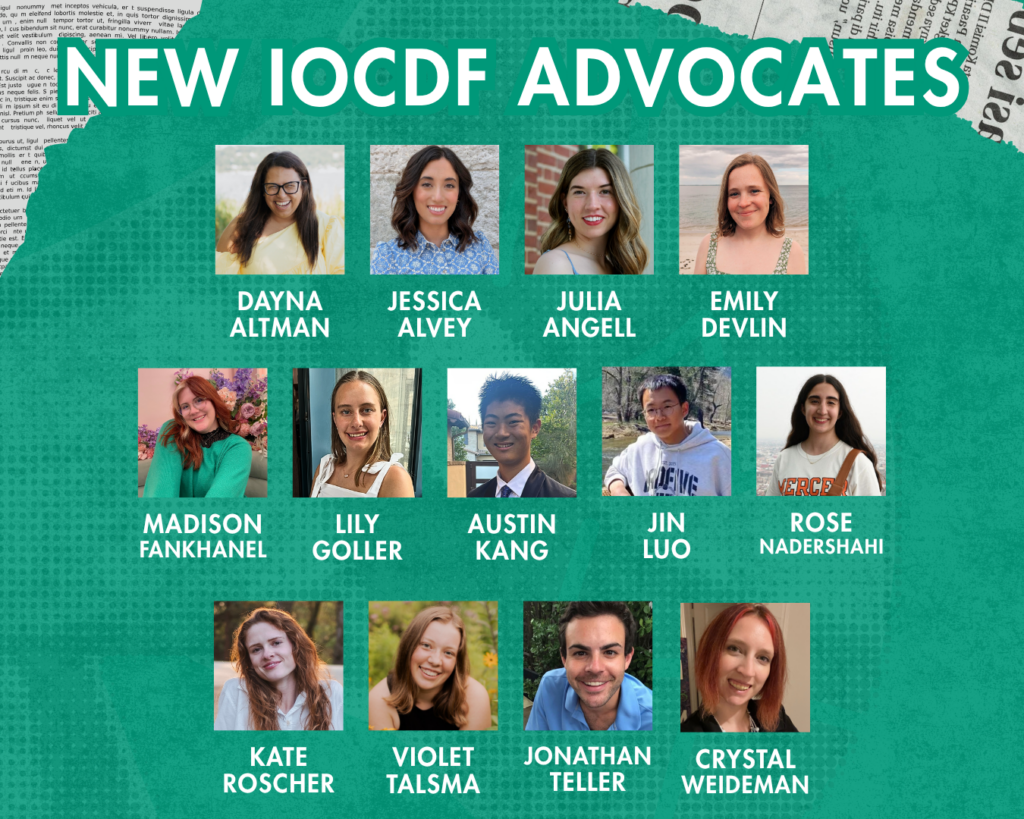
- Dayna Altman
- Jessica Alvey
- Julia Angell
- Emily Devlin
- Madison Fankhanel
- Lily Goller
- Austin Kang
- Jin Luo
- Rose Nadershahi
- Kate Roscher
- Violet Talsma
- Jonathan Teller
- Crystal Weideman
You can see the full list of IOCDF advocates at iocdf.org/advocate-program
Your Voice Matters Too
Inspired by our Advocates? You can make a difference! Here are ways to start advocating today:
Fuel Our Mission Through Fundraising
Turn your passion into action by launching a personal fundraiser. Whether for a birthday, a race, or a creative project, you can rally your friends and family to raise critical funds. Every dollar helps build a world where everyone affected by OCD can thrive. Start your fundraiser here or explore all ways to give back here.
Advocate for policy change
Your voice can shape laws that improve access to care and insurance coverage. The IOCDF Public Policy Action Center makes it simple to find the latest bills and contact your elected officials with just a few clicks. True change starts here.
Join an IOCDF Special Interest Group
Connect with people who share your experiences or professional interests. IOCDF Special Interest Groups (SIGs) provide a platform for deeper discussion.
Whether you advocate on the national stage, share your story to fight stigma, or fundraise your way, every action creates a ripple effect of hope and understanding. Your journey, your voice, and your commitment are powerful tools.
Start today and help us build a world where everyone affected by OCD feels supported, seen, and empowered. Join a dedicated community committed to raising awareness.
Welcome again to our new IOCDF Advocates, we’re grateful to have you joining our mission!
The post Welcome to Our New IOCDF Advocates appeared first on International OCD Foundation.
App-Based Physical Activity Intervention for Individuals With Depression (MoodMover): Single-Arm, Pre-Post Proof-of-Concept and Feasibility Study
Background: Depression is a prevalent mental disorder, and it remains one of the leading causes of disability in Canada and globally. Mobile app–based physical activity interventions may offer an effective and accessible treatment option for individuals with depression who cannot or prefer not to access supervised exercise programs. Objective: This study aims to investigate the feasibility, acceptability, and proof of concept of a 9-week, theory-guided, app-based physical activity promotion intervention (MoodMover) developed for people with depression. Methods: We conducted a single-arm, pre-post study from November 2024 to May 2025, following the phase IIa: Proof-of-concept and phase IIb: Pilot and Preliminary Testing of the Obesity-Related Behavioural Intervention Trials model. Physically inactive adults who either self-reported a diagnosis of major depressive disorder or reported at least mild depressive symptoms, operationalized as a minimum score of 5 on the Patient Health Questionnaire, 9-Item, were recruited. The intervention spanned 9 weeks, with the first week serving as a run-in period and including a 15-minute orientation session on the first day. Participants were instructed to use the MoodMover program, delivered via the Pathverse app. Feasibility was assessed based on 4 primary criteria: recruitment, adherence, usability, and retention. Proof-of-concept was evaluated by assessing changes in physical activity behavior and depressive symptoms over the intervention period. Results: From November 2024 to March 2025, 32 of the 51 adults who met eligibility criteria consented to participate in this study, resulting in a recruitment rate of 63%. Twenty-eight participants completed baseline assessments, with a mean age of 39.8 (SD 13.4) years. A total of 21 participants attended the orientation session and received the intervention. Retention, adherence, and usability rates were 57% (16/28), 67% (14/21), and 50% (8/16), respectively. Regression analyses found that age consistently associated with app engagement, usability, and satisfaction. Two-tailed paired tests indicated significant pre-post changes in self-reported moderate to vigorous physical activity and depressive symptoms across the 75%, 85%, and 95% CIs. Among participants with clinically elevated depressive symptoms at baseline (Patient Health Questionnaire, 9-Item ≥10), 75% (9/12) achieved a clinically meaningful reduction in symptom severity. Conclusions: Our findings suggest that MoodMover holds potential for promoting physical activity behavior among individuals with depression and supporting depression management at scale. However, the feasibility of the tested version remains suboptimal. Necessary modifications (eg, improvements to enhance the accuracy of step tracking) should be implemented and reevaluated before progressing to a more rigorous efficacy trial. Trial Registration: ClinicalTrials.gov NCT06573125; https://clinicaltrials.gov/study/NCT06573125
<img src="https://jmir-production.s3.us-east-2.amazonaws.com/thumbs/3b1cfec4cf77a239ea121adef6075f91" />
Exposure to Moderate Air Pollution Raises Cardiovascular Disease Risk
Research from the University of Toronto shows long-term exposure to moderate air pollution increases a person’s risk of fatty build up in the blood vessels of the heart, which can lead to serious cardiovascular events like heart attack.
As reported in the journal Radiology, the study also showed that women were particularly badly affected and had an 81% increased risk for obstructive coronary artery disease if exposed to long-term air pollution.
“Even at exposure levels below current Canadian air quality standards, long-term air pollution was independently associated with more advanced coronary artery disease—suggesting current regulations may not be fully protective and that air pollution belongs alongside blood pressure, cholesterol and smoking as a modifiable cardiovascular risk factor,” said lead author Kate Hanneman, MD, associate professor at the University of Toronto, in a press statement.
The study included 11,128 people who underwent cardiac computed tomography (CT) scans who also had available data for air pollution exposure for around 10 years. The average age was 60 years and 52% were men.
In the cohort, median 10‑year exposures were 7.5 μg/m³ for PM2.5, a common measure of particulate air pollution and 13.4 ppb for nitrogen dioxide. These levels are relatively low compared with many historical and low‑/middle‑income settings but still above the latest World Health Organization guideline of 5 μg/m³ for PM2.5 and 5.3 ppb for nitrogen dioxide.
For each addition increment of PM2.5 (1 μg/m³) people in the study had had about 11% more calcium in their coronary arteries and 13% higher odds of having more atherosclerotic plaque. For each increment of nitrogen dioxide (1 ppb) small but measurable increases in calcium (aprx 1%) and plaque (about 4%) were seen in the coronary arteries of those exposed.
After taking into account age, risk factors, medicines, and other differences, each increment higher long‑term air pollution was linked to more severe, artery‑narrowing heart disease in women, but not in men. Each increment increase in PM2.5 was associated with an 80% higher chance of women having a dangerously narrowed coronary artery and each increase in nitrogen dioxide a 6% increased chance.
There was a similar trend in men, but it was not statistically significant after correcting for possible confounding factors.
“These findings add to the growing body of evidence identifying air pollution as a modifiable risk factor for atherosclerosis,” conclude the authors.
“Considering the epidemiologic data linking air pollution to cardiovascular events, these results reinforce the urgency of global public health initiatives aimed at improving air quality to reduce cardiovascular risk.”
The post Exposure to Moderate Air Pollution Raises Cardiovascular Disease Risk appeared first on Inside Precision Medicine.
Defective HIV RNA Linked to Persistent Viremia During Long-Term ART
Antiretroviral therapy (ART) has enabled most people living with HIV to live long and healthy lives. However, a small portion of people experience detectable traces of the virus, known as nonsuppressible viremia (NSV), despite strict adherence to long-term treatment regimens and the absence of symptoms. The results of a study headed by researchers at Johns Hopkins University School of Medicine now suggest that most cases of NSV are explained by defective and noninfectious copies of the virus.
The study, which involved more than 50 people, found that while traces of HIV-1 RNA can persist in blood after optimal therapy, cases of non-suppressible viremia are driven by HIV-1 RNA with defects in a piece of the RNA known as 5’-leader. The team developed a digital PCR (dPCR) assay, CLAWS (Capturing 5′ Leader Anomalies Without Sequencing), that distinguishes intact from defective 5′L RNA.
“From a clinical perspective, this is important because people with HIV are taught that the absolute goal of their medication is to achieve undetectable viral load, and they worry,” said Francesco R. Simonetti, MBChBD, PhD, an assistant professor of medicine in the Division of Infectious Diseases at Johns Hopkins University School of Medicine. The new findings, said Simonetti and his team, should provide relief to many people living with HIV who fear a viral rebound or who are concerned about transmitting the virus to partners despite taking effective treatment.
Simonetti is senior and corresponding author of the team’s report in Nature Communications (“5′ leader defects drive persistent HIV-1 viremia on long-term ART”), in which they stated, “These findings identify 5′L-defective genomes as the predominant driver of NSV and establish CLAWS as a practical tool for monitoring viremia in clinical and cure-related settings.”Modern antiretroviral therapies, which date back to 1996, prevent HIV from infecting new populations of immune system cells, but aren’t able to retroactively prevent previously infected cells from releasing HIV viral particles. Since those cells usually represent a small portion of infected cells after a person is on stable therapy, most people with HIV (PWH) who take antiretroviral therapies are able to bring their viral loads to clinically undetectable levels in their blood.
However, in some cases, which are estimated to occur less than 1% of the time, people may experience clinically detectable levels after taking long-term antiretroviral drug therapy. “Traces of HIV-1 RNA can persist in plasma despite long-term suppressive antiretroviral therapy (ART), the authors stated. This could happen years later, or, in less frequent cases, they may have never achieved undetectable levels. “The sources of NSV remain poorly defined, in part due to limited tools to characterize plasma HIV-1 RNA,” the team continued. “NSV raises concerns for virologic failure, transmission, and immune activation, complicates ART management, causing anxiety and ultimately affecting the quality of life of PWH.”
For the newly reported study, the investigators examined blood samples from 52 people living with HIV who had detectable loads of the virus despite taking long-term antiretroviral drug therapy. These samples, which were assessed from 32 people and compared to an additional 20 samples, were collected between 2021 and 2025. The majority of participants were white men, between ages 58 and 68, and received care in the United States, Canada, and Denmark. The researchers found that most detectable forms of the virus, around 95%, were due to defective copies, and most defects were due to mutations or deletions in the 5’-leader region of HIV-1 RNA. This region is known to orchestrate the production of copies of the virus, but in this case, the defects prevented the generation of infectious virus.
“In 31 participants from the original NSV cohort and an additional 20 participants from the validation cohort, RNA transcribed from defective proviruses accounted for a median of 95% of plasma HIV-1 RNA, firmly establishing their central role in persistent viremia,” the investigators wrote in summary.
The study offers evidence that clinicians can now study the virus in blood plasma and confirm if clinically detectable levels are due to defective copies released from one or a few T-cell clones, said Simonetti. If so, he added, this could eliminate the need for extra medications and could prevent related complications. It could also help people living with HIV have access to surgeries or other procedures, such as hip or knee replacements or organ transplants, and participate in clinical studies if they know they have HIV under control.
“We know that these defective proviruses cannot infect new cells, but they are still clinically relevant,” said Simonetti. “Think of how many extra visits, extra drugs, extra costs, and tests they’ve been causing. It’s also clear from the new study that, over time on treatment, intact proviruses that make virus are pruned away, while defective ones escape the immune system,” he said. “Now we want to understand these differences in immune recognition to uncover HIV’s vulnerabilities.”
Similar to using a liquid biopsy to detect cancer mutations in DNA, the CLAWS assay developed by the researchers uses advanced technology to identify detectable viral loads that are due to defective copies. The method is cost-effective and can be broadly used in HIV clinics and research settings.
In their paper, the authors wrote in conclusion, “In summary, our results establish 5’L-defective proviruses as the major source of NSV and introduce CLAWS as a practical tool for dissecting persistent viremia. Beyond clarifying mechanisms of HIV-1 persistence, CLAWS provides immediate translational utility for clinical monitoring and HIV-1 cure research.”
The post Defective HIV RNA Linked to Persistent Viremia During Long-Term ART appeared first on GEN – Genetic Engineering and Biotechnology News.
Why this year’s World Cup ball may not fly as far
Much is new about this month’s upcoming FIFA World Cup tournament, which will be held in the US, Canada, and Mexico. It hosts more teams than ever before. It’s the first to occur in three different host countries. And, like predecessor cups for over half a century, it will employ a soccer ball with a brand-new design.
One group of researchers that has been testing the physics of World Cup balls for the past 20 years recently studied this new entry, called the Trionda. Made by Adidas, the Trionda features four red, green, and blue panels textured with deep grooves and maple leaf, green eagle, and star emblems to represent the three host countries. Through wind-tunnel experiments, the research team found that this ball improves over previous versions in some ways, but long-distance kicks might not go as far as they did in the past.
“The simple picture is that Trionda may very slightly punish extreme distance, but it should reward clean technique and predictable flight,” says team member John Eric Goff, who researches sports physics and is an incoming professor of engineering practice at Purdue University. “Goalkeepers, defenders hitting long passes, and long-range shooters are where I would look first for visible differences.”
TAKESHI ASAI, SUNGCHAN HONG, AND RICHONG LIU
Adidas has been designing new balls for each World Cup since the 1970s. Some of the design changes in the first few decades were aesthetic: The 1986 ball featured graphics inspired by Aztec temples for the Mexico tournament, and 1994’s had space graphics in honor of the moon landing’s 25th anniversary. There were some structural differences too, such as upgraded foam cores and improved water resistance. But by and large, the balls used the same design of 32 pentagonal panels stitched together.
That changed in the 2006 World Cup in Germany, when Adidas introduced the +Teamgeist ball. It featured just 14 curved panels, which were thermally bonded together rather than stitched. The design helped keep moisture out so the ball wouldn’t grow heavier throughout the game, Goff says. It was around this time that he started studying soccer balls. In the years since then, he and his colleagues have followed the transformations as Adidas has released balls with different surface textures and even fewer panels—design changes significant enough to affect game play.
In-flight motion
Goff discovered early on that by analyzing a ball’s trajectory data, he could derive its drag coefficient—a number that determines the air resistance it experiences midflight at a given speed. Shortly after, he began working with a team in Japan to analyze how the World Cup ball’s in-flight behavior changes with each new design.
The experiments, carried out at the University of Tsukuba in Japan, have been purposely consistent over the years because “maintaining continuity is important for comparing new data with historical data sets,” says Takeshi Asai, a professor there who works on the experiments. They entail attaching the ball to a metal rod connected to an instrument called a force balance, which measures aerodynamic forces such as drag and lift as the ball is exposed to the same wind speeds it would experience in a real soccer game—seven to 35 meters per second.
The team tests the ball in different orientations, “but you can only do a few because the Trionda ball is $170,” Goff says, and each new test effectively destroys it. The experiments show the team how the drag coefficient changes with speed, and Goff then writes code to simulate the ball’s overall trajectory as it flies through the air.
The team’s analysis has shown how recent World Cup balls evolved since the eight-panel Jabulani ball for the 2010 event. The Jabulani faced much criticism from players—particularly goalkeepers, who said it had a deceptive trajectory that “dipped wickedly,” as one player told the Guardian.

ALAMY

ADOBE STOCK

TAKESHI ASAI, SUNGCHAN HONG, RICHONG LIU
The 2010 Jabulani ball (left) had eight panels and a smooth texture that translated into unpredictable performance. Later balls, like the 2014 Brazuca (center) and this year’s Trionda (right) have fewer panels but more roughness.
The ball had one key flaw: It was too smooth. Even though its drag coefficient was relatively low at high speeds, once the ball slowed to a certain point the coefficient would ratchet up, causing it to lose speed quite fast and behave as the 2010 players complained. This sudden transition—called the drag crisis—occurs at higher speeds for smoother balls, but with added texture like seams and grooves, the transition can be avoided until a ball reaches lower speeds. This allows the ball to travel farther and generally behave in a more predictable way during typical play.
“It’s the same reason why golf balls have dimples and baseballs have those nice 108 double stitches. If those rough features of those balls were not there, you would not get anywhere near the kind of distance when those balls are thrown or hit that you see now,” Goff says. “There has to be some kind of a roughness on the ball to move this transition to a smaller speed.”
New grooves
Subsequent designs have been able to push the drag crisis to lower speeds, according to the analysis by Goff and his colleagues. The Brazuca ball used in 2014, for instance, has only six panels, but their total seam length is much longer, adding to the surface’s roughness. And this year’s Trionda ball contains just four panels, but each panel also has three deep grooves for more texture.
There’s a trade-off to this roughness, though. While Goff and his colleagues found that the Trionda ball experiences the drag crisis at the slowest speed since 2010, its drag coefficient is also higher than that of the other balls at high speeds. That means that even though the most dramatic change doesn’t happen until the ball is moving quite slowly, the ball will still slow down faster than its recent predecessors during the faster portion of its flight. So the trajectories of long kicks may be a few meters shorter, Goff says. Adidas did not respond to a request for comment.
Fortunately, players in the upcoming World Cup should already be familiar with these added nuances, as they’ve had access to the new ball for at least a few months. The ball, Goff notes, is quite similar to Nike’s Flight ball in design, so players who’ve spent more time with that ball may have an added advantage.
Meanwhile, Goff continues sending the group’s papers to his colleagues FIFA and Adidas in hope of providing some new insights, and he’s been sent balls by Adidas in the past. Adidas does perform its own unpublished tests of each new ball. The New York Times reported last year that the Trionda’s 3.5-year testing process included robotics designed to kick the ball at specific speeds as well as testing in seven of the 16 host locations.
But as Goff sees it, soccer is “the world’s most popular sport, [this is] its most important tournament, and the most important piece of equipment in that tournament is this ball right here,” indicating the the Trionda ball that he had on camera with him during our Zoom call. “I think they’re interested in what some external testing looks like.”
The Download: AI hacking beyond Mythos, and chatbots’ impact on our brains
This is today’s edition of The Download, our weekday newsletter that provides a daily dose of what’s going on in the world of technology.
The Meta hack shows there’s more to AI security than Mythos
On Monday, reports emerged that attackers had used Meta’s AI customer support agent to steal Instagram accounts. Their approach was simple: they asked the agent to link the accounts to email addresses they controlled, and it complied.
Since Anthropic announced that its Mythos model was too good at hacking for a general release, cybersecurity concerns have focused on the risk of superpowered AI systems overwhelming computer infrastructure. But the Instagram hack shows that far simpler exploits can still cause damage.
As companies offload more work to AI, these comparatively unsophisticated attacks are becoming harder to ignore. Read the full story to understand why.
—Grace Huckins
Are AI chatbots making us lose control of our brains?
Gloria Mark, a psychologist at the University of California, Irvine, fears that digital technologies are weakening our cognitive abilities.
Her research suggests attention spans have fallen sharply over time, leading to higher stress and lower performance. She now believes AI tools like ChatGPT and Claude may accelerate this shift. “You’re deferring your cognitive work to AI,” she said. “And it’s not good for us.”
Mark argues this could weaken critical thinking and emotional intelligence. Luckily, she thinks we can course-correct by changing our relationship with these technologies.
Find out how AI could reshape attention and thinking.
—Jessica Hamzelou
This story is from The Checkup, our weekly newsletter giving you the inside track on all things biotech. Sign up to receive it in your inbox every Thursday.
The must-reads
I’ve combed the internet to find you today’s most fun/important/scary/fascinating stories about technology.
1 Anthropic has called for a global slowdown in AI development
It flagged the risk of models “self-improving.” (WSJ $)
+ And wants a coordinated plan to stop them. (Reuters $)
+ Skeptics note that the timing is awfully convenient. (The Register)
2 In a first, scientists have precisely edited human embryo genes
They relied on a newer gene-editing technique. (NYT $)
+ Genetically-modified babies could be on their way. (Guardian)
+ Companies have big plans for the technology. (MIT Technology Review)
3 US officials have discussed taking financial stakes in the AI firms
They’ve held talks about the government acquiring shares. (Reuters $)
+ Sam Altman pitched the idea to the White House last year. (WSJ $)
4 Bot web traffic has overtaken human web traffic
Cloudflare said 57.4% of traffic now comes from bots. (NBC News)
+ Its CEO expected the milestone at the end of 2027. (CNET)
5 The White House plans to bring AI doctors into American medicine
It wants chatbots to diagnose illness and prescribe medicine. (WSJ $)
+ But we don’t even know if healthcare AI actually helps patients. (MIT Technology Review)
6 Meta quietly added facial recognition code for smart glasses to its app
The exploratory feature would identify people via biometric data. (Wired $)
+ Smart glasses are also entering warfare. (MIT Technology Review)
7 South Korea’s labour minister wants tech firms to share AI profits
Kim Young wants staff and suppliers to get a share. (Reuters $)
+ He helped avert a huge strike over AI profit-sharing at Samsung. (NYT $)
8 Canada’s highly-anticipated AI strategy has launched
It promises over $2 billion in funding and aims to create 250,000 jobs. (BBC)
+ AI could strengthen democracy. (MIT Technology Review)
9 Investment in agricultural tech is booming
That’s good news at a time when we’re facing unprecedented levels of food market volatility. (The Economist $)
10 Bumblebees can use tools to solve problems, new research shows
Not just busy—they’re clever too! (Guardian)
Quote of the day
“Welp, that happened faster than I predicted.”
—Matthew Prince, co-founder and CEO of Cloudflare, one of the largest internet hosting services, reacts on X to reports that bots have overtaken humans in driving web traffic.
One More Thing
CHRISTOPHER PAYNE
Inside the machine that saved Moore’s Law
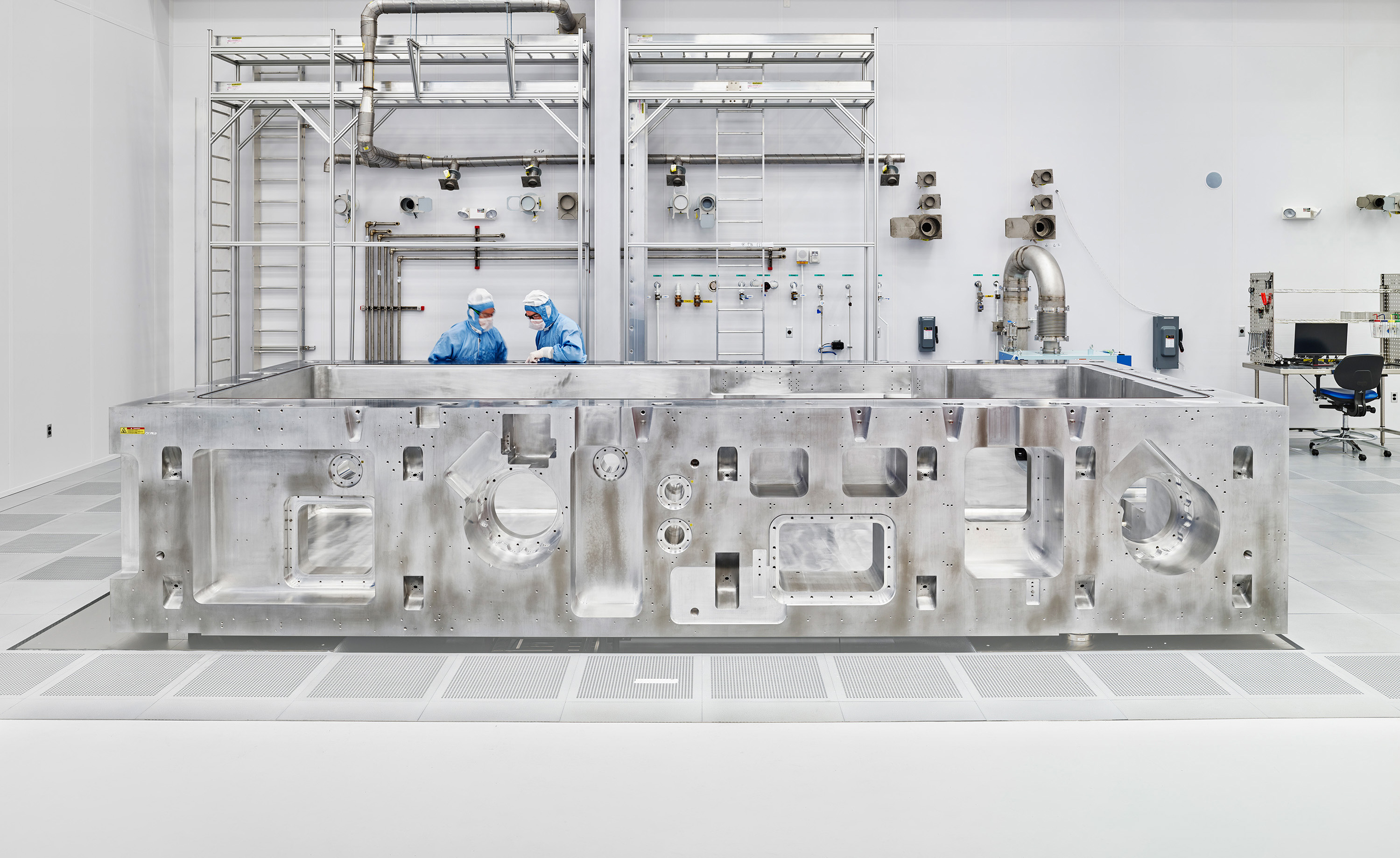
In a Connecticut clean room, the Dutch company ASML is developing the world’s most advanced machine for extreme ultraviolet (EUV) lithography, a crucial process for manufacturing microchips.
The system has become vital to Moore’s Law—the observation that the number of transistors on a chip roughly doubles every two years as components shrink, driving gains in performance and efficiency. “Without this machine, it’s gone,” says Wayne Lam, a director of research at CCS Insight. “You can’t really make any leading-edge processors without EUV.”
Discover how ASML’s EUV technology saved Moore’s Law.
—Clive Thompson
We can still have nice things
A place for comfort, fun, and distraction to brighten up your day. (Got any ideas? Drop me a line.)
+ Tech bosses love Tolkien. Here’s what the writer might think of them.
+ Rare footage captures an underwater volcano erupting beneath the Pacific Ocean.
+ Watch a tiny rescued cub grow into adulthood in this heartwarming tiger compilation.
+ This medieval version of “Take On Me” is like stepping into a tavern of synth-pop bards.
Functional Electrical Stimulation for MDD
Conditions: MDD
Interventions: Device: Functional Electrical Stimulation (FES)
Sponsors: Unity Health Toronto
Not yet recruiting
Interventions: Device: Functional Electrical Stimulation (FES)
Sponsors: Unity Health Toronto
Not yet recruiting