STAT+: Pharmalittle: We’re reading about bigger drug discounts in Germany, drugmakers embracing secrecy, and more

Good morning, everyone. Damian Garde here, filling in for Ed Silverman at Pharmalot’s satellite campus along the East River, where today’s cup of stimulation is filled not with coffee but rather a smoothie of curious color and questionable contents (what exactly is an “adaptogen”?). Anyway it’s Friday, as you’re almost certainly aware, and here are some tidbits to help you through the waning hours of another working week. …

German lawmakers passed a bill that would more than double the discount on branded medicines drugmakers must provide to the government, Reuters reports. The policy, part of an effort to plug a sizable budget gap in the country’s health insurance system, would increase the mandatory rebate from 7% to 15.5%. Industry groups have said the bill, if it clears Germany’s upper chamber, would deter investment and imperil the country’s access to new medicines.

The rapid rise of China’s biotech industry has led some American drug developers to do their work in near total secrecy, the Wall Street Journal observes. U.S. startups are increasingly loath to publish early data, disclose their scientific ambitions, or even publicize which diseases they hope to treat, all in fear that nimble Chinese firms will use that information to whip up competing drugs and beat them to the punch of starting clinical trials.

Continue to STAT+ to read the full story…

Local PBMC Isolation Enables Four-Hour Processing in San Diego

Fast, local cryopreservation is a consistent bottleneck for autologous cell therapy developers, even in major cell and gene therapy hubs. For the peripheral blood mononuclear cells (PBMCs) that form the foundation of immunotherapies, vaccine development and autologous therapies, every hour between leukapheresis collection and cryopreservation can degrade cell viability and functional integrity.

OrganaBio’s new PBMC isolation facility in San Diego removes that bottleneck for one of the three major cell and gene therapy hubs in the world. The opening of the new PBMC processing and cryopreservation laboratory at Excellos Labs (which OrganaBio acquired in May) makes it possible to isolate and cryopreserve PBMCs within three to four hours of collection, rather than losing time and quality by shipping live material across the country.

“The quality you lock in at cryopreservation is the quality the developer gets back months later,” Justin Irizarry, CEO, OrganaBio, tells GEN. “Get the first few hours right and you have protected everything downstream. Having that processing happen locally is what makes the few-hour window realistic rather than aspirational.”

The San Diego lab reports an average PBMC viability of “around 99.1% and recovery above 2.9 million cells per milliliter, with consistency from batch to batch,” Irizarry says. He credits those statistics to rapid time to cryopreservation, validated standard operating procedures “including sponsor-specific protocols,” personnel trained in each of those procedures, and a single quality system for each of OrganaBio’s sites. That combination ensures consistency across batches and sites, so “a sample processed in San Diego is indistinguishable from one processed in Miami,” he emphasizes.

In contrast, one German study comparing cells cryopreserved within six hours or 20 hours of collection notes a higher percentage of apoptotic natural killer (NK) cells associated with the longer hold time. Specifically, after 20 hours, 41% of the cells were apoptotic versus 24% for those preserved within six hours of collection. Robustness also declined with the longer hold times.

Robust local sourcing for PBMCs is a strategic advantage for San Diego’s clinical-stage biotherapeutic developers. In addition to gaining higher-quality starting materials, they can expect to benefit from tighter manufacturing timelines and less supply chain risk. Local processing reduces the inherent risk associated with cold-chain and transportation variables, while enhancing redundancy provided by OrganaBio’s West Coast sites in San Diego, Irvine, and San Francisco Bay, and its East Coast headquarters in Miami.

OrganaBio expects continued growth, “including clinical trial services, manufacturing services, and product manufacturing,” Irizarry says. The company is onboarding new customers and programs and deepening relationships with existing customers. “We also will evaluate opportunities to expand into additional markets for clinical trial services, particularly where there is strong population growth, good ethnic and racial diversity, and a lack of professionalized PBMC isolation services in the market.”

The post Local PBMC Isolation Enables Four-Hour Processing in San Diego appeared first on GEN – Genetic Engineering and Biotechnology News.

Hair cortisol as psychotherapy process parameter – an inpatient pediatric psychosomatic study

IntroductionPediatric-psychosomatic inpatient therapy is an essential part of the German health care system for the treatment of mental disorders in children and adolescents. However, empirical research in this field remains scarce and limited to psychological parameters. This longitudinal naturalistic study aimed to evaluate the efficacy and sustainability of inpatient psychosomatic therapy in children and adolescents by examining both psychological outcomes and biological markers.MethodsA total of 58 patients were assessed at seven time points before, during, and after treatment. Hair cortisol concentration (HCC) was measured as a neuroendocrine parameter of long-term stress regulation. Psychometric data were collected using five validated questionnaires.ResultsFindings indicated significant improvements in perceived stress, depressive and anxiety symptoms, family functioning and internalizing symptoms in the course of inpatient treatment. Overall, these effects remained stable at three- and six-month follow-ups, with only transient increases in depressive symptoms and family problems. HCC showed a significant decrease from admission to discharge and remained stable across follow-ups.DiscussionThese results support the efficacy of inpatient pediatric psychosomatic interventions on both psychological outcomes and neuroendocrine stress regulation and highlight the value of integrating biological markers into psychotherapy research.

In Huntington’s Mouse, Optogenetic Activation of VIP Neurons Restores Brain Function

Huntington’s disease is a devastating brain disorder in which damage to nerve cells leads to progressively worsening cognitive and movement abilities. While the genetic mutation responsible for the condition is well known, the details of how the disease disrupts brain circuits have not been clearly understood. Now, researchers have identified and tracked neurons involved in Huntington’s disease progression and used optogenetics to selectively activate these neurons and improve the debilitating deficits of the condition.

The study is published in Nature in the paper, “Restoring cortical disinhibition improves Huntington’s disease phenotypes.”

“This work shows that correcting specific imbalances in brain circuits can restore function, even in a complex neurodegenerative condition, and highlights the potential of targeting defined cell types to promote recovery,” said Takaki Komiyama, PhD, professor in the UC San Diego Departments of Neurobiology (School of Biological Sciences) and Neurosciences (School of Medicine).

Huntington’s disease is caused by a trinucleotide repeat mutation in the Huntingtin (HTT) gene. While the mutation is well known, the neural networks connected with the disease progression have been more elusive.

This work aimed to map the neural circuits that expose the networks involved at the onset and spread of the disease’s debilitating symptoms. In transgenic mice carrying the same mutation as human patients, the researchers evaluated how different types of brain cells in the motor cortex are affected in Huntington’s disease. Advanced imaging techniques allowed the researchers to track the activity of these cortical neurons as the disorder progressed.

The researchers found that the disease disrupts the balance of activity across different cell types, including cortical inhibitory neurons.

“Cortical inhibitory cells have received little attention in Huntington’s disease, as for a long time they were considered to be spared from neurodegeneration,” said Irina Dudanova, PhD, previously based at the Max Planck Institute for Biological Intelligence, now at the University of Würzburg in Germany. “Surprisingly, we detected profound changes in their activity, with some cell types being overactive and some nearly silent.”

Huntington's
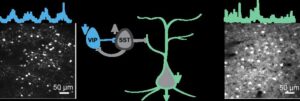
The activity of neuron types in the brain is imbalanced in mice with Huntington’s disease. The image depicts an example field-of-view from inhibitory (left) VIP (vasoactive intestinal peptide) neurons and excitatory (right) neurons recorded during behavior. Activity traces from a selected neuron for each type are shown above the images. [Sonja Blumenstock, Komiyama Lab, UC San Diego]

In particular, a class of inhibitory neurons known as vasoactive intestinal peptide (VIP) neurons, exhibited significantly reduced activity. VIP neuron activity is essential for normal learning, as these cells enable the brain to adapt and refine brain circuits during learning.

Reduced VIP neuron activity, the researchers reasoned, could be impairing the brain’s ability to function and learn properly. They sought to activate these cells to re-engage brain states that support learning. They tested this idea using optogenetics to stimulate VIP neurons.

“By activating the VIP inhibitory cell type, we gradually restored more normal activity patterns, and, very importantly, we also saw an improvement in the ability of the mouse to learn a motor task,” said Sonja Blumenstock, PhD, assistant project scientist at UC San Diego.

The results confirm VIP neurons as a key point of vulnerability in Huntington’s disease as well as a promising target for therapy. As to how this process works, the results suggest that modulating VIP neurons opens a “gate” that enables learning-related brain plasticity.

“This intervention restored more normal patterns of activity in the brain and improved movement in affected mice,” said Komiyama. “Importantly, the improvements persisted for days after stimulation ended, suggesting that the treatment triggered lasting beneficial changes in brain circuits rather than only temporary effects.”

The study provides important indications of where research could focus to normalize human brain function and facilitate brain recovery. Komiyama envisions a future scenario in which scientists could non-invasively activate the brain from outside the skull using novel approaches.

“Our study shows that despite the genetic defect, a precise intervention into the brain circuitry can lead to significant improvements in motor symptoms,” said Dudanova. “If we know which cells to target, we can retune the brain’s abnormal activity patterns. This gives hope for future therapies.”

The research also shows that corrections to specific brain circuit imbalances can restore function in a highly complex neurodegenerative condition, with similar potential in other disorders.

“We have come up with a way to allow the diseased brain to learn better,” said Komiyama. “The approach can improve behavior in diseased mice, and our hope is that a related approach will help people with impairment in their learning abilities.”

The post In Huntington’s Mouse, Optogenetic Activation of VIP Neurons Restores Brain Function appeared first on GEN – Genetic Engineering and Biotechnology News.

Circio’s circVec and Tcelltech’s nanoSMAR Technologies Combined to Generate Nextgen In vivo CAR-T and TCR-T Cells

Norway-based Circio and Tcelltech, based in Germany, will collaborate using the double-stranded, non-integrating nanoSMAR vector platform for the development of next generation engineered T-cell therapies.

Engineered T-cell therapies such as CAR-T have transformed the treatment of certain cancers. However, ex vivo manufacturing remains complex, and the shift towards in vivo approaches currently relies on viral vectors that have significant safety concerns, according to Richard Harbottle, PhD, head of vector technology and manufacturing at Tcelltech. By integrating the technologies developed by Circio and Tcelltech, the parties aim to engineer T-cells with enhanced and sustained CAR/TCR expression, without the need for viral vectors, he adds.

“The combination of Tcelltech’s non-viral, episomal nanoSMAR DNA vector platform with Circio’s circVec expression technology holds great promise for the development of in vivo gene delivery systems that are non-disruptive to target cells, maintain high expression levels, and enable straightforward, cost-effective manufacturing,” says Harbottle. “Furthermore, the exceptionally large cargo capacity of nanoSMAR vectors—beyond what is achievable with viral approaches—enables the design of complex, and sophisticated constructs incorporating multiple payload genes and regulatory elements.”

Circio and Tcelltech will combine Circio’s circVec circular RNA expression technology with Tcelltech’s non-viral, high-cargo capacity nanoSMAR vector platform and evaluate the combination in engineered T cells through a staged research program. An initial proof-of-concept phase will compare how strongly and how durably the different technology combinations drive gene expression in primary human T cells, followed by a functional phase in which CD19-directed CAR T cells are generated and tested for their ability to kill tumor cells.

“In vivo T-cell therapy is one of the most exciting frontiers for our circVec technology and is a rapidly advancing approach that could make these therapies more scalable and accessible,” adds Victor Levitsky, PhD, CSO of Circio. “Tcelltech´s universal nanoSMAR platform is a promising and differentiated delivery technology for T-cells, which we expect will act synergistically with circVec-enhanced payload expression.

“This collaboration fits into Circio’s broad business development strategy of testing circVec across multiple modalities and delivery systems to identify the optimal technology combination and identify the most promising therapeutic avenues.”


The post Circio’s circVec and Tcelltech’s nanoSMAR Technologies Combined to Generate Nextgen <i>In vivo</i> CAR-T and TCR-T Cells appeared first on GEN – Genetic Engineering and Biotechnology News.

Merck KGaA to Acquire Bio-Techne for $11.3B, Expanding Life Science Tools Presence

Merck KGaA, Darmstadt, Germany, has agreed to acquire Bio-Techne for approximately $11.3 billion, the companies said today, in a deal designed to position the buyer as more of a leader across the life science value chain by expanding its presence in high-growth, next-generation life-sci markets with Bio-Techne’s tools, analytical technologies, and consumables.

The deal would add Bio-Techne’s multiomics offerings, analytical technologies, and integrated workflow solutions to German Merck’s platforms and services in research, bioprocessing and advanced therapeutics, with the aim of creating a combined company capable of helping customers from discovery and translational research through development, testing and commercial manufacturing.

Merck KGaA added that acquiring Bio-Techne would directly deliver on its mid- to long-term strategic agenda, which focuses on adding to its high-growth value drivers, integrated workflows, platformed capabilities—as well as scaling and sourcing innovation through merger-and-acquisition (M&A) deals like the Bio-Techne transaction.

That transaction is the latest in a series of acquisitions for Merck KGaA totaling more than $35 billion, including in the U.S. with acquisitions such as Millipore (for about $7 billion in 2010), as well as Sigma-Aldrich (for $17 billion in a deal announced in 2014 and completed the following year), Versum Materials (for €5.8 billion [about $6.6 billion] in 2019), and last year, SpringWorks Therapeutics (for $3.95 billion).

Merck KGaA said it would also benefit from Bio-Techne’s position as a leading provider of materials, analytics, and process technologies to cell therapy developers. Bio-Techne expects to acquire the ownership in Wilson Wolf it does not own immediately following the end of calendar year 2027 under the terms of a two-part forward contract between the company and Wilson Wolf, a manufacturer of cell culture devices, including the G-Rex product line. Bio-Techne holds 19.9% of Wilson Wolf that it acquired in the fiscal year that ended June 30, 2023.

Merck KGaA employs more than 14,000 people in the U.S. across over 70 company and customer sites.

The $11.3 billion Bio-Techne acquisition is the new third largest biopharma merger-and-acquisition (M&A) deal announced so far this year, behind the €10.7 billion ($12.268 billion) cash buyout offer for Italian-based Recordati being pursued by CVC Capital Partners and Groupe Bruxelles Lambert, which aim to take the company private; and Sun Pharmaceutical Industries’ planned $11.75 billion purchase of Organon, the women’s health drug developer spun out of Merck & Co., in a deal expected to close in early 2027.

The previous third-largest M&A deal this year, now fourth-largest, is the $10.9 billion AbbVie purchase of Apogee Therapeutics, announced on Monday. The fifth largest deal is GlaxoSmithKline (GSK)’s planned $10.6 billion buyout of Nuvalent,  announced June 9 and expected to close in the third quarter.

“Outstanding fit”

“Bio-Techne is an outstanding fit that directly supports our strategic direction focused on delivering cutting-edge products and solutions across the entire industry value chain—from lab customers to those manufacturing in the biotech and pharmaceutical industries,” Kai Beckmann, chairman of the executive board and group CEO of Merck KGaA, Darmstadt, Germany, said in a statement.

“By combining Bio-Techne’s scientific depth, innovation engine and differentiated portfolio with the global scale, manufacturing excellence and customer reach of Merck KGaA, Darmstadt, Germany, we are in a strong position to address some of the most important opportunities in life sciences and support our customers in accelerating the next generation of scientific discovery and therapeutic innovation. This positions us to deliver compelling strategic and financial benefits for shareholders, customers and employees,” Beckmann added.

Those benefits, according to German Merck, include immediate accretion to the company’s earnings before interest, taxes, depreciation, and amortization (EBITDA) pre margin for both the Group as a while and its Life Science business segment upon closing of the acquisition deal.

The Life Sciences segment finished last year with €8.98 billion ($10.36 billion) in revenue.  Merck KGaA does not break down its businesses further than its three segments, which also include healthcare (drug development, focused on oncology, neurology and immunology, and “global health” treatments such as for malaria) and electronics (high-tech materials).

The deal is expected to close by late 2026 or early 2027, subject to satisfying customary closing conditions that include obtaining regulatory approvals and approval by Bio-Techne shareholders.

Bio-Techne’s board of directors and the corporate bodies overseeing Merck KGaA, Darmstadt, Germany, have already approved the transaction, which will also add to earnings per share (EPS) by year three after closing, German Merck said.

€140M in “synergies”

Merck KGaA said it will carry out cost-cutting “synergies” of approximately €140 million (about $159.3 million) that are expected to be fully realized by the third year after closing.

The planned acquisition will be funded through a combination of existing cash on hand and proceeds from new debt, Merck KGaA said, adding that it will preserve its “strong” investment-grade credit rating.

For Minneapolis-based Bio-Techne, the acquisition is expected to increase its geographic and omnichannel access for its customers through integration of its offerings with those of Merck KGaA through a synergistic platform.

Bio-Techne has more than 3,000 employees, with approximately 2,300 employees based in the U.S. The company operates 34 global locations and 15 manufacturing facilities across the U.S., Canada, the U.K., Switzerland and China, and generated net sales of more than $1.2 billion in the fiscal year that ended June 30, 2025.

A leader in recombinant proteins with a half-century of heritage in next-generation R&D and new modalities, Bio-Techne said it would bring to German Merck a globally recognized portfolio of cytokines, growth factors, antibodies, and immunoassay kits. Bio-Techne is expected to strengthen the analytical and bioprocess solutions of Merck KGaA by adding to its offerings ProteinSimple, a leader in automated protein detection and analysis instruments. Bio-Techne added that its RNAscope and related in situ hybridization technologies would strengthen the capabilities of Merck KGaA, in spatial biology and diagnostics.

“For 50 years, Bio-Techne has enabled scientific breakthroughs across proteomics, spatial biology, and novel therapeutics,” stated Kim Kelderman, president and CEO of Bio-Techne. “This transaction is a testament to the remarkable company our team has built and to the enduring value we create for our customers and stakeholders.”

Muted enthusiasm

Bio-Techne investors appeared to share only muted enthusiasm for the deal, as the company’s shares traded on Nasdaq rose just 19.8% to $70.53 as of 12:48 pm ET, from Wednesday’s close of $58.88 per share. Merck KGaA shares traded on XETRA rose 4.93% to €147.00 ($167.25).

Puneet Souda, senior managing director, life science tools and diagnostics, and a senior research analyst with Leerink Partners, offered a possible explanation in a research note today: “The acquisition appears to be only a 24% premium to yesterday’s close and 26x the Street’s forecast for FY27 [enterprise value]/EBITDA compared to 16x for its LST [life science technologies] peer group.”

“We see the acquisition multiple undervaluing what is a highly accretive asset in our view,” Souda wrote. “Historically, TECH [Bio-Techne’s stock ticker] traded at much higher multiples given their highly accretive consumables profile (80%+ consumables) of consistent 70%+ gross margins and operating margin potential.”

One rival company in particular may benefit from the deal, Souda said: “The announcement is likely to be viewed positive for peer LST companies today, especially RVTY [Revvity] in our view.”

At $73 per share cash, the deal price represents a 36% premium to Bio-Techne’s one-month volume weighted average trading price.

“As part of Merck KGaA, Darmstadt, Germany, we will have greater scale and expanded capabilities to accelerate innovation and deepen our impact. Together, we will empower our customers to tackle the most important challenges in science and healthcare, helping to improve outcomes worldwide,” Kelderman added.

The post Merck KGaA to Acquire Bio-Techne for $11.3B, Expanding Life Science Tools Presence appeared first on GEN – Genetic Engineering and Biotechnology News.


Supreme Court ruling blocks thousands of lawsuits against maker of Roundup weedkiller

WASHINGTON — The Supreme Court sided with the maker of Roundup weedkiller Thursday in a ruling expected to block thousands of lawsuits alleging it failed to warn people the product could cause cancer.

The case came before the justices after a tidal wave of litigation that included some multibillion-dollar verdicts against the global agrochemical manufacturer Bayer, a Germany-based company that acquired Roundup when it bought its original producer Monsanto in 2018.

Read the rest…

Scaling Stem-Cell Manufacturing for Therapies

Human pluripotent stem cells (hPSCs) have long been viewed as one of regenerative medicine’s most promising raw materials. Now, as more than 100 clinical trials evaluate hPSC-derived therapies for diseases ranging from Parkinson’s disease to heart failure and type 1 diabetes, attention is turning toward a crucial challenge: how to manufacture these cells reliably and economically at industrial scale.

According to Kevin Cyrys and Robert Zweigerdt, PhD, both of Hannover Medical School in Germany, the field has entered a new phase. Rather than simply demonstrating that stem cells can be grown in bioreactors, researchers are increasingly focused on creating robust production platforms that can deliver consistent quality across facilities and patient populations.

“Human pluripotent stem cells can serve as an unlimited, renewable ‘raw material’ for essentially any therapeutic cell product,” the authors wrote, highlighting the technology’s potential to overcome limitations associated with donor-derived tissues and organs.

The manufacturing challenge is substantial. While some therapies, such as treatments for age-related macular degeneration, require only tens of thousands of cells per dose, others may demand billions of cells for a single patient treatment. Conventional laboratory-scale methods are unlikely to meet such requirements efficiently.

To address this gap, developers are increasingly adopting three-dimensional suspension cultures in bioreactors. Compared with traditional two-dimensional cell culture systems, bioreactors provide tighter control over temperature, oxygen levels, pH, and carbon dioxide while supporting automated, closed-system manufacturing compatible with good manufacturing practice (GMP) standards.

The field has already demonstrated notable progress across multiple therapeutic areas. Researchers have developed scalable processes for producing cardiomyocytes, pancreatic islet cells, hepatocyte-like cells, neural tissues, and immune effectors derived from hPSCs. Some cardiac manufacturing platforms have reported production of billions of cardiomyocytes in liter-scale bioreactors, while immune-cell manufacturing programs have successfully expanded induced pluripotent stem cell-derived natural killer cells in 1–10 L systems while maintaining product quality.

Yet scaling production involves more than increasing cell yields. “Industrial-scale success depends on more than headline totals,” Cyrys and Zweigerdt note, citing the importance of volumetric productivity, production time, reproducibility, and integration of expansion, differentiation, and downstream processing into a coherent GMP-ready workflow.

Looking ahead, Cyrys and Zweigerdt argue that the next generation of stem-cell manufacturing will be defined by data-driven process control. They predict that AI-enabled systems will help move the industry from retrospective quality analysis toward real-time decision support, ultimately improving comparability between batches and strengthening product definitions across manufacturing networks.

Despite ongoing challenges involving cost, quality control, and regulatory compliance, the authors conclude that stem-cell bioprocessing has already crossed an important threshold. Scalable culture systems are no longer the primary obstacle. Instead, the focus has shifted toward engineering reliable industrial processes capable of transforming complex stem-cell biology into reproducible therapeutic products.

The post Scaling Stem-Cell Manufacturing for Therapies appeared first on GEN – Genetic Engineering and Biotechnology News.
Medical AI Model Privacy Risks

Research led by the Technical University of Munich shows that data from some individuals used to train medical artificial intelligence (AI) models could be at much higher risk of exposure due to cyberattack than others.

Writing in Nature, the researchers explain that underrepresented groups, such as people with a rare disease or a minority ethnicity, are at particularly high risk of having their data exposed.

A type of cyberattack called a “membership inference attack” can be used to uncover sensitive information about individuals or learn about the training data behind an AI system, without seeing the original database. In the wrong hands, this kind of information can be used for discrimination, blackmail, or even to assess who might be vulnerable to exploitative marketing.

“The extent to which this constitutes a privacy violation is nuanced and depends on factors such as the underlying training population and the deployment context of the model. Although inferring membership for a model trained on a general population may be benign, doing so for a model trained on a narrow, disease- or center-specific cohort acts as a direct proxy for sensitive medical information,” explained lead author Moritz Knolle, a doctoral researcher at the Technical University of Munich, and colleagues.

In this study, the team studied seven large, real‑world clinical datasets including medical images, electrocardiograms, and electronic health records. They trained around 200 versions of an AI model for each dataset, then quantified, for every single record and patient, how accurately an attack would be at guessing if a patient was part of the training set.

They showed that membership inference attacks can be almost perfectly successful for some individual patients, such as those with an unusual disease or presentation, even though the average attack performance across the whole training set looked close to random guessing.

As the AI model capacity increased, the number of highly vulnerable patients rose substantially. Underrepresented groups in the training group, for example, by disease, ethnicity, insurance, sex, or imaging protocol, were among the most vulnerable records to this kind of attack.

Current practice tends to check the privacy vulnerability of AI models by taking an average from the whole dataset. “Together, our findings show that aggregate privacy metrics can severely underestimate individual privacy risk,” warned Knolle and colleagues.

“Given this vulnerability, medical AI models and their deployment contexts should be assessed for the sensitive information that attackers could obtain by successfully inferring training dataset membership. To prevent privacy harm, we recommend that vulnerable models be protected by verifiable risk mitigation strategies and/or strict access controls.”

The post Medical AI Model Privacy Risks appeared first on Inside Precision Medicine.

Global research landscape, knowledge structure, and emerging trends in adverse childhood experiences and personality disorders: a bibliometric analysis

BackgroundThe relationship between adverse childhood experiences (ACEs) and personality disorders (PDs) has attracted sustained attention in psychiatry, psychology, and public health. Existing studies have mainly examined epidemiological associations, specific PDs diagnoses, or mechanisms, whereas bibliometric evidence mapping the field’s knowledge structure and thematic evolution remains limited. This study aimed to characterize trends, contributors, collaboration networks, core themes, and frontiers in ACEs–PDs research.MethodsEnglish-language publications on ACEs and PDs were retrieved from Web of Science Core Collection, Scopus, and PubMed from inception to December 31, 2025. After year screening, document-type filtering, and deduplication, 5,084 records were included. Bibliometric analyses were performed using R, VOSviewer, and CiteSpace. The merged dataset was used to examine annual trends, countries/regions, institutions, authors, journals, and keyword co-occurrence, while WoSCC records were used for co-citation analysis, keyword clustering, and burst detection.ResultsACEs–PDs research showed sustained growth, with a marked increase after 2000. The United States occupied a central position in publication output, citation impact, and international collaboration, while the United Kingdom, Germany, Canada, the Netherlands, and Australia also showed strong influence. Harvard University, the University of London, and Ruprecht Karls University Heidelberg were leading institutions; Zanarini M, Fonagy P, Schmahl C, Paris J, and Kleindienst N were key contributors. Influential journals mainly covered psychiatry, personality disorders, child maltreatment, trauma, and developmental psychopathology. Keyword analyses identified childhood adversity, personality disorder, borderline personality disorder, depression, childhood sexual abuse, and post-traumatic stress disorder as core themes. VOSviewer and CiteSpace analyses indicated that hotspots have expanded from childhood abuse, PDs diagnosis, and psychiatric comorbidity to emotion dysregulation, non-suicidal self-injury, social support, functional connectivity, early intervention, and mechanism validation. Highly cited publications revealed a knowledge base centered on childhood abuse/trauma, borderline personality disorder, psychiatric comorbidity, emotion regulation, and neurobiological mechanisms.ConclusionThis study maps development and knowledge structure of ACEs–PDs research. Findings suggest a shift from exposure–outcome association studies toward comorbidity, intermediate phenotypes, neurobiological mechanisms, and clinical translation. Future research should strengthen longitudinal and cross-cultural designs, consider ACE type, timing, duration, and severity, and integrate neuroimaging, inflammatory, epigenetic, and clinical-course phenotypes.