The $400 million machine powering the future of chipmaking

Jos Benschop is climbing a ladder to get to the top of his newest machine. 

It’s a bit of a schlep. The contraption is the size of a double-decker bus—more than 150 tons of gleaming precision-milled aluminum covered in thousands of snaking tubes, colored cables, and pressurized tanks. From the ground, it looks like a futuristic V8 engine. When I reach the top with Benschop we’re looking down from about 15 feet in the air, with bunny-suited technicians scurrying around below.

It’s more than 200 cubic meters of tech—“mechatronic devices that hold a few mirrors in a position with atomic precision,” he says, gesturing at the gargantuan apparatus. Benschop, a tall and grizzled 66-year-old, has spent over a decade working with his engineers to design this thing, but even so, he’ll sometimes look at it and go: Oh my God.

Benschop is the executive vice president of technology for ASML, a Dutch company that is the linchpin of the microchip industry. If you want to make powerful chips to power phones or AI, a lithography machine like the one we’re standing on is what you need to create increasingly tiny circuitry. Lithography is the art and science of shining light on a silicon wafer to pattern out the transistors, wiring, and other components of the microchips that will be cut from it.

The chipmaking field is essentially controlled by only two big players: ASML, which creates the lithography machines, and TSMC, the chipmaking giant.

Nine years ago, ASML began selling machines that use a daring new way of patterning chip features. These machines employ extreme-ultraviolet light, or EUV—radiation well outside the visible spectrum that they produce by shooting lasers at tiny molten drops of tin, tens of thousands of times a second. Those first machines—the result of an R&D moonshot that lasted 16 years and cost about $10 billion—can craft transistor features with a resolution of 13 nanometers. This new machine can do even better: It has a resolution of just eight nanometers, the width of about 40 silicon atoms. The devices are now shipping to chipmaking factories, or fabs, at an eye-watering price: $400 million each.

But chipmakers will fork that cash over, because they are in a desperate race to produce new and improved chips every year. That means getting their mitts on machines that can make ever smaller components and cram them together ever more densely—part of a long-standing recipe for creating faster and more energy-­efficient chips. 

For years now, ASML’s tools have been critical to keeping Moore’s Law alive. Without the company’s advanced chipmaking technology it is very possible that chip density—and the ability to perform ever more calculations—would have plateaued. 

The AI industry has produced new and ravenous demand for denser chips, as firms like OpenAI and Anthropic scramble to erect server farms that train and deploy new, ever-more-powerful models, which require new, ever-more-powerful hardware. ASML’s latest machine promises to help keep the AI party raging for at least another decade. 

“We can allow customers to go to smaller and smaller features, and that opens up the space for whatever we see now today in AI, which is absolutely mind-blowing,” Marco Pieters, ASML’s CTO, told me. “I think we’ve only seen the tip of the iceberg.” 

Its relentless push for “shrink”—as they call it in the chipmaking industry—has made ASML a dominant force: The company produces about 90% of all chip-­lithography tools worldwide. If you make chips, ASML is unavoidable.

But that monopoly position makes some people, and governments, uneasy. The chipmaking field is essentially controlled by only two big players: ASML, which creates the lithography machines, and TSMC, the chipmaking giant in Taiwan, which uses ASML’s machines to craft the vast majority of all microchips. This duopoly is so powerful that it has geopolitical implications. In an effort to prevent China from developing advanced AI, the US government pressured the Dutch government to impose an embargo in 2019: ASML isn’t allowed to sell high-end machines to any Chinese firm. Geopolitically, “chips are the new oil,” says Marc Hijink, the author of Focus: The ASML Way. Being deprived of them can be as disastrous as being deprived of oil. And in that metaphor, you might say, ASML is the Strait of Hormuz.

James Proud, the cofounder and CEO of the lithography startup Substrate, says the situation is not ideal. The US is “dangerously reliant” on a supply chain that’s overseas and increasingly pricey, Substrate says on its website. “There’s a huge concentration in a small number of players,” Proud says. “And the supply chain is just very expensive.” 

Which is why, after two decades of ASML’s dominance, would-be competitors are now gunning for its territory. China is hungrily pouring billions into trying to replicate ASML’s tech. And startups like Substrate are trying to get in the game as well, setting their sights on creating lithography machines that are cheaper, smaller, and even more capable than ASML’s behemoths. Will any of them succeed? The near future clearly belongs to ASML, but as its engineers well know, you can unseat a giant with the right trick of the light.


Making chips is, oddly, a bit like silk-screening a T-shirt. To print a pattern on a silicon wafer, you start with a pattern on a reticle—a mask that carries the design. Shining a light on the reticle transfers that pattern to the wafer. The light interacts with a layer of chemicals on the wafer, fixing the pattern in place. 

The size of a chip’s features is partly set by the wavelength of light the machine uses: The smaller the wavelength, the teensier the circuitry you can create. You can stretch the capabilities of a wavelength somewhat; increasing what’s known as the numerical aperture, which usually means swapping in a bigger lens, can further focus the light and thus lay down patterns for smaller and smaller components. Eventually, though, this trick hits its limit, and you need to find a new form of light with a smaller wavelength. 

So the history of chipmaking has been a two-step dance. The industry finds a good source of light, eventually increases the numerical aperture, and then finally accepts the need for a smaller wavelength, starting the two-step all over again. Up to the early 1990s, chipmakers used visible light, with a wavelength of about 400 nanometers. By the mid-’90s they’d upgraded to deep ultraviolet, ultimately getting it down to a 193-nanometer wavelength. By the late ’90s they saw the end of the line approaching for deep ultraviolet. But what would come next?

All the options were troublesome. They could shift to x-rays, with a teensy one-­nanometer wavelength, but they were devilishly hard to focus. Beams of electrons and ions were equally precise; but they worked like dot-matrix printers, transferring a pattern point by point, which was far too slow. (The chip industry wants a machine to crank out hundreds of wafers per hour.) 

“It’s a very engineering-heavy company: Let’s send thousands of engineers and just have them mow down these problems. That’s what they did, and it worked.”

Jeff Koch, analyst, SemiAnalysis

Around 2001, ASML, then a smaller player in the lithography world, placed its bet on another option: EUV, with a wavelength just shy of the x-ray range. Nikon and Canon were working on it as well, but they dropped out—while ASML kept going. The idea was full of unknowns. Nobody knew how to reliably generate that type of light, nor how to focus it; EUV is absorbed by regular glass lenses. It’s even absorbed by air. ASML figured it would take six full years to wade through this R&D nightmare. 

In reality it took those 16 years and about $10 billion in research, but it worked. The machine, which works in a vacuum, creates EUV light by vaporizing molten tin and using mirrors to direct it. Zeiss, a historic German optics company, had to invent new techniques for polishing and inspecting the mirrors, using an ion beam to knock off minute imperfections. 

“They sort of ignored the buzz of, like, Hey, this is never gonna work, and they just beat their heads against these huge engineering problems,” says Jeff Koch, who used to work for ASML and is now an analyst for the chip-industry research firm SemiAnalysis. “It’s a very engineering-­heavy company: Let’s send thousands of engineers and just have them mow down these problems. That’s what they did, and it worked.” 

When the first EUV machines went on the market in 2017, they cost well over $100 million apiece. Some observers wondered whether the demand would really be there from the major chipmaking firms—TSMC, Samsung, and Intel. In the years chipmakers were waiting for EUV to happen, the lithography industry had developed clever ways to improve on old-fashioned deep ultraviolet light. (If you put a layer of water on top of the wafer, for example, the light could focus more narrowly.) Maybe EUV wouldn’t be much needed for a while?

But ASML lucked out. Only a few years after EUV debuted, OpenAI released GPT-3 and then ChatGPT. Artificial intelligence burst into the mainstream. Instantly, firms like OpenAI, Google, Meta, and Anthropic were hungry for increasingly high-end chips as they built massive server farms to train and deploy large language models. EUV made it easier and faster to crank out AI-tailored chip designs. Nvidia began producing elite GPUs—processors perfectly suited for AI training—that cost $40,000 a pop; the big companies couldn’t get enough. The AI wars were on, and EUV was in demand. In 2025, ASML says, it sold nearly 50 EUV machines to companies and pulled in nearly $40 billion in revenue. As of press time, the company’s market cap was over half a trillion dollars. 


ASML’s new machines have no shortage of potential customers. But there is one in particular, with deep pockets, that can’t buy them for any amount of money: China. 

The US wants to hobble China’s ability to create cutting-edge AI chips—or any advanced chips, for that matter. So when ASML began selling its original EUV machines, in 2017, the Trump administration successfully pressured the Dutch government to forbid the company from selling them to any Chinese firms. The US had also imposed export controls on China’s telecom giant Huawei, banning US firms from using its 4G and 5G equipment.

This one-two punch incensed the Chinese government and stirred it to action. China is now pouring billions into catching up and trying to develop its own EUV chip-patterning technology. A Reuters report last winter found that a government skunkworks employing former ASML staffers had cobbled together a machine so huge it filled the entire floor of a lab. It’s unclear how well it works. The experiment may well be making some chips, says Hijink, but he doubts it can do so at an industrial scale.

A mirror is installed in an optical system for the high-NA machine.
COURTESY OF ZEISS

Officially, the government denied it was pushing to develop EUV tech. An editorial in the Global Times—a newspaper closely allied with the Chinese government—pooh-poohed the report, claiming that China was still happy to work with the West to get access to chips. “Our goal has never been to build a self-­sufficient ‘technology island’ in isolation,” it stated, “but rather, on the basis of achieving autonomy and control over key technologies, to integrate more deeply and equally into the global innovation network.”

Experts say the reality is in the middle. China definitely craves a domestic ability to make high-end chips. And unlike ASML, it doesn’t need its EUV machinery to be efficient and profitable, cranking out about 200 wafers an hour. Any output would help wean it off reliance on the West. 

“They would be very happy to have a tool that does one wafer per hour and it costs them a fortune to run,” Koch says. “They would build a fab with a thousand of those and be super happy with it.” 

Still, producing and managing EUV light well is a feat that might take years, some told me. In the meantime, the Chinese will lean hard on deep-ultraviolet lithography, developed in the ’90s, making the most of an alternative but slower approach known as multi-­patterning, says David Lin, senior advisor for tech leadership at the Special Competitive Studies Project, a think tank that focuses on security and technology. “They’re going to push DUV to the absolute limits,” Lin says.

The AI race is also pushing China to devise ever cleverer ways of developing LLMs that don’t rely on the fastest AI chips. In the US, OpenAI, Anthropic, and Google are fighting over who can buy the biggest piles of hot Nvidia chips. Since China can’t compete that way, it is innovating not in hardware but in software—building lighter-­weight LLMs like DeepSeek. 


As China rumbles into action, ASML has remained laser focused on shrink. To go even smaller, Benschop and his engineers decided, they wouldn’t shift to a new form of light. They’d do the second part of the two-step: They’d raise the numerical aperture of the machine by more than half (for those keeping track of the specific numbers, it would be a switch from an NA of 0.33 to an NA of 0.55). That would let them cut the size of the transistors by close to half and nearly triple their density on a chip. 

This would also be an easier climb. Without the need to develop an entirely new source of light, the new machine—based on high-numerical-aperture EUV, or “high NA”—would be evolutionary, not revolutionary.

Still, building the new system did present a few gnarly challenges. In an EUV machine, the way you transfer an image onto a wafer is by shining light at the microchip pattern on the reticle and then using an optical system to take the reflected light and demagnify that pattern, shrinking it down to the size you want on the wafer. The light hits only part of the reticle at any given time, so you quickly move the reticle back and forth to expose every part of the pattern to the light.

Going to a higher numerical aperture meant they could have smaller features on the reticle. But this also meant that some of the light would be arriving at the reticle—and reflecting off it—at a steeper angle. 

That’s what caused problems. The pattern on the reticle is three-dimensional, so light arriving at such a steep angle caused shadows—much the way slanted sunlight creates shadows in the Grand Canyon. That stood to diminish the machine’s ability to make clear patterns.

The new reticle moves with acceleration up to 22 g, much faster than in the company’s original EUV machine. “Don’t try to sit on it, because you’ll pass out.”

The solution was to change the pattern on the reticle—along with the way the mirrors took the light and shrank it down to impart the pattern to the wafer. The designs on the reticle would now be twice as long as they were wide—stretched, as it were, in one dimension.

But this design came with its own problems. The changes to the mirrors meant the area on the wafer exposed during a single scan was half the size it was with the original EUV machines, reducing the system’s speed. And ASML couldn’t tolerate any slowdown: Chipmakers were paying it for machines with massive throughput, about 200 wafers an hour.

If one part of the system slowed down, another part would have to speed up. The engineers decided the machine should move the reticle faster, which meant making the entire mechanism lighter and dramatically redesigning it. The new reticle moves with acceleration up to 22 g, much faster than in the company’s original EUV machine. “Don’t try to sit on it, because you’ll pass out,” Pieters told me. The wafer stage moves around faster as well, in tandem with the reticle.

Meanwhile, over in Germany, Zeiss’s engineers were busy designing mirrors to accommodate the higher numerical aperture and asymmetric shaping of the light. The new mirrors would be about twice as large as those in the regular EUV machines, and the projection system, which carries light from the reticle to the wafer, weighed fully 12 tons, seven times more than before. Zeiss built a new robot-assisted production line to handle these ponderous new beasts. The company says they’re the smoothest surfaces they’ve ever made. 

At the same time, ASML was working on making its EUV light source even more powerful, to help make the wafer-exposing process go faster. The engineers calculated that they could improve the output of EUV if they hit each tin droplet three times with the laser instead of twice, as they do in the first machine. That meant the already-hectic system of firing tin would need to speed up by 50%. “The lasers just keep getting bigger,” says Alex Schafgans, the head of engineering at ASML in San Diego, where the EUV light source is built. 

Indeed, the lasers for a single machine now fill an entire room. After Benschop showed me the massive high-NA device, we walked across the hall and entered a chamber filled with hulking six-foot-tall boxes that were part of the laser system. Peering through tiny windows in the sides of the units, we could see the glowing purple plasma used in creating the laser light.


When high-NA machines began to roll off the assembly line, one company was waiting hungrily: Intel. The company purchased the very first high-NA machine put up for sale, and in the spring of 2024, 300 ASML engineers showed up in Oregon at one of Intel’s fabs to begin assembling and testing it. 

“ASML actually put a giant ribbon around one of the boxes,” says Mark Phillips, an Intel fellow who is director of its hardware and lithography solutions, laughing. His team has been testing the machine to see how well it performs; Phillips wouldn’t give details other than to say he’s “very pleased at the rapid pace of tool health.” He also wouldn’t give a date for when Intel would start using it to make chips, though observers say that will likely happen next year. The company plans to ease it in, using it for just a few precision components on a chip and then gradually for more and more. 

What’s at stake is a chance to recapture its mojo. Intel was once a silicon powerhouse, designing the most cutting-edge CPUs for computers and servers, and building them in its own fabs. But in the 2010s, the big new markets were mobile-phone chips and GPUs for AI and gaming, and Intel rapidly lost ground. Apple designed its own mobile chips (and had TSMC make them), while Nvidia did the same thing with GPUs. Google began banging out its own TSMC-made AI chips called TPUs in 2015, and soon it was stuffing data centers full of them.

over the shoulders of a crowd of workers in cleanroom suits listening to a central figure.
Intel fellow Mark Phillips briefs members of the media on the high-NA tool at the company’s Fab D1X in Hillsboro, Oregon. Intel was ASML’s first customer for the new EUV machine.
COURTESY OF INTEL CORPORATION

So in 2021 Intel announced a moonshot. It would aggressively begin building out a foundry business, one that would go toe to toe with TSMC. Instead of creating Intel chips, the Intel foundry would manufacture designs for customers like makers of mobile phones and AI chips. 

Intel hopes that being the first to wield high-NA technology will give it an edge in the silicon rat race, making it possible to print tiny patterns faster than anyone else. 

It could also make things simpler for customers. Over the years, while waiting for EUV machines to emerge, chip designers used multi-patterning to squeeze more life out of the older forms of light. Every chip is made out of layers, which are laid down to make components like the switches and wiring. If you’re working on one of those layers and need to make features tinier than your machine can normally produce, you can break the pattern for that layer up into several patterns and then expose the wafer to them one at a time. This strategy helped chipmakers keep using older (and cheaper) machines while still creating tinier and tinier components. But multi-patterning is a hassle: It’s more challenging to design the complex overlay of patterns, and much slower to print each chip. Designing a chip is far easier if you know you can do “single patterning,” blasting each layer in one go. 

Observers say it won’t be easy to build a foundry business that bests TSMC and Samsung on their own terrain. “Leapfrogging is difficult,” Hijink says. But it’s also true that the high-tech world has such a ravening hunger for better chips that Intel could succeed, simply because even TSMC and Samsung can’t fulfill all that need. 

“There’s spillover demand, so Intel can survive off that,” Koch says. “It’s not even scraps now. It’s a meal. It may not be the best foundry, but they can make chips, and there’s only three companies that can do that, right?”

TSMC, for its part, seems to be biding its time when it comes to high NA. “TSMC will deploy high-NA EUV when it is mature and ready to deliver maximum benefit to our customers,” the company wrote to MIT Technology Review. Some suspect it won’t use the machines in serious volume until the 2030s. Part of the reason is cost: TSMC is ruthlessly focused on producing chips as cost-effectively as possible, and the high-NA tools are a blistering $400 million each, far more than the previous EUV rigs. And unlike those, the new machines are not a revolutionary leap upward. 

“This is like 30% to 50% better in terms of capability,” says Koch, the analyst and former ASML employee. “This is probably the first tool that hasn’t obviously made business sense right away for ASML.”

It’s not that the industry won’t eventually embrace high NA en masse, Koch says. Most companies will need to, if they want to keep going smaller. But TSMC is more likely to push ahead as far as it can go with its existing EUV tools, using onerous multi-patterning to wring as much as it can out of that generation until it absolutely needs to switch. 

“The industry has only shifted paradigms when it just absolutely cannot extend—even one more little bit—out of what it’s been doing,” Koch says. 


China isn’t the only party looking to upset the current balance of power. The dominance of ASML, and the swelling cost of its tools, is prompting other upstarts too. But instead of trying to replicate ASML’s breakthroughs in EUV, they’re doing an end run—working on lithography tools that use entirely different forms of light. These will be far cheaper, they promise, and just as powerful.

One is Substrate, a San Francisco–based startup. Founded four years ago, it’s working on a tool that uses x-ray light produced by a particle accelerator. X-rays have a remarkably tiny wavelength, making them a potentially powerful way to create minute features. 

Particle accelerators have historically been enormous, making them difficult to fit into a chipmaking process. Substrate says it has harnessed decades of scientific improvements in particle acceleration to produce a light source that’s smaller and suitable for mass production. 

Last year the company released images showing that it had created fine patterns, which Proud, the CEO, says are only possible now with a high-NA EUV machine. He says Substrate’s goal is to produce chips at scale by 2030. 

But Proud doesn’t intend to sell the tools to TSMC or Intel. Indeed, he doesn’t plan to sell them to anyone. Instead, Substrate wants to create its own fab, building chips using its own tools.  

“The amount of chips we’re going to need is going to be many orders of magnitude larger than even the wildest projections you have now.”

James Proud, cofounder and CEO, Substrate

The semiconductor industry, Proud argues, needs new approaches, because it’s become too pricey and too centralized. A single fab today can cost $25 billion to build, up from about $5 billion in the 2010s, the company notes. It’s driving the cost of a single wafer full of advanced chips up toward $100,000, Proud says. 

“That is, I think, a prohibitive cost,” he says. There also isn’t enough capacity in the supply chain: “It’s relatively slow and hard to flex to the current increase in demands.” He admires ASML’s EUV tooling—it’s “the apex implementation of that technology”—but new approaches are needed.

That’s partly for national security reasons. Proud and his team think it’s too dangerous for the US to rely on foreign supplies. But he also predicts the current AI boom will go into overdrive, creating a massive demand for chips that the existing ASML/TSMC duopoly won’t be able to deliver: “The amount of chips we’re going to need is going to be many orders of magnitude larger than even the wildest projections you have now.”

""
ASML’s machines use lasers and molten tin to generate the EUV light.
CHRISTOPHER PAYNE

Substrate predicts it will be able to produce finished wafers at $10,000 a pop—a tenth of where Proud predicts the rest of the industry is heading. Proud says that’s partly because the company’s system will be vertically integrated, so it will control all parts of the chipmaking process, but also because its lithography tooling will be less complex: “We’re able to put together in a sort of simpler package.”

Still, Substrate is playing its cards close to its chest. Unlike ASML, the company isn’t offering nuanced detail on how it generates light, or on how that then translates into making patterns on a wafer. 

Substrate’s ambitions give some industry observers pause. Hijink, who thinks it is probably “unachievable and impossible” to simultaneously master both a new form of lithography and high-throughput fab techniques, regards the company’s secrecy as a red flag. “This industry is about open innovation,” he says.

Koch is more impressed by its ambitions and funding. The type of technology it’s pursuing “is really cool,” he says. “It’s interesting.” But “there’s a long road between lab-scale demonstration and high volume,” he adds. “Is this like an imminent disruption to ASML? Probably not.”  

Another startup that is aiming to hit the market around the same time as Substrate is Lace Lithography. Based in Norway, it is devising an entirely different approach—one that doesn’t use light at all. Instead, an energized beam of helium atoms is pointed at the pattern on the reticle. When the helium atoms then hit the wafer, the atoms transfer their energy to it, imparting the design to the chip. 

The idea dates back a while. Bodil Holst, the CEO, took it up in 2008, when she was a physicist studying the use of atom beams. MIT professor Henry “Hank” Smith, a pioneer in using x-rays for lithography, told her she should explore using atoms as a mechanism for making microchips, because back then he wasn’t sure ASML’s EUV moonshot would work. “Even if it does, we’ll need atoms eventually,” he told her.

Holst did some experiments to investigate the idea further and partnered with a former PhD student—Adrià Salvador Palau, a physicist and expert in machine learning—to found Lace. Like Substrate’s, its tool is completely different from ASML’s massive machinery. The source of the excited atoms “looks a bit like a rocket motor,” says Palau. “It’s very cool.” While EUV’s wavelength is 13.5 nanometers, the helium atoms offer a precision of 0.1 nanometers. The process also requires far less power, and the machine is intended to be far smaller. Holst tells me the company aims to have machines ready to sell to fabs by 2029 or 2030.

“I think everybody’s really looking forward to something that extends a road map beyond light, beyond EUV,” Palau says. 

ASML is watching these upstarts with curiosity. Benschop says he can’t assess whether Substrate’s technology will work reliably and affordably, because the company hasn’t explained anything about its processes. But he went to a conference where Holst and Palau did a presentation outlining Lace Lithography’s technology.

“I’m incredibly impressed with how they do it,” he says. The problem, he says, is he doesn’t think the process produces patterns on the wafer that are deep enough to be useful. “I cannot see how they would scale it to a viable volume product,” he told me. 

He suspects ASML’s mastery of EUV will keep it on top for the near future. “So far, I have not seen a viable alternative,” he says. He thinks there’s “no serious runner-up” when it comes to volume manufacturing of the most advanced chip generations.

It’s true that major shifts in chipmaking are slow, says Chris Miller, a professor of international history at Tufts University and the author of Chip War, a book about the worldwide struggle for dominance in the industry. “No doubt we’ll eventually have alternatives [to EUV],” he told me via e-mail. “But it’s worth noting that lithography transitions have historically taken years, if not decades.” 


ASML’s executives, too, are pondering their future. Benschop expects high-NA technology to dominate chipmaking into the 2030s. Beyond that? The industry has, indeed, tended to shift to a new form of light every decade.

“You may argue it’s time for the next decade,” he told me after we’d stripped off our bunny suits and he was relaxing with a coffee. 

But ASML’s executives suspect they can continue to squeeze more capabilities out of EUV by increasing the numerical aperture even further on their existing machine. They’re already toying with a design that would take an NA of 0.55 to an NA of 0.75: “hyper NA.” It could let them pattern wafers with a resolution of six nanometers. They’re also working on standardizing their various optics into a platform of a single size, so customers could order one machine outfitted for either regular EUV, high NA, or hyper NA. If it’s all in the same-sized unit, it would simplify the costs and logistics of integrating each into a fab. If the company goes through with it, Benschop figures, the hyper-NA tool might hit the market seven or eight years from now and be sold in volume during the second half of the 2030s.

For now, the ball is in ASML’s court. “We’re pushing the limits of physics,” Pieters told me. The question now is whether anyone else can push harder. 

Clive Thompson is a science and technology journalist based in New York City. He wrote about the development of ASML’s original EUV machine in MIT Technology Review’s 2021 issue on computing.

The Download: a reality check for geoengineering and the science of interoception

This is today’s edition of The Download, our weekday newsletter that provides a daily dose of what’s going on in the world of technology.

Hacking the atmosphere: geoengineering gets a reality check

Solar geoengineering, the controversial idea that we could deliberately intervene in the climate system to counteract global warming, is moving beyond computer simulations and into the practical engineering challenges required to make it real.

Researchers are now working on aircraft, materials, and other systems for solar geoengineering. But as they delve into these details, they’re finding that even early deployment would require significant new infrastructure, time, and investment.

Find out what happens when solar geoengineering encounters the realities of trying to cool the planet.

—James Temple

MIT Technology Review Narrated: inside interoception, the hidden sense of how you feel inside

Scientists have a word for how we sense ourselves from the inside: interoception. Today, thanks to a 2021 Nobel Prize and new tools that can map internal signaling across the body, research into interoception is taking off.

As researchers decode how signals move between body and brain, a clearer picture is starting to take shape—with implications for how we treat conditions from obesity to anxiety.

—Katherine W. Isaacs

This is our latest story to be turned into an MIT Technology Review Narrated podcast, which we publish each week on Spotify and Apple Podcasts. Just navigate to MIT Technology Review Narrated on either platform, and follow us to get all our new content as it’s released.

The must-reads

I’ve combed the internet to find you today’s most fun/important/scary/fascinating stories about technology.

1 SpaceX is now valued higher than Amazon 
Its market value hit $2.659 trillion yesterday. (Axios)
+ A post-IPO stock surge also briefly pushed it above Microsoft’s. (Quartz)
+ It’s now the world’s fifth most valuable company. (Guardian)
+ SpaceX is acquiring AI coding startup Cursor for $60 billion. (CNBC)

2 G7 leaders want access to top US AI models
They’re pushing to escape restrictions on the likes of Fable 5. (Reuters $)
+ The Mythos shutdown has sparked a global scramble for sovereign AI. (Fortune)
+ The world is looking to ditch US AI models. (MIT Technology Review)

3 Trump’s AI export strategy has run into Trump’s export controls
His administration risks undermining its own AI plans. (Axios)
+ It now effectively has a licensing regime for frontier AI. (Fortune)
+ Here’s how a top Chinese AI model overcame US sanctions. (MIT Technology Review) 

4 Huawei’s big comeback has exposed the limits of US chip controls
It’s overcome restrictions on advanced chipmaking gear. (Financial Times $)
+ The AI boom has ignited Asia’s chip companies. (NYT $)

5 AI fears are pushing Silicon Valley toward gene-editing startups
They want smarter babies to counter superintelligent AI. (Mother Jones)
+ The pursuit of perfect babies is an ethical mess. (MIT Technology Review)

6 A brain implant has enabled a speechless ALS patient to work full-time
The system translates his brain activity into speech. (The Register)
+ He’s become the first “power user” of a BCI. (MIT Technology Review)

7 A leak has revealed details of Peter Thiel’s secret society
Its program ranges from cult-building to prepping for World War III. (Wired $)

8 ChatGPT’s market share has slipped below 50% for the first time
Thanks to the rise of Gemini and Claude. (TechCrunch)

9 A quantum state that lasts forever may finally be within our grasp
Experiments suggest that quantum “eternity” is possible. (New Scientist $)

10 Commodore has made a digital detox phone that isn’t dumb
The Callback combines gadget nostalgia with modern needs. (The Verge)

Quote of the day

“The Entity List is like whack-a-mole and you’ve got to ‌keep whacking ⁠the moles.” 

—Philip Luck, who studies global supply chains at the Center for Strategic and International Studies, tells Reuters that a lack of new blacklistings is likely leading American innovations to adversaries who could use them against the US.

One More Thing

A model generated by AlphaFold shows how amino acids fold to form a protein.

COURTESY OF DEEPMIND


This is the reason Demis Hassabis started DeepMind

Watching DeepMind’s AI master the ancient board game Go, Demis Hassabis realized that his company was ready to take on one of the most important and complicated puzzles in biology: predicting the structure of proteins. 

The result was AlphaFold2, an AI that could predict the shape of proteins down to the nearest atom. “It’s the most complex thing we’ve ever done,” Hassabis told MIT Technology Review.

Taking on scientific problems is the culmination of what Hassabis set out to achieve, and it’s what he wants to be known for.  “This is the reason I started DeepMind,” he says. “In fact, it’s why I’ve worked my whole career in AI.”

Discover how he plans to transform science with AI. 

—Will Douglas Heaven

We can still have nice things

A place for comfort, fun, and distraction to brighten up your day. (Got any ideas? Drop me a line.)

+ This mesmerising footage of wind rolling through grass looks like CGI.
+ The glorious early days of internet discovery have been revived by the return of StumbleUpon.
+ A German subway entrance has been delightfully designed as an old tram car crashing into the pavement.
+ The Last Museum lets you search across 5.8 million museum artworks spanning from 3000 BC to the present day.

STAT+: Pharmalittle: We’re reading about Medicare and obesity drugs, Germany’s pricing plans, and more

Rise and shine, everyone, another busy day is on the way. And it is getting off to a pleasant start here on the Pharmalot campus, where clear blue skies and comfy breezes are greeting us. Moreover, the official mascots succeed in spotting various varmints — foxes and possums, to be specific, but thankfully, no vultures. As for us, we are heating our spiffy new replacement kettle for another cuppa stimulation. Our choice today is old-fashioned green teas. And here is a helpful tip — a teaspoon of honey enhances the flavors splendidly. Of course, you are invited to join us. For the full experience, we are now hawking replicas — take a look. Meanwhile, here are a few items of interest. As always, do keep in touch. We appreciate feedback, criticism, and tips. …

Weight loss drugs will be available to adults 65 and older in Medicare for the first time next month, thanks to a government program that is supposed to be temporary — but it may be difficult to end, STAT explains. By law, Medicare is prohibited from paying for obesity drugs, but the Trump administration is circumventing the law by making the drugs available in a demonstration program. Initially, Medicare hoped to push private Medicare insurers to voluntarily cover the drugs in a three-year program called Balance, which would have started following a short transitional period. But insurers balked, so the government is instead extending the transitional coverage program, called Bridge, until the end of next year.

Novo Nordisk chief executive officer  Mike ​Doustdar said the company plans to seek Chinese regulatory approval ‌for its Wegovy weight loss pill “very soon” as it moves to catch up with Eli Lilly in the world’s second-largest pharmaceutical market, Reuters tells us. The patent for semaglutide, the active ​ingredient in Novo’s blockbusters Wegovy and Ozempic, expired in China in March, though the company ​has regulatory data protection until early next year. Doustdar said he expected competition from generic drugmakers from the second quarter of next year. Novo won early approval in the U.S. and the U.K. for its Wegovy pill and launched ​it in the U.S. ​this year. Lilly ⁠followed quickly, securing U.S. approval in April for its oral drug orforglipron.

Continue to STAT+ to read the full story…

Want to get a data center online quickly? Give it some flex.

At the end of a tense and scoreless first half of a soccer match between the English men’s team and rival Germany, millions of Brits let out a collective sigh and did what they so often do in moments of stress: They made tea. That wave of electric kettles clicking on, however, caused a different kind of stress: a huge and sudden increase in demand for electricity. But National Grid, which operates the local transmission network, was ready.

Just as those kettles started heating up, an AI program sent instructions to a data center in London to slow down some of the facility’s power-hungry chips. This reduction helped make sure there was enough supply to match demand, staving off potential blackouts or damage to electrical hardware. For data centers, which normally guzzle power without consideration for anyone or anything else’s needs, it was a radical departure.

It was also a simulation. In December 2025, engineers sought to test a new breed of data center built to be flexible about its electricity needs, so they re-created the energy demand facing the UK’s grid during a match from the 2020 Euro tournament. They wanted to see how their software, called Conductor, would have responded had it been online at the time.

Conductor is the signature product of Emerald AI, a firm based in Washington, DC, that’s part of a wave of companies trying to figure out whether data centers can work within the confines of the existing electric grid.

This year, Emerald is set to deploy Conductor in a new facility in the part of Virginia known as Data Center Alley, this time connected to the live grid. When overall demand spikes, Conductor will turn down the power used by the data center, while making sure its servers still carry out their timeliest and most important jobs. Emerald’s partners on the project—which include Nvidia and the giant data-center operator Digital Realty—bill it as one of the world’s first “power-flexible AI factories.”

Demonstrating that data centers can participate in this kind of give-and-take could ease what many tech leaders identify as the bottleneck in getting facilities online: It takes far longer to get approval for, construct, and connect new power plants than to build data centers. PJM, the grid operator in Virginia and the largest one in the US, for instance, needs eight years to bring new generation online, according to RMI, an energy research and advocacy group. “We need to solve the energy equation,” says Josh Parker, head of sustainability at Nvidia. “AI factory flexibility is the bridge between the incredible demand for AI and the immediate limitations of our energy grid.”

Speed, though, is only one of the issues. Once facilities do plug in, neighbors often criticize them for drawing too much electricity and contributing to rising prices. They say the data centers generate more noise than they do long-term jobs, contribute to pollution, and threaten to put people out of work. Organizers stalled over $150 billion worth of projects in 2025, according to Data Center Watch, and policymakers alert to the public mood are starting to impose limitations on development.

More than a dozen states are considering bans, and local moratoriums are in effect in places like Minneapolis and DeKalb County in Georgia. At the federal level, the GRID Act, a bipartisan bill in the US Senate, proposes to sever new data centers from public grids entirely. Some operators are already moving that way by trying to develop their own power generation.

Rather than rushing to build new power plants, companies could find part of the solution to the crunch right under our noses—or, more precisely, in the transmission lines under our feet and above our heads. The existing system operates near its full capacity during only a small number of high-demand hours throughout the year. This means, some grid experts argue, that if data centers can limit the power they draw during those stretches, they won’t need to wait for big infrastructure upgrades or build their own off-grid generation. 

Indeed, a growing number of studies have shown there could be plenty of power available for data centers that can flex. A widely discussed 2025 report from researchers at Duke University found that the US grid could offer an additional 76 gigawatts—about 5% of its entire capacity, and about enough to accommodate projected data-center growth in the US through 2030—to facilities that are willing to reduce their usage just 0.25% of the time. That’s about 22 hours a year. And when researchers from Princeton University and two grid-modernization companies looked at locations for new data centers in the PJM region, their report, which was funded by Google, found that a 500-megawatt facility capable of flexing for less than 1% of the year could reach full operation three to five years faster than one that’s inflexible. 

Flexible power connections could also help data centers address some of their PR problems. By decreasing their draw at times of grid stress, for instance, they could avoid diverting power from where it’s most needed, thus boosting stability. By using existing capacity, they might be able to reduce the need for new fossil-fuel power plants and spread fixed costs over more electricity users, pushing prices down. 

The AI power pinch is attracting resources and research into strategies for grid flexibility overall, which could help negotiate a tricky period: Taken together with electric vehicles, air-conditioning, and other sectors, data centers are helping drive what analysts predict will be a 25% increase in US electricity demand by 2030 compared with 2023 levels.

Ideally, flexibility gives grid operators more control over the flow of electrons, making them leaders of a harmonious ensemble rather than hostages to inflexible electricity requirements. That will help them manage demand spikes across the entire system and deal more effectively with the intermittent nature of renewables like wind and solar. “Demand flexibility is incredibly useful for power grids,” says Johanna Mathieu, a grid expert at the University of Michigan. “It helps reduce electricity costs and improve grid reliability.”

But while advocates see plenty of benefits, the concept brings complexity. For data centers, compromising on energy needs can be a hard sell. Flexibility requires utilities and grid operators, which tend to be operationally conservative, to change long-held practices. And some skeptics also say that flexibility distracts from the very real need to build more grid infrastructure faster, and could even pose risks to our electricity supply. 

Still, some technologists, grid operators, and utilities are hoping to show that flexibility works—not only in white papers or simulations but in real life. 


The poster children for data-center growth default toward inflexibility. Hyperscalers like Microsoft and Oracle have proposed enormous new centers, many of which would rely on off-grid, natural-­gas-burning power plants. When xAI wanted to speed up the buildout of the Colossus site outside Memphis, Tennessee, it rolled up with gas turbines on flatbed trucks. The facility, now in operation, is facing blowback from regulators and residents about the spike it’s causing in emissions and other pollution. In any case, there aren’t enough gas turbines worldwide to meet the demand from data-center operators. 

One big obstacle for anyone demanding a lot of power is that our grids are mostly rigid. They’re designed to supply enough power to meet total demand when it’s highest, even if that’s for only a relatively small number of hours a year. That conservative approach is a simple route to reliability, but it means that the grid has quite a bit of headroom. “The grid is already overbuilt by a lot. If you were an airline running at 30% utilization, you would not buy more planes,” says Amit Narayan, the cofounder and CEO of GridCare, a company developing flexibility technologies, referring to a 2025 Stanford study of transmission lines in western North America. “If you are running a grid at 30% utilization, there’s no scientific reason you can’t go to 60.” 

“If you were an airline running at 30% utilization, you would not buy more planes. If you are running a grid at 30% utilization, there’s no scientific reason you can’t go to 60.”

To be fair, the idea of flexibility isn’t entirely foreign to grid operators. For decades, they’ve practiced a technique called demand response: When it looks as if demand will get too close to supply, as it might during a heat wave when many people turn on the AC at the same time, they call large commercial or industrial facilities and ask them to shut down parts of their operations. This method can help avoid the need to fire up so-called peaker plants, which run on fossil fuels, but it’s slow, imprecise, and hard to scale.

In the 2000s, as the adoption of technologies like electric cars and solar panels presented new challenges, more internet-­connected grids also provided new means of flexibility. Virtual power plants, or VPPs, offered a smarter, faster, more granular alternative. Electricity customers ranging from factories to homeowners with smart thermostats, solar panels, or big batteries would allow the utility to adjust their draw to help meet demand—often getting paid for their (frequently unnoticed) trouble. 

After the generative AI boom began with the release of ChatGPT in 2022, some companies began to see flexibility as a way to get data centers set up more easily, efficiently, and affordably. If they bring AI money into existing grids and reduce or defer the need for expensive upgrades, data centers could actually help spread out fixed costs so as to lower rates for other users. A study from Duke University published this past February, for instance, found that flexibility could reduce rates by 0.5% to 2.8%. 

""

PETRA PÉTERFFY

The trick is figuring out how data centers, notorious power hogs, can keep operating when their flexible connections are throttled. Flexibility specialists envision three possible ways. The simplest is for the new data center to install on-site backup power storage or generation to tap when the grid is maxed out—at their own expense, of course.

A facility could also fill the gap by drawing on a VPP. The utility would turn down the electricity going to users who signed up for the VPP, and the data center would pay them for their flexibility. This method wouldn’t require any major infrastructure, but it would require the utility to have a big VPP program and to coordinate the exchange at a time when the grid was under stress. While VPPs exist to some extent in nearly 40 states, the rules governing them vary widely, and they are empowered to do more in some areas than in others. 

Finally, a data center could simply use less power at peak times. The conventional wisdom is that they won’t go for such limits, particularly when every number-­crunching server can feel like a goose potentially laying little golden eggs. But some experts are betting that the value of getting up and running quickly is enough to change their minds. “There is a clear and growing trend,” says Ayse Coskun, chief scientist at Emerald AI. “Operators are increasingly willing to trade some level of flexibility for faster grid interconnection.” 


GridCare, a startup based in Silicon Valley, was one of the first companies to use flexibility to get data centers online quickly. Instead of looking at grids only in worst-case scenarios when electricity demand is highest, the company analyzes the system under all conditions, explains CEO Narayan, who studied smart grids at Stanford. It feeds every part of the grid—including power plants, lines, substations, and homes—into a generative AI model that creates a “digital twin” for different grid configurations. It then picks out results that could unlock capacity while maintaining reliability, and it feeds those into another model trained on the physics of electrical components like resistors and capacitors to make sure they’re realistic.

GridCare found its first customer in the Silicon Forest, an area in the Pacific Northwest named for the trees that dominate the landscape and the IT industry that has more recently sprouted up there. The local grid needed more capacity to support more data centers. “Data centers wanted ‘speed to power,’” says Isaac Barrow, a manager of data-center relations at Portland General Electric, or PGE, the local power generator and distributor, “but transmission buildout is a long process that’s very costly.”

In 2024, Aligned Data Centers came to PGE wanting to expand its operation in Hillsboro, Oregon, and PGE followed a recommendation from GridCare. Aligned will install a 31-megawatt battery, set to be in service in May 2027, and decrease its draw by up to that amount when the grid becomes congested. Bundled with other flexibility measures, that battery has allowed PGE to increase the capacity it can offer Aligned and other nearby operators by 80 megawatts without any new power plants. Though the buildout of data centers in Hillsboro has faced plenty of pushback from locals, Barrow points out that it could have the knock-on effect of lowering costs for ratepayers, because it spreads out the tab.

Other companies are promoting different flavors of flexibility. Google has been moving processing loads from facilities in areas experiencing demand spikes to those in less stressed spots since 2023. It’s signed agreements with five utilities, including the Tennessee Valley Authority and Indiana Michigan Power, that add as much as a gigawatt of flexibility. 

Voltus, a major VPP provider across the US and Canada, markets a “bring your own capacity” program in which a data-­center company can fund a VPP nearby. The grid operator can use the VPP to decrease demand at busy times, and participants get a financial thank-you. “We can spin up new VPPs on the order of months,” says Emily Orvis, Voltus’s vice president of energy markets. In June, the company signed their first such data-center deal: a three-year plan in which Google will bankroll a VPP in the PJM interconnection.

Of all the approaches to flexibility, Emerald AI’s may be the most ambitious: asking data centers to dial into the grid’s needs. The company’s Conductor software, which can run on premises or in the cloud, builds on the research of chief scientist Coskun. Her group at Boston University showed in a pair of 2013 papers that a data center could watch the grid and help balance big power fluctuations, such as the intermittent effects of solar and wind power. By 2022, she and her colleagues had tested their methods on a cluster of 36 research servers and shown that the system could respect power limits without breaking the processes it was running. 

One of the most important questions for Conductor is deciding which AI processes can be slowed down to save energy without kneecapping performance. A lot of companies label their jobs by priority—a real-time chatbot query, for instance, might outrank something like a web search that’s part of a deep research project. When they don’t, Emerald AI tries to infer priority from the nature of the job. Conductor then analyzes the AI workload to determine how tweaking the power to a given processor will affect the performance and help meet the usage limits set by the grid operator.

“The performance curve changes for different kinds of workloads,” says Coskun. “Each AI job is going to have a different location on that curve. Our intelligence is figuring out where you are on that curve.” 

""

PETRA PÉTERFFY

Last year, Emerald AI began assessing the technology’s readiness for real-world use in a series of tests, raising the difficulty each time. The trials were carried out in partnership with the Data Center Flexible Load Initiative—a collaboration among tech companies like Google and Nvidia, utilities like Duke Energy, and grid operators like PJM that aims to help establish a repeatable framework for power-­flexible data centers.

The first challenge was in Phoenix, a fast-growing computing hub. For the test, Conductor took control of a group of server racks laden with 256 Nvidia A100 GPUs—hardware that can use about as much power as around 170 US homes. When presented with a simulation of a busy grid, Conductor reduced the power to the chips by 25% for three hours, while maintaining acceptable computing performance. Emerald AI and its partners reported the results in a paper in Nature Energy in December 2025.

The next trial forced the system to juggle surprise grid fluctuations without advance warning and redirect AI jobs from a data center in Virginia to a less busy one in Chicago. Then, in London, Conductor took the reins of equipment beyond the main GPU processors and faced a more complicated mix of fluctuations, including very short and long bouts of congestion—plus the notorious teakettle effect.

The progress so far shows that flexibility can work, at least in some situations, but only a small fraction of operators have pursued it as yet. “We’re just in the beginning innings of the game,” says Jesse Jenkins, one of the authors of the 2025 Princeton study and cofounder of Firma, a startup that works on data-center flexibility. “People are recognizing that this is a potential solution. The motivation is there; there are some bespoke examples. But there’s no uniform solution set that’s the default option, which is where we need to get.”


While data centers are going up across the US, no place on Earth comes close to the accumulated computing muscle in Northern Virginia’s Data Center Alley. The region is home to around 500 compute-crunching facilities, which represent 13% of the entire world’s capacity; the next two hot spots, Beijing and Oregon, contain 6% each.

There are proposals to build hundreds more facilities in Virginia, but a government study found that the state’s electricity demand will increase 183% (around 26 gigawatts) by 2040 if they all go forward, and supporting even half would be difficult. The power-flexible data center that Emerald AI, Nvidia, Digital Realty, and their partners are building in the suburb of Manassas could demonstrate how data centers can squeeze the power they need out of existing capacity. The facility, slated to come online later this year, is intended to give Conductor the chance to manage power at the largest scale yet and to respond to conditions on a live grid for the first time. In the UK demonstration, Conductor managed a 130-kilowatt AI cluster; in Manassas, it will pull the strings of a 96-megawatt hyperscale AI factory. 

Some degree of flex will play a key role as we transition away from fossil fuels and toward a future that has to juggle technologies like solar and wind power, batteries, and electric cars.

For PJM, the Manassas facility points to a potential path through the current power crunch. “We think data-center flexibility, in different forms, will be essential for the reliable integration of data-center load over the short to mid term,” says Scott Baker, who manages demand-side markets at PJM. 

But not all grid experts are so sanguine. PJM’s market monitor, which oversees the grid operator, says there are no workarounds when it comes to adding capacity. “The notion that large amounts of data-center load can be added without adding new generation is magical thinking,” says Joseph Bowring, an economist and the head of PJM’s market monitor since 1999.

One problem, he says, is that there’s no way to guarantee that a data center will actually take less power when demand is high. That is, absent any legal or regulatory push for flexibility or compliance, the utility won’t be able to step in to help prevent, say, a blackout. Utilities can rely on resources like power plants, but they can’t control or rely on data centers. “They do not want to be fully interruptible,” Bowring says of the facilities.

Stephen Empedocles, an advisor for technology companies, views flexibility as more of a tool than a silver bullet. “These approaches are excellent for improving grid reliability and getting more out of the infrastructure we already have,” he says, “but they are optimization tools.” They’re not substitutes for the “generation, transmission, and distribution expansion that will still be required,” he continues.

Flexibility advocates agree that over the long term, whether or not AI continues to boom, electrification will drive a need for more generation and transmission. Some degree of flex will play a key role in using grid infrastructure better as we transition away from fossil fuels and toward a future that has to juggle technologies like solar and wind power, batteries, and electric cars. A report published by the International Renewable Energy Agency in January 2026 found that grids around the world will need three times as much flexibility in 2030 as they had in 2019—and 10 times as much by 2050—to balance increasing demand with fluctuating supplies of renewable energy. 

The challenge of powering AI could provide just the spark we need to do the work of designing and building smarter, more flexible grids, says Coskun. “I think with a crisis like this, there’s no quick solution,” she says. “Sometimes a crisis like this creates an opportunity to do something differently.” 

Amos Zeeberg is a freelance science and technology journalist based in Bucharest. He’s developing a book about technology networks, including electric grids.

These new solid-state ACs promise a cool future. Scientists aren’t so sure.

After three years of record-­breaking heat, this one is set to be yet another scorcher. Air-conditioning? Not going anywhere. The International Energy Agency projects that the number of AC units will triple by 2050.

That’s good for health—one Lancet study estimated that AC prevented nearly 200,000 premature deaths in 2019 alone—but bad for the planet. Artificial chill already accounts for 7% of global electricity use and 3% of greenhouse-gas emissions, and if improperly disposed of, the units can leak refrigerants with more global-­warming potential than carbon dioxide.

Feeling the heat, a number of scientists and startups are hoping to amp up solid-­state cooling, which is currently used at a small scale for things like mini fridges, EV batteries, and some high-end gaming computers. Traditional ACs transfer heat by using a compressor and a fan to circulate a refrigerant and turn it from liquid to gas.

Solid-state systems, on the other hand, move heat through conductive materials like gadolinium and bismuth telluride—which could theoretically cool spaces and surfaces with fewer messy side effects. 

The catch is whether they can match the efficiency of conventional AC. “One of the key questions that remain is why are the solid-state coolers not as efficient as typical thermodynamic cycles?” says Pramod Reddy, a professor of mechanical engineering at the University of Michigan who studies heat transfer. 

Research and pilot programs are underway to test a range of approaches. Brooklyn-based Mimic Systems uses thermo­electric cooling, which passes a current through semiconductive materials to shift heat from one side to another. Its room-scale climate control system is being piloted in an apartment in Vancouver.

The German company Magnotherm is set to test its system, which relies on a magneto­caloric setup that transfers heat by magnetizing and demagnetizing materials, in a chain of supermarkets. A team in Hong Kong has announced that its elastocaloric device, whose material heats and cools as it expands and contracts, can dip below 0 °C. And the UK’s Barocal is betting on barocaloric systems, which change temperature in response to shifts in pressure. 

But experts, especially in thermoelectrics, have doubts about how well any solid-­state scheme can compete. For most modern HVAC systems, the coefficient of performance (COP) is 3, explains Jeff Snyder, a professor at Northwestern University who studies electrical and thermal conductivity. That essentially means the system moves three units of heat for every unit of energy that goes into it.

Thermoelectrics in particular tend to have a much lower performance at high levels of temperature change, Snyder says, which means they’re best suited for niche uses such as cooling the back of a car seat. 

brown HVAC unit below a window
Mimic’s room-scale thermoelectric HVAC unit is being tested in a Vancouver apartment.
COURTESY OF MIMIC SYSTEMS, INC

Efficiency, however, isn’t everything, argues Lindsay Rasmussen, a manager at the Rocky Mountain Institute’s climate tech accelerator Third Derivative, which supports both Magnotherm and Mimic. In the US, most ACs currently in use employ a refrigerant called R410A, which has a global-­warming potential more than 2,000 times that of carbon dioxide. Plus, their moving parts can make them less durable, especially compared with a solid-state model that’s less mechanically complex.

Still, a dearth of units makes it hard to answer the efficiency question. To understand how well alternatives work, says Rasmussen, researchers need to compare their long-term energy consumption with that of conventional models instead of simply looking at COP. Mimic claims, for example, that its room-scale model should match the draw of a typical AC unit over the course of a year. Elastocaloric and barocaloric systems also have promise, Rasmussen adds, but room-scale prototypes are probably two to three years away. 

In the end, the likelihood that solid-state cooling could replace compressor-based AC is slim. But as the planet warms and places like India install tens of millions of new AC units over the next decade, supplanting even a small number could make a dent. “If [solid-state] could take over even a 5% market share,” Rasmussen says, “that is a really large potential impact.” 

Sara Kiley Watson is a science journalist specializing in climate and sustainability. She’s based in The Hague.

Teleguided Point-of-Care Ultrasound for Fluid Assessment in Geriatric Inpatients Performed by Nurses and Medical Students: Prospective Observational Feasibility Study

<strong>Background:</strong> Fluid assessment in geriatric inpatients is challenging, as clinical signs are often unreliable. Inferior vena cava (IVC) ultrasound provides a rapid, noninvasive estimation of intravascular volume. Teleguided point-of-care ultrasound (POCUS) allows examiners without prior ultrasound experience to perform scans under real-time supervision. <strong>Objective:</strong> This study aimed to evaluate the feasibility, accuracy, efficiency, and user satisfaction of remote-guided IVC ultrasound performed by medical students and nurses without prior ultrasound experience in a geriatric inpatient setting. <strong>Methods:</strong> This prospective feasibility study was conducted between February and March 2025 in a geriatric inpatient ward at a German tertiary care hospital. Thirty hospitalized geriatric patients were recruited using a pragmatic convenience sampling approach on predefined study days. Each patient underwent 2 IVC ultrasound examinations (n=60) using a handheld device with TeleGuidance; one was performed by a medical student and one by a nurse. All scans were remotely supervised by an ultrasound-experienced cardiologist, who subsequently performed a third, independent IVC scan on each patient, serving as the reference standard. Examiners were 2 final-year medical students and 2 nurses, all without ultrasound experience, each performing 15 scans. Primary outcomes were technical feasibility (successful teleguidance connection), accuracy of IVC diameter measurement (≥80% within +2 mm to –2 mm), and examination duration (≤10 minutes). The secondary outcome was user satisfaction (≥75 on a 0-100 numeric rating scale). <strong>Results:</strong> Connectivity and remote supervision were consistently stable, enabling completion of all scans (feasibility 100%). IVC visualization was successful in 90% (27/30) of cases. Accuracy was achieved in 80% (48/60; 95% CI 67-88) of scans. Mean duration was 3.3 (SD 2.0) minutes. Mean user satisfaction was 89%, with all ratings ≥85%. <strong>Conclusions:</strong> Telemedicine-guided IVC ultrasound was feasible and well accepted in this geriatric inpatient setting. Nonexpert examiners were able to obtain clinically usable measurements under remote supervision within a few minutes after minimal training. These findings suggest that teleguided POCUS is a promising approach to support task sharing in geriatric care. Further studies are needed to confirm these results and to evaluate integration into clinical practice. <strong>Trial Registration:</strong> German Clinical Trials Register DRKS00035821; https://www.drks.de/search/de/trial/DRKS00035821/details

FEEL-GOOD: A Multicenter Trial of a Mindfulness-Based Group Therapy in Young Adults With Early Psychosis

Conditions: Early Onset Psychosis; First Psychotic Episode Within the Last 5 Years; First-episode Psychosis; Schizophrenia Spectrum Disorders (SSD); Psychosis; Psychosis NOS; Randomized Controlled Trial (RCT)

Interventions: Behavioral: FEEL GOOD; Other: Treatment as Usual (TAU)

Sponsors: Stephanie Mehl; German Research Foundation; Universitätsklinikum Hamburg-Eppendorf; Central Institute of Mental Health, Mannheim; University Hospital Augsburg; Ludwig-Maximilians – University of Munich; Charite University, Berlin, Germany; University Hospital of Cologne; Vivantes Klinikum am Urban; Philipps University Marburg

Recruiting

Cyclana Bio Is Exploring the Extracellular Matrix to Treat Endometriosis

Despite an estimated 190 million women and girls around the world living with endometriosis, a chronic and painful gynecological condition, no disease-modifying therapy has yet been approved to treat it. Léa Wenger, PhD, and her colleagues at Cyclana Bio are aiming to fix this.

Endometriosis occurs when endometrial tissue grows outside the uterus, causing inflammation, pain, and sometimes scarring and fertility problems. Although this condition was historically neglected in terms of research and development, Cyclana is now one of a small but growing group of companies trying to develop more effective endometriosis treatments. After completing a veterinary degree, Wenger shifted away from clinical practice when she discovered a passion for biomedical research during her PhD at the University of Cambridge. During this time, Wenger was diagnosed with endometriosis, which led her to co-found Cyclana Bio in 2024 with Kevin Chalut, PhD, who was her colleague at Altos Labs at the time.

The company joined the Babraham accelerator program last year and has already raised an oversubscribed £5 million ($6.8 million) pre-seed round. Wenger spoke to Inside Precision Medicine’s senior editor, Helen Albert, about her inspirations, career, and what she and her colleagues are hoping to achieve at Cyclana.


Q: What inspired you to become a scientist?

Léa Wenger, PhD
Léa Wenger, PhD

Léa Wenger: I was always very curious as a child. What drove me directly to science, rather than going for any other subjects, was my desire to be a vet. I wanted to be a vet and knew vets needed to know about science, so I decided to learn all the science I could. The irony of that was that I didn’t end up practicing a single day of veterinary medicine, but it got me into the doors of institutions where they teach you veterinary medicine in a way that was very scientific and research-driven. I really discovered a passion for science at that point, a passion for actually understanding things that we don’t know. I was exposed to this idea of driving knowledge where it isn’t present, and that was really what got me excited about research. That’s when I effectively shifted from the veterinary medicine career to the more traditional biomedical research route.


Q: What made you decide to go into biotech rather than staying in academia?

Wenger: I think the frustration I had in academia was that the system was set up to do a one-person, one-project type of research. That can be fun in some ways, but for me, it didn’t really address impact in the way that I really wanted it to. I wanted to feel like I was working towards creating discovery, translating it, and being able to improve patient lives. I just felt that biotech was a better conduit for that because it was based on faster-moving collaborative teamwork.

I was working in neurodegeneration at the time and on organoid models made of 3D stem cell-derived complex architectures. Organoid models are incredibly good at reproducing human development. But when you’re looking at neurodegenerative diseases that happen with age, it’s a lot harder. Aging in a dish is really hard to reproduce.

Cyclana Bio scientists
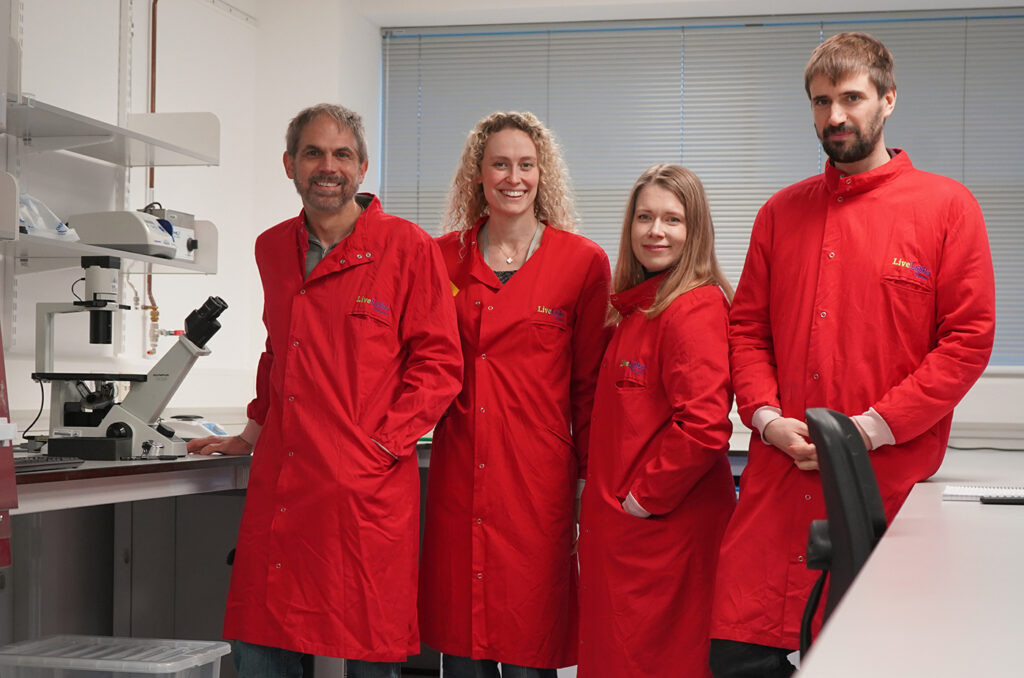
Cyclana Bio scientists working in the LiveLabs laboratory, from left to right, Kevin Chalut, PhD, cso and co-founder, Léa Wenger, PhD, ceo and co-founder,
Siiri Salooma, PhD, founding scientist, and Tom Wyatt, PhD, founding scientist.

It was at exactly then that I wanted to go down this research route in more detail that Altos Labs opened in Cambridge. The company had a thesis of “Let’s try and do real discovery science, deep, groundbreaking science,” but in a biotech environment where you’re much more collaborative. That really attracted me at the time, and so I applied to work there after my PhD. Luckily enough, they took a chance on me and believed in me.

I loved it and I learned a huge amount. Not just in terms of how you build discovery programs from the ground up, but also how you work in a team, how you focus, and how you align incentives in biotech. I think it completely shifted my mindset away from simple academic curiosity to, “How do we drive that curiosity towards impact as quickly as possible?” The bar, in my opinion, is somewhat higher than in academia because you’re not just saying, “Is this good enough to publish?” You’re saying, “Is this a therapy? Is this actually good enough to put into a human and help them and not harm them?”


Q: What made you decide to found Cyclana Bio?

Wenger: I was in an epigenetics lab within Altos, and my co-founder was actually one of the group leaders there working on the extracellular matrix. The more I worked with him, the more I realized how massively important it is in guiding how cells behave. You can get completely different responses from a cell depending on what environment it’s in. I got really interested in that interface between the epigenetics, the gene level regulation, and the [extracellular] matrix.

I was doing a lot of discovery science there, but during that time, I also developed endometriosis. I was in my mid-to-late 20s when my symptoms started, and they got worse very quickly. Like every scientist who gets diagnosed with a condition, I nerded out on the disease. In my spare time, I downloaded all the data and looked into what research was there, and very quickly realized that there wasn’t much information available.

There’s not much that we know about the disease and how it happens. People are still debating the causes and drivers of endometriosis. That was interesting and another area of unknown, which has always been what I was attracted to. I’d always been passionate about women’s health, but never really had the opportunity to do something about it.

There’s an easy, non-invasive way of getting access to cells to study endometriosis because menstrual fluid is built and shed every month from your endometrium. It’s built and shed in healthy women, in women with endometriosis, and in women with other conditions. On top of that, biopsies are actually way more common in gynecology than in a lot of other conditions. So I realized this was a huge opportunity to do this tissue-level discovery that we were so passionate about, but for a cause that I really believed in, in a field that was unknown.

I spoke to the CEO at Altos at the time and explained what I wanted to do. He was supportive and thought it was an interesting idea, but ultimately, the indication didn’t align with the priorities of Altos—of looking into age-related diseases. So that’s when we left and started Cyclana Bio.


Q: How easy was it to start the company?

Wenger: We were very lucky in that we got into the Babraham accelerator program very quickly, last May. That was important because not only did it give us validation that someone had actually picked us and said this is a good idea, but it also gave us lab space and access.

We did take quite a bit of a risk. Both my co-founder and I left without having raised funding or grants to start the company. For a short while, we were living off our savings and also paying for some very preliminary science and our first scientist to try and get some data going. That was in May [2025], but quite quickly, we got a bit of traction. By July, we had our first investment term sheet because we started fundraising immediately. Then by September, we were oversubscribed. We finalized the closing in October–November for a £5 million pre-seed round.

I think along the way, we basically just had to assume it was going to happen. We were building the company as if we had the money already, although we were always very open with Tom [Wyatt], the scientist who joined us first, about how much funding we had when he joined.

We’re nine people now and have some amazing scientists who have joined the team, including a great CTO who was also at Altos beforehand. We are still growing as we speak. It’s funny how science brings so much more science.


Q: What are you trying to achieve at Cyclana?

Wenger: Our main aim is to get at least one therapy that’s truly disease-reversing to the clinic. Based on a lot of research, we know that the extracellular matrix can guide how cells respond. It can act as a sink for particular signal factors. Sometimes it can sequester or deliver things like growth factors or inflammatory signals, but it also massively changes how the cell is interacting with its neighbors.

It’s a key component of a positive runaway effect that happens in lots of chronic inflammatory diseases and in some cancers. A lot of the time, when trying to develop treatments, we focus on the cells and whether we can stop that inflammation. What we think is, if you don’t address problems with the matrix, you are not going to cure the disease. You’re effectively just going to mitigate the side effects, and this matrix is going to act like a memory of the disease. This means that if you stop the treatment, it comes back because the matrix issue hasn’t been solved.

We think that that’s a big element of what’s going wrong with endometriosis. Lesions are removed surgically and then they come back. We really think the diseased extracellular matrix is very much driving the pro-inflammatory phenotype, and that if we don’t address that, we don’t actually get to the point where we are curing the disease. We want to see if we can effectively reverse the phenotypes and if we can effectively get to a cure by stopping this recurrent feedback loop.

We haven’t settled on an exact target or modality yet. We’re exploring a few different targets, and I think based on exactly what mechanism we want to go after, we will determine what the best modality is. We want to be sure about the science, very sure about the target, and then make that target work.


Q: Where does precision medicine come into your strategy?

Wenger: Our overall strategy is based on how we see endometriosis as a whole, but I think endometriosis hopefully won’t be viewed like that much longer. We hope that there’s going to be much better stratification and classification of the disease, because it manifests very differently in different women.

Although we think the extracellular matrix might be a common mechanism, we’re building a research platform where we will hopefully find out for sure because we’re collecting data. We’ve got an ongoing observational clinical study where we’re collecting biopsy tissue, menstrual fluids, clinical data, and blood from women, either with or without endometriosis.

We’re collecting that data, looking at the tissue, the proteins, and the architecture, but also isolating cells to test in our models. Then, when we start perturbing with particular interventions that we think might reverse the disease’s impact on the matrix or have different effects on the cells, we might start seeing patterns as to which types of women with endometriosis respond well to different treatments.

It’s going pretty well so far, thanks to our clinical collaborators and participants who have donated samples. Menstrual fluid is a very good way of getting samples from seemingly healthy women, because they don’t need to go to the doctor, [they] just send us a sample. We are also collecting tissue biopsies during routine gynecological procedures to minimize invasiveness and inconvenience.

So far, there’s lots of variability, which was what we expected and which is why we want to collect [samples from] a high number of donors. Not because we think that variability is noise, but because variability is signal. It can tell us more about the nuances of the disease in these different manifestations.


Q: What has the experience of being a CEO and biotech founder been like so far?

Wenger: It’s definitely been a steep learning curve. I think that’s also why it’s been so fulfilling, because I do love being in an environment where I’m not complacent, where I’m always learning.

To some extent, because we had so much freedom at Altos to drive our own projects, I had exposure already to the pure project management side of science, so that didn’t seem quite as much of a step up.

Obviously, there’s a huge business, commercial, and legal dimension that I never had thought about before. But I have been trying to learn as much as I can, as quickly as I can, from others. One thing that the biotech field is quite good at is volunteering information. You go to any sort of networking event, or you meet someone from the industry, and they are often very willing to talk to you about what they’re interested in, but also about what you’re doing, and give any advice they might have.

I’ve met many people who have helped me along the way and who have shared their opinions with me. I walked in expecting academia to be way more collaborative than the biotech industry, but actually, I’ve been very pleasantly surprised with my experience.


Q: Can you share any key learning experiences from the last year?

Wenger: If you have scientific training or you can think in a scientific way, going into the field of business or building a company is somewhat similar. There’s lots of information and lots of alternative paths that you can take, just like in scientific discovery, and there is differently weighted evidence as to which paths are the best ones to take. Once you have a certain amount of information, you can then take the best educated guess. That’s how I’ve gone about building the company. For example, when I started, I was told by a friend, “If you’re starting a biotech, you’re going to need to raise venture capital.” They gave me a book called Venture Deals, which is a very good book that explains how funds work. I read that book and felt I was better equipped to talk to people at the fundraisers. I think the first thing I’d say is, when going into any sort of field, try to really understand how and why that field exists and what are the structures that define its environment. Then you can put context into how people work. As a first-time founder, you might think, “I’m going to find investors, and if they believe in me, they’ll invest.” But there’s so much more to running a venture capital fund. Those things are important to know when framing your discussion.

Something I would do differently is not do everything at once. I left my job, started the company, started the science, started building the network, and started fundraising at the same time. There was always this pressure when I was meeting people that I also had to get them to invest. I think looking back on it, if I could start over, I probably would have spent a few more months trying to build my network and understanding the field better before I started having those investment conversations. It still worked out for us, we still raised funds, but it was stressful. Networking events were very high stakes!


Q: How has the endometriosis space changed in recent years?

Wenger: Gedeon Richter purchasing the Celmatix portfolio and backing FimmCyte are very good signs that people are trying again. I think endometriosis has been plagued by failures in clinical trials, and I think now we’re finally seeing some non-hormonal options being tested, which makes me hopeful. Some will fail, some will succeed, and the successes will drive more interest and availability of funding and hopefully, more successes in the future. I’m really looking forward to seeing the results from some of those clinical trials because I think the more solutions we have for women, the better.


Q: Is funding in the overall field of women’s health changing for the better?

Wenger: Absolutely. I think the funding environment is more open to women’s health. I think that’s been helped by the World Economic Forum and McKinsey Health Institute driving the message of value there. There is excitement, I think, and more funding, especially privately.

I’m not sure about public funding. I do think that on the public funding side, we have a trend of saying, “We should fund women’s health, let’s look for quick wins.” I think that’s a bit of a problem with any field that’s been somewhat left behind, once we realize that we need to bring it back. The risk will be funding the wrong things or putting too much of the money into solutions that may not be revolutionary because they don’t have the foundational science to back them up.

It can also be easy to get stuck in the valley of death between seed and late-stage funding. But I do think that there are incredible scientists moving into the field, and there are some great companies starting up. So even if there is this bias towards pre-seed or seed funding, you only need a couple of those companies to have some really promising data, and they will be funded. The bar might be higher than in other fields, but if you produce groundbreaking discoveries, there will be money.


Q: What advice would you give other new founders starting to build their companies?

Wenger: Just follow your gut and your dream. That’s the most important thing. I started Cyclana because I thought this needed to happen and we needed to look into endometriosis. I thought it was a bit hypocritical of me to think we needed to do something and not do it, despite having the training and the skills to try and find a solution. If you really believe something needs to happen in the world, startups are the best way to feel like you are driving that change and contributing to seeing the change that you want to happen. Whether it succeeds or not, you won’t wake up thinking, “What am I doing this for?” You’ll just be thinking, “I really hope that we don’t fail!”


Helen Albert is senior editor at Inside Precision Medicine and a freelance science journalist. Prior to going freelance, she was editor-in-chief at Labiotech, an English-language, digital publication based in Berlin focusing on the European biotech industry. Before moving to Germany, she worked at a range of different science and health-focused publications in London. She was editor of The Biochemist magazine and blog, but also worked as a senior reporter at Springer Nature’s medwireNews for a number of years, as well as freelancing for various international publications. She has written for New Scientist, Chemistry World, Biodesigned, The BMJ, Forbes, Science Business, Cosmos magazine, and GEN. Helen has academic degrees in genetics and anthropology, and also spent some time early in her career working at the Sanger Institute in Cambridge before deciding to move into journalism.

The post Cyclana Bio Is Exploring the Extracellular Matrix to Treat Endometriosis appeared first on Inside Precision Medicine.

AI Tool Classifies 102 CNS Tumor Subtypes in Minutes

Researchers German Cancer Research Center (DKFZ), Heidelberg University’s Medical Faculty, Heidelberg University Hospital developed AI system called Hetairos classify central nervous system (CNS) tumors using routinely prepared stained sections. research, published Nature Cancer, showed system classify 102 molecular tumor subtypes CNS cancers using digitized H&E slides, delivering diagnostic findings minutes rather than days or weeks often required molecular testing.

“ shows artificial intelligence is capable deriving molecular information directly routine sections thus fundamentally changing cancer diagnostics,” said lead author Darui Jin, PhD, postdoctoral fellow DKFZ.

CNS tumors encompass broad range diseases substantial molecular morphological diversity. methylation profiling is currently gold standard classifying many brain tumors, tests require specialized labs employing expensive analytical tools require sufficient amount tumor material, which difficult obtain some instances. these tests typically take two weeks return . reliance on molecular testing also created barriers some settings.

“Faster more widely accessible methods therefore needed,” researchers wrote. Existing alternatives such nanopore also require specialized instruments preparation. Routine H&E histopathology remains most widely available diagnostic material worldwide.

development Hetairos made possible advances computer vision digital pathology. Prior research established AI algorithms detect molecular features classify tumors molecularly defined categories. researchers noted previous research shown AI models estimate methylation signals standard H&E slides predict specific molecular alterations, “ artificial intelligence (AI)-based diagnostic solution H&E slides covers entire spectrum CNS tumors, currently only possible methylation testing, is still missing.”

develop Hetairos, team trained validated system using more than 11,000 digitized sections 9,606 treated 11 medical centers across four continents. Diagnoses used training were primarily established through methylation diagnostics. resulting model was designed classify tumors 102 molecular subtypes span nearly entire WHO classification spectrum CNS tumors.

important element system is it estimate confidence its predictions.

“Crucial Hetairos’s applicability across cohorts its realistic confidence estimates, which help judge its prediction accuracy,” researcher wrote. “Depending on cohort, Hetairos made high-confidence predictions 50–70% cases, those predictions were found correct nearly 90% instances.”

it become custom, system was also tested directly experts. Five board-certified neuropathologists reviewed 210 cases using only sections. Hetairos achieved accuracy rate 68%, compared 30% specialists. When three most likely diagnoses were considered, AI tool was 84% accurate versus 50% neuropathologists.

“ show modern AI systems now capable recognizing extremely subtle morphological patterns difficult even experienced specialists distinguish,” said Felix Sahm, project leader DKFZ.

prospective evaluation Hetairos practice analyzed 210 tumor alongside routine diagnostics without, its weren’t used influence management. While complete molecular testing required average 12 days, Hetairos generated approximately 12 minutes digitized slides were available. Including slide preparation scanning, findings often produced within 24 hours two days.

much speedier help clinicians initiate targeted treatments sooner guide additional testing, rather than replacing molecular testing, developers envision Hetairos triage decision-support tool.

“We developed Hetairos primarily tool support diagnostics,” Sahm said. “It is not intended replace molecular analyses, rather specifically complement accelerate them. technology make important contribution, particularly countries or regions limited resources, it is based on standard sections used worldwide.”

The post AI Tool Classifies 102 CNS Tumor Subtypes in Minutes appeared first on Inside Precision Medicine.