

Jordan Sollof is joined at NHS ConfedExpo 2026 by Dr Peter Thomas and Kate Warriner for a deep dive into the proposed single patient record.
EEG Biomarkers for ADHD Stimulant Treatment
Conditions: ADHD
Interventions: Drug: methylphenidate HCl; Drug: Mixed amphetamine salts extended release
Sponsors: Boston Children’s Hospital; Seattle Children’s Hospital; Tris Pharma, Inc.
Not yet recruiting
Interventions: Drug: methylphenidate HCl; Drug: Mixed amphetamine salts extended release
Sponsors: Boston Children’s Hospital; Seattle Children’s Hospital; Tris Pharma, Inc.
Not yet recruiting
Using Fenfluramine to Test the Serotonin Deficiency Theory of Depression
Conditions: Depression – Major Depressive Disorder
Interventions: Drug: Fenfluramine Hydrochloride; Radiation: [11C]Cimbi-36; Drug: Placebo
Sponsors: Imperial College Healthcare NHS Trust; University of Oxford
Not yet recruiting
Interventions: Drug: Fenfluramine Hydrochloride; Radiation: [11C]Cimbi-36; Drug: Placebo
Sponsors: Imperial College Healthcare NHS Trust; University of Oxford
Not yet recruiting
Two-component Radiology-guided Autonomous Cascade Engine (TRACE)
Conditions: Gastric Cancer (Diagnosis)
Interventions: Diagnostic Test: Utilizing the TRACE model to assist radiologists in T-staging; Other: washout period; Diagnostic Test: Utilizing the TRACE model to assist radiologists in T-staging
Sponsors: Liaoning Cancer Hospital & Institute
Recruiting
Interventions: Diagnostic Test: Utilizing the TRACE model to assist radiologists in T-staging; Other: washout period; Diagnostic Test: Utilizing the TRACE model to assist radiologists in T-staging
Sponsors: Liaoning Cancer Hospital & Institute
Recruiting
Comparison of Day Hospitalization Versus Full-Time Hospitalization in the Treatment of Severe Adolescent Obesity
Conditions: Severe Adolescent Obesity; Adolescent Obesity; Pediatric Obesity
Interventions: Other: Day Hospital Multidisciplinary Care; Other: Full-Time Inpatient Multidisciplinary Care
Sponsors: Fondation Santé des Étudiants de France
Not yet recruiting
Interventions: Other: Day Hospital Multidisciplinary Care; Other: Full-Time Inpatient Multidisciplinary Care
Sponsors: Fondation Santé des Étudiants de France
Not yet recruiting
Characterizing Social Determinants of Health in Patients With Type 2 Diabetes and Liver Disease: Cross-Sectional Survey Study
Background: The mortality rate from liver disease among people with type 2 diabetes mellitus (T2DM) increased by 20% between 2001 and 2018. There are marked racial and ethnic differences among people with T2DM at risk of metabolic dysfunction–associated steatotic liver disease (MASLD) and related complications. Objective: We aimed to investigate the distribution of individual-level social determinants of health (SDOH) in people living with both T2DM and MASLD. Methods: In this small cross-sectional study, patients (N=50) were recruited from a tertiary care general hepatology clinic to complete a survey that assessed potential determinants of health. We sought to oversample Black and Hispanic patients to better understand the prevalence of SDOH. Electronic health records were reviewed to determine stage of liver disease, and these data were linked to survey results to identify the distribution of individual-level determinants of health in patients with cirrhosis. Results: Black and Hispanic respondents were more likely to report more experiences of racial discrimination, worries about being discriminated against, and group-based medical mistrust, especially regarding unsupportive health care providers. Cirrhosis groups tended to have lower incomes and less coverage from private health insurance. However, no substantial trends were observed in the distribution of health literacy, discrimination, and diabetes stigma among patients with and without cirrhosis. Conclusions: These findings will inform a future study aimed at assessing and developing interventions to address the combined impact of individual- and neighborhood-level SDOH on health-related outcomes in patients with T2DM and MASLD.
<img src="https://jmir-production.s3.us-east-2.amazonaws.com/thumbs/3141b70bef3ea79b1f1526511c805dab" />
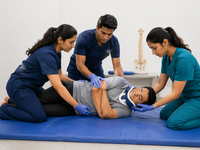
Standardized Patient vs Video Demonstration for Teaching Psychomotor Skills in Spinal Injury Management to Undergraduate Medical Students: Prospective Interventional Comparative Study
<strong>Background:</strong> Emergency trauma care in the “golden hour” can reduce the fatality rates by 20%-50%. Imparting trauma care training in the undergraduate Indian medical graduate curriculum can prepare graduates as first responders for both prehospital and hospital setup management. However, teaching these skills for managing acute traumas in a competency-based medical education curriculum is challenging. These skills can be taught on a standardized patient (SP), allowing the learner to achieve higher clinical competency and better communication skills. However, since SP availability is limited, a video demonstration (VD) of such skills is an easy and reliable teaching-learning method. <strong>Objective:</strong> This study aims to evaluate the effectiveness of using an SP vs VD for teaching psychomotor skills to undergraduate students in the management of spinal injury. <strong>Methods:</strong> A prospective interventional comparative study was performed in the orthopedics department of a teaching hospital from September 2024 to February 2025, with institutional ethics committee approval. Thirty undergraduate students posted in the orthopedics department were divided into 2 groups (15 each) based on their even and odd roll numbers (systematic sampling). One group was shown a VD of the skills like application of an improvised cervical collar and log rolling maneuver for the management of a patient with spinal injury in a primary setting, while the other group was taught on an SP. The students were assessed by an objective structured clinical examination (OSCE), and maneuvers were performed on mannequins. Pretest and posttest evaluations with peer-validated questionnaires along with students’ feedbacks were obtained. The data were analyzed using unpaired 2-sided <i>t</i> test for OSCE scores and paired 2-sided <i>t</i> test for pretest and posttest scores with statistical significance set at <i>P</i><.05 (95% CI). Student feedback questionnaires based on a 5-point Likert scale were evaluated. <strong>Results:</strong> The mean OSCE scores obtained by the VD group (15.47) were significantly different from those obtained by the SP group (18.27) (<i>P</i>=.004). However, the mean OSCE scores obtained in individual skill demonstration stations for log rolling maneuver and cervical spine immobilization of the VD group were 2.27 and 3.20 and those of the SP group were 2.33 and 3.27, respectively. This difference was not significant (<i>P</i>=.74 and .79, respectively). The student feedback showed that teaching with an SP was marginally more interesting and effective, giving them more confidence to apply these skills in a primary setting. <strong>Conclusions:</strong> Both VD and SP methods are equally effective for teaching lifesaving psychomotor skills for the management of spinal injury. However, SP group students had better student engagement. Hence, a blended approach, where VD is used to teach large groups or can be given to students prior to the sessions, followed by teaching or assessing on SPs for application of these skills will lead to optimum results and save time.
Sense of Coherence in patients with stable schizophrenia: multidimensional determinants from a cross-sectional study of 438 inpatients in Guangzhou, China
IntroductionSchizophrenia, a chronic psychiatric disorder, profoundly affects social functioning and quality of life. The Sense of Coherence (SOC), a core construct in salutogenic theory, plays a pivotal role in stress coping and recovery outcomes. While SOC has been studied in general populations, its determinants in stabilized schizophrenia inpatients remain underexplored. This study comprehensively investigated the Sense of Coherence (SOC) profile among stabilized schizophrenia inpatients by assessing its current status, exploring the interrelationships between SOC and demographic factors/Big Five personality traits (CBF-PI)/social support (SSRS), and identifying factors associated with SOC to inform potential personalized resilience-enhancing interventions. Findings may guide clinical strategies to enhance resilience and mental health recovery and potentially facilitate functional recovery in this population.Patients and methodsA cross-sectional study was conducted at a Guangzhou tertiary psychiatric hospital with 438 stabilized schizophrenia inpatients from November 2024 to February 2025. Data collection included demographic/clinical variables, Chinese Big Five Personality Inventory (CBF-PI), 13-item Sense of Coherence Scale (SOC-13), and the Social Support Rating Scale (SSRS). Statistical analyses were performed using SPSS version 27.0. Descriptive statistics were used to summarize the data and independent-samples t-tests and one-way analysis of variance (ANOVA) were employed to compare SOC scores across demographic and clinical groups. Pearson correlation analysis was conducted to examine the relationships between personality traits, social support, and sense of coherence and multiple linear regression analysis was utilized to identify independent factors influencing sense of coherence (P < 0.05).ResultThe mean SOC score among the 438 stabilized schizophrenia inpatients was 53.35 ± 11.81. SOC correlated positively with all five dimensions of CBF-PI-B (P < 0.05), as well as subjective social support (P < 0.01), while showing inverse correlations with objective support (p < 0.01) and support utilization subscales (P < 0.01), Multiple regression identified personal income(yes), frequency of physical activity (≥3 times/week), and primary caregiver (Children) as significant SOC predictors.ConclusionThis study demonstrates that stabilized schizophrenia inpatients in a tertiary psychiatric setting exhibit generally lower Sense of Coherence (SOC) levels compared with healthy normative values and moderately lower than several outpatient schizophrenia samples. Higher SOC was significantly associated with having a personal income, frequent physical activity (≥3 times/week), having children as primary caregivers, and Chinese Big Five Personality traits. Notably, while subjective support was positively correlated with SOC, objective support and support utilization showed negative associations. Given the moderate internal consistency of the SSRS (Cronbach’s α = 0.626), the differential associations with social support dimensions should be interpreted cautiously. Concurrently, personality traits are relatively stable, their associations with SOC may inform indirect supportive strategies leveraging existing strengths rather than direct modification. These findings underscore the potential value of tailored interventions that enhance subjective support, promote structured recreational activities, and foster patients’ perceived coping resources. Further cross-sectional and longitudinal outpatient studies are warranted to validate these results and elucidate the mechanisms underlying the support paradox.
Group painting therapy for children and adolescents with bone tumors: a quasi-experimental trial evaluating anxiety, depression, post-traumatic growth, and health-related quality of life
BackgroundChildren and adolescents undergoing treatment for malignant bone tumors frequently experience heightened psychological distress, including anxiety, depression, and reduced health-related quality of life (HRQoL). Group painting therapy has been proposed as a supportive non-pharmacological strategy, yet empirical evidence in pediatric oncology remains limited. This study aimed to evaluate the impact of an eight-week structured group painting therapy program on anxiety, depression, post-traumatic growth (PTG), and HRQoL in this population.MethodsA quasi-experimental pretest–posttest study was conducted among children and adolescents (aged 8–18 years) with primary malignant bone tumors at Henan Cancer Hospital from December 2023 to December 2024. A total of 76 participants were consecutively enrolled and allocated to an intervention group receiving group painting therapy (n=39) or a control group receiving standard nursing care (n=37) using a nonrandomized ward-based approach. Anxiety, depressive symptoms, PTG, and HRQoL were assessed at baseline and post-intervention using validated instruments, including SCARED, DSRSC, PTGI, and PedsQL™ 3.0 Cancer Module.ResultsCompared with the control group, the intervention group demonstrated greater reductions in anxiety and depressive symptoms, along with significant improvements in PTG and selected HRQoL domains. Notable improvements were observed in emotional functioning, social communication, generalized anxiety, somatic symptoms, personal strength, and appreciation of life. No significant between-group differences were observed in physical symptom domains such as pain and nausea.ConclusionsGroup painting therapy was associated with improvements in emotional well-being, PTG, and selected HRQoL domains in children and adolescents with primary bone tumors. These findings suggest that painting therapy may be a promising adjunct to routine pediatric oncology care for promoting resilience and psychological recovery.
NHS leaders call time on AI pilots and demand national scaling
Senior NHS digital leaders have called for an end to repeated AI pilots, arguing that the focus must now shift to implementation and scaling.