Telehealth by Home Monitoring and Video Consultation for Children With Cystic Fibrosis: Qualitative and Quantitative Study

Background: Clinical outcomes for patients with cystic fibrosis have improved over the last decades, with a focus on enhancing the quality of life for children and their families. These improvements are expected to reduce the need for in-hospital visits, allowing for alternative care provisions that further enhance their quality of life. Telehealth can decrease the number of in-hospital visits and disruptions to everyday life. Objective: This study aims to assess the feasibility of home monitoring with subsequent video consultations and to explore the experiences of families and health care professionals. Methods: We recruited 12 children with cystic fibrosis (>6 y) and their parents from the Cystic Fibrosis-Center Copenhagen. The 5-month intervention consisted of alternately standard care visits and telehealth care visits. Telehealth care visits consisted of home monitoring, with automatically transmitted data to the hospital-based electronic health record. Home monitoring included spirometry, weight, and oxygen saturation, conducted with parental support, along with a video consultation. To monitor lung infections during telehealth care visits, all participants were encouraged to send in a sputum sample beforehand. Families completed preintervention and postintervention questionnaires about time spent, sense of security, and usability of home monitoring devices. We also collected data on families’ and health care professionals’ experiences with telehealth care visits through semistructured interviews after the intervention. Results: All 12 (100%) approached children and their parents accepted to participate. Standard care visits caused full-day absences for 8 (73%) children and 10 (91%) parents, compared to only 1 (8%) child and their parents during telehealth visits. More than 70% of children and their parents rated the oxygen saturation device (n=9, 75%) and weighing scale (n=11, 92%) as “very easy” to use after the intervention. However, 50% (n=6) found the home spirometry device “difficult” or “acceptable” to use, possibly due to device errors. We identified 4 main themes in the interviews: benefits of telehealth, disadvantages of telehealth, prerequisites for telehealth to be successful, and next steps toward telehealth. Conclusions: Home monitoring with automatically transmitted data to the hospital-based electronic health record and video consultations was feasible despite identified concerns regarding technical issues with home spirometry devices.

Smartphone-Based Grading and Rehabilitation in Patients With Facial Palsy Using Computer Vision: Prospective Validation Study

Background: Peripheral facial palsy causes significant functional and psychosocial impairments, requiring precise assessment and patient engagement for effective rehabilitation. However, conventional clinician-graded scales (eg, House-Brackmann Scale, Sunnybrook Facial Grading System, and Stennert Index) are subjective and prone to interobserver variability, limiting their reliability for tracking recovery. Smartphone-based computer vision solutions offer objective, standardized facial movement grading, and interactive home-based training to improve adherence and outcomes. Objective: This pilot study evaluated a novel iOS smartphone app (Apple Inc.) for facial palsy management. The app uses the iPhone TrueDepth 3D camera and on-device computer vision to compute a Digital Facial Index (DFI) for objective facial movement analysis, and provides guided neuromuscular facial exercises with real-time biofeedback. The study aimed to validate DFI against standard clinical grading scales and assess patient-reported outcomes and usability. Methods: A 4-week single-arm pilot included 21 patients with unilateral facial palsy. Participants used the app at home for daily facial exercises and periodic self-assessments with DFI. Clinicians, blinded to DFI, rated facial function from standardized video exams at baseline and 4 weeks using the House-Brackmann Scale, the Sunnybrook Facial Grading System, and the Stennert Index. DFI concurrent validity was evaluated via correlation with these clinician scores. Patient-reported outcomes included pre- and postintervention Facial Disability Index (FDI) physical and social scores, the System Usability Scale, and a poststudy user feedback questionnaire. Results: During the study period, strong correlations were observed between DFI and conventional clinical scores. FDI physical and social showed significant functional improvement. Mean System Usability Scale was 88.3 (SD 15.4), indicating excellent usability, and participants reported high satisfaction, preferring the app over traditional paper-based exercises. Conclusions: The app’s DFI provided objective facial function grading that correlated well with standard clinical scales. Patients’ FDI scores improved significantly over 4 weeks. High usability and patient preference support the app’s feasibility for home-based rehabilitation. This digital approach is promising for facial palsy management, and controlled studies are needed to confirm efficacy and improve long-term engagement.
<img src="https://jmir-production.s3.us-east-2.amazonaws.com/thumbs/c93e0cde98c329f0fd77c09399a73c49" />

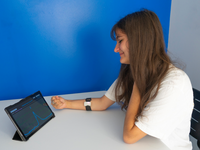
Reliability and Safety of Smartwatch Blood Pressure and Oxygen Saturation Measurements in Older Adults: Instrument Validation Study

Background: Hypertension is a significant risk factor for cardiovascular diseases and premature mortality, with its prevalence increasing due to population aging and lifestyle factors. Accurate measurement of blood pressure (BP) and arterial oxygen saturation is crucial for disease prevention and monitoring, and wearable devices have emerged as a promising alternative. However, their clinical reliability requires validation, particularly in older populations. Objective: The aim of this research was to evaluate and compare the measurement of BP and arterial oxygen saturation in older people using a smartwatch in comparison with reference devices. Methods: We recruited 50 participants aged between 50 and 89 years (mean 70.60, SD 12.03 y), including 34 female participants and 16 male participants. A total of 3 BP measurements were taken simultaneously using the smartwatch and an ambulatory BP monitoring device (reference device). Arterial oxygen saturation was measured simultaneously using the smartwatch and the oximeter. The paired-sample test (2-tailed) was used to compare variables, and the intraclass correlation coefficient (ICC) was used to verify the correlation. Results: When averaged values were considered, no significant differences were observed between the Samsung Galaxy Watch 6 and the reference device for systolic BP (=.31) or diastolic BP (=.88), with good agreement for both parameters (systolic BP ICC=0.88; diastolic BP ICC=0.88). Arterial oxygen saturation showed no significant difference between devices (=.10), with moderate agreement (ICC=0.68). Heart rate measurements also showed no significant differences between devices (=.54), demonstrating good agreement. Conclusions: The Samsung Galaxy Watch 6 demonstrated acceptable agreement with reference devices for BP and arterial oxygen saturation measurements in older adults without decompensated clinical conditions, evaluated under controlled resting conditions. These findings indicate that the device provides reliable measurements within this specific population and context when measurements are obtained under standardized and physiologically stable conditions.
<img src="https://jmir-production.s3.us-east-2.amazonaws.com/thumbs/546c189ff2e5b934b29edccd0b4f2d42" />

Accelerated iTBS for Major Depression

Conditions: Major Depressive Disorder (MDD); Treatment Resistant Depression (TRD)

Interventions: Device: Accelerated Intermittent Theta Burst Stimulation (iTBS)

Sponsors: Istanbul University – Cerrahpasa

Recruiting

Multigesture Electromyographic Control Complexity in Upper Limb Prostheses Actuated via Single Sensor Input Contraction Magnitude: Qualitative Study for Evaluating Performance and Cognitive Load

<strong>Background:</strong> Lack of functionality is one factor that contributes to prosthetic rejection rates. Electromyographic upper limb prostheses are controlled through muscle contractions in the user’s residual limb. The incorporation of multigesture controls into a novel, in-house developed upper limb prosthesis requires users to differentiate between the strengths of muscle contractions to trigger programmed gestures. Little research exists on the limitations of expanding device capabilities. This expansion may lead to a decline in accuracy and perceived usability or an increase in training time and cognitive workload. <strong>Objective:</strong> This study aimed to determine the feasibility of implementing multiple gestures when learning electromyographic controls during a single training session. <strong>Methods:</strong> Participants with full upper extremity control were fitted with a Flex Controller, a surface electromyography device that measures muscle contraction. Contractions were visualized as peaks and calibrated through an adjustable scale on a tablet. A training app was developed in-house to test novice users on an electromyography control system. Users interacted with 1, 3, or 5 zones on the screen. Each horizontal zone represented a threshold required to trigger a distinct gesture on the prosthesis. The cohorts were labeled A1 (n=9), A2 (n=10), A3 (n=9), and B1 (n=26). Every participant completed 3 trials per arm, and each trial consisted of 15 randomized cues. Each cue was represented by a green color change, with 1 point earned after a successful peak. Collected outcomes included performance, the System Usability Scale, and the National Aeronautics and Space Administration Task Load Index. <strong>Results:</strong> Scores decreased significantly as zones increased (Kruskal-Wallis H<sub>3</sub>=24.9, <i>P</i>&lt;.001). The mean scores were 15.0 (SD 0.0) for 1 zone, 9.1 (SD 1.1) for 3 zones, and 5.5 (SD 1.1) for 5 zones. Perceived usability, measured by System Usability Scale, showed modest omnibus difference across cohorts (Kruskal-Wallis H<sub>3</sub>=5.22, <i>P</i>=.16); however, a pairwise comparison showed the 5-gesture cohort rated usability lower than the progressive cohort (2-tailed Welch t<sub>11</sub>=–2.19, <i>P</i>=.05). The 5-gesture cohort rated the system lowest (mean 63.3, SD 16.2). Cognitive workload, assessed through the National Aeronautics and Space Administration Task Load Index, increased with the number of gestures. The performance subscale showed a significant omnibus difference across cohorts (Kruskal-Wallis H<sub>3</sub>=21.4, <i>P</i>&lt;.001). Mean performance subscale scores were 84.4 (SD 14.7) for the single-gesture condition, 30.6 (SD 21.7) for the 5-gesture condition, and 44.2 (SD 21.2) for the progressive cohort, reflecting increasing perceived difficulty with more gestures. The sample size for quantitative analysis was 54. <strong>Conclusions:</strong> These findings support the implementation of progressive training for 3 gestures. Usability perceptions were the highest among the more complicated progressive cohort, which is likely related to perceived improvement. Progressively learning 3 gestures enables a balance between device capability, user intention, perceived usability, and cognitive workload.

Three factor delay learning rules for spiking neural networks

Spiking neural networks (SNNs) are hybrid dynamical systems that operate on spatiotemporal data, yet their learnable parameters are often limited to synaptic weights, contributing little to temporal pattern recognition. Learnable parameters that delay spike times can improve classification performance in temporal tasks, but existing methods rely on large networks and offline learning, making them unsuitable for real-time operation in resource-constrained environments. In this paper, we introduce synaptic and axonal delays to leaky integrate and fire (LIF)-based feedforward and recurrent SNNs, and propose three-factor learning rules to simultaneously learn weights and delays online. We employ a smooth Gaussian surrogate to approximate spike derivatives exclusively for the eligibility trace calculation, and together with a top-down error signal determine parameter updates. Our experiments show that incorporating delays improves accuracy by up to 18% over a weights-only baseline, and for networks with similar parameter counts, jointly learning weights and delays yields up to 14% higher accuracy. On the SHD speech recognition dataset, our method achieves similar accuracy to offline backpropagation-based approaches. Compared to state-of-the-art methods, it reduces model size by 6.6× and inference latency by 50%, with only a 2.5% drop in classification accuracy. Our findings would be beneficial for the design of power and area-constrained neuromorphic processors by enabling on-device learning and lowering memory requirements.

Smart Wristband Detects Cardiac Arrest with 92% Sensitivity in Early Clinical Study

A wearable smart wristband that continuously measures blood flow at the wrist may be able to detect cardiac arrest and automatically trigger emergency alerts, according to findings from the DETECT-1b study published in the journal Circulation: Arrhythmia and Electrophysiology. Researchers at Radboud University Medical Center found that the technology detected shockable cardiac arrest events with 92% sensitivity during controlled clinical procedures in patients with ventricular arrhythmias. The findings are an early indication that monitoring the condition via a wearable device technology could eventually help reduce delays in providing care for out-of-hospital cardiac arrest by automatically alerting emergency medical systems or nearby responders.

“Our findings are important because many out-of-hospital cardiac arrests are unwitnessed. A smart technology wristband capable of automatically detecting cardiac arrest and triggering an alert could function as a digital witness,” said senior author Judith Bonnes, MD, PhD, a cardiologist at Radboud University Medical Center in the Netherlands. “With the device automatically notifying emergency services or nearby trained responders, help could arrive sooner, which may significantly improve survival chances.”

The DETECT-1b study was designed to evaluate a medically certified smart wristband that uses a light-based sensing method called photoplethysmography (PPG) that is capable of measuring blood flow changes in the wrist. The wearable device, called CardioWatch, continuously monitored pulse-related blood flow signals during procedures in which dangerous heart rhythms were intentionally induced under controlled conditions in people known to have abnormal heart rhythms.

The research is a follow-on of the DETECT-1a study. “In the DETECT-1a, we developed a wrist-derived photoplethysmography (PPG) algorithm for cardiac arrest detection using patient data from induced short-lasting circulatory arrests, achieving 98% sensitivity,” the researchers wrote.

DETECT-1b was developed as a prospective multicenter validation study involving adults undergoing ventricular tachycardia ablation or subcutaneous implantable cardioverter-defibrillator implantation. During these procedures, pulseless ventricular tachycardia or ventricular fibrillation was induced briefly to test cardiac function and device response. While this was occurring, the researchers recorded electrocardiogram and invasive blood pressure measurements as reference standards while patients wore the CardioWatch.

The study enrolled 49 adults in the Netherlands. Participants had a median age of 66 years, 84% were men, and many had existing cardiovascular disease. Seven participants had a prior history of cardiac arrest, 69% had experienced myocardial infarction, and approximately half had moderately or severely reduced left ventricular function.

For this study, the researchers evaluated 125.5 hours of data from the wristbands of the participant and identified 59 shockable cardiac arrest events among 26 patients. Fifty of the identified events were pulseless ventricular tachycardia and nine involved ventricular fibrillation. The algorithm detected 92% of all cardiac arrest events overall, including 100% of ventricular fibrillation episodes and 90% of pulseless ventricular tachycardia events.

“This is the first external validation in patients of a wearable-based cardiac arrest detection model, demonstrating that wrist-derived PPG reliably detects shockable cardiac arrest, with 100% sensitivity for VF,” the researcher wrote.

The algorithm developed to detect these events works by continuously monitoring the amplitude of PPG signals collected at the wrist. When signal amplitude decreases, the embedded algorithm evaluates signal quality to determine whether pulse-related peaks remain detectable. If pulse signals disappear, the algorithm triggers a cardiac arrest alarm.

The researchers also uncovered a number of false-positive alerts. Thirty-three alerts occurred in the absence of pulseless ventricular tachycardia or ventricular fibrillation. Nevertheless, of the 33 alert, 24 occurred during hemodynamically tolerated ventricular tachycardia and were considered clinically relevant. In total, nine of the alerts from 125.5 hours of monitoring were classified as false positives.

Lead study author Roos Edgar, a technical physician at Radboud, noted that the technology differs from prior cardiac arrest detection methods because the wrist-based design allows continuous monitoring during routine daily life. While many commercially available smart watches contain similar PPG sensors, they are not equipped to detect cardiac arrest.

The technology has the potential to be used for patients at elevated risk for cardiac arrest, including patients with ventricular arrhythmias or implantable cardioverter-defibrillators. The researchers said future deployment could also involve directly integrating the wristband’s alerts with emergency dispatch systems.

“The goal is to connect the wristband to emergency dispatch centers and volunteer responder networks in the Netherlands so that nearby rescuers and ambulance services can be alerted immediately when cardiac arrest is detected,” Bonnes said.

Future studies are expected to evaluate how the system performs during everyday activities, exercise and sleep, conditions that may create additional signal noise and complicate detection.

The post Smart Wristband Detects Cardiac Arrest with 92% Sensitivity in Early Clinical Study appeared first on Inside Precision Medicine.


Metaverse-Based Virtual Reality for Remote Anatomy Education: Pilot Randomized Controlled Trial

Background: Traditional anatomy teaching relies on cadaveric dissection and 2D resources, which often require in-person attendance and may limit spatial understanding. Virtual reality (VR) provides an immersive, remote alternative that supports 3D visualization from home. Recent evidence suggests that while VR may yield comparable factual knowledge gains to 2D methods, its primary value lies in enhancing learner engagement, motivation, and perceived educational value. Objective: This pilot randomized controlled trial compares remote synchronized VR with didactic animated anatomy lectures for the teaching of tracheostomy anatomy. Methods: Participants were recruited via convenience sampling through the VRiMS (Virtual Reality in Medicine and Surgery) Surgical Society network. All participants first attended a synchronous 20-minute online lecture delivered by a consultant surgeon. They were then individually randomized to one of 2 groups using a computer-generated sequence. Allocation was concealed until the intervention; however, participants and researchers were unblinded. The intervention group completed a 10-minute metaverse-based VR session, delivered by a consultant surgeon via 3D Organon’s Medverse platform on the PICO 4 Ultra headset. The control group completed a 10-minute prerecorded 2D animated lecture, accessed on their personal device. Participants then swapped to the other modality. Data were collected via Google Forms at 3 intervals (baseline, postintervention, and postcrossover) to assess confidence, spatial understanding, and knowledge (10-item multiple-choice questions). The analysis of nonparametric data utilized Wilcoxon signed-rank tests for within-group changes and Mann–Whitney tests for between-group differences. Results: Twenty-four medical students from 11 United Kingdom and Irish medical schools participated. Adherence was 100%, with all participants completing their assigned 10-minute intervention and all assessment points. Ninety-two percent of participants (n=22) reported no prior tracheostomy anatomy teaching. Additionally, 83% (n=20) had no prior remote-synchronized VR anatomy teaching experience. Anatomical confidence improved significantly in the VR group compared with animation (mean change 1.58, SD 1.00 vs mean 0.50, SD 0.80, =.01). Knowledge scores improved significantly in both groups (VR: mean 1.75, SD 1.54, =.007; animation: mean 2.83, SD 1.70, =.003), with no significant postintervention difference between groups (=.46). VR participants reported significantly superior spatial understanding across all measured domains (all ≤.009). These included depth perception (3.75 vs 2.58, =.009), appreciation of anatomy from different viewpoints (4.25 vs 2.33, =.001), mental reconstruction from varying angles (3.83 vs 2.08, =.002), and spatial depth supporting anatomical understanding (4.08 vs 2.08, =.001). Following the completion of both modalities, participants rated VR as more engaging (mean 4.54, SD 0.78) and more educationally effective (mean 4.29, SD 0.95) than animation. Conclusions: Remote VR teaching is feasible and engaging and enhances spatial understanding compared to animation. While knowledge gains were comparable between modalities, VR improved learner confidence and perceived 3D comprehension. Hence, VR may represent a scalable adjunct or alternative to traditional anatomy teaching.
<img src="https://jmir-production.s3.us-east-2.amazonaws.com/thumbs/ea7ffabbe2afcc58142431a9a195eb32" />