Background: Digital remote monitoring technologies, including smartphones and wearables, offer promising avenues for early detection of psychosis relapse. However, selecting devices that are acceptable to participants and produce high-quality data remains challenging. Objective: The aim of this nested pilot study was to assess the acceptability and data quality of 3 commercially available wearable devices in people with psychosis recruited to the CONNECT cohort study. Methods: Participants recruited to the CONNECT study before July 31, 2024, were included in the pilot study and selected 1 of 3 wearable devices: a Fitbit Charge 5, Samsung Galaxy Watch 5, or Apple Watch SE. Baseline demographics were compared between device groups. Acceptability of devices to participants was assessed through a Wearable Device Satisfaction Questionnaire after 3 months of use, with the proportion of positive responses to each question calculated and compared. Data completeness was also assessed by calculating the number (and percentage) of valid days of step count, heart rate, and sleep data, and comparing between groups. Data quality was assessed through summarizing the amount of troubleshooting required, additional metrics available from the wearables, and continuity of data completeness by calculating the proportion of participants with at least 3 days of heart rate data per week for the first 20 weeks of follow-up. Predefined criteria were used to determine the next steps for the wider CONNECT study: if one device was superior, this would be selected; if none were found to be superior and the Fitbit was found to be noninferior, then Fitbit would be retained. Results: Of the first 107 participants recruited to CONNECT, 105 were included in the pilot study evaluation. The Samsung Galaxy Watch was selected most frequently by participants (46/105, 43.8%), followed by the Apple Watch (27/105, 25.7%), and Fitbit Charge (23/105, 21.9%). Differences in participant demographics were observed across device groups. Self-reported acceptability after use did not differ substantially between devices. However, in terms of data completeness, the median proportion of valid heart rate data days was significantly lower for Samsung Galaxy (median 31.2%, IQR 8.5%-46.0%) compared to Fitbit (median 80.1%, IQR 26.7%-95.0%; =.003) and Apple Watch (median 49.3%, IQR 21.5%-86.0%; =.02). There was no significant difference between Fitbit and Apple Watch. Similar patterns were observed for step count and sleep data. The Samsung Galaxy Watch required more frequent troubleshooting for data flow issues and lacked additional physiological metrics, available from the other devices. Conclusions: Due to comparatively lower data quality and technical performance, the Samsung Galaxy Watch was discontinued for use in the subsequent phase of the CONNECT study. The study highlights the importance of incorporating nested evaluations of devices in long-term research.
<img src="https://jmir-production.s3.us-east-2.amazonaws.com/thumbs/15a98cce4ebe0d50a261a2b9f900f482" />
Transcutaneous Auricular Neurostimulation (tAN) for Premenstrual Dysphoric Disorder (PMDD) and Perimenopause
Conditions: Perimenopause; PMDD
Interventions: Device: transcutaneous auricular neurostimulation (tAN)
Sponsors: Texas Christian University; Spark Biomedical, Inc.
Recruiting
Interventions: Device: transcutaneous auricular neurostimulation (tAN)
Sponsors: Texas Christian University; Spark Biomedical, Inc.
Recruiting
The Download: South Korea’s hottest bachelors, and advancing eye transplants
This is today’s edition of The Download, our weekday newsletter that provides a daily dose of what’s going on in the world of technology.
South Korea’s hottest new bachelors are chip workers
Baek, a 35-year-old manager at the South Korean semiconductor titan SK Hynix, was enrolled in a matchmaking company a year ago. In a move typical of anxious South Korean parents, his mother signed him up, hoping to find a good wife for her son.
Lately, says Baek, he and his coworkers are having better luck finding dates—perhaps because of the dazzling bonuses they just got. Flush with eye-popping profits from the AI chip boom, SK Hynix agreed to pay 10% of operating profits to employees, which translates to an extra $476,000 per employee this year. Samsung workers received a similar deal this May.
With their newfound wealth, chip workers like Baek have become the most sought-after bachelors and bachelorettes in South Korea.
Discover how AI chip profits are transforming South Korea’s dating market—and stoking anxieties.
—Michelle Kim
A device that revives eyeballs from dead donors could make eye transplants possible
It’s not easy to transplant a whole human eye. The surgery is difficult, and eyes start to degenerate as soon as they’ve left the body. When surgeons attempted it a few years ago, the newly transplanted eye couldn’t see.
But researchers believe they might have a solution: a device that maintains and revives freshly removed eyeballs using a technique called perfusion. Treated eyes don’t degrade as quickly and appear to retain the ability to transmit electrical signals—and potentially see.
The device could one day make whole-eye transplants a viable possibility. Here’s how it works.
—Jessica Hamzelou
The must-reads
I’ve combed the internet to find you today’s most fun/important/scary/fascinating stories about technology.
1 The UN’s chief has warned that AI is outpacing global rules
He’s called for globally harmonised guardrails. (Reuters $)
+ The UN also said AI could worsen global inequality. (Guardian)
2 An Israeli battlefield system identified 850,000 targets in Gaza and Lebanon
Elbit Systems says it detected targets in real time. (Guardian)
+ Congress wants to permanently integrate US and Israeli defence tech. (Intercept)
+ How AI turned the Iran conflict into theater. (MIT Technology Review)
3 EU transparency rules have exposed Microsoft’s tax haven tactics
A new report shows how it shifts profits around to reduce tax bills. (NYT $)
+ Other US companies will soon need to provide similar reports. (Engadget)
4 A spacecraft has launched an audacious mission to rescue a NASA telescope
LINK will try to tug the SWIFT observatory to a higher orbit. (New Scientist $)
+ It will attempt to grab the telescope with three robotic arms. (BBC)
+ The observatory studies gamma-ray bursts. (NBC News)
+ We’re putting more stuff into space than ever. (MIT Technology Review)
5 Chinese tech giants are disabling humanlike AI due to new regulations
ByteDance and Alibaba have shut down the features. (SCMP)
+ Beijing is tightening its AI regulations. (Nikkei Asia)
6 Anthropic wants to develop its own drugs
The company says it will pursue treatments for “neglected” diseases. (Verge)
+ It’s also got a new AI for science product. (MIT Technology Review)
7 India is testing an alternative to Silicon Valley’s AI playbook
It’s based on small, offline, multilingual, open-source AI. (Rest of World)
+ India’s AI infrastructure is also attracting investors. (CNBC)
8 Big Tech has suddenly flipped on the AI jobs wipeout scenario
Negative public opinion has sparked a more optimistic public stance. (WSJ $)
+ The AI jobs hysteria needs a reality check. (MIT Technology Review)
9 Midjourney has accused Hollywood studios of covertly using AI
It’s escalated its legal fight with Disney, Universal, and Warner. (Gizmodo)
10 A martian rock has lots of carbon on it, and it’s not clear why
Scientists cannot yet tell whether biology played a role. (Ars Technica)
Quote of the day
“It’s just his AI and my AI going back and forth.”
—An anonymous employee explains why she’s struggling to develop a good working relationship with her boss, Fortune reports.
One More Thing

The AI relationship revolution is already here
AI is everywhere, and it’s starting to alter our relationships with our spouses, kids, colleagues, friends—and even ourselves.
Although the technology remains unpredictable and sometimes baffling, individuals from all across the world and from all walks of life are finding it useful, supportive, and comforting too.
People are using large language models to seek validation, mediate marital arguments, and help navigate interactions with their community. They’re using it for parenting support, self-care, and even to fall in love.
Explore how AI is changing our relationships.
—Rhiannon Williams
We can still have nice things
A place for comfort, fun, and distraction to brighten up your day. (Got any ideas? Drop me a line.)
+ Radiohead’s seminal album “OK Computer” has been reimagined as a Nintendo 64 soundtrack.
+ Graphic design history meets stamp collecting in this beautifully curated archive of postage stamp design.
+ As Lionel Messi lights up another World Cup, his former coach breaks down his style of play in this fascinating analysis.
+ Armchair engineers will enjoy the brilliant product teardowns of everyday items like clicky pens and lighters on Mechanical Pencil.
Regulated Stimulation for Optimized Network Activity and Therapeutic Equilibrium – Maintenance
Conditions: Major Depressive Disorder (MDD)
Interventions: Device: Motif XCS System
Sponsors: Motif Neurotech, Inc.
Not yet recruiting
Interventions: Device: Motif XCS System
Sponsors: Motif Neurotech, Inc.
Not yet recruiting
Mindfulness-based Psychoeducation in Patients With Lumbar Disc Herniation
Conditions: Lumbar Disc Herniation; Mindfulness Meditation
Interventions: Device: Experimental Group; Device: control group
Sponsors: Giresun University; Aksaray University
Completed
Interventions: Device: Experimental Group; Device: control group
Sponsors: Giresun University; Aksaray University
Completed
A device that revives eyeballs from dead donors could make eye transplants possible
It’s not easy to transplant a whole human eye. The surgery is difficult. And the eyes themselves start to degenerate as soon as they’ve left the body. When surgeons attempted it a few years ago, the newly-transplanted eye wasn’t able to see.
But researchers believe they might have a solution: a device that maintains and revives freshly removed eyeballs using a technique called perfusion. Perfusion works by providing surgically-removed organs with some of the oxygen and nutrients they typically get when they’re inside a body. Treated eyes don’t degrade as quickly, and appear to retain the ability to transmit electrical signals, and potentially see. The device could one day make eye transplantations a viable possibility.
“It’s really cool,” says Shannon Tessier at Massachusetts General Hospital, who was not involved in the research but studies perfusion of other organs. “It could be a new frontier for retina preservation.”
Pia Cosma at the Centre for Genomic Regulation at the Barcelona Institute of Science and Technology in Spain and her colleagues have spent years developing their device. The Eye-in-a-Care-Box (ECaBox), as they call it, delivers an oxygen-rich supply of fluid through the artery that normally supplies the eye with blood.
The eye itself sits on a “bed,” and excess fluids are drained away. And while the device itself is sealed to maintain a specific temperature and pressure, a clear window on its side allows researchers to study and image the eye while it’s inside.
Cosma and her colleagues started experimenting with pig eyes, which are anatomically similar to human eyes but easier to get hold of (the team got theirs from a local slaughterhouse).
Pig eyes that are kept at room temperature outside of the device start to degenerate pretty quickly. The team found that cells in the eye shrank, and the eyes started to lose their structure. Cooling the organs didn’t help preserve them, either—the eyes degenerated within 24 hours even when they were kept at 4°C (39°F).
But eyes kept in the EcABox fared much better. 24 hours later, tests suggested the prefused eyes were “significantly more viable” than eyes that hadn’t been maintained in the device.
The perfused eyes also seemed to be able to respond to light, suggesting they might technically be able to see if they were transplanted. Untreated pig eyes lost this ability as soon as they were removed from the animal. But it came back after about 15 minutes of perfusion, according to the scientists behind the work. A few of the treated eyes kept going for 10 hours or more.
Cosma and her colleagues described the work in a preprint article that has not yet been peer reviewed, and did not want to comment on the work.
After success with the pig eyes, the team members then tested their device on human eyes. They first collected 12 eyes from six people who had died. In each case, one of each pair of eyes was put in the device, while the other was not. Again, the perfused eyes did better—and their retinas were preserved.
Cosma and her colleagues hope that their device could offer scientists a new way to study eye treatments—one that doesn’t involve experimenting on living animals. They also hope that, with some improvements, the ECaBox might provide a way to maintain and revive donated human eyes for whole-eye transplantation.
Whole-eye transplants have been attempted in the past, mostly in research animals, with limited success. In May 2023, a team at NYU Langone transplanted an eye along with part of a face to a man who had survived a high-voltage electrical accident that resulted in the loss of much of the left side of his face, including his left eye, two years earlier. Although the man recovered well, he wasn’t able to see out of the transplanted eye.
We won’t know whether eyes treated in the ECaBox could do any better until they have been transplanted, says Tessier.
In the meantime, Cosma and her colleagues plan to use a newer version of their device to collect more human eyes for research. “We are planning to develop a portable, surgery-room ECaBox to minimize [degradation] in heart-beating donor eyes, when they become available,” they write.
Overnight Thalamic TES-TI to Modulate Sleep Spindles in Individuals With Schizophrenia Spectrum Disorders and Matched Healthy Controls
Conditions: Schizophrenia
Interventions: Device: TES-TI; Device: Sham TES-TI
Sponsors: University of Wisconsin, Madison; Alkermes, Inc.
Not yet recruiting
Interventions: Device: TES-TI; Device: Sham TES-TI
Sponsors: University of Wisconsin, Madison; Alkermes, Inc.
Not yet recruiting
Neuromodulation of Mood Switch Circuitry in Bipolar Disorder
Conditions: Bipolar Disorder (BD); Bipolar 1 Depression; rTMS; fMRI
Interventions: Device: MagVenture MagPro TMS system; Device: Sham Stimulation
Sponsors: Weill Medical College of Cornell University; BD2 LLC
Not yet recruiting
Interventions: Device: MagVenture MagPro TMS system; Device: Sham Stimulation
Sponsors: Weill Medical College of Cornell University; BD2 LLC
Not yet recruiting
Accelerated iTBS for PTSD and Depression
Conditions: Post Traumatic Stress Disorder PTSD; Major Depressive Disorder (MDD)
Interventions: Device: Accelerated intermittent theta burst stimulation
Sponsors: Lawson Research Institute of St. Joseph’s
Not yet recruiting
Interventions: Device: Accelerated intermittent theta burst stimulation
Sponsors: Lawson Research Institute of St. Joseph’s
Not yet recruiting
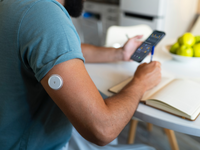
Perspectives on Continuous Glucose Monitoring Among Adults with Type 2 Diabetes in the United Kingdom: Cross-Sectional Survey
<strong>Background:</strong> Type 2 diabetes (T2D) is one of the most common noncommunicable diseases, requiring ongoing lifestyle changes and continuous glucose management through medication, diet, and physical activity. Traditional self-monitoring of blood glucose can be burdensome, especially with frequent finger pricks. As continuous glucose monitoring (CGM) becomes more affordable and accessible, it offers benefits such as increased glucose awareness, behavioral modifications, and reduced anxiety. However, challenges remain, including cost, discomfort, skin reactions, and privacy concerns. In the United Kingdom, perceptions of CGM among people with T2D, including both users and nonusers, are not well understood, limiting insight into factors influencing adoption and sustained use. <strong>Objective:</strong> This study aims to explore how adults with T2D perceive the benefits and challenges of using CGM, including both current users and nonusers. <strong>Methods:</strong> This study used a cross-sectional, online survey using YouGov’s nationally representative panel to explore experiences of CGM among adults with T2D in the United Kingdom. A total of 531 participants were recruited from November to December 2024. Thematic analysis of responses to 2 open-ended questions identified key perceived benefits and challenges associated with CGM use. <strong>Results:</strong> A total of 531 adults with T2D completed the YouGov online survey. Over half were male (297/531, 55.9%) and aged 65 years and older (281/531, 52.9%). Two-thirds (347/531, 65.3%) had lived with T2D for more than 5 years, and 9.6% (51/531) use or had previously used a CGM. Overall, 50.8% (270/531) responded to at least one free-text question, with 49% (260/531) commenting on benefits and 33.1% (176/531) on challenges. Thematic analysis identified five key benefit themes: (1) reduced monitoring burden, described as eliminating frequent finger prick testing and simplifying daily routines; (2) lifestyle feedback, enabling participants to better understand how diet and physical activity influence glucose levels; (3) greater control, by supporting more informed decision-making and increasing confidence in self-management; (4) feeling safer, through alerts for hypo- and hyperglycemia; and (5) sharing data with clinicians, which facilitated communication and more collaborative care. The main challenges were (1) access barriers, including restrictive eligibility criteria and the high cost of self-funding; (2) device issues, such as discomfort, inconvenience, and practical difficulties wearing the sensor; (3) technology reliance, with concerns about depending on devices rather than listening to bodily cues; (4) emotional strain, including anxiety, over-monitoring, and increased preoccupation with glucose levels; and (5) data concerns, particularly regarding accuracy, interpretation, and privacy. <strong>Conclusions:</strong> Adults with T2D, including both users and nonusers, described CGM as a practical and empowering tool that improves understanding, safety, and collaboration with health care providers. Nevertheless, access barriers, usability issues, and emotional and data-related burdens remain major obstacles to equitable adoption. Addressing these through improved affordability, digital literacy support, and customized clinical guidance may support ongoing and inclusive CGM use in routine care.