Device developers win Junkosha Innovator of the Year Award prizes

Junkosha has named two medical device developers as Technology Innovator of the Year Award winners. Anchor Balloon Inc. founder and CEO Dr. Vishal Gupta won the $25,000 late phase award for the AngioLock coronary balloon catheter, described as a “zip-line catheter designed to stabilize and simplify precise stent delivery in complex coronary anatomy.” Junkosha also…

The post Device developers win Junkosha Innovator of the Year Award prizes appeared first on Medical Design and Outsourcing.

Mussallem Cardiovascular Accelerator launches for breakthrough tech startups

Octane is launching the Mussallem Cardiovascular Accelerator for medical device startups developing breakthrough technology for cardiovascular disease diagnosis, treatment, monitoring, and patient care. The 14-week virtual program will offer workshops, executive mentoring, investor readiness preparation, curated introductions to strategic partners and advisors, and the opportunity to pitch at Octane’s Cardiovascular Tech Forum in September. The…

The post Mussallem Cardiovascular Accelerator launches for breakthrough tech startups appeared first on Medical Design and Outsourcing.

Cretex Medical expands with Holland Molds deal

Cretex Medical says it has purchased select assets and capabilities of Holland Molds Inc. in Wadena, Minnesota. The deal closed June 10, Cretex Medical said. Cretex Medical is a subsidiary of Elk River, Minnesota-based Cretex Cos., providing medical device contract manufacturing and engineering services through Brooklyn Park, Minnesota-based Cretex Medical Component & Device Technologies (CDT).…

The post Cretex Medical expands with Holland Molds deal appeared first on Medical Design and Outsourcing.

The Download: AI bottleneck debates, and BCI trials take off

This is today’s edition of The Download, our weekday newsletter that provides a daily dose of what’s going on in the world of technology.

A startup claims it broke through a bottleneck that’s holding back LLMs

AI startup Subquadratic came out of stealth last month with a huge claim: it had solved a mathematical bottleneck that had held back large language models for almost a decade.

The purported breakthrough comes from slashing the number of computations transformers need to carry out to generate answers. The result is a faster and cheaper LLM that uses far less energy than any other model on the market.

Many experts remained skeptical—but Subquadratic has started to share the receipts. They suggest that their approach might be worth paying attention to.

Here’s how the system works—and why some researchers still aren’t convinced.

—Will Douglas Heaven

Brain-computer interface trials are taking off

—Jessica Hamzelou

This week, I covered the story of Casey Harrell—a man with ALS who is “the first power user” of a brain implant. The device has enabled him to maintain an income, reconnect with friends and family, and read to his daughter. He told me that it’s “nothing short of revolutionary.” 

Over the past couple of years, the number of BCI trial volunteers has soared. This year, China became the first country to approve a BCI for medical use. Advances in technology are allowing engineers to provide more features than ever. BCI research is properly taking off.

Find out how the technology is edging from the lab towards the market.

This story is from The Checkup, our weekly newsletter giving you the inside track on all things biotech. Sign up to receive it in your inbox every Thursday.

The must-reads

I’ve combed the internet to find you today’s most fun/important/scary/fascinating stories about technology.

1 Amazon workers who backed data center limits may face termination
The engineers say they’re under investigation by the company. (NYT $)
+ And could face discipline, including potential termination. (The Verge)
+They had testified at meetings about pausing data centers. (CNBC)
+ They’ve filed a joint complaint to Seattle’s Office for Civil Rights. (Wired $)

2 A new fossil discovery has rewritten 150 years of evolutionary theory
It suggests early land vertebrates skipped the tadpole stage. (New Scientist $)
+ And raises questions about how vertebrates adapted to land. (404 Media)
+ Sponges may have been the first animals. (MIT Technology Review)
 
3 Bernie Sanders plans to give the public direct ownership of AI firms
He’s unveiled new legislation to create an AI sovereign wealth fund. (AP News)
+ It would be funded through a one-time tax on AI companies’ stock. (Quartz)
+ And make annual payments directly to Americans. (Washington Post $) 
 
4 Investors in China secretly acquired stakes in SpaceX before its IPO
One had ties to Chinese military contractors. (ProPublica)
+ The US fears China has got one of ASML’s top machines. (Reuters $)
 
5 Researchers have figured out Russia’s nuclear-powered missile
They call it “a terrible idea”—but not an impossible one. (NPR)
+ NASA is building a nuclear reactor-powered spacecraft. (MIT Technology Review)
 
6 Longevity medicine faces a do-or-die moment in a landmark trial
It will test whether cellular aging can be safely reversed in humans. (Axios)
+ The next step is “chemical reprogramming.” (MIT Technology Review)
 
7 Studies suggest AI may already be deskilling professionals
Over-reliance appears to weaken doctors’ and engineers’ abilities. (Nature)
 
8 Tech workers who maxed out their AI use are now trying to minimize it
Spiralling costs mean “tokenminning” has replaced “tokenmaxxing.” (NYT $)
 
9 Scientists say the human genome’s structure may confound AI models
Which would constrain AI-based models of biology and disease. (Quanta)

10 A new robotic self-driving toilet brings the bathroom to you
The Xiaoban also cleans up and empties itself all on its own. (The Verge)

Quote of the day

“They hated me. They were doing everything they could to knock me down. And look at them now.” 

—Donald Trump mocks Mark Zuckerberg and Jeff Bezos in a conversation with Elon Musk that’s recounted in a new book, Wired reports. 

One More Thing

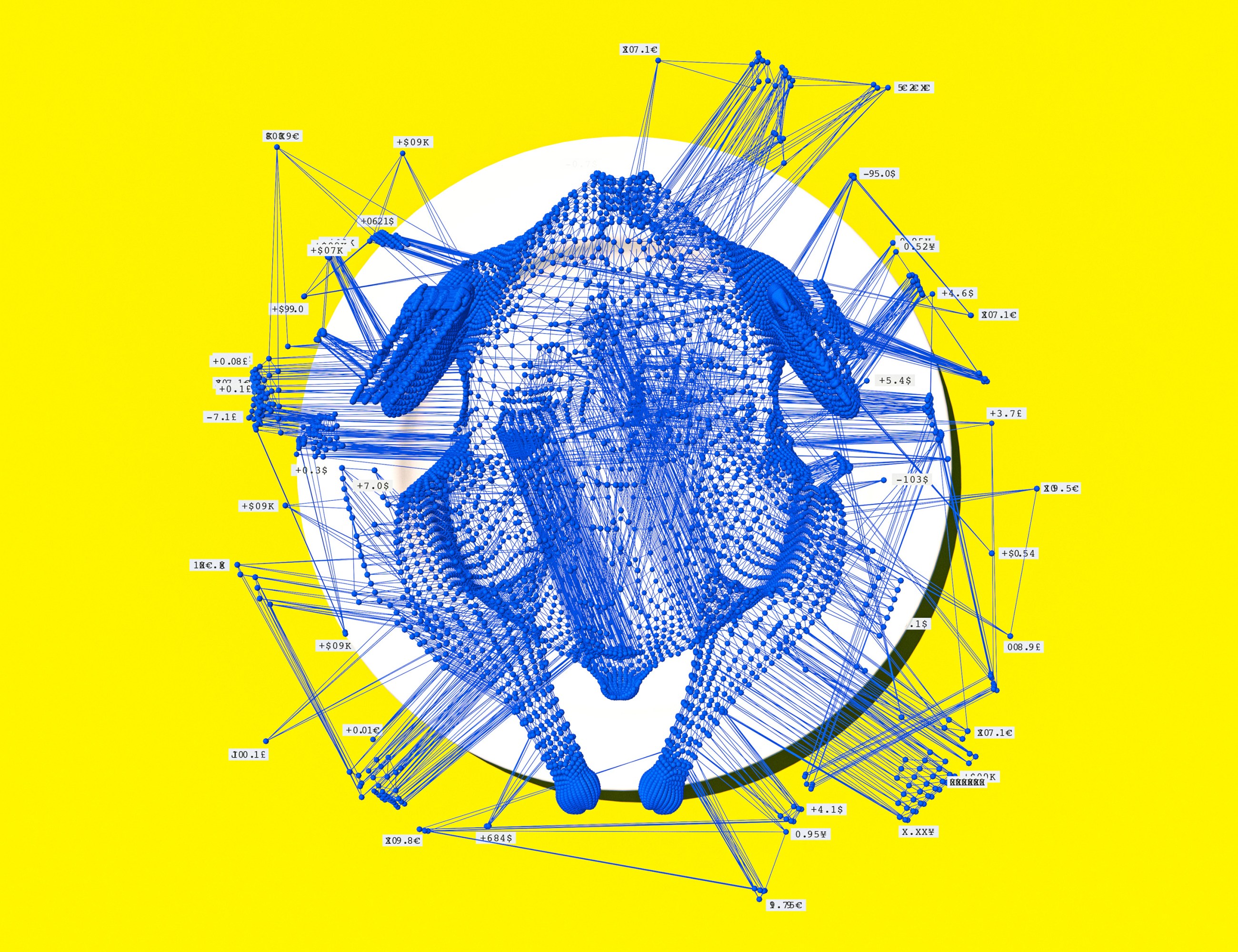
chicken network

PABLO DELCAN


Technology can help us feed the world, if we look beyond profit

The pandemic exposed the weak spots in our interconnected food system. They’re the result of decades’ worth of technological advances, from globe-spanning shipping to refrigeration networks. But technology is not inherently opposed to sustainable and resilient food systems.

Powerful technologies like genetic modification can create stronger local agriculture and a healthier food system—but they normally aren’t. The challenge is ensuring they serve food security and human well-being, rather than simply maximizing profits.

Dive into our food system’s problems and the solutions that technology can provide.

—Fabio Parasecoli

We can still have nice things

A place for comfort, fun, and distraction to brighten up your day. (Got any ideas? Drop me a line.)

+ This intriguing video tracks the covert reality of Japan’s shinobi.
+ Dive into this admirably obsessive archive covering over 100 different ways to tie your shoes.
+ One of the world’s largest digital collections of plants and fungi is now available for free to everyone.
+ A grand orchestra has beautifully covered Michael Jackson’s “Human Nature” at Abbey Road Studios.

Brain-computer interface trials are taking off

This week, I covered the story of Casey Harrell—a man with ALS who is “the first power user” of a brain implant, according to the researchers who worked with him. Harrell is paralyzed and unable to speak coherently without the device. He has now spent almost three years using a brain-computer interface (BCI) that enables him to “speak,” surf the web, and perform his job as a climate activist, largely independently.

Since Harrell was implanted with the device, in July 2023, a team at the University of California, Davis, has worked with him to adjust and improve its offerings. They’ve refined its accuracy, for example. And they’ve introduced settings including a privacy mode and a “profanity filter” that lets Harrell talk to his daughter without risking accidental swearing.

Harrell told me that, for him, the device is “nothing short of revolutionary!” It has enabled him to maintain an income, reconnect with friends and family, and read to his daughter. 

The team that developed his BCI is one of several working on ways to use technology to allow people with paralysis to communicate, engage with the online world, and regain some independence. And Harrell is one of a growing number of people volunteering their brains to, as he puts it, “pay it forward and do the scientific research … [and] get some personal benefit.”

Over the past couple of years, the number of BCI trial volunteers has soared. This year, China became the first country to approve a BCI for medical use. Advances in technology are allowing engineers to provide more features than ever. BCI research is properly taking off.

I should first point out that BCIs come in different forms. Harrell’s device includes a set of electrodes embedded in his brain that pick up the electrical activity associated with speech. Those electrodes are connected to two docking ports on top of his head that can be plugged into a computer.

That computer is loaded with software trained to decode his brain signals into phonemes (units of sound in speech) and predict what Harrell wants to say. He can then use an eye gaze tracker to make any corrections before the speech is played out loud.

But some BCIs don’t need to be “plugged in”—they’re fully implanted and wireless. Others are less invasive; they might involve placing wired electrodes on the surface of the brain or simply wearing a cap of electrodes, for example. There are trade-offs—the closer you get to the neurons you want to record from, the better your signal will be. But generally speaking, the more invasive the surgery, the higher the risk of complications.

BCIs can also have different functions. Harrell has ALS, but most BCIs in use today are sitting in the brains of people with spinal cord injuries. Typically, these individuals have some degree of paralysis; for example, they may be unable to move their arms and legs, but their face and ability to speak are unaffected. In those cases, BCIs can be used to control other kinds of devices that might help with mobility.

In 2024, Michelle Patrick-Krueger, then at the University of Houston, and her colleagues published a roundup of all trials of BCIs conducted between 1998, which is when they believe the first device was implanted, and the end of 2023. They identified 21 research groups that, among them, had trialed BCIs in a total of 67 volunteers.

“Since then, that number has increased a lot,” says Mariska Vansteensel, a BCI researcher at University Medical Center Utrecht. In January, Neuralink (the BCI company founded by trillionaire Elon Musk) announced that it has implanted 21 people with its device in the past two years.

Synchron, another BCI company, is currently testing its devices in trials in North America and Australia. Shanghai-based Neuracle has been trialing a BCI since November 2024, and it recently obtained approval for the device to be used outside of clinical trials. Precision Neuroscience, cofounded by a former co-creator of rival Neuralink, is also trialing its BCI, which sits on the surface of the brain.

At the same time, academic research has continued. The UC Davis team that worked with Harrell is part of BrainGate—a BCI research effort that has been running for the past two decades. Other academic teams are exploring a variety of devices, from the fully implanted to the minimally invasive.

Since 2024, when Patrick-Krueger’s paper was published, the number of people who have been implanted with a brain electrode has more than doubled, according to Vansteensel. “My current estimation would be around 150 people,” she says.

The technology is improving too. Take the BrainGate trial, for example. The first 17 years of that trial focused on the use of what researchers call “point-and-click” communication—allowing users to control a cursor and “click” with their brain activity. But in recent years the team has pivoted toward decoding speech, says David Brandman, the lead investigator on the team (and the person who implanted Harrell’s electrodes). Today, Harrell’s device uses a voice clone—the speech it produces is based on previous recordings of Harrell’s voice.

But BCIs are still experimental. And plenty of questions remain about who might benefit from them—and how long the devices will last. So far, most BCIs have been implanted in people with spinal cord injuries. We know even less about how they might benefit other people who have ALS, for example. In some cases where the devices initially helped people with ALS—even someone who was completely locked in—the BCIs eventually stopped working. And scientists don’t really know why.

The only way they’ll find out is through more research—and the participation of volunteers like Harrell. So it’s exciting to see trials truly take off. And I promise I’ll update you on where they stand two years from now.

This article first appeared in The Checkup, MIT Technology Review’s weekly biotech newsletter. To receive it in your inbox every Thursday, and read articles like this first, sign up here.

tDCS for Late-Life Depression

Conditions: Late Life Depression (LLD)

Interventions: Device: High-intensity (6 mA) transcranial direct current stimulation (tDCS)

Sponsors: Andre Russowsky Brunoni

Not yet recruiting

Smartphone-based Intervention for Young Adults With ADHD

Conditions: Attention Deficit/Hyperactivity Disorder(ADHD); Alcohol Use

Interventions: Device: Ecological Momentary Assessment for ADHD and Substance Use – Intervention Group; Device: Ecological Momentary Assessment for ADHD & Substance Use – Control Group

Sponsors: Traci Kennedy; National Institute on Alcohol Abuse and Alcoholism (NIAAA)

Recruiting