Interventions: Dietary Supplement: Placebo; Dietary Supplement: Sulforaphane
Sponsors: Second Xiangya Hospital of Central South University
Not yet recruiting
The mission of the International OCD Foundation — to ensure that no one affected by OCD or related disorders suffers alone — requires the collaboration and dedication of countless individuals and professionals around the world. Each year, the IOCDF is honored to recognize a few of these contributors who have gone above and beyond to inspire hope, build community, and move us closer to a world where everyone has access to effective support and care.
These awards will be presented at the 31st Annual OCD Conference, sponsored by OCD Institute Texas, on Saturday, July 11, 2026.
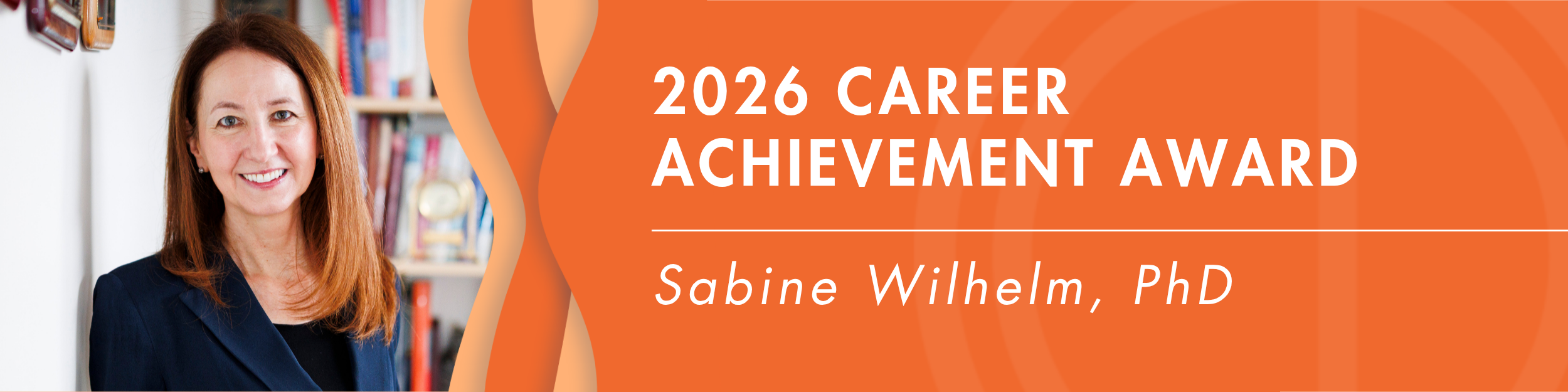
2026 Career Achievement Award Winner: Sabine Wilhelm, PhD
Highlighting the significant and notable contributions of a professional in the field of OCD and related disorders.
Sabine Wilhelm, PhD, is the Donovan-Chien Family Endowed Professor at Harvard Medical School and Chief of Psychology at Mass General Brigham. She directs both the Center for OCD and Related Disorders and the Center for Digital Mental Health at Massachusetts General Hospital. Dr. Wilhelm’s work leverages AI and technology to improve mental health care globally, focusing on developing personalized, scalable digital treatments. She has authored 375 publications and nine books. She has received major awards, including the NAMI Scientific Research Award and the Peter Ranney Innovation Award from the World Medical Innovation Forum. Dr. Wilhelm is the outgoing Chair of the IOCDF Scientific & Clinical Advisory Council after serving since 2023, and she has served on numerous committees to support the Foundation’s work to advance research and resources for OCD and related disorders.

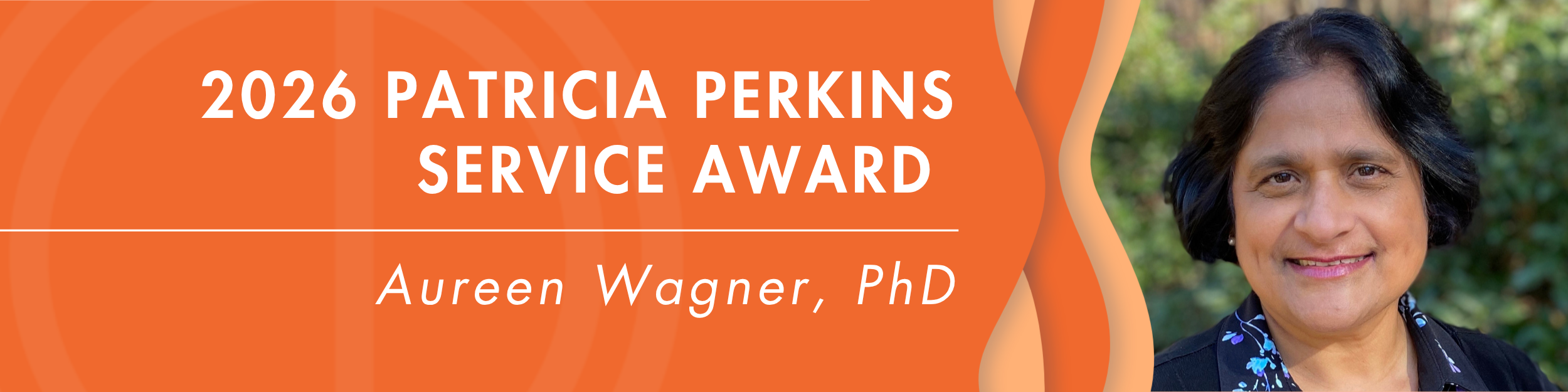
2026 Patricia Perkins Service Award Winner: Aureen Wagner, PhD
Honors any professional or IOCDF member who has stood out as a long-time (10+ years) and active contributor to the IOCDF in multiple ways. This award is named after Patricia Perkins, IOCDF co-founder, past president of the Board of Directors, and previous executive director.
Winner Bio: Aureen Pinto Wagner, PhD, has been involved with the International OCD Foundation since 1992 and a frequent presenter at its conferences and programs for families, clinicians, and youth. She serves on the IOCDF’s Scientific and Clinical Advisory Board and has been faculty with the Behavior Therapy Training Institute since 2001.
Dedicated to expanding access to evidence-based OCD treatment, Dr. Wagner provides clinician training, workshops, and consultation nationwide. She is the author of the professional treatment manual Treatment of OCD in Children and Adolescents: A Professional’s Kit and several award-winning books for families, including “Up and Down the Worry Hill: A Children’s Book about Obsessive-Compulsive Disorder and its Treatment,” “What to do when your Child has Obsessive-Compulsive Disorder: Strategies and Solutions” and “Worried No More: Help and Hope for Anxious Children.”
At The Anxiety Wellness Center in Cary, North Carolina. Dr. Wagner provides in-person and telehealth treatment for children, adolescents, and adults with OCD, anxiety, and related conditions, along with parenting support for families.

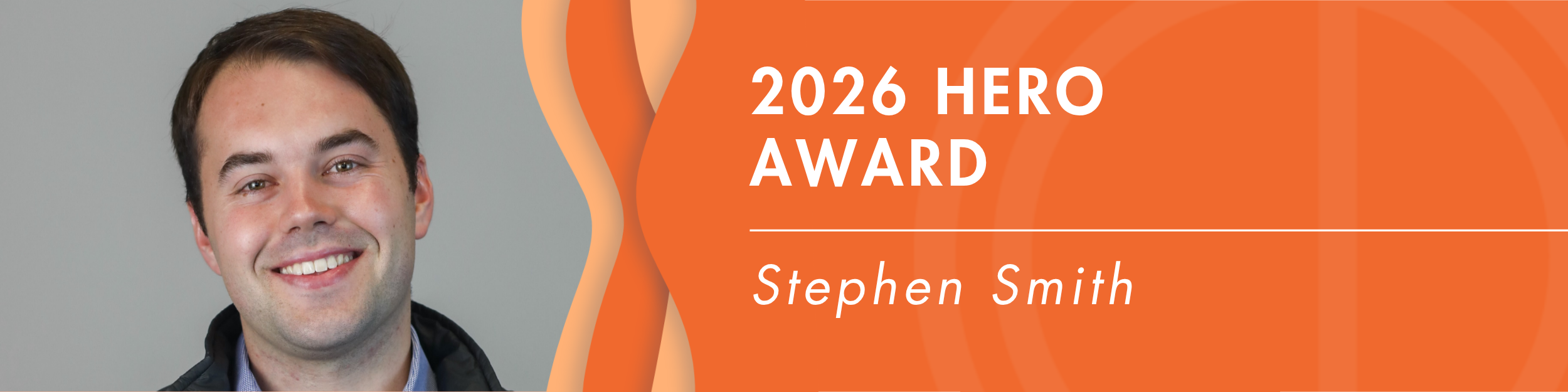
2026 Hero Award Winner: Stephen Smith
Recognizes any individual that has stood out as a particularly effective advocate for OCD and related disorders or who helped raise awareness of these disorders.
Stephen Smith is the Co-founder and Chief Executive Officer of NOCD, the world’s largest OCD-specialty treatment provider for both adults and children. After emerging from a personal struggle with undiagnosed OCD and experiencing the success of Exposure & Response Prevention (ERP) therapy first-hand, Stephen made it his mission to transform the behavioral health treatment system for people with OCD and related conditions. Under his leadership, NOCD has done that. NOCD drives OCD awareness campaigns that reach millions of people each year, cares for hundreds of thousands of people with OCD, and is contracted to serve more than 140 million commercial lives nationally.

2026 Youth Hero Award Winner: Gabriella Lee
Recognizes any youth (under 18) that has stood out as a particularly effective advocate for OCD and related disorders or who helped raise awareness of these disorders. This award is presented by UNSTUCK: an OCD kids movie.
Gabriella Chaeyoon Lee is a junior at Great Oak High School in California who is dedicated to promoting mental health awareness, particularly surrounding OCD. Inspired by her personal connection to OCD through her mother’s diagnosis, she actively works to reduce stigma and support others through her school club and independent initiatives. She is passionate about creating safe and inclusive spaces where individuals feel understood and supported. She hopes to continue her advocacy and contribute to meaningful change in mental health communities.

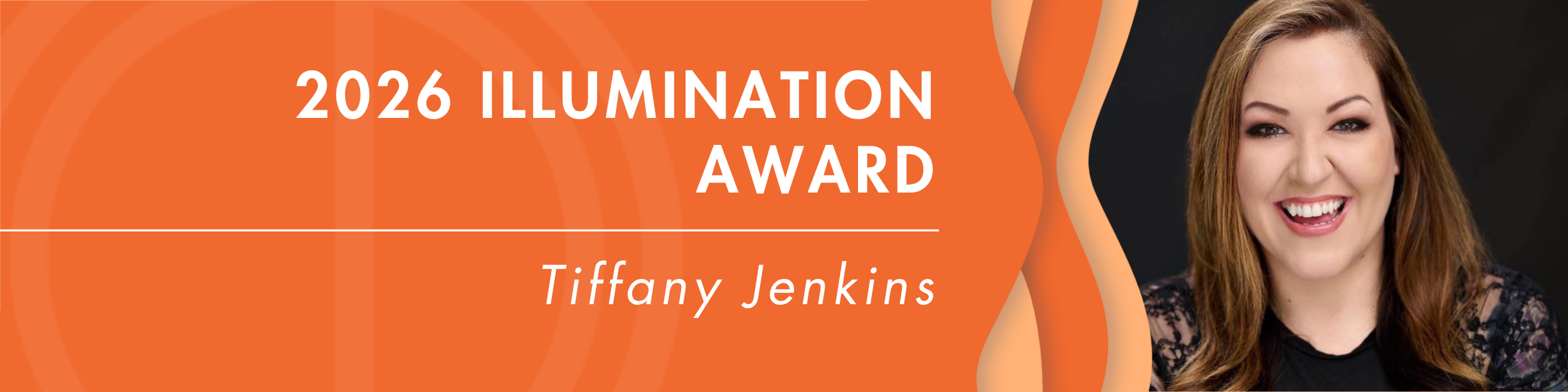
2026 Illumination Award Winner: Tiffany Jenkins
Honors media personalities who have represented OCD or related disorders in a respectful, accurate, and appropriate way, or who have challenged stereotypes and helped to fight stigma around mental health issues.
Tiffany Jenkins is a comedian, New York Times bestselling author, speaker, and podcast host with a combined social media following of over 9 million and more than one billion video views worldwide.
While widely recognized for her relatable and candid comedy, Tiffany is deeply committed to raising awareness around mental health and addiction. Drawing from her own lived experience in recovery, she travels across the United States speaking at high schools, correctional facilities, treatment centers, and conferences, where she delivers impactful, honest conversations that resonate with diverse audiences.
Above all, Tiffany is a devoted mother, bringing authenticity, resilience, and humor into both her work and her everyday life.

The post Introducing the 2026 IOCDF Award Winners of the 2026 Annual OCD Conference appeared first on International OCD Foundation.
Researchers at the University of California, San Francisco (UCSF) have developed a new form of adaptive deep brain stimulation (aDBS) that adjusts therapy in real time as patients walk, improving gait stability and reducing falls in people with Parkinson’s disease.
Published in Nature Medicine, the study demonstrates for the first time that an implanted neurostimulator can detect brain signals associated with individual steps and modify stimulation within fractions of a second. The approach represents a significant advance in personalized neuromodulation and could help address one of the most difficult-to-treat symptoms of Parkinson’s disease.
“Difficulty walking is one of the most disabling symptoms of Parkinson’s disease and one of the hardest to treat,” said senior author Doris D. Wang, MD, PhD, associate professor of neurological surgery at UCSF. “Walking is a highly dynamic behavior that requires precise timing across both sides of the body. We developed a system that can recognize those movement patterns and respond in real time, effectively allowing the stimulation to work with the patient as they move.”
More than 10 million people worldwide are living with Parkinson’s disease, a progressive neurodegenerative disorder characterized by tremor, rigidity, slowness of movement, and postural instability.
Deep brain stimulation has become an established treatment for many motor symptoms of the disease, particularly tremor and rigidity. However, gait impairment, freezing of gait, and falls often persist despite therapy and are major contributors to disability, hospitalization, and loss of independence.
One limitation of conventional DBS is that it delivers continuous stimulation regardless of a patient’s activity. While effective for relatively stable symptoms, this approach may not adequately support complex behaviors such as walking, which require rapid and constantly changing coordination between the brain, spinal cord, and muscles.
The UCSF team hypothesized that stimulation timed to a patient’s actual movements might provide more effective support for gait control.
To develop the system, researchers identified neural activity patterns associated with movements of the left and right legs. These movement-related signals were then incorporated directly into an implanted neurostimulator capable of adjusting therapy automatically during different phases of walking.
Unlike previous adaptive DBS approaches that typically respond to slower changes in disease-related brain activity, the new system operates on a timescale of milliseconds and responds directly to behavior itself.
“The brain contains remarkably rich information about movement,” said first author Kenneth H. Louie, PhD, a UCSF postdoctoral scholar. “We found that we could identify neural signatures linked to each step and use them to guide stimulation in real time.”
The researchers liken the device to a cardiac pacemaker. Rather than delivering constant stimulation, the neurostimulator continuously monitors neural signals and dynamically modifies therapy to match the brain’s walking rhythm.
The system performs these adjustments internally without requiring an external computer, making it suitable for real-world use outside the laboratory.
The study enrolled five individuals with Parkinson’s disease who had previously undergone DBS surgery as part of a UCSF investigational research program.
In addition to therapeutic DBS leads implanted deep within the brain, participants received research electrodes positioned over motor-related cortical regions. These electrodes allowed researchers to record neural activity associated with walking and identify personalized movement signatures for each participant.
Using these individualized neural biomarkers, investigators programmed the implanted device to automatically adjust stimulation during walking.
Laboratory testing demonstrated improvements in several objective measures of gait performance, including increased gait symmetry and reduced variability between steps. Both metrics are associated with more stable and efficient walking patterns.
The researchers then evaluated the system in participants’ daily lives through a blinded, multi-day crossover study comparing periods with adaptive stimulation and periods with conventional stimulation settings.
During adaptive stimulation, participants experienced fewer falls while maintaining overall control of their Parkinson’s symptoms.
No serious adverse events were reported, and participants tolerated the rapid stimulation changes without difficulty.
Although the trial was small, the findings provide early evidence that matching stimulation to behavior may offer benefits beyond those achieved with continuous DBS.
The study highlights an emerging trend in neuromodulation: moving from static therapies toward systems that continuously sense and respond to changing neural states.
Most adaptive DBS technologies under development focus on biomarkers that fluctuate over minutes or hours. The UCSF approach instead targets neural signals associated with immediate actions, enabling stimulation to respond almost instantaneously.
“This study is about more than walking,” said Wang. “It demonstrates that brain stimulation can adapt to what a person is doing in real time. That opens the door to future therapies that respond dynamically to movement, speech, mood, cognition, and other brain functions.”
The concept could ultimately extend beyond Parkinson’s disease to other neurological and psychiatric disorders in which symptoms vary throughout the day.
Researchers envision future implanted devices that function as closed-loop systems, continuously monitoring neural activity and delivering therapy only when needed.
Such systems could potentially improve treatment efficacy while reducing side effects and conserving device battery life. By tailoring stimulation to specific behaviors or symptoms, clinicians may be able to provide more precise and individualized care.
The work also represents an important technological milestone because the adaptive algorithms were embedded directly within the implanted device rather than relying on external processing hardware.
“This is an important step toward a new generation of brain therapies,” Wang said. “Instead of delivering the same stimulation all day long, future devices may continuously listen to the brain and immediately respond to a patient’s needs. Just as pacemakers transformed the treatment of heart disease, intelligent neurostimulators may transform how we treat disorders of the brain.”
While larger clinical studies will be needed to confirm the benefits of the approach, the results provide an early demonstration that real-time, behavior-responsive neuromodulation may offer a new way to address some of Parkinson’s disease’s most challenging symptoms.
The post Adaptive Deep Brain Stimulation Improves Walking and Reduces Falls in Parkinson’s Disease appeared first on Inside Precision Medicine.

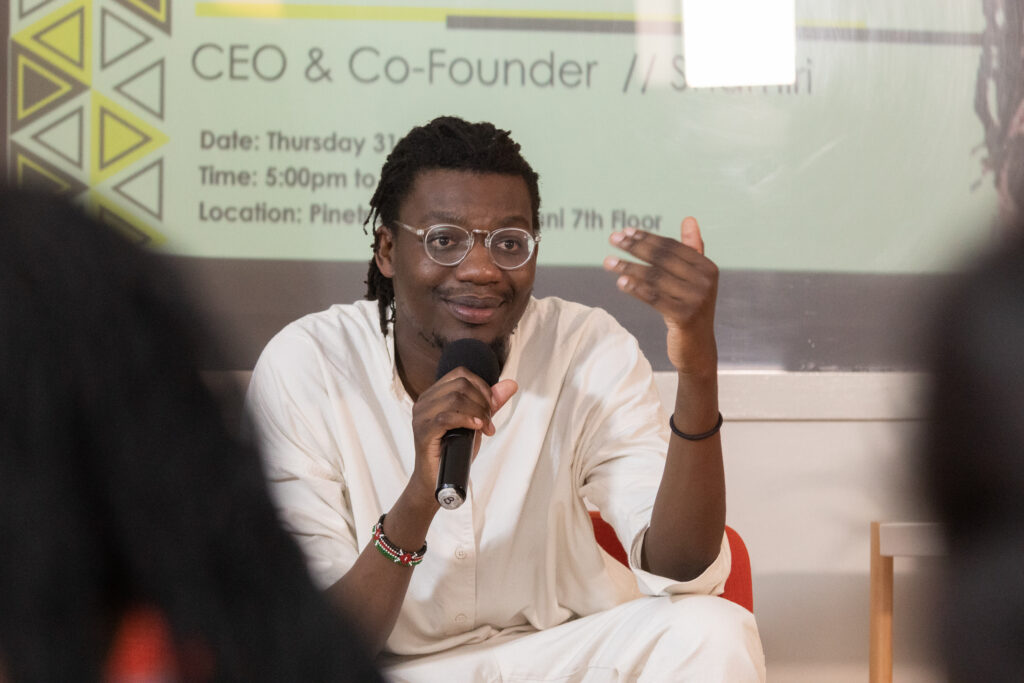
A Conversation with Tom Osborn, Founder of Africa’s Largest Mental Health Provider Shamiri Institute
Aaliyah Nadirah Madyun, program director at the Stavros Niarchos Foundation (SNF) Global Center for Child and Adolescent Mental Health at the Child Mind Institute, recently sat down with Tom Osborn, founder of the Shamiri Institute and an International Advisory Board member at the SNF Global Center. They discussed Osborn’s remarkable journey as a young entrepreneur.
At just 18, while studying at Harvard University, Osborn founded the Shamiri Institute, which has since grown into Africa’s largest youth mental health provider — now reaching over 100,000 young people annually and having trained and employed more than 3,000 providers. In this candid conversation, Osborn shares hard-won lessons on resilience, mentorship, and well-being. He offers advice to the SNF Global Center’s Youth Council members — many of whom are launching their own mental health initiatives in communities across Greece, Brazil, South Africa, and beyond.

AM: You founded Shamiri when you were just 18. Many members of our SNF Global Center Youth Councils are now launching their own mental health organizations. What advice would you give them?
TO: I think these past three to five years post-COVID have been quite good for mental health. There’s just more dialogue, more conversation. It’s maybe one of the best times to start working in mental health. There is a big space for young people to be leaders. On the other hand, it’s also very difficult.
AM: What kind of difficulties can young people expect to encounter?
TO: It’s very difficult for a few reasons. We normally start this work because we have a lot of passion, enthusiasm, and commitment to the cause. But that is not the day-to-day of being a social entrepreneur. It’s convincing people to partner with you, to fund you, etc., which is a completely different skill set to learn. And the second part is getting a level of comfort with failure. Because the reality is, on average, nine out of ten doors that you try to open will not open; especially when you are starting. For example, if you’re in Brazil and there are 100 other young people trying to start something, there is a finite pool of opportunities and resources. So, when you are starting, part of the initial process requires you to develop resilience and a growth mindset.
AM: Could you speak about the role mentorship has played in your journey, and how young entrepreneurs can leverage mentorship to navigate the challenges of building something from the ground up?
TO: Mentorship is really crucial. Finding folks — researchers, practitioners, or just folks in the community — who can help provide guidance as you build the skills you need to be an effective entrepreneur.
AM: How would you recommend young people go about finding a mentor? It seems like that ability, identifying and cultivating a mentoring relationship, might be a skill set in itself.
TO: In my experience, there are three pathways. In many countries we have what we call accelerators, which look for young people who literally have an idea and enthusiasm, and then take them through 10–16 weeks of bootcamp where they can learn the skills to develop their idea. So, that’s one pathway. The second pathway, which really worked for me but may sound intimidating, is direct outreach to folks who have done something similar. So, you can do some research. It doesn’t have to even be related to mental health. It can be education or some broader thing. But find someone who has built something that you admire. You will be surprised how many people are willing to support and pay it forward, because we all have benefited from the help of someone else. I created an Excel spreadsheet with a list of people who I looked up to, and I reached out to them on LinkedIn. Sometimes you can even find their email. Some people said “no”, but if you reach out to 10 or 20 people, some people will talk to you. And the third pathway is . . . increasingly we have a lot of resources like the SNF Global Center Youth Councils and international organizations that deal with mental health. You can join these organizations to expand your network.
AM: Could you share your story with us and tell us how you got started?
TO: I started when I was in University as part of a research project I was doing when I was studying psychology. I needed to do something for my thesis and in the process of doing that I applied to an accelerator. I also went to my professor and asked him, ‘Do you know anyone who could connect me with?’ In fact, he helped me write my first grant and gave me the opportunity to learn those entrepreneurial skills.
AM: Starting at such a young age, one can imagine that you must have encountered many challenges and setbacks. What were the key lessons you took away from that growth period?
TO: The reality of this work, and not to discourage people but to give a factual picture, is that there are more setbacks than there are wins. Part of the process is that you learn from the setbacks. I can give you an example of some of my own setbacks. In my first year of doing this, we tried to raise money. We applied for grants, sent out proposals, etc.; but we couldn’t raise any money. So, what I did after getting the rejection is I would email and ask, “Do you have any feedback for us about why we didn’t get the funding?” or “Can we jump on a call so you can explain what we can do better?” What I learned from that was the way I was communicating what we were doing made sense in my mind, but I wasn’t putting myself in the shoes of the person who was reviewing the proposal. I only have five to ten minutes of someone’s time. So, how can I really simplify my message? For example, my first proposal was, “Shamiri does task-shifting mental health interventions for adolescent depression, anxiety, etc.” If you are in the field, you maybe get it. But if you are somebody who is just reading grants on mental health education, you don’t really get it. Now we say, “Shamiri means thrive and we enable young people to thrive.” So that invites people to ask how we’re helping people to thrive.
AM: What is another setback that surprised you?
A second example of a failure is getting buy-in from the beneficiaries that we were trying to work with. I thought, “We have this great idea, we’ve done this research, and it works. We’re going to go to schools and they’re going to be like, ‘This is great! Come work with us.’ Teachers are going to want to work with us.” But actually, in our first three years we were trying to work with 25,000 students and we ended up working with only 1,000 students. We really struggled with getting people to sign up. The lesson from that was we were thinking more from the idea this was our product, rather than thinking, “What is the problem that I am trying to solve for this person?” To give a concrete example, there are three people we need to get buy-in from: young people in schools, teachers, and parents. Just having a great product does not mean that people are going to use it. You need to figure out what the problem is. How can I solve it? How do I communicate this to users?
AM: I can imagine that dealing with failures and setbacks is extremely hard, especially for a young person. What would you say to a young person who is currently experiencing this?
TO: Finding ways to stay grounded and healthy from a well-being perspective is really crucial. Identify what matters to you and connect with those things. And ideally if you can find a way to build a routine around that, it could help. Doing this work takes a big toll. If you don’t find ways to ground yourself and get the energy to continue with this, you may burn out.
AM: Do you have some final words for our Youth Council members and other young people reading this?
TO: Those closest to the problem are those closest to the solution. I am from Kenya, which is a really young country. The median age is 19 and 70 percent of the population is under 30. If we are to solve some of these pressing problems, including mental health, those solutions are going to have to come from young people.
The post Turning Rejection Into a Roadmap: Advice for the Next Generation of Mental Health Leaders appeared first on Child Mind Institute.