ObjectiveTo identify factors associated with psychological distress among family caregivers of preschool-aged children with Autism Spectrum Disorder (ASD) using LASSO regression and random forest algorithms.MethodsA convenience sampling method was employed to recruit 213 caregivers of preschool-aged children with ASD from three institutions in Urumqi between December 2023 and October 2024. Participants completed a demographic questionnaire and the Symptom Checklist-90. Predictors were screened through LASSO regression, and a random forest risk assessment model was constructed and validated on the test set. A logistic regression model was simultaneously developed for comparative validation.ResultsThe top five factors associated with caregivers’ psychological distress are comorbid conditions in children with ASD, daily care hours, marital status, the severity of the child’s ASD, and employment status. The model outperformed logistic regression on both the training set (AUC = 0.845, sensitivity=0.893, specificity=0.913, accuracy=0.933, F1 score=0.901) and test set (AUC = 0.87, sensitivity=0.733, specificity=0.727, accuracy=0.710, F1 score=0.721). Decision curve analysis demonstrated clinical utility across threshold probability ranges of 0–0.85.ConclusionFactors associated with psychological distress among autism caregivers include comorbidity status, caregiving duration, marital status, disease severity, and employment status. These findings provide evidence-based guidance for early psychological intervention targeting high-risk caregivers.
Lifestyle, psychological and demographic predictors of anxiety: insights from a large-scale survey and machine learning analysis
ObjectiveAnxiety is influenced by a combination of lifestyle, psychological, and demographic factors. This study aimed to evaluate these associations and explore the potential of machine learning in predicting anxiety severity.MethodsAnxiety levels were evaluated using a large survey-based dataset of 11, 000 adults alongside demographic, physiological, and psychological measures. Descriptive statistics and inferential analyses were conducted in IBM SPSS to identify associations between key variables. Several machine learning regression algorithms, including linear, regularized, and ensemble models, were implemented in Python to predict anxiety levels. Model performance was evaluated using standard error metrics.ResultsOur findings revealed significant associations of anxiety with stress and sleep duration, while demographic attributes such as family history of anxiety and occupation also influenced outcomes. Ensemble machine learning algorithms achieved superior performance compared to single and linear-model approaches. Feature importance analysis identified stress, sleep, and caffeine intake as top predictors of anxiety.ConclusionsThe integration of statistical approaches with machine learning applications highlights the multifactorial nature of anxiety and demonstrates the potential of predictive modeling in mental health care. Future research should emphasize longitudinal designs and the incorporation of biological and digital markers to enhance clinical applicability and prediction.
Seasonal and gender-specific patterns in prescriptions for hypnotic and sedative medications in primary care
IntroductionPopulation-level prevalence of sleep disorders can be assessed using prescription data for hypnotic and sedative medications. Such prescribing patterns exhibit seasonality that may be linked to variations in daylight exposure. The aim of this study was to analyze temporal trends in prescriptions for drugs with sedative-hypnotic properties.MethodsPrescription data for hypnotics and sedatives were analyzed retrospectively and stratified by month, year, and patient gender. Seasonal patterns, associations with day length, and the effects of transitions between daylight saving time and standard time were examined. Changes in prescription numbers during the COVID-19 pandemic were also assessed. Relative differences in prescription counts were evaluated using incidence rate ratios (IRR).ResultsPrescription numbers were lowest in summer (May–August) and highest in winter and early spring. Increasing day length was significantly associated with reduced prescription rates. A decline in prescriptions occurred earlier and was more pronounced in men (February–September; IRR 0.88–0.95), whereas in women the changes were weaker and mainly limited to summer months (June–August; IRR 0.94–0.97), with a slight increase observed in February. During the COVID-19 pandemic, prescription numbers decreased significantly. Transitions between standard and daylight saving time exerted measurable short-term effects on sleep-related health at the population level.ConclusionsBased on data from a single primary care center in Poland, prescribing patterns for hypnotic and sedative medications demonstrate clear seasonality and significant gender differences. Longer daylight exposure and transitions to daylight saving time are associated with lower prescription rates. The COVID-19 pandemic substantially disrupted previous trends in sleep medication prescribing, which may be related to reduced access to healthcare services and changes in healthcare delivery. In addition, transitions between standard and daylight saving time were associated with statistically significant short-term changes in prescription rates.
Exploring the life stories of young adult men in prison with a history of dual harm
People who engage in both self-harm and violence (‘dual harm’) in prison cause widespread disruption to prison services. Whilst the behavioural profile of such individuals is gaining attention, there is very little research which explores their life histories and how these contextualise their dual harm. This study qualitatively explored how five young men in a medium secure prison in England with a history of dual harm (in the community, prison, or both) made sense of their life experiences and engagement in dual harm behaviours. Participants were interviewed using an in-depth life story interview protocol. A narrative analysis identified three themes: ‘Beginning: Making sense of a traumatic childhood’, ‘Middle: Exploring challenges during late adolescence’ and ‘End: Who I am now, and who I must be’. These themes, grounded in life experiences and associated meaning, offer valuable insights into the underpinnings of dual harm behaviours and direction for interventions addressing dual harm in prisons. The paper concludes with a discussion of key implications and directions for future research and practice in relation to the support and management of people who dual harm in custody.
HPV vaccines, 20 years on
Nature Medicine, Published online: 20 May 2026; doi:10.1038/s41591-026-04374-x
Women are now at the very center of the global cancer control agenda, but there are major challenges ahead.
<![CDATA[Learn how to spot bipolar mixed features, avoid antidepressant pitfalls, and choose evidence-based antipsychotics.]]>
Aspects of Quality of Life in Interstitial Lung Disease: Pilot Observational Cross-Sectional Study in a Single Center
Background: Quality of life (QOL) is an important aspect of every chronic disease, including interstitial lung disease (ILD). QOL is perceived as a significant patient-centered outcome. Objective: This study aims to identify factors correlating with different aspects of QOL in patients with various ILDs. Methods: We recruited 57 participants hospitalized in a tertiary care clinical center to this pilot observational cross-sectional study. These included 22 patients with idiopathic interstitial pneumonia (IIP), 19 patients with connective tissue disease–associated ILD (CTD-ILD), and 16 patients with interstitial pneumonia with autoimmune features (IPAF). The Saint George’s Respiratory Questionnaire (SGRQ) and World Health Organization Quality of Life Questionnaire (WHOQOL-BREF) were used to assess QOL, and the Hospital Anxiety and Depression Scale – Modified Version (HADS-M) and Patient Health Questionnaire – 9 (PHQ-9) were used to evaluate depression severity. Functional parameters including forced vital capacity (FVC), forced expiratory volume in 1 second (FEV), transfer lung capacity for carbon monoxide (TLCO), and 6-minute walk distance (6MWD) were assessed. Assessment of QOL was a secondary outcome measure in a multicenter prospective study aimed at determining the characteristics of Polish patients with interstitial pneumonia with autoimmune features. Results: In each study group, positive correlations existed between the WHOQOL-BREF physical domain score and FEV % predicted value (=.001) and TLCO % predicted value (=.03). Regardless of diagnosis, higher depression, anxiety, and aggression scores (ie, worse mental health) correlated negatively with multiple domains of QOL measured using the WHOQOL-BREF. Predictors of QOL aspects varied in each study group. In the IPAF group, the TLCO % predicted value was a predictor of QOL expressed as the SGRQ total score (=.005). In the CTD-ILD group, short 6MWD (<.001) and high HADS-M aggression score (=.01) correlated with low QOL (expressed as a high SGRQ total score). In the IIP group, 6MWD (=.002) and PHQ-9 scores (<.001) were predictors for SGRQ symptoms score. Gender-based differences were revealed: In all study groups, men had higher scores in the psychological, social, and environmental domains of the WHOQOL-BREF, indicating better QOL, without a statistically significant difference in the physical domain scores between genders. Diagnosis-based differences in the psychological aspects of QOL were also revealed: The QOL psychological domain scores were significantly lower in the CTD-ILD and IPAF groups than in the IIP group, indicating worse QOL (=.01). Conclusions: QOL is a multifaceted issue with various factors impacting its assessment. 6MWD, TLCO predicted value, and worse functional ability might specifically impact QoL in ILD. Mental health is an important aspect of QOL in the ILD population, as patients with a chronic, potentially life-limiting disease may be more prone to developing depression or anxiety. Assessment of QOL should be taken into account in clinical decision-making and research on chronic diseases, as this patient-related outcome may impact therapeutic decisions and patient compliance. Trial Registration: ClinicalTrials.gov NCT03870828; https://clinicaltrials.gov/study/NCT03870828

Feasibility of Videoconference-Based Cognitive Behavioral Therapy for Somatic Symptom Disorder: Single-Arm Pilot Trial
Background: Somatic symptom disorder (SSD) is a mental disorder marked by persistent somatic symptoms and maladaptive health-related thoughts, feelings, or behaviors. Cognitive behavioral therapy has been shown to be effective in treating SSD, reducing patients’ somatic symptoms, depressive symptoms, and anxiety symptoms. However, challenges remain—including limited access to treatment. Videoconference-based cognitive behavioral therapy (vCBT) has emerged as a promising approach, offering flexible and tailored treatment while addressing the shortage of medical resources and potentially reducing patient dropout. Objective: This study examined the feasibility of vCBT for patients with SSD and explored secondary outcomes related to the physical component of health-related quality of life (HRQOL) as assessed using the Medical Outcomes Study 36-Item Short Form Health Survey (SF-36) physical component summary (PCS) score and other exploratory clinical outcomes. Methods: This single-arm pilot trial evaluated feasibility as the primary outcome assessed via recruitment rate, retention rate, session completion rate, and safety. Ten participants with SSD were enrolled, and all received 6 weekly 50-minute vCBT sessions. Secondary outcomes included physical HRQOL (SF-36 PCS) as the key secondary outcome, as well as mental HRQOL, depressive symptoms, somatic symptom severity, anxiety symptoms, health anxiety, pain, insomnia, and generic HRQOL. These outcomes were measured at the preintervention (week 0) and postintervention (week 6) time points and 1-month follow-up (week 10) and were analyzed using 2-sided paired tests. Results: All feasibility criteria were met, with a recruitment rate of 83.3% (10/12), a retention rate of 100% (10/10), a session completion rate of 100% (10/10), and no adverse events reported. The SF-36 PCS score improved by 4.99 points at the postintervention time point, representing a large within-group effect (Cohen =0.99, 95% CI 0.21‐1.74). Medium to large improvements were also observed in mental HRQOL, depressive symptoms, anxiety symptoms, health anxiety, pain, insomnia, and generic HRQOL, and most of these improvements were observed at the 1-month follow-up. Conclusions: Our findings indicate that vCBT is a feasible and safe approach for SSD, with findings suggesting acceptability and preliminary evidence of effectiveness. Trial Registration: University Hospital Medical Information Network Clinical Trials Registry UMIN000046138; https://center6.umin.ac.jp/cgi-open-bin/ctr/ctr_view.cgi?recptno=R000052664
<img src="https://jmir-production.s3.us-east-2.amazonaws.com/thumbs/983b4d444e460efb73d39ec554707350" />
Impact of Restriction-Resumption Protocols on Mood and Anxiety in Healthy Adults: Randomized Controlled Trial
<strong>Background:</strong> Simple behavioral and cognitive actions can reduce symptoms of anxiety and depression. However, there is limited research investigating whether restricting those same actions increases symptoms and whether resuming those actions reduces symptoms. <strong>Objective:</strong> The primary aim was to examine the impact of restricting, then resuming (the “restriction-resumption protocol”), 5 groups of actions called the Things You Do (TYD), on symptoms of depression and anxiety. Participant satisfaction with life and perceptions of changes in behavior and mental health were also evaluated. <strong>Methods:</strong> In total, 70 adults were randomly allocated to an intervention group (IG) or a control group (CG). IG participants completed a 3-phase protocol over 8 weeks: a 2-week baseline period (phase A), 2 weeks of restricted TYD actions (phase B), and a 4-week resumption phase (phase C). CG participants were instructed to maintain their usual activities and routines. Primary outcomes included symptoms of depression (Patient Health Questionnaire–9), anxiety (Generalized Anxiety Disorder–7), and frequency of TYD actions. Secondary outcomes included satisfaction with life and perceived changes in mental well-being. Outcomes were measured weekly throughout the 8-week trial and again after the trial at week 9. <strong>Results:</strong> Scores on outcome measures did not differ between groups during phase A and after the trial. However, by the end of phase B, IG participants showed significantly increased symptoms of depression and anxiety compared to CG participants (<i>P</i>s<.001). Large within-group effect sizes were observed on the Patient Health Questionnaire–9 and Generalized Anxiety Disorder–7 from baseline to the end of phase B (Cohen <i>d</i>>1.8) and from phase B to after the trial (Cohen <i>d</i>>1.9). Changes in satisfaction with life and evaluations of mental health corresponded with symptom changes. <strong>Conclusions:</strong> These findings demonstrate a relationship between the frequency of performing specific actions and symptoms of depression and anxiety. The restriction-resumption protocol has the potential to increase our understanding of causal mechanisms underlying common mental disorders and may lead to the development of new models of prevention and treatment. <strong>Trial Registration:</strong> Australian and New Zealand Clinical Trials Registry ACTRN12624001491550; https://www.anzctr.org.au/Trial/Registration/TrialReview.aspx?id=388828&isReview=true

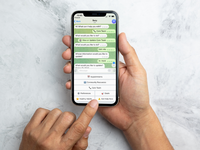
Development, Feasibility, Acceptability, and Usability of an Artificial Intelligence–Powered Chatbot (Suzy) to Support Patients in Substance Use Disorder Recovery: Multiphase Study
<strong>Background:</strong> Substance use disorder (SUD) remains a major public health crisis in the United States, with significant challenges in treatment access, retention, and workforce capacity. SUD care teams, including addiction medicine physicians and peer recovery coaches (PRCs), support patients receiving SUD treatment but face heavy workloads and burnout. Artificial intelligence (AI) innovations, particularly large language model (LLM)–based chatbots, may extend PRC support and provide patients with on-demand recovery support between clinic visits and PRC contacts. However, evidence on their development, feasibility, acceptability, and usability in addiction services remains limited. <strong>Objective:</strong> This study describes the development, feasibility, acceptability, and usability of an AI-powered health coaching chatbot (Suzy) designed to support patients in SUD recovery. <strong>Methods:</strong> A total of 2 clinicians, 5 researchers, and 2 technology developers led a small, multiphase pilot study. In the formative phase, they conducted focus groups and qualitative in-depth interviews with 12 health care professionals and 8 patients with substance use histories to specify chatbot functions and develop a rule-based chatbot. In phase 2, they conducted usability testing of the rule-based chatbot with 8 patients who reported substance use and completed standardized tasks, surveys, and qualitative interviews. Measures included the System Usability Scale (SUS), Net Promoter Score (NPS), and Single Ease of Use Question (SEQ). In phase 3, they developed an LLM-based chatbot co-designed and fine-tuned with PRCs and other SUD experts. <strong>Results:</strong> Rule-based chatbot functions included craving management, appointment reminders, resource referrals, care team contacts, and goal setting. Usability task testing supported feasibility. In this small pilot sample, quantitative and qualitative feedback indicated acceptability and usability, with an average SUS score of 93 (benchmark 68), an NPS of 63 (benchmark 35), and a mean SEQ score of 6.5/7. Patients valued Suzy’s approachable, nonjudgmental language and features that promoted accountability, self-monitoring, and 24/7 availability, while emphasizing that chatbots should supplement but not replace human support. The LLM-based chatbot development emphasized information accuracy, safety escalation protocols to mitigate risks of inappropriate chatbot responses, human-in-the-loop features, and expanded conversational flexibility and personal tailoring. <strong>Conclusions:</strong> In this pilot study, a rule-based chatbot designed to support SUD care demonstrated feasibility, usability, and acceptability. LLM-based chatbot development required more robust safety and emergency reporting features, while offering more patient-responsive conversational functions. By providing on-demand coaching, referrals, and reminders, Suzy may extend the reach of care teams, alleviate provider burden, and enhance patient engagement. Additional work is needed to understand how to best integrate Suzy into patients’ recovery journeys to ensure human support remains accessible and prioritized. LLM evaluation was based on expert testing and safety review. Clinical effectiveness, including the impact on substance use, was not evaluated. Next steps include evaluating the LLM chatbot in real-world settings with larger samples and assessing its efficacy in reducing substance use.