STAT+: Blood pressure tech floods the market after FDA relaxes wearables oversight

In early January, the Food and Drug Administration delivered on the Trump administration’s deregulatory promises by allowing more wellness products to be marketed without the agency’s authorization. Leaders at smart ring maker Oura swiftly planted the pivot foot.

“As soon as this guidance came out, literally the same day, we started having conversations with our product team around what our roadmap looks like, features that we could bring in and actually ship sooner,” Ricky Bloomfield, the company’s chief medical officer, told STAT less than a week after the FDA announcement. He added: “this guidance helps give us more confidence that we can release features sooner and not have to spend months getting additional clarification from the FDA.”

One thing FDA clarified in the updated guidance is that companies can release products that use sensors to “estimate, infer, or output” blood pressure and blood glucose readings without approval, if they are intended for wellness purposes. In a speech at the Consumer Electronics Show the day the guidance was announced, the FDA commissioner at the time, Marty Makary, said his agency would “get out of the way” of products that weren’t making medical or clinical claims. “This reduces the amount of subjectivity by regulators and guesswork by developers,” he said.

Five months later, consumer technology giants have already taken advantage. Oura on Thursday announced a refreshed model of its ring and a battery of new features, including two aimed at providing users with insights on blood pressure. In March, Samsung released a smartwatch feature that offers users readings of their systolic and diastolic blood pressure. 

Elsewhere, upstart developers are racing to market with do-it-all devices. A smart ring called the Pin Pulse, which claims to offer readings of blood pressure, blood glucose, sleep insights, and more, raised $260,000 in a Kickstarter campaign that ended in April. The product was conceived by recent University of California, Berkeley graduate students who partially outsourced technical development to a team in China.

Optimistically, the new wave of blood pressure products may help raise awareness about a deadly hypertension epidemic, regulatory and clinical experts told STAT. After all, nearly half of American adults have high blood pressure, and many people have no idea until they have a heart attack. Realistically, experts are concerned that the underlying technology is still novel and unproven, and that a flood of confusing features may mislead users about the state of their health and prevent them from pursuing necessary care. 

Continue to STAT+ to read the full story…

Heart Health Impacted COVID-19 Deaths

Having a lifestyle that promotes heart health may have been key in determining who died or was hospitalized during the COVID-19 pandemic.

Research in the Journal of the American Heart Association (AHA) suggests these healthy behaviors—involving diet, exercise, smoking, and sleep as well as body measures—could not only protect against cardiovascular disease but also have other benefits.

Specifically, they may help the body cope with the stress of infections such as those caused by the severe acute respiratory syndrome coronavirus 2 (SARS-CoV-2), even in people without clinical cardiovascular disease.

Adults with the highest heart health scores were nearly half as likely to die or be hospitalized as a result of COVID-19 compared with those who had the lowest scores.

“In many ways, a viral infection is like a cardiac stress test, except it’s not controlled,” explained researcher Elizabeth Oelsner, MD, from Columbia University.

“At the beginning of the pandemic, we immediately saw that COVID-19 was a particularly severe stress on the body. Our results highlight that better heart health, which is something that individuals can work on, likely prepares you better for real-life stress tests such as infectious diseases like COVID-19.”

The findings come from the Collaborative Cohort of Cohorts for COVID-19 Research (C4R), a collection of 14 U.S. studies that accrued extensive health information from participants.

The current analysis included 29,740 adults without clinical cardiovascular disease as of March 2020. Their average age of 66 years, and 61% were women.

Among the participants, just over a third each were White and Hispanic/Latino, while just over a fifth were Black.

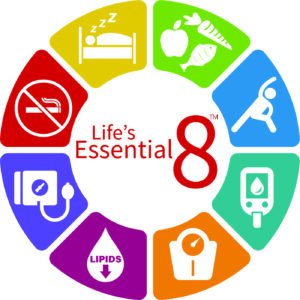
Cardiovascular health was measured according to the AHA’s Life’s Essential Eight (LE8), a summary measure that scores diet, physical activity, cigarette use, sleep, body mass index, blood pressure, lipids, and glucose levels each out of 100.

Around 18% of study participants had high heart health(LE8 ≥80), 70% had moderate heart health (LE8 ≥50 to <80), and 12% had low heart health (LE8 <50).

The American Heart Association's Life’s Essential 8 is a wheel shape with 8 wedges representing the eight elements that are essential for cardiovascular health [American Heart Association]
The American Heart Association’s Life’s Essential 8 is a wheel shape with eight wedges representing the eight elements that are essential for cardiovascular health. [American Heart Association]

There were 681 severe COVID-19 cases from March 2020 to March 2023. Just over half the participants were known to have received a COVID-19 vaccination before contracting the virus.

Adults with high LE8 scores had a 46% reduction in risk of COVID-19 hospitalization or death compared with those who had low scores. In addition, every 14-point increase in LE8 was linked with a 20% lower risk of COVID-19 hospitalization or death.

Higher scores for physical activity, weight, blood pressure and sleep patterns were individually associated with lower risk of severe COVID-19.

The benefits of heart heath were similar across different participant groups and continued through the study period and when vaccines became available.

“COVID-19 caused 1.22 million deaths in the U.S. between March 2020 and March 2025, so it’s essential that we understand how important health components, such as heart health, relate to severity of COVID-19 infections,” said lead researcher Tim Plante, MD, from the University of Vermont.

“Our findings suggest that the tremendous impact of COVID-19 on the U.S. could have been reduced if the general population had had better heart health prior to the onset of the pandemic.”

The post Heart Health Impacted COVID-19 Deaths appeared first on Inside Precision Medicine.

Imagery Control Therapy and Lucid Dreaming for REM-Related Symptoms in Narcolepsy

Conditions: Narcolepsy Type 1; Hypnagogic Hallucinations; Sleep Paralysis; REM Sleep Intrusion Symptoms; Central Disorders of Hypersomnolence

Interventions: Behavioral: Cognitive Behavioral Therapy for Narcolepsy (CBT-NAR) With Lucid Dreaming and Imagery Control Therapy; Behavioral: Sleep Hygiene Education and Structured Clinical Follow-up

Sponsors: Institute of Behavioral Sleep Medicine, Colombia

Completed

Triple Play: Lilly Acquires Three Developers of Infectious Disease Vaccines for Up-to-$3.8B

Eli Lilly has agreed to acquire three privately-held developers of vaccines for infectious diseases for a combined up to $3.83 billion cash, the companies said today, in deals intended to expand the acquisitive pharma giant’s R&D efforts into infectious disease—and which represent Lilly’s eighth, ninth, and 10th planned buyouts of smaller biotechs this year alone.

Lilly announced planned acquisitions of Vaccine Company for up to $1.55 billion, Curevo for up to $1.5 billion, and LimmaTech Biologics for up to $780 million. The planned triple play of buyouts, Lilly said, will enable it to apply differentiated technology platforms toward attacking infectious diseases, focusing on viral pathogens linked to long-term neurological and oncological risk, plus bacterial pathogens long considered difficult to prevent or treat.

“These acquisitions reflect a deliberate strategy to prevent disease at its source rather than treat its consequences,” Daniel M. Skovronsky, MD, PhD, chief scientific and product officer, and president, Lilly Research Laboratories, said in a statement.

“Decades of evidence now link common infections to diseases that potentially emerge years later, including neurological disease, cancer and infertility. And as antimicrobial resistance erodes our ability to treat bacterial infections, vaccines are increasingly the only path to prevention,” Skovronsky added. “Combining these companies’ platforms and teams with Lilly’s global scale positions us to change that trajectory.”

Investors appeared to support the triple play, sending Lilly shares up 1.36% to $1,079.19 as of 11:56 a.m. ET, from $1,065 at Friday’s close of trading.

Capitalizing on tirzepatide billions

The deal spree reflects Lilly’s desire to capitalize on the billions of dollars it is generating from sales of its obesity and diabetes drugs based on glucagon-like peptide 1 (GLP-1) receptor analysts alone or in tandem with a glucose-dependent insulinotropic polypeptide (GIP).

Those drugs account for 58% or $49.329 billion of the $84.978 billion in revenues reported by Lilly in 2025 and the first quarter of 2026. Lilly markets tirzepatide, a GLP-1/GIP dual agonist, in obesity as Zepbound® ($13.542 billion in 2025, $4.16 billion in first quarter 2026) and in diabetes as Mounjaro® ($22.965 billion, $8.662 billion in Q1 ‘26).

Lilly executives did not mention infectious diseases as a potential area of future growth during the company’s most recent earnings call last month with analysts following Q1 results, even as it cited three other therapeutic areas: I&I (immunology and inflammation), neuroscience, and oncology.

“We’re proud of what we’re doing in those three areas, and I think each of them has very significant unmet medical needs that we can scale into as our medicines are successful. We like what we got, and we like the direction we’re going. Of course, in each of those areas, we also see opportunities to get a lot bigger, and we’ve highlighted some of the themes already in those areas,” Skovronsky said on the April 30 call.

“Even without the obesity and metabolic business, Lilly would be the fastest or surely one of the fastest-growing pharmaceutical companies in the industry,” Skovronsky added.

Parade of purchases

Lilly’s long parade of purchases began January 7 when it inked a $1.2 billion acquisition of Ventyx Biosciences, an NLRP3-targeting oral drug developer focused on inflammatory diseases. A month earlier, Lilly announced plans to buy out circular RNA cell therapy developer Orna Therapeutics for up to $2.4 billion, targeting advancements in cell therapy. And in March, Lilly committed up to $7.8 billion to acquire Centessa Therapeutics, a developer of sleep disorder drugs.

Last month, Lilly agreed to acquire three cancer drug companies—in vivo chimeric antigen receptor T-cell (CAR T) developer Kelonia Therapeutics for up to $7 billion; JAK inhibitor developer Ajax Therapeutics for up to $2.3 billion; and next-generation dual-payload antibody-drug conjugate (ADC) developer CrossBridge Bio for up to $300 million.

Just last week on May 20, non-viral DNA delivery-focused drug developer Engage Biologics announced it had been acquired by Lilly for up to $202 million cash, including an upfront payment and payments upon achieving specified development milestones.

As for the latest planned acquisitions:

South San Francisco, CA-based Vaccine Company is developing in vivo nanoparticle (IVN) technologies designed to enable the antigen display known to elicit durable immune responses associated with virus-like particle vaccines, while avoiding the manufacturing burden of traditional VLP production. The company is advancing a preclinical pipeline spanning multiple viral pathogens; the lead program applies this technology to Epstein-Barr Virus (EBV) with a five-antigen Phase I-ready candidate.

Preventing mono and consequences

Lilly and Vaccine Company reason that a prophylactic vaccine could prevent not only acute infectious mononucleosis but also long-term neurological and oncological consequences that may follow infection, given what it said was growing evidence linking EBV to multiple sclerosis and several malignancies,

Under the acquisition deal, Lilly agreed to give Vaccine Company shareholders up to $1.55 billion, which would include an undisclosed upfront payment and additional payments tied to achieving specified clinical and commercial milestones.

LimmaTech Biologics, based near Zurich in Schlieren, Switzerland, is a developer of vaccines targeting bacterial pathogens for which rising antimicrobial resistance is steadily closing therapeutic options, including Staphylococcus aureus, Neisseria gonorrhoeae, and Chlamydia trachomatis. LimmaTech’s platform is designed to generate broad, durable immune responses against complex bacterial targets by targeting the toxins and superantigens that drive disease.

LimmaTech’s lead program, LTB-SA7, is in Phase I development as a vaccine against S. aureus, the leading cause of surgical-site infection. The company has also developed a preclinical pipeline of candidates targeting additional bacterial pathogens, including those that drive infertility and other long-term consequences of infection that fall disproportionately on women.

Lilly has agreed to acquire LimmaTech for up to $780 million, which will include an undisclosed upfront payment and additional potential payments also tied to achieving specified clinical and regulatory milestones.

Seeking greater tolerability

Bothell, WA-based Curevo has an infectious disease vaccine pipeline led by amezosvatein, an adjuvanted subunit vaccine being developed for the prevention of shingles in adults. Curevo acknowledges that the current standard of care for shingles prevention, GlaxoSmithKline (GSK)’s Shingrix® (Zoster Vaccine Recombinant, Adjuvanted) is effective, but says tolerability challenges can limit overall vaccination rates and contribute to second-dose hesitancy, leaving a meaningful portion of patients with reduced or no protection against shingles and its long-term consequences.

To prevent that problem, amezosvatein has been engineered with a next-generation synthetic adjuvant. In a Phase II trial head-to-head against Shingrix, amezosvatein matched immune response across all primary endpoints and reduced side effects such as activity-limiting fatigue, chills, and pain at the injection site by more than half. Lilly and Curevo reason that in light of growing evidence linking shingles to elevated risk of stroke and tying shingles vaccination to lower risk of dementia, a better-tolerated vaccine could reduce these long-term risks, thus expanding the reach of shingles prevention.

Lilly’s up to $1.5 billion deal price for Curevo includes another upfront payment and an additional payment hinging upon achievement of a certain milestone, all unspecified.

All three deals are subject to customary closing conditions, including expiration of the waiting period under the Hart-Scott-Rodino Antitrust Improvements Act of 1976. Lilly said it will determine the accounting treatment of the transactions upon closing, in accordance with Generally Accepted Accounting Principles (GAAP). The transactions will be reflected in Lilly’s future financial results and financial guidance to investors.

That guidance was raised last month after Lilly reported stellar first quarter earnings tied to booming sale of its blockbuster tirzepatide-based drugs. Lilly raised its full-year 2026 revenue guidance to between $82 billion and $85 billion, and non-GAAP earnings per share (EPS) guidance to be in the range of $35.50 to $37.00.

In February, Lilly guided investors to between $80 billion and $83 billion in revenue, and non-GAAP EPS ranging from of $33.50 to $35.00.

The post Triple Play: Lilly Acquires Three Developers of Infectious Disease Vaccines for Up-to-$3.8B appeared first on GEN – Genetic Engineering and Biotechnology News.


STAT+: Eli Lilly to buy three small vaccine developers

Eli Lilly said Tuesday it would buy three early- and mid-stage vaccine developers, a boost for the field. 

The deals — which together could cost up to nearly $4 billion — are the latest acquisitions from Lilly, a company rich with cash from its booming GLP-1 business. In recent months, it’s picked up companies working on cancer, autoimmune diseases, and sleep disorders, all for under $10 billion each. 

The companies being bought are Curevo, LimmaTech Biologics, and Vaccine Company. 

Continue to STAT+ to read the full story…

Testing a Smartphone-Based Intervention Targeting Anxiety Sensitivity Among Women Presenting for Emergency Care After Sexual Assault: Pilot Randomized Controlled Trial

Background: Anxiety sensitivity (AS), defined as the fear of anxious arousal, is a promising therapeutic target for reducing posttraumatic stress disorder (PTSD) symptom development after trauma exposure. Initial research suggests that smartphone-based AS interventions may be acceptable to sexual assault survivors at risk for PTSD symptoms and effective for symptom reduction, but only small one-arm proof-of-concept studies have been conducted. Objective: The goal of this study was to extend prior proof-of-concept work by conducting a pilot randomized controlled trial. The aims were to evaluate intervention efficacy, AS and PTSD symptom change, the acceptability and credibility of a control intervention, and the feasibility of a larger randomized controlled trial. Methods: A total of 60 women with high AS presenting for emergency care after sexual assault were recruited and randomized to either the AS intervention or a control condition, and they were followed up with for over 6 months via remote self-report questionnaires. Results: The findings indicated that the study population is at risk and in need of intervention: 88.8% (40/45) and 80.6% (29/36) of women sexual assault survivors in the sample met the criteria for probable PTSD at 7 weeks and 6 months post assault, respectively. Most (16/27, 59.3%) individuals receiving the AS intervention who completed it rated it as acceptable (eg, 18/21, 85.7% reported that the treatment was helpful). Early within-group reductions were not statistically significant, but by month 6, statistically significant reductions in AS and PTSD symptoms were observed in both conditions. Recruitment and retention data supported the feasibility of the study design, although some suggestions were noted for future research (eg, improving intervention and ecological momentary assessment compliance). Conclusions: This pilot study replicated the proof of concept and acceptability of a novel smartphone-based intervention targeting AS delivered to women sexual assault survivors presenting to emergency care. Intervention completion was in line with or better than traditional therapy but remained a challenge. Our selected control condition demonstrated a larger effect than expected, and we were unable to track its initiation or completion, causing difficulty in drawing conclusions. Overall, the results highlight the need for additional research. Trial Registration: ClinicalTrials.gov NCT05305235; https://clinicaltrials.gov/ct2/show/NCT05305235
<img src="https://jmir-production.s3.us-east-2.amazonaws.com/thumbs/492053ca2749db9a1e293caa4733770d" />

Opinion: How the perimenopause movement is hurting women

Below is a lightly edited, AI-generated transcript of the “First Opinion Podcast” interview with Patricia Bencivenga and Adriane Fugh-Berman. Be sure to sign up for the weekly “First Opinion Podcast” on Apple Podcasts, Spotify, or wherever you get your podcasts. Get alerts about each new episode by signing up for the “First Opinion Podcast” newsletter. And don’t forget to sign up for the First Opinion newsletter, delivered every Sunday.

Torie Bosch: Brain fog and weight gain and hair loss and insomnia — those are the calling cards of perimenopause. At least that’s what the new perimenopause awareness movement claims. But what’s real and what’s just social media misinformation?

Read the rest…