Claude Science is Here, Antibiotics Designed by Text Prompt Among Applications

Anthropic has released Claude Science, an AI workbench for scientists that consolidates fragmented research tools, including over 60 scientific databases and connectors pre-configured for genomics, proteomics, structural biology, and more, into a single reasoning layer. The platform joins an increasingly crowded ecosystem of tech platforms specialized for biology and aims to accelerate scientific discovery by making domain expertise more accessible.

Anthropic’s life science partners are delivering applications. Basecamp Research is targeting global public health, where drug-resistant infections play a role in nearly five million deaths per year. The London-based team has announced that its antibiotic design and vaccine target prediction EDEN models will now be available through Claude Science.

A metagenomic foundation model, EDEN demonstrated a 97% success rate when designing functional peptides with high potency against World Health Organization (WHO) critical-priority and multidrug-resistant pathogens. The work was done in collaboration with César de la Fuente, PhD, presidential associate professor at the University of Pennsylvania.

In a Claude Science demo, Oliver Vince, PhD, co-founder at Basecamp, uploaded a sample patient microbiology report. When given a simple natural language prompt, the platform designed peptides, predicted their efficacy, and provided a shortlist of candidates most likely to succeed in experiments in minutes.

While generating human-ready antibiotics at the click of a button is still a step away, Vince said democratizing these tools is a powerful first step, particularly for researchers in regions where accelerated computing infrastructure is not readily accessible.

“Most models require you to be a computational scientist,” Vince told GEN Edge. “Now, potentially any clinician in the world can chat with Claude and design an antibiotic that may work.”

“From a strategic perspective, you want the people with the most agency to solve the problem,” added Phil Lorenz, PhD, CTO at Basecamp. “Not the model builders who are two or three steps removed.”

Full stack

Founded in 2019, Basecamp has spent its initial years building a full computational stack spanning data, models, and therapeutic assets.

In addition to antibiotics and vaccines, the company’s U.S. office, based in Cambridge and led by Jonathan Finn, PhD, Basecamp CSO and former CSO of Tome Biosciences, has fine-tuned EDEN for programmable gene insertion. The approach places large therapeutic DNA sequences at precise locations in the human genome, expanding upon CRISPR-based approaches that use small edits to address a limited number of indications.

EDEN’s generalizability is enabled by training on BaseData, the company’s proprietary dataset composed of 9.8 billion protein sequences collected over 200 diverse and extreme locations, including thermal springs, polar ice, and high-altitude plateaus, across more than 30 countries. The database provides a 10-fold expansion of known protein diversity when compared to all public databases combined.

In March, the team published the compounding advantages of BaseData on model performance in a technical report on scaling laws for metagenomics. Basecamp is steadily pushing forward that data diversity through the Trillion Gene Atlas, a partnership with Anthropic, NVIDIA, PacBio, and Ultima Genomics that aims to scale BaseData 100-fold over the next two years.

Vince emphasizes that model deployment and integration into real-world workflows will be critical for these models to reach their full potential. Basecamp anticipates releasing more applications over the next year.

“I think it will surprise people what these models can do,” he said.

The post Claude Science is Here, Antibiotics Designed by Text Prompt Among Applications appeared first on GEN – Genetic Engineering and Biotechnology News.

iPSC-Derived Retinal Endothelial Cells Offer Platform for Studying Diseases

Biomedical engineers at Duke University have for the first time used induced pluripotent stem cells (iPSCs) to grow specialized blood vessel cells critical to retinal health.

When injected into mouse models of retinal disease, these “retinal endothelial cells” (iRECs) integrated into the damaged tissue to regenerate blood vessels and restore retinal function. The team also demonstrated these cells’ ability to form functional retinal vascular tissue in a lab-grown environment, providing a pathway to model and research various eye diseases.

The results point toward the potential of using these retinal cells and models to develop new methods of impactful vision loss treatments and eye disorder research. “Retinal vascular diseases affect millions of people in the U.S., but our understanding remains limited, hindering our ability to discover and develop new therapeutics,” said Sharon Gerecht, PhD, the Paul M. Gross Distinguished professor and chair of Biomedical Engineering at Duke. “Using human stem cells, we generated the cells found in retinal blood vessels, paving the way for new therapeutic approaches.”

Gerecht is senior and corresponding author of the researchers’ published paper in Nature Biomedical Engineering, titled “Derivation of functional retinal endothelial cells from human pluripotent stem cells for therapeutics and modeling.” In their report the authors suggested that their iREC differentiation strategy will “… advance cell therapy and disease modeling, accelerating the discovery of treatments for retinal microvascular diseases.”

The old saying that the eyes are windows into the soul is more accurate than one might think. Neurons from the retina—the back part of the eye that detects light—extend directly to the brain, technically making the eyes part of the central nervous system.

Also like the brain, the retina has a blood barrier that strictly controls what gets in and out including oxygen, nutrients, water and pharmaceuticals. While this barrier keeps the retina healthy and relatively protected from disease-causing agents, it also makes treating the retina difficult. “Retinal tissue has the highest energy and oxygen usage in the body due to the retina’s intense and continuous neuronal activity,” the authors further explained. “This demand leads to a crucial reliance on the inner blood–retina barrier (iBRB) to maintain ocular homeostasis.”

The barrier is formed by blood vessel tissue comprising a tight network of retinal endothelial cells, which form the inner layer of blood vessels, in concert with other specialized cells called pericytes and astrocytes. “Retinal endothelial cells (RECs) in the iBRB are continuous endothelial cells (ECs) that form tight junctions to regulate the diffusion of small molecules, such as ions and water, across their cell–cell interface,” the investigators continued. The specificity of these cells and the fact that they do not form in other areas of the body make the complex tissue difficult to heal or to grow from scratch.

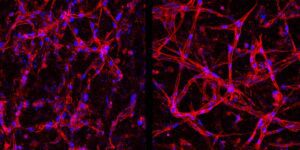
This image depicts both healthy (right) and deteriorated (left) human retinal endothelial cells, which are essential for maintaining eye sight. The deterioration is caused by low oxygen and high glucose levels, mimicking conditions found in diabetic retinopathy, the leading cause of vision loss in working-age people in the United States. [Duke University]

“When this specialized blood vessel tissue begins to break down, it can cause a lot of different diseases that lead to vision loss,” said Parker Esswein, a PhD student working in the Gerecht laboratory and co-first author of the paper. “While there are sources of retinal endothelial cells, being able to grow a continuous supply from scratch could offer many advantages for those working in the field.”

These retinal endothelial cells are currently collected and grown from real patients, making them relatively expensive with a limited supply. “A renewable source of human iBRB endothelium is thus vital for advancing eye research and treatment development,” the team noted in their paper.

To expand access, reduce cost and control variability, the Gerecht lab wanted to see if they could grow them from iPSCs. These are essentially mature adult cells reprogrammed to become primal versions of themselves that can then grow into a wide variety of other cell types.

To do this, Esswein and Ying-Yu Lin, PhD, a former PhD student in Gerecht’s lab, took commercial iPSCs and used a well-established procedure to get them to grow into common endothelial cells that form the inner layer of most of the body’s blood vessels. The researchers then used a specialized cocktail of growth factors to coax the cells into becoming the specific type of endothelial cells found in the retina. “… we differentiated human induced pluripotent stem cells into retinal endothelial cells (iRECs) via the Wnt–β-catenin pathway, namely Norrin–Frizzled4 signaling,” they explained.

Once successful, the researchers put their development to the test. In benchtop experiments, the team was able to get the iRECs to form the same networks and structures that they do within the body. The team then subjected these lab-grown tissues to low oxygen and high glucose levels, which are detrimental conditions often seen within real people. These conditions are fundamental causes of diabetic retinopathy (DR), the leading cause of vision loss in working-age people in the United States, and caused the tissue barrier to break down just like it does in patients. They wrote in summary, “Overall, we were able to robustly recapitulate the DR phenotype in 2D and 3D with our iRECs, exemplifying their ability to be utilized for in vitro disease modeling and to elucidate aberrant pathways and therapeutic targets.”

The researchers then tried their lab-grown cells as a therapy for mouse models with weak, unstructured retinal blood vessels. When injected into the mice before any actual vision loss occurred, these cells successfully integrated into the existing tissue and helped develop strong blood vessels with strong barriers. “When injected into oxygen-induced retinopathy mice, iRECs integrated into the host vascular network and revascularized the ischemic eye, rescuing the tissue,” they stated.

“The tests showed that these lab-grown cells have promise for preventative treatments, especially since they should be easier and cheaper to obtain using our technique,” Esswein said. “And while our benchtop experiments did not attempt to model a wide variety of specific eye diseases in these studies, we’re confident we can create excellent human tissue models in the lab to help better understand these diseases and uncover therapies.”

Moving forward, the researchers are planning to explore these potential uses for their retinal endothelial cells both in their laboratory and through emerging industry partnerships. The group also has a patent pending that covers both the stem cell-based therapeutics and in vitro modeling for drug discovery and testing. In their paper they concluded “Our study establishes functional human iRECs and microphysiological iBRB models that facilitate mechanistic studies aimed at identifying therapeutic targets and promoting the revascularization of injured retinas, thereby supporting treatment advancement.”

The post iPSC-Derived Retinal Endothelial Cells Offer Platform for Studying Diseases appeared first on GEN – Genetic Engineering and Biotechnology News.

First Huntington’s Disease Patient Dosed with Neural Stem Cell Therapy

Huntington’s disease therapeutics have reached a historic milestone—the first patient has successfully received an experimental neural stem cell therapy at UCI Health. This groundbreaking dose marks the world’s first human trial of embryonic stem cell-derived neural stem cells for the devastating neurodegenerative disorder.

The treatment, performed in May at University of California Irvine (UCI) Health, represents the culmination of more than 12 years of laboratory research and eight years of clinical planning led by scientists and physicians at the University of California, Irvine. Researchers hope the treatment, known as hNSC-01, could eventually slow disease progression, protect vulnerable brain cells and potentially restore damaged neural circuits.

To date, the first participant has not reported any serious adverse effects, according to the clinical team. A second patient is expected to receive the therapy in July.

Leslies Thompson - Huntington's
Leslie M. Thompson, PhD, Donald Bren Professor of psychiatry and human behavior, as well as neurobiology and behavior, at the University of California, Irvine [UC Irvine]

“This clinical trial highlights the important role that an interdisciplinary academic and clinical team, together with the HD families, plays in advancing medicine,” Leslie M. Thompson, PhD, clinical trial sponsor as well as the Donald Bren Professor of psychiatry and human behavior UC Irvine, told Inside Precision Medicine. “We are grateful to our patients and their incredible families for their bravery to provide hope for others with very few options.”

hNSC-01

Huntington’s disease, caused by a mutation in the huntingtin gene, destroys brain cells, causing involuntary movements, cognitive decline, and psychiatric symptoms that begin between 35 and 50 and worsen over time. Without a cure, the fatal disorder burdens patients and families emotionally, physically, and financially, often requiring daily and long-term care.

Current treatments for Huntington’s disease primarily focus on managing symptoms rather than altering the underlying disease process. Drugs such as tetrabenazine and deutetrabenazine can reduce involuntary movements known as chorea, while antidepressants, antipsychotics and mood stabilizers help address psychiatric symptoms. Physical therapy, speech therapy and occupational therapy can also improve quality of life. However, none of these approaches has been shown to slow or stop the progressive loss of neurons that drives the disease.

Over the past decade, researchers have pursued several experimental disease-modifying strategies. Among the most advanced are gene-targeting therapies designed to reduce production of the mutant huntingtin protein. These include antisense oligonucleotides (ASOs), which are delivered through repeated spinal injections, as well as RNA-targeting and gene-editing approaches intended to suppress or correct the faulty gene. While these strategies directly target the genetic cause of Huntington’s disease, clinical results have been mixed, and questions remain about long-term effectiveness, safety and the need for lifelong treatment.

The hNSC-01 neural stem cell therapy being tested at UCI Health takes a different approach. Rather than targeting the mutant gene itself, the therapy aims to protect vulnerable neurons, replace lost cells, rebuild damaged neural circuits and provide supportive factors that promote brain health. 

The UCI researchers believe stem cell-based therapies may offer a new approach by addressing multiple aspects of the disease simultaneously. The experimental treatment, hNSC-01, consists of pluripotent neural stem cells derived from embryonic stem cells and manufactured through the UC Davis Good Manufacturing Practice facility.

Preclinical studies in animal models suggested the cells could perform several functions relevant to Huntington’s disease, including protecting existing neurons, replacing cells that have been lost, rebuilding damaged neural networks and releasing beneficial proteins such as brain-derived neurotrophic factor (BDNF). The cells were also shown to reduce harmful protein accumulations associated with neurodegeneration and demonstrated long-term safety in mice.

Unlike conventional drug therapies, the stem cells are delivered directly into the brain. During the approximately six-hour procedure, performed under general anesthesia, patients lie face down within an MRI scanner while neurosurgeons use a specialized stereotactic navigation and delivery system to implant the cells into the striatum, a deep brain structure heavily affected by Huntington’s disease.

The striatum plays a central role in motor control, decision-making, motivation and learning. Degeneration of this region contributes significantly to the hallmark symptoms of the disorder. The first intervention was delivered by UCI Health neurosurgeon Jefferson W. Chen, MD, and a multidisciplinary surgical team.

Tracking treatment impact

As a Phase Ib/IIa study, the trial’s primary objective is to evaluate safety. However, researchers will also track biomarkers and clinical indicators that may provide early clues about whether the treatment is affecting disease progression.

When asked which biomarkers would help identify how the therapy is working in patients, Thompson emphasized that current measurements are focused more on assessing treatment impact than revealing biological mechanisms. “We will be including HD relevant clinical endpoints and biomarkers, including NfL in plasma and NfL and PENK in CSF; however, these are geared to understanding whether the treatment is having a benefit to these outcome measures versus informing the mechanism of action,” Thompson said.

One of the most important early indicators will be whether disease-related biomarkers remain stable rather than continuing their expected decline. “The earliest sign first and foremost is safety in this initial trial,” Thompson said. “Initial signs that the therapy could be meaningfully altering disease progression would be if the blood-based or CSF-based biomarkers do not show progression.”

Reaching the point of treating the first patient required overcoming a series of scientific, manufacturing and logistical hurdles. According to Thompson, selecting the optimal cell line was among the most significant challenges, testing multiple cell lines in vitro and in vivo.

Researchers also had to establish quality-control standards for the final therapeutic product and create Good Manufacturing Practice cell banks following extensive testing in Huntington’s disease mouse models. The COVID-19 pandemic introduced additional delays. “Disruptions caused by COVID-19, in particular the safety and tumorigenicity studies, delayed the timeline,” Thompson explained.

Another major undertaking involved creating the clinical infrastructure necessary for a first-of-its-kind procedure. Thompson said that it’s not really a challenge, but getting the overall procedural pipeline in place is the first study of this kind at the UCI Health–Irvine hospital in the MRI suite.

Despite the complexity of the project, Thompson said interactions with regulators proceeded smoothly. “We actually had a very good experience in terms of regulatory activities. A very helpful pre-pre-IND, pre-IND and relevant feedback from the FDA on the clinical trial.”

Scalability and competitive landscape

Whether hNSC-01 will ultimately compete with or complement emerging gene-targeting therapies remains unclear. Gene-silencing approaches may be easier to distribute because they do not require brain surgery, but repeated administrations over many years could result in substantial cumulative costs. In contrast, hNSC-01 involves a specialized MRI-guided neurosurgical procedure that may initially be limited to major medical centers, but it is designed as a one-time treatment whose long-term costs could compare favorably with chronic therapies if benefits prove durable.

Thompson believes the infrastructure requirements may be less of a barrier than many assume. “Yes, major medical centers can eventually offer it, and several medical centers are now using this system for other indications,” she said. “The other aspect is this would be a one-time administration so an individual could even travel to a medical center that offers the procedure.”

The REGEN4HD trial plans to enroll 21 adults aged 18 to 65 with early-stage Huntington’s disease. Twelve participants will be included in a Phase Ib dose-escalation cohort, while nine additional participants will be enrolled in a Phase IIa expansion group. The study is funded through a $12 million grant from the California Institute for Regenerative Medicine and coordinated through the UC Irvine Alpha Clinic, one of nine state-supported regenerative medicine clinical research centers.

Even if the therapy proves safe and beneficial, researchers caution that it remains unclear whether stem cell transplantation alone will be sufficient to combat Huntington’s disease over the long term. “At this point we do not know whether this will be sufficient alone or will need to be delivered with other disease-modifying therapies,” said Thompson. “For example, ones that specifically target an HD mechanism such as somatic repeat instability,” Thompson said. “However, these cells also have the potential to exert therapeutic effects directly while serving as vehicles for the delivery of additional interventions.”

For families affected by Huntington’s disease, the first successful treatment in the REGEN4HD trial represents more than a scientific milestone. It marks the beginning of a new chapter in regenerative medicine—one that researchers hope could eventually transform the outlook for a disease that has long remained untreatable.

The post First Huntington’s Disease Patient Dosed with Neural Stem Cell Therapy appeared first on Inside Precision Medicine.

Treating ADHD With Methylphenidate (Ritalin, Concerta)

Methylphenidate is a stimulant medication used to treat symptoms of ADHD. It helps the brain regulate attention, focus, and impulsive behaviors.

It’s one of the two stimulants widely used in ADHD medications. Methylphenidate is the active ingredient in Ritalin and Concerta, among others. The other commonly used stimulant, amphetamine, is the active ingredient in Adderall and Vyvanse, among others. Both stimulants work by increasing levels of dopamine and norepinephrine, chemicals in the brain that control attention, focus, and impulsivity. If a child doesn’t do well on the first stimulant medication they try, they may respond better to a different formulation of that type or the other type of stimulant.

How is methylphenidate different from amphetamine?

Methylphenidate is somewhat less powerful than amphetamine and tends to have milder side effects.

If your child is under 12 and has just been diagnosed with ADHD, a doctor is likely to prescribe a methylphenidate medication first, to see how well the medication reduces their ADHD symptoms, and whether the side effects are problematic.

Methylphenidate is also many doctors’ first choice for younger children because it has been used to treat ADHD much longer than amphetamine. Ritalin (methylphenidate-based) was FDA approved in 1955, while Adderall (amphetamine-based) wasn’t approved until 1996. In countries outside the United States, amphetamine-based ADHD medications are less widely approved than those based on methylphenidate.

How methylphenidate works vs amphetamine

The two stimulants target the same brain chemicals but work slightly differently, says Paul Mitrani, MD, PhD, a child and adolescent psychiatrist at the Child Mind Institute. Methylphenidate increases the levels of dopamine and norepinephrine by blocking what’s called reuptake — the process by which nerve cells reabsorb these chemicals after they’ve been released. As Dr. Mitrani describes it, methylphenidate “enhances” the norepinephrine and dopamine the brain naturally releases by making the chemicals stay around longer. It boosts the stimulation the brain is already getting from whatever activity the child is engaged in.

Amphetamine, on the other hand, not only blocks reuptake but stimulates the release of more dopamine and norepinephrine, which is why it’s considered stronger. “Adding stimulation with amphetamine sometimes helps,” he notes. “But sometimes that added stimulation is too much, and it increases side effects the child experiences.”

Kids vary in how they respond to methylphenidate vs amphetamine

There is individual variation in how children respond to the two stimulants. So if methylphenidate doesn’t give the desired symptom relief or produces problematic side effects, it’s recommended practice to try amphetamine, or vice versa. Research shows that 70 percent of children with ADHD respond to a trial of methylphenidate. More than 90 percent will have a beneficial response to one of the stimulants if both methylphenidate and amphetamine are tried. Studies also show that approximately 41 percent respond equally well to both types of stimulant.

Children can also vary in their response to different formulations of the same stimulant, which affect the rate at which the medication goes into the bloodstream.  For instance, a short-acting form of Ritalin will kick in quickly and last for 3-4 hours, while Concerta, a delayed-release formula, lasts as long as 10-12 hours. It’s very common for kids to try several before finding the best fit.

What are the side effects of stimulant medications?

Methylphenidate and amphetamine have the same side effects, though they may be less intense with the former.

Appetite suppression

The most common side effect of stimulants is appetite suppression. It can be especially concerning with long-acting forms of the medication, which are often preferred to get better coverage through the school day. Kids who take a long-acting stimulant in the morning tend to lose their appetite for lunch and may not be interested in eating until after dinnertime.

When this is a problem, Dr. Mitrani notes that taking a shorter-acting form of the medication can help. “For instance, Concerta is a methylphenidate medication that lasts for a long time and can suppress appetite for 10–12 hours.” An alternative might be a medication that lasts for 6–8 hours, such as Metadate CD or Ritalin LA. Some children with more pronounced problems with appetite will do better on a short-acting dose in the morning and then another after lunch, he adds, since it gives them a break during the day where they can eat better.

Sleep issues

Kids who take stimulant medication can have trouble falling asleep. This can happen when a long-acting medication or an afternoon dose of a short-acting medication wears off and they get restless or hyperactive around bedtime. Difficulty falling asleep can get better after a few weeks, but if it doesn’t, it may be helpful to change either the timing or the type of the medication that is given. It’s also important to explore whether there are other contributors to sleep challenges, such as worry, screen time too close to bedtime, or lack of a consistent evening routine that helps kids calm down.

Irritability

Stimulant medications can generate agitation and irritability, which can be especially problematic in kids who are already anxious. For children with anxiety, this can be another reason to start treatment with methylphenidate, because amphetamines can feel more activating.

But Dr. Mitrani notes that treating ADHD can also reduce anxiety: “Some kids are so stressed about school — because they can’t pay attention or arealways getting in trouble — that when you treat the ADHD, they are better able to manage the demands of school and become less anxious.”

That reduction in school anxiety can also affect what happens when they get home from school. “When there is anxiety, it’s like kids are holding it together at school, and then they come home after a stressful day and just let it out,” he says. “So if the school day is less stressful, you may also see that come down at the end of the day.”

Mood changes

Some children report that stimulant medications seem to dull their personality. Dr. Mitrani suggests that this may be connected to the medication stimulating the prefrontal cortex, the part of the brain that not only manages attention and focus, but also helps regulate emotions and impulse control in other brain areas. “Enhanced control of the emotional part of the brain can cause this feeling of dullness,” he notes. “Some people will even say they feel depressed, that they’re just not like themselves because they don’t have the same energy or personality.”

If this happens to a child on methylphenidate, Dr. Mitrani will recommend trying an amphetamine or a non-stimulant medication.

Rebound effects

Some families report that their child is irritable or emotional after school or at the end of the day, when the stimulant medication is wearing off. Dr. Mitrani notes that this can coincide with the child being hungry after missing lunch. It can also be connected to the medication level dropping too quickly, and strategies that create a more gradual decrease may help take it away. For example, he might suggest adding a small dose of  short-acting form of the stimulant a half hour before the morning medication wears off.

Starting children on methylphenidate

Dr. Mitrani usually starts a child on a short-acting form of methylphenidate for two reasons: as a quick test to see if the child will experience side effects and to have an opportunity to try it twice in a day, to have more chances to assess for positive changes.

He recommends starting the medication on a weekend or a break from school and giving the child some tasks that are challenging for them because of their ADHD, like reading or something else that requires concentration, such as cleaning their room or doing household chores. “After lunch you want to try it again, to have another time point to check on. Because if you only give one dose of the medication, you don’t know if the child’s behavior was a result of the medication or some other factor. The more data points that we have, or more trials, the more information we get.”

He recommends keeping the child on short-acting doses for at least several days before trying a longer-acting formula.

Starting children on a low dose

Practice guidelines for psychiatrists recommend starting children on a low dose to assess any side effects the child might experience and gradually increasing it over 1-2 weeks with careful monitoring of response until you reach the minimum dose that will give the best symptom relief.

There is a great deal of variation in how children respond to these medications, so starting with an “average” effective dose, even adjusted by body weight, would be under-medicating some kids and overmedicating others.

For instance, for a 6- or 7-year-old child, a common starting dose of a short-acting medication might be about 2.5 mg, going up to 5 mg if more is needed for symptom relief and side effects are not an issue, Dr. Mitrani says. 

Liquid versions of either stimulant have an advantage when it comes to getting exactly the right dose, he notes: “You can do, 1 milliliter, 1.5, 1.6, depending on the syringe.”

Long-acting formulations that come in capsules can be especially frustrating, he adds — since they come in set doses and can’t be opened and divided effectively, because the beads inside are made to be triggered at different time periods.

Trying different formulations

Dr. Mitrani stresses that small differences in the formulation of a medication can make a difference in a child’s reaction.

For instance, Focalin (dexmethylphenidate) is a refined form of methylphenidate. Standard methylphenidate medications contain two mirror-image forms, or isomers, but most of the benefit comes from one of them. Focalin contains only this more active isomer. For some children, it works better, causes fewer side effects, or feels smoother.

He also notes that variations in the release patterns among long-acting formulations can affect a child’s experience. “Take Concerta, which has a unique mechanism for the extended release,” he explains. “There are three phases: a really immediate phase, then a regular Ritalin kind of phase and, then a slow extrusion of the remaining methylphenidate throughout the day that helps it last as long as 12 hours.”

By contrast, he describes Ritalin LA, which tends to last for 6-8 hours, as “50-50” — 50 percent of the dose is immediate released and the other half is delayed release. Other formulations are “40-60” or “30-70.” “These subtle differences can result in some kids responding better to one than the other, while other kids can do well on any of them.”

So even within the methylphenidate group, there may be reason to try a child on number of different formulations to get the best fit. And, of course, other reasons for trying different versions are limits on what insurance covers —which can change suddenly — and what’s available because of shortages. “And that can be really frustrating for families,” he says. “What I hear is, ‘My child was on Concerta or on Metadate CD and they made me switch to this one and now my kid’s not doing as well.’ “


When families cannot get a medication that has been working, finding another medication that’s available, that’s effective, and that insurance will approve can be a lot of hoops to jump through, he adds.

The post Treating ADHD With Methylphenidate (Ritalin, Concerta) appeared first on Child Mind Institute.


Schistosomiasis Vaccine Shows Strong Immune Memory in Early Clinical Trials

Helminth parasites of the Schistosoma genus cause roughly 290,000 deaths annually, primarily in tropical and subtropical regions. In addition, an estimated 250 million people are currently chronically infected with Schistosoma parasites—with an additional 800 million people at risk of getting the infection—making schistosomiasis second only to malaria among the world’s deadliest tropical parasitic diseases.

The larvae, which live in fresh water, penetrate the skin and develop into adults. Schistosomiasis can be found in nearly 80 countries and is common in sub-Saharan Africa.

Now, new research shows promise for a vaccine being tested to prevent and treat schistosomiasis. SchistoShield® (Sm-p80 + GLA-SE) is a leading vaccine candidate for schistosomiasis that has successfully completed Phase I (USA) and Phase Ib (Africa) safety and immunogenicity clinical trials. Findings in a new report suggest that the vaccine triggered an adaptive immune effector and memory responses.

This work is published in npj Vaccines in the paper, “Schistosomiasis vaccine SchistoShield® induces functional immune memory responses in U.S. and African populations.”

Afzal Siddiqui, PhD, director of the Center for Tropical Medicine and Infectious Diseases and chair of the Department of Immunology and Molecular Microbiology at the TTUHSC School of Medicine has devoted decades to creating SchistoShield.

In this study, samples taken from people who’ve received trial doses of the vaccine in both the United States and Africa now demonstrate the vaccine’s effectiveness. Using Peripheral Blood Mononuclear Cells (PBMCs) obtained from intercontinental Phase I and Phase Ib trial participants, the team analyzed adaptive immune effector and memory responses to SchistoShield.

“The SchistoShield vaccine,” Siddiqui notes, “induced robust cell-mediated effector and memory responses, hallmarks of a potentially efficacious vaccine against schistosome/helminth parasites.”

More specifically, the paper reports results demonstrating that “the vaccine induced pronounced effector and memory T-cell responses. Upon recall with Sm-p80 antigen, cytokines including IFN-γ, TNF-α, IL-17A, IL-9, and granzyme B were produced, indicating the generation of functionally heterogeneous CD4 T-helper and cytotoxic lymphocyte responses. Consistent with T-helper responses that promote humoral immunity, Sm-p80 antigen-specific antibody-secreting plasmablasts were detected in vaccinated volunteers who were tracked longitudinally.”

“The people we have vaccinated, in both the U.S. and in Africa, have the memory response, both B-cell and T-cell-based,” Siddiqui said. “The vaccine is doing what it is supposed to. But always remember that these trials are very small 50 to 100 people. Now it has to go to thousands of people. So that’s where we are moving into.”

Schistosomiasis is considered a “neglected disease” because it predominantly affects impoverished communities in tropical and subtropical regions. There’s only one drug available to treat people, but it does not prevent re-infection. Through his efforts, and the support of TTUHSC, federal grants and national and international charitable and non-profit groups, Siddiqui has been able to develop SchistoShield as a humanitarian effort, rather than making it for profit.

“Our purpose from the beginning has been to expand access to care,” Lori Rice-Spearman, PhD, president of TTUHSC said. “Dr. Siddiqui’s work reflects that commitment through research that could help address a disease affecting millions of people around the world.”

The post Schistosomiasis Vaccine Shows Strong Immune Memory in Early Clinical Trials appeared first on GEN – Genetic Engineering and Biotechnology News.

Shilpa Commissions Integrated ADC Drug Substance GMP Manufacturing Facility

India-based Shilpa Biologicals commissioned an antibody–drug conjugate (ADC) GMP manufacturing facility, purpose-built and designed to meet global regulatory approval standards including U.S. FDA, EMA, and other major health authority requirements. The facility is fully operational, with GMP qualification protocols now underway.

According to Sridevi Khambhampaty, CEO, Shilpa Biologicals, “The manufacturing of highly potent compounds has been a core pillar of Shilpa’s identity, and this ADC drug substance facility adds a new sophisticated dimension to the capabilities of the Shilpa group. We now offer global biotech and pharma partners a uniquely integrated ADC facility built with the knowledge of our existing high potency manufacturing excellence.”

“India has the scientific talent and now, with this facility, the infrastructure to be a serious and trusted partner in global ADC drug substance manufacturing,” said Vishnukant Bhutada, managing director, Shilpa Medicare. “We are ready to partner with the world’s leading oncology innovators.”

The post Shilpa Commissions Integrated ADC Drug Substance GMP Manufacturing Facility appeared first on GEN – Genetic Engineering and Biotechnology News.

APOE4-Linked Alzheimer’s Risk Lower Than Estimated in Japanese People

Research led by Niigata University suggests that the Alzheimer’s disease risk associated with carriage of the APOE4 gene variant is not as high in Japanese populations as earlier studies reported.

A study published in 1997 suggested that Japanese people who carried two APOE4 alleles had a more than 30-fold increased risk for developing Alzheimer’s disease compared with people with two copies of the more common APOE3 allele.

Writing in the journal Molecular Neurodegeneration, co-lead author Takeshi Ikeuchi, MD, PhD, a professor at Niigata University, and colleagues challenge this earlier statistic. Results from a new meta-analysis carried out by Ikeuchi and team suggest that Japanese APOE4 homozygotes are actually at approximately 12-15-fold increased risk of developing Alzheimer’s compared to those carrying two copies of APOE3.

APOE (apolipoprotein E) is a protein that transports lipids in the blood and brain and helps with neuronal repair after injury. The E4 variant increases Alzheimer’s risk because it alters the way lipids are processed and is associated with greater amyloid‑beta and tau accumulation, more neuroinflammation, and earlier onset of disease symptoms compared with other variants.

Depending on the population, the most common APOE gene variant is E3, which has an average global frequency of around 80%, followed by E4 at around 13% and then E2 at around 7%. While E4 is known to increase the risk for Alzheimer’s disease, E2 is protective in those who carry it with one copy linked to an approximate halving of Alzheimer’s risk and two copies can reduce risks by as much as 85% compared with having two copies of E3.

In European populations, about whom the most genetic information is available, carriage of two copies of the APOE4 allele is linked to an approximate 10-15-fold increase in Alzheimer’s risk. However, this is not the case in all populations. East Asian populations were previously thought to be at higher risk, linked to the earlier Japanese study and also higher estimates in Korean populations. But African or African American populations are thought to have a lower risk linked to being an APOE4 homozygote with an estimated 5-7 fold higher risk than a APOE3 homozygote.

For the current meta-analysis, Ikeuchi and colleagues included 21 Japanese case–control studies that spanned from the early 1990s to the 2010s and reported APOE genotypes in Alzheimer’s patients and controls.

They found that being an APOE4 homozygote substantially increased Alzheimer’s risk in Japanese people, but less than previously thought. Pooled risk increases for E4/E4 vs E3/E3 were 15.5 for early‑onset, 12.5 for late‑onset, and 13.5 for all Alzheimer’s disease, indicating about a 12–15‑fold risk increase for people carrying two copies of APOE4 overall.

Earlier meta-analyses had reported risk increases of 21.8–33.1, so this study revises the Japanese E4 homozygote effect downward to a figure similar to that seen in European populations.

“Accurate risk estimates are essential for both research and clinical practice,” said Ikeuchi in a press statement. “As the field moves toward earlier diagnosis and prevention of Alzheimer’s disease, reliable genetic risk information will become increasingly important.”

The post <i>APOE4</i>-Linked Alzheimer’s Risk Lower Than Estimated in Japanese People appeared first on Inside Precision Medicine.

The Download: metric weaknesses and AI elephant warnings

This is today’s edition of The Download, our weekday newsletter that provides a daily dose of what’s going on in the world of technology.

The inevitable weakness of metrics

There are plenty of useful things a metric can reveal. There are even more that it can obscure or corrupt.

Like a lot of people bitten by the self-quantifying bug, I started gathering personal data to pursue a nebulous collection of goals and desires. I wanted to feel better physically and emotionally, get outside more, and bring order to the messiness and uncertainty of my daily existence.

But external metrics and data can never capture what’s truly important. Worse, they inevitably redefine your core sense of what’s important, whether you’re aware of the trap or not.

Dive into the dangers of quantifying our lives with metrics.

—Bryan Gardiner

This story is from the next edition of our magazine, which is all about engineering. Subscribe now to get a copy when it lands!

Elephant alert! AI warning systems aim to avoid deadly clashes

India is home to about 60% of the world’s wild Asian elephants, and around 80% of their habitat lies outside protected areas. That brings them into close contact with people, and clashes can turn lethal: there have been some 3,000 human casualties in the last five years and over 1,000 elephant deaths since 2014.

In response, state forest departments, NGOs, and locals are designing, testing, and deploying a range of AI systems that cut response and warning times to minutes—or even seconds. They range from wildlife eyes in Maharashtra to infrared drones in Chhattisgarh.

Find out how they work in our interactive map.

—Kanika Gupta

The must-reads

I’ve combed the internet to find you today’s most fun/important/scary/fascinating stories about technology.

1 The US has allowed Anthropic to release Mythos 5 to “trusted” orgs
About 100 US companies and federal agencies now have access. (Semafor)
+ The White House said appropriate safeguards were now in place. (WSJ $)
+ The US had restricted both models over national security concerns. (BBC)
+ Which raised new questions about AI safety. (MIT Technology Review) 
 
2 A Chinese AI model has matched Mythos in finding security bugs
Security researchers say Zhipu AI is poised to reset the AI race. (WSJ $)
+ It’s sparked alarm that US restrictions are boosting China’s progress. (NYT $)
+ Although it still can’t match Anthropic or OpenAI on general tasks. (Verge)
+ In the AI race, China is eyeing a come-from-behind victory. (WP $)
 
3 Apple is seeking approval to buy chips from a blacklisted Chinese firm
It’s lobbying the White House for clearance to buy from ChangXin. (FT $)
+ ChangXin is on a Pentagon list of firms with Chinese military ties. (WP $)
+ Chipmakers are profiting off AI at the expense of everyone else. (WSJ $)
+ The US is banning imports of more Chinese technology. (Reuters $)
+ But Chinese tech companies feel optimistic. (MIT Technology Review)
 
4. South Korea plans to train its entire military as “drone warriors”
It wants to train all 500,000 personnel. (Reuters $)
+ And produce 110,000 drones by 2029. (Ars Technica)
 
5 Google has limited Meta’s use of its Gemini AI models
Meta wanted more compute than Google could provide. (FT $)
+ The cap has disrupted and delayed some Meta AI projects. (Bloomberg $)

6 Zuckerberg wants Meta to work with Polymarket and Kalshi
Meta wants its own prediction market, but without real-money bets. (NYT $)
+ The partnerships could hedge risks and accelerate development. (Reuters $)
 
7 Extreme heat is putting already hot data centers under pressure
Severe weather is now the leading cause of loss for data centers. (CNBC)
+ Heat waves also mess with your brain. (MIT Technology Review)

8 Android phones alerted millions moments before Venezuela’s earthquakes
They gave users between seconds and up to two minutes’ notice. (NYT $)

9 Scientists think Uranus and Neptune may not be the icy giants we imagined
They may have a magma ocean brewing on the inside. (Gizmodo)

10 Too much sleep may be as harmful as too little
A new study suggests 6.4–7.8 hours is the sweet spot. (Economist $)

Quote of the day

“This kind of powerful weapon that can alter the landscape of cyberwarfare can’t remain solely in American hands.” 

—360 Security CEO Zhou Hongyi tells a cybersecurity conference in Beijing why Chinese AI firms need to match the capabilities of their rivals in the US, The Wall Street Journal reports.

One More Thing

teenage girls on their phones

GETTY


Why Generation Z falls for online misinformation

Research shows that young people are more likely to believe and pass on misinformation if they feel a sense of common identity with the person who shared it in the first place. 

Offline, teenagers are likely to draw on the context that their communities provide. Social media, however, promotes credibility based on identity rather than community. And when trust is built on identity, authority shifts to influencers.

As young people participate in more political discussions online, those who have successfully cultivated identity-based credibility could become de facto community leaders, attracting like-minded people and steering the conversation. While that has the potential to empower marginalized groups, it also exacerbates the threat of misinformation.

Find out what we can all learn about how young people evaluate truth online.

—Jennifer Neda John

We can still have nice things

A place for comfort, fun, and distraction to brighten up your day. (Got any ideas? Drop me a line.)

+ The Euclid space telescope has captured the most detailed image yet of the Milky Way.
+ Here’s a lovely, lilting medieval bardcore cover of Daft Punk’s electronic classic Veridis Quo.
+ A toilet plunger becomes an unlikely engineering breakthrough in this quest to build a better blowgun.

Opinion: STAT+: The U.S.-China biotech crackdown may hurt the scientists America needs the most

I spent nearly two decades covering the biotech and pharma sector, first in Washington, D.C., and then in Beijing. My first story, published in 2007, covered the U.S. Food and Drug Administration’s decision to open its inaugural overseas office in China, a fast-emerging market I later covered for 12 years.

In that time, I saw a lot of discussion about what the growth of China’s biotech sector would mean for the U.S. Never have I been more concerned about that discourse than I am now.

In recent years, China has become a biotech innovator, accounting for 34% of roughly 14,088 new drugs in global clinical development, leading the United States’ 27%. China is now contributing to 40% of new drugs entering clinical stage each year, according to data provider Pharmcube. The company also noted that China’s out-licensing deals rose nearly tenfold from 2021 to 2025, to an record $137.7 billion. Amid all of this are concerns about stolen intellectual property and the China government’s state-run companies.

Continue to STAT+ to read the full story…

STAT+: Sword Health contracted to provide AI-supported physical therapy for an entire country

Can artificial intelligence-powered care solve medical problems at national scale? A modest-sized European country is about to find out.

Portugal’s National Health Service this month inked a deal with digital health company Sword to make its physical therapy care available to the country’s entire population of 10 million people. After receiving a referral from a doctor, patients will receive unlimited access to Sword’s virtual therapy, which leans heavily on artificial intelligence to help guide and supervise care.

Founded a decade ago in Portugal, Sword Health has become one of the most prominent digital health companies offering chronic condition care in the United States. The new deal comes amid growing debate about how the government should support and pay for AI-based care stateside.

Continue to STAT+ to read the full story…