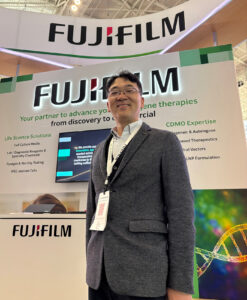
Smile Please: Wisconsin Welcomes FUJIFILM Cellular Dynamics New Headquarters
In January 2012, Kodak, a name synonymous with analog photography, filed for Chapter 11 bankruptcy protection, an event caused in part by the company’s inability to anticipate and adapt to the digital revolution.
A similar fate might well have befallen its Japanese competitor, Fujifilm. But last year, the Japanese giant recorded record sales and record profits, priding itself on its ability to innovate and evolve.
Part of that evolution and commitment to growth was on full display this week in Madison, Wisconsin, as Fujifilm executives and state officials officially opened the new facility of FUJIFILM Cellular Dynamics, Inc. (FCDI), which houses nearly 200 employees with a view to developing tomorrow’s life-saving therapies.
“The collaboration between Wisconsin and Japan has been fantastic,” said Tomoyuki (Tom) Hasegawa, CEO of FCDI for the past four years. “We are making a global impact together.”
The work here is “incredible,” Hasegawa continued. “All our employees are excited!”
Among the dignitaries speaking prior to the official ribbon-cutting ceremony were Wisconsin Governor Tony Evers, a 74-year-old Democrat. “Cleaning out a drawer the other day,” Evers joked, “I found a box of Fujifilm. I’m not sure what to do with it!”
Having toured Fujifilm’s Japan headquarters in 2019, Evers called the opening “a full-circle moment” and “a true Wisconsin success story.” The state’s expertise in stem cell biology began more than 20 years ago with the pioneering research of James Thompson, PhD, who co-founded Cellular Dynamics in 2004. The company was acquired by Fujifilm in 2015.
The new facility will quadruple FCDI’s cell therapy research and manufacturing, which Evers said, “may hold the key to Parkinson’s disease, Alzheimer’s, cancers, autoimmune and liver disease and other serious health conditions.”
Also speaking was Toshihisa “Toshi” Iida, a 30-year Fujifilm veteran who currently serves as corporate vice president and general manager of Fujifilm’s Life Sciences Strategy Headquarters and Bio CDMO Division.
Fujifilm was founded in 1934, Iida said, with a continuous push to combine technology and innovation. “Our journey has not always been easy,” he said. In 2000, the company’s core film business accounted for 70 percent of the firm’s profits. The business did not just decline; “It was a collapse,” he said.
“We overcame this challenge. I am a living witness to this transformation story.”
While Fujifilm’s business has evolved and diversified, the company’s purpose pays tribute to its photographic roots: “Giving our world more smiles.” The company’s interest in human health dates back to its early years. Just two years after its founding, Fujifilm produced the first X-ray film. “Our technology must serve people and improve lives,” Iida said.
Over the past 15 years, Fujifilm has invested some $10 billion in health and biologics. The investment in Madison is just a part of that bigger program. “This site is not just a building, but a platform to support innovation,” Iida said. “Japan is the birthplace of iPS cells. This has the potential to change medicine.”
Field of dreams
Hasegawa has been with Fujifilm for his entire professional career of 28 years, joining the company fresh from completing a law degree at the University of Tokyo. The one thing he knew was that he did not want to pursue a law career.
It was the late 1990s and the dawn of the digital camera revolution. “The company’s transformation story sounded very interesting to me,” Hasegawa told me in an interview in the exhibit hall at the American Society of Gene and Cell Therapy in Boston. “Especially right after Windows 95 came out, those were very exciting days expanding the digital capability of the company globally.”

Before long, the company set its sights on the U.S. market, and Hasegawa moved to New York to lead that effort, before returning to Tokyo in 2011 and assuming direction of the global marketing team. Three years later, he moved into business development and was put in charge of corporate planning and cultural affairs.
Hasegawa recalls reading about the induced pluripotent stem cells (iPSCs) by accident. In 2012, the Japanese scientist Shinya Yamanaka, PhD, famously won the Nobel Prize in Physiology or Medicine for the identification of factors crucial in the reprogramming of mature cells into pluripotent stem cells.
Following the acquisition of Cellular Dynamics, Fujifilm “asked me to be in charge” of this fledgling program in regenerative medicine, Hasegawa said. “This is a very well-known story in Japan because [Yamanaka] won the Nobel Prize and it is a very interesting technique. He’s a superstar! That’s why Fujifilm believes that the cell and gene therapy [CGT] field could be our next field of dreams.”
Thompson built a foundation in iPS cells in Cellular Dynamics and “ introduced lots of new [cell types] derived from iPS cells. Cellular Dynamics became a global leader for iPS-related products,” Hasegawa said. “Fujifilm’s concept was very interesting—we wanted to explore the synergy of imaging, analysis, and digital technologies to support the pharma industry. That’s what happened in 2015.”
Hasegawa says he has “a big dream” for the company’s growth. “One way is to deliver our iPS cell products, which include cardiomyocyte cells and neuron cells. We have 40 types of cells for toxicity and efficacy testing for pharma companies to do their R&D. We are a leading supplier of these iPS cells, which have high quality and also the same donor cell for multiple neurons to enable isogenic research.”
At one time, Hasegawa concedes, “we wanted to be a king of pharma, but we switched our strategy.” The company invested heavily in its services to support drug discovery through commercialization, including service lines across contract development and manufacturing (CDMO) and small-molecule drug development. In 2017, Fujifilm acquired reagent company Wako Pure Chemical, which has an HQ in Japan and a subsidiary in Richmond, VA.
Another strand to Fujifilm’s bow is as a provider of materials including reagent kits. “As you remember [in cinema], film is not necessarily the hero—cameras and cameramen are the heroes,” Hasegawa said. “We support [R&D], so that kind of mindset is very beneficial.”
Another thriving business is cell therapy utilizing iPSC technology. Hasegawa points to another subsidiary that provides cell therapy CDMO services in California. “We have an end-to-end service for cell therapy,” he said. In the cell therapy space, he is not looking for additional acquisitions, “because we shifted our strategy.” But for the supporting industry, “if there are good opportunities, we can of course have a discussion about it.”
Fujifilm says its $200-million investment in the new FCDI facility will “help secure America’s supply chain for biotech and regenerative medicine.” The new facility will feature state-of-the-art resources, including a Center of Excellence for genome editing and laboratories for cell culture manufacturing and process development. The space will quadruple capacity for R&D and manufacturing and enhance the company’s capabilities in drug discovery support and process development.
The company believes the investment will help Fujifilm keep pace with the rapidly expanding cell therapy market—and put a smile on the faces of patients and company executives alike.
The post Smile Please: Wisconsin Welcomes FUJIFILM Cellular Dynamics New Headquarters appeared first on GEN – Genetic Engineering and Biotechnology News.
AI Shows Value for Breast Cancer Prediction
AI is increasingly being used to help determine breast cancer risk, with two studies showing its value for primary prevention and in women of diverse ancestry.
The first study, in Science Translational Medicine, revealed that AI could outperform standard clinical risk tools at identifying women of European ancestry who were at greatest risk of developing breast cancer within the next decade.
Because current AI-based models mostly predict breast cancer risk in the short term, Mikael Eriksson, PhD, from the Karolinska Institute, and fellow researchers created a model for invasive and in situ breast cancer that covered a 10-year period.
“Considering that a tumor can take five to 20 years to develop into a screen- or clinically detected cancer, a 10-year or lifetime risk projection time is reasonable,” they noted.
The researchers validated their image-derived AI-based 10-year risk model using digital mammograms from 8676 women in two cohorts from the U.S. and Sweden, of whom 1633 had breast cancer.
They compared their model with three other risk assessment tools: the Tyrer-Cuzick-v8, which uses personal and family history to determine the lifetime risk of breast cancer; the Breast Cancer Surveillance Consortium v3 tool, which estimates the risk of developing invasive risk cancer over five years; and the Mirai AI algorithm for predicting breast cancer risk.
The model calculated that the 10-year risk of breast cancer was 3.83% for the North-American group and 3.14% for the Scandinavian group, and it showed promise for predicting the risk of invasive tumors.
The AI model performed significantly better at predicting invasive breast cancer than the three comparator models both overall, in women aged 50 to 69 years and those with estrogen-receptor-positive breast cancers.
“An image-derived AI-based risk model developed for 10-year risk assessment for identifying individuals in mammographic screening who may benefit from primary prevention strategies identifies up to 40% of breast cancers to be at high risk at study entry in U.S. and Swedish validation case cohorts per clinical guidelines,” summarized Eriksson and co-workers.
The second study, in Science Advances, revealed how AI could be of value for women from more diverse backgrounds, and that it had value regardless of race and ethnicity.
The research was driven by the observation that conventional prediction models incorporating genetic and clinical factors including breast density underperform in women who do not have European ancestry.
Shu Jiang, PhD, from Washington University School of Medicine in St Louis, and co-workers set out to evaluate the generalizability of an AI-derived mammogram risk score (MRS), a summary of texture features which captures intrinsic breast-tissue characteristics that are the basis for cancer to develop.
To do this, they used data from two large North American cohorts that represented more than 226,000 racially diverse women undergoing routine breast screening with mammography.
This was then used to examine the generalizability of MRS with breast cancer risk across non-Hispanic white (NHW), non-Hispanic Black (NHB), East Asian, South Asian, and Indigenous women.
Jiang and team found that the MRS was a strong predictor of breast cancer risk independent of race or ethnicity, demonstrating its potential for broader clinical utility.
Across the two independent screening cohorts, the MRS increased with age in line with rising breast cancer risk. It was a strong and consistent predictor of breast cancer risk across race and ethnic groups as shown by the association study and comparison of distributions and demonstrated excellent calibration in all groups.
Its remained robust across full-field digital mammograms or synthetic two-dimensional digital breast tomosynthesis, although the limited numbers of images precluded an analysis of how performance varied across manufacturers.
“Overall, these results support that MRS is a powerful breast cancer risk predictor that does not depend on race or ethnicity, supporting its potential for broader clinical adoption and use in varied populations of women undergoing routine screening mammography to identify those at increased risk,” Jiang and coworkers concluded.
The post AI Shows Value for Breast Cancer Prediction appeared first on Inside Precision Medicine.
Surgeon general’s office issues warning on screen time for children
WASHINGTON — Health secretary Robert F. Kennedy Jr. is issuing a U.S. surgeon general’s advisory urging families, schools, and providers to reduce children’s screen time, according to a draft of the report reviewed by STAT.
The report, which comes from the surgeon general’s office even though there is no Senate-confirmed nominee, calls on parents, schools, and all levels of government to work together to shift the use of devices with screens, saying some patterns of use “can pose real harm to children.”
Mutating Antibodies for Easier Drug-Conjugate Manufacturing
Scientists in the United States have developed a general-purpose antibody that they hope will help revolutionize antibody-drug conjugate (ADC) manufacturing. The team, from Johns Hopkins University, says they mutated the fragment crystallizable (FC) region, the part of an antibody that modulates immune response. The aim was to create new sites to attach molecules, including nanoparticle drugs or fluorescent markers for quality assurance.
According to Jamie Spangler, PhD, associate professor of biomedical engineering and chemical & biomolecular engineering, the new antibodies could—in the future—lead to more effective and easier-to-manufacture drug conjugates.
“The chemistry of antibody drug conjugates is so heterogeneous. It can be hard to characterize the drug-to-antibody ratio and to [do things like] maintain consistency in formulations.”
To get around this problem, Spangler’s team installed six mutations on the FC region of an antibody that can act as attachment sites for a variety of molecules. The team was able to attach a dye to quantify how many sites were available and discovered the best productivity was found when using up to four sites.
They emphasize that the sites can be used for many purposes.
“You can attach whatever you want,” Spangler explains. “You could use [them] to make an antibody-dye conjugate or even a drug conjugate.”
According to Spangler, the team has already shown that the mutations can be used to conjugate with nanoparticles. “We encapsulate the protein we want to deliver within the nanoparticle, and then we coat the surface with an antibody. The nanoparticle we’re carrying, in this case, contains some GFP [green fluorescent protein], which is a fluorescent readout, but we can attach that to an antibody.”
After the antibody binds to a cell expressing the target, it’s internalized, and the nanoparticle can release its cargo, she explains. This system can be used for any number of purposes.
“The sky’s the limit for how people want to use this in their own research and their own work,” she says. “It’s a fully tuneable and generalisable system, and we’d encourage people to think broadly and creatively about the different attachments they can use.”
The post Mutating Antibodies for Easier Drug-Conjugate Manufacturing appeared first on GEN – Genetic Engineering and Biotechnology News.
Mixed-Reality Fermentation Simulator Preps Workforce
Hands-on biomanufacturing training is expensive, regardless of whether that training occurs in manufacturing facilities where training may take production units offline, or in community colleges and universities where the availability of equipment and consumables may limit training time.
A mixed-reality fermentation training platform dubbed BioSuite Virtual solves much of that challenge.
Developed by Prism Immersive with funding from BioMADE and expertise from an industry consortium, BioSuite Virtual immerses learners in a world in which they interact with a virtual bioreactor in their physical space. Conversely, the perhaps more familiar augmented reality lets learners interact with physical objects with virtual overlays.
BioSuite Virtual consists of more than 40 different modules across 12 chapters, starting with a short introduction to the biomanufacturing space, followed by content-specific modules.
“It’s end-to-end fermentation training,” Jared DeCoste, PhD, CEO and co-founder of Prism Immersive, tells GEN. “Learners gain vital skills along the way as they assemble a bioreactor, sterilize it, inoculate it, add the media, set the controls, and perform a run. They monitor the run by taking samples and observing the fermentation conditions, making necessary adjustments throughout.” As a learner, “you can do things multiple times if you need to. You can start and stop. You can go at your own pace, all the way through the run.”
Shaped by fermentation SMEs
Training is based on best practices from industry subject matter experts—especially Amyris, which shared its processing best practices and expertise with Prism early on—and partners at Bioscience Core Skills Institute (BCSI), Northeastern University, and Harford Community College who shaped and piloted the software. Prism made these connections with the support of BioMADE’s member network.
This lets all users learn from what Dan Beaupré, COO and co-founder of Prism, calls “the best of the best” in precision fermentation. “BioSuite Virtual is informed by dozens of subject matter experts [from industry],” he stresses.
“BioSuite Virtual isn’t meant to completely supplant in-person training,” Beaupré adds. “It’s a precursor, where users can obtain literacy and develop operational familiarity with precision fermentation workflows before they touch real equipment.” Because they have this foundation, trainers can then focus on teaching more complex processes and scenarios.
Prism’s first clients, community colleges, began using the virtual training tool this spring, and “about a dozen others” from Massachusetts to Hawaii are licensing it for use in the next academic year. DeCoste reports interest from contract development and manufacturing organizations and biopharma companies, too. “One of the great things about software is that you can modify it for the exact procedures utilized within [a specific] environment.”
Going forward, Prism Immersive plans to create new modules in such areas as biosafety cabinet operations and aseptic training, “because that’s what industry is calling for,” Beaupré says.
“All sorts of things are possible in XR [mixed, augmented, or virtual reality], as long as they’re well-designed,” Beaupré emphasizes. “Everything we do is intentional,” and knowledge checks are built in to reinforce and validate learning. After successfully completing the course, learners have the option to be credentialed through BCSI.
The post Mixed-Reality Fermentation Simulator Preps Workforce appeared first on GEN – Genetic Engineering and Biotechnology News.
Carolina Aguilar: Brain-Computer Interfaces that Heal Neural Circuits
Jonathan D. Grinstein, PhD, North American Editor of Inside Precision Medicine, hosts a new series called Behind the Breakthroughs that features the people shaping the future of medicine. With each episode, Jonathan gives listeners access to his guests’ motivational tales and visions for this emerging, game-changing field.
Brain-computer interfaces have captured global attention in recent years, but most public discussion has focused on assistive technologies—systems designed to help patients control computers, prosthetics, or digital devices through thought alone. Carolina Aguilar, co-founder and CEO of INBRAIN Neuroelectronics, believes the larger opportunity lies elsewhere: using advanced neural interfaces not just to decode the brain but to treat disease directly. Built around graphene-based technology, INBRAIN is developing implantable systems capable of reading and writing neural signals with far greater precision than traditional metal-based devices.
Before founding INBRAIN, Aguilar spent 13 years at Medtronic, including a decade leading the company’s global neuromodulation business. During that time, she saw both the extraordinary potential of brain stimulation therapies and the limitations of incremental innovation inside large medical technology companies. Her background in neuroscience research, including early work studying the relationship between pesticides and Parkinson’s disease, shaped a long-term interest in circuit modulation and neurotherapeutics. That experience eventually converged with the emergence of graphene as a promising material for next-generation neural interfaces.
In this conversation, Aguilar discusses why INBRAIN chose to focus on therapeutic BCI applications rather than assistive computing, how graphene may enable higher-resolution neural decoding and stimulation, and why Parkinson’s disease became the company’s first major target. She also outlines INBRAIN’s broader vision for personalized neurotechnology, AI-driven therapies, and future applications ranging from epilepsy and memory restoration to bioelectronic treatments for cardiometabolic disease.
This interview has been edited for length and clarity.
IPM: You spent more than a decade at Medtronic before founding INBRAIN. What made you realize that incremental innovation was no longer enough, and why did graphene feel like the right breakthrough technology at the right time?
Aguilar: INBRAIN is a graphene-based brain-computer interface (BCI) company developing the most intelligent and adaptive interface between the neural system and AI to solve health for billions.
I started my career in consumer goods, but then I spent 13 years at Medtronic, where, for ten of those 13 years, I was leading the brain stimulation, or neuromodulation, business globally. I was always extremely impressed by what the company vision was and the number of disease areas and patients that we could help. However, I saw that every year we were innovating, but it was a bit incremental versus breakthrough. It’s normal for big companies to prioritize preserving shareholder value and revenue opportunities.
Investing in breakthroughs is harder; they usually just acquire those breakthroughs and then integrate them. And, of course, they revitalized their innovation. So I thought at that point that I could be one of those breakthrough innovators that could take a little bit more risk but then bring much bigger value into the field.
When the right opportunity presented itself to us, after the European Union put €1 billion into bringing graphene to market and after having gone through different speeds as pieces, we realized that it was the time to build INBRAIN and make that breakthrough a step instead of the incremental innovation of the past.
It’s interesting because I actually studied neuroscience at Virginia Tech, and at Virginia Tech, I had to define my thesis to study for my master’s degree. I picked up a combination of pesticides in the study. The study focused on the effects of pesticides and their combinations on brain chemistry in Parkinson’s disease. Right. So it was already quite oriented toward what we are solving today. And I got a grant award for the best vision on circuit modulation. So it was not about targeting the brain. It was about the circuit that was actually managing some of these dynamics of Parkinson’s disease.
At that early stage, I was already very attracted to the problem we are solving today, even though I did not know I would have a company dedicated to that field and to this innovation. However, it was always driving me in that direction. Medtronic was the company that turned that ambition into a real product and broad platform, which I also helped launch globally. So I guess it was always there. It was the seed that had been growing over time.
IPM: Medtronic exposed you to commercial, upstream product development, and engineering challenges. What did you learn that prepared you to build INBRAIN, and how did graphene change your engineering perspective?
Aguilar: It also evolves over time. So we start with a problem, such as pesticides in the development of Parkinson’s. Then I think I stepped into Medtronic as a solution to the problem that existed at that time. I was like, great. Now we have a problem. We have a solution. Let’s fix Parkinson’s disease.
At Medtronic, I was exposed to new experiences even while working in a commercial role, as I became a global director. I was exposed to the upstream. At Medtronic, there is a downstream process from which all employees receive their compensation. Then there’s the upstream piece, which is the product development and the planning of the next platforms. I was not in charge of that, but I was exposed to the process, the thinking, what is coming next, how we can make it happen, and where the constraints are. And that intrigued me a lot.
I discovered that I had a little bit of an engineering part inside of me that I never exploited. When the right opportunity came, I received a call from an investor friend of mine, who sometimes asked me to do some small due diligence. And he said, “Hey, there are some guys who have some graphene technology here that you might understand better than me. Do you want to come to the pitch?” I said, “Perfect.”
Then I saw that some of these constraints that we were dealing with in Medtronic in terms of miniaturization, higher-resolution interfaces, charge injection limits, and many of these engineering problems, partially, we could also solve by going graphene and going a different kind of electronics and a different kind of platform. When these consolidated and we created INBRAIN, I had to put a huge amount of effort into understanding semiconductors, microelectronics, mechanical configurations, and data architectures. So it’s been a huge learning journey for me.
IPM: INBRAIN appears to be building a platform strategy across multiple applications and devices. What are the product verticals and why does graphene offer capabilities that traditional neural interfaces cannot?
Aguilar: So it’s effectively a platform with three product verticals. When Morgan Stanley released the BCI industry report, it stated that the market was a $400 billion opportunity. We already knew that with one device, you could not capture all that immense market. So we were already working on a stepwise approach to the biggest opportunity. And this is what we have today on the table in the sense that we have a first product. The first product I can show you is a cortical interface. Starting with about 100 contacts, we can grow to a thousand. But in this case, it was not necessary.
It’s made of graphene. So it’s not about the number of contacts but the quality of what these contacts can decode. What is the precision of anatomy and the resolution of disease-related biomarkers that we can decode at high resolution in a way that that resolution is superior to a standard medical technology?
In some cases, standard platinum and iridium are used; in some cases, iridium oxide. We decided to create this first product for use for less than 30 days once it’s approved. It’s not yet approved, but we are getting closer, and it is the one that we actually took first-in-human. The results of those three reports are being generated using this device to demonstrate both the safety of graphene and its decoding superiority compared to metal technology. And, of course, within that first-in-human study, we also decoded speech at the phoneme level.
It was about creating the first step toward making graphene and consolidating advanced materials in clinical practice. So from there, the second product is actually an implantable platform that uses some of that configuration. So we use a cortical and subcortical interface to actually decode a circuit.
In our case, the microcircuit that is involved in Parkinson’s disease. And that is the second one. And the third product is actually the same platform, where instead of these two cortical and subcortical interfaces, we put in the central nervous system. We are truly connected to a vagus nerve interface that decodes the fibers within the vagus nerve, which go into the different modulations of the different organs of the body.
We go from reading the brain to reading the body. This sequence of product verticals opens up the immense possibility of a $400 billion opportunity. But even more important is the number of patients we could actually touch and improve therapeutically with such a platform.
IPM: Many BCI companies focus on assistive applications like computer and prosthetic control. INBRAIN appears to be therapeutic. Why did you choose direct disease treatment, and what makes it harder?
Aguilar: People say “invasive” or “noninvasive.” I call them implantable and non-implantable. And within the implantable, there might be different levels of invasiveness, but we were looking at the problem to solve, and especially coming from the field we come from and having experience for ten years, the use cases we saw are assistive BCI, meaning I transfer thought to action in the computer as solving a very important problem, but actually in a small population because, at the end, paraplegia and ALS. They are very important disease areas, but compared to other areas, there are smaller populations.
There were many people and companies, great companies, already aiming to solve that. So Neuralink and Synchron and Paradromics were always positioned there. And we thought, well, we have a similar approach, but maybe with a material that is much better suited to actually read and write bidirectionally, therapeutically. In assistive BCI, you do a ton of decoding. So, you read it and then transfer it to the computer. On the therapeutic side, where we are doing it, you have to read, write, and do that computing already within the implanted system.
It’s a much more complex architecture and a harder problem to solve. Now the benefit is solving the disease for as long as the system is active. And Parkinson’s was only the beginning. We are currently examining the validation of this program. We’re looking at memory restoration. We are looking at a set of disease areas on the cardiometabolic side that I cannot disclose without an NDA that we are developing with Merck KGaA. Those deals were unexplored or suboptimally explored by some of the low-resolution companies in the field.
The post Carolina Aguilar: Brain-Computer Interfaces that Heal Neural Circuits appeared first on Inside Precision Medicine.

After a critique from Rubio, WHO defends work on Ebola response
World Health Organization officials on Wednesday mounted a defense of their response to the new and worrisome Ebola outbreak centered in the Democratic Republic of the Congo, after U.S. Secretary of State Marco Rubio said the agency was “a little late” in identifying infections.
WHO authorities stressed that their role is to offer technical and operational help to national health agencies, which have primary responsibility for detecting the spread of diseases under international rules.
STAT+: OpenEvidence makes its pitch to hospitals. ‘We’re not crazy monsters’
SAN FRANCISCO — OpenEvidence rode the wave of early enthusiasm for large language models by building a free chatbot for doctors. Physicians, especially trainees, have flocked to the platform to help make patient care decisions; the company claims that about 650,000 U.S. physicians use it actively.
In just four years, OpenEvidence has leveraged that popularity into a $12 billion valuation, going directly to clinicians and avoiding health tech’s traditional hospital procurement process. But the company is facing competitive pressures and questions about whether its ad-based business model can continue to propel the company forward.
At the STAT Breakthrough Summit West, OpenEvidence chief technology officer Zachary Ziegler said that while the company has grown by building for individual clinicians, it’s time to aim bigger.
STAT+: NIH behind in filling top roles, with 15 of 27 institutes led by acting directors
Across the Department of Health and Human Services, top leadership positions are being filled with acting directors. There is no permanent director at the Centers for Disease Control and Prevention or at the Food and Drug Administration. President Trump’s nominee for surgeon general is yet to be confirmed, and HHS’ top spokesperson resigned last week.
The National Institutes of Health may appear to have more stable leadership, with Director Jay Bhattacharya and his deputies holding their positions. But just below the surface, a leadership vacuum has persisted for months, with 15 of the 27 institutes being led by acting directors. The dearth of permanent leadership at the institutes, which oversee research in a specific topic area, means that the institutes are unable to plan long-term projects, or offer reassurances to a research community that is seeing unprecedented changes in federal funding priorities.
“Strong, permanent leadership across NIH is essential to keeping lifesaving medical research moving forward. Institute directors ensure taxpayer dollars are going to the most important science and the most promising research for American families,” said Erika Sward, executive director of United for Cures, a network of patient advocacy groups. “Having experienced directors in these roles provides the stability needed to ensure progress and avoid delays in developing new treatments and cures that millions of patients and families are counting on.”