

Having a lifestyle that promotes heart health may have been key in determining who died or was hospitalized during the COVID-19 pandemic.
Research in the Journal of the American Heart Association (AHA) suggests these healthy behaviors—involving diet, exercise, smoking, and sleep as well as body measures—could not only protect against cardiovascular disease but also have other benefits.
Specifically, they may help the body cope with the stress of infections such as those caused by the severe acute respiratory syndrome coronavirus 2 (SARS-CoV-2), even in people without clinical cardiovascular disease.
Adults with the highest heart health scores were nearly half as likely to die or be hospitalized as a result of COVID-19 compared with those who had the lowest scores.
“In many ways, a viral infection is like a cardiac stress test, except it’s not controlled,” explained researcher Elizabeth Oelsner, MD, from Columbia University.
“At the beginning of the pandemic, we immediately saw that COVID-19 was a particularly severe stress on the body. Our results highlight that better heart health, which is something that individuals can work on, likely prepares you better for real-life stress tests such as infectious diseases like COVID-19.”
The findings come from the Collaborative Cohort of Cohorts for COVID-19 Research (C4R), a collection of 14 U.S. studies that accrued extensive health information from participants.
The current analysis included 29,740 adults without clinical cardiovascular disease as of March 2020. Their average age of 66 years, and 61% were women.
Among the participants, just over a third each were White and Hispanic/Latino, while just over a fifth were Black.
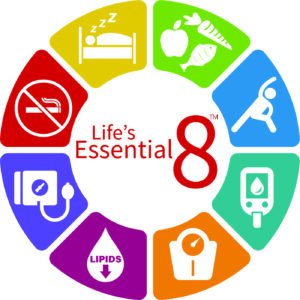
Cardiovascular health was measured according to the AHA’s Life’s Essential Eight (LE8), a summary measure that scores diet, physical activity, cigarette use, sleep, body mass index, blood pressure, lipids, and glucose levels each out of 100.
Around 18% of study participants had high heart health(LE8 ≥80), 70% had moderate heart health (LE8 ≥50 to <80), and 12% had low heart health (LE8 <50).
There were 681 severe COVID-19 cases from March 2020 to March 2023. Just over half the participants were known to have received a COVID-19 vaccination before contracting the virus.
Adults with high LE8 scores had a 46% reduction in risk of COVID-19 hospitalization or death compared with those who had low scores. In addition, every 14-point increase in LE8 was linked with a 20% lower risk of COVID-19 hospitalization or death.
Higher scores for physical activity, weight, blood pressure and sleep patterns were individually associated with lower risk of severe COVID-19.
The benefits of heart heath were similar across different participant groups and continued through the study period and when vaccines became available.
“COVID-19 caused 1.22 million deaths in the U.S. between March 2020 and March 2025, so it’s essential that we understand how important health components, such as heart health, relate to severity of COVID-19 infections,” said lead researcher Tim Plante, MD, from the University of Vermont.
“Our findings suggest that the tremendous impact of COVID-19 on the U.S. could have been reduced if the general population had had better heart health prior to the onset of the pandemic.”
The post Heart Health Impacted COVID-19 Deaths appeared first on Inside Precision Medicine.