

First coined over a decade ago in the aerospace industry to describe a digital replica of a physical object, the concept of a “digital twin” has since found its way into medicine, where it refers to the simulation of a patient’s unique biology. Drawing on multiple layers of patient health data, these computer models promise to predict how a person’s health will evolve over time and how they will respond to any given intervention.
Digital twins represent a transformative shift in medicine, moving from reactive health interventions toward preventive strategies. While this technology is still in early stages, it is already being used to guide personalized cancer treatment, simulate the outcomes of cardiology interventions, and manage complex metabolic diseases like diabetes. However, most applications today are closer to small-scale digital models of a specific tissue or condition rather than a complete digital twin that dynamically adapts to real-world data from each simulated patient.
A convergence of rapid technological advances across multi-omics and artificial intelligence (AI) is priming the development of powerful computational models that can capture intricate biological processes beyond the capabilities of any of their predecessors. As large-scale multi-omics datasets are increasingly combined with clinical and real-time physiological data, digital twins are laying the foundation for a more precise and individualized understanding of human health.
Exploring uncharted territory
Digital twins could have a particularly meaningful impact in areas of medicine where knowledge is limited and currently available technologies have fallen short. One such area is rare diseases. Although rare diseases collectively affect more than 300 million people worldwide, each of the over 7,000 conditions covered under this definition only affects a small number of patients—sometimes even just a single person. This scarcity makes it difficult to study the underlying biology and hinders the development of much-needed treatments and diagnostics.
Group Team Lead
European Bioinformatics Institute
“We can use digital twins to address the fact that, with a rare disease, you might only have a handful of patients with that diagnosis,” said Ellen M. McDonagh, PhD, group team lead at the European Bioinformatics Institute (EMBL-EBI) in the U.K. and translational informatics director at Open Targets.
Through a project funded by the Chan Zuckerberg Initiative, McDonagh’s team is developing digital twins of human tissues that combine multi-omics data with a patient’s clinical history and additional phenotype data. Their approach begins by modeling biological processes in healthy tissue, and then bringing in data from common diseases affecting the same tissue to train AI models to predict patterns of dysfunction. This would allow researchers to feed the algorithm data from patients with rare diseases to better understand the underlying biological mechanisms driving each condition.
Integrating diverse layers of multi-omics data will be critical to achieving a more comprehensive understanding of the molecular basis of these rare conditions. In some countries, including the U.K., patients with rare diseases routinely undergo whole-genome or whole-exome sequencing as part of diagnostic testing. However, many of the identified genetic variants remain difficult to interpret with limited current knowledge. By combining genomics with other modalities such as transcriptomics, proteomics, and metabolomics, researchers can develop a more complete picture of the underlying molecular interactions and better determine the relevance of these previously uncharacterized variants.
On this front, a major challenge lies in collecting and integrating data across a wide range of modalities, cohorts, and institutions. To address this, McDonagh’s team is actively developing workflows to standardize data collected from the scientific literature, public datasets, and research environments, enabling more reliable comparisons across datasets and facilitating their integration into digital twin models.
This work also involves efforts to fill gaps in the data, as not all data modalities will be available for every patient. For instance, a computer model could predict what the transcriptomic profile will look like based on genomics data, and vice versa.
“We are benchmarking different methods that can help with predicting missing data, but also evaluating how confident we are in those predictions,” said McDonagh. Knowing which biological processes can be predicted with high confidence, and which cannot, can help researchers draw more robust conclusions and guide future data collection efforts.
As digital twin models keep growing and becoming more refined, they will enable the identification of new therapeutic targets and diagnostic markers, while also forecasting the precise effects an intervention will have on a given person. McDonagh highlights their potential to develop more personalized treatment plans for each patient, adding that, “Monitoring patients over time, one could also predict whether a patient might develop resistance to a given drug and switch them to an alternative treatment.”
Integrating real-time data
Integrating multi-omics data with physiological measurements, obtained from continuous sensors and wearable devices, could help digital twins take a significant step forward in accurately simulating complex and dynamic biological processes. In turn, this could help advance healthcare from a reactive model to a more proactive approach.

Associate Professor
University of Yamanashi
“Today, much of medicine begins after a disease has become clinically apparent,” said Tadao Ooka, MD, PhD, associate professor at the University of Yamanashi in Japan. “In contrast, preemptive medicine aims to detect subtle biological changes before symptoms or irreversible damage occur, and to intervene earlier through lifestyle, environmental, pharmacological, or behavioral approaches.”
Achieving such a transformative shift could significantly reduce the burden of chronic diseases such as diabetes, cardiovascular disease, and neurodegenerative disorders. This is becoming an increasingly urgent goal in aging societies, including Japan, where preventing health decline and extending healthy life expectancy are currently major public health priorities.
Ooka’s lab is developing digital twins that integrate patient data from longitudinal multi-omics, wearables, and lifestyle questionnaires. Through Taomics, a company he co-founded, Ooka is also building a platform to collect longitudinal data from patients and healthy individuals. This data is used to create digital twins that can provide users with personalized health recommendations while informing drug discovery and identifying target populations for a more precise approach to clinical development.
“One major objective is to identify biological pathways related to insulin resistance and metabolic dysfunction,” he added. “The goal is not only to predict risk, but also to understand which behaviors or interventions may improve a person’s molecular and metabolic state.”
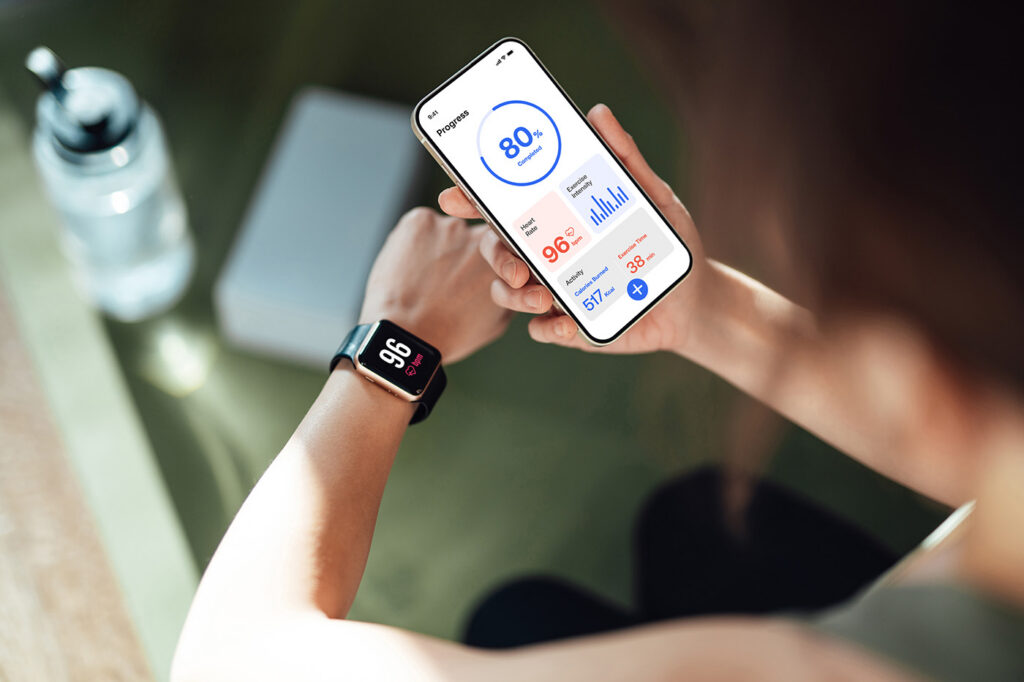
While multi-omics data can tell researchers what is happening within the body at the molecular level, continuous data obtained from sensors and wearables can provide a deeper insight into what a person is experiencing in daily life, including physical activity, sleep, heart rate, and stress levels.
“The key is to connect these two layers,” said Ooka. “Together, they allow us to move from general advice to personalized, testable, and adaptive recommendations. For example, if a person’s sleep, physical activity, or dietary pattern changes, we can examine how their inflammatory, metabolic, or insulin resistance-related protein signatures change afterward. Conversely, if a molecular pathway appears to be deteriorating, [sensor] data may help identify the behavioral or environmental context behind that change.”
Across all medical specialties, Ooka expects digital twins to make the greatest early impact in diseases where progression is continuous, multifactorial, and strongly influenced by the patient’s lifestyle and environment. These include metabolic diseases, which develop over many years and are shaped by interactions between genetics, environment, and behavioral patterns. Oncology will also be particularly relevant given the complexity of treatment response and resistance processes at the molecular level.
To reach these ambitious goals, however, a number of challenges must be addressed. In addition to ensuring the data used to train digital twin models is robust and reliable, implementation needs to be carefully planned so that digital twins can adapt to and integrate into real-world clinical workflows, reimbursement systems, regulatory frameworks, and ethical governance structures.
“The goal should be to create systems that benefit the broader population,” explained Ooka. “We need to ensure that prediction does not become discrimination, that data is handled securely, and that people receive understandable and actionable recommendations.”
Towards dynamic predictions
In the future, experts expect to see digital twins that integrate multi-omics data with wearable, imaging, clinical, and environmental data to capture the full complexity of human biology, becoming intelligent decision-support platforms. This progress will be underpinned by continued improvements in multi-omics technology, with the coming decade being primed for advances in longitudinal data collection and spatial multi-omics. Coupled with increasingly lower prices, this technology is expected to become much more accessible to researchers and clinicians alike.

Associate Professor
Daegu Gyeongbuk Institute of Science and Technology (DGIST)
“While omics data were once confined to laboratory analysis, emerging wearable technologies now allow real-time detection of certain metabolites and protein markers,” wrote Kyung-In Jang, PhD, associate professor at the Daegu Gyeongbuk Institute of Science and Technology (DGIST) in South Korea. “These innovations support integrating omics into everyday health monitoring, contributing to the accessibility and responsiveness of precision healthcare.”
Within the next decade, McDonagh expects to see the first translational applications of digital twins in the clinic, whether to support diagnosis, patient stratification in clinical trials, or predicting how a patient will respond to a given treatment. “It really does open the door to being able to identify new targets that are causing disease in rare disease patients, but also in more complex, common diseases,” she said. “Ultimately, digital twins will help in the development of new, safer, more effective treatments and more personalized medicine.”
Going forward, Ooka expects medical applications of digital twins to evolve in stages, starting with smaller, disease-specific models, and later becoming large-scale tools that can predict future outcomes and enable patients to alter their disease trajectories through personalized interventions. This evolution will go beyond purely technical improvements, potentially shaking the foundations of healthcare systems as we know them today.
“The field will require new ecosystem models, not only new analytical technologies,” said Ooka. “Medical digital twins cannot be built by academia, industry, hospitals, or technology companies alone. They require long-term participant engagement, trusted data governance, scientific rigor, clinical relevance, and business sustainability.”
Ooka has been actively working on setting up such an ecosystem in Japan through the COI-NEXT initiative, bringing together universities, regional companies, and global partners to return insights derived from their data to local communities.

“Ultimately, I would like to create a system in which individuals can receive personalized health recommendations based on their own longitudinal biological data,” he concluded. “This means moving beyond one-time testing toward a continuous feedback loop: measure, interpret, intervene, and re-measure. At the same time, such a platform could contribute to pharmaceutical research by connecting real-world human biology, lifestyle, and molecular data in a way that supports more precise and efficient drug development.
“My hope is that digital twins will help create a future where healthcare is no longer centered only on diagnosing and treating disease, but on continuously supporting each person’s optimal health throughout life.”
Clara Rodríguez Fernández is a science journalist specializing in biotechnology, medicine, deeptech, and startup innovation. She previously worked as a reporter at Sifted and editor at Labiotech, and she holds an MRes degree in bioengineering from Imperial College London.
The post From Multi-Omics to Digital Twins: A Data-Driven Future for Precision Medicine appeared first on Inside Precision Medicine.