

IntroductionCochlear implant (CI) patients who are single-sided deaf can match the sound quality of speech presented to their CI ear and speech presented to their normal hearing ear. Previous work using this patient population has generated acoustic approximations of CI sound quality for speech, achieving high similarity ratings through interactive manipulation of sound parameters such as filtering, pitch shifting, and spectral smearing. The present study aimed to extend this approach to music.MethodsA digital audio workstation (DAW) methodology was developed for generating sound quality matches to both speech and music in 11 adults with unilateral MED-EL CIs and contralateral acoustic hearing. Participants compared the sound quality created by acoustically manipulated signals presented to their better hearing ear with the sound quality of unprocessed signals presented to the CI ear. The similarity of the two signals was rated on a scale of 1 to 10 with 10 indicating a perfect match.ResultsOn average, speech matches achieved higher similarity ratings (9.3) than music matches (6.7). Speech matches were typically achieved using bandpass filtering, pitch shifts, and distortion. Similarity ratings for speech using the digital audio workstation (9.3) were not different from those (8.7) using the custom, speech-specific software of previous studies. Music matches frequently required additional manipulations, including frequency equalization and modulation. The specific manipulations required varied across participants, and several individuals could not complete music matches despite extensive attempts.DiscussionThese findings suggest that music introduces perceptual dimensions not fully addressed by speech-based matching procedures. The DAW methodology provides an accessible framework for investigating CI sound quality and may guide future efforts to characterize and optimize sound quality for signals beyond speech.
Speech in noise prediction by use of cortical auditory evoked potentials in normal hearing and sensorineural hearing loss: a systematic review
IntroductionSpeech perception in noise (SPiN) is a critical challenge for individuals with sensorineural hearing loss (SNHL), and current behavioral assessments can be unreliable in populations with language barriers or cognitive impairment. Cortical auditory evoked potentials (CAEPs) can serve as a supplementary measurement as they often show strong correlations with SPiN outcomes across diverse hearing profiles.MethodsFollowing PRISMA and SWiM guidelines, this systematic review includes studies from PubMed, Web of Science, and Scopus databases that examined the relationship between non-task related CAEPs and SPiN outcomes in adults with normal hearing, SNHL, or cochlear implants.ResultsSixteen studies were included, encompassing 238 participants with SNHL and 204 participants with normal hearing. Across studies, N1 latency, P2 latency, and N1-P2 amplitude of the onset CAEP and acoustic change complex (ACC) are most consistently correlated with SPiN performance, particularly in sentence-based tests. The mismatch negativity (MMN) showed limited predictive value, as findings varied by age and hearing status. A meta-analysis was not conducted due to methodological heterogeneity.ConclusionOnset CAEP and ACC N1 and P2 latencies together with N1-P2 amplitudes particularly demonstrate potential as electrophysiological indicators of SPiN performance. Their clinical utility is promising for populations where behavioral testing can be unreliable, such as CI users or individuals with cognitive or language barriers. However, standardization of protocols and further longitudinal research are needed to validate their application in clinical settings.Systematic Review Registrationhttps://www.crd.york.ac.uk/PROSPERO/view/CRD42023404158, identifier PROSPERO (CRD42023404158).
Frequency shaping of tactile perception via transcutaneous interferential electrical stimulation: a simulation study
Electrotactile feedback via transcutaneous interferential electrical stimulation generates temporally modulated stimulation fields and enables frequency-domain adjustment with carrier and beat frequencies. To systematically characterize these effects, we present a simulation framework that integrates tissue-scale electrical potential simulation with the finite element method and axon-scale dynamics using the axon cable equation, which incorporates cable theory and the Hodgkin–Huxley model, to predict axon activation and tactile perceptual metrics. We simulated a simplified glabrous skin model with three orthogonally oriented axons. Results show that the carrier frequency in the range of 1–4 kHz determines the upper bounds of the perceived field size, reaching up to 1.6 mm and exceeding the 1 mm electrode diameter, and perceived intensity, whereas the beat frequency in the range of 0–100 Hz adjusts these quantities within these bounds. Furthermore, axons oriented perpendicular to the skin surface exhibit lower activation thresholds than those oriented parallel. Unlike the conventional approaches of transcutaneous electrical stimulation, our results suggest that transcutaneous interferential electrical stimulation can shape the perceived field and perceived intensity without electrode reconfiguration or amplitude modulation. These findings clarify the distinct roles of carrier and beat frequency in tactile perception. This paper provides a theoretical foundation for frequency-domain adjustment of electrotactile interfaces and points toward compact, programmable systems. Quantitative validation through psychophysical experiments will further test and refine these predictions.
Sex differences in the development, treatment, and prognosis of multiple sclerosis in Switzerland
IntroductionThere has been growing recognition of potential differences in disease course and presentation between men and women with MS. This study examined sex differences in MS using data collected at study entry in the Swiss Multiple Sclerosis Cohort (SMSC).MethodsA cross-sectional analysis of the data from 1541 SMSC participants (June 2012–February 2022) with persons with relapsing-remitting MS or Clinically Isolated Syndrome (named relapsing type) and progressive MS including persons with Primary Progressive Multiple Sclerosis (PPMS) and Secondary Progressive Multiple Sclerosis (SPMS) was performed. Sociodemographic and clinical characteristics, disease history, and severity indicators were examined, focusing on sex differences within progressive and relapsing MS types, and comparing these MS types. Statistical analyses included Mann-Whitney U tests and chi-squared tests for group comparisons. Multivariate linear regression models were constructed to examine the independent association of sex with Expanded Disability Status Scale (EDSS) scores, adjusting for age, disease duration, treatment category, recent relapse, and body mass index (BMI).ResultsWomen represented 65.8% of the cohort (1,014/1,541). BMI was significantly lower in women than in men in the relapsing type and SPMS (relapsing: p < 0.001; SPMS: p = 0.001; PPMS: p = 0.86). Age at first symptoms differed by sex depending on MS type: women were younger in the relapsing group (29.7 vs. 31.4 years, p = 0.036), while men were younger in PPMS (42.3 vs. 47.7 years, p < 0.001), with no difference in SPMS (p = 0.5). In univariate analysis, men showed a trend toward higher disability levels at study entry in the relapsing type (p = 0.058), but no significant sex differences in EDSS were observed in progressive forms. In multivariate analysis, female sex showed a trend toward lower EDSS scores in relapsing MS after adjusting for clinical factors (β = −0.13, 95% CI: −0.26 to 0.005, p = 0.059) but was not associated with EDSS in PPMS (β = −0.09, p = 0.802) or SPMS (β = + 0.09, p = 0.816).ConclusionThis study identified sex differences in disease distribution, BMI and EDSS at their entry in the SMSC. These findings underscore the complexity of sex differences in MS and highlight the importance of prospective longitudinal studies with standardized severity assessments to clarify sex-specific disease trajectories and inform personalized treatment strategies.
Targeting the microbiota-gut-brain axis in post-stroke insomnia: a phase-dependent therapeutic framework
Post-stroke insomnia (PSI) is a critical biological barrier to neurorehabilitation afflicting over half of all stroke survivors. Traditional sedatives often force clinicians into a therapeutic dilemma between sleep efficacy and cognitive suppression. The microbiota-gut-brain (MGB) axis has recently emerged as a transformative target to resolve this impasse. Acute stroke triggers profound autonomic dysfunction, causing immediate intestinal barrier collapse. This “leaky gut” facilitates the systemic translocation of lipopolysaccharides (LPS) and activates the NLRP3 inflammasome. The resulting inflammatory storm hijacks central tryptophan metabolism via the indoleamine 2,3-dioxygenase (IDO) enzyme. This “tryptophan steal” diverts serotonin precursors toward neurotoxic kynurenine pathways, driving severe cortical hyperarousal. Sleep fragmentation then prevents the glymphatic system from clearing metabolic waste, further exacerbating neuroinflammation. To break this vicious cycle of neurotoxicity, we propose a phase-dependent therapeutic framework. During the highly vulnerable acute phase, interventions must prioritize gut barrier protection using postbiotics to mitigate infection risks under CNS injury-induced immunodepression (CIDS), often discussed as stroke-induced immunosuppression. As patients enter the chronic phase, therapy shifts toward metabolic restoration using live therapeutics, such as washed microbiota transplantation (WMT) and next-generation psychobiotics like Akkermansia muciniphila. Targeting the MGB axis offers a mechanism-based strategy to achieve precision sleep medicine, restoring the biological foundation necessary for optimal neuroplasticity and recovery.
Esophagus engineering tackles function
Nature Biotechnology, Published online: 09 April 2026; doi:10.1038/s41587-026-03100-9
A tissue-engineered esophageal graft supports luminal patency in growing minipigs with emerging structural integration.
C-section rate in 2025 highest in a decade
Get your daily dose of health and medicine every weekday with STAT’s free newsletter Morning Rounds. Sign up here.
A First Opinion essay today argues that “tastiness is not why people overeat.” But I may beg to differ — and so may a friend of mine who recently gave me a stuffed scolding after I convinced her to order pad thai for the table in addition to our meals.
Palantir staff being issued NHS email accounts sparks concerns
Concerns are being raised by NHS staff that engineers working for US software firm Palantir have been issued NHS email accounts.
The Download: AstroTurf wars and exponential AI growth
This is today’s edition of The Download, our weekday newsletter that provides a daily dose of what’s going on in the world of technology.
Is fake grass a bad idea? The AstroTurf wars are far from over.
In 2001, Americans installed just over 7 million square meters of synthetic turf. By 2024, that number was 79 million square meters—enough to carpet all of Manhattan and then some. The increase worries folks who study microplastics and environmental pollution.
While the plastic-making industry insists that synthetic fields are safe if properly installed, lots of researchers think that isn’t so. Find out why AstroTurf has ignited heated debates.
—Douglas Main
This story is from the next issue of our print magazine, packed with stories all about nature. Subscribe now to read the full thing when it lands on Wednesday, April 22.
Mustafa Suleyman: AI development won’t hit a development wall anytime soon—here’s why
—Mustafa Suleyman, Microsoft AI CEO and Google DeepMind co-founder
The skeptics keep predicting that AI compute will soon hit a wall—and keep getting proven wrong. To understand why that is, you need to look at the forces driving the AI explosion.
Three advances are enabling exponential progress: faster basic calculators, high-bandwidth memory, and technologies that turn disparate GPUs into enormous supercomputers. Where does all this get us? Read the full op-ed on the future of AI development to learn more.
Desalination technology, by the numbers
—Casey Crownhart
When I started digging into desalination technology for a new story, I couldn’t help but obsess over the numbers.
I knew on some level that desalination—pulling salt out of seawater to produce fresh water—was an increasingly important technology, especially in water-stressed regions including the Middle East. But just how much some countries rely on desalination, and how big a business it is, still surprised me.
Here are the extraordinary numbers behind the crucial water source.
This story is from The Spark, our weekly newsletter on the tech that could combat the climate crisis. Sign up to receive it in your inbox every Wednesday.
The must-reads
I’ve combed the internet to find you today’s most fun/important/scary/fascinating stories about technology.
1 Meta has launched the first AI model from its Superintelligence Labs
Muse Spark is the company’s first model in a year. (Reuters $)
+ The closed model brings reasoning capabilities to the Meta AI app. (Engadget)
+ It’s built by Meta’s Superintelligence Labs, the unit led by Alexandr Wang. (TechCrunch)
2 Anthropic has lost a bid to pause the Pentagon’s blacklisting
An appeals court in Washington, DC denied the request. (CNBC)
+ A California judge had temporarily blocked the blacklisting in March. (NPR)
+ The mixed rulings leave Anthropic in a legal limbo. (Wired $)
+ And open doors for smaller AI rivals. (Reuters $)
3 New evidence suggests Adam Back invented Bitcoin
The British cryptographer may be the real Satoshi Nakamoto. (NYT $)
+ Back denies the claims. (BBC)
+ There’s a dark side to crypto’s permissionless dream. (MIT Technology Review)
4 Gen Z is cooling on AI
The share feeling angry about it has risen from 22% to 31% in a year. (Axios)
+ Anti-AI protests are also growing. (MIT Technology Review)
5 War in the Gulf could tilt the cloud race toward China
Huawei is pitching “multi-cloud” resilience to Gulf clients. (Rest of World)
6 Meta has killed a leaderboard of its AI token users
It showed the top 250 users. (The Information $)
+ Meta blamed data leaks for the shutdown. (Fortune)
+ It encouraged “tokenmaxxing,” a growing phenomenon in Big Tech. (NYT $)
7 Did Artemis II really tell us anything new about space?
Or was it primarily a PR exercise? (Ars Technica)
8 Israeli attacks have brutally exposed Lebanon’s digital infrastructure
It’s managing a modern crisis without modern technology. (Wired $)
9 AI models could offer mathematicians a common language
They hope it will simplify the process of verifying proofs. (Economist)
10 A “self-doxing’ rave is helping trans people stay safe online
It’s among a series of digital self-defenses. (404 Media)
Quote of the day
“I feel like anything that I’m interested in has the potential of maybe getting replaced, even in the next few years.”
—Sydney Gill, a freshman at Rice University, tells the New York Times why she’s soured on AI.
One More Thing
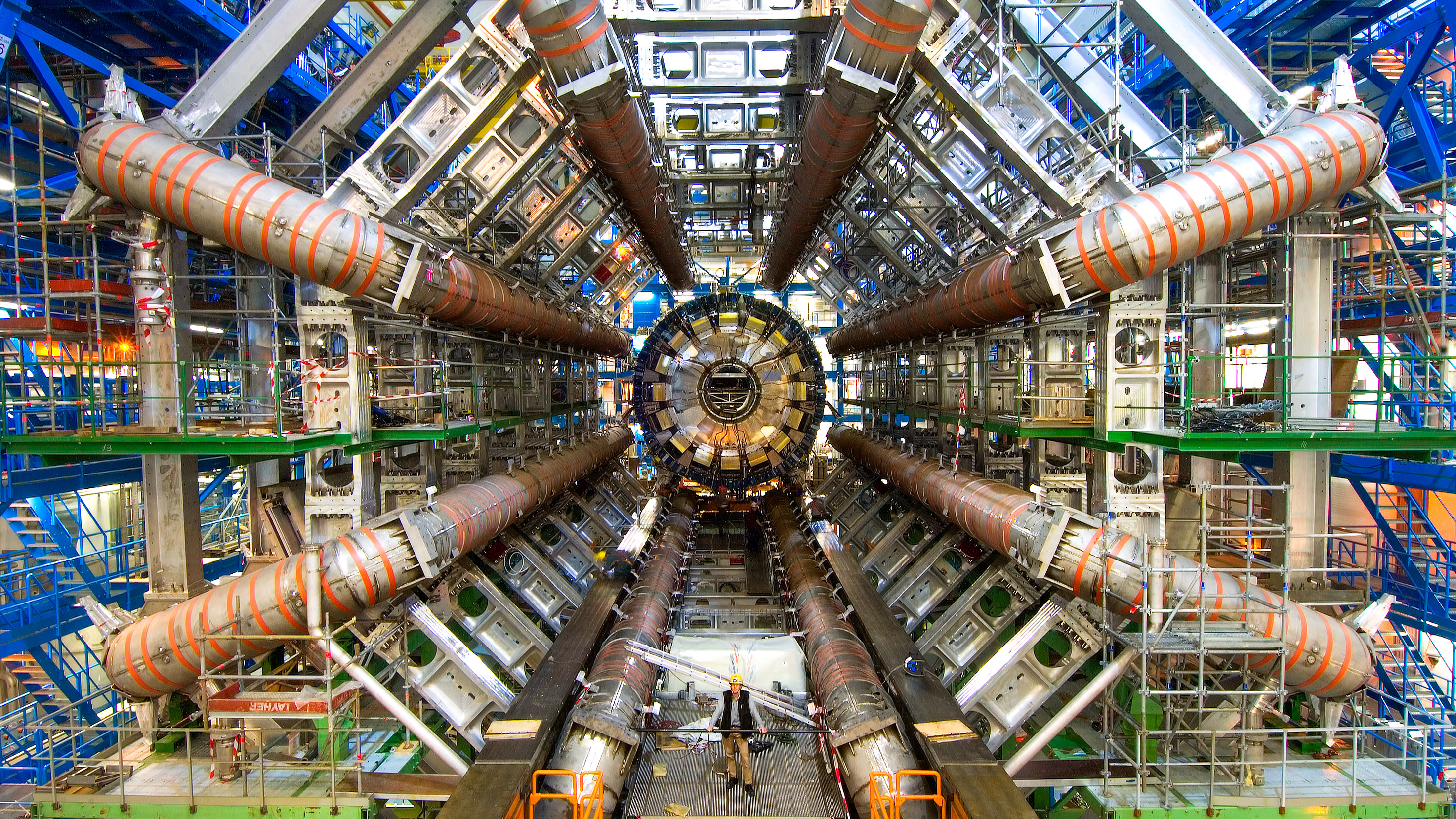
one of two general-purpose detectors at the Large Hadron Collider.
MAXIMILIEN BRICE/CERN
Inside the hunt for new physics at the world’s largest particle collider
In 2012, data from CERN’s Large Hadron Collider (LHC) unearthed a particle called the Higgs boson. The discovery answered a nagging question: where do fundamental particles, such as the ones that make up all the protons and neutrons in our bodies, get their mass?
But now particle physicists have reached an impasse in their quest to discover, produce, and study new particles at colliders. Find out what they’re trying to do about it.
—Dan Garisto
We can still have nice things
A place for comfort, fun and distraction to brighten up your day. (Got any ideas? Drop me a line.)
+ Enjoy this tale of the “joke” sound that accidentally defined 90s rave culture.
+ Take a nostalgic trip through the websites of the early 00s.
+ One for animal lovers: sperm whales have teamed up to support a newborn.
+ Here’s a long overdue answer to a vital question: can the world’s largest mousetrap catch a limousine?
Desalination technology, by the numbers
When I started digging into desalination technology for a new story, I couldn’t help but obsess over the numbers.
I’d known on some level that desalination—pulling salt out of seawater to produce fresh water—was an increasingly important technology, especially in water-stressed regions including the Middle East. But just how much some countries rely on desalination, and how big a business it is, still surprised me.
For more on how this crucial water infrastructure is increasingly vulnerable during the war in Iran, check out my latest story. Here, though, let’s look at the state of desalination technology, by the numbers.
Desalination produces 77% of all fresh water and 99% of drinking water in Qatar.
Globally, we rely on desalination for just 1% of fresh-water withdrawals. But for some countries in the Middle East, and particularly for the Gulf Cooperation Council countries (Bahrain, Qatar, Kuwait, the United Arab Emirates, Saudi Arabia, and Oman), it’s crucial.
Qatar, home to over 3 million people, is one of the most staggering examples, with nearly all its drinking water supplies coming from desalination. But many major cities in the region couldn’t exist without the technology. There are no permanent rivers on the Arabian Peninsula, and supplies of fresh water are incredibly limited, so countries rely on facilities that can take in seawater and pull out the salt and other impurities.
The Middle East is home to just 6% of the world’s population and over 27% of its desalination facilities.
The region has historically been water-scarce, and that trend is only continuing as climate change pushes temperatures higher and changes rainfall patterns.
Of the 17,910 desalination facilities that are operational globally, 4,897 are located in the Middle East, according to a 2026 study in npj Clean Water. The technology supplies not only municipal water used by homes and businesses, but also industries including agriculture, manufacturing, and increasingly data centers.
One massive desalination plant in Saudi Arabia produces over 1 million cubic meters of fresh water per day.
The Ras Al-Khair water and power plant in Eastern Province, Saudi Arabia, is one of a growing number of gigantic plants that output upwards of a million cubic meters of water each day. That amount of water can meet the needs of millions of people in Riyadh City. Producing it takes a lot of power—the attached power plant has a capacity of 2.4 gigawatts.
While this plant is just one of thousands across the region, it’s an example of a growing trend: The average size of a desalination plant is about 10 times what it was 15 years ago, according to data from the International Energy Agency. Communities are increasingly turning to larger plants, which can produce water more efficiently than smaller ones.
Between 2024 and 2028, the Middle East’s desalination capacity could grow by over 40%.
Desalination is only going to be more crucial for life in the Middle East. The region is expected to spend over $25 billion on capital expenses for desalination facilities between 2024 and 2028, according to the 2026 npj Clean Water study. More massive plants are expected to come online in Saudi Arabia, Iraq, and Egypt during that time.
All this growth could consume a lot of electricity. Between growth of the technology generally and the move toward plants that use electricity rather than fossil fuels, desalination could add 190 terawatt-hours of electricity demand globally by 2035, according to IEA data. That’s the equivalent of about 60 million households.
This article is from The Spark, MIT Technology Review’s weekly climate newsletter. To receive it in your inbox every Wednesday, sign up here.