

<![CDATA[New BEST teletraining helps people after TBI name emotions, reduce anxiety and anger, and boost resilience—early trials show promise.]]>
Oral Antiviral Blocks Measles-Like Virus Transmission in Ferrets
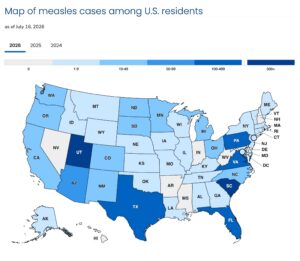
This year, the United States has recorded the highest number of measles cases since 2000, the year that the disease was declared eliminated from the country. As of mid-July, 2,260 measles cases were reported—just 29 cases less than the entire year of 2025. And outbreaks are widespread, with 34 new outbreaks reported in 2026.
The reason for this surge in cases is waning vaccination rates across the country. Given that, the production of new antivirals is an urgent matter.
Now, the new oral antiviral drug candidate GHP-88310 has shown promising results in a ferret model of infection. When administered before or after direct contact or airborne exposure to canine distemper virus (which causes measles-like disease in ferrets) GHP-88310 blocked transmission of the virus and reduced clinical symptoms in ferrets.
“We were very excited to see that GHP-88310 given by mouth completely prevented airborne transmission in our ferret model of measles,” said Carolin Lieber, PhD, a postdoctoral fellow in the Plemper lab at Georgia State University. “This finding is unprecedented for a viral polymerase inhibitor and demonstrates the extraordinary antiviral potency of this drug.”
This research is published in Nature Microbiology in the paper, “Antiviral GHP-88310 blocks contact-mediated and airborne transmission in a ferret model of measles-like disease.”
“Silencing measles outbreaks quickly is essential to reestablish control over the virus,” said Richard Plemper, PhD, professor and director of the Center for Translational Antiviral Research (CTAR) at Georgia State University. “This study follows our recent development of the drug candidate GHP-88310. It demonstrates that the drug is suitable to augment traditional ring vaccination against measles.”
GHP-88310 (described earlier this year in Science Advances) is known to be an orally efficacious broad-spectrum orthoparamyxovirus polymerase inhibitor. But its effect on viral transmission has remained unclear. This study explored whether prophylactic administration of GHP-88310 prevents virus transmission through close contact or through the air. The results demonstrate that GHP-88310 efficiently blocks both forms of viral spread. In addition, the study showed that treatment of infected animals shortened the time period in which infected animals could transmit the virus.
To explore relevant conditions of viral transmission, the researchers established both direct-contact and airborne canine distemper virus transmission models to examine pharmacological suppression of virus spread. The transmission systems allowed them to pair infected and uninfected animals in direct physical contact or shared airspace, each under controlled environmental parameters.
“We designed the study to recapitulate viral spread between people with direct contact, for instance in a household, and between more distant social contacts, for example in classrooms or other indoor settings that bring people into proximity without direct interaction,” said Plemper.
The results showed that pre- and post-exposure prophylactic GHP-88310, given twice daily to air contacts, prevented transmission. The authors note that once-daily prophylactic administration mediated complete survival with all air contacts undergoing seroconversion. In addition, they note that therapeutic treatment of air contacts mitigated clinical signs, and animals survived, whereas all vehicle-treated air contacts succumbed. In addition, therapeutic treatment of infected source animals shortened the contagious phase by five days.
“In addition to this prophylactic benefit, GHP-88310 used therapeutically shortened the duration of disease in our model,” noted Plemper. “If equally applicable to human hosts, it may shorten the severe social and economic burden of prolonged quarantine of patients and further aid outbreak management.” The investigators are now readying GHP-88310 for formal clinical testing.
The post Oral Antiviral Blocks Measles-Like Virus Transmission in Ferrets appeared first on GEN – Genetic Engineering and Biotechnology News.
Gut Bacteria Chemical Linked to Irregular Heart Beat
A chemical called trimethylamine N-oxide (TMAO), which originates from gut bacteria digesting animal products such as red meat, is present at higher levels in the blood of people with an irregular heart beat than the rest of the population.
The researchers found that after they had controlled for various factors like age and comorbidities, people in the top third of TMAO levels had a 70% increased risk of having atrial fibrillation compared with those in the bottom third.
Atrial fibrillation is the most common sustained heart rhythm disorder in the U.S. impacting more than 10 million adults. It occurs because the upper chambers of the heart beat rapidly and irregularly, which can lead to blood clots, stroke and heart failure if left unchecked.
TMAO is formed when trimethylamine produced by gut bacteria is carried to the liver and oxidized. Animal-derived foods such as red and processed meat, eggs, high fat dairy products, and some supplements, are the main dietary precursors for production of TMAO. It has previously been linked to increased risk of cardiovascular disease more generally, but whether high levels of this chemical increased risk of atrial fibrillation was less clear.
In this study, published in the journal of Journal of Clinical Investigation, lead investigator Robert Koeth, MD, PhD, a clinician scientist based at the Cleveland Clinic, and colleagues assessed blood TMAO levels in 5,000 adults who underwent elective heart catheterization for known or suspected cardiovascular disease.
They also studied the effects of TMAO on heart beat regularity in model mice susceptible to atrial fibrillation and tested a potential candidate drug to see if it could reduce levels of TMAO in these animals.
After controlling for age, sex, diabetes, cardiovascular disease, blood pressure, smoking, body mass index, inflammation and kidney function, people with the highest TMAO levels had about 1.7‑times the odds of having atrial fibrillation compared with people with the lowest levels.
In the mouse studies, when TMAO levels in the blood were higher, the animals developed atrial fibrillation sooner and it became a persistent problem more quickly. The researchers also saw changes in how electrical signals moved through parts of the heart that made it easier for abnormal rhythms to start and continue.
The researchers tested iodomethylcholine in the mice, an experimental small molecule drug that blocks the gut microbial enzyme responsible for converting choline into trimethylamine. In response to the drug, TMAO levels fell, the mix of gut bacteria changed, and both the first episodes of atrial fibrillation and its progression were delayed without notable negative effects on the liver.
“A possible pathogenic culprit for the development of atrial myopathy and electromechanical dysfunction is chronic autonomic dysfunction from TMAO inhibition of the M2 muscarinic acetylcholine receptor and increasing sympathetic tone,” write Koeth and team.
The results suggest “TMAO promotes atrial fibrillation in a gut microbiota dependent manner by causing autonomic dysfunction, atrial myopathy, and electromechanical dysfunction,” they conclude.
The post Gut Bacteria Chemical Linked to Irregular Heart Beat appeared first on Inside Precision Medicine.
There are already more U.S. measles cases this year than in all of 2025
The number of measles cases in the U.S. has surpassed the record-breaking tally for all of 2025, with five more months of 2026 still to come.
The U.S. Centers for Disease Control and Prevention logged 2,318 cases of measles as of Thursday, according to an agency update on Friday.
Dual Bispecific Regimen Shows Strong Phase III Signal in Earlier-Line Relapsed Myeloma
Bispecific antibodies are moving rapidly from late-line rescue therapy into earlier phases of multiple myeloma care. The latest signal comes from MonumenTAL-6, a Phase III study evaluating Johnson & Johnson’s TECVAYLI® (teclistamab) plus TALVEY® (talquetamab) in patients with relapsed or refractory multiple myeloma who had received one to four prior lines of therapy, including an anti-CD38 antibody and lenalidomide.
According to topline results released by the company, the dual bispecific regimen reduced the risk of disease progression or death by 89% compared with investigator’s choice standard of care, corresponding to a hazard ratio of 0.11. The combination also reduced the risk of death by 62%, with a hazard ratio of 0.38. A second investigational arm, TALVEY plus pomalidomide, also met the primary endpoint, reducing the risk of progression or death by 73%.
A dual-antigen strategy
The clinical rationale is clear. TECVAYLI targets BCMA, a validated plasma cell antigen, while TALVEY targets GPRC5D, another antigen highly expressed on myeloma cells. Combining the two agents could deepen tumor control by engaging T cells against two distinct myeloma-associated targets, potentially reducing the likelihood that disease escapes through antigen loss or heterogeneous target expression.
This dual-antigen approach is particularly relevant in earlier-line relapse, where patients may still have better marrow reserve, less heavily treated immune systems, and more opportunity to achieve durable disease control. It also reflects a broader shift in myeloma treatment: immunotherapy is no longer being reserved only for patients who have exhausted conventional options.
“These findings add to a growing body of Phase III evidence evaluating the survival outcomes associated with the early use of immunotherapy doublets in the treatment journey,” said Ajay K. Nooka, MD, MPH, director of the Myeloma Program at Emory University School of Medicine.
Topline data, not yet full clinical detail
MonumenTAL-6 compared TECVAYLI plus TALVEY and TALVEY plus pomalidomide with investigator’s choice of elotuzumab, pomalidomide and dexamethasone or pomalidomide, bortezomib and dexamethasone. The Independent Data Monitoring Committee recommended unblinding the study at the first interim analysis, and Johnson & Johnson said full data will be presented at a future medical meeting and submitted to global regulatory authorities.
That timing matters. The reported hazard ratios are striking, particularly for progression-free survival with the TECVAYLI-TALVEY arm. However, clinicians will need the full dataset to assess response depth, duration, subgroup consistency, treatment discontinuation, infection burden, cytopenias, quality-of-life effects, and practical feasibility in community settings.
Safety will be central to interpretation. Both drugs are T-cell redirecting bispecific antibodies and carry risks including cytokine release syndrome, neurologic toxicity including ICANS, infections, cytopenias, and other target-specific adverse events. The company reported that overall safety profiles in MonumenTAL-6 were consistent with the known profiles of the individual monotherapies, but detailed rates from the combination study have not yet been released.
Implications for myeloma sequencing
If confirmed, these data could strengthen the case for earlier use of off-the-shelf bispecific combinations in relapsed myeloma. TECVAYLI is already approved in combination with daratumumab and hyaluronidase in certain patients after at least one prior line of therapy, while TALVEY is currently approved as monotherapy for more heavily pretreated relapsed or refractory disease.
The key question is no longer only whether bispecific antibodies work, but how they should be sequenced and combined alongside CD38 antibodies, proteasome inhibitors, immunomodulatory drugs, CAR T therapies, and emerging antibody-drug conjugates. A BCMA/GPRC5D combination may offer a way to intensify immune pressure without the manufacturing delays associated with autologous cell therapy, but it will also require careful infection prevention, monitoring infrastructure, and patient selection.
For now, MonumenTAL-6 adds an important signal to the changing treatment landscape. Earlier-line myeloma therapy is becoming increasingly immunotherapy-based, and dual-antigen targeting may become one of the strategies used to push responses deeper and make remission more durable.
The post Dual Bispecific Regimen Shows Strong Phase III Signal in Earlier-Line Relapsed Myeloma appeared first on Inside Precision Medicine.
Care.com: Why do toddlers get obsessed? Here’s what’s normal—and what’s not
Kathryn L. Keough explains how toddlers gain confidence and become more independent through repetition.
The post Care.com: Why do toddlers get obsessed? Here’s what’s normal—and what’s not appeared first on Child Mind Institute.
<![CDATA[Placebo and nocebo effects shape psychiatric care—how expectations and framing boost medication benefit and reduce side effects.]]>
International OCD Foundation Responds to OCD Representation in TLC’s “90 Day Fiancé”
Recent conversations about the portrayal of OCD on TLC’s 90 Day Fiancé underscore an important truth: how OCD is portrayed in television, film, and other media matters.
OCD is a serious, often debilitating mental health disorder affecting millions of people. It is characterized by unwanted, intrusive thoughts, images, or urges (obsessions) and repetitive behaviors or mental acts (compulsions) performed in an attempt to reduce distress. While OCD can look different from person to person, it is highly treatable. Yet today, nearly 95% of people with OCD are not receiving the most effective treatment. Misunderstanding OCD makes it harder for people to recognize their symptoms, receive an accurate diagnosis, and get the care they need to reclaim their lives.
Each episode of 90 Day Fiancé is watched by more than one million viewers. With that kind of reach comes an extraordinary opportunity to shape public understanding of mental health for the better. Accurate portrayals of OCD have the power to transform lives. They replace myths with understanding, reduce stigma, help people recognize the signs of OCD sooner, inspire individuals to seek effective treatment, and let those living with OCD know they are not alone—and that recovery is possible.
The entertainment industry has a responsibility to get it right, and doing so requires thoughtful decisions at every stage of the creative process. The International OCD Foundation encourages TLC to engage clinical experts and people with lived experience to better inform their editorial decisions. We stand ready to serve as a resource for future portrayals of OCD and related disorders.
If you are creating content that includes OCD or related disorders, we encourage you to connect with us at media@iocdf.org. Together, we can improve public understanding of OCD, reduce stigma, and help more people find the treatment that can change their lives.
The post International OCD Foundation Responds to OCD Representation in TLC’s “90 Day Fiancé” appeared first on International OCD Foundation.
<![CDATA[Don’t miss out on these CME articles! Test your knowledge here.]]>
Digital platform powers Scotland’s mental health hub network
A digital care platform developed by Dr Julian Nesbitt is supporting Scotland’s first national network of walk-in mental health hubs.