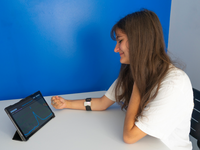
<strong>Background:</strong> Lack of functionality is one factor that contributes to prosthetic rejection rates. Electromyographic upper limb prostheses are controlled through muscle contractions in the user’s residual limb. The incorporation of multigesture controls into a novel, in-house developed upper limb prosthesis requires users to differentiate between the strengths of muscle contractions to trigger programmed gestures. Little research exists on the limitations of expanding device capabilities. This expansion may lead to a decline in accuracy and perceived usability or an increase in training time and cognitive workload. <strong>Objective:</strong> This study aimed to determine the feasibility of implementing multiple gestures when learning electromyographic controls during a single training session. <strong>Methods:</strong> Participants with full upper extremity control were fitted with a Flex Controller, a surface electromyography device that measures muscle contraction. Contractions were visualized as peaks and calibrated through an adjustable scale on a tablet. A training app was developed in-house to test novice users on an electromyography control system. Users interacted with 1, 3, or 5 zones on the screen. Each horizontal zone represented a threshold required to trigger a distinct gesture on the prosthesis. The cohorts were labeled A1 (n=9), A2 (n=10), A3 (n=9), and B1 (n=26). Every participant completed 3 trials per arm, and each trial consisted of 15 randomized cues. Each cue was represented by a green color change, with 1 point earned after a successful peak. Collected outcomes included performance, the System Usability Scale, and the National Aeronautics and Space Administration Task Load Index. <strong>Results:</strong> Scores decreased significantly as zones increased (Kruskal-Wallis H<sub>3</sub>=24.9, <i>P</i><.001). The mean scores were 15.0 (SD 0.0) for 1 zone, 9.1 (SD 1.1) for 3 zones, and 5.5 (SD 1.1) for 5 zones. Perceived usability, measured by System Usability Scale, showed modest omnibus difference across cohorts (Kruskal-Wallis H<sub>3</sub>=5.22, <i>P</i>=.16); however, a pairwise comparison showed the 5-gesture cohort rated usability lower than the progressive cohort (2-tailed Welch t<sub>11</sub>=–2.19, <i>P</i>=.05). The 5-gesture cohort rated the system lowest (mean 63.3, SD 16.2). Cognitive workload, assessed through the National Aeronautics and Space Administration Task Load Index, increased with the number of gestures. The performance subscale showed a significant omnibus difference across cohorts (Kruskal-Wallis H<sub>3</sub>=21.4, <i>P</i><.001). Mean performance subscale scores were 84.4 (SD 14.7) for the single-gesture condition, 30.6 (SD 21.7) for the 5-gesture condition, and 44.2 (SD 21.2) for the progressive cohort, reflecting increasing perceived difficulty with more gestures. The sample size for quantitative analysis was 54. <strong>Conclusions:</strong> These findings support the implementation of progressive training for 3 gestures. Usability perceptions were the highest among the more complicated progressive cohort, which is likely related to perceived improvement. Progressively learning 3 gestures enables a balance between device capability, user intention, perceived usability, and cognitive workload.
Background: The Technology Adoption Model (TAM) offers a potential framework for elucidating the relationships between data privacy or security concerns and behavioral intention, perceived usefulness (PU), and perceived ease of use (PEOU) of mobile health (mHealth) apps, particularly for patients’ self-care management. In Saudi Arabia, limited information is available on these pertinent research areas despite the government’s relentless efforts to bolster the use of mHealth apps. Objective: This study applies the TAM and the psychosociocultural framework to explore the influence of patients’ data privacy and security concerns on the PU, PEOU, and behavioral intention to use mHealth apps for self-care management in Saudi Arabia. Methods: A cross-sectional study was conducted by recruiting patients using mHealth apps for self-care from various provinces in Saudi Arabia. Research instruments were developed based on the components of 2 theories: the psychosociocultural framework and TAM, which were then piloted, validated, and distributed to participants via Google Forms. Linear regression models were performed to test the hypothesized relationships. Results: Overall, 567 patients using mHealth apps participated in the study. Slightly more than one-third (217/567, 38.2%; range 35.6%‐41.4%) of the participants expressed a high level of concern regarding data privacy, confidentiality, and security, with significant predictors being female gender, higher educational qualifications, and younger age groups (<46 years). About 18% to 25% of the variance in PU, PEOU, and behavioral intention to use mHealth apps was explained by the tested factors. Patients were more likely to have higher PU following a unit decrease in data confidentiality (=.31; =.01) and security concerns (=.47; =.01). The PEOU of mHealth apps increased as users demonstrated less concern regarding data privacy (=.18; =.001), confidentiality (=.24; <.001), and security (=.43; =.02). Likewise, behavioral intention to use mHealth apps also increased significantly following a reduction in respondents’ concerns toward data privacy (=.18; =.02), confidentiality (=.24; =.03), and security issues (=.36; =.01). Conclusions: Specific demographic factors and concerns regarding data security and privacy influence patients’ PU, PEOU, and behavioral intention to use mHealth apps for self-care management. Targeting the age-, education-, and gender-based differences regarding the usage of mHealth apps. Health care providers and policymakers may consider age-, education-, and gender-based differences when developing strategies to improve the adoption of mHealth apps among the Saudi patient population.
Background: Somatic symptom disorder (SSD) is a mental disorder marked by persistent somatic symptoms and maladaptive health-related thoughts, feelings, or behaviors. Cognitive behavioral therapy has been shown to be effective in treating SSD, reducing patients’ somatic symptoms, depressive symptoms, and anxiety symptoms. However, challenges remain—including limited access to treatment. Videoconference-based cognitive behavioral therapy (vCBT) has emerged as a promising approach, offering flexible and tailored treatment while addressing the shortage of medical resources and potentially reducing patient dropout. Objective: This study examined the feasibility of vCBT for patients with SSD and explored secondary outcomes related to the physical component of health-related quality of life (HRQOL) as assessed using the Medical Outcomes Study 36-Item Short Form Health Survey (SF-36) physical component summary (PCS) score and other exploratory clinical outcomes. Methods: This single-arm pilot trial evaluated feasibility as the primary outcome assessed via recruitment rate, retention rate, session completion rate, and safety. Ten participants with SSD were enrolled, and all received 6 weekly 50-minute vCBT sessions. Secondary outcomes included physical HRQOL (SF-36 PCS) as the key secondary outcome, as well as mental HRQOL, depressive symptoms, somatic symptom severity, anxiety symptoms, health anxiety, pain, insomnia, and generic HRQOL. These outcomes were measured at the preintervention (week 0) and postintervention (week 6) time points and 1-month follow-up (week 10) and were analyzed using 2-sided paired tests. Results: All feasibility criteria were met, with a recruitment rate of 83.3% (10/12), a retention rate of 100% (10/10), a session completion rate of 100% (10/10), and no adverse events reported. The SF-36 PCS score improved by 4.99 points at the postintervention time point, representing a large within-group effect (Cohen =0.99, 95% CI 0.21‐1.74). Medium to large improvements were also observed in mental HRQOL, depressive symptoms, anxiety symptoms, health anxiety, pain, insomnia, and generic HRQOL, and most of these improvements were observed at the 1-month follow-up. Conclusions: Our findings indicate that vCBT is a feasible and safe approach for SSD, with findings suggesting acceptability and preliminary evidence of effectiveness. Trial Registration: University Hospital Medical Information Network Clinical Trials Registry UMIN000046138; https://center6.umin.ac.jp/cgi-open-bin/ctr/ctr_view.cgi?recptno=R000052664
<img src="https://jmir-production.s3.us-east-2.amazonaws.com/thumbs/983b4d444e460efb73d39ec554707350" />
<strong>Background:</strong> Simple behavioral and cognitive actions can reduce symptoms of anxiety and depression. However, there is limited research investigating whether restricting those same actions increases symptoms and whether resuming those actions reduces symptoms. <strong>Objective:</strong> The primary aim was to examine the impact of restricting, then resuming (the “restriction-resumption protocol”), 5 groups of actions called the Things You Do (TYD), on symptoms of depression and anxiety. Participant satisfaction with life and perceptions of changes in behavior and mental health were also evaluated. <strong>Methods:</strong> In total, 70 adults were randomly allocated to an intervention group (IG) or a control group (CG). IG participants completed a 3-phase protocol over 8 weeks: a 2-week baseline period (phase A), 2 weeks of restricted TYD actions (phase B), and a 4-week resumption phase (phase C). CG participants were instructed to maintain their usual activities and routines. Primary outcomes included symptoms of depression (Patient Health Questionnaire–9), anxiety (Generalized Anxiety Disorder–7), and frequency of TYD actions. Secondary outcomes included satisfaction with life and perceived changes in mental well-being. Outcomes were measured weekly throughout the 8-week trial and again after the trial at week 9. <strong>Results:</strong> Scores on outcome measures did not differ between groups during phase A and after the trial. However, by the end of phase B, IG participants showed significantly increased symptoms of depression and anxiety compared to CG participants (<i>P</i>s<.001). Large within-group effect sizes were observed on the Patient Health Questionnaire–9 and Generalized Anxiety Disorder–7 from baseline to the end of phase B (Cohen <i>d</i>>1.8) and from phase B to after the trial (Cohen <i>d</i>>1.9). Changes in satisfaction with life and evaluations of mental health corresponded with symptom changes. <strong>Conclusions:</strong> These findings demonstrate a relationship between the frequency of performing specific actions and symptoms of depression and anxiety. The restriction-resumption protocol has the potential to increase our understanding of causal mechanisms underlying common mental disorders and may lead to the development of new models of prevention and treatment. <strong>Trial Registration:</strong> Australian and New Zealand Clinical Trials Registry ACTRN12624001491550; https://www.anzctr.org.au/Trial/Registration/TrialReview.aspx?id=388828&isReview=true
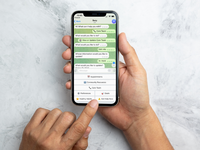
<strong>Background:</strong> Substance use disorder (SUD) remains a major public health crisis in the United States, with significant challenges in treatment access, retention, and workforce capacity. SUD care teams, including addiction medicine physicians and peer recovery coaches (PRCs), support patients receiving SUD treatment but face heavy workloads and burnout. Artificial intelligence (AI) innovations, particularly large language model (LLM)–based chatbots, may extend PRC support and provide patients with on-demand recovery support between clinic visits and PRC contacts. However, evidence on their development, feasibility, acceptability, and usability in addiction services remains limited. <strong>Objective:</strong> This study describes the development, feasibility, acceptability, and usability of an AI-powered health coaching chatbot (Suzy) designed to support patients in SUD recovery. <strong>Methods:</strong> A total of 2 clinicians, 5 researchers, and 2 technology developers led a small, multiphase pilot study. In the formative phase, they conducted focus groups and qualitative in-depth interviews with 12 health care professionals and 8 patients with substance use histories to specify chatbot functions and develop a rule-based chatbot. In phase 2, they conducted usability testing of the rule-based chatbot with 8 patients who reported substance use and completed standardized tasks, surveys, and qualitative interviews. Measures included the System Usability Scale (SUS), Net Promoter Score (NPS), and Single Ease of Use Question (SEQ). In phase 3, they developed an LLM-based chatbot co-designed and fine-tuned with PRCs and other SUD experts. <strong>Results:</strong> Rule-based chatbot functions included craving management, appointment reminders, resource referrals, care team contacts, and goal setting. Usability task testing supported feasibility. In this small pilot sample, quantitative and qualitative feedback indicated acceptability and usability, with an average SUS score of 93 (benchmark 68), an NPS of 63 (benchmark 35), and a mean SEQ score of 6.5/7. Patients valued Suzy’s approachable, nonjudgmental language and features that promoted accountability, self-monitoring, and 24/7 availability, while emphasizing that chatbots should supplement but not replace human support. The LLM-based chatbot development emphasized information accuracy, safety escalation protocols to mitigate risks of inappropriate chatbot responses, human-in-the-loop features, and expanded conversational flexibility and personal tailoring. <strong>Conclusions:</strong> In this pilot study, a rule-based chatbot designed to support SUD care demonstrated feasibility, usability, and acceptability. LLM-based chatbot development required more robust safety and emergency reporting features, while offering more patient-responsive conversational functions. By providing on-demand coaching, referrals, and reminders, Suzy may extend the reach of care teams, alleviate provider burden, and enhance patient engagement. Additional work is needed to understand how to best integrate Suzy into patients’ recovery journeys to ensure human support remains accessible and prioritized. LLM evaluation was based on expert testing and safety review. Clinical effectiveness, including the impact on substance use, was not evaluated. Next steps include evaluating the LLM chatbot in real-world settings with larger samples and assessing its efficacy in reducing substance use.
Background: Common mental health disorders are highly prevalent among refugees. There is an urgent need to address the mental health burden in this population. Objective: This study tested the efficacy of an individually supported self-help stress-management intervention developed by the World Health Organization—Doing What Matters in Times of Stress (DWM)—in reducing psychological distress and improving functioning among refugees in Indonesia, a major transit country in the Asia-Pacific region. Methods: A single-blind randomized controlled trial with 303 Farsi-speaking refugees was conducted between June 2024 and June 2025. Participants with moderate to high psychological distress (Kessler Psychological Distress Scale [K10] score≥20) were randomly allocated to the facilitator-guided individual DWM condition (n=202) or a repeated assessment control condition (n=101). The primary outcome was psychological distress (K10 score) at the posttreatment assessment. Secondary outcomes were posttraumatic stress disorder symptoms, functional impairment, social functioning, and personally identified problems. Results: Intent-to-treat analysis indicated that participants in the DWM condition showed greater reductions in K10 scores than those in the repeated assessment control condition (posttreatment: =−.563, SE=0.124; <.001; Cohen =0.56; 1-month follow-up: =−.447, SE=0.140; =.002; Cohen =0.45). Similarly, those participants in the DWM condition reported greater improvements in posttraumatic stress disorder symptoms, well-being, social functioning, functional impairment, and personally identified psychological problems. No serious adverse events were reported. Conclusions: The findings provide the first evidence for the effectiveness of DWM in reducing psychological distress and improving overall functioning among urban refugees living in a transit setting. Individually supported self-help interventions such as DWM mayoffer an effective, feasible, and scalable approach to improving mental health for refugees. Trial Registration: ANZCTR ACTRN12624000609550; https://www.anzctr.org.au/Trial/Registration/TrialReview.aspx?id=387637&isReview=true
Lilly created Lilly TuneLab to accelerate biotech innovation by enabling participating companies to access models trained on Lilly’s proprietary research data. Through this agreement, biotech companies that use CDD Vault will be able to utilize select Lilly predictive models within their natural scientific workflows, according to Barry A. Bunin, Collaborative Drug Discovery (CDD) president and CEO.
“By integrating TuneLab directly into CDD Vault, we are advancing CDD’s core vision to enable collaboration across drug discovery teams and organizations. We believe that solving the most complex challenges in drug discovery will depend on innovative collaboration models that provide broad access to research data and empower chemists and biologists to make informed, data-driven decisions,” said Bunin. “TuneLab’s ADMET models will fit in our secure CDD Vault software environment in natural workflows for experimental and computational scientists and with our growing CDD Vault ecosystem of biopharmaceutical companies.”
This agreement paves the way for the planned integration of Lilly TuneLab in both the core and AI modules within CDD Vault for biotech companies that opt into the program. A company spokesperson explained that the agreement builds on CDD’s founding vision from 2004 to demonstrate the economics of efficiency of web-based collaboration.
“TuneLab’s models are synergistic with our innovations such as Zero Click Models, Generative Bioisosteres, as well as Ultrafast Deep Learning similarity to SureChEMBL for novelty and Enamine libraries for convenient SAR-by-catalog,” noted CDD research informatics senior scientist Peter Gedeck, PhD.
Senate and House Democrats introducedresolutions Wednesday to overturn a Medicare pilot that uses artificial intelligence to approve or deny care. The technology experiment has led to allegations of delayed care for seniors in at least one of the six states it is currently being implemented.
The newest effort to force a vote to stop the experiment follows a Government Accountability Office ruling from last week. The GAO determined that the Wasteful and Inappropriate Service Reduction program (WISeR) is subject to congressional approval and should have been submitted to Congress before going into effect in January.
In January 2012, Kodak, a name synonymous with analog photography, filed for Chapter 11 bankruptcy protection, an event caused in part by the company’s inability to anticipate and adapt to the digital revolution.
A similar fate might well have befallen its Japanese competitor, Fujifilm. But last year, the Japanese giant recorded record sales and record profits, priding itself on its ability to innovate and evolve.
Part of that evolution and commitment to growth was on full display this week in Madison, Wisconsin, as Fujifilm executives and state officials officially opened the new facility of FUJIFILM Cellular Dynamics, Inc. (FCDI), which houses nearly 200 employees with a view to developing tomorrow’s life-saving therapies.
“The collaboration between Wisconsin and Japan has been fantastic,” said Tomoyuki (Tom) Hasegawa, CEO of FCDI for the past four years. “We are making a global impact together.”
The work here is “incredible,” Hasegawa continued. “All our employees are excited!”
Among the dignitaries speaking prior to the official ribbon-cutting ceremony were Wisconsin Governor Tony Evers, a 74-year-old Democrat. “Cleaning out a drawer the other day,” Evers joked, “I found a box of Fujifilm. I’m not sure what to do with it!”
Having toured Fujifilm’s Japan headquarters in 2019, Evers called the opening “a full-circle moment” and “a true Wisconsin success story.” The state’s expertise in stem cell biology began more than 20 years ago with the pioneering research of James Thompson, PhD, who co-founded Cellular Dynamics in 2004. The company was acquired by Fujifilm in 2015.
The new facility will quadruple FCDI’s cell therapy research and manufacturing, which Evers said, “may hold the key to Parkinson’s disease, Alzheimer’s, cancers, autoimmune and liver disease and other serious health conditions.”
Also speaking was Toshihisa “Toshi” Iida, a 30-year Fujifilm veteran who currently serves as corporate vice president and general manager of Fujifilm’s Life Sciences Strategy Headquarters and Bio CDMO Division.
Fujifilm was founded in 1934, Iida said, with a continuous push to combine technology and innovation. “Our journey has not always been easy,” he said. In 2000, the company’s core film business accounted for 70 percent of the firm’s profits. The business did not just decline; “It was a collapse,” he said.
“We overcame this challenge. I am a living witness to this transformation story.”
While Fujifilm’s business has evolved and diversified, the company’s purpose pays tribute to its photographic roots: “Giving our world more smiles.” The company’s interest in human health dates back to its early years. Just two years after its founding, Fujifilm produced the first X-ray film. “Our technology must serve people and improve lives,” Iida said.
Over the past 15 years, Fujifilm has invested some $10 billion in health and biologics. The investment in Madison is just a part of that bigger program. “This site is not just a building, but a platform to support innovation,” Iida said. “Japan is the birthplace of iPS cells. This has the potential to change medicine.”
Field of dreams
Hasegawa has been with Fujifilm for his entire professional career of 28 years, joining the company fresh from completing a law degree at the University of Tokyo. The one thing he knew was that he did not want to pursue a law career.
It was the late 1990s and the dawn of the digital camera revolution. “The company’s transformation story sounded very interesting to me,” Hasegawa told me in an interview in the exhibit hall at the American Society of Gene and Cell Therapy in Boston. “Especially right after Windows 95 came out, those were very exciting days expanding the digital capability of the company globally.”
FUJIFILM Cellular Dynamics CEO Tom Hasegawa at his company’s booth at the American Society of Gene and Cell Therapy 2026 in Boston. [K. Davies]
Before long, the company set its sights on the U.S. market, and Hasegawa moved to New York to lead that effort, before returning to Tokyo in 2011 and assuming direction of the global marketing team. Three years later, he moved into business development and was put in charge of corporate planning and cultural affairs.
Hasegawa recalls reading about the induced pluripotent stem cells (iPSCs) by accident. In 2012, the Japanese scientist Shinya Yamanaka, PhD, famously won the Nobel Prize in Physiology or Medicine for the identification of factors crucial in the reprogramming of mature cells into pluripotent stem cells.
Following the acquisition of Cellular Dynamics, Fujifilm “asked me to be in charge” of this fledgling program in regenerative medicine, Hasegawa said. “This is a very well-known story in Japan because [Yamanaka] won the Nobel Prize and it is a very interesting technique. He’s a superstar! That’s why Fujifilm believes that the cell and gene therapy [CGT] field could be our next field of dreams.”
Thompson built a foundation in iPS cells in Cellular Dynamics and “ introduced lots of new [cell types] derived from iPS cells. Cellular Dynamics became a global leader for iPS-related products,” Hasegawa said. “Fujifilm’s concept was very interesting—we wanted to explore the synergy of imaging, analysis, and digital technologies to support the pharma industry. That’s what happened in 2015.”
Hasegawa says he has “a big dream” for the company’s growth. “One way is to deliver our iPS cell products, which include cardiomyocyte cells and neuron cells. We have 40 types of cells for toxicity and efficacy testing for pharma companies to do their R&D. We are a leading supplier of these iPS cells, which have high quality and also the same donor cell for multiple neurons to enable isogenic research.”
At one time, Hasegawa concedes, “we wanted to be a king of pharma, but we switched our strategy.” The company invested heavily in its services to support drug discovery through commercialization, including service lines across contract development and manufacturing (CDMO) and small-molecule drug development. In 2017, Fujifilm acquired reagent company Wako Pure Chemical, which has an HQ in Japan and a subsidiary in Richmond, VA.
Another strand to Fujifilm’s bow is as a provider of materials including reagent kits. “As you remember [in cinema], film is not necessarily the hero—cameras and cameramen are the heroes,” Hasegawa said. “We support [R&D], so that kind of mindset is very beneficial.”
Another thriving business is cell therapy utilizing iPSC technology. Hasegawa points to another subsidiary that provides cell therapy CDMO services in California. “We have an end-to-end service for cell therapy,” he said. In the cell therapy space, he is not looking for additional acquisitions, “because we shifted our strategy.” But for the supporting industry, “if there are good opportunities, we can of course have a discussion about it.”
Fujifilm says its $200-million investment in the new FCDI facility will “help secure America’s supply chain for biotech and regenerative medicine.” The new facility will feature state-of-the-art resources, including a Center of Excellence for genome editing and laboratories for cell culture manufacturing and process development. The space will quadruple capacity for R&D and manufacturing and enhance the company’s capabilities in drug discovery support and process development.
The company believes the investment will help Fujifilm keep pace with the rapidly expanding cell therapy market—and put a smile on the faces of patients and company executives alike.
Researchers from Rutgers University have shown that even limited exposure to modern medical care is associated with rapid changes in gut microbial diversity among remote Indigenous communities in the Amazon. The research, published in Cell Reports, studied the effects on Indigenous people in Venezuela where subsistence lifestyles have remained largely unchanged until the introduction of a World Health Organization–supported medical program for the treatment of the parasitic infectious disease onchocerciasis, also known as river blindness. After receiving medical care, the researchers discovered that gut microbial communities in the people began to shift toward patterns more commonly seen in industrialized populations after only a few medical visits and included measurable declines in microbial diversity.
“The study gives us a better idea of how sensitive human gut microbes are,” said senior author Maria G. Dominguez-Bello, PhD, a professor of microbiome and health at Rutgers. “It opens the door for future research on how we can restore our microbiota after using medicines like antibiotics, which can deplete organisms in our gut.”
Prior research has established that urbanization-related changes in diet, lifestyle, and environment can alter the gut microbiome, but those factors are often intertwined. In this research, the unique setting and population allowed the Rutgers team to isolate the effects of repeated medical exposure in populations with minimal prior contact with modern healthcare.
“Many factors contribute to reduced microbial diversity associated with Westernization, complicating efforts to identify early drivers of microbiome change,” the researchers noted, adding that the Amazonian villages provided a setting where “low-exposure villages show higher baseline gut microbiota diversity than the medium-exposure village, and microbiota diversity declines over time in association with repeated exposure, particularly in children.”
The study followed 335 participants across multiple villages, collecting fecal samples and body-site swabs before and during repeated medical visits between October 2015 and February 2016. The villages were categorized by prior exposure to outsiders and medicine, allowing comparisons between low-exposure communities and a medium-exposure village that had a longer history of modern medical services. Researchers collected samples from the gut, mouth, nose, and skin in conjunction with the WHO’s quarterly visits that delivered antiparasitic treatments and basic care.
“This study leverages a rare longitudinal dataset from remote Amazonian Indigenous communities to examine how the human microbiome shifts during the earliest stages of contact with external institutions, prior to major dietary or lifestyle urbanization,” the researchers wrote.
In the gut microbiome, data from the collected samples showed a decline in taxa commonly associated with fiber metabolism and an increased abundance of bacterial groups more commonly seen in industrialized populations. Functional gene profiles also shifted, with increased representation of genes linked to simple carbohydrate metabolism and antimicrobial resistance, and reduced representation of genes involved in fiber fermentation and other metabolic processes.
The study also found that microbial changes were most pronounced in children, pointing toward a heightened sensitivity of developing microbiomes to repeated medical exposure. In addition to gut changes, oral, nasal, and skin microbiomes also shifted: oral microbial diversity declined; nasal diversity increased after initial visits; and skin communities showed reductions in diversity and shifts in composition.
Previous research cited by the authors has linked industrialized lifestyles with reduced microbial diversity, altered microbial networks, and increased prevalence of genes associated with antimicrobial resistance. However, the current study provides a unique glimpse at the effects of the earliest stages of treatment by modern medicine before shifts in diet or infrastructure occur.
This new data highlights the need to find the balance between essential medical interventions and preservation of microbial diversity. While treatments such as those for river blindness remain critical for reducing infectious disease burden, the researchers suggest that repeated exposure to medical care may coincide with microbial restructuring that reduces diversity and alters functional capacity.
“Understanding and navigating this balance is essential not only for microbiome science but also for ethical, culturally informed approaches that respect both biological and social dimensions of wellbeing,” the researchers noted.
Future research will examine ways to protect microbial diversity during necessary medical interventions and expanding longitudinal studies that assess resilience and recovery of the microbiome after repeated exposure to medicines.