

Background: Digital remote monitoring technologies, including smartphones and wearables, offer promising avenues for early detection of psychosis relapse. However, selecting devices that are acceptable to participants and produce high-quality data remains challenging. Objective: The aim of this nested pilot study was to assess the acceptability and data quality of 3 commercially available wearable devices in people with psychosis recruited to the CONNECT cohort study. Methods: Participants recruited to the CONNECT study before July 31, 2024, were included in the pilot study and selected 1 of 3 wearable devices: a Fitbit Charge 5, Samsung Galaxy Watch 5, or Apple Watch SE. Baseline demographics were compared between device groups. Acceptability of devices to participants was assessed through a Wearable Device Satisfaction Questionnaire after 3 months of use, with the proportion of positive responses to each question calculated and compared. Data completeness was also assessed by calculating the number (and percentage) of valid days of step count, heart rate, and sleep data, and comparing between groups. Data quality was assessed through summarizing the amount of troubleshooting required, additional metrics available from the wearables, and continuity of data completeness by calculating the proportion of participants with at least 3 days of heart rate data per week for the first 20 weeks of follow-up. Predefined criteria were used to determine the next steps for the wider CONNECT study: if one device was superior, this would be selected; if none were found to be superior and the Fitbit was found to be noninferior, then Fitbit would be retained. Results: Of the first 107 participants recruited to CONNECT, 105 were included in the pilot study evaluation. The Samsung Galaxy Watch was selected most frequently by participants (46/105, 43.8%), followed by the Apple Watch (27/105, 25.7%), and Fitbit Charge (23/105, 21.9%). Differences in participant demographics were observed across device groups. Self-reported acceptability after use did not differ substantially between devices. However, in terms of data completeness, the median proportion of valid heart rate data days was significantly lower for Samsung Galaxy (median 31.2%, IQR 8.5%-46.0%) compared to Fitbit (median 80.1%, IQR 26.7%-95.0%; =.003) and Apple Watch (median 49.3%, IQR 21.5%-86.0%; =.02). There was no significant difference between Fitbit and Apple Watch. Similar patterns were observed for step count and sleep data. The Samsung Galaxy Watch required more frequent troubleshooting for data flow issues and lacked additional physiological metrics, available from the other devices. Conclusions: Due to comparatively lower data quality and technical performance, the Samsung Galaxy Watch was discontinued for use in the subsequent phase of the CONNECT study. The study highlights the importance of incorporating nested evaluations of devices in long-term research.
<img src="https://jmir-production.s3.us-east-2.amazonaws.com/thumbs/15a98cce4ebe0d50a261a2b9f900f482" />
Loneliness From the Digital Mental Health Practitioners’ Perspective: Thematic Analysis of Semistructured Interviews
Background: Loneliness is a prevalent concern across the United Kingdom. While validated scales exist to quantify the severity of loneliness across populations, there remains a gap in understanding how loneliness manifests and is addressed within therapeutic practice. Given the associated stigma surrounding loneliness, practitioner perspectives offer crucial insights into how clients express loneliness within digital therapeutic environments. These insights can inform more nuanced conceptualizations of loneliness. Objective: This study aimed to gather the practitioners’ perspectives on loneliness within a digital therapeutic context and were defined as follows: (1) understand how practitioners identify loneliness concerns, (2) identify how loneliness is elicited in digital mental health interventions, and (3) identify co-occurring themes (such as grief, shame, and social disconnection) that signal loneliness concerns in client communications within digital therapeutic environments. Methods: Semistructured interviews were conducted with 9 practitioners. Participants included specialists in grief counseling, lesbian, gay, bisexual, transgender, and queer or questioning plus support; and digital mental health therapists. Interview transcripts were analyzed using thematic analysis, using an inductive, data-driven approach to allow themes to emerge from participant accounts rather than fitting data to preexisting theoretical frameworks. Results: The following four themes were identified: (1) Conceptualizing Loneliness: practitioners distinguished between social contact and meaningful connection; (2) Contextual Causes: loneliness emerged from life transitions, stigmatized identities, and resource reduction (eg, youth services closures and social support); (3) Expressions and Language: clients rarely expressed loneliness directly, instead using proxy terms, with disclosure patterns varying by age; and (4) Mental Health Co-occurrence: severe mental health conditions created bidirectional cycles of loneliness, exacerbated by symptoms of mental health difficulties. Practitioners reported that many clients experienced loneliness concerns, yet direct disclosure was absent across all participants’ experiences. Conclusions: Practitioners identified multiple stigmatizing experiences as contextual drivers of loneliness, particularly demonstrating how loneliness emerges not only from individual experiences but from broader patterns of social exclusion and marginalization. For therapeutic practice, these insights suggest that practitioners can use awareness of stigmatizing experiences as potential indicators when assessing loneliness risk. The presence of contextual patterns was consistent across practitioners’ experiences, providing a foundation for developing more targeted interventions to address both the emotional experience of loneliness and the underlying social drivers.
<img src="https://jmir-production.s3.us-east-2.amazonaws.com/thumbs/49f9659143e30c484fef04019fa3e953" />
Biotech and Biomed Engineering Grad and Certificate Programs to Debut at Auburn
Biomedical engineering graduate and certificate programs are coming to Auburn University. Led by the department of chemical engineering and the Biomedical Engineering Advisory Committee, the state‑approved programs will serve the entire college of engineering and the broader Auburn University community, according to university officials.
These offerings include a doctoral degree, thesis and non‑thesis master’s degrees, and two graduate certificates, all drawing on the university’s expertise in advanced biomedical technologies and biotechnology.
“The biotechnology and biomanufacturing sectors within the state of Alabama are growing quickly, and they need engineers who are prepared to contribute on day one,” said Mario Eden, PhD, dean of engineering. “These offerings position Auburn as a conduit for that workforce, producing graduates with the technical depth and hands‑on experience industry partners are asking for and enhancing the college’s capacity to support the state’s growing innovation economy.”
Biomedical engineering blends principles of engineering, biology, physics, and medicine to advance human health. It focuses on developing technologies and systems that improve how diseases and injuries are understood, diagnosed, monitored, and treated. This interdisciplinary field includes:
- Biomanufacturing, tissue engineering, and regenerative medicine
- Drug delivery and pharmaceutical engineering
- Computational modeling, data science, and artificial intelligence
- Biomechanics, biomaterials, and rehabilitation engineering
- Medical imaging, medical devices, wearable technologies, biosensors, and diagnostics
Auburn’s biomedical engineering lineup will involve more than 20 faculty members across the college.
“This effort gives us a clear framework for graduate study in a field where our faculty have already built real momentum,” said Selen Cremaschi, PhD, chair of the department of chemical engineering. “It brings that activity into a coordinated structure that supports rigorous graduate experiences and reflects our identity as a research driven college.
The biomedical engineering certificate program is expected to launch in Fall 2026 with a full program launch scheduled for Fall 2027.
The post Biotech and Biomed Engineering Grad and Certificate Programs to Debut at Auburn appeared first on GEN – Genetic Engineering and Biotechnology News.
AI Reveals Hidden Brain Lesions in Multiple Sclerosis MRI
It has long been known that brain gray matter plays a key role in multiple sclerosis (MS) disease progression and cognitive impairment, but because magnetic resonance imaging (MRI) has only been able to detect lesions in white matter, neither clinicians nor researchers have had a way to detect or monitor gray matter (cortical) lesions. And while many new drugs developed in the past decade can slow disease progression significantly, they primarily work on reducing white matter lesions.
A University at Buffalo (UB)-led team now reports that it has found a way to use artificial intelligence to reveal these otherwise invisible cortical lesions by reviewing existing MRI scans. The researchers say the significance of finally being able to see what has been known as one of the most important indicators in MS disease progression cannot be overstated.
“Detecting previously invisible cortical lesions on conventional legacy MRI scans has major implications for MS research and clinical care,” commented Robert Zivadinov, MD, PhD, SUNY distinguished professor in the Department of Neurology and director of the Buffalo Neuroimaging Analysis Center (BNAC) in the Jacobs School of Medicine and Biomedical Sciences at UB. “The ability to see for the first time these previously hidden indicators of MS disease progression, including cognitive impairment and disability, is an important advance.”
Added Michael G. Dwyer, PhD, associate professor of neurology and biomedical informatics in the Jacobs School and a researcher with BNAC, “What this collaboration has been able to accomplish is a real success story for applying AI in the medical arena. We now have access to these incredibly useful data on MRI scans that were there but you couldn’t see them without using AI to pull them out. The computational methods are finally at the point where we can do this.”
Zivadinov is senior author, Dwyer first and corresponding author of the team’s published paper in Communications Medicine, titled “Quantifying cortical lesions in multiple sclerosis MRI datasets using multi-contrast post- processing and deep learning.”
“Multiple sclerosis (MS) affects both the inner, connectivity-oriented portions of the brain (white matter) and the outer layer of the brain (the cortex),” the authors explained. While the involvement of cortical lesions in MS has been known almost since the identification of MS in the late 19th century, they weren’t included on diagnostic criteria until the 21st century. And even when they were included, it was noted that their use would be greatly limited due to the current capabilities of clinical MRI.
“Historically, research and clinical care in MS have focused on white matter, where focal demyelinating lesions are a hallmark of the disease,” they continued. And although there are now many therapies that can almost completely halt the incidence of new white-matter lesions in individuals with MS, they haven’t had the same impact on clinical progression, the team continued.
Over more recent decades it’s been found that gray matter is affected from the earliest MS disease stages, and it’s become evident that gray matter pathology is more than secondary to white matter damage. “From a clinical perspective, cortical lesions are strongly associated with clinical disability and cognitive impairment,” the authors stated. “They may also have more prognostic value than white matter lesions for disability and disease course.”
There’s an urgent need for in vivo imaging methods that can show gray matter lesions, they stressed. Dwyer added, “We have all been very frustrated, knowing that these cortical lesions were there but not being able to see them. There’s a lot of ongoing damage that continues to happen in MS that you won’t see with conventional MRI, but that histopathologists have been clearly demonstrating for decades on postmortem tissue.”
For their newly reported study the team applied advanced image processing techniques, including artificial intelligence, to standard MRI scans from a large MS clinical trial. “Recently, several post-processing methods, including synthetic contrasts and artificial intelligence (AI)-based approaches, have shown potential for enhancing cortical lesion detection on conventional MRI data,” they noted. “These methods have the potential to reanalyze existing clinical-trial data to answer key mechanistic questions about both MS development and about treatment effects.”
The AI approaches the researchers used, building on work from co-authors from the Netherlands, were designed to extrapolate vital information from the relationships between multiple images that can’t be seen on a single image.
The researchers combined multiple image-processing techniques, including a new one they developed called MMCLE, or multimodal cortical lesion enhancement. They then applied these techniques to MRI scans from the large, phase III FDA regulatory ORATORIO clinical trial, a study of the MS drug Ocrelizumab that included more than 700 participants.
They found that while individual images of a patient’s brain revealed mostly white matter lesions, once they applied the AI-based image processing methods to multiple different contrast images, they were able to see anywhere from 15 to 20 cortical lesions for each patient, more than 11,000 for the whole dataset. “We confirmed that cortical lesions can be clearly visualized and quantified with these methods,” they stated. “Using deep learning, we also confirmed that the simultaneous use of multiple contrasts improves quantification.”
Dwyer explained further, “If you look on the original scans, you generally can’t see the cortical lesions, but generative AI is very powerful because it can look between the scans and detect tiny differences between them. Because it sees those minor discrepancies, AI can reveal that there’s something going wrong there, that the tissue is not behaving like healthy tissue. The trained models can view multiple MRI images together and synthesize them and synthesize what had been missing.”
Zivadinov added “This work, which has revealed that there is so much invisible pathology in the brain, will have tremendous impact for reviewing data from past clinical trials and also for those going forward,” he says.
The post AI Reveals Hidden Brain Lesions in Multiple Sclerosis MRI appeared first on GEN – Genetic Engineering and Biotechnology News.
New Clues to Inherited Heart Disease Point to Broader Role for Mavacamten
A targeted therapy already transforming treatment for hypertrophic cardiomyopathy (HCM) may be effective across a broader range of disease-causing genetic mutations than previously understood, according to new preclinical research published in Nature Cardiovascular Research.
The study identifies a previously unknown molecular mechanism underlying one of the most common inherited forms of HCM and demonstrates that the cardiac myosin inhibitor mavacamten—the first targeted therapy available for this condition—can reverse disease-associated changes, even when the underlying biology differs from that of the patients for whom the drug was originally developed.
HCM affects approximately one in 200 to 500 people and is the leading cause of sudden cardiac death in young adults and athletes. The disease is characterized by abnormal thickening of the heart muscle, impaired relaxation, and excessive contractility, which can ultimately lead to heart failure, arrhythmias, and sudden cardiac death.
Most inherited cases are caused by variants in either MYH7, which encodes the molecular motor myosin, or MYBPC3, which encodes cardiac myosin-binding protein C (cMyBP-C), an important regulator of cardiac muscle contraction.
While truncating mutations in MYBPC3 reduce levels of cMyBP-C and promote excessive myosin activity, much less has been known about how missense mutations—which preserve protein levels but alter protein function—drive disease.
To investigate this question, researchers generated a knock-in mouse model carrying the R502W missense mutation, one of the most common pathogenic MYBPC3 variants found in patients with HCM. Unlike mice lacking cMyBP-C, the R502W animals maintained normal amounts and localization of the protein yet still developed hallmark features of hypertrophic cardiomyopathy, including cardiac hypertrophy, fibrosis, impaired cardiac function, and hypercontractility.
“Our findings support that mutation-induced loss of interactions between the central domains of cMyBP-C and myosin is a molecular pathomechanism in HCM that can be targeted by myosin inhibitors,” the authors write.
Rather than reducing protein abundance, the mutation weakened the interaction between cMyBP-C and myosin, shifting more myosin molecules into an active structural state capable of generating contraction. The mutation also increased calcium sensitivity, together producing excessive contractile force.
Importantly, these abnormalities arose through a mechanism distinct from the loss-of-protein pathway associated with truncating MYBPC3 mutations.
Despite these divergent disease mechanisms, treatment with mavacamten significantly reduced pathological remodeling in both the R502W mice and animals lacking cMyBP-C. The drug also restored a more normal inactive structural state of myosin in mutant heart muscle and reduced excessive contraction in engineered human heart tissues carrying the same mutation.
“Hence, our data and evidence in the literature suggest that mavacamten is equally effective for carriers of any pathogenic variant in MYH7 or MYBPC3,” the authors conclude. The findings may help explain why genetic differences alone are unlikely to account for the variable clinical responses observed in patients receiving mavacamten.
The work also has implications beyond current therapies. Because some emerging gene therapies aim to replace cMyBP-C rather than correct mutant protein function, the authors suggest those approaches may be less effective for patients carrying missense mutations such as R502W. By contrast, gene-editing strategies capable of directly correcting single-base mutations may prove particularly promising.
The researchers also propose that the newly developed mouse model more closely resembles the relatively mild progression of human hypertrophic cardiomyopathy than previous models based on complete cMyBP-C deficiency, making it a valuable platform for testing future therapies and studying disease biology.
Looking ahead, the investigators suggest that most patients carrying pathogenic MYBPC3 variants could potentially benefit from myosin inhibition regardless of the mutation’s underlying molecular mechanism.
“Our preclinical data indicate that all carriers of pathogenic variants in MYBPC3, arguably the most common cause of HCM, may similarly benefit from myosin inhibition regardless of diverging specific pathomechanisms,” the authors conclude. They add that the limited effectiveness of mavacamten observed in some patients is “probably due to reasons other than the specific HCM variants they carry,” including disease stage, environmental influences, or other genetic factors.
The post New Clues to Inherited Heart Disease Point to Broader Role for Mavacamten appeared first on Inside Precision Medicine.
The Quest for Large-Scale DNA
Although genome editing was not a new concept, as zinc finger and TALEN platforms were already in use, the discovery of CRISPR-Cas9 shifted genome-editing research and clinical translation into high gear. But just like other platforms, this new kid on the block was not applicable to every editing situation for every genetic disease.
A longstanding desire in the field is a one-and-done, mutation-agnostic cure for genetic diseases that result from numerous mutations in a gene or from large-scale chromosomal structural variations, including deletions, duplications, inversions, and translocations. Gene therapies for these genetic indications require large-scale DNA manipulation, presenting different technical and regulatory challenges than correcting single-nucleotide point mutations.
Scientists donned their Indiana Jones hats to search for this holy grail of genome editing. Promising approaches under exploration included bridge recombinases, large serine recombinases, and CRISPR-associated transposases (CASTs), as well as immune-evasive DNA cargoes like circular single-stranded DNA (cssDNA), which may address the innate toxicity of double-stranded DNA (dsDNA) payloads.
Still, delivery can remain a conundrum for large payloads. For the most part, current delivery mechanisms are size-limited in terms of payloads, as are the workarounds using mRNA formats and leveraging reverse transcriptase.
The thirst is there, and the quest will continue. New genome-editing tools applicable to large DNA cargoes and delivery mechanisms will be refined, putting potential cures in sight for some deplorable diseases.
Bridge recombinases
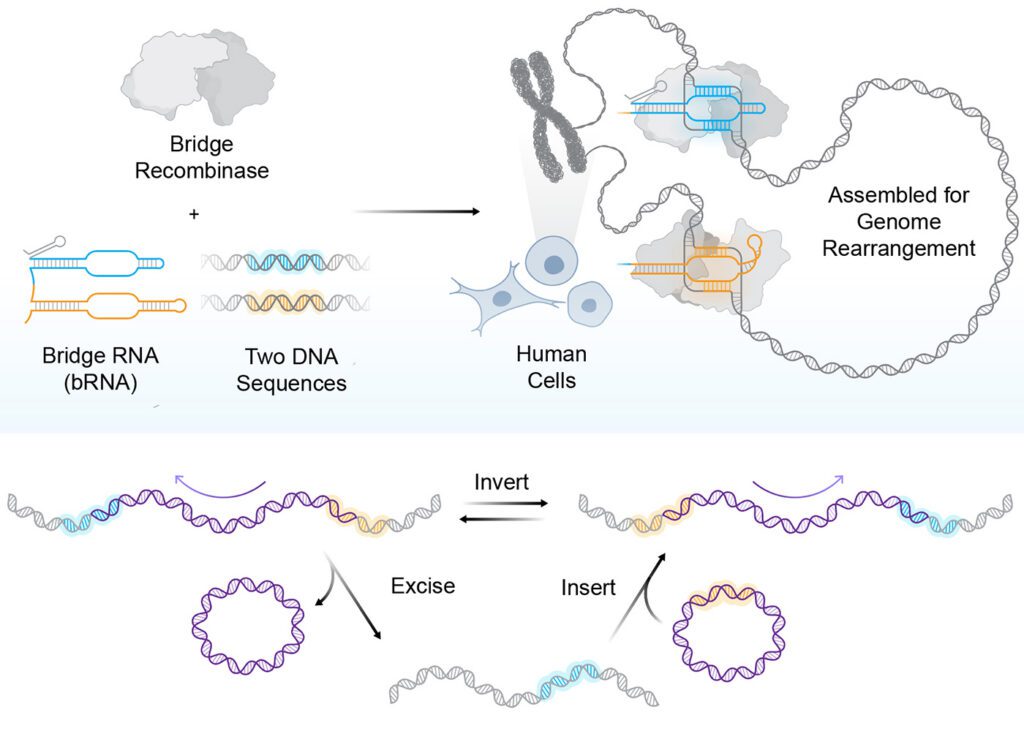
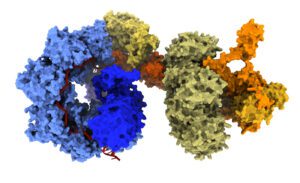
A new class of programmable genome-editing tools, bridge recombinases are the first RNA-guided DNA recombinases providing a distinct mechanism for manipulating DNA.1,2
The system has two key components: the recombinase enzyme, which catalyzes the DNA rearrangement, and a bridge RNA guide with two independently programmable loops. The target-binding loop controls genomic locus targeting, and the donor-binding loop specifies the donor payload.
Reprogramming the bridge RNA to change the configuration and orientation of the target and donor sites allows the system to be redirected to perform excision of a desired sequence from the genome or inversion of a DNA segment in place. The modularity means a single two-component system can perform all three fundamental DNA rearrangements—insertion, excision, and inversion—through a single unified mechanism.
“The most immediate advantage is the scale of DNA that bridge recombinases can manipulate,” said Patrick Hsu, PhD, co-founder and core investigator of the Arc Institute and assistant professor of pathology at Stanford University. “A technology that can operate at the scale of whole-gene replacement or correct structural variants opens up a new class of genetic interventions.” Multi-kilobase insertions, inversions up to 0.93 Mb, and excisions up to 0.13 Mb have all been demonstrated in human cells.3
Bridge recombination also does not rely on dsDNA breaks. The recombinase catalyzes strand exchange directly through a covalent intermediate, making the outcome deterministic in a way that nuclease-dependent approaches are not. This indicates that the system may have advantages in post-mitotic cells for therapeutic applications. About a quarter of the size of Cas9, the system can be encoded in delivery vectors with limited capacity.
“The technology is still in development. While our current efficiency and specificity numbers (20% insertion efficiency with 82% on-target) represent a meaningful proof-of-concept in human cells, improving both metrics will be necessary for safe and effective therapeutic applications,” said Hsu. The diversity of bridge-recombinase systems found in nature continues to be explored.
Large serine recombinases
“For simpler cases where we want to insert a DNA payload into a fixed safe harbor site, we are working on large serine recombinases (LSRs),” said Hsu. While these enzymes lack the RNA programmability of bridge recombinases, they offer very high efficiency and specificity of insertion and are effectively unidirectional, leading to very stable insertions of large DNA cargoes into the human genome.
A 2025 Nature Biotechnology paper described an LSR enzyme engineered to enable site-specific insertions of multi-kilobase DNA payloads with 53% efficiency and 97% genome-wide specificity. Importantly, it was demonstrated that LSRs work well in non-dividing cells, including primary human T cells.4
Stylus Medicine, a company Hsu co-founded, intends to advance LSRs for in vivo genetic therapies. “I am excited to see the new therapies that will emerge from combining recombinase technology with machine learning-assisted protein engineering and advances in DNA and effector delivery for challenging disease contexts,” said Hsu.
CRISPR-associated transposases
CASTs are naturally occurring bacterial systems that utilize nuclease-deficient CRISPR machinery to integrate DNA at genomic locations specified by guide RNAs (gRNA). “While CRISPR is often used to cut DNA, CASTs instead use CRISPR systems to guide site-specific DNA transposition,” said Isaac Witte, PhD, department of chemistry and chemical biology at Harvard University.
In 2019, two research groups—one at Columbia University led by Sam Sternberg, PhD, and the other at the Broad Institute of MIT and Harvard, headed by Feng Zhang, PhD—found that CASTs use CRISPR systems to target DNA transposition by a transposase complex. Further work demonstrated that CASTs were very efficient bacterial genome editors.
CASTs can mobilize multi-kilobase-scale DNA cargoes, and their naturally evolved transposition mechanism avoids forming dsDNA breaks in the genome. The problem was that the wild-type systems exhibited extremely low (often ≤0.1% of treated cells) or undetected integration activity in human cells.
Collaborating with the Sternberg lab, the lab of David Liu, PhD, from the Broad Institute of MIT and Harvard, used PACE (phage-assisted continuous evolution), a directed evolution platform developed by the Liu lab, to enhance the efficiency of CAST transposition.
In PACE, bacteriophages, which infect host bacteria, encode evolving genes in place of an essential gene for phage replication. This essential gene is instead encoded by host bacteria. “In PACE, you link the desired activity of the evolving biomolecule to the expression of this essential gene. In this case, we linked targeted DNA integration to the replication of phages encoding evolving CAST protein components,” said Witte.
A series of modifications ensured efficient enhancement of activity, resulting in the generation of an evolved variant of the CAST transposase protein TnsB that mediated over 200-fold improved integration activity in human cells. The TnsB protein contained ten individual mutations scattered throughout the predicted structure, which contributed to improved activity.
The evolved TnsB was combined with other PACE-evolved and rationally engineered CAST components to yield evoCAST, a system optimized for human-cell integration activity, published in Science.5
The evoCAST DNA integration does not require formation of dsDNA breaks in the genome, resulting in undetected levels of insertion and deletion mutations (indels) commonly found in traditional methods of gene insertion like nuclease-stimulated, homology-directed repair (HDR). In addition, evoCAST can be easily reprogrammed to genomic sites of interest by changing the gRNA sequence, and it supports a variety of DNA payload sizes, ranging from less than 1 kb to at least 15 kb.
A potential limitation, however, is that evoCAST is molecularly complex, containing seven distinct protein subunits, making the total coding size (~8.5kb) relatively large compared to around 5 kb for Cas9.
Big-picture limitations center on delivery, according to Witte, such as mitigating the cytotoxicity of foreign dsDNA in most therapeutically relevant cell types. Additionally, reducing the size and the number of distinct components required for integration activity may facilitate evoCAST applications in vivo. Next steps include harnessing the naturally existing diversity of CAST systems to develop a more diverse repertoire of CASTs for genome editing in human cells.
Circular single stranded DNA
Full Circle Therapeutics’ genome writing technology centers on an immune evasive DNA modality, a mini-cssDNA, called C4DNA—circular, clean, concealed, and customizable up to 20 kb.
“The holy grail of gene editing is kilobase DNA integration. While most studies focus on new editing enzyme discovery, we address the challenge from the donor side. To integrate gene-size DNA in a specific locus, the choices of donor cargo templates are ds, ss, circular, or linear DNA. Workarounds using RNA formats and leveraging reverse transcriptase are still size-limited,” said Howard Wu, PhD, co-founder and CSO at Full Circles Therapeutics.
The company has commercialized over 350 research-grade cssDNA for primary sequences and is developing processes for GMP-grade products for clinical applications. According to Wu, initially, the company’s founder, Richard Shan, intended to supply linear cssDNA as a DNA commodity for researchers in the gene-integration field. The starting material was cssDNA that was cleaved into linear strands. A serendipitous benchmark experiment using cssDNA as a control demonstrated surprisingly better integration performance than its linear counterpart.6 The unexpected results led to a foundational patent describing the use of cssDNA for targeted genomic integration.
After benchmarking the different DNA formats, cssDNA appeared superior and compatible with various CRISPR-Cas systems, along with other meganuclease editing systems such as TALEN. Next, they evaluated the hypothesis that immunogenicity due to dsDNA could be eliminated if mobile genetic elements like transposase systems and LSRs could use cssDNA.
Collaborating with a team at Harvard Medical School led by Benjamin Kleinstiver, PhD, they demonstrated that naked unmodified cssDNA, combined with piggyback transposases or LSRs, enables kilobase writing, albeit inefficiently. One way to improve integration efficiency was to design an oligo that could fuse to the cssDNA with hydrogen bonding to form a partial duplex. A 30- to 60-mer partial duplex showed good integration efficiency when compared to dsDNA, while remaining immune silent.
In another approach, the team modified the nuclear editor and installed a peptide sequence identified from a bacterial genome with a strong binding affinity with cssDNA. In this case, the modified Cas9 became an engineered molecular chaperone to recruit the DNA molecule and form a complex, effectively loading and delivering the genome engineering complex into the nucleus and direct to the targeted genome.7
Continued collaboration with Kleinstiver’s lab aimed to improve integration efficiency. The approach, in this case, used a partial duplex cssDNA that reconstituted a recombinase recognition sequence. The scientists termed this integration through nucleus-synthesized template addition of large lengths (INSTALL). INSTALL is compatible with diverse genome engineering nucleases and RNA-guided recombinases for high-fidelity kilobase-scale human genome writing.8
“We welcome partners,” said Wu. “It is prime time to talk about DNA medicines.”
References
- Hiraizumi, M, Perry NT, Durrant, MG, et al. Structural mechanism of bridge RNA-guided recombination. Nature2024; 630:994-1002. doi:10.1038/s41586-024-07570-2
- Durrant, MG, Perry NT, Pai JJ, et al. Bridge RNAs direct programmable recombination of target and donor DNA. Nature2025:630:984-993. doi:10.1038/s41586-024-07552-4
- Perry NT, Bartie LJ, Katrekar D, et al. Megabase-scale human genome rearrangement with programmable bridge recombinases. Science. 2026 Mar 12;391(6790):eadz0276. doi:10.1126/science.adz0276
- Fanton, A, Bartie, LJ, Martins JQ, et al. Site-specific DNA insertion into the human genome with engineered recombinases. Nat Biotechnol. 2025 Nov 6. doi:10.1038/s41587-025-02895-3
- Witte IP, Lampe GR, Eitzinger S, et al. Programmable gene insertion in human cells with a laboratory-evolved CRISPR-assoc iated transposase. Science. 2025 May 15;388(6748). doi:1126/science.adt5199
- Xie K, Starzyk J, Majumdar I, et al. Efficient non-viral immune cell engineering using circular single-stranded DNA-mediated genomic integration. Nat Biotechnol. 2025 Nov;43(11):1821-1832. doi:10.1038/s41587-024-02504-9
- Nam H, Xie K, Majumdar I, et al. Engineering tripartite gene editing machinery for highly efficient non-viral targeted genome integration. Nat Commun. 2025; 16:4569. doi:1038/s41467-025-59790-3
- Tou CJ, Xie K, Ferreira da Silva J, et al. Immune evasive DNA donors and recombinases license kilobase-scale writing. Nature. 2026 Mar 11. doi:10.1038/s41586-026-10241-z
The post The Quest for Large-Scale DNA appeared first on GEN – Genetic Engineering and Biotechnology News.
Exploring the Experiences of Moderators From an Asynchronous Online Dementia Support Forum: Qualitative Interview Study
Background: Asynchronous online forums provide flexible, accessible peer support for many people living with dementia and carers. Moderators are central to the functioning of these communities, yet little is known about their experiences. Objective: This study explored the experiences of individuals moderating an online dementia forum, including their motivations, perceived benefits, challenges, and suggestions for improvements. Methods: Moderators from a UK-based online dementia support forum were recruited using purposive sampling via forum administrators. Between January and March 2025, 5 moderators, all with dementia care experience, participated in remote semistructured interviews. Interview topics included pathways into moderation, perceptions of the moderator role, experiences of supporting forum members, challenges encountered, perceived personal benefits, and views on the future development of online support communities. Interviews were transcribed verbatim and analyzed using reflexive thematic analysis. Results: Four themes were produced: (1) “from support seeker to support provider”: moderators primarily identified as community members rather than authority figures, following a trajectory from receiving support as a carer to actively facilitating community support; (2) “understanding through shared experience”: lived experience of dementia was seen as essential for empathy, credibility, and sensitive responses, though sometimes prompted strong emotional reactions; (3) “giving back and gaining in return”: moderation offered purpose, structure, and social connection, particularly postretirement and following transition out of caring; (4) “balancing growth with community preservation”: forum expansion increased workload, spam management demands, and safeguarding responsibilities, and moderators were cautious about social media–style features and artificial intelligence–generated content undermining the effectiveness of support exchanges. Conclusions: Moderators play a crucial, value-driven role in sustaining dementia support forums, extending beyond administrative duties. The findings suggest that moderators occupy a distinctive position as both recipients and providers of peer support, drawing on experiential expertise to maintain trust and community cohesion. Forum growth and technological innovations present opportunities and challenges, highlighting the need to balance scalability with authenticity in online support communities.
<img src="https://jmir-production.s3.us-east-2.amazonaws.com/thumbs/7de433b448ae15efb6eafec0d1e8d504" />
<![CDATA[New data in cannabis use disorder show investigational drug PP-01 cuts irritability 42% in trials.]]>
STAT+: FDA approves Vera Therapeutics kidney disease treatment
The Food and Drug Administration on Tuesday approved a new medicine from the biotech company Vera Therapeutics for patients with a type of chronic autoimmune kidney disease.
The drug, called Trutakna, was cleared to treat IgA nephropathy, or IgAN, a disease caused by the buildup of immune antibodies in the kidneys. The condition leads to progressive loss of kidney function and potentially organ failure requiring dialysis.
“We’re extremely excited to bring Trutakna to patients,” Vera CEO Marshall Fordyce told STAT, in an interview conducted ahead of the FDA approval.
CRISPR-Engineered Treg Cell Therapy Clears IND for Solid Tumors
The U.S. Food and Drug Administration has cleared CoRegen’s Investigational New Drug (IND) application for CRG-150, allowing the company to initiate a first-in-human Phase I/IIa clinical trial of its autologous CRISPR-engineered regulatory T (Treg) cell therapy in patients with advanced solid tumors. The study will evaluate safety and preliminary efficacy in metastatic triple-negative breast cancer (TNBC), metastatic HR-positive/HER2-negative breast cancer, and metastatic prostate cancer at leading academic cancer centers.
The clearance advances into the clinic an immunotherapy strategy that differs fundamentally from existing cell therapies. Rather than engineering cytotoxic lymphocytes to recognize tumor antigens, CRG-150 uses CRISPR gene editing to reprogram regulatory T cells (Tregs), with the goal of reversing the immunosuppressive tumor microenvironment and restoring endogenous antitumor immunity.
The approach emerged from more than three decades of research at Baylor College of Medicine on steroid receptor coactivator-3 (SRC-3), a transcriptional regulator that sits upstream of numerous immune signaling pathways. According to CoRegen, CRISPR-mediated disruption of SRC-3 fundamentally alters Treg biology, removing one of the mechanisms tumors use to evade immune surveillance.

“What was fantastic about this discovery was that it allowed us to engineer a regulatory T cell to knock out SRC-3,” said Suneet Varma, chairman of the board of CoRegen. “By knocking out SRC-3, we have essentially removed the cloak of invisibility that cancer was hiding behind. Once you remove that cloak of invisibility, the tumor is recognized by the immune system, and CD4-positive T cells, CD8-positive T cells, and natural killer cells flood the tumor.”
The company reports that preclinical studies in multiple murine solid tumor models demonstrated durable tumor eradication following treatment with SRC-3-disrupted regulatory T cells. Investigators subsequently rechallenged animals with the original tumor and observed rapid elimination consistent with immunologic memory. In additional experiments, mice challenged with different tumor types, including pancreatic cancer after initial treatment of triple-negative breast cancer, also mounted antitumor responses, suggesting that the mechanism may not depend on a single tumor antigen or histology. Those findings now await validation in humans.
“This is a new, never-been-done-before approach to immuno-oncology,” Varma said. “We’ve cured many, many mice. But we need to now treat and cure humans. There’s a lot of work between here and there.”
Reversing the biology of immune suppression
Since the identification of FOXP3 as the master transcription factor governing regulatory T-cell development more than two decades ago, Tregs have become recognized as essential regulators of immune homeostasis. By suppressing excessive immune activation, they prevent autoimmunity and maintain peripheral tolerance. The same biology, however, is frequently co-opted by cancer. Many solid tumors recruit or expand Tregs within the tumor microenvironment, where they suppress cytotoxic T lymphocytes and natural killer (NK) cells, limiting endogenous antitumor immunity and contributing to resistance against immunotherapy.
That dual biology has made Tregs both attractive and challenging therapeutic targets. Most clinical development in the field has focused on harnessing their suppressive properties. Multiple companies are developing autologous, allogeneic, and CAR-engineered Treg therapies for autoimmune diseases, inflammatory disorders, and transplantation, where augmenting immune tolerance is desirable. By contrast, relatively few cell therapy programs have sought to manipulate Tregs in oncology because selectively disrupting their immunosuppressive function without broadly compromising immune regulation has proven difficult.
For example, last week, the FDA approved Orca Bio’s Tregzi, an unmodified donor-derived cell therapy designed as an alternative to traditional matched-donor stem cell transplantation for blood cancer patients. The therapy uses three purified donor cell populations—including regulatory T cells, conventional T cells, and hematopoietic stem and progenitor cells—selected to preserve immune control while supporting blood system recovery. By leveraging naturally occurring immune-regulating cells, Tregzi aims to reduce complications such as chronic graft-versus-host disease, marking a key milestone for the broader effort to harness Tregs as a next-generation approach in cancer treatment.

CoRegen’s strategy is to alter Treg biology directly through CRISPR-mediated disruption of SRC-3, a steroid receptor coactivator that functions as a transcriptional regulator upstream of numerous immune signaling pathways. Sonal Gupta, MD, PhD, chief medical officer of CoRegen, explained that SRC-3 occupies a regulatory position upstream of numerous genes involved in immune signaling, including pathways associated with immune checkpoint regulation. “What we do is use CRISPR editing to knock out the SRC-3 gene,” Gupta told Inside Precision Medicine. “That changes the biology of regulatory T cells.”
She compares unmodified Tregs to “bouncers at a nightclub,” preventing immune cells from entering tumors. Following gene editing, the cells no longer maintain that suppressive phenotype, allowing endogenous immune cells to infiltrate the tumor microenvironment. Unlike checkpoint inhibitors, which interrupt individual inhibitory pathways such as PD-1/PD-L1 or CTLA-4, the company hypothesizes that reprogramming Tregs through SRC-3 disruption may produce broader remodeling of tumor immune suppression.
The therapy is also differentiated from CAR T cells. “CAR T cells directly kill the cancer cells by targeting something on the cancer cell, and, in our case, we genetically modify regulatory T cells,” said Gupta. “Regulatory T cells play a very important role in the tumor microenvironment. They basically do not allow the endogenous immune system to kill the cancer. When we gene-modify them the way we do, they allow the endogenous immune system to enter and kill the cancer cells.”
From laboratory discovery to first-in-human testing
The origins of CRG-150 trace back more than three decades to the laboratory of the late Bert W. O’Malley, MD, at Baylor College of Medicine. O’Malley, widely regarded as one of the founders of molecular endocrinology, spent much of his career studying steroid receptor coactivators (SRCs), proteins that regulate large transcriptional networks controlling cellular behavior.
According to Varma, bringing that body of work together with advances in regulatory T-cell biology transformed a long-running academic research program into a therapeutic platform. “Our goal was to take this tremendous body of evidence and receptor biology and move what was in an academic laboratory into a biotech environment where we could demonstrate the potential impact in patients,” he said.
CRG-150 begins with collection of autologous peripheral blood cells rather than bone marrow. Regulatory T cells are isolated, edited using CRISPR to disrupt SRC-3, expanded ex vivo, and then reinfused into the patient.
Gupta believes beginning with an autologous product provides the strongest opportunity to demonstrate proof of concept. “Autologous really is the gold standard,” she said. “Because the cells come from the patient, they’ve already been exposed to the tumor antigens.”
Another potentially important distinction is the absence of lymphodepleting chemotherapy prior to treatment. Current CAR T therapies typically require depletion of endogenous lymphocytes before infusion, adding toxicity and limiting outpatient administration. “Unlike CAR T cells, these patients do not have to undergo depletion and have their immune system knocked out before receiving therapy,” Gupta said. “There is potential for this therapy to actually be outpatient.”
Varma noted that because the therapy relies on a standard blood collection rather than more invasive procedures, the collection process should also be broadly accessible. “Not all autologous therapies are created equal,” he said. “We wanted the process to be as simple as possible and the vein-to-vein time as manageable as possible.”
The company has partnered with Lonza under a multi-year manufacturing agreement to support clinical production. Varma said manufacturing consistency formed an important component of the IND package reviewed by the FDA. “The FDA concurred that we had achieved what we needed to achieve to proceed,” he said.
Gupta added that recent advances in Treg manufacturing have substantially improved the feasibility of clinical development. “Being able to expand regulatory T cells to generate sufficient doses for patients has been a very important advance,” she said.
Testing a new therapeutic paradigm
Historically, novel oncology therapies enter clinical testing in heavily pretreated patients before moving into earlier treatment settings if efficacy is demonstrated. Varma believes CRG-150 may ultimately challenge that paradigm because its mechanism depends on mobilizing endogenous immunity. “We would really benefit from a healthier immune system, since that’s what we’re activating,” he said. “Scientifically, it suggests the therapy should ultimately be used earlier.”
The initial study, however, appropriately begins in advanced disease. The Phase I/IIa trial will use a dose-escalation and cohort-expansion design. Phase I will establish safety and identify the recommended Phase II dose, followed by expansion cohorts evaluating preliminary efficacy in metastatic TNBC, HR-positive/HER2-negative breast cancer, and metastatic prostate cancer. According to Gupta, the long-term objective is to generate sufficient data to support discussions with the FDA regarding a subsequent registration study.
The company reports strong interest from academic investigators participating in the study. “We’ve had more interest from clinical sites than we can currently support,” Varma said.
The FDA clearance positions CoRegen within a rapidly evolving landscape of engineered immune cell therapies. Most current Treg programs are directed toward restoring immune tolerance in autoimmune disease or transplantation, whereas oncology developers have largely focused on engineered effector cells such as CAR T cells, T-cell receptor-engineered T cells, and tumor-infiltrating lymphocytes. CRG-150 occupies a distinct niche by seeking to reprogram, rather than expand or eliminate, regulatory T cells within the tumor microenvironment.
The company is already exploring future iterations of the platform, including allogeneic products and in vivo approaches, as well as expansion into additional tumor types including pancreatic cancer, glioblastoma, melanoma, colorectal cancer, and non-small cell lung cancer. For now, however, the focus is on determining whether a strategy that has generated durable immune responses across multiple preclinical solid tumor models can safely translate into patients. The Phase I/IIa trial will provide the first opportunity to answer that question.
The post CRISPR-Engineered Treg Cell Therapy Clears IND for Solid Tumors appeared first on Inside Precision Medicine.