

IntroductionMotor imagery (MI) is one of the most widely used paradigms in electroencephalogram (EEG)-based brain–computer interfaces (BCIs). In recent years, deep learning and transfer learning techniques have been increasingly adopted to further improve MI-EEG decoding performance, thereby facilitating the practical deployment of BCIs. In transfer learning, the similarity between the source and target domains is a critical factor influencing its effectiveness. Given the analogous cortical activation patterns observed in MI and motor execution (ME) tasks, cross-task transfer learning from ME to MI presents a promising yet underexplored direction.MethodsTo tackle the underexplored problem of cross-task transfer learning from ME to MI, we propose a domain-aware domain–class adaptation network (DDCA Net), which consists of a domain-shared feature extractor, two classifiers, and two domain-specific feature re-weighting blocks. Domain-level alignment is achieved by minimizing the maximum mean discrepancy between source and target feature distributions, while domain-specific feature re-weighting preserves discriminative characteristics unique to each task. In addition, a bi-classifier adversarial learning framework is employed to encourage consistency of decision boundaries across domains, thereby enabling implicit class-level alignment.ResultsExtensive experiments were conducted on a public dataset with over 100 subjects under varying proportions of target-domain training samples. When 80% of target-domain samples are used for training, the proposed DDCA Net significantly outperforms the within-task baseline, achieving a 7.71% improvement in classification accuracy and converting approximately 80% of previously BCI-illiterate subjects into BCI-literate users.DiscussionTo the best of our knowledge, this is the first work to verify the feasibility of applying domain adaptation for cross-task transfer learning in MI-EEG classification. The findings of this study provide new insights for integrating ME and MI in advanced BCIs.
GLOBE: an explainable machine learning platform for preoperative prediction of thromboembolism and neurological deterioration in patients with glioma
BackgroundPatients with glioma are at high risk of postoperative venous thromboembolism (VTE) and postoperative neurological deterioration (PND). Conventional clinical scoring systems have limited accuracy in predicting these perioperative risks. This study aimed to develop and validate machine-learning models for individualized preoperative prediction of postoperative VTE and PND in patients with glioma.MethodsA retrospective cohort of 427 patients with glioma was included. Patients were randomly divided into training and test sets at an 8:2 ratio using stratified random sampling. Multiple machine-learning algorithms were trained and evaluated. Model performance was assessed using the area under the curve (AUC), accuracy, sensitivity, specificity, calibration curves, and decision curve analysis. An online prediction platform was developed to facilitate individualized risk assessment.ResultsAmong 427 patients, postoperative VTE and PND occurred in 34 and 35%, respectively. For VTE prediction, the final Top-10 random forest model outperformed the Caprini score alone and achieved an AUC of 0.815 (95% CI, 0.720–0.910) in the held-out test set. Performance remained strong in the clinically significant VTE sensitivity analysis (AUC, 0.923; 95% CI, 0.847–0.998). SHAP analysis indicated that older age, elevated D-dimer and fibrin degradation products (FDP), as well as lower hemoglobin levels, were associated with increased predicted VTE risk. For PND prediction, the final Top-10 logistic regression model achieved an AUC of 0.741 (95% CI, 0.627–0.854). Older age, recurrent glioma, higher Caprini score, higher neutrophil percentage, and hypertension history tended to increase predicted PND risk. Models were deployed in the GLOBE web platform (https://gliomas.shinyapps.io/GLOBE/) for real-time preoperative risk prediction.ConclusionWe developed accurate, interpretable, and clinically meaningful preoperative prediction models for postoperative VTE and PND in patients with glioma. The GLOBE online prediction system translates these models into a practical tool for individualized perioperative risk stratification.
Efficacy of repetitive transcranial magnetic stimulation for insomnia disorder: a systematic review and meta-analysis of randomized controlled trials
ObjectiveInsomnia Disorder (ID) is associated with significant health burdens. First-line treatments are limited by accessibility or side effects, necessitating alternative approaches. rTMS, a noninvasive neuromodulation technique, has shown promise in treating various neuropsychiatric disorders by modulating cortical excitability. This comprehensive meta-analysis explores the effect of rTMS on ID and identifies possible factors that influence it.MethodsA comprehensive search of the Cochrane Library, Embase, Web of Science, PubMed, CNKI, and Wanfang databases identified RCTs evaluating the effects of rTMS on insomnia disorder. Data synthesis and subgroup analysis were performed via SMD, WMD, relative risk (RR), and 95% CI to evaluate the effects of rTMS and its influencing factors. The review protocol was prospectively registered in PROSPERO (CRD42024626833).ResultsNineteen studies contributed 23 trials involving 1,690 adult participants. The rTMS group demonstrated markedly improved sleep quality compared with sham rTMS recipients in individuals with insomnia disorder. (PSQI total scores; ISI; p < 0.001); (PSG (SE); p = 0.003). Combined rTMS and medication were more effective than medication alone. (PSQI total scores; p = 0.003). In the subgroup analysis, after excluding a study with high heterogeneity, the rTMS cohort showed greater improvement in sleep quality than the other treatment groups. (PSQI total scores; p = 0.03).ConclusionIndependent rTMS and rTMS-medication combinations significantly improve sleep patterns and rest quality in patients with Insomnia Disorder. The safety and efficacy of LF-rTMS are also significant. The duration of the disease, treatment duration, and stimulation site may influence the sleep quality of patients with ID.
The effects of unilateral deprivation amblyopia on fixation stability
IntroductionDeprivation amblyopia is a neurodevelopmental disorder caused by obstruction of the visual pathway due to congenital cataracts, ptosis or corneal opacities that occur during early visual development. Visual deficits persist into adulthood even though the obstruction (e.g. cataracts) have been removed early in life. The effects of deprivation amblyopia on oculomotor control have not been studied. The present study evaluates the effects of unilateral deprivation amblyopia resulting from congenital cataracts on fixation stability.MethodSeven adults with unilateral deprivation amblyopia and 18 adults with normal vision were tested during binocular and monocular viewing. A video-based eye tracker was used to record eye position of the viewing eye(s) (closed-loop condition with visual feedback) and the covered eye (open-loop condition with no visual feedback).ResultsFindings for the control group were consistent with previous studies. Fixation stability (eye position stability), evaluated using bivariate contour ellipse area (BCEA), microsaccade rate, amplitude and slow drift velocity, was best during binocular viewing, and significantly worse during open-loop monocular viewing. In comparison to the control group, patients had similar fellow eye fixation stability under binocular viewing, but fixation (eye position stability) was poorer under monocular closed-loop and open-loop viewing. Fixation stability was worst in the amblyopic eye in all viewing conditions.DiscussionOur findings demonstrate fixation stability deficits in adults with unilateral deprivation amblyopia, underscoring the lasting impact of early visual deprivation on oculomotor function.
Predictive value of antioxidant and thyroid function indicators for non-suicidal self-injury in adolescents with major depressive disorder
BackgroundNon-suicidal self-injury (NSSI) is highly prevalent in adolescents with major depressive disorder (MDD); however, its underlying pathophysiological mechanisms remain incompletely elucidated. Emerging evidence suggests a potential association between antioxidant markers, thyroid function parameters, and the occurrence of NSSI, although research in this domain remains limited. Accordingly, this study aimed to investigate the predictive efficacy of combining antioxidant and thyroid biomarkers with clinical symptoms for NSSI in adolescents with MDD.MethodsThis study recruited 162 adolescents with MDD between September 2022 and January 2026. Participants were stratified into groups based on the presence or absence of NSSI, in accordance with DSM-5 diagnostic criteria. Multidimensional scales were employed to assess the severity of depression, anxiety, perceived stress, and internet addiction (IA). Concurrently, blood samples were collected to measure bilirubin levels and thyroid function parameters. Stepwise logistic regression analysis was subsequently performed to identify independent risk factors associated with NSSI. Finally, receiver operating characteristic (ROC) curves were constructed to quantify the predictive performance of these identified independent factors.ResultsThe prevalence of NSSI in adolescents with MDD was 57.4%. Multivariate logistic regression analysis identified females (OR = 2.246, 95% CI = 1.032-4.888, P = 0.041), HAMD-17 score (OR = 1.183, 95% CI = 1.088-1.286, P < 0.001), indirect bilirubin (OR = 0.890, 95% CI = 0.797-0.995, P = 0.040), and TSH (OR = 2.060, 95% CI = 1.254-3.385, P = 0.004) as independent predictors of NSSI. Furthermore, ROC curve analysis further demonstrated that the four-item combination of sex, HAMD-17 score, indirect bilirubin, and TSH (AUC = 0.776, 95% CI = 0.701-0.850, P < 0.001) had a better ability to identify NSSI.ConclusionAdolescents with MDD, particularly females, represent a high-risk population for NSSI. Reduced levels of indirect bilirubin coupled with elevated TSH levels may constitute the underlying pathophysiological basis of NSSI and demonstrate significant clinical predictive value. In the future, targeted intervention strategies focusing on the antioxidant defense system and thyroid function may offer novel therapeutic avenues for the management of NSSI.
Two years of COVID-19: persistently reduced well-being and increases in global psychopathology during the pandemic in a representative Austrian population-sample within the COH-FIT study
IntroductionThe COVID-19 pandemic worsened well-being and mental health worldwide, but effects have diminished over time. However, prospective national data within representative samples remain scarce. We aimed to examine the change in well-being and psychopathology from pre-pandemic to intra-pandemic times in an Austrian representative general population sample, to identify vulnerable subgroups, and explore most effective coping strategies to mitigate the impact of COVID-19.MethodsData were collected in Austria as part of the Collaborative Outcomes Study on Health and Functioning During Infection Times (COH-FIT) survey, an international, multilingual, anonymous online survey assessing mental health indicators during COVID-19. Adults ≥18 years old participated through nationally representative sampling across three waves from 05/2020-04/2022. Outcomes included the WHO well-being index (WHO-5) and a global psychopathology score (‘P-score’), alongside 12 predefined risk factors and 16 coping strategies.ResultsAcross 4,148 adults, the mean WHO-5 well-being score decreased by 7.5 ± 17.7 points from the pre-pandemic baseline (73.2 ± 19.7) to the intra-pandemic average (65.7 ± 24.1) (p<.001). Participants with female sex, pre-existing mental or physical health conditions, and unemployment experienced greater declines. The proportion of individuals scoring <50, indicating depression, increased from 12.6% pre-pandemic baseline to 25.1% intra-pandemic, and the proportion scoring <29, indicating major depression, increased from 3.3% to 9.7% (both p<.001). The ‘P-score’ increased by 9.6 ± 15.0 points from 24.1 ± 19.5 pre-pandemic baseline to 33.7 ± 22.4 intra-pandemic (p<.001) with the same risk groups (except female sex). Although the greatest deterioration in both outcomes occurred during the mid-pandemic period (04/2021), neither well-being nor ‘P-score’ levels returned to pre-pandemic baseline values by 04/2022, nor to values from 05/2020 (Wave 1). Greater deterioration in WHO-5 and the P-score were associated with female sex, unemployment, pre-existing mental or physical disorders, and COVID-19 infection. The most commonly reported helpful coping strategies included internet use, physical activity, media consumption, social media and remote interaction, and meaningful hobbies.DiscussionCOVID-19 had a persistent negative impact on well-being and mental health in Austria. Vulnerable subgroups – including those with prior health conditions and unemployment – were particularly affected. The findings underscore the importance of implementing public health measures together with targeted interventions, preventive measures, and long-term psychosocial support, especially for risk populations.
The efficacy of acupuncture for depression-associated chronic pain: a systematic review and meta-analysis
ObjectiveThe comorbidity of pain and depression is prevalent, adding difficulty to the treatment of depression. This systematic review with meta-analysis aims to determine the efficacy and safety of acupuncture in treating depression-associated chronic pain (DACP).MethodsA comprehensive search was conducted across four international databases, namely PubMed, Embase, Web of Science, and the Cochrane Library, along with four regional databases, including Wanfang Data, CNKI, VIP database, and SinoMed, from inception to March 2025. The Cochrane Risk of Bias 2 tool was utilized to assess risk of bias in the included research articles, and the Grading of Recommendations Assessment, Development, and Evaluations system was employed to evaluate the certainty of evidence. Meta-regression analysis was performed to explore the influence of patient age and treatment duration on the study results, and sensitivity analysis was used to verify the stability of the results. The publication bias was evaluated when the number of included studies exceeded ten. All data analyses were completed using Stata15.1.ResultsTen randomized controlled trials involving 761 participants were included. Acupuncture combined with conventional medications was more effective than medication alone in improving depressive symptoms (standardized mean difference (SMD): -0.72; 95% confidence interval (CI): -0.91 to -0.53; P < 0.01) and reducing pain (SMD: -0.85; 95% CI: -1.36 to -0.34; P < 0.01). Head-to-head comparisons revealed that acupuncture is similar to medication in improving the Hamilton Depression Rating Scale scores (SMD: -0.05; 95% CI: -0.61 to 0.51; P > 0.05) and the Visual Analogue Scale scores (SMD: -0.33; 95% CI: -0.94 to 0.29; P > 0.05), suggesting no statistically significant difference between the two treatments. In contrast, acupuncture was associated with a better safety profile (relative risk: 0.40; 95% CI: 0.27 to 0.60). Further subgroup analysis found the advantage of a 4-week acupuncture treatment in improving depressive symptoms, while longer-term treatment tended to be more effective in relieving pain.ConclusionsAcupuncture appears to have comparable antidepressant and analgesic effects to conventional oral medications. When applied as an adjuvant therapy, acupuncture may enhance the clinical efficacy of monotherapy for DACP. Regarding treatment duration, a 4-week acupuncture intervention may be superior to a longer cycle (> 4 weeks) in alleviating depressive symptoms, while long-term acupuncture treatment may provide greater benefits in analgesia.Systematic Review Registrationhttps://www.crd.york.ac.uk/PROSPERO, identifier CRD420251026454.
One Antibody, Fewer Scientific Surprises
Sponsored content brought to you by

In biomedical research, promising programs rarely collapse for lack of scientific ambition. More often, they collapse under the weight of inconsistency. One assay produces compelling results, the next model delivers confusion, and suddenly, researchers are left wondering whether the biology changed or whether the tools did.
That uncertainty sits at the heart of translational continuity, a concept gaining increased attention as drug-discovery pipelines become more complex and expensive. According to Cody Spencer, PhD, Director of Scientific Affairs at Bio X Cell, maintaining continuity across experimental systems is less about rigidly replicating conditions and more about reducing unnecessary variability.
“I define translational continuity as the ability to study the same underlying biology as you move from early discovery into more complex preclinical models without introducing unnecessary variability,” Spencer explains.
In practice, translational continuity means researchers can move from in vitro assays to organoids to in vivo mouse models while remaining confident that their findings reflect real biological phenomena, not artifacts created by inconsistent reagents or shifting methodologies. That distinction matters more than many researchers realize.
The greatest threat to continuity, Spencer argues, is often surprisingly mundane: switching antibodies or suppliers midway through a research program. Even antibodies marketed against the same target protein can behave differently depending on clone selection, sequence, production methods, formulation, or purification standards. When an antibody’s functional profile—whether blocking, agonistic, or depleting—is well characterized, researchers can select tools aligned with their experimental goals from the start, reducing the need to switch reagents mid-program. “When you switch suppliers, you’re often introducing a new variable without fully realizing it,” Spencer says.
Those differences might seem subtle initially, but they can snowball dramatically in translational studies. Inconsistent potency, altered dose responses, or unintended immune engagement can suddenly emerge even when earlier experiments appeared rock solid. Researchers then face a dangerous interpretive trap: Are they observing a genuine biological effect or merely the consequences of a reagent change? “That’s where you start to see promising early data that doesn’t hold up in more complex models,” Spencer notes.
The consequences extend beyond scientific frustration. Failed translation burns time, funding, and institutional confidence. Entire programs can stall while teams attempt to reconcile conflicting datasets generated by technically different reagents presenting as equivalent tools. For companies operating in high-stakes therapeutic areas like immuno-oncology, autoimmune disease, and inflammatory disorders, that level of ambiguity can become extraordinarily expensive.
The formulation of antibodies also plays a surprisingly large role in reproducibility, particularly in vivo. Preservatives, endotoxin contamination, and formulation inconsistencies can introduce unintended biological effects that distort experimental outcomes. “For in vivo studies, antibodies need to have ultra-low endotoxin levels and be free of preservatives to avoid introducing unintended biological effects,” Spencer explains.
This emphasis on reproducibility has reinforced the case for recombinant antibodies, which are derived from defined sequences rather than traditional hybridoma methods. Recombinant production offers stronger lot-to-lot consistency and allows researchers to better control host species, isotype selection, and Fc functionality.
That predictability becomes even more critical as antibody engineering grows more sophisticated. Bispecific antibodies, for example, can engage two targets simultaneously, enabling researchers to model increasingly complex biological interactions. But those advanced formats also amplify the risks associated with inconsistency. “Small changes can significantly impact activity,” Spencer warns.
Ultimately, translational continuity is about preserving confidence. In an era where reproducibility concerns continue to challenge biomedical science, researchers are increasingly recognizing that experimental reliability depends not only on biological insight but also on the consistency of the tools used to generate it. “When translational continuity is strong, the data become much easier to interpret,” Spencer says. “If the biology is real, it should carry across systems.”

Learn more bioxcell.com.
The post One Antibody, Fewer Scientific Surprises appeared first on GEN – Genetic Engineering and Biotechnology News.
Illuminating the Drug Development Path with Cell-Based Reporter Assays
Sponsored content brought to you by

Selecting and advancing drug candidates through discovery and development is a long, resource-intensive process. Demonstrating efficacy, mechanism of action (MOA), and product quality requires robust functional data.
In early discovery, researchers use high-throughput screening (HTS) to identify active compounds in a biologically relevant context. During lead characterization and validation, these assays generate reproducible, quantitative data to confirm activity and support candidate selection. In later stages, cell based assays are commonly used as potency assays to ensure reliability, consistency, and lot-to-lot comparability of biologics, supporting regulatory compliance.
BPS Bioscience maintains upstream licensing agreements for its cell lines, enabling clients to operate within established regulatory frameworks. This approach mitigates downstream risks associated with third-party restrictions and supports a smoother transition from research to clinical and commercial use.
Scientific rationale for using cell-based assays in biologics development
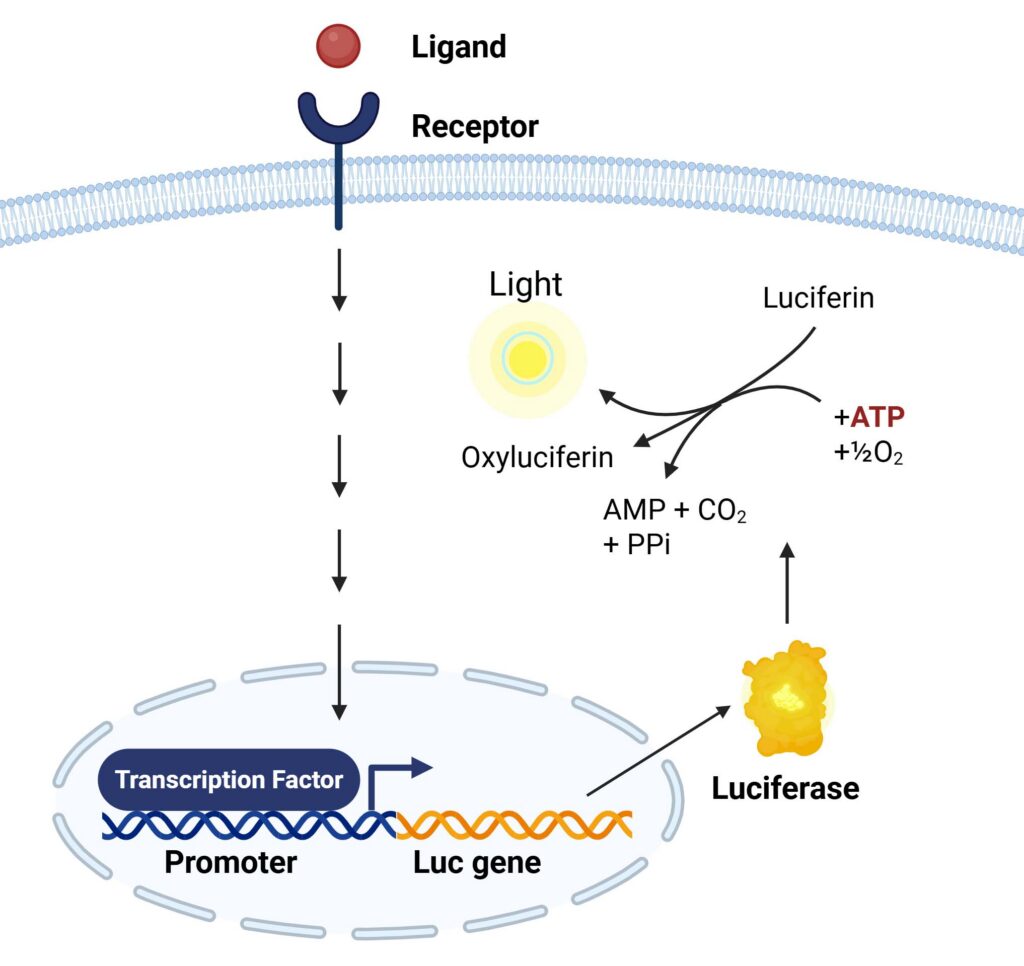
Unlike biochemical assays, cell-based assays capture key parameters such as membrane permeability, receptor engagement, and downstream signaling in intact cells, providing a more accurate representation of biological activity. Genetically engineered cell lines include overexpression and knockout models used to validate therapeutic targets and assess compound activity. Inducible reporter assays are particularly valuable for studying signaling pathways. Luciferase reporters, placed under the control of pathway-specific response elements, enable sensitive, quantitative, and reproducible measurement of pathway activation.
Reporter systems are broadly applicable across diverse cell types and signaling pathways, supporting HTS as well as more complex applications such as research in metabolism/obesity and immunotherapy, chimeric antigen receptor and T-cell receptor functional evaluation, antibody-dependent cellular cytotoxicity assays, and other co-culture models. Many biologics, including cytokine-targeting antibodies, peptides, and mimetics, are defined by their effects on specific signaling pathways. For example, GLP-1 receptor agonists activate cAMP-dependent signaling cascades, while anti-TL1A antibodies inhibit TL1A-mediated immune signaling. Accurately measuring these pathway-specific responses is essential for candidate selection and mechanistic validation.
Applications
Reporter cell lines enable a wide range of applications:
- Discovery and screening
• Identify agonists or antagonists of specific signaling pathways
• Screen compound libraries for selective modulators
- Mechanistic studies
• Characterize MOA
• Analyze pathway function and regulation
- Functional assays
• Perform co-culture cytotoxicity assays to evaluate immune effector function
• Support immunotherapy development and cell-based therapeutic evaluation
BPS Bioscience reporter cell portfolio
BPS Bioscience offers a comprehensive portfolio of pathway-specific reporter cell lines designed to support biologics development across multiple therapeutic areas. Reporter cell lines include IL-2, IL-6, and IL-15-responsive reporter cells, GLP-1-responsive models for metabolic research, and TL1A-responsive Jurkat cells.
Luciferase-based reporter systems provide rapid, sensitive, and quantitative detection of cellular responses, enabling efficient compound screening, pathway analysis, and target validation. Supporting reagents, including optimized culture media and the One-Step Luciferase Assay System, further streamline experimental workflows and improve reproducibility.
Advantages of luciferase reporter cell systems
- Quantitative readouts enable precise measurement of pathway activity
- High sensitivity allows detection of subtle biological effects
- Low background and high signal-to-noise ratio ensure robust data
- Compatibility with high-throughput formats supports large-scale screening
Advantages of BPS Bioscience reporter cell lines
- Optimized protocols and media simplify assay implementation
- Human cell backgrounds improve physiological relevance (with select alternative models available)
- Cost-effective workflows with minimal reagent requirements
- Extensive validation, with data often benchmarked against clinically relevant compounds
- Clonal cell lines ensure consistency and reduce variability over time
Together, cell based reporter assays and their supporting tools enable efficient, pathway
relevant evaluation of biologics from discovery through late stage development.

Learn more bpsbioscience.com.
The post Illuminating the Drug Development Path with Cell-Based Reporter Assays appeared first on GEN – Genetic Engineering and Biotechnology News.
Corning Advances the Organoid Revolution
Sponsored content brought to you by

The rapid rise of new approach methodologies (NAMs) is reshaping drug development, and organoids are emerging as one of the field’s most promising technologies. With the FDA Modernization Act 2.0 removing the long-standing requirement for animal testing in many drug-development pathways, researchers and industry leaders are increasingly looking toward human-relevant systems that better predict clinical outcomes. Against this backdrop, Corning Life Sciences is positioning itself as a key enabler of the organoid revolution by helping scientists overcome persistent barriers related to complexity, reproducibility, and throughput.
“Corning is helping to overcome challenges to adopting NAMs such as organoid models by providing specialized consumables and reagents that are essential to generating more in vivo-like models,” said Hilary Sherman, senior applications scientist at Corning Life Sciences. Sherman pointed to products including “Corning Matrigel Matrix, Transwell Permeable supports, and a wide variety of specialized plasticware for spheroid and organoid culture” as foundational technologies supporting the transition toward more predictive biological systems.
The push toward NAMs adoption gained further momentum this year when the FDA released draft guidance on alternatives to animal testing in drug development. The agency emphasized that NAMs—including organoids, spheroids, organ-on-chip platforms, and computational models—can improve predictivity while reducing reliance on animal studies.
Those priorities align closely with challenges the organoid field has wrestled with for years. During the GEN virtual event Spotlight on Organoids, Hans Clevers, MD, PhD, an organoid pioneer and distinguished professor at the Hubrecht Institute, stressed that standardization remains one of the field’s biggest hurdles.
“We don’t even have a good definition of what an organoid is,” Clevers said during the GEN virtual event. “When is an organoid an organoid?” He added that “nothing is standardized and nothing is automated,” underscoring the need for scalable workflows that can transition organoid science from exploratory academic research into robust industrial platforms.
Clevers nevertheless remains optimistic about the technology’s transformative potential. “The most important part is we can now grow structures that really represent a small part of the human body,” he said. “Animals are complete organisms, but they’re not humans.” According to Clevers, many diseases—particularly chronic human diseases—are poorly modeled in animals, limiting translational success in drug development.
Corning sees education and workflow optimization as crucial to solving those problems. “Corning feels very strongly about supporting our customers by providing resources to educate scientists on how to create more in vivo-like models that are reproducible,” Sherman explained. “We do this through publishing novel applications, protocols, and webinars.”
The company is also helping researchers streamline increasingly sophisticated organoid workflows. “We have several protocols and optimization guides that educate customers on how to culture organoids to ensure they are set up for success,” Sherman noted. “Additionally, we have many application notes demonstrating different ways of automating organoid assays to give researchers a starting point for their own work.”
Automation and scalability are becoming especially important as organoids move deeper into pharmaceutical pipelines. At the GEN virtual event, Maya Gosztyla, PhD, co-founder and CSO of BrainStorm Therapeutics, described how her company’s platform as “a very high throughput and very scalable and reproducible version of brain organoids.”
Her company is studying CDKL5 deficiency disorder, a rare genetic epilepsy. “The whole reason that we’re doing this work in brain organoids is that the mouse models of CDKL5 don’t recapitulate the symptoms of the disease,” Gosztyla explained.
She believes regulatory changes are accelerating industry confidence in organoid-based drug discovery. “These regulatory shifts have basically allowed drug-discovery companies to show efficacy using an alternative like a brain-organoid model,” Gosztyla said, adding that such systems are “a lot more translational compared to something like a mouse.”
For Corning, helping researchers achieve that translational promise means supporting every stage of organoid adoption—from foundational reagents to reproducible protocols and scalable automation strategies. As NAMs continue gaining regulatory and commercial traction, the ability to standardize organoid workflows might ultimately determine how quickly these human-centric systems become mainstream tools in drug discovery and development.

Learn more www.corning.com.
The post Corning Advances the Organoid Revolution appeared first on GEN – Genetic Engineering and Biotechnology News.